Every story, poem, newspaper article, or song has a recognizable fingerprint: the author’s unique voice or style. Voice and style consist of three aspects:
- The habitual choice of words shapes the tone of our writing.
- The chronic use and misuse of grammar and punctuation shapes the pacing of our sentences.
- Our deeply held beliefs and attitudes emerge and shape character arcs and plot arcs.
 Some authors are forceful in their style and throw you into the action. They have an in-your-face, hard-hitting style that comes on strong and doesn’t let up until the end.
Dashiell Hammett perfected the crime noir novel with short, choppy sentences packed with power words:
Quote from TheMaltese Falcon:
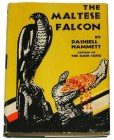 “I’m going to send you over. The chances are you’ll get off with life. That means you’ll be out again in twenty years. You’re an angel. I’ll wait for you.” He cleared his throat. “If they hang you I’ll always remember you.” [1]
Other authors take you on a journey. They have a more leisurely, fluid style of writing. Neil Gaiman is poetic and thoughtful, leading you deeper into the story with each paragraph.
Quote from Stardust:
Are we human because we gaze at the stars, or do we gaze at the stars because we are human? [2]
When we first begin writing, our style is heavily influenced by the authors whose works we love. Our stories are an unconscious reflection of what we wish they would write.
We develop our own voice and style when we write every day or at least as often as possible. We subconsciously incorporate our speech patterns, values, and fears into our work, and those elements of our personality form the voice that is ours and no one else’s.
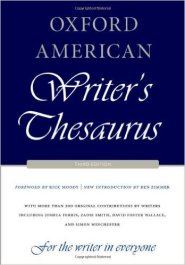
Developing a broad vocabulary is important because we are creatures of habit. When we want to express ourselves, we fall back on certain words and ignore their synonyms. This is where a good online thesaurus comes in.
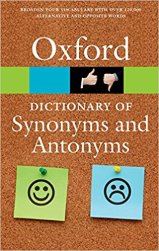
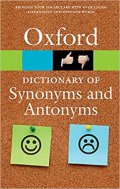 But I prefer to keep my research in hardcopy form, rather than digital. The Oxford Dictionary of Synonyms and Antonyms is a handy tool when I am stuck for alternate ways to say something.
And it makes the perfect place to rest my teacup.
We all have “crutch” words. These are words we choose above others because they say what we mean more precisely, or they color our prose with the right emotion. Unfortunately, I can be repetitive with certain words when expanding on an idea. Having alternatives that express my idea does two things:
- It often gives me a different understanding of what I am trying to say, which improves the narrative.
- It makes my work less tedious. (I hope.)
 As we become confident in our writing, we learn more about grammar and punctuation in our native languages. We learn to write so others can understand us.
The great authors use those rules to energize their prose. They are knowledgeable about sentence and paragraph construction and the fundamentals of grammar—the aspects of writing we call mechanics. They write to industry standards. When they break a rule, they do it deliberately and consistently.
Our word choices are a good indication of how advanced we are in the craft of writing. For instance, in online writing forums, we regularly are told to limit the number of modifiers (adjectives and adverbs) we might habitually use.
We are like anyone else. Our work is as dear to us as a child, and we can be just as touchy as a proud parent when it is criticized. We should respect the opinions of others, but we have the choice to ignore those suggestions if they don’t work for us.
Our voice comes across when we write from the heart. We gain knowledge and skill when we study self-help books, but we must write what we are passionate about. So, the rule should be to use modifiers, descriptors, or quantifiers when they’re needed.
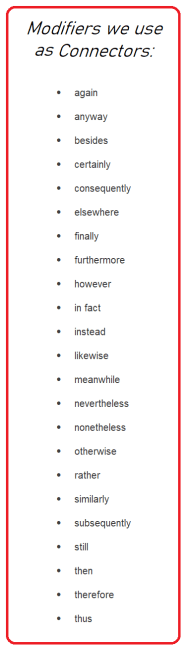
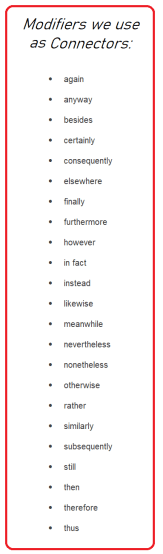
How we use them is part of our style. Modifiers change, clarify, qualify, or sometimes limit a particular word in a sentence to add emphasis, explanation, or detail. We also use them as conjunctions to connect thoughts: “otherwise,” “then,” and “besides.”
Descriptors are adverbs and adjectives ending in “ly.” They are helper nouns or verbs, words that help describe other words. Some descriptors are necessary. However, they are easy to overuse and are sometimes reviled by writing groups on a mission.
When I begin revising a first draft, I do a global search for the letters “ly.” A list will pop up in my left margin. My manuscript will become a mass of yellow highlighted words.
I admit it takes time and patience to look at each instance to see how they fit into that context. If a word or phrase weakens the narrative, I change or remove it. If that descriptor is the only word that works, I leave it. Ninety percent of “ly” words get removed.
Quantifiers are abstract nouns or noun phrases. They’re used to convey either a vague impression or a nebulous quantity, such as: very, a great deal of, a good deal of, a lot, many, much. The important word there is abstract, which shows a thought or idea that doesn’t have a physical or concrete existence.
In some instances, we might want to move the reader’s view of a scene or situation out, a “zoom out” so to speak. The brief use of passive phrasing will do that.
 However, quantifiers have a bad reputation because they can quickly become habitual, such as the word very.
When I am laying down the first draft of a story, quantifiers, descriptors, and modifiers fall out of my head and into the keyboard. They are a mental shorthand that tells the story in only a few words, which is essential when we are just trying to get the story down before we lose our train of thought.
They are subconscious signals to our future selves that indicate an idea needs expanding and rewording for impact. They tell us to rewrite that sentence to strengthen it.
Limiting descriptors and quantifiers to conversations makes a stronger narrative. We use these phrases and words in real life, so our characters’ conversations will sound natural. The fact we use them is why they fall into our first drafts. But they weaken the story’s impact if we let them bleed over into the narrative.
 Our narrative voice comes across in our choice of hard or soft words and where we habitually position verbs in a sentence. Where we automatically place the words in the sentence is a recognizable fingerprint.
Sometimes I read something, and despite how well it is constructed and written, it doesn’t ring my bells. Maybe I’m not attracted to the author’s style or voice.
That doesn’t mean I think the work is awful. It only means I wasn’t the reader it was written for.
Credits and Attributions:
[1] Quote from: the Maltese Falcon by Dashiell Hammett, © 1930, published by Alfred A. Knopf. Fair Use.
Illustration, Original Cover of The Maltese Falcon by Dashiell Hammett, © 1930, published by Alfred A. Knopf. Public Domain.
[2] Quote from Stardust by Neil Gaiman and illustrated by Charles Vess, © 1999, published by DC Comics. Fair Use.
Illustration: Original Cover of Stardust by Neil Gaiman and illustrated by Charles Vess, © 1999, published by DC Comics. Fair Use.

 Description: Best Nature Picture of the Day, by Guruspsingh
 The final aspect of narrative voice or style arises from our deeply held beliefs and attitudes. We may or may not consciously intend to do it, but our convictions emerge in our writing, shaping character and plot arcs.
 Whether or not we are aware of it, our societal and religious beliefs emerge in our writings. Subliminal fears of climate change, worry about a world on the edge of economic collapse, and our hopes for a better society come out in our plot arcs and world-building. How they appear may have nothing to do with real life, but they add color to our worlds.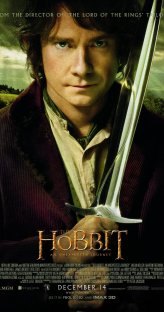

 Why do I say such a terrible thing? It’s true. All stories are derived from a few basic plots, and we have only so many words in the English language with which to tell them.
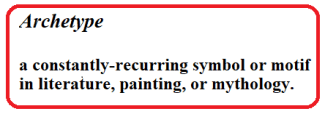 Overcoming the monster
 For that reason, I have the
  Noisy
Noisy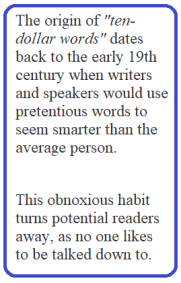 My Texan editor refers to those convoluted morsels of madness as “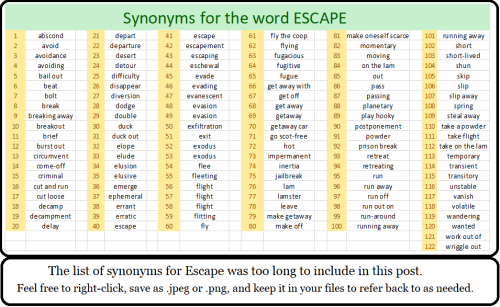
 Today’s post focuses on word choice. What do you want to convey with your prose? This is where the choice and placement of words come into play. Active prose is constructed of nouns followed by verbs or verbs followed by nouns.
 The second draft revisions are where I do the real writing. It involves finetuning the plot arc, character arcs, and most importantly, adjusting phrasing.
 Some types of narratives should feel highly charged and action-packed. Most of your sentences should be constructed with the verbs forward if you write in genres such as sci-fi, political thrillers, and crime thrillers.
 What clues should you look for when trying to see why someone says you are too wordy?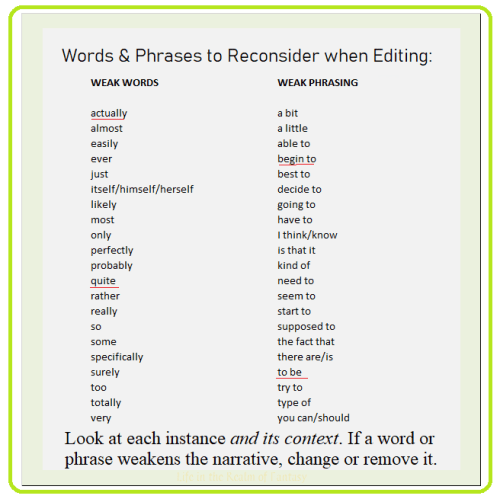
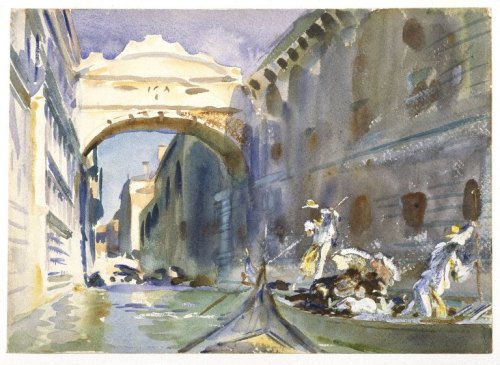 Artist: John Singer Sargent (1856–1925)
 In
In 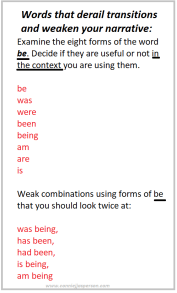 If we write a sentence that says a character is hot and thirsty, we leave nothing to the reader’s imagination. However, when we change the tense, we are often inspired to rephrase a thought.
 Other authors manipulate time. They may start with a chapter of action and commentary set in the past. The experiences shown in the prologue show the reason for present day events and actions that are yet to unfold.
 I’ve read some excellent narratives where the author uses the flashback to ratchet up the suspense in a danger scene. An example could be a character trapped in a small space while a killer searches for her. She remembers being a small child during the war and being hidden in a cupboard by her father when enemy soldiers arrived. Through the keyhole, she witnesses the slaughter of her family.
 Narrative time and calendar time are separate entities. Point of view and narrative time work together.
 Some stories work best with a first-person point of view, while others are too large and require an omniscient narrator.
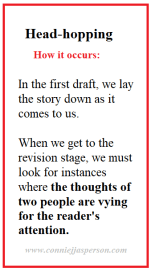 Head-hopping occurs when an author switches point-of-view characters within a single scene. It sometimes happens when using a third-person omniscient narrative because each character’s thoughts are open to the author.
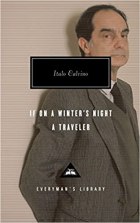 One example of a bestseller written in second person POV is
  Photograph: Tanguar Haor by Abdul Momin


 Life in the Realm of Fantasy