
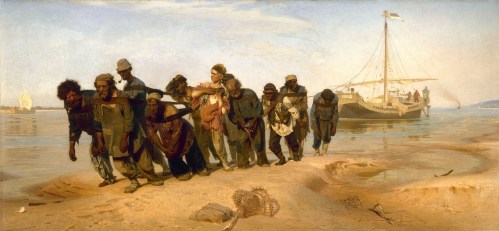
 Barge Haulers on the Volga by Ilya Repin (1844–1930)
- Date: 1870
- Medium: oil on canvas
- Dimensions: Height: 131.5 cm (51.7 ″); Width: 281 cm (110.6 ″)
- Current location: Ж-4056 (Russian Museum)
- Inscriptions: Signature and date: И. Репин / 1870-73
What I love about this painting:
A burlak was a person who hauled barges and other vessels upstream from the 17th to 20th centuries in the Russian Empire. Most burlaks were landless or poor peasants.
These men are shown working, painted with brutal truth. They are beyond exhausted. Their skin is darkened and weathered from years of work in the unremitting sun, except for the young man in the middle. One day he will be like the older men, hardened to the misery and enduring his lot in life.
Each face is filled with emotion, with a story of their own. Who knows what tragedies brought them to agree to this terrible existence, this seasonal slavery of physically towing boats upriver?
For the women and men who towed the barges, winter was even worse, because once the river froze over these burlaki were unemployed. Their life was a constant circle of starvation and hellish labor under the harshest conditions.
This post first appeared in November of 2019. Each time I view this painting, I am moved by the unwritten stories, the tragedies that led these people to the life of a burlak, and the hardship shown so clearly here.
About this Painting (via Wikipedia)
Barge Haulers on the Volga or Burlaki (Russian: Burlaki na Volge, Бурлаки на Волге) is an 1870–73 oil-on-canvas painting by artist Ilya Repin. It depicts 11 men physically dragging a barge on the banks of the Volga River. They are at the point of collapse from exhaustion, oppressed by heavy, hot weather.[1][2]
The work is a condemnation of profit from inhumane labor.[3] Although they are presented as stoical and accepting, the men are defeated; only one stands out: in the center of both the row and canvas, a brightly colored youth fights against his leather binds and takes on a heroic pose.
Repin conceived the painting during his travels through Russia as a young man and depicts actual characters he encountered. It drew international praise for its realistic portrayal of the hardships of working men, and launched his career.[4] Soon after its completion, the painting was purchased by Grand Duke Vladimir Alexandrovich and exhibited widely throughout Europe as a landmark of Russian realist painting. Barge Haulers on the Volga has been described as “perhaps the most famous painting of the Peredvizhniki movement [for]….its unflinching portrayal of backbreaking labor”.[5]
The characters are based on actual people Repin came to know while preparing for the work. He had had difficulty finding subjects to pose for him, even for a fee, because of a folklorish belief that a subject’s soul would leave his possession once his image was put down on paper.[8] The subjects include a former soldier, a former priest, and a painter.[9] Although he depicted eleven men, women also performed the work and there were normally many more people in a barge-hauling gang; Repin selected these figures as representative of a broad swathe of the working classes of Russian society. That some had once held relatively high social positions dismayed the young artist, who had initially planned to produce a far more superficial work contrasting exuberant day-trippers (which he himself had been) with the careworn burlaks. Repin found a particular empathy with Kanin, the defrocked priest, who is portrayed as the lead hauler and looks outwards towards the viewer.[10] The artist wrote,
“There was something eastern about it, the face of a Scyth…and what eyes! What depth of vision!…And his brow, so large and wise…He seemed to me a colossal mystery, and for that reason I loved him. Kanin, with a rag around his head, his head in patches made by himself and then worn out, appeared none the less as a man of dignity; he was like a saint.”[11]
Credits and Attributions:
Wikipedia contributors, “Barge Haulers on the Volga,” Wikipedia, The Free Encyclopedia, https://en.wikipedia.org/w/index.php?title=Barge_Haulers_on_the_Volga&oldid=918607811 (accessed November 1, 2019).
 The events set in this world are linked by family, warped by lies and secrets kept across three generations. Themes of hubris, truth vs. falsehood, heroism, and coming of age power this truly epic fantasy series.
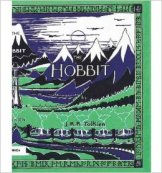 , demons, magic or sorcery, and multilayered quests. They often have constructed languages, coming-of-age themes, and multivolume narratives.
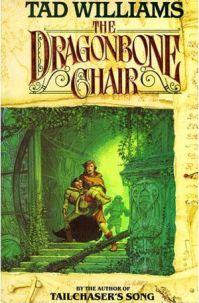 Binabik‘s people, the Qanuc, are called trolls by the humans and Sithi. They are a cross between Tolkien’s dwarves and hobbits, made wiser and less concerned about gold. The Hunën are brutish giants who serve the Norns and are often at war with the Qanuc.
 In that case, it’s time to widen your reading horizons and try reading something in a different subgenre. Maybe you’d like a space opera or a portal fantasy. You’ll never know what you are missing if you don’t read outside your favorite genre.
 Tad Williams’s
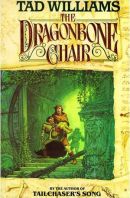 When the story opens with the first novel,
 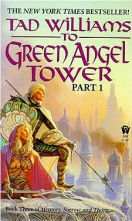 By the end of the third book,
  Fate vs. free will
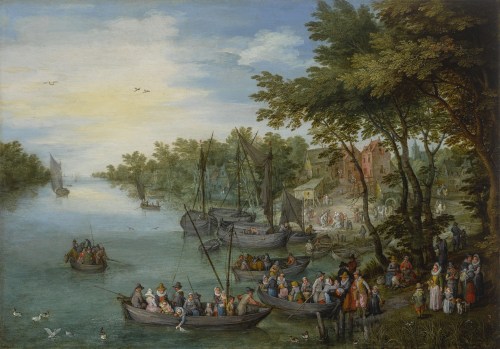 Artist: Jan Brueghel the Elder (1568–1625)
 Now, we probably wouldn’t have plumped for such a fancy getaway, but my husband has a conference there, and what with him not driving right now, I am along as chauffeur.
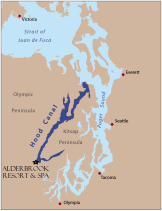 It’s a fjord, not a canal, so why they named it that, I don’t know. But there it is, one more thing our pioneering ancestors have to answer for.
 The man and the baby: We arrived on Sunday afternoon. We sat at a romantic table for two for our first dinner, overlooking the beach. It’s the Pacific Northwest, so people come dressed for January in June (or June-uary as June is known here). The lawn chairs were full of guests lounging in their summer finery of Gore-Tex and wool, ignoring the intermittent misty rain and drinking steaming coffees. Off to one side was a young man sitting alone. Beside him was the fanciest baby pram I’ve ever seen.
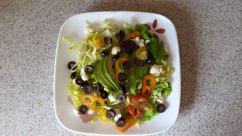
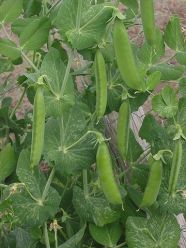 On Monday, I decided to be adventurous. I thought I would try the spring salad with fresh peas, pea vines, fennel, watermelon radishes, and a champagne vinaigrette. I had never thought of eating pea vines, but I’m not afraid to try new things.
 Today we are on our way home, where we will indulge in budget-friendly home-cooked meals and other economies for a few weeks to make up for this splurge.
 We who write because we love words spend a great deal of time framing what our words say. We choose some words above others because they say what we mean more precisely, or they color our prose with the right emotion.
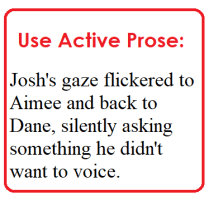 Two: Placement of verbs in the sentence can strengthen or weaken it.
 Four: Contrast—In literature, we use contrast to describe the difference(s) between two or more things in one sentence. The blue sun burned like fire, but the ever-present wind chilled me.
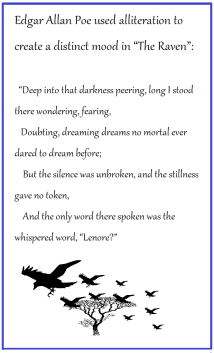 Seven: Alliteration is the occurrence of the same letter (or sound) at the beginning of successive words, such as the familiar tongue-twister: Peter Piper picked a peck of pickled peppers. Alliteration lends a poetic feeling to passages and enhances the atmosphere of a given scene without creating wordiness.
 Active phrasing generates emotion. Sometimes, using similes, repetition, and alliteration in subtle applications enhances the worldbuilding without beating your reader over the head.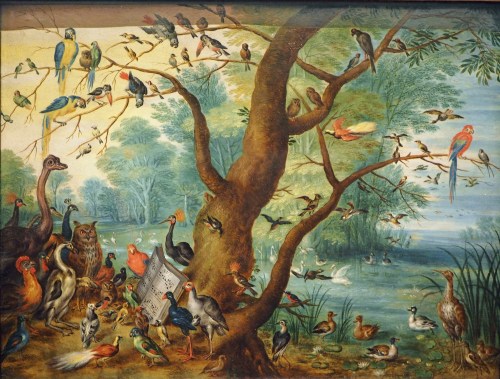
 Readers connect with these stories across generations and across the centuries because the fundamental concerns of human life aren’t unique to one society, one technological era, or one point in time.
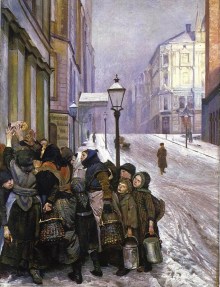 Acquiring food becomes their first priority. Having a surplus of food becomes a reason to celebrate. To go without adequate food for any length of time changes a person and makes one determined to never go hungry again.
 Love and loss, safety and danger, loyalty and betrayal—the eternal themes of tragedy and resolution. Hardship contrasted against ease provides the story with texture, turning a wall of “bland” into something worth reading.
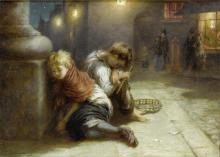 We writers must make our words count. We have to show the comfort zone in the moments leading up to the disaster, not too much, but just enough to show what will soon be lost.
 Scenes of conflict are crucial to the advancement of the story. They should be inserted into the novel as if one were staging a pivotal scene in a film.
 If you have no experience with combat or fighting, you don’t understand the limits of a normal athlete’s physical abilities. So, you must do the research. Think of how the human body works in reality. If your character knees a foe in the jaw, how is it possible?
 If you don’t show how such a strange hit could happen, the reader will say, “That’s impossible.” It’s a risky choice though, because going into that kind of detail bores the heck out of our readers. Our readers mind will fill in the details and if it’s confusing, they may stop reading.
 Don’t do this for every incident. After they are armed and armored as much as they are going to be the first time, just have them meet the enemy, skirmish, and continue on. The reader already knows what armor and weapons they had.
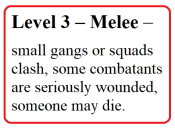
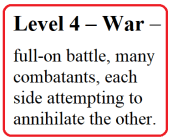 In real life, conflict happens on a sliding scale. It begins with a disagreement and escalates to an all-out war. While my outline will have a note alerting me to the level of conflict that must happen, I choreograph my fights to reflect that sliding level of intensity.
 Person-to-person combat doesn’t stretch for hours because no matter how well trained a fighter is, no one has that kind of strength.
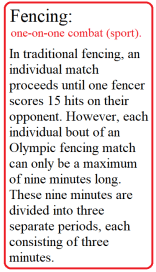 A typical
  I try to show this discreetly by sitting back and visualizing the scene after the choreography is laid on paper. I replay it in my mind as if I were a witness to the events and look for each combatant’s facial expressions and reactions.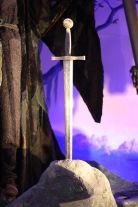
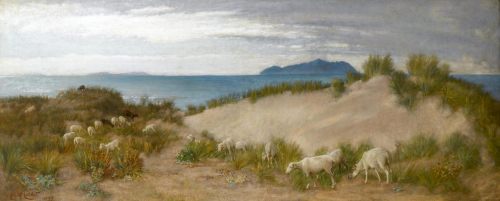 Title: Sheep Grazing in the Dunes, on an Italian Coast


