
Now that we are well into the new year, many of us are finally getting back to work on novels we began for NaNoWriMo or work we had on hold for the holidays.
 This is an excellent time to look at the freedom we give our characters to act and react within the story. I have mentioned many times that I am a plotter. However, when I am in the process of writing the first draft of a novel, the characters sometimes take over. The plot veers far from what I had intended when I began writing it.
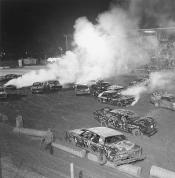 This happens because my work is character-driven, and sometimes, they’re like demolition derby drivers.
When a significant change happens, I have to adjust events to match the timeline. Adjusting my outlines is a simple process because I create them in Excel. I can delete and move events as needed to ensure my story arc doesn’t flatten.
Other people use whiteboards and sticky notes, and still others use Scrivener—a program my style of thinking doesn’t mesh with.
I tried Scrivener but grew too frustrated, so I returned to my good old Excel spreadsheet program. Google Sheets works well too, and it’s free.
Usually, the ultimate ending never changes no matter what the characters do. However, the path to that place can go quite far afield from what was initially intended.
I try to keep the plot moving so that it flows naturally. The characters must still act and speak individually, the way that I envision them. I want their uniqueness to remain central to the story, even if their motives and actions evolve from what I first planned.
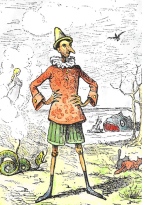 This is called giving your characters “agency.” Agency is an integral aspect of the craft of writing. It means that you allow your characters to make decisions that don’t necessarily follow the original plot outline. This gives them a chance to become real, the way Pinocchio wanted to be a real boy and not a puppet.
Many times, the way to avoid predictability in a plot is to introduce a sense of danger early, a response to an unavoidable, looming threat. Every character has a different personality and should respond to each event differently. The freedom you allow the protagonist and antagonist to steer the events is crucial for them to emerge as real to the reader.
In literary terms, “agency” is the ability of a character to surprise the author, and therefore, the reader. If you plan their every response when you are writing them, it can feel canned and boring. The most exciting moments I’ve had as an author are when my characters surprise me and take over the story.
Sometimes my characters make their own choices. Other times, they go along as I, their creator, have planned for them. Ultimately, they do what I intend for them, but they always do it their own way and with their own style.
Plotting, for me, means setting out an arc of events for a story that I hope to write. I do this in list form in a new Excel workbook. My outline workbook will contain several spreadsheets. On page one, I create the characters and give them personality traits. On page two, I list the order of events that I think will form the arc of the story.
When my characters begin evolving, new events are added. My plot outline must continually evolve with them so that I don’t lose control of the arc and go off on a side quest to nowhere. The evolution of the outline happens once I begin writing because that is when I get to really know my characters. Only when the writing commences can they make choices and say things that surprise me.
That is when they have agency.
When I first consider writing a new novel, I get the idea out of my head by creating a plot outline. For me, introducing the threat and warning signs of inescapable danger early in the story arc limits my habit of writing too much backstory. Their history can happen off-screen, in a file marked Backstory. That way, I get to know my characters, but no one is going about “life as normal” in the narrative. Readers aren’t looking for ordinary—they have enough of that in real life.
Each character will be left with several consequential choices to make in every situation that arises along the timeline. I consider the personality and allow the characters’ reactions to fit who they are.
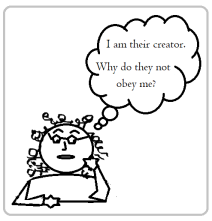 No matter how they respond, they will be placed in situations where they have no choice but to go forward. After all, I am their creator, the deity of their universe. I have an outline that predestines them to specific fates, and nothing they can do will stop that train.
The consequences my characters face for their choices affect the atmosphere and mood of the story as it emerges. Think about it—if there are no consequences for bad decisions a character might make, everyone goes home unscathed. So why bother writing at all?
So, while I am an outliner and plotter, I also fly-by-the-seat-of-my-pants to a certain extent. I love it when my characters take over and drive the story.
Credits and Attributions:
Lowenburg at the English Wikipedia, CC BY-SA 3.0 <http://creativecommons.org/licenses/by-sa/3.0/>, via Wikimedia Commons
Pinocchio by Enrico Mazzanti (1852-1910), Public domain, via Wikimedia Commons
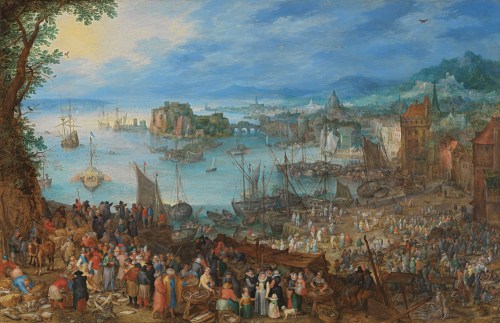
 On November 1st, when we began setting the first words on the blank page, our minds formed images, scenes we attempted to describe. In his book, The Language Instinct,
 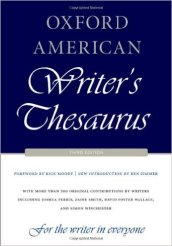 Once you find them, you need to go to the thesaurus to find alternatives that better express your intent.
 If you don’t have it already, a book you might want to invest in is
  Each chapter is comprised of one or more scenes. These scenes have an arc to them: action and reaction. These arcs of action and reaction begin at point A and end at point B. Each launching point will land on a slightly higher point of the story arc.
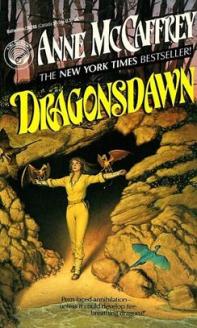 he scenes we are looking at today have two distinct environments to frame them: first the planet and then the abandoned colony ship, Yokohama. These scenes are filled with emotion, high stakes, and rising dread for the sure and inevitable tragedy that we hope will be averted. Not all the drama is in Sallah Telgar’s direct interaction with Avril Bitra. The environment heightens the drama, the sense of impending doom.
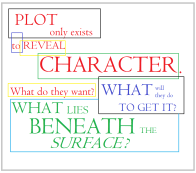 We see Avril taunting Sallah for her matronly body and move out again to see Avril tying a cord to Sallah’s crushed foot and forcing her to make the navigational calculations for Avril’s escape. We move close up and hear the interaction, Sallah pretending to do as Avril asks but really setting her enemy’s doom in action. The camera moves to the wide view again, and we hear the interaction with her frantic husband on the ground. We are caught up in her determination to seize this only chance, using her dying breaths to get the information about the thread spores to the scientists on the ground.
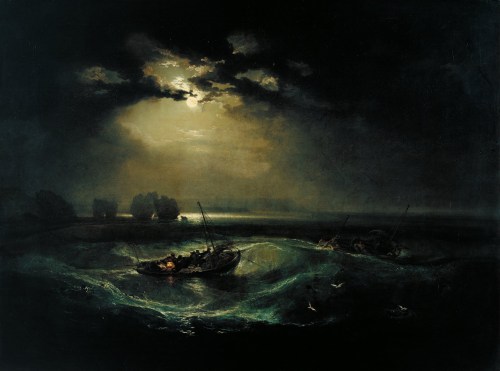 Artist:
  But more importantly, even if you are traditionally published, you pay for the books you sell at shows.


 She also wrote the brilliant, hilarious standalone novel,
  About Ellen King Rice: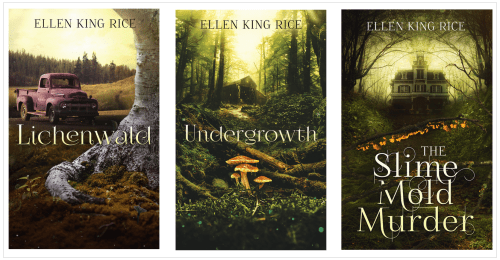
 Artist: Anna Ancher (1859–1935)
 In an instant, an entire manuscript is gone, wiping away hundreds of hours of work on their labor of love.
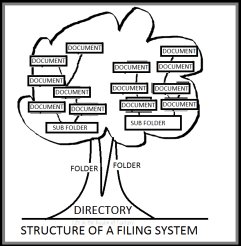
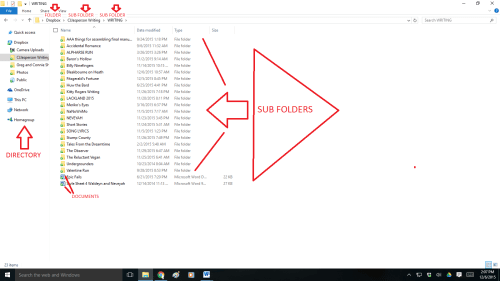 A filing system is quite simple, rather like a tree from the ground up. For most documents, my system is a standard office-type system that consists of:
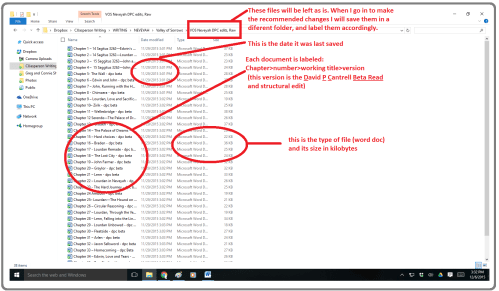 Name your files consistently and save each version in a separate folder within the master folder. Below is the master file for Valley of Sorrows.
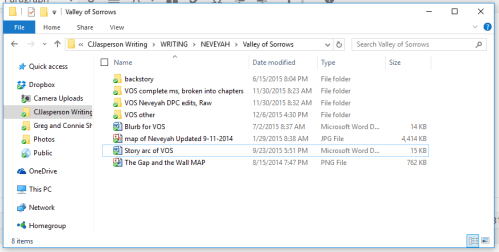 You may create many versions of your manuscript. YOU MUST manage your versions with meticulous care, or you will lose files, have to rewrite sections you just wrote, and which were brilliant, or any number of horrible, irritating situations.
 It’s a platform where you can advertise your books and discuss your interests, and most importantly, talk about what you are writing.
 Writing blogposts requires me to become a thinking author, as well as a pantser. I can write using the “stream-of-consciousness” method or from an outline of whatever interests me at the time. I do the research, and the post begins to write itself.
 I love to see what questions people might want to have answered. Sometimes topics crop up at my writing group that no one has an answer to, and then I get to do a little research—my favorite thing. Other times I find interesting questions in the writers’ forums that I frequent.
 If you feel that it’s too much work, consider how you update your other social media. Try posting a haiku, a tweet-length post, or an Instagram-style post once or twice a week. Any social media platform post can be converted to serve as a blog post.


 Life in the Realm of Fantasy
