
Authors just starting out, either Indie or traditionally published, rarely earn enough royalties to support their families. Regardless of the path you choose, if your spouse makes enough to support you in your early days, you can devote more time to advancing your career.
 But not every author has that option.
Before you embark on either path, consider this: publishers, large and small, don’t waste budgets promoting work by unknown authors the way they do the few who have risen to the ranks of their guaranteed bestseller lists.
You will do the work of getting your name out there regardless of whether you choose the traditional route or not.
So, what are the perks of going traditional if you’re an unknown? Why go to the trouble of wooing an agent and trying to court a publisher? Even today, an air of ‘respectability’ clings to those who are traditionally published.
The traditional publishing industry does offer incentives to those who get their foot in the door. Once you are in their flock, you have an editor who works with you personally. Most of the time, you can forge a good working relationship with this editor.
Conversely, Indies must find an independent editor and pay them out of their own pocket.
While the traditional publisher may not treat a new author the way they do their highest sellers, they may dedicate a small budget to marketing your work with newspaper ads, or swag posters for bookstores to place as decoration. That small amount will be more money than you might be able to pay as an Indie.
Traditional publishers have contracts with markets like Target, Walmart, Costco, airports, and grocery store chains. That is a huge thing, assuming your publisher considers your work worthy of such a commitment on their part.
However, your first book most likely won’t see the inside of a Walmart right away. The publisher’s confidence must be earned. You can expect to find your work on the slow track for a while as the publisher tests the water and sees how well your work sells through Amazon and Barnes & Noble.
These are all valid reasons for attempting to go the traditional route.
However, there are equally valid reasons for going Indie. Your book will be published. If you seek a book contract, you must pass a gauntlet of gatekeepers: literary agents, acquisition editors, editorial committees, and publishing-house CEOs.
These people must answer to the international conglomerates that actually own most American publishing companies. This is why you are most likely to be stopped by a rejection letter.
It’s not the quality of your work. It’s the publishers’ perception of what the reading market will purchase and what it means to the accountants, who in turn must answer to their shareholders.
As an Indie, you may not be a bestseller, but you’ll make more money on what you do sell.
 In most standard book contracts, royalty terms for authors are terrible, and this is especially true for eBook sales. Most eBooks are sold through online retailers like Amazon. If you’re a traditionally published author and your publisher priced your eBook at $9.99, this is how the Amazon numbers break out. No matter what you think of Amazon, it is still the Big Fish in the Publishing and Bookselling Pond:
- Amazon takes 30% of the list price, leaving about $7.00 for the publisher, agent, and you to split.
- The publisher will keep 75% of that $7.00, or $5.25.
- The publisher will pay you 25% of that $7.00—just $1.75.
- You then must pay your agent her 15% commission—or 26 cents.
- You net just $1.49 on each $9.99 eBook sale. This is assuming your publisher honestly reports your sales and royalties, and in my personal experience, a few small publishers do not.
Unfortunately, traditional publishers usually charge far more than $9.99 for eBooks, charging more than they do for paperbacks in their effort to keep eBook sales down and drive paper sales.
If you self-publish your eBook at that same price, for each sale of your $9.99 eBook, Amazon takes its 30%, leaving you $7.00. I don’t recommend such a high eBook price, but at $4.99 or even $2.99, you stand to sell books and make a decent profit.
You’ll receive royalties sooner. When a publisher accepts your book, he offers you an advance against sales. These are often paid in installments stretched out over long periods and are tied directly to how well or how poorly your book is doing in real market time. Publishers report sales and pay royalties slowly, as royalty statements are usually issued semiannually. Your royalty checks arrive later, so you can’t rely on this income until you have become an established author in their world.
Conversely, most eBook distributors like Draft2Digital, Barnes & Noble, and print-on-demand services such as Amazon KDP, report your sales virtually. Best of all, they pay your royalties monthly, with just a sixty-day lag from the day sales began.
Finally, and from my point of view, most importantly: You retain all rights to your work.
Legacy book contracts are a terrible danger zone for the author. The sheer complexity of negotiating a contract can be confusing and intimidating. I recommend you hire a lawyer specializing in literary contracts or risk unwittingly signing away secondary and subsidiary rights to your work forever.
Please, read this article, A Publishing Contract Should Not Be Forever, published on the Authors Guild website on July 28, 2015. It is an eye-opening look at the industry and its practices.
Now we arrive at marketing. As I said before, you must do the work of getting your name out there regardless of whether you choose the traditional route or not. You must still work your day job to feed your family.
Being an indie author or being published by a small press means you are on your own as far as getting the word out about your books. Even some traditionally published authors find that if they want their books seen at a convention, they must pay for the table, find their own hotel accommodations, and pay their own way there.
You pay upfront for your book stocks if you are an indie.
If you are traditionally published, the costs of your stock are deducted from future royalties. Publishing houses are not charities, so you will pay for stocking and restocking your inventory either way you choose.
If you choose the indie path, you pay for editing, beta reading, and proofreading. You will also need a graphic designer for book covers and should seek professional formatting services to create the files for your paperback book.
 However, to be considered for a traditional contract, you should hire an editor, beta reader, and proofreader to ensure the manuscript you submit to an agent or editor demonstrates your ability to turn out a good, professional product.
Either way, it’s a business, and you must factor these costs into your budget.
Both paths are reasonable in today’s market. There are positive rationales for choosing either direction, as well as negatives. You will have to work hard no matter which path you choose.
The publishing path is a critical choice for an author to make and is one we shouldn’t make lightly. A decision that affects your career as strongly as this deserves deep consideration of the many pros and cons.
 Regardless of your publishing path, you must budget for certain things. You can’t expect your royalties to pay for them early in your career – and many award-winning authors must still work at their day jobs to pay their bills.
 Conferences are an extension of the self-education process. I have discovered so much about the craft of writing, the genres I write in, and the publishing industry as a whole—things I could only learn from other authors. I gained an extended professional network by joining

 Sometimes I am invited to participate in panels or offer a workshop, and I can share my experiences with others. Either way, I learn things. In September, I will be on a panel with
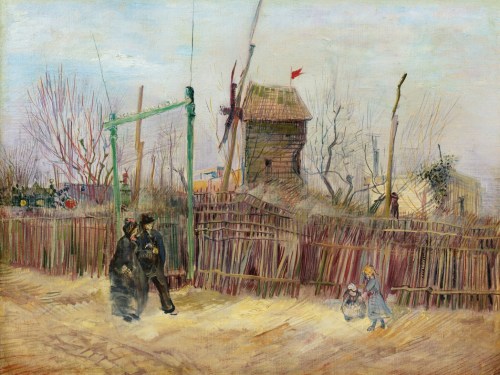 Artist: Vincent van Gogh (1853–1890)
 The plan or design is submitted to the client, who likes it. A mockup of the first iteration is submitted to the client, who still likes it, but … their needs have changed a little, and a new adjustment must be incorporated.
 Books are one area where project creep is not only appreciated but encouraged. Stories are particularly prone to this continual expansion of the original ideas. Short stories grow into novellas and then into novels, becoming a series of books.
 The first aspect of this is to Identify your Project Goals – create a rudimentary outline with names, who they are in relation to the protagonist, and decide who is telling the story. Remember, your story is your invention. Some inventions are in development for years before they get to market. Others are complete and ready to market in a relatively short time. Regardless of your production timeline, this is where project management skills really come into play.
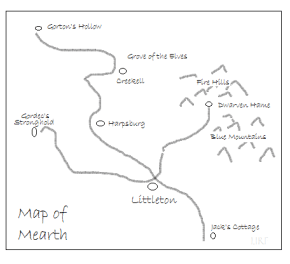 Your map doesn’t have to be fancy – all you need are some lines and scribbles telling you all the essential things, like which direction is north and what certain towns are named. Use a pencil, to easily update your map if something changes during revisions.
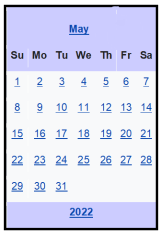 Time can get a little mushy when we are winging it through a manuscript. A calendar gives us a realistic view of how long it takes to travel from point A to point B, or how much time it will take to complete a task.
 Time interests me because I mostly write fantasy, although I write contemporary short fiction and poetry. Fantasy, and all speculative fiction, relies heavily on worldbuilding, and managing time is a facet of that skill.
 HERE is where I confess my great regret: in 2008, a lunar calendar seemed like a good thing while creating my first world.
 In an even worse bout of predictability, I went with the names we currently use when I named the days, only I twisted them a bit and gave them the actual Norse god’s name. (The gods and goddesses of Neveyah are not Norse.)
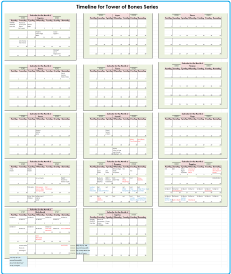
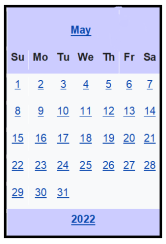 I LEARNED from my mistakes – the timeline for the Billy’s Revenge 3-book series, Huw the Bard, Billy Ninefingers, and Julian Lackland, uses the familiar calendar we use today.
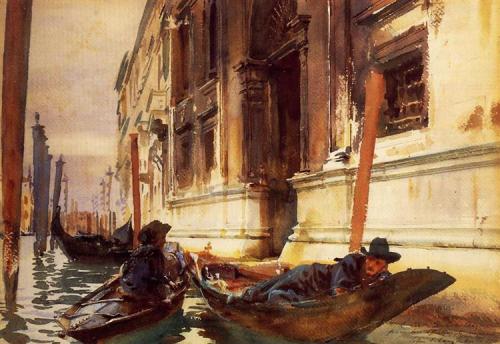
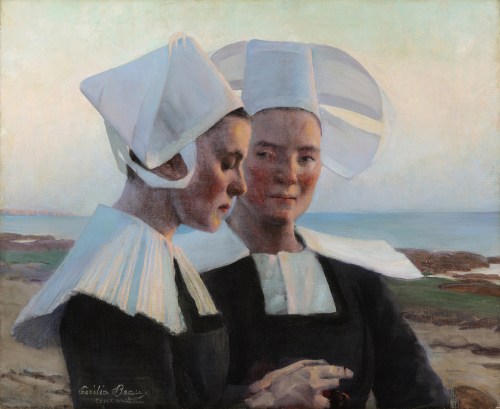 Twilight Confidences by Cecilia Beaux (1855–1942)
 Thus, it makes sense to consider whether your story is complex enough to hold up well across a series.
 If you are done with your first draft and are just now realizing your novel could be the beginning of a saga, you should consider making notes as to what the future holds for your crew beyond the end. Otherwise, you may find yourself writing a continuation of book one, but with no goal, no purpose.
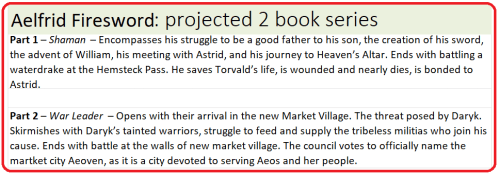 So, for a saga you might want to draw up an overall story arc for the entire series. For a standalone book featuring a recurring character, you likely won’t need to have an all-encompassing projected arc.
 Think about it – the universe contains all we can measure and know, all of space and time and their contents, including planets, stars, galaxies, and all forms of matter and energy. It likes balls and spirals and has a structure that repeats itself. This is reflected in the shape and behavior of the smallest particles to the largest quasars.
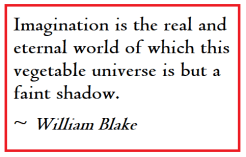
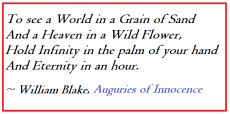 First off, no matter our conscious thoughts regarding the universe and God, writers don’t exist in reality. We exist in what we think reality is, and collectively, we create it as we go along, for good or ill.
 But if you make a map of what you can see, your own
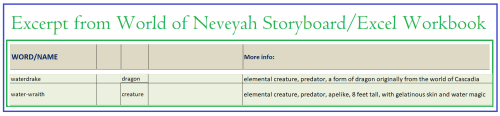
 As I wrote, the outline for that first book took its shape. The written universe is in constant flux, and the storyboard records the changes and keeps the fabric of time from warping.
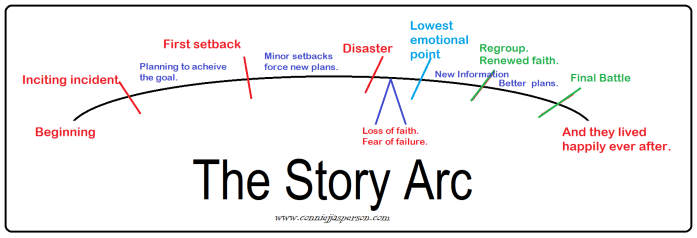 Once I have decided the proposed length, I know where the turning points are and what should happen at each. The outline ensures an arc to both the overall story and the characters’ personal growth.
 In other words, something we can’t see or measure is out there, shaping our known universe. For lack of a better term, scientists refer to it as “dark matter” and “dark energy.”
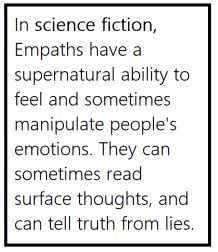 Unless your story is set in a school (such as the
 In real life, if a person had the kind of power that our fictional empaths wield, we would hope they were noble, compassionate, and above all, respectful of other people’s wish for privacy. One would want them to be circumspect and never rummage in people’s minds uninvited.
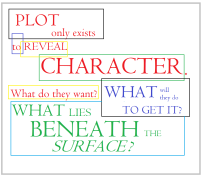 What does healing cost the healer? Does it exhaust them? Does some of the healing magic come from the patient? Do they need to sleep afterward?


 Life in the Realm of Fantasy


