I am a supporter of NaNoWriMo (National Novel Writing Month) as a way to get people writing. Some people can’t resist a challenge, and NaNoWriMo is definitely that.
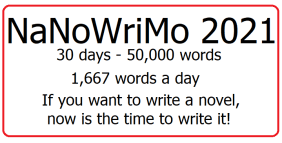
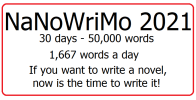 NaNoWriMo is a personal challenge, a month that is solely dedicated to the act of writing a novel. It is a speed-run with daily goals to meet.
Day 1 – write 1,667 words or more.
Days 2 through 30 – rinse and repeat.
If you write 50,000 words and have your word count validated through the national website, you ‘win.’ Reporting your word count has been an honor system for the last two years, so you never have to upload your manuscript.
If you do cross the 50,000-word line, there are no huge prizes or great amounts of acclaim waiting for you. You will, however, get a PDF winner’s certificate that you can fill out and print to hang on your wall or keep in your digital files as I do.
Starting on day one, you will collect badges, little visible rewards, for your daily achievements. One badge that is difficult to get is the “update your progress every day” badge. I usually have my “winners’ certificate” by the day they become available, but I continue writing every day through the 30th and update my word count daily.
We all know that a novel of only 50,000 words is a good length for YA or romance, but for epic fantasy or literary fiction it’s only half a novel. Still, a dedicated author can get the basic structure and story-line of a novel down in those thirty days simply by sitting down for an hour or two each day and writing a minimum of 1667 words per day.
With a simple outline and a few notes to keep you on track, that isn’t too hard. Most authors who grew up with computers (unlike me) can double or triple that.
 As always, there is a downside to this intense month of stream-of-consciousness writing. Just because you can sit in front of a computer and spew words does not mean you can write a novel that others want to read.
And unfortunately, for the first time author, the desire to publish that book without making revisions, and without professional editing is almost impossible to quell. Every year in February and March, many cheap or free eBooks will emerge testifying to that fundamental truth.
So why do I participate every year? I love working with the writers in our area, and hope to see the rare, committed novelist, the one who stays writing all year long. That person will join our region’s Discord channel and be a part of the posse.
More people write during November than you would think. In some years, about half the NaNo Writers in my regional area are journaling, writing family histories, or even writing their thesis.
Every year, my co-Municipal Liaison and I see a wave of new people who fill the vacancy left behind by the people who either lost interest in the first week or couldn’t find the time to get more than ten or twenty thousand words during previous years.
Those people sometimes feel like failures, but they aren’t.
Ten thousand words is two or three short stories. Twenty thousand is a novella. Writing a story of any length is an accomplishment, and those authors should be proud. They will write more as time goes on.
However, for a very few people, participating in NaNoWriMo will give them the confidence to admit that an author lives inside their heart, demanding to get out. In their case, NaNoWriMo is about writing and completing a novel they had wanted to write for years, something that had been in the back of their minds for all their lives.
These authors will take the time and make an effort to learn writing conventions. Grammarly’s website says writing conventions consist of four elements:
- spelling
- grammar
- punctuation
- capitalization
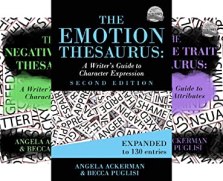 Some new authors seek out books about writing craft and attend seminars. They will join writing groups and develop the skills needed to take a story and make it a novel with a proper beginning, a great middle, and an incredible end.
They will properly polish their work and run it past critique groups before they publish it. They will have it professionally edited.
These are books I will want to read.
And one skill we must develop early on is a thick skin. Nothing hurts worse than to see your work through their unbiased eyes and discover it wasn’t perfect after all. Yes, some people will love and admire what we have created, but other times what we hear back from our readers and editors is not what we wanted to hear.
For most authors success can only be measured in the satisfaction we get out of writing and seeing it published.
If your first novel is picked up by a traditional publisher, they may not put a lot of effort into pushing it, because you are an unknown author. They will test the waters and see what sort of reaction your book gets before they really commit to backing you.
Also, whether you are traditionally published or indie, you must do all the social media footwork yourself. You must get an Instagram account, a twitter account, a website, and so on. You may even have to arrange your own book signing events, just as if you were an indie.
 This is time-consuming, and you will feel as if you need a personal assistant to handle these things. I know several authors who rely on the services of hourly personal assistants to help navigate the rough waters of being their own publicist.
Every year, participating in NaNoWriMo will inspire many discussions about becoming an author. Going full-time or keeping the day job, going indie or aiming for a traditional contract—these are conundrums many new authors will be considering after they have finished the chaotic month of NaNoWriMo.
However, if you don’t sit down and write that novel, you won’t have to worry about it.
November is a good time to do just that.
#NANOPREP SERIES TO DATE:
#NaNoPrep: part 1: What’s the Story? (the storyboard)
#NaNoPrep, Setting: Creating the Big Picture
#NaNoPrep, Building Characters
#NaNoPrep, More Character Building
#NaNoPrep, Creating Societies
#NaNoPrep, Designing Science, Magic, and the Paranormal
#NaNoPrep, Terrain and Geography
#NaNoPrep, Connections and Interconnections
#NaNoPrep, Construction and Deconstruction
#NaNoPrep, The Story Arc Part 1
#NaNoPrep, The Story Arc Part 2
#NaNoPrep, The Story Arc part 3, the End
#NaNoPrep: Signing up and Getting Started
#NaNoPrep: Guernica, Inspiration, and Finding Writing Prompts
#NaNoPrep: Time Management
#NaNoPrep: Countdown to November, Subject and Theme
This post: #NaNoPrep: What to Expect

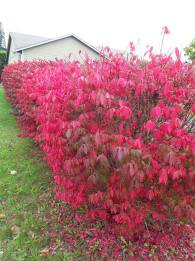
 My euonymus alata compacta, AKA Burning Bush, was glorious this year. That is a non-native shrub, but wow! The hedge really brightened up the yard.
 Where was I? Oh, yes. Today (Wednesday) is the third day of NaNoWriMo2021. I am managing to get all the clerical work for my region done and keep a path cleared through my home. Monitoring the Discord channel for my region has been a bit distracting. However, I still have the time to get a respectable amount of work done on my new book.
 This method involves hopping around in the story arc, but it works for me. I have a master file already with the storyboard in it. Today, I began writing each scene as a short story, labeling the file with a title like FoR_pub_scene_at_Linniston (Fires of Redemption, pub scene at Linniston). The title tells me where this scene will fit in the story arc. Everything will go into the master file in my writing folder and be saved to Dropbox. I’m starting with this one, as it introduces everyone.
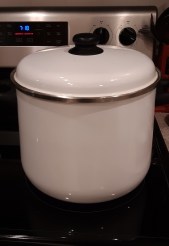 This will be one of the more challenging years for me, as life is throwing roadblocks in my path. A water pipe has broken beneath our master bedroom closet, and two weeks on, we are still waiting for a plumber. In the meantime, we have no hot water, but we do have cold still flowing, so we aren’t hurting too badly. I make hot water with the spaghetti boiler on my stove and feel glad we aren’t hauling it here from the creek.
 That was a week ago. We’ve been waiting for the plumber for two weeks, but a light is on the horizon. Hope looms, and an appointment for tomorrow has finally been confirmed.
 So, what do we need to have in place during the next seven days before the big event?
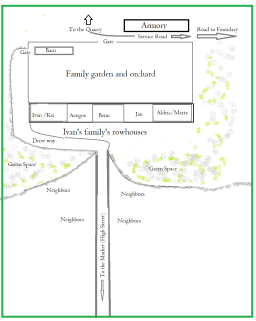 Environment: Ivan and Kai live in Weiland, Tribe Weila’s riverport and mining center. Ivan’s extended family has five rowhouses at the upper end of High Street. It’s a steep but easy walk to the market for his grandfather, who lives next door and watches the children while Ivan and Kai work. I drew a little map for my notes, so I know the layout of where everything is in regard to their home and businesses. It could change, but I have something to start with.
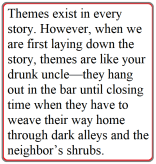 A common theme in fantasy is the juxtaposition of chaos and stability (or order). This subtheme will feature strongly in my novel. Good vs. evil is a
 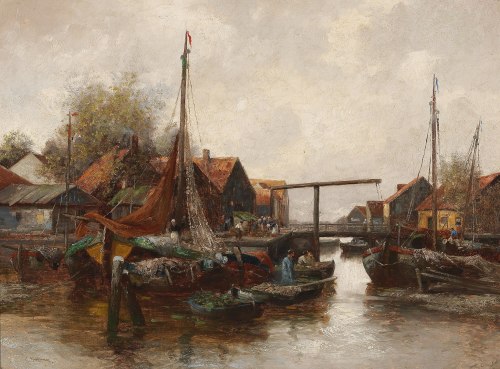 Artist: Adolf Kaufmann (1848–1916)
 Writing is easier once it becomes a daily
  We have this perception that taking time for creativity is selfish, and that will be your biggest hurdle. Trust me, it is not asking too much of your family for you to have some time every day that is sacred and dedicated to writing.
 Write for five minutes here and ten minutes there all day long if that is all you can do. Every word counts toward your finished manuscript. I took my lunch to work and wrote during my lunch half-hour whenever possible. I also wrote on the bus when I didn’t own a car.
 Remember, what you are writing is a rough draft, so your story arc will be bumpy and uneven. It doesn’t have to be perfect, so don’t worry about making it so. The goal of NaNoWriMo is to get that first draft written in thirty days. So, every time you have fifteen minutes to spare, sit down and write as much as you can in that short length of time. Spew your story as fast as you can in those moments before you are pulled away. With six or seven short bursts of writing, you can really rack up the word count.
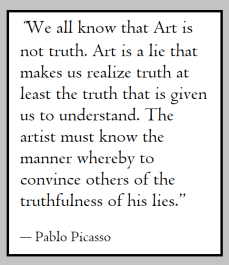 Often the work that is inspired by a visual prompt has nothing to do with the image. But it has everything to do with the nature of storytelling. The ability to explain the world through stories and allegory emerges strongly in some people. Many are naturally able to form and express a story, and others find the subliminal prompting of an image will be the spark that lights their creativity.
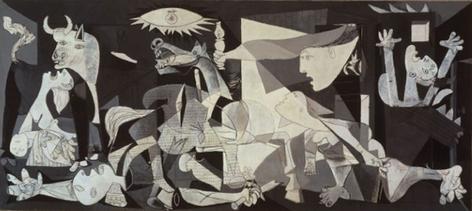 Picasso’s choice to use black and white to tell that story is brilliant. Newsreels of the day were black and white, which influenced his decision. This piece is powerful because of the emotion the artist painted into the image.
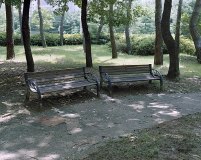 nspiration can be found in the image of an unoccupied park bench in winter. The gray weather, the barren scenery, the loneliness of the empty bench could be the seeds from which a novel grows. Who is that bench waiting for? Who has just left it? Is the story light or dark?
 Artist: Anna Ancher (1859–1935)
 Once there, create a profile. You don’t have to get fancy unless you are bored and uber-creative.
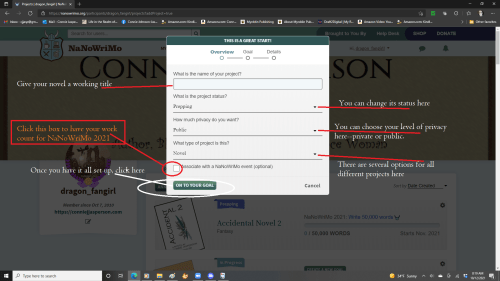 You can play around with your personal page a little to get used to it. I use my NaNoWriMo avatar and name as my Discord name and avatar. This is because I only use Discord for NaNoWriMo and one other large organization of writers. (Next week, we’ll talk about Discord and why NaNoWriMo HQ wants us to use it for word sprints and virtual write-ins.)
 Next, check out the community tabs. If you are in full screen, the tabs will be across the top. If you have the screen minimized, the button for the dropdown menu will be in the upper right corner and will look like the blue/green and black square to the right of this paragraph.
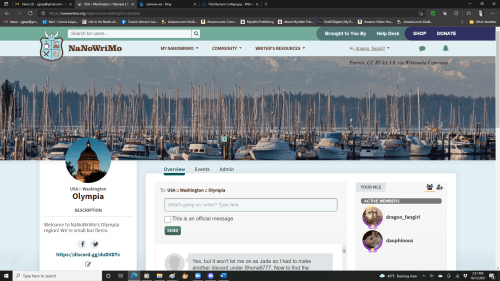 You may find the information you need in one of the many forums listed here.
 Make a master file folder that is just for your writing. I write professionally, so my files are in a master file labeled Writing.
 Give your document a label that is simple and descriptive. My NaNoWriMo manuscript will be labeled: Accidental_Novel_2.
 Still, we can come together and support each other’s writing via the miracle of the internet. My region is finalizing a schedule for “Writer Support” meet-ups via Zoom – little gab sessions that will connect us and keep us fired up.


