#FineArtFriday: Belvedere 1927 Seldon Connor Gile

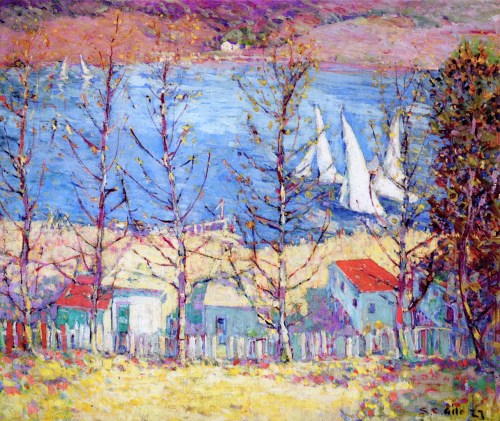
Title: Belvedere

Artist: Seldon Connor Gile

Medium: Oil on Canvas

Date: 1927

Inscription: signed and dated by Artist: Gile 27


What I love about this painting:

This is a view of San Francisco Bay from a hill in the town of Belvedere, California. Belvedere is located on the San Francisco Bay in Marin CountyCalifornia. Consisting of two islands and a lagoon, it is connected to the Tiburon Peninsula by two causeways.

It is a place the artist clearly loved, and he had his home nearby in Tiburon.

The intensity of color as one looks down the hill toward the shanties lends an atmosphere of purity, of fresh air, and approaching springtime to the painting.

Bold strokes of red and blue convey the atmosphere that is quintessential to Northern California. He offers us a sense of wonder, of peace, of modest post-WWI prosperity in this painting. We are shown the depth of color and vibrancy of a time and sense of place that has long vanished.

This is an era we usually see through old black-and-white photographs and jerky, scratchy newsreels.

Even rundown and undeveloped properties in Tiburon and Belvedere now sell in the high millions. Starving artists and middle-class workers can rarely acquire vacation shanties in that area.

About the Artist, Via Wikipedia:

Selden Connor Gile (20 March 1877 – 8 June 1947) was an American painter who was mainly active in northern California between the early-1910s and the mid-1930s. He was the founder and leader of the Society of Six, a Bay Area group of artists known for their plein-air paintings and rich use of color, a quality that would later figure into the work of Bay Area figurative expressionists.

Though Gile was steadily employed at jobs other than art until the age of 50, his artistic output, primarily from marathon weekends spent painting, was considerable. 1915, the year of the Panama–Pacific International Exposition, marked the beginning of his maturation as an artist, despite that fact that Gile and the Society of Six would not exhibit their art beyond a few occasional paintings until 1923. From their first exhibition at the Oakland Art Gallery on March 11, 1923 to the sixth and final show as a group in 1928, Gile and the Society of Six were generally well received by critics. In the spring of 1927, Gile quit his job as an office manager for Gladding, McBean and Company and moved from his cabin on Chabot Road in Oakland (also known as the “Chow House” where the Society of Six would meet on weekends), into a cottage he had kept since the early 1920s on San Francisco Bay in TiburonMarin County to paint full-time.

Selden Gile continued to paint and exhibited in various group shows every year until 1937. During the 1930s, the number of his oil paintings declined in favor of watercolors. Another change likely brought on by the mood around the Great Depression was to include more people, particularly workers, in his paintings. Despite his discomfort with larger formats, Gile took on the town of Belvedere’s only WPA mural commission, painting a mural for the public library, where he served as a part-time librarian. Towards the end of his life, unable to pay his rent, Gile took on another mural commission, this time for a railroad office in San Francisco. He is remembered from his time in the Tiburon/Belvedere area:

“…as a loner, independent, and very proud. [Gile] enjoyed cordial relationships with some of his neighbors, often chatting with them on the street or in doorways, but he consistently refused their hospitality…In the end Gile was a sick, alcoholic old man surrounded by paintings he never sold, lonely, and not painting. The process of painting and camaraderie that he had enjoyed were past now.”

A few months before he died, Selden Gile checked himself into the Marin County Hospital and Farm, where he spent the rest of his life. On June 8, 1947, Gile died of cirrhosis of the liver.


Credits and Attributions:

Belvedere, California 1927 by Selden Connor Gile, Public domain, via Wikimedia Commons

Wikimedia Commons contributors, “File:Selden Connor Gile Belvedere 1927.jpg,” Wikimedia Commons, the free media repository, https://commons.wikimedia.org/w/index.php?title=File:Selden_Connor_Gile_Belvedere_1927.jpg&oldid=525009834 (accessed March 11, 2021).
Comments Off on #FineArtFriday: Belvedere 1927 Seldon Connor Gile

Filed under #FineArtFriday

The Role of the Trickster #amwriting

My lead characters always have companions, and one of them is usually the trickster. In his famous book, The Hero With a Thousand Faces, philosopher Joseph Campbell discusses his theory of the journey of the archetypal hero found in world mythologies.

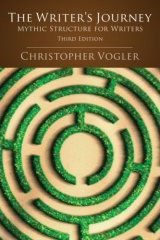
Christopher Vogler takes Campbell’s concept of the monomyth and applies it to modern storytelling.  His 2007 book, The Writer’s Journey, Mythic Structure for Writers, offers insights into character development and takes the mythical aspects of the hero’s journey and places it into pop culture, from movies to television, to books.

I am on my third copy of this book.

In my last post, I mentioned that tricksters:

  • Cross Boundaries
  • Break rules
  • Disrupt ordinary life
  • Charm us with their wit and charisma

Wikipedia tells us:

All cultures have tales of the trickster, a crafty creature who uses cunning to get food, steal precious possessions, or simply cause mischief. In some Greek myths, Hermes plays the trickster. He is the patron of thieves and the inventor of lying, a gift he passed on to Autolycus, who in turn passed it on to Odysseus. In Slavic folktales, the trickster and the culture hero are often combined. [1]

Often in mythology, the bending/breaking of rules takes the form of tricks or thievery.  When I need a thief, I automatically think of Loki—the consummate trickster of Norse mythology. Loki sometimes helps the gods and other times he is the villain. Loki is the god you love to hate.

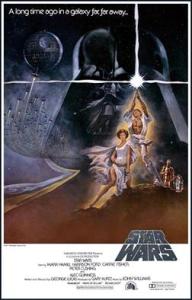
Who is a good example of the trickster in modern mythology? Let’s look at the first three Star Wars movies, and the character of Han Solo.

This is a man who is slightly older than the rest of the cast and has been around long enough to become jaded. He’s contradictory, in that he doesn’t believe in the force but relies on his luck.

Always courageous but not stupid, Han Solo takes incredible chances, and usually comes out on top. He rarely learns anything from his failures.

Han Solo’s primary role is keep everyone grounded. No one gets to be a princess around him, not even an actual princess. He points out to our hero that a blaster is more reliable than the force, and has no problem cold-bloodedly murdering a bounty hunter in a crowded bar.

What I love about the character of Han Solo is the way he livens things up. He is the ray of sunshine in what is actually a dark tale.

Vogler describes the trickster as: someone who embodies the energies of mischief and desire for change. [2]

I think the word energy is key. The rogue’s job is to inject energy into the story.

The loveable rascal is an important component of any epic tale. In the book versions of J.R.R. Tolkien’s Lord of the Rings trilogy, Pippin and Merry tend to go their own way sometimes and by doing so, they serve in the role of tricksters.

Quote from Wikipedia: The critic Tom Shippey notes that Tolkien uses the two hobbits and their low simple humour as foils for the much higher romance to which he was aspiring with the more heroic and kingly figures of Theoden, Denethor, and Aragorn: an unfamiliar and old-fashioned writing style that might otherwise have lost his readers entirely.

He notes that Pippin and Merry serve, too, as guides to introduce the reader to seeing the various non-human characters, letting the reader know that an ent looks an old tree stump or “almost like the figure of some gnarled old man”. The two apparently minor hobbits have another role, too, Shippey writes: it is to remain of good courage when even strong men start to doubt whether victory is possible, as when Pippin comforts the soldier of Gondor, Beregond, as the hordes of Mordor approach Minas Tirith. [3]

The trickster brings the essence of fallible humanity to a group of characters that can be otherwise too perfect. Their influence on the hero also offers us moments of hilarity and pathos.

The character who plays the trickster guides us through the darker aspects of a story with their wit and ironic humor. Thanks to them, the story is not quite so frightening, even when things are really bad.

The trickster sometimes emerges in my work, but I don’t always recognize them until my reading posse gets my manuscript. They will point out areas where I could use this character to better show certain aspects of the action.

I highly recommend The Writer’s Journey, Mythic Structure for Writers, by Christopher Vogler. It is one of the foundation books in my reference library, and I refer back to it often, especially in the early stages of a manuscript.

Hero, villain, mentor, or trickster—knowing what archetype a character embodies helps me identify their potential role within the story.


Credits and Attributions:

Star Wars movie poster © 1977 Lucasfilm Ltd., via Wikimedia Commons. Production company: Lucasfilm Ltd. Distributed by 20th Century Fox Release date May 25, 1977 (United States) Fair Use.

[1] Wikipedia contributors, “Trickster,” Wikipedia, The Free Encyclopedia, https://en.wikipedia.org/w/index.php?title=Trickster&oldid=811022016 (accessed December 5, 2017).

[2] Wikipedia contributors, “The Writer’s Journey: Mythic Structure for Writers,” Wikipedia, The Free Encyclopedia, https://en.wikipedia.org/w/index.php?title=The_Writer%27s_Journey:_Mythic_Structure_for_Writers&oldid=804454608  (accessed December 5, 2017).

[3] Wikipedia contributors, “Pippin Took,” Wikipedia, The Free Encyclopedia, https://en.wikipedia.org/w/index.php?title=Pippin_Took&oldid=1010711687 (accessed March 9, 2021).

7 Comments

Filed under writing

Dramatic Irony and the Trickster – Part 1 #amwriting

Creating depth in our writing is an involved process, one we get better at as time goes on. “Depth” consists of a multitude of layers we add to a scene, usually as part of the revision process.

Good writers take a one-dimensional idea and create a real, three-dimensional world. They do this magic layer by layer. Some layers are more abstract than others, but they add life to a story.

Two important layers of depth are dramatic irony and wry humor. They are fraternal twins who play well together. When done well, both add an element of the unexpected into the mix.

One of my favorite characters to write is the archetype known as “the trickster.” This wise friend can sometimes work against you, but their presence can add an essential layer of sardonic humor to the narrative.

Tricksters cross boundaries. They break rules and disrupt everyday life, but we love them for their wit and charisma. They are the wise-cracking rogue who lends a touch of fallible humanity to the cast that can be otherwise too perfect. Their interactions with the hero provide moments of both hilarity and grief.

The trickster often employs a literary device called dramatic irony. Their sarcasm adds a moment of “ah-hah!” to a scene. The ordinary becomes extraordinary.

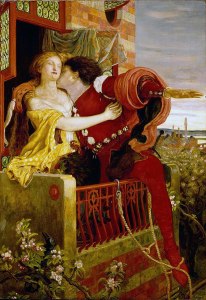
One of my favorite examples of where an author made good use of both dramatic irony and ironic wit is the play, Romeo and Juliet. The way William Shakespeare wrote the play, we see layer after layer of both irony and wit applied heavily.

First, the prologue announces that the  Capulets are at war with the Montagues and tells us that what happens to the star-crossed lovers at the end will bring about peace between the warring families.

That the audience is aware of the situation from the outset, but the characters aren’t, is one layer of irony. That “we know, but you don’t” factor might not fly today with modern audiences, but Elizabethans loved it. Their daily lives were fraught with danger, so knowing what lay around the corner was good.  

The next layer resonates with modern audiences. The second layer of irony is applied when Romeo falls in love with his nemesis—the daughter of his family’s arch-enemy.

Again, the audience sees the irony there, but (third layer) Romeo pushes onward, trying to convince Juliet that her family won’t harm him, that her love will protect him.

Alas, the ironic blindness of teenaged infatuation.

Nevertheless, at this point, despite the blatant warning that the prologue gives us at the outset, we are all hoping for a happy ending, even though we’ve had 400 years of “we know this will end badly.”

Mercutio and Benvolio discuss Romeo’s love-stricken behavior, as friends usually do. They assume he is still pining for Rosalind (fourth layer of irony). The audience says, “We know something you don’t.”

Alas poor Romeo! he is already dead;

stabbed with a white wench’s black eye;

shot through the ear with a love-song; [1]

“Shot through the ear with a love-song” is brilliant, ironic humor in any era and is one of my all-time favorite turns of phrase.

All through the play, from Tybalt’s murder to the suicides, the audience knows what is going on, but the characters don’t. That is dramatic irony taken to an extreme and contributed to the play’s success back in 1594-1595 when it first opened.

I know that tastes have changed over the 400-plus years since that play was written. We don’t want to be as blatant as William Shakespeare, but readers still like us to inject dramatic irony into our work as foreshadowing.

Imagine a movie involving a neighborhood planning committee’s meeting about what to do with a plot of land. Should they let it be developed commercially or make it a playground? In itself, the topic would make a dull movie.

Dramatic irony is introduced in the opening scene when an ordinary-looking woman enters the empty conference room ahead of the meeting, wearing gloves. She kneels and places a backpack under the table, makes an adjustment to its contents, sets the timer to 14:25 (2:25 pm), and then exits the room.

With just that one scene taking less than two minutes, the audience’s nerves are on edge. Every second that the mindless bickering over technicalities and political correctness drags on ratchets up the tension.

A committee member gets up to get a glass of water. Another member steps out to make a phone call. Someone else gets agitated, pacing back and forth as they press their opinions.

With each of the committee members’ mundane movements, one leaving the table and another returning, the clock on the wall ticks toward 2:25.

You wonder, “Will this person be the one to escape the massacre?”

Dramatic irony as foreshadowing is the backpack lurking under the table.

Modern science fiction made good use of both dramatic irony and the trickster. In the 20th century science fiction novel, Fahrenheit 451, Ray Bradbury used irony to convey information.

Bradbury introduced “firemen,” not as those brave people who put out house fires. Instead, they are charged with starting fires and burning all books.

The naming of that job title was subtle, as Bradbury never resorted to explaining the irony. Even today, it packs a punch when you first read it.

Ray Bradbury employed “situational irony” to give his readers the information they needed. This was handled in a way that impacted the reader and promised more to come.

We can also use ironic humor to convey information the reader needs. Both the trickster as an archetypal character and the inclusion of dramatic irony adds depth to a story. The reader understands what is being conveyed but hasn’t been told what to think.

Readers like to think for themselves.

The Machine that Won the War, a short story by Isaac Asimov, is one long scene filled with dramatic irony that becomes humorous as the story progresses.

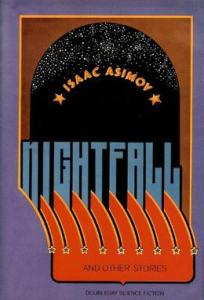
That story might be hard to find, but it first appeared in the October 1961 issue of The Magazine of Fantasy & Science Fiction. It was reprinted in the collections Nightfall and Other Stories (1969) and Robot Dreams (1986).

We will take a closer look at the role of the trickster in our next post.


Credits and Attributions:

[1] Quote from Romeo and Juliet, William Shakespeare, 1594 – 1595 PD|100.

Romeo and Juliet, by Ford Madox Brown, Public domain, via Wikimedia Commons. Wikimedia Commons contributors, “File:Romeo and juliet brown.jpg,” Wikimedia Commons, the free media repository, https://commons.wikimedia.org/w/index.php?title=File:Romeo_and_juliet_brown.jpg&oldid=531347482 (accessed March 8, 2021).

Cover of Nightfall and other Stories by Isaac Asimov, © 1969 Doubleday, cover art by Amelia S. Edwards. Fair Use. Wikipedia contributors, “Nightfall and Other Stories,” Wikipedia, The Free Encyclopedia, https://en.wikipedia.org/w/index.php?title=Nightfall_and_Other_Stories&oldid=885885790 (accessed March 8, 2021).

4 Comments

Filed under writing

#FineArtFriday: View to a Clearing by Albert Bierstadt

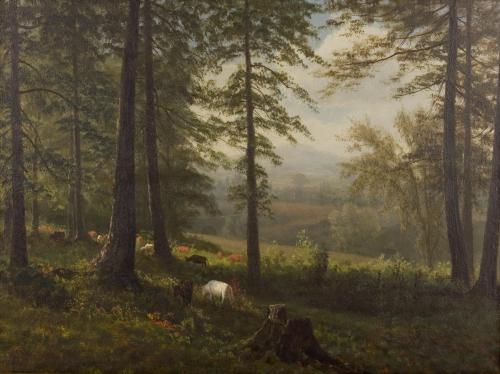
Title: View to a Clearing by Albert Bierstadt

Medium: oil on paper mounted on canvas

Dimensions: Height: 14 in (35.5 cm); Width: 19 in (48.2 cm)

Inscriptions: Signature bottom left: ABierstadt

What I love about this painting:

I love the serenity of this scene, one of Bierstadt’s quieter paintings.  The muted colors, the rising mist, the filtered light, and the cattle grazing show us a hazy afternoon. It was perfect for a picnic, for mind-wandering, and a good day for painting.

Bierstadt is one of my favorite artists because he was often over the top, a little fantastic, and usually epic. He saw drama in nature and painted it, and like every good storyteller, his imagination filled in the blanks with with powerful imagery.

About the artist, via Wikipedia:

Despite his popular success, Bierstadt was criticized by some contemporaries for the romanticism evident in his choices of subject and his use of light was felt to be excessive. Some critics objected to Bierstadt’s paintings of Native Americans on the grounds that Indians “marred” the “impression of solitary grandeur.”

Interest in Bierstadt’s work was renewed in the 1960s with the exhibition of his small oil studies.  Modern opinions of Bierstadt have been divided. Some critics have regarded his work as gaudy, oversized, extravagant champions of Manifest Destiny. Others have noted that his landscapes helped create support for the conservation movement and the establishment of Yellowstone National Park. Subsequent reassessment of his work has placed it in a favorable context, as stated in 1987:

The temptation (to criticize him) should be steadfastly resisted. Bierstadt’s theatrical art, fervent sociability, international outlook, and unquenchable personal energy reflected the epic expansion in every facet of western civilization during the second half of the nineteenth century.

Bierstadt was a prolific artist, having completed over 500 paintings during his lifetime.


Credits and Attributions:

Wikimedia Commons contributors, “File:Albert Bierstadt – View to a Clearing.jpg,” Wikimedia Commons, the free media repository, https://commons.wikimedia.org/w/index.php?title=File:Albert_Bierstadt_-_View_to_a_Clearing.jpg&oldid=343092014 (accessed March 5, 2021).

Wikipedia contributors, “Albert Bierstadt,” Wikipedia, The Free Encyclopedia, https://en.wikipedia.org/w/index.php?title=Albert_Bierstadt&oldid=1009967730 (accessed March 5, 2021).

2 Comments

Filed under writing

Three books ruined by sins of repetition #amwriting

Last week I read three books, which is about my usual average. When I read, I like to see how other authors construct different aspects of their novels.

Two of the books I read were recent publications, both highly recommended by numerous reader-reviewers at the Big Bookstore in the Sky. The first one was a 2018 mystery published by Thomas & Mercer. This Amazon company publishes mysteries and thrillers, and the novel was written by a well-known British author.

The second book was published in 2020 by Tor Books and was a fantasy novel by a high-profile American author.

The final book I read was published by Doubleday and written in the 1980s by another well-known British author.

I’m not going to name these books or their authors because while they were good enough books, I wish to focus on the negatives I found in the diverse works I read.

Before I do that, I must say that I did enjoy the books, but in my view, they were three-star books, average and acceptable. The flaws I’m going to discuss didn’t detract from the overall story arcs. The main characters, for the most part, were engaging. I just didn’t like them enough to review them on my blog because I only review books I think are worth four or more stars.

I say the characters were engaging for the most part. Book Number One’s title proclaims it to be “an absolutely gripping whodunit full of twists.” No, that is not a tagline or review quote. The publisher has the gall to put that in the book’s title, something no indie would ever get away with.

If nothing else, it’s a shining example of what not to put in your book’s title.

Despite the glowing title, I was disappointed, but it did offer me an education on what I don’t want to do in my own work. This is actually a “2.75 star” book, in my opinion. It only gets three stars because of rounding up to the next higher number.

It began well. The protagonist was given to making snarky comments, which I thought livened things up. I would have connected with her if not for one fatal flaw. She was made less engaging by the author’s continual reference to her size and amazing sexual desirability.

The protagonist is a caterer who solves mysteries. She is continuously described as Junoesque, ample, vast, chubby, size eighteen, fat, large…and on and on. In every chapter, at least once and usually twice, we are given a visual description of her, along with indications of how she affects the males around her.

These mentions were meant to emphasize the author’s perception of her protagonist as plump but irresistible to the males. However, as the book wore on, it became jarring and unnecessary. Those distractions made it difficult to remain engaged in the book. For me, lesson one was that I had a visual picture of the caterer in the first chapter, and one or two mentions further on down the road would have been fine.

The overall arc of the mystery was good and carried the story enough to keep me reading. However, I will probably avoid buying any more books written by that author.

Book Number Two, the Fantasy book, had a 2020 publishing date. It had a good story arc, but it was clearly a novella that had been stretched to novel length. Of the three, this book had the most engaging protagonist.

Unfortunately, the way the author and publisher stretched this book’s length was to have the main character recap previous events whenever a new character entered the story. I should have expected it because an earlier book in the series had the same flaw.

Book Number Three was a police procedural, written and published in the 1980s, and was the best one of the lot. The one flaw was the continual reference to the protagonist’s pipe. Every scene involved fumbling with the tobacco, the ashes, etc. It was a distraction that jarred me out of the book.

Books One and Three bring up the question: when we are trying to convey our protagonists’ personalities, how do we go about it? Frankly, we walk the knife’s edge, balanced between too much and not enough.

Protagonist A is a larger woman, and she has sex appeal. After the first three references, we knew that.

Protagonist C is a sharp, personable detective with a dirty habit. After the first three references, we knew that.

In books One and Three, I felt that the authors did their protagonists a disservice by pointing out these character traits too often, from the external omniscient God-like view. Once I can visualize how the other characters see the protagonist, I want to see what the protagonist sees from that point on.

Reading those two books, I realized that an occasional observation of the main character from another character’s POV would have been a better way to show how the other characters saw them.

I would think this especially works if there is a blossoming love interest.

Book Number Two raised a different specter: padding the narrative with repetition to stretch the book.

What would you rather be known for writing? Would you want to be known as having written a brilliant novella or an average novel? Book Number Two could have been a brilliant novella had the padding been removed in the editing process.

These flaws, harping on character traits and fluff-dumping, are “sins of repetition.”  In all three of these books, the bulk of the story was told from the close third-person point of view which worked well.

This week, I am working on characterization in my own work. I am in the revision stage and strengthening how my protagonists are represented and shown.

In my current writing, I hope to portray my protagonists as I see them without bashing my readers with their magnificence.

We authors can see our characters so clearly. We love them and can wax poetic about specific characteristics each person has. The great difficulty is to convey those traits naturally and in such a way that the reader isn’t beaten over the head with them.

At 70,000 words, my current novel may be a little short when compared to other fantasy novels. Fantasy tends to be longer than some different genres, but I refuse to introduce padding to get the word count I want. 70,000 words is novel-length.

So, no one new will die, and no dramatic elements will be introduced just to fluff up the book-length.

If the finished product is a little short for a fantasy novel, that’s fine. If I can get my characters clearly drawn and balanced within that length, I will have achieved my goal.

12 Comments

Filed under writing

Revisions part 5: Near-Homophones or Cursed Words #amwriting

One thing that I notice when reading is the improper use of near-homophones, or words that sound closely alike, are spelled differently, and have different meanings. When we read widely, we’re more likely to notice the difference between words like accept and except when they are written.

The different meanings of seldom-used sound-alike words become blurred among people who have little time to read, and little encouragement. Wrong usages become part of everyday speech.

For this reason, new and beginning writers are often unaware they habitually misuse common words until they begin to see the differences in written words.

Let’s look at two of the most commonly confused words, accept and except. People, even those with some higher education, frequently mix these two words up in their casual conversation.

Accept (definition) to take or receive (something offered); receive with approval or favor.

  • to accept a present.
  • to accept a proposal.

Except (definition) not including, other than, leave out, exclude.

  • present company excepted.
  • with the exclusion of.

We accept that our employees work every day except Sunday.

English, being a mash-up language, has a long list of what I think of as cursed words to watch for in our writing.

Farther vs. Further: (Grammar Tips from a Thirty-Eight-Year-Old with an English Degree | The New Yorker by Reuven Perlman, posted February 25, 2021:

Farther describes literal distance; further describes abstract distance. Let’s look at some examples:

  • I’ve tried the whole “new city” thing, each time moving farther away from my hometown, but I can’t move away from . . . myself (if that makes sense?).

  • How is it possible that I’m further from accomplishing my goals now than I was five years ago? Maybe it’s time to change goals? [1]

When we use these words, we want to ensure we are using them correctly.

Ensure: make certain something happens

Insure:  arrange for compensation in the event of damage to (or loss of) property, or injury to (or the death of) someone, in exchange for regular advance payments to a company or government agency.

Assure: tell someone something positively or confidently to dispel any doubts they may have.

What follows is a looooooooong list of cursed words to double-check the meanings of.

If you need to use one of these words in your work, I suggest you look them up in the online dictionary to be sure your words say what you think they do.

For the moment, ignore the grandiose words and learn how to use all your words correctly. The majority are good words and using them correctly when they’re the only word that works is not pretentious.

However, if you pepper your narrative with obscure words, your readers might put the book down out of frustration, so go lightly. Still, it never hurts to know the meaning and uses of words.

178 Homophone and near-homophone comparisons and other often misused words:

  • abhorrent vs. aberrant
  • accept vs. except
  • ado vs. adieu
  • adopt vs. adapt
  • adverse vs. averse
  • affect vs. effect
  • afflict vs. inflict
  • aggravate vs. irritate
  • allude vs. elude
  • allusion vs. illusion vs. delusion
  • alternate vs. alternative
  • ambiguous vs. ambivalent
  • amicable vs. amiable
  • amoral vs. immoral
  • amuse vs. bemuse
  • anecdote vs. antidote
  • appraise vs. apprise
  • ascent vs. assent
  • assume vs. presume
  • assure vs. ensure vs. insure
  • aural vs. oral vs. verbal
  • aver vs. avow
  • bare vs. bear
  • bazaar vs. bizarre
  • breach vs. breech
  • bridal vs. bridle
  • broach vs. brooch
  • callus vs. callous
  • capital vs. capitol
  • censor vs. censure
  • chord vs. cord
  • cite vs. site vs. sight
  • climactic vs. climatic
  • complement vs. compliment
  • compose vs. comprise
  • concurrent vs. consecutive
  • confident vs. confidant(e)
  • connotation vs. denotation
  • connote vs. denote
  • conscious vs. conscience
  • contemptible vs. contemptuous
  • continual vs. continuous
  • correlation vs. corollary
  • council vs. counsel
  • decent vs. descent vs. dissent
  • definitely vs. definitively
  • demur vs. demure
  • desert vs. dessert
  • didactic vs. pedantic
  • disassemble vs. dissemble
  • discomfit vs. discomfort
  • discreet vs. discrete
  • disillusion vs. dissolution
  • disinterested vs. uninterested
  • disperse vs. disburse
  • dual vs. duel
  • economic vs. economical
  • elusive vs. illusive
  • emigrate vs. immigrate vs. migrate
  • eminent vs. imminent
  • eminent vs. imminent vs. immanent
  • empathy vs. sympathy
  • endemic vs. epidemic
  • entitle vs. title
  • entomology vs. etymology
  • envelop vs. envelope
  • envy vs. jealousy
  • epidemic vs. pandemic
  • epigram vs. epigraph
  • epitaph vs. epithet
  • especially vs. specially
  • exalt vs. exult
  • exercise vs. exorcise
  • expedient vs. expeditious
  • extant vs. extent
  • facetious vs. factious vs. fatuous
  • faint vs. feint
  • farther vs. further
  • faze vs. phase
  • ferment vs. foment
  • fictional vs. fictitious vs. fictive
  • figuratively vs. literally
  • flair vs. flare
  • flaunt vs. flout
  • flounder vs. founder
  • formerly vs. formally
  • formidable vs. formative
  • fortunate vs. fortuitous
  • gambit vs. gamut
  • gibe vs. jibe
  • gig vs. jig
  • gorilla vs. guerrilla
  • grisly vs. gristly vs. grizzly
  • hale vs. hail
  • healthful vs. healthy
  • hero vs. protagonist
  • historic vs. historical
  • hoard vs. horde
  • homonym vs. homophone vs. homograph
  • hone vs. home
  • imply vs. infer
  • incredible vs. incredulous
  • indeterminate vs. indeterminable
  • indict vs. indite
  • inflammable vs. inflammatory
  • ingenious vs. ingenuous
  • insidious vs. invidious
  • instant vs. instance
  • intense vs. intensive vs. intent
  • introvert vs. extrovert
  • irony vs. satire vs. sarcasm
  • it’s vs. its
  • laudable vs. laudatory
  • lay vs. lie
  • loath vs. loathe
  • lose vs. loose
  • luxuriant vs. luxurious
  • marital vs. martial
  • mean vs. median vs. average
  • medal vs. meddle vs. mettle
  • metaphor vs. simile
  • moral vs. morale
  • morbid vs. moribund
  • nauseated vs. nauseous
  • naval vs. navel
  • objective vs. subjective
  • optimistic vs. pessimistic
  • overdue vs. overdo
  • palate vs. palette vs. pallet
  • paradox vs. oxymoron
  • parameter vs. perimeter
  • parody vs. parity
  • peak vs. peek vs. pique
  • peddle vs. pedal vs. petal
  • persecute vs. prosecute
  • personal vs. personnel
  • pitiable vs. pitiful vs. piteous vs. pitiless
  • pore vs. pour
  • practical vs. practicable
  • pragmatic vs. dogmatic
  • precede vs. proceed
  • precedent vs. president
  • predominate vs. predominant
  • premier vs. premiere
  • prescribe vs. proscribe
  • pretentious vs. portentous
  • principal vs. principle
  • prophecy vs. prophesy
  • prostate vs. prostrate
  • quote vs. quotation
  • rebut vs. refute
  • regrettably vs. regretfully
  • reluctant vs. reticent
  • respectfully vs. respectively
  • sac vs. sack
  • scrimp vs. skimp
  • sensual vs. sensuous
  • simple vs. simplistic
  • slight vs. sleight
  • stationary vs. stationery
  • statue vs. statute
  • than vs. then
  • that vs. which
  • their vs. there vs. they’re
  • tortuous vs. torturous
  • troop vs. troupe
  • turbid vs. turgid
  • unconscionable vs. unconscious
  • undo vs. undue
  • unexceptional vs. unexceptionable
  • venal vs. venial
  • veracious vs. voracious
  • wave vs. waive
  • weather vs. whether
  • who vs. whom
  • who’s vs. whose
  • wreck vs. wreak vs. reek
  • your vs. you’re

Credits and Attributions:

[1] Farther vs. Further: (Grammar Tips from a Thirty-Eight-Year-Old with an English Degree | The New Yorker by Reuven Perlman, posted February 25, 2021 (accessed 28 Feb 2021).

Wikimedia Commons contributors, “File:Collegiate Dictionary.jpg,” Wikimedia Commons, the free media repository, https://commons.wikimedia.org/w/index.php?title=File:Collegiate_Dictionary.jpg&oldid=497770186 (accessed February 28, 2021).

13 Comments

Filed under writing

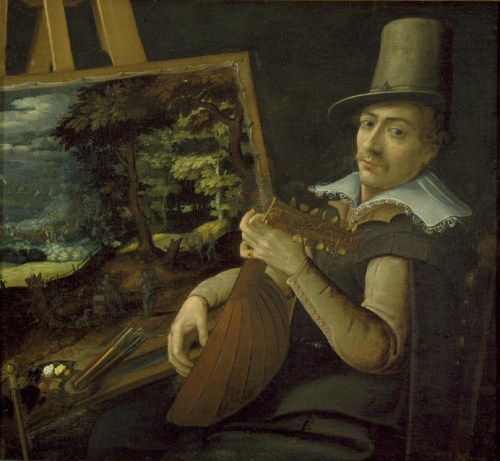
#FineArtFriday: Self-portrait, Paul Bril ca. 1595-1600

Artist: Paul Bril (circa 1553/1554–1626)

Title: Self-portrait

Genre: self-portrait

Date: between 1595 and 1600

Medium: oil on canvas

Dimensions: Height: 71 cm (27.9 in); Width: 78 cm (30.7 in)

About this painting, via Wikipedia:

The painting portrays the artist, elegantly dressed and holding a lute, sitting before his palette and easel, on which a landscape painting sits.

Bril is seen from the back, and is turning towards the viewer. He grasps the lute firmly, with active and jointed fingers. The landscape painting sitting on the easel is typical of Bril’s early work which is characterized by small figures, deep and shaded foregrounds and masses of silvery foliage, attributes that [Bril] shared with other Flemish painters. This has helped with the dating of the work to ca. 1595 – 1600. [1]

What I love about this image:

In this self-portrait Bril shows the viewer who he is and what he cares about, art and music. He is relaxed, at peace and sharing his two passions with us.


Credits and Attributions:

Paul Brill, Public domain, via Wikimedia Commons

[1] Wikipedia contributors, “Self-Portrait (Paul Bril),” Wikipedia, The Free Encyclopedia, https://en.wikipedia.org/w/index.php?title=Self-Portrait_(Paul_Bril)&oldid=1008810469 (accessed February 26, 2021).

Wikimedia Commons contributors, “File:Bril, Paul – Self-Portrait – 1595-1600.jpg,” Wikimedia Commons, the free media repository, https://commons.wikimedia.org/w/index.php?title=File:Bril,_Paul_-_Self-Portrait_-_1595-1600.jpg&oldid=527757876 (accessed February 26, 2021).

Comments Off on #FineArtFriday: Self-portrait, Paul Bril ca. 1595-1600

Filed under #FineArtFriday

Revisions part 4: the Beta Read, #amwriting

There comes a point in every manuscript where we have done all the revising and self-editing we can do. You may think that after one round of revisions you’re done.

I suggest you don’t rush to publish just yet. If you are smart, the external eye comes into play before you get to the final round of revisions.

It’s best if you can afford an editor. However, as I said last week in my post, Revisions part 2: Efficient self-editing, there are ways to make a decent stab at self-editing.

Regardless, you should consider having your manuscript looked at by a trusted member of your writing group or consider paying for what is known as a beta read. Beta reads by professionals are far more affordable than professional editing. A good beta read will point out the areas in a so-so story where it bogs down or gets confusing.

An unfortunate truth is that some indie published works are clear examples of work by authors who don’t realize the importance of working with an external eye. Those who have had assistance from readers in their writing group are more likely to turn out an enjoyable novel.

What is quite disappointing to me is the many traditionally published works that seem to fall into the same lack-of-good-editing category. I’m at a loss as to why this is so.

So, what is the difference between a beta reader and an editor?

Beta Reading is done by a reader. One hopes the reader is a person who reads and enjoys novels in that genre. Strict attention is paid to the overall story arc.

Beta reading is meant to give the author a general view of its overall strengths and weaknesses. The beta reader must ask himself:

  1. Were the characters likable and did the reader empathize with them? If not, why not?
  2. Where did the plot bog down and get boring? They should note the places where they wanted to skip forward.
  3. Were there any confusing places? These places should also be noted.
  4. What did the reader like? What did they dislike?
  5. Did the ending satisfy them?

Beta Reading is not editing. Editing is a stage of the writing process. A writer and editor work together to improve a draft by correcting grammar errors and making words and sentences clearer and more effective. Weak sentences are made stronger, nonessential information is weeded out, and important points are clarified.

Sometimes, major structural issues will emerge in an edit that must be addressed. If your work was read by a conscientious and kind reader, you will have addressed those areas first.

Editing is expensive because it is complex and time-consuming.

Therefore, whether you choose to self-edit or hire an editor, you should consider having your work beta-read after your first round of revisions. That way, you will be aware of the larger areas of concern and can address them first. The second round of revisions will go more smoothly.

No one writes flawless work without going through some sort of editing and revising process. Even with all that effort, when I get to the proofing stage, my sister, a retired educator, finds errors in my work.

I’m fortunate to have a good writing group and am friends with fellow authors who will beta read for me before I send a manuscript to my editor for line editing. I do the same for them.

Don’t ask a fellow member of a professional writers’ forum to read your work unless you want honest advice.

They will be kind, but they will point out areas that need work. And something for you to remember is that even if they don’t “get” your work, they spent their precious time reading it, taking time from their own writing.

Choose your readers carefully. Sometimes, no matter how close your friendship is, some people are not cut out to be beta readers. Perhaps they are not cut out to be readers at all.

Some people are like one of my aunts was. She found fault with everything, was proud that she shot from the hip, and her blunt comments took no prisoners. I got on with her only because I never asked her opinion of anything.

Be warned! If you offer your work to a person like Aunt Jo, don’t be surprised if she eviscerates you as well as your work.

If you have offered your work to a reader and then discovered they had nothing good to say, don’t feel guilty for not asking them to read for you again.

As difficult as it is to experience, negative feedback is a necessary part of growth. This is where you have the chance to cross the invisible line between amateur and professional.

Never be less than gracious to a person who reads and critiques your work when you communicate with them.  Remember, they have taken time out of their life to read your work, and you did ask for their opinion.

Sit back and cool down. Consider the areas they find problematic and find ways to revise and work out those problems. You might find that your second round of revisions goes quickly because you have targeted and resolved the larger areas of concern.

Above all, keep the finished goal in mind and keep writing.

3 Comments

Filed under writing

Revisions part 3: The Detour #amwriting

We who write fantasy and other genre fictions are story-tellers.  We write about invented people living in invented worlds, doing invented things. Unfortunately, there are times when we realize we have written ourselves into a corner, and there is no graceful way out.

This happened to me in 2019. I took one of my works in progress back from 90,000 words to 12,000.

That was the point where I began fighting the story, forcing it onto paper. I hated to admit that I had taken a wrong turn so early on, but by the 50,000-word point, the story arc had gone so far awry there was no rescuing it.

But I’m no quitter. No sir, not me.

I spent 40,000 more words refusing to admit I had “gone off the rails.”

Fortunately, much of what I had written can be recycled into a different project. NEVER DELETE months of work. Don’t trash what could be the seeds of another novel. Save it in an outtakes file and use it later:

HA_outtakes_29Dec2019

I had accomplished many important things with the 3 months of work I had cut from that novel.

  • The world was solidly built, so the first part of the rewrite went quickly.
  • The characters were firmly in my head, so their interactions made sense in the new context.
  • Some sections that had been cut were recycled back into the new version.

Writing the failed novel wasn’t a waste, just a detour. This sort of thing is why it takes me so long to write a book.

At the 12,000 word point, I needed a new outline. I spent several days visualizing the goal, the final scene, mind-wandering on paper until I had a concrete objective for my characters.

I finally realized that Alf had two quests, both of which were core plot points. I was unable to visualize a final scene because they had merged in my mind.

Beginning the novel with no definitive resolution was how I had lost my way.

So I separated them, and now I had a concrete goal to write to.

That was when I realized this book is actually two books worth of story. The first half is the personal quest. The second half resolves the unfinished thread. Both halves of the story have finite endings, so the best choice is to break it into two novels.

With that in mind, I outlined the first half, made a loose outline of the second for later reference, and began writing.

I was near the end of part one when I saw the flaw in my outline. This was 4 days into NaNoWriMo 2020, and I had just finished writing the ending to my serialized novel, Bleakbourne on Heath. I planned to finish Heaven’s Altar, and dove right into it.

I began to make good headway.  If you are a regular visitor here, you know what happened.

In trying to resolve the logic for the antagonist, I had to know the path that a tainted relic had take through the years. I needed to know where it originated and how it had survived for centuries, and why it had the power to corrupt my antagonist.

I accidentally wrote a completely different novel with a completely different cast of characters and plot. I finished November 2020 with around 90,000 words on three projects.

That accidental manuscript is in the final stages of my rewrite and is nearly ready for my beta readers.

For those of you who are keeping count—that’s 3 novels in progress in that world, and one almost complete stand-alone novel set in a different world entirely.

And it’s all because of one core plot-point and the logic of how it comes into my original, still unfinished, novel.

There are times when we must accept that we are forcing something and it’s not working. That’s when the best course is to look at it dispassionately and pare it down to the bare bones.

The sections you cut can be better used elsewhere.

I believe in the joy of writing, the elation of creating something powerful. If you lose your fire for a story because another story has captured your imagination, set the first one aside and go for it.

We who are indies have the freedom to write what we have a passion for.

True inspiration is not an everlasting fire-hose of ideas. Sometimes there are dry spells, and that is when you come back to the original work. You will see it with fresh eyes, and the passion will be reignited.

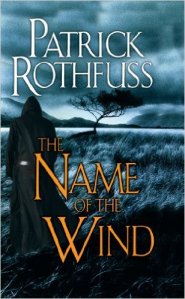
Yes, that is also when the work begins, but I think of Patrick Rothfuss and his struggle to write the books in his series, the Kingkiller Chronicle. The first two books, The Name of the Wind (2007) and The Wise Man’s Fear (2011) have sold over 10 million copies.

Rothfuss’ work is original and powerful, but though his work is highly regarded, he struggles to put it on paper just as the rest of us do. Despite a decade having passed, the third novel titled The Doors of Stone has not yet been released, and some fans are highly critical of him for that.

The two published books are work I consider genius, and I am willing to wait for him to be satisfied with his work.

Patrick Rothfuss’ battle to write the book he envisions gives me permission to keep at it, to not just push out a novel that is almost what I wanted to write.

When a book that gave you so much trouble turns out to be one of your best efforts, it’s worth it.

7 Comments

Filed under writing

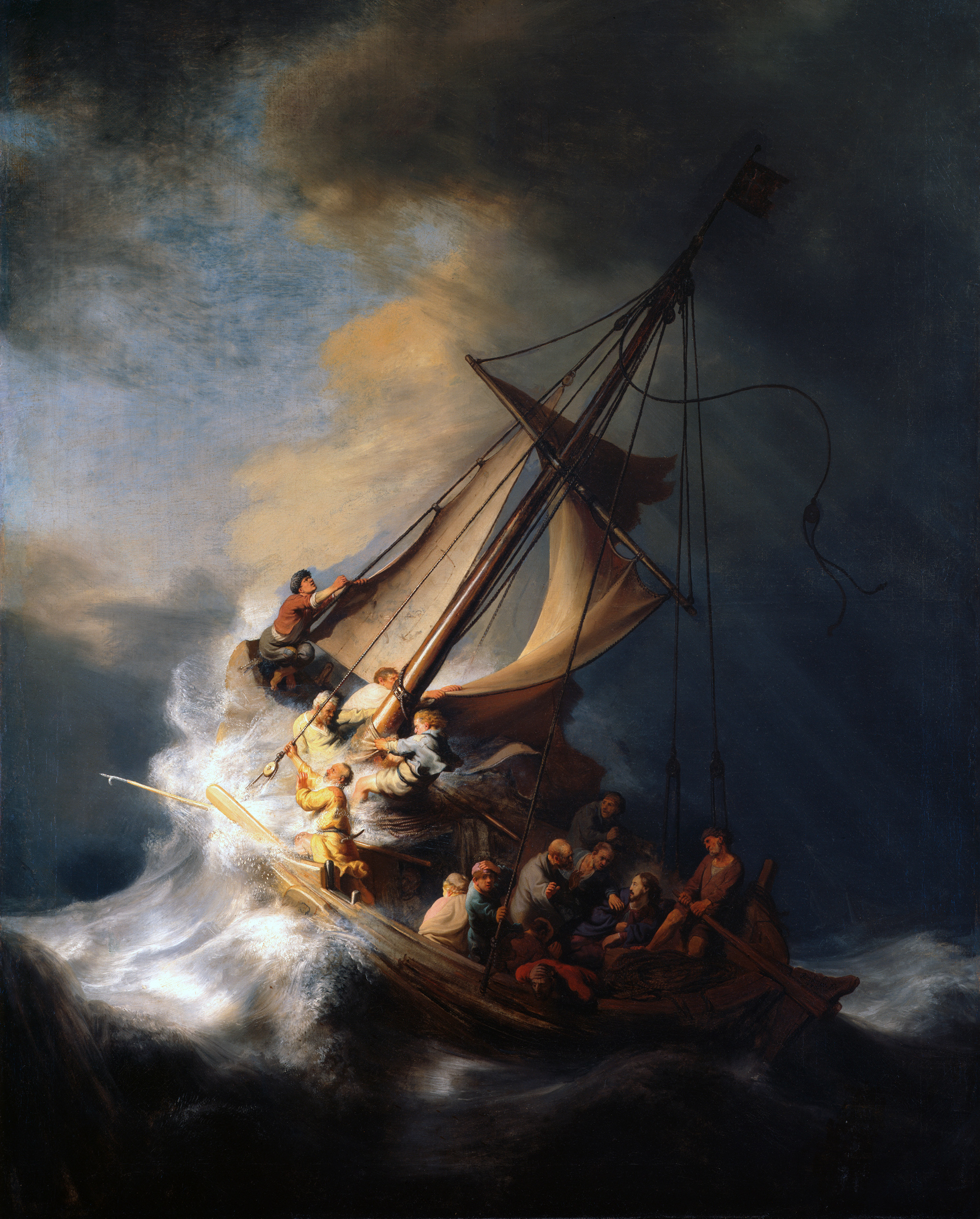
#FineArtFriday: Christ in the Storm on the Sea of Galilee by Rembrandt van Rijn, 1633

Today’s image is of a picture that was stolen in 1990 and has never been recovered. I like to bring this picture to the public eye every year, in the hope that one day it will be found safe and will be recovered. 

Christ in the Storm on the Sea of Galilee was painted during one of the happiest years of Rembrandt van Rijn’s turbulent life and depicts the miracle of Jesus calming the storm on the Sea of Galilee. A devout Christian, Rembrandt painted it from the description of the event as reported by the Apostle Mark, in the fourth chapter of his Gospel. As far as is known, it is the only seascape Rembrandt ever painted.

Constantijn Huygens, the father of Dutch mathematician and physicist Christiaan Huygens, had seen Rembrandt’s talent and helped him gain important commissions from the Court of The Hague. Many of his best religious paintings date from the years during which he had the favor of both Huygens and Prince Frederick Hendrick.

At the end of 1631, Rembrandt had moved to Amsterdam. The city was becoming the new business capital of the Netherlands, so there was great opportunity there for artists. In Amsterdam, Rembrandt had begun to paint portraits for the first time, and by 1633, his work was in high demand. His religious paintings and history paintings were also receiving the highest praise.

At first, he lived with an art dealer, Hendrick van Uylenburgh, which was where he met Hendrick’s cousin, Saskia van Uylenburgh. During 1633, the year in which Christ on the Sea of Galilee was painted, he was courting Saskia, hoping to marry her. He was earning a good income as a portraitist, and a bright future loomed. He must have felt in many ways as if he had the world by the tail.

What I love about this painting:

Rembrandt’s colors are vivid, standing out against the darkness of the storm. An entire story is captured in this image. The sea is terrifying, monstrous waves battering the ship, men panicking, trying to gain control. The terror of the event is clearly shown, and you feel fear for the men too. In the midst of chaos, Jesus awakes, calm despite the panic around him. Each face has a different expression, and one, a man holding a rope in one hand and pressing his cap to his head with the other, looks directly at us—Rembrandt himself.

The Gospel of Mark records the incident:

He woke up and rebuked the wind, and said to the sea, “Peace! Be still!” Then the wind ceased, and there was a dead calm. He said to them, “Why are you afraid? Have you still no faith?” And they were filled with great awe and said to one another, “Who then is this, that even the wind and the sea obey him?

Rembrandt was a man of many frailties but was a devout Christian. He lived the story as he painted it, as do all good storytellers.

About the theft, via Wikipedia:

On March 18, 1990, 13 works of art valued at a combined total of $500 million were stolen from the Isabella Stewart Gardner Museum in Boston. In the early hours, guards admitted two men posing as police officers responding to a disturbance call. Once inside, the thieves tied up the guards and over the next hour committed the largest-value recorded theft of private property in history. Despite efforts by the Federal Bureau of Investigation (FBI) and multiple probes around the world, no arrests have been made, and no works have been recovered.

The stolen works had originally been purchased by art collector Isabella Stewart Gardner (1840–1924) and intended to be left on permanent display at the museum with the rest of her collection. Since the collection and its layout are permanent, empty frames remain hanging both in homage to the missing works and as placeholders for their potential return. Experts are puzzled by the choice of paintings that were stolen, especially since more valuable artwork was left untouched. Among the stolen works was The Concert, one of only 34 known works by Vermeer and thought to be the most valuable unrecovered painting, valued at over $200 million.[when?] Also missing is The Storm on the Sea of GalileeRembrandt‘s only known seascape. Other works by Rembrandt, DegasManet, and Flinck were also stolen.

Christ in the Storm on the Sea of Galilee by Rembrandt van Rijn

  • Artist:   Rembrandt  (1606–1669)
  • Genre: religious art
  • Date: 1633
  • Medium: oil on canvas
  • Dimensions: Height: 160 cm (62.9 ″); Width: 128 cm (50.3 ″)
  • Current Location: Unknown

Sources and Attributions:

Wikimedia Commons contributors, “File:Rembrandt Christ in the Storm on the Lake of Galilee.jpg,” Wikimedia Commons, the free media repository, https://commons.wikimedia.org/w/index.php?title=File:Rembrandt_Christ_in_the_Storm_on_the_Lake_of_Galilee.jpg&oldid=341966464 (accessed April 4, 2019).

Wikipedia contributors, “Calming the storm,” Wikipedia, The Free Encyclopedia, https://en.wikipedia.org/w/index.php?title=Calming_the_storm&oldid=882782126 (accessed April 4, 2019).

The Isobel Stewart Gardner Museum, CHRIST IN THE STORM ON THE SEA OF GALILEE, 1633, https://www.gardnermuseum.org/experience/collection/10953 (accessed April 4, 2019).

This post first appeared in April of 2019. 

2 Comments

Filed under #FineArtFriday