
Authors who want to take their books from idea to paperback must become project managers. Like any other endeavor, writing and successfully taking your novel to publication has many steps that take it from idea to proto-product to completion. It doesn’t matter if you are going indie or sticking to the traditional route.
 Then there is the marketing of the finished product, but that is NOT my area strength, so I won’t offer any advice on that score.
Even on the surface, writing fiction is complex.
We all know a high-quality product when we see one. The manufacturer didn’t make it out of cheap components. They put their best effort and the finest materials they could acquire into creating it. Because the manufacturer cared about their product, we are proud to own it.
For authors, the essential component we must not go cheaply on is grammar. The way we habitually structure our prose (our voice) adds to the feeling of depth. We must have a fundamental understanding of basic mechanical skills as they are the rules of the road and prevent confusion:
- Grammar
- Punctuation
If you have a limited knowledge of grammar, your first obligation is to resolve that. The internet has many easy-to-follow self-education websites to help you gain a good understanding of basic grammar in whatever your chosen language is. One site that I like is https://grammarist.com/.
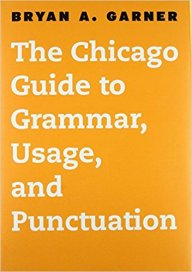 If you are writing in US English, I can highly recommend getting a copy of the Chicago Guide to Punctuation and Grammar. If you are writing in UK English, purchase the Oxford A – Z of Grammar and Punctuation.
Uneducated authors write erratic prose with inconsistent capitalizations, random commas, and use too many exclamation points. They show no understanding of how to punctuate dialogue, which leads to confusion and garbled prose.
Authors must know the rules of grammar to break them with style and consistency. How you break the rules is your unique voice.
Readers expect words to flow in a certain way. If you choose to break a grammatical rule, you absolutely must be consistent about it.
Ernest Hemingway, James Joyce, Alexander Chee, and George Saunders all have unique voices in their writing. All of them break the rules in one way or another, but they are deliberate and consistent. Each of these writers has written highly acclaimed work. Their prose is magnificent, and you never mistake their work for anyone else’s.
Alexander Chee employs run-on sentences and dispenses with quotation marks (which I find excruciating to read).
George Saunders writes as if he is speaking to you and is sometimes choppy in his delivery. But his work is wonderful to read.
We need a broad vocabulary, but we also need to be careful not to get too fancy with it. To be successful, we need an understanding of the tropes common to our chosen genre. We must employ those tropes to satisfy the general expectations of our readers. How we do that is our twist, the flavor that is our unique “secret sauce.”
We don’t consciously think about this, but organizational skills are critical because we want the story to flow easily from scene to scene. This is why successful authors are project managers, even if they don’t realize it.
The first aspect of this is to Identify your Project Goals. Your story is your invention. You want to sell that invention, so your effort and the materials you create it out of are what determine the quality of the finished product.
Some inventions are in development for years before they get to market. Others are complete and ready to market in a relatively short time. Regardless of your timeline, this is where project management skills really come into play.
I use a phased (or staged) approach. This method breaks down and manages the work through a series of distinct steps to be completed.
- Concept: The Brilliant Idea. Make a note of that idea, so you don’t forget it.
- The Planning Phase: creating the outline. Some people don’t need this step, but I do.
- The Construction Phase—writing the first draft from beginning to the end through multiple drafts.
- Monitoring and Controlling—This is where you build quality into your product.
 Creating a style sheet as you go. See my post on style sheets here: Self-editing: Ensuring Consistency.
- Finding beta readers and heeding their concerns in the rewrites.
- Taking the manuscript through as many drafts as you must in order to have the novel you envisioned.
- Employing a good line editor to ensure consistency in the quality of your product.
- Finding reliable proofreaders. (Your writing group is an invaluable resource.)
- Completion or Closing—
- Employing a cover designer if you are going indie.
- Finding an agent if you are taking the traditional route.
- Employing a professional formatter for the print version if you are going indie.
- Courting a publisher if you are taking the traditional route.
After that comes marketing, whether you are going indie or traditional. Both paths require serious effort on your part. But as I said earlier, I have no professional skills in the area of marketing. I recommend you seek professional help but be wary—the waters are full of starving sharks waiting to devour you and your savings.
 Write the basic story. Take your characters all the way from the beginning through the middle and see that they make it to the end. If you have completed the story and have it written from beginning to end, you can concentrate on the next level of the construction phase: adding depth.
We will work on some of the sublayers of depth in our next series on the craft of writing. First up, we will examine why your story isn’t finished just because it now has an ending.
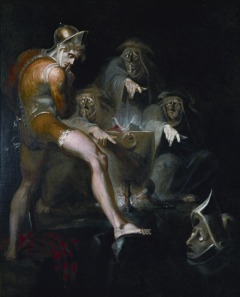
 The Fairy Mab
 My husband is recovering from a total hip replacement, so traveling out of town for an extended stay involves a lot of logistics. Also, I am vegan, which has an impact on things. I can eat in restaurants, but once I am away from my part of the world, the menu is often limited to a garden salad.
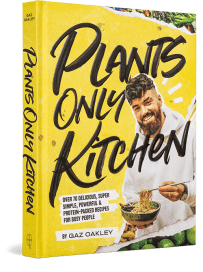 Protein is essential, and I have many delicious options to make that don’t involve processed foods. My favorite “impress-the-son-in-law” cookbook is this gem by
  The most surprising thing about being vegan is how little it costs to eat well once you have your pantry basics. Going sans meat is the lazy person’s dream diet. It’s amazing how quickly you can get a meal on the table, and whether you are making beans or soup, the crockpot is your best friend. I often make my own bread from several different recipes, a tasty treat that takes less than five minutes to put together using my bread machine.
 Sturm und Drang, as a literary form, evolved during the time of the American Revolutionary War. This was an era of global unrest and great hardship, especially in Europe. The main feature of Sturm und Drang is the expression of high emotions, strong reactions to events, and rebellion against rationalism. It is characterized by intense individualism and complex reactions.
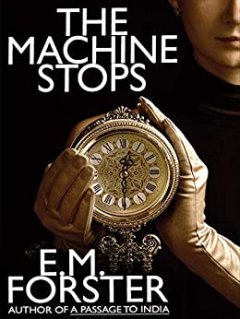 So, this brings me to the subgenre of cyberpunk. One of the earliest science fiction short stories to feature a dystopian society was
  Many authors whose works appeared in the early days of cyberpunk were indies hoping to go mainstream. Their short stories appeared in popular sci-fi magazines because visionary editors risked their jobs and reputations by accepting and publishing work that their readers could have rejected.
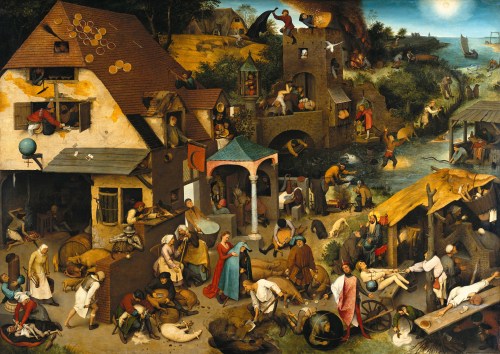 One of the best allegorical paintings of all time is
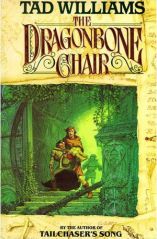 Tad Williams’s
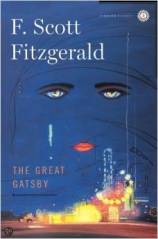 No matter where we live, San Francisco, Seattle, or Middle Earth, these fundamental human experiences are personal to every reader. We have each experienced pain and loss, joy and love.
 Plot, in my opinion, is driven by the highs and lows. You don’t need to pay for books you won’t like. Go to the library or to the secondhand bookstore and see what they have from the NYT bestseller list that you would be willing to examine.
 The human body moves in many ways when fighting, some of which are effective, and others not so much. In the 1990s, I studied
 Scenes that involve violence are difficult to write well unless you know how the action will affect your protagonist. Also, you must remember to give the protagonist and the reader a small break between incidents for regrouping.
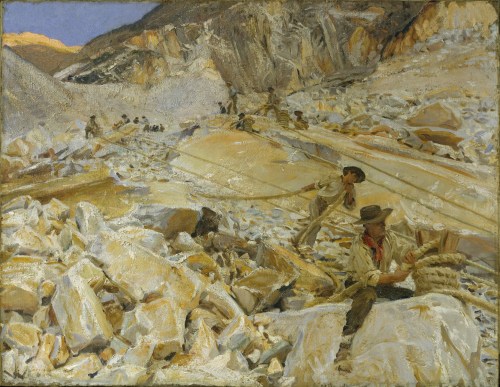 Today we are revisiting a painting I first posted in January of this year, Bringing down marble from the quarries to Carrara, by John Singer Sargent (1856–1925). This is a painting that conveys the lives and efforts of quarrymen in the way all of Sargent’s paintings of the working class do. You see the heat they work in, and feel their effort as they go about their tasks in the same way as their fathers did before them, and their grandfathers.
 Most writers are hobbyists. This is because if one intends to be a full-time writer, one must have an income.
 Events occur, disturbing my writing schedule, but I usually forgive the perpetrators and allow them to live. At that point, I revert to writing whenever I have a free moment.
 As I have said many times before, being a writer is to be supremely selfish about every aspect of life, including family time.
 Writing emotions with depth is a balancing act. This is where I write from real life. I think about the physical cues I see when my friends and family feel emotion. When someone is happy, what do you see? Bright eyes, laughter, and smiles.
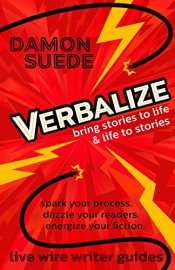 Also, I’m a book junkie—I can’t pass up buying any book on the craft of writing. I bought two books on writing craft by
  Each of us experiences emotional highs and lows in our daily lives. We have deep-rooted, personal reasons for our emotions, for whether we are attracted to or repulsed by another person. Sometimes those interactions can be highly charged.


.jpg&oldid=354733943)