Tag Archives: adventure

Plug in to The Matrix


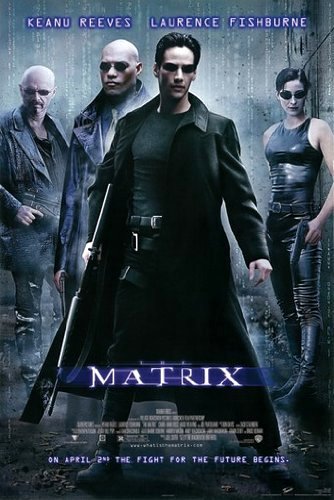
the Matrix PosterNovels have layers. Theme is what the story is about on a deeper level than the plot details. It’s the big meaning, and often it’s a moral meaning. Love, honor, family, and revenge are all some common, underlying themes.

I think of the scenes in my books as if they were scenes in a movie. Each conversation is a scene.

Sometimes, we find ourselves in Outer Mongolia as we wrangle our words. Our mind is off chasing squirrels, and our fingers are madly keying dialogue. It happens, and then we find ourselves writing paragraphs of discussion regarding the vase on the kitchen table. Why are we discussing this vase?  If there is a reason that will emerge later, keep it. If it is just idle fluff, lose it.

I actually have a scene in one of my forthcoming books where the characters do just that. They are discussing a vase that was made by a child, but the conversation is not important for the sake of the vase, nor is it really about that object. It is there to expose how important an absent person is to one of the speakers, and the brief interaction between the two speakers endears to the reader one of the characters who will later meet a sad end. The underlying themes of this book are brotherhood, family, romantic love, honor, duty. The obvious theme is the successful resolution of a quest. The core plot device around which the story evolves is an ongoing War of the Gods, and the world in which the tale is set in is their battleground, offering all sorts of opportunities for mayhem.

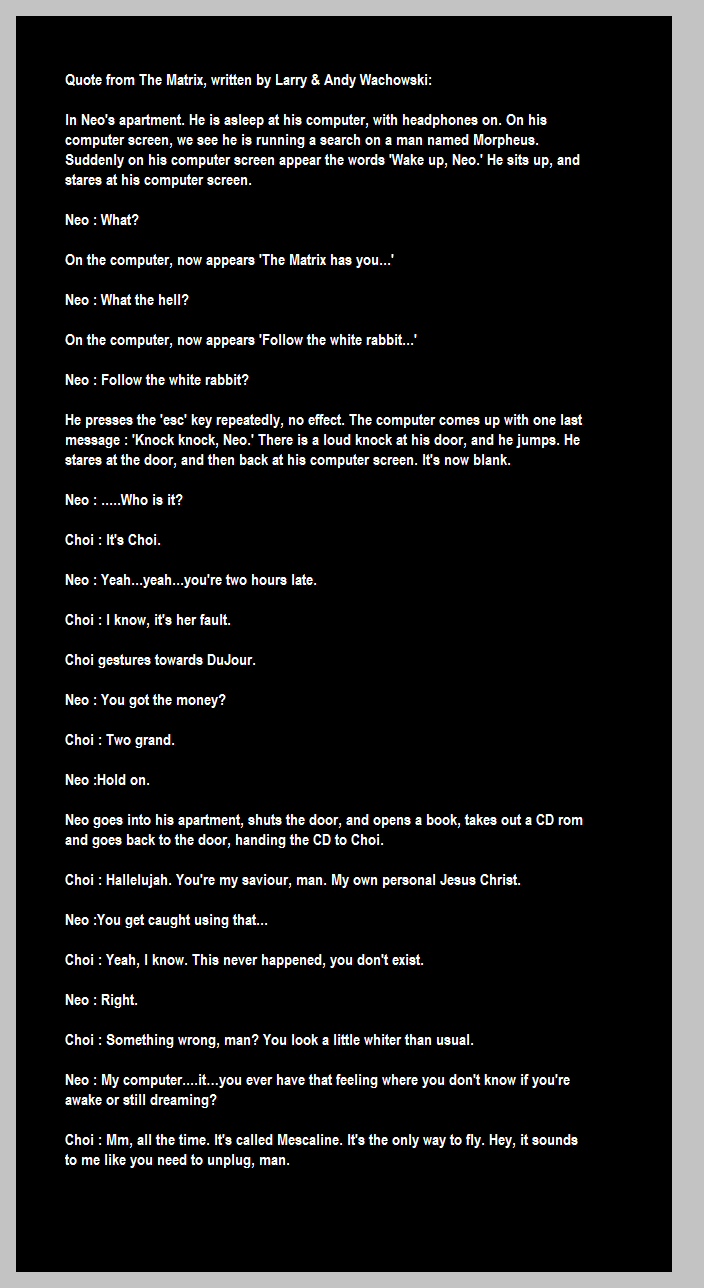
Consider the first scene of one of my favorite movies of all time, The Matrix. This movie has a lot of action, but it has a lot of dialogue also, and that dialogue advances the plot and never loses the theme of the story.

Quotes from the matrix

The conversation concerns a drug deal, but the underlying theme is never lost. The key words are in the first line, written on the computer, The Matrix has you, the third line, follow the white rabbit, and in that very last line, telling Neo to unplug. The Matrix is all about waking up, about what reality is, and about Neo as the potential savior of the world, which has been enslaved by a virtual reality program. It is about escaping that program. The conversations that happen in the course of the film all advance that theme, even the minor interactions, from the first conversation to the last.

The Arc of the StoryWe must approach conversations in our novels as if they were scenes in a movie. In a good movie, we don’t notice it, but there is an arc. In a story arc, a character undergoes substantial growth or change. It ends with the denouement in the last third or quarter of a story. The end of a narrative arc is the denouement, the final resolution. It shows what happens as a result of all the conflict that the characters have gone through.

If we don’t keep the arc of the story moving with each scene, we will lose our reader, and to that end, each conversation must reflect the underlying themes of the story without beating the reader over the head with it. As in real life, some of the people know more than others, and to advance the plot and the theme, small clues must come out over the course of each scene, each scene building to the finale.

I876MilanoDuomo‘ve said this before, but we must build the overall arc of the story from scenes, each of which is a small arc, in the same way a gothic cathedral is constructed of many arches that all build toward the top.  The underlying arches strengthen the overall construction. Without arches, the cathedral wouldn’t remain standing for very long. The novel is a cathedral and your scenes are the arches that hold it up. The conversations that form those scenes are miniature arches, each with a beginning, a high point, and a resolution.


4 Comments

Filed under Adventure, Battles, blogging, Books, Fantasy, Humor, Literature, mythology, Publishing, Self Publishing, Uncategorized, WordPress, writer, writing

Mmmm…chocolate…

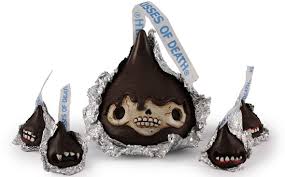
halloween kisses

Kisses of Death by artist Andrew Bell

I’ve always thought that if you really wanted to do something creepy for Halloween, you should hand out little mini-packs of chocolate covered ants, or something. I  just feel there is nothing scary about a Reese’s Peanut Butter Cup, and to do the most sinister night of the year justice, we should serve evil treats.

Halloween is the most important day of the year for many reasons–not the least of which is the annual midnight write in at Shari’s Restaurant for those intrepid heroes who can’t wait a minute longer to start their November Novel!

HTB New Front Cover with gold frameI wrote Huw the Bard in 2011 as my NaNoWriMo Novel–it had a different working title. In 2014 it was published, and the changes it went through in those two years was amazing. Fortunately I have a supportive husband who  regularly allows me to neglect him.

This year I am writing a novel that begins in the old west of northern New Mexico, where a journey to take a holy relic to be melted down at the smelters in Durango takes a terrifying turn into a world between the worlds. The first plan I had for this story was to co-write it with indie author Aura Burrows, but that didn’t pan out as various commitments made it impossible for us to get together on it, and she is unable to do it. But I fell in love with my main character, William Two Cats, and I am going to tell his story.

I have a working title, I have designed a placeholder book cover, I know who and what I am writing about, and tonight at midnight I am off to the races. On the National Novel Writing Month website I am Dragon_Fangirl, and you can see my book page and follow my progress here.

William Two Cats is a man of two worlds, the white-man’s world and the world of the A’shiwi–the people we call the Zuni Pueblo Indians,and yet he is a man of neither. His white mother insisted he be educated him in both cultures, and his Zuni father agreed. The tribal elders know he is destined to be firmly centered between the two worlds, and ensure he takes the path of the shaman. When we meet William, he has left the pueblo.

I can’t wait to get started on this new novel, counting down the hours to midnight…counting…counting….

Oh, look! We still have chocolate covered ants left! Yum!

What? They’re not vegan?

Curses….

ants


2 Comments

Filed under Blogger, blogging, Books, Food, Humor, Publishing, Self Publishing, Vegan, WordPress

The Great Dialogue Debate

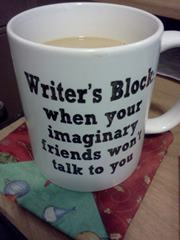
My Coffee Cup © cjjasp 2013We meet our friends on the street, or in a bar or a coffee shop and we talk talk talk.  And so do our characters.  Sometimes those wild and wacky imaginary friends of ours just won’t be quiet, and it drives us nuts. Other times they behave like a thirteen-year-old forced to go on the old family vacation,  sitting in stony silence staring at her signal-less phone, refusing to participate with those people who claim to be her parents and who dragged her off to the wilderness for something called ‘family time.’

Eww.

But when they DO choose to participate in the conversation, how do we make them sound natural? There is a lot of argument in writers forums on this subject, but I go from the point of view of the reader. What is easiest for the reader to follow?

Take a good long look at the works of established writers whose dialogue is crafted in such a way that you, as the the reader, didn’t feel like you were reading it: you felt like you were living it. Did they get too fancy, and uber creative?

No, they kept it simple, and showed you the conversation.

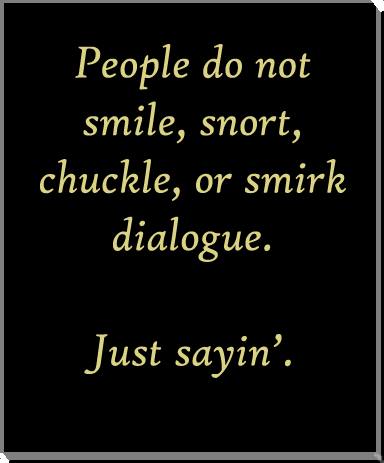
First off–my pet peeve: people do not smile, snort, chuckle, or smirk dialogue. They don’t giggle it either, but they DO say it, they reply it, and many times they ask it. As long as you mainly stick to said, replied, answered, and asked, your reader won’t even notice the attributions are there. If you are writing genre-fiction, there is no need to get creative with your attributions, or ‘dialogue tags’ as we call them: stick to ‘John said’ (not said John, which sounds too old-fashioned these days.) Unless you absolutely need a John screamed or a Sarah uttered or a Paula retorted (which you pretty much never do) just say it and let the reader do the rest. Fancy synonyms for ‘said’ are usually unnecessary and distracting.

You can skip using dialog tags altogether for a back-and-forth or two, but not if there are more than two speakers in the scene, and not for more than a few exchanges. Readers want to be able to track who is saying what.

Sometimes it’s okay to miss a few beats. Beats are what screen-writers call the little bits of physical action that is inserted into dialogue:

People do not snort dialogueBack in the office with the door shut tight, Junior and Pap plotted the special hunting trip for the nice tabloid man. Junior unbraided his hair and pulled it back into his customary long ponytail. Off came the blanket, which he told Pap smelled musty, and the headband. “Tell Johnny thanks for the loan of his buckskins,” he said as he stripped them off, stuffed them into a gym bag, and then pulled on a pair of slacks. “I’ll need them tomorrow for this picnic. That idiot wanted to leave at dawn! I told him after breakfast, so what do you think—about ten o’clock? I usually don’t go to bed until dawn.”

Beats or actions serve to punctuate the dialogue, to give the scene movement, and to maintain a strong mental picture in the absence of description.

Small actions showing the mood of a character are often best placed where there is a natural break in the dialogue, as they allow the reader to experience the same pause as the characters. They’re an effective tool and are essential to good dialogue, but don’t overdo it. If your characters are fluttering their eyelashes, gazing into the distance or opening their laptops between every second line of conversation, the scene becomes about the action and not the dialogue, and the impact is diluted or lost entirely.

This means that when we add gestures and actions to the conversation we want it to be meaningful,.  Otherwise, just use a simple dialogue tag, like said, or replied. This is why we don’t want to make the mistake of getting rid of attributions entirely—because the verbal exchanges become confusing and the action takes over, making the dialogue fade into the background noise of foot shuffling and paper rattling.
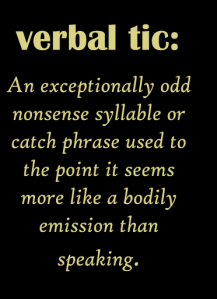
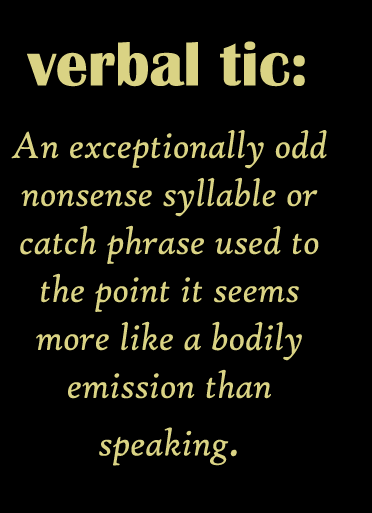
verbal tic memeBut what about exclamations and verbal tics?

We frequently speak this way  in real life, but we don’t want it in our work so I recommend you avoid using them. When a character overuses exclamations, it is exhausting for the reader to wade through paragraphs peppered with instance after instance of “Ahhhh…” “Ugh!” “Yuck!”  “Blech!”

For example, have you ever met a person who drones on with a long “A-a-and a-a-ahhhhhhhhh….” holding conversations hostage with meaningless syllables? These are ‘thinking syllables.’ This is what is known as a ‘verbal tic’ and can be such an ingrained habit the guilty party is unaware they are doing it. They’re often quite hurt if you try to hurry them along.

It’s a habit that we don’t enjoy in a conversation, and don’t want to read in novel, so I recommend you don’t begin more than a few sentences with thinking syllables like  “Ahh…” or “Hmmm….”

These are difficult speech behaviors to convey, because they are supremely annoying in real life and are excruciating to read in a book. As a reader, I’ve come to feel your best bet when dealing with verbal tics is to give a brief instance of their speech pattern and after that, if it is important, mention occasionally the way their habits annoy other characters.

What about accents? Grammar Girl, Mignon Fogarty, says “When writing for a character with an accent, it is tempting to render the character’s speech phonetically using nonstandard spellings. However, this practice is risky and should be avoided, unless you specifically want to emphasize how a character speaks. First, there’s the question of how accurate to be. The more accurate the phonetic spelling, the more frustrating it will be to read.”  

Don’t overdo spelling them out.  You have no idea how hard it is to wade through that:

490px-Henry_Singleton_The_Ale-House_Door_c._1790“Me lempsor’ ‘urt an’ oi’m feelin’ dead knackered. Oi nade ter kip for a while.”

Translation: “My feet hurt and I’m feeling dead tired. I need to sit and rest a while.”  I think you could get away with just using knackered and kip to convey the general idea, and not lose the reader’s interest. If you choose to replace ‘to’ with ‘ter’ for a specific character, be sure to do it consistently and consider leaving it at that.

I have walk-on characters who are minotaurs, and the physical transformation from man to minotaur affects their ability to speak, some more than others. They also come from a different world. This posed a dilemma for me. Because the lower ranked minotaur soldiers make only brief appearances, I can get away with a bit more of a dialect or a speech impediment. The higher ranking ones made it through the remaking with more of their wit and abilities intact, and therefore speak more clearly. I mention they have an accent and leave it at that.

More and more, I am leaning away from writing heavy accents into my dialogue. I recommend going light and limiting the use of misspellings, bad grammar, and vulgar accents especially if you are trying to point out that the character is uneducated or from a rural background.  Use only a few well-chosen words to convey the idea of the accent and use them in a consistent manner for that character in such a way that it isn’t incomprehensible. It’s very easy to go over the top with it, and then the character becomes a parody, a cartoon of a person, instead of someone who feels real.

This winds up my rant on annoying habits we don’t want to inject into our dialogue. Accents, dialects, verbal tics–these are things we need to convey, but we must be mindful of our readers’ supply of patience. Show a little, and let the reader’s imagination do the rest.

5 Comments

Filed under blogging, Books, Fantasy, Humor, Literature, Publishing, Self Publishing, Uncategorized, writer, writing

Write write write…

225px-Ff12castRight now I am writing two fantasies, both based in  the world of Neveyah, which was originally designed for an old-school RPG that didn’t get built.

When I write in Neveyah, I find myself gaming more during my downtime than reading. Dragon Age, Final Fantasy–those are my games.  Anything where I can go out and hack, slash, and throw a little magic around, while great music and wonderful storylines unfold–those are the games that intrigue me.  Anything to get to that all important cut scene!

Not only am I writing the 3rd and 4th books in the Tower of Bones series, I am in the re-editing process for Tower of Bones, the first book in the series. It has been a slow process, as my editor in England has been unwell, and has also had her own wonderful work to write. But it is getting there, and when it is republished, it will be what it should have been when it was originally written.

When I first started this gig, I knew I wanted to be an indie, even though I knew it would be hard, and my sales would be miserable. The point for me was that I could be published and have some control over my work.

What I didn’t realize, is that your friends, wonderful people that they are, are not editors. They don’t really notice anything but the most glaring errors, and they miss a great many of those! Places where you have repeated yourself ad nauseam, and places that are phrased in a confusing way are skipped over.  Large plotholes, clichés, and intriguing auto-correct mistakes get missed when your eager-to-help friends try to edit your work.

You see–very rarely are you BFFs with an editor to begin with–although, through this process, I have become BFFs with MY editors.

Your friends know they don’t like what you wrote, but they don’t know why, so they plow through it as fast as they can just to get the misery done with. They will spot a few problems, which helps, but isn’t going to make your ms readable.

Oh, they aren’t going to tell you that, but they will think it. “This is really different. I’m a little confused about the dog who was an arsonist, but it’s really…unique.”

Do hire an editor. Even if you plan to submit it to a large publisher, do this, so that what you submit will be the best you can offer them.

SO, right now I am working on two books, one that runs concurrent with Forbidden Road, detailing events involving Edwin’s father, John Farmer, and also the follow-up to Forbidden Road, concluding that tale. I am also occasionally working on the rewrite of The Last Good Knight, which is what  Julian Lackland’s story was originally, and is the book Huw the Bard evolved from.  That one is complete, but it needs to sit on the back-burner for a spell while I gain some perspective on it.  Then I will go through it one more time and find an editor for it.

Then, there is Mountains of the Moon, which is in the editing queue.  Not sure if that will be done anytime soon, but rushing to publish is no longer my thing.

Goodness knows how all this will come together, but I love it.


2 Comments

Filed under Adventure, Blogger, blogging, Books, Fantasy, Final Fantasy, Humor, Literature, Publishing, Self Publishing, Uncategorized, writer, writing

Infinite power equals infinite boredom

I attended a seminar on World Building this week offered by Lindsey Schopfer, local author and writing coach. One of my strengths is in that area, and I realized, as I listened to his talk, that it is because I use the same steps he does to make my world as real as is possible. I always know WHERE I am writing, WHO, and WHAT I am writing about.

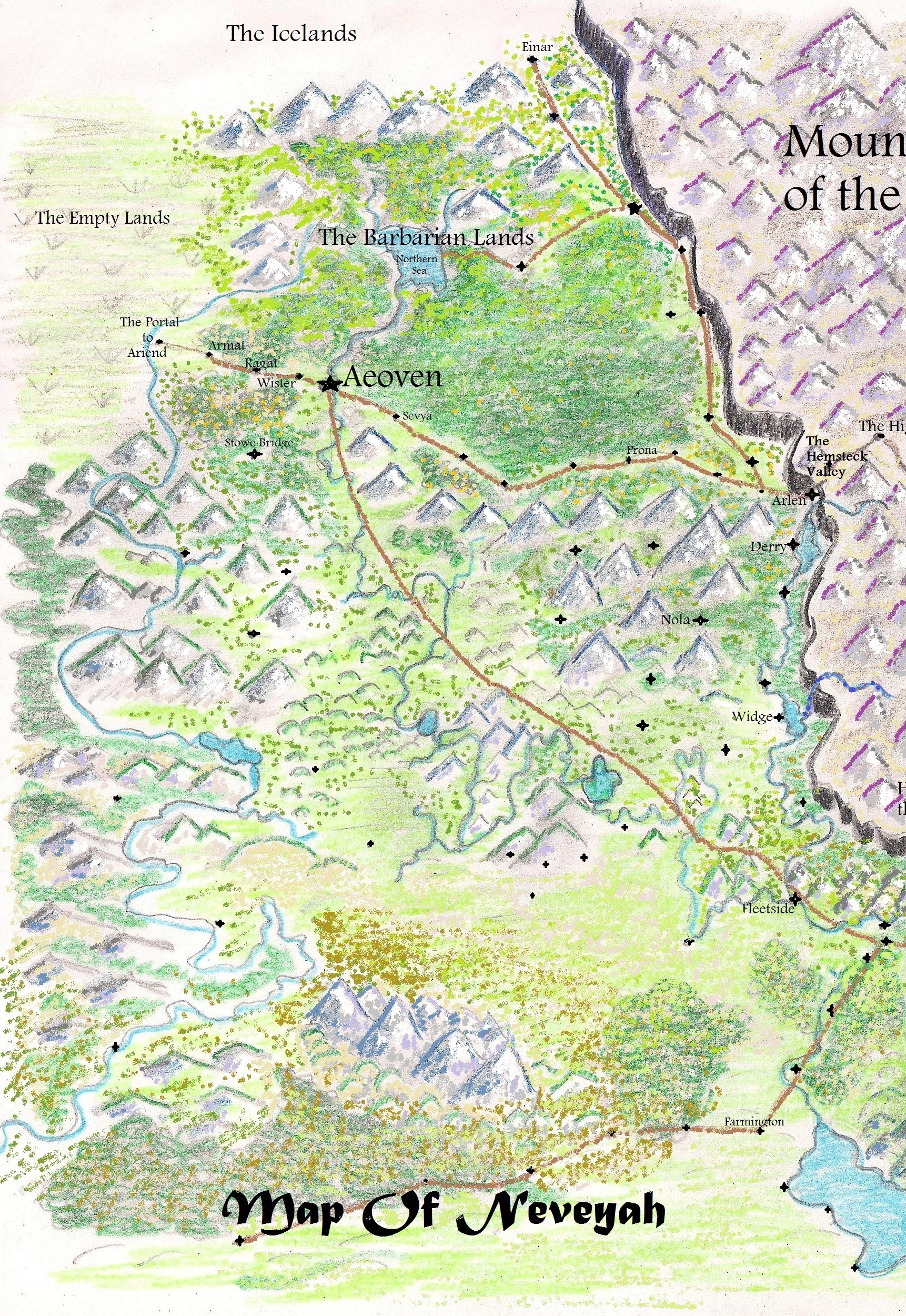
I begin by drawing a sketchy map.This way I have an idea of where the towns are in relation to each other. Nothing on a map is ever finite, they are only approximations–artistic guesses.

Heart of Neveyah relief 3-4-2013 001As I write, my map evolves, becoming more complex as the topography becomes more clear to me. In Neveyah, I began with a pencil sketch, and that evolved into a relief map that gave me the opportunities for injecting tension into the tale that I needed. It also provided me with a detailed explanation of where the resources are, so that funding my country is not an issue.

I build their political and monetary structure, and the prevailing religion. I decide who has the power and privilege in that society, and who is the underclass.

As I create the power-structure and the maps, the opportunities for creating tension within the story also grow. I keep a list of those ideas so that when I run short on creativity I have a bit in the bank, so to speak.

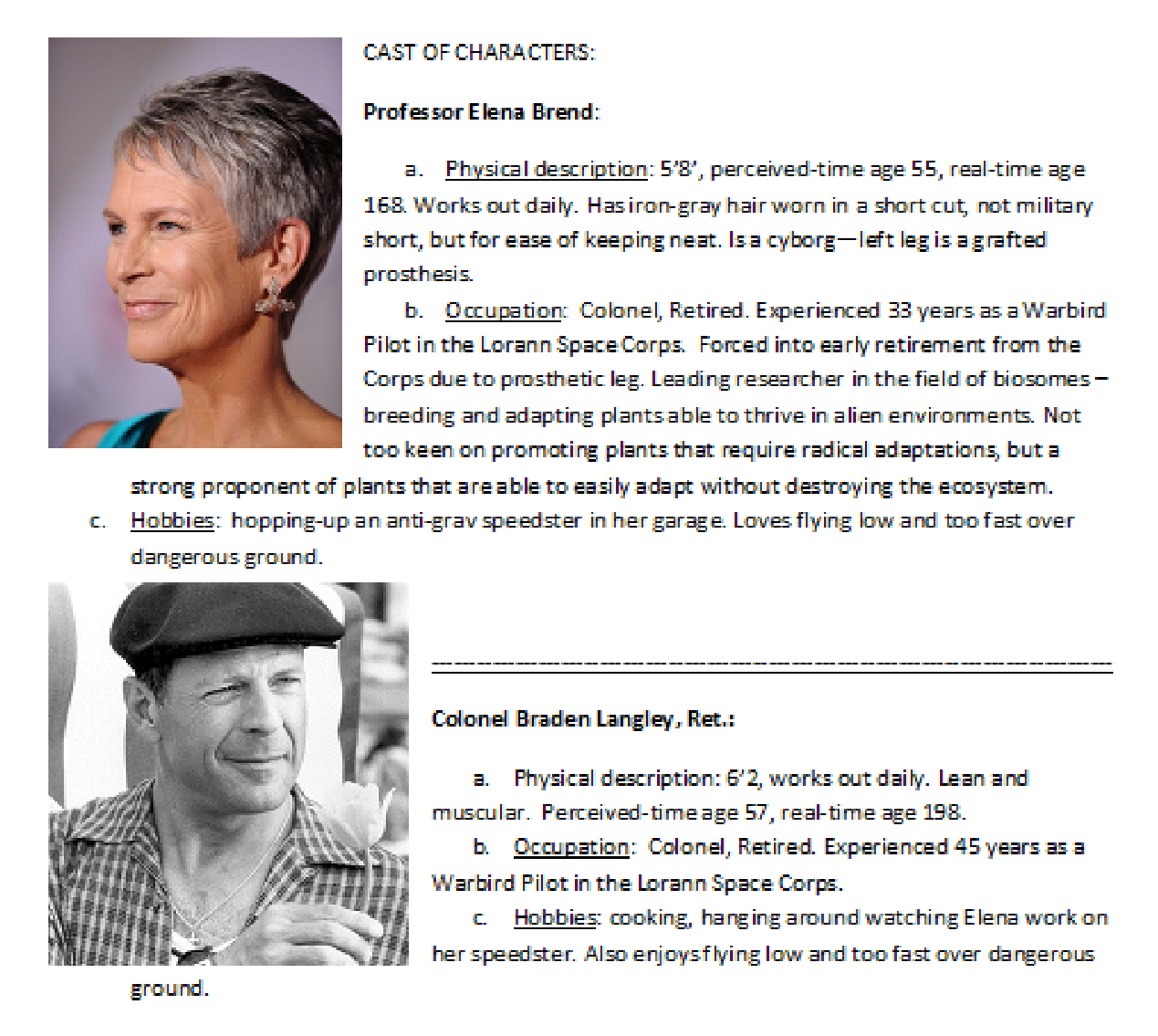
Another thing Lindsey mentioned that I also do is to create a sort of personnel file. (I was an office-manager for years, so I think in those terms.) Is everyone human? If not, what are their species and how do they differ from humans? What are their origins and why are they all together on this world. This information will most likely not make it into the tale, but it is important for me to know.

personel file for Elena and LangleySome people draw their characters, but my artistic talents run to less realistic things. In some cases, I select an actor who best represents my character or who could play him/her well. I am a whiz at cartoons and maps, but not at drawing people or animals, so that’s why I resort to simpler methods to cement them in my head. Once I know who they are, that is where I stop. The reader will decide from the bare-bones descriptions I will give as to what they look like and that will be more intriguing than if I belabor their violet eyes and stunning cheekbones.

When I design a religion, I do it from the ground up.  I know who the gods are, what they require of their worshipers and the rituals that worship involves.  The same goes for the political system. Who is in charge of the country, and what is their power-base? What is their currency and how do they get it? Alternatively, how do they spend it? Are they despots or benevolent?

Then, there is the magic. Who has magic? What kind of magic–healing or offensive or both? What are the rules for using that magic and why do those rules exist? I despise books where there are no clearly defined rules for the magic, because infinite power instills infinite boredom in me as a reader.

http://www.hdwallpapers.in/

Ask yourself what sort of wild creatures will live in your world. What do they look like and how big are they? How do they survive, what do they eat? Are they hunted, or are they simply benign creatures that harm no one? What is their place in the ecosystem?

How are you going to name your people and beasts? Do your readers a favor and use spellings that look fairly simple and look good on paper. DO NOT USE THE CONVENIENT NAME GENERATOR websites that the internet is rife with. They provide you with hokey, ridiculous  names no barbarian worth his salt would claim.

How do they dress? Do they wear armor? How difficult is that armor to get on and off?

How do they travel? Horses or spaceships each have certain basic requirements–both require fuel of some sort and both frequently need maintenance, whether it is currying or cleaning the exhaust vents. Who does this?

In conclusion, assembling this background information is time-consuming, but once I have it all together, my work is so much easier. The hard work is mostly done at that point, so there is less stopping and starting. All I have to do is get my heroes off the sofa and out of the house to the final battle on time, so they can save the world.


6 Comments

Filed under Adventure, blogging, Books, Dragons, Fantasy, Literature, Publishing, Self Publishing, WordPress, writer, writing

Yes, but how do you really feel?

x - y chromosomesI love writing and I love my characters, but they are so stubborn about some things. Of course, many of them have ‘Y’ chromosomes, but still…. It’s frustrating because they don’t want to to talk about how they’re feeling.

Oh, for the love of Tolstoy–don’t they get it? I’m  a woman. I need you people to talk to me. Tell me what’s going on in your imaginary head.

It’s difficult to show the characters’ emotions and thought processes when it’s so much easier to just say he felt, or she was some emotion.  These thoughts and feelings are central to making our characters feel real. But describing them from a distance, as an author must do, may disconnect the reader from that character.

Sometimes, descriptions don’t allow the reader to experience the moment with the character. Instead, the author is telling them how the character feels.What we must ensure is that our readers remain immersed in the narrative, that no ‘speed-bumps’ come along to knock them out of it. Heart Search cover

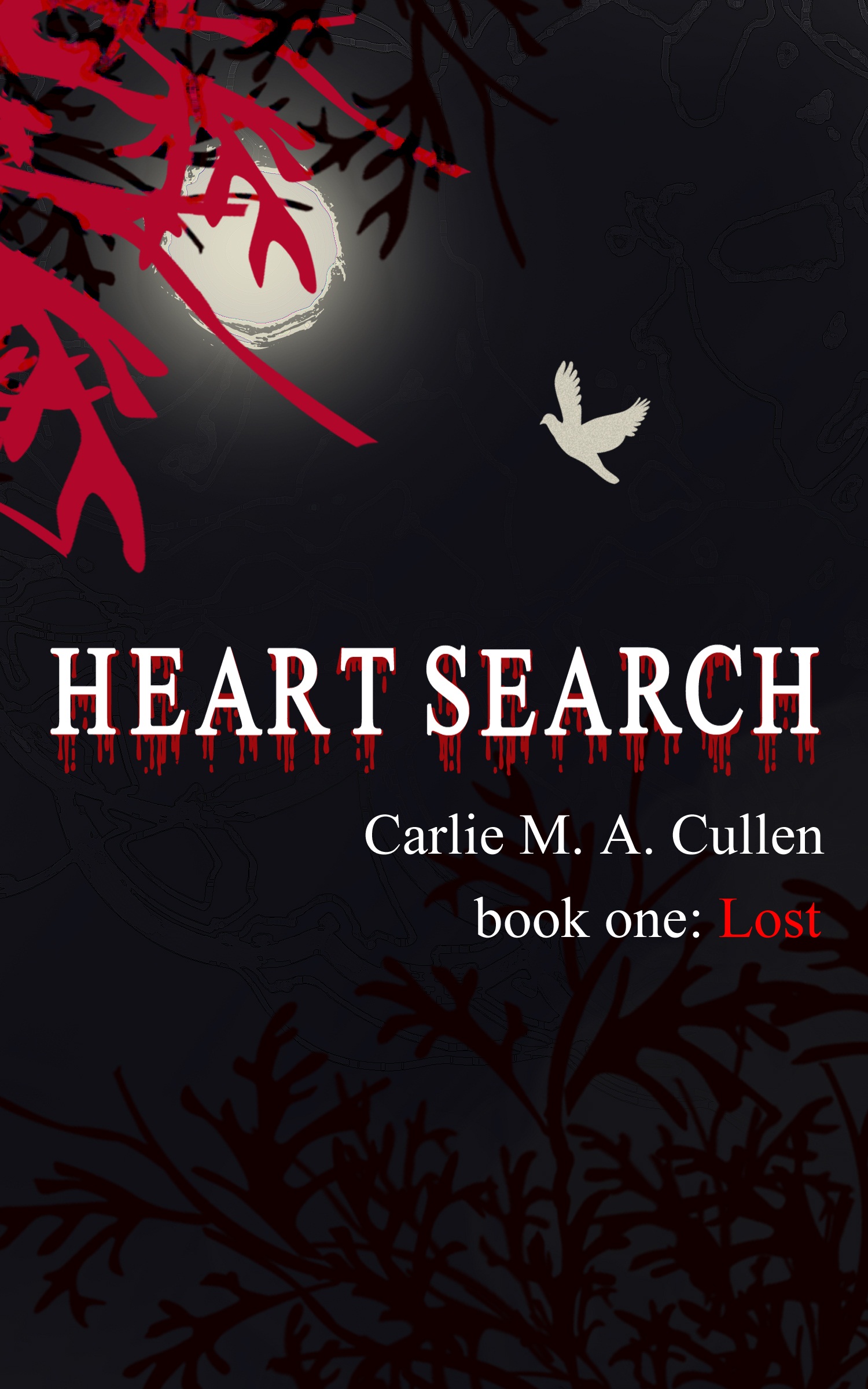
One of the best at this is Carlie M.A. Cullen, whose urban fantasy series Heart Search  featuring a coven of vampires is gaining in popularity. I think her books are so compelling because of her ability to draw a reader into the character without going over the top. So, how does she do it?

The opening line of chapter one of Heart Search Book 1, Lost reads like this: The sun, a ferocious golden orb, burnt into his skin as Joshua wandered aimlessly through the country park.

She could have just written The sun was hot and Joshua was killing time in a park.

But she didn’t, and the story is better for it–AND she showed you both the scene and Joshua’s mood in that one sentence.

So what can we learn from reading our favorite authors? We can see how they craft their tales, and we can learn those skills. Painters do this all the time, and we paint with words. 480px-Schmalz_galahad

Let’s pretend we’re writing a fantasy novel. We can go over the top, like a painting by Herbert Gustave Schmalz, or we can find a happy medium between too much and too little. There is no need to sink into overly sentimental and exaggerated pathos in order to inject feeling into our work.

Here we have a character who is on the run from a creature of some sort. 1. He was afraid. He was terrified to look back.

Example one tells the reader how the character feels. We might write this in our first draft when we are just trying to get the story out of our heads. An unskilled writer would consider it just fine the way it is, as it expresses his thoughts perfectly.

However, it tells the reader how to feel, and readers really don’t like being told what to do.

2. He wiped the sweat from his brow with a trembling hand, fear from his narrow escape coursing through his veins. Heart pounding, he leaned against the wall, listening for any sounds that shouldn’t be there before chancing a glance around the corner.

Personally, I would read book number two over book number one, because it’s more interesting and makes me want to know more about this character and his problems. We need to use physical symptoms a character might experience combined with their actions, but  we need to describe them in such a way that it is a natural part of the scene.

John slid down the wall, sitting in the mud, his breaths coming in hard, ragged gasps. Something trickled down his cheek, and wiping it, his hand came away with blood.

Another example: Theodor_Hosemann_Weinstube_1858

Lord Deccan’s fist hit the table. “Wine now, you miserable worm–or I’ll cut off your other ear!”

The one-eared innkeeper scuttled to the cellar. He quickly searched the shelves filled with dusty jars of cheap wine, settling at last on a vintage he thought might suffice.

Baldric’s guests normally drank from wooden tankards, but he knew that wouldn’t suit. There was a goblet, one he’d come by in a peculiar way, but it was a fine cup and would do well enough to stave off a tantrum of the lordly variety.

His shoulders hunched in anticipation of trouble, he approached the angry lord’s table. Setting the only goblet before the nobleman, he left the bottle and stepped away, bowing with feigned obeisance. Baldric had  survived  the  war with all but his left ear intact, and intended to remain that way.

Sir Paul McCartney, image from Rolling Stone MagazineWhat we are doing here is exactly like interpreting what our loved one is telling us, when he/she refuses to use their words. Seeing them sitting slouched in the chair, clicker in hand and numbly flipping through channels is a good indication of their mood. So we must picture the scene and describe it .

We must show the emotions as they are reflected by the physical cues our characters give us, but don’t tell them–a difficult trick to master but one we must all do if we want our work to engage the reader.

7 Comments

Filed under blogging, Fantasy, Humor, Publishing, Self Publishing, Uncategorized, WordPress, writer, writing

The Flâneur ~ the 4th POV

In a literary fiction seminar  I attended at a recent convention in Seattle, University of Washington  professor, Scott Driscoll, discussed  a fourth point of view I had heard of in college, that of the detached observer.  I had forgotten about it, and Driscoll gave it a name I’d never heard of: the Flâneur (idler, lounger, loiterer.) Many of you have heard of it as third-person objective or third-person dramatic. I see it as a completely separate way to show a story.

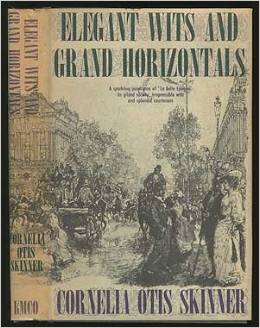
elegat wits and grand horizontalsWriting in 1962, Cornelia Otis Skinner said that there is no English equivalent of the term,  flâneur,  “just as there is no Anglo-Saxon counterpart of that essentially Gallic individual, the deliberately aimless pedestrian, unencumbered by any obligation or sense of urgency, who, being French and therefore frugal, wastes nothing, including his time which he spends with the leisurely discrimination of a gourmet, savoring the multiple flavors of his city”.

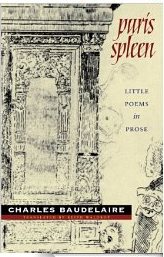
paris spleenThe French author, Charles  Baudelaire, characterized the flâneur as a “gentleman stroller of city streets.” He saw the flâneur as having a key role in understanding, participating in and portraying the city. Thus, in the narrative, a flâneur plays a double role by existing  as a present, but ignored, member of society who remains a detached observer of all that occurs within the story.

Having the option to use this point of view in the narrative of genre fiction opens up many possibilities for originality an author may not have considered:

  • he is NOT omniscient as in having complete or unlimited knowledge, awareness, or understanding of the fictional universe–he doesn’t know everything–but he does know what he sees.
  • he sees more than the individual characters do because his random travels take him all over town regularly, and he observes most of the tale as it unfolds.
  • Because he only knows what he sees, some information crucial to the resolution of the final events will be revealed to him at the last minute–a surprise to him too. When the last pieces of the puzzle are put together, his commentary summarizes the fall-out and final outcome of the characters involved.

Men without WomenIt is a POV used in classic french modernist literature to describe the story of certain social scenes in the city, but I can see this as a useful way to relate the events on a space-station, or indeed in many traditional genre fiction social settings.

Now for the downside of using the flâneur as your vehicle to convey your narrative:

  • He is not reliable—he has his own personality, offering subtle judgments and unconscious opinions on the behavior of the characters. Therefore, just as in a first-person narrative, the reader cannot be sure he is telling the unbiased truth.
  • The narrator  tells the story without describing any of the character’s thoughts, opinions, or feelings; so the reader can only guess at character motivations, and must assume the objective observer truly is objective and has told the truth in that regard.
  • It separates the reader from the intimacy of the action and slows the pace down.
  • It could become voyeuristic, if one writes graphic love scenes. {eeew.}

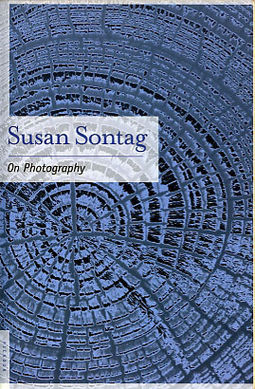
255px-On_PhotographyThe POV of a flâneur is also a vehicle used in in art, and in street photography.  Susan Sontag in her 1977 collection of essays, On Photographydescribes how, since the development of hand-held cameras in the early 20th century, the camera has become the tool of the flâneur:

The photographer is an armed version of the solitary walker reconnoitering, stalking, cruising the urban inferno, the voyeuristic stroller who discovers the city as a landscape of voluptuous extremes. Adept of the joys of watching, connoisseur of empathy, the flâneur finds the world “picturesque.”

Susan SontagOn Photography, pg. 55

I don’t see myself using this style of POV for an entire novel, but I can think of a thousand ways to use it in short-stories. Come November, when NaNoWriMo begins, I may give it a whirl, just for practice. Writing is a craft and I love finding different ways to express it. A fresh point of view to write from can only stretch my writing skills.

4 Comments

Filed under Blogger, Books, Fantasy, History, Humor, Literature, Publishing, Self Publishing, Uncategorized, WordPress, writer, writing

Kicking off the annual PNWA writers conference

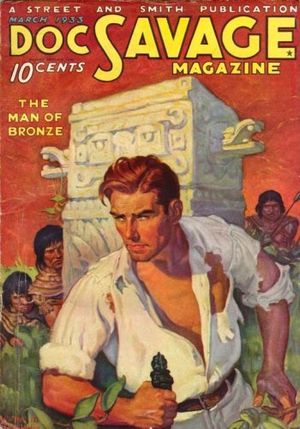
300px-DocsavageWell it’s that time of the year again–today is the first day of the Pacific Northwest Writers Association Conference, held in Seattle, Washington. I’m a proud member of PNWA, and find incredible inspiration at these conventions. This year’s keynote speaker is James Rollins, the well-known master of magic, mayhem, and monsters.  According to Wikipedia, the fount of all knowledge,  “Rollins found the authors of the Doc Savage series inspirational as a youth and acquired an extensive collection of the popular 1930′s and 1940′s pulp magazine stories.”

Quite frankly, I too adored Doc Savage, and discovering that another author was influenced by that wonderful, lurid, misogynistic series is quite a treat.  I’m looking forward to hearing him speak tonight.

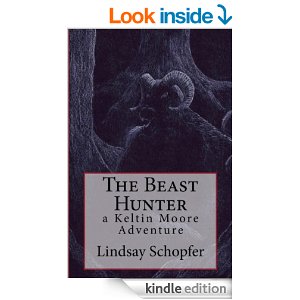
Another person whose seminar I am looking forward to will be given by Lindsay Schopfer, author of The Beast Hunter. He will be talking on the subject of unlocking character motivation, and I am quite interested in hearing what he has to say on the subject, as he is an accomplished author, and his characters leap off the page.

The Beast Hunter, Lindsay SchopferIt’s one thing to understand the mechanics of writing, the nuts and bolts of how to put together a coherent sentence and join it together with other sentences to make paragraphs. Most writers can do that. It’s quite another thing to write paragraphs that become stories other people will want to read.  Attending writers conferences and seminars gives me insight into how successful authors whom I’ve admired over the years think, and helps me stay fired up about my own work.

I will reconnect with many local northwest authors who I’ve become friends with over the years, and of course I’ll be connecting with agents and editors from all over the country.  This is a huge opportunity for me to absorb the mojo that happens whenever writers gather to talk shop. My next blog post will cover the events and hilarity of this one.

Jake RansomLast year I did learn one important thing–even the Hilton doesn’t have a clue when it comes to providing decent vegan entrees, no matter how the conference organizers claim they will offer them. Rather than starve as I did last year, this year I am commuting from home and bringing my own sack-lunch with plenty of snacks. It’s a bit of a drive, a little over 1 hour each way, but if the dinners provided are less than adequate, I’ll survive.

Today’s lunch will be an avocado, lettuce and tomato sandwich on whole-wheat. ♥  It doesn’t get any better than that!

Comments Off on Kicking off the annual PNWA writers conference

Filed under Adventure, Battles, Books, Humor, Publishing, Self Publishing, Uncategorized, Vegan, WordPress, writer, writing

Pareidolia

Martian_face_vikingSo I was reading a rather badly crafted novel last night–one that was entirely forgettable other than this one word: pareidolia.  I tried to get my kindle to find the meaning, and it was unable to answer that question too.  But  Wikipedia, the fount of all knowledge, came to the rescue:

Pareidolia (/pærɨˈdliə/ parr-i-doh-lee-ə) is a psychological phenomenon involving a vague and random stimulus (often an image or sound) being perceived as significant, a form of apophenia. Common examples include seeing images of animals or faces in clouds, the man in the moon or the Moon rabbit, and hearing hidden messages on records when played in reverse.

The word comes from the Greek words para (παρά, “beside, alongside, instead”) in this context meaning something faulty, wrong, instead of; and the noun eidōlon (εἴδωλον “image, form, shape”) the diminutive of eidos. Pareidolia is a type of apophenia, seeing patterns in random data.

Sir Paul McCartney, image from Rolling Stone MagazineHuh. Who knew? Apparently people have been suffering from pareidolia  for thousands of years: seeing patterns in the stars and calling them constellations,  faces and images in clouds, and seeing the face of the Virgin Mary in the patterns on their french toast. They also hear the Beatles implying “Paul is dead” when you play their songs backwards.   The Rorschach inkblot test uses pareidolia in an attempt to gain insight into a person’s mental state.

330px-Francesco_Melzi_-_Portrait_of_Leonardo_-_WGA14795You aren’t crazy–you are extremely creative and able to visualize it pretty clearly. Even Leonardo Da Vinci understood the phenomenon–apparently he wrote of pareidolia as a device for painters, writing “if you look at any walls spotted with various stains or with a mixture of different kinds of stones, if you are about to invent some scene you will be able to see in it a resemblance to various different landscapes adorned with mountains, rivers, rocks, trees, plains, wide valleys, and various groups of hills. You will also be able to see divers combats and figures in quick movement, and strange expressions of faces, and outlandish costumes, and an infinite number of things which you can then reduce into separate and well conceived forms.”

Well, it’s a word I most likely won’t use, but there it is — pareidolia — a new word in my vocabulary.


10 Comments

Filed under Adventure, Battles, blogging, Books, Fantasy, History, mythology, Self Publishing, WordPress, writer, writing

Nurturing the Muse

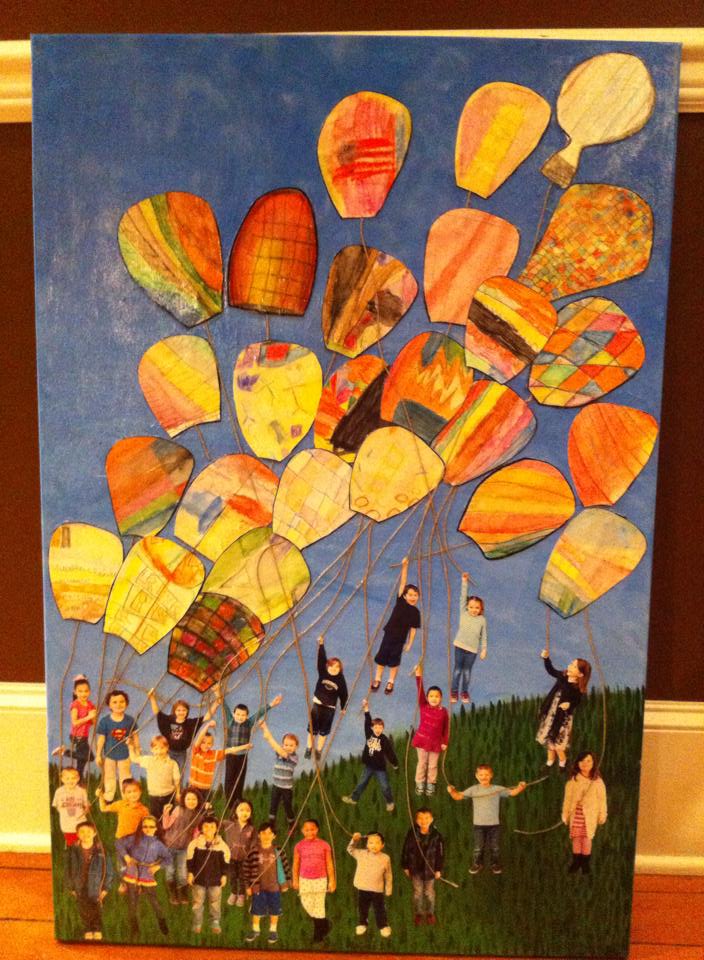
photo ©Leah Reindl 2014 used by permission

photo ©Leah Reindl 2014 used by permission

I come from a family whose creative muse is frequently expressed in music or in art. Musicians and artists dot the landscape of the old family tree. So far as I know, other than my daughter Leah, I am the only one who writes novels, but it may be that I am the only one who ever had the time to spend on such an endeavor.

When I watch children at play, I see the creativity that all musicians and artists know, that wonderful sense of “Ah ha! This is fun!” that comes with making something that exists only to bring pleasure to those who hear or see it. I see this sense of “I can do it!” in all the children, but by the time they are teenagers, much of that joy in creativity has been trained out of them. I wonder why and how it happens.

When I was young and working at dead-end jobs, I would come home and while my children did their homework or played, I would write, draw, or play the guitar. It was selfish, yes–in that it gave me pleasure. But it was not selfish, as it didn’t take me out of their world, and was something we could share. It taught them that they could take the time to be creative.

If there is any advice I would give young parents, it is to be creative in the presence of your children. You go to work every day, and by that you are teaching them that one must earn a living, yes, but the reward of earning that living is a life of love and creativity.

Some people will say bitterly that their job has burned all their energy and creativity from them. I say this is not necessarily so–you must take the time and energy you expend on hating your circumstances, and convert it into something creative. It’s amazing how many people I know who tell me they aren’t creative, but they doodle the most amazing  little pictures on the handouts during those requisite boring meetings-to-nowhere that we all endure in Corporate America.

That is creativity trying to get out.

The reason children are so creative is that they don’t do it for other people, they are doing it solely for the fun of it. Get out the crayons and a blank sheet of paper for a child who hasn’t been to school yet, and watch what happens. Add old magazines, round-end scissors, and mix up some flour & water paste, and the possibilities are endless. But once that child gets into a social environment where he begins to feel less talented than the child next to him, he shuts that creativity down.

science of relationships dot comInside every adult at the water cooler is kindergartner with a picture to draw, a song to sing, or a story to tell. Somewhere along the line, they began to fear they weren’t good enough and put it aside. Soon they have an “I can’t do it” attitude, because they fear failure and embarrassment. They have forgotten the joy of making a good, creative mess. They don’t remember how they learned as much from the failures as they did from the successes.

Don’t let the fact you have no money stand in your way. It takes very little money to draw a picture, or to write a story. You don’t need an expensive computer program–all you need is a pencil and paper.  And music?  You don’t need to play an instrument to sing. If you always wanted music lessons but couldn’t afford them, a great way to learn is to join a community choir. It’s free, and takes a little time away from your TV, but it is a way to jumpstart your joy of making music.

Our children are all artistic and creative in the most amazing (to me) ways, and I think that is because I never stopped making art or music.  They all sing or play instruments, or create art. Our older son, Billy, and youngest daughter, Meg, are working musicians. Billy is a drummer in a band with my ex-husband and my brother. Meg is a young mother and a working musician with several mp3s to her credit. If you are curious, here is her Facebook page where you can hear her work: Meg is Singing.

Meg and Billy are both incredible musicians, playing the drums, the guitar, keyboards, and in Meg’s case, the flute. Music is their passion. Son Dan is a guitar virtuoso, but he plays for his own pleasure. He is an incredible sports photographer, and his work can be seen here: SpotKazu

Christy and Leah express their art in other ways. Christy is an engineer who deeply loves her craft, and brings her sense of beauty into her home, designing an environment that is both serene and filled with color. Leah is an artist, one of her pictures can be seen at the top of this page, and a hair-dresser. She loves her craft as much as Christy does hers. They go to work, and art is expressed in their daily lives, enriching the lives of their children.

This is why I am and have always been a happy person despite the bumps and hardships of life–I did what I had to do to put food on the table, but I played and sang and wrote poems and goofy stories in my free time. My children were my audience and my co-creators. My husband’s children were raised in the same sort of environment (he is a trumpet player and she is an actress) and all 5 of our kids are sheer genius to me. They far outstrip me with their talents and abilities, and with their drive and ambition.

Tower of Bones Trailer, Music by MEG

2 Comments

Filed under blogging, Books, Fantasy, Humor, Literature, Music, Publishing, Self Publishing, Spirituality, writer, writing