Tag Archives: #amwriting

#NaNoWriMo prep part 2: Character Creation #amwriting

Today is part two of my October NaNo Prep series. This post explores character creation. Often, we have ideas for great characters but no story for them. For those who don’t write daily, it’s a way to help get you into the habit.
nano prep namesThese exercises will only take a few minutes unless you want to spend more time on them. They’re just a warmup, getting you thinking about your writing project. Each post will tackle a different aspect of preparation and won’t take more than ten or fifteen minutes to complete. By the end of this series, my goal is for you to have a framework that will get your project started.

SO—let’s begin with characters. Some will be heroes, others will be sidekicks, and still others will be villains to one degree or another.

rudimentary stylesheetI recommend you create a file that contains all the ideas you have in regard to your fictional world, including the personnel files you are creating. I list all my information in an Excel workbook for each book or series, but you can use any kind of document, even handwritten. You just need to write your ideas down. See my post, Ensuring Consistency: the Stylesheet.

Perhaps you already have an idea for the characters you intend to people your story with. Even if you don’t, take a moment to sit back and think about who they might be.

No matter the genre or the setting, humans will be humans and have certain recognizable personality traits.
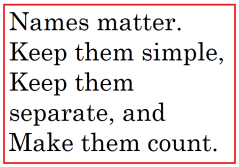
names keep them simpleSo, who is the protagonist of my intended story? Truthfully, in some aspect or another, they will be the person I wish I were. That is how it always is for me—living a fantasy in the safe environment of the novel. Bilbo was J.R.R. Tolkien’s younger self, an inexperienced man discovering the broader world through his wartime experiences. Luke Skywalker was the hero George Lucas always wanted to be.

For me, a story is the people—the characters, their interactions, their thoughts, and how the arc of the plot changes them. In return, writing the events they experience enables me to see my values and beliefs more clearly. I begin to understand myself.

I feel an author should introduce however many characters it takes to tell the story. But we must also use common sense. Too many named characters is too many.

So, let’s start with one character, our protagonist. First, we need a name, even if it’s just a placeholder. I have learned to keep in mind simplicity of spelling and ease of pronunciation when I name my characters. My advice is to keep it simple and be vigilant—don’t give two characters names that are nearly identical and that begin and end with the same letter.

Have you ever read a book where you couldn’t figure out how to pronounce a name? Speaking as a reader, it aggravates me no end: Brvgailys tossed her lush hair over her shoulder. (BTW—I won’t be recommending that book to anyone.) (Ever.)

You might think of the unusual spellings as part of your world-building. I get that, but there is another reason to consider making names easily pronounceable, no matter how fancy and other-worldly they look if spelled oddly. You may decide to have your book made into an audiobook, and the process will go more smoothly if your names are uncomplicated. I only have one audiobook, and the experience of making that book taught me to spell names simply.

Now that we have a name, even if it’s just a placeholder, we can move on to the next step. Then we write a brief description. One thing that helps when creating a character is identifying the verbs embodied by each individual’s personality. What pushes them to do the crazy stuff they do?

The person our protagonist appears to be on page one, and the motivations they start out with must be clearly defined. Identifying these two aspects is central to who your character is:

  • VOID: Each person lacks something, a void in their life. What need drives them?
  • VERBS: What is their action word, the verb that defines their personality? How does each character act and react on a gut level?
the hobbitIf we know their void, we should write it down now, along with any quirky traits they may have. Next, we decide on verbs that will be the driving force of their personality at the story’s opening. Add some adjectives to describe how they interact with the world and assign nouns to show their characteristics.

Example:

Maia (healer, 25 yrs. old, black ringlets, dark skin, brown eyes with golden flecks.) Parents were mages, father an earth-mage who builds and repairs levees in the cities along the River Fleet. VOID: Mother murdered by a priest of the Bull God. Father never got over it. Maia is not good with tools and unintentionally breaks or loses things. VERBS: Nurture. Protect. ADJECTIVES: awkward, impulsive, focused, motivated, loyal, caring. NOUNS: empathy, purpose, wit.

Once I do this for the protagonist and her sidekicks, I will ask myself, “Who is the antagonist? What do they want?”

Nord, a tribeless mage, turned rogue. Warlord desiring control of Kyrano Citadel. Intent on making a better life for his children and will achieve it at any cost. VOID: Born into a poor woodcutter’s family. Father abusive drunk, mother weak, didn’t protect him. VERBS: Fight, Desire, Acquire. ADJECTIVES: arrogant, organized, decisive, direct, focused, loyal. NOUNS: purpose, leadership, authority.

Our characters will meet and interact with other characters. Some are sidekicks, and some are enemies. Don’t bother giving pass-through characters’ names, as a name shouts that a character is an integral part of the story and must be remembered.

Your project could be anything from a memoir to an action-adventure. No matter the genre, the characters must be individuals with secrets only they know about themselves. This is especially true if you are writing a memoir. Over the next few days, list these traits as they come to mind.

Name your characters as they occur to you. Assign genders and preferences and give a loose description of their physical traits. If you like, use your favorite movie stars or television stars as your prompts.

We are changed in real life by what we experience as human beings. Each person grows and develops in a way that is distinctively them. Some people become jaded and cynical. Others become more compassionate and forgiving.

Everyone perceives things in a unique way and is affected differently than their companions. In a given situation, other people’s gut reactions vary in intensity from mine or yours. Whether we are writing a romance, a sci-fi novel, a literary novel, or even a memoir, we must know who the protagonist is on page one.

That means we need to create their backstory, just a paragraph or two. This will grow in length over time as the story takes shape. As we write each personnel file, we will begin to see their past, present, and possible future.
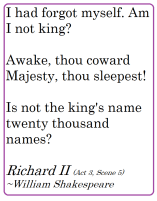
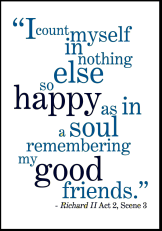
name quote, richard II shakespeareMaking lists of names is essential. You want their spellings to remain consistent and being able to return to what you initially planned is a big help later on. When we commence writing the actual narrative, each character will have an arc of growth, and sometimes names will change as the story progresses. Do remember to make notes of those changes.

Heroes who arrive perfect in every way on page one are uninteresting. For me, the characters and all their strengths and flaws are the core of any story. The events of the piece exist only to force growth upon them.

Posts in this series to date:

#NaNoWriMo prep part 1: Deciding on the Project #amwriting


Credits and Attributions:

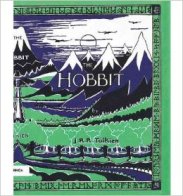
Dustcover of the first edition of The Hobbit, taken from a design by the author, J.R.R. Tolkien.
17 Comments

Filed under writing

The Plot Generator – a cure for boredom #amwriting

We all have moments where we can’t figure out what our characters need to do next. Sometimes, all we have is a character and a vague premise for the story. I’ve been invited to write a short story for a specific anthology, but all I have is the ghost of an idea.

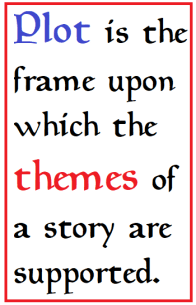
plot is the frame upon which the themes of a story are supportedRather than obsess about my lack of creativity, I decided to have fun with it. Several young writers in my NaNoWriMo region have said they used a plot generator to jumpstart their ideas, so I thought I’d give that a try.
The internet has a plethora of plot generators – who knew there was such a demand for plots? I chose the top one because of the algorithms. Or perhaps it was at the top for something even more sinister – corporate bribery.

Either way, no problem. No matter how it got there, if it’s at the top of page one, it must be good, right? I believe everything I’m told by the internet, so I went with it.

The website opens with a template. You plug in a few words that pertain to what you think your story is, and presto! The internet generates your plot.

I thought I’d try that and see what it came up with. I invented two characters, John Smith and Morris Jones.

When asked what sort of dwelling they inhabited, I decided they lived in an inn.

The next spot in the template wanted a word that described what the dwelling meant to my characters.

“Well,” I thought, “it’s probably cold and rainy out there in Fantasy World, so an inn means ….”

  • Shelter

After that, the plot generator asked me for a list of keywords.

Well, that was both unkind and unfair.

I’m horrible at thinking up keywords. If I could think up keywords, I wouldn’t be consulting a plot generator. I’d be looking up my horoscope instead.

But the template was staring at me, demanding answers. I had a teacher who always looked at me that way, making me nervous, expecting results ….

So, I fired off the first words that popped into my head, most of them aimed at the stupid plot generator:

  • Author-thoughtsCursed
  • Lying
  • Worrying
  • False
  • Deceitful
  • Frantic (my state of mind)
  • Charming (me, if you actually know me)
  • Passionate (me, when it comes to chocolate)
  • wicked
  • Fake
  • Violent
  • Cold (how the search for keywords left me)

Then I was asked for three professions. By now, I was getting into the swing of things and having a good time. I decided to give John and Morris honest occupations:

  • Blacksmith (definitely honest).
  • Loan shark (definitely dishonest, but it popped into my head, so …).
  • Pharmacist (fairly random, but we had to pick up a prescription later, so it was on my mind).

Who were their companions? I had no clue, so I opted for generic:

  • Men
  • Mages
  • People

The generator asked what they might be searching for. I didn’t know my two characters were searching for anything. “Well,” I thought, “this is a fantasy, so ….”

  • Spells
  • Swords

Then the generator asked me to name a big battle. That stumped me. I figured that Waterloo was already taken, and the Battle of Hastings was too. So I went with a made-up name:

  • Shallowford

This is what the plot generator gave me:

In an inn there lived a deceitful, frantic loan shark named John Smith. Not a cursed charming, passionate inn, filled with charms and a worrying smell, nor yet a wicked, violent, cold inn with nothing in it to sit down on or to eat: it was a loan shark-inn, and that means shelter.

One day, after a troubling visit from the pharmacist Morris Jones, John leaves his inn and sets out in search of three false spells. A quest undertaken in the company of people, mages and fake men.

In the search for the mage-guarded spells, John Smith surprises even himself with his loyalty and skill as a blacksmith.

During his travels, John rescues a sword, an heirloom belonging to Morris. But when Morris refuses to try lying, their friendship is over.

However, Morris is wounded at the Battle of Shallowford and the two reconcile just before John engages in some serious lying.

John accepts one of the three false spells and returns home to his inn a very wealthy loan shark.

By golly, I think that’s the perfect plot for a story in five paragraphs, including a happy ending. The prose is … (insert superlatives here).

the hobbitThis plot generator has clearly been studying J.R.R. Tolkien, as it has managed to plagiarize the first paragraph of The Hobbit right down to the punctuation.
“In a hole in the ground, there lived a hobbit. Not a nasty, dirty, wet hole with ends of worms and an oozy smell, nor yet a dry bare sandy hole with nothing to sit on or eat: it was a hobbit-hole and that means comfort.”

J.R.R. Tolkien, The Hobbit, or There and Back Again, published 1937 by George Allen & Unwin.

Maybe I should write a Gothic romance next. I could probably use the same keywords.

18 Comments

Filed under writing

When Good Advice Goes Bad #amwriting

The craft of writing involves learning the rules of grammar, developing a broader vocabulary, learning how to develop characters, build worlds etc., etc. Most of us don’t have the money to embark on an MFA program in writing. Instead, we educate ourselves as well as we can.

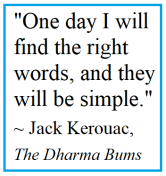
Jack Kerouak on writing LIRF07252022Even if you have an MFA degree, you could spend a lifetime learning the craft and never learn all there is to know about the subject. We join writing groups, buy books, and most importantly, read. We analyze what we have read and figure out what we liked or disliked about it. Then, we try to apply what we learned to our work.

Most writing advice is good because it reinforces what we need to know about the craft, and simple sayings are easy to remember. They encourage us to write lean, descriptive prose and craft engaging conversations.

The same advice can be bad because it is so frequently taken to extremes by novice authors armed with a little dangerous knowledge.

  • Remove all adverbs.

This advice is silly. Without descriptors, you can’t show mood, atmosphere, or setting. Remember, not all adverbs end in “ly,” so use a little common sense and don’t use unnecessary adverbs.

I am a wordy writer and a poet. I love words in all their many shapes and forms. I know readers like lean prose, so I work to trim it, sometimes more successfully than others. In the second draft, I use the global search (find option) to look for each instance of ‘ly’ words and rewrite those sentences to make them more active.

Margaret Atwood on writing LIRF07252022

  • Don’t use speech tags.

Well, that makes things pretty confusing. Who said that, and why are there no speech tags in this nonsense?

  • Show, Don’t Tell. Don’t Ever Don’t do it!

We’ve all experienced intensely painful feelings, such as fear, sadness, and anger. If you have shared your work with a writing group, you have been admonished to show these emotions rather than saying, “Joe grew angry.”

You can see their point. So, you sit down and rewrite your scene graphically: Joe snarls, cheeks going hot, brows pulling together, eyes glaring, lips curling in a sneer, and fists clenching. Edith sits hunched in on herself with drooping shoulders, downturned quivering lips, shaking hands, nausea rising, and tear-streaked cheeks.

Maybe that much detail is necessary, but maybe it’s not. Set that scene aside and come back to it later. Then look at it with fresh eyes and decide what will be enough to show their emotions and what is too much.

An avalanche of microscopic showing can make your characters seem melodramatic and sometimes cartoonish. Truthfully, that much physical drama doesn’t show a character’s emotions. What is going on inside their heads?

You must either relay the thought process that led to those physical reactions or lay the groundwork with some crucial bits of exposition.

  • Write what you know.

Your life experiences shape your writing, but your imagination is the story’s fuel and source.

  • If you’re bored with your story, your reader will be too.

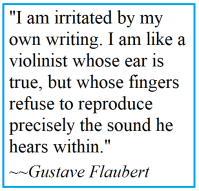
Flaubert on writing LORF07252022You have just spent the last year or more combing through your novel. This is another example of silly advice that doesn’t consider how complex and involved the process of getting a book written and published is. I love writing, but when you have been working on a story through five drafts, it can be hard to get excited about making one more trip through it, looking for typos.
  • Kill your darlings.

I’ve said this before, but it bears repeating. We can’t be married to our favorite prose. When a paragraph or chapter we love no longer fits the story, we must cut it, save it in a separate file, and move on.

However, cutting a passage just because you like it is stupid. Maybe it does belong there—maybe it is the best part of that paragraph.

  • Cut all exposition.

BE reasonable. Some background information is essential to making the story understandable to a reader. How, when, and where you deploy the exposition is what makes a great story. Hold the deep history back – like a magician, only produce the backstory at the time and place where the characters and the reader need to know it.

Good advice taken to an extreme has become a part of our writing culture. This is because all writing advice has roots in truth.

  • Too many descriptors can ruin the taste of an author’s work.
  • Too many speech tags can stop the eye, especially if the characters are snorting, hissing, and ejaculating their dialogue.
  • Too much telling takes the adventure out of the reading experience.
  • Too much showing can be tedious and is sometimes visually revolting.

Our task is to find that happy medium between too much and not enough. Our voice and writing style reflect our thought processes and the way we strive for balance.

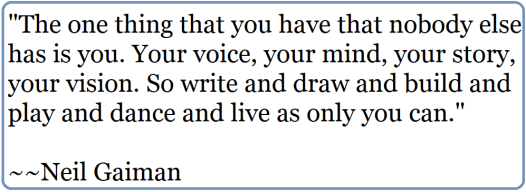
Neil_Gaiman_QuoteWhen we first embark on learning this craft, we latch onto handy, easy-to-remember mantras because we want to educate ourselves. Unless we’re fortunate enough to have a formal education in the art of writing, we who are just beginning must rely on the internet and handy self-help guides.
Something to remember: most readers are not editors. They will either love or hate your work based on your voice, but they won’t know why. Voice is how you break the rules, but you must understand what you are doing and do it deliberately. Craft your work so it expresses what you intend in the way you want it said. So, the most important rules are:

  • Trust yourself,
  • Trust your reader.
  • Be consistent.
  • Write what you want to read.

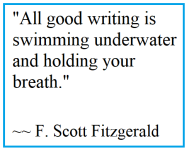
F Scott Fitzgerald on Good Writing LIRF07252022We can easily bludgeon our work to death in our effort to fit our square work into round holes. In the process of trying to obey all the rules, every bit of creativity is shaved off the corners. A great story with immense possibilities becomes boring and difficult to read. As an avid reader and reviewer, I see this all too often.
Great authors work to learn the craft of writing and apply writing advice gently. Their work stays with the reader long after the last line has been read.

36 Comments

Filed under writing

Why you should consider writing a narrative essay #amwriting

Many highly respected, award-winning authors began as freelancer authors, writing narrative essays, and other articles, humorous or serious in nature. Narrative essays are drawn directly from the author’s real-life experiences but aren’t necessarily factual or accurate.

narrative essayThey often detail an experience or event and how it shaped the author on a personal level. For those of us who wish to earn actual money from writing, the narrative essay appeals to a broader audience than short stories, so more magazine editors are looking for them.
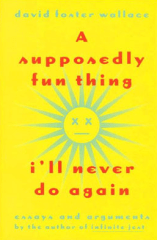
I have mentioned one of my favorite narrative essays before, 1994’s Ticket to the Fair (now titled “Getting Away from Already Being Pretty Much Away from It All“) by the late David Foster Wallace and published in Harpers. It is a humorous, eye-opening story of a “foreign” (east coast) journalist’s assignment to cover the 1993 Iowa State Fair. Wallace wrote it from his own point of view.

At the outset, Wallace tells us how he was born several hours’ drive from the fair but had never attended it. He was a slightly arrogant city boy without knowledge of farms, farm culture, or animals.

In pursuit of his dream, Wallace left the Midwest for the East Coast and never looked back after graduating high school and college. He was overjoyed when he was assigned to report on the fair for Harpers. As a naïve young correspondent, he didn’t think about the fair beyond the fact that he was getting his first official press pass, making him a “real” reporter.

Wikipedia summarizes Ticket to the Fair this way: Wallace’s experiences and opinions on the 1993 Illinois State Fair, ranging from a report on competitive baton twirling to speculation on how it represents Midwestern culture and its subsets. Rather than take the easy, dismissive route, Wallace focuses on the joy this seminal midwestern experience brings those involved.

He was shocked and repelled by some aspects of showing farm animals in a fair. Raising and caring for hogs or sheep can be a dirty business and he was unprepared for the sights and smells.

But he saw the joy and pride people have in their livestock and their skills. By connecting with their enjoyment, he was able to write a narrative that made his name as an author.

A-supposedly-fun-thing-first-edition-coverBut just what is an essay in the first place? The primary purpose of an essay is to offer readers thought-provoking content. The narrative essay conveys our ideas in a palatable form, so writing this sort of piece requires authors to have some idea of the craft of writing.
That means we must understand and write to the publishing industry’s standards of grammar and mechanics.

A narrative essay is a story that begins with an experience. You know how that experience began and ended, so you must plan how you want your account to be perceived. You must develop both content and structure.

Just like any other form of short fiction, a narrative essay has

  • an introduction,
  • a plot,
  • characters,
  • a setting,
  • a climax,
  • a conclusion.

It’s not a memoir, so we can’t ramble on. Authors must choose words that convey the intended mood concisely.

We must be intentional with how we phrase things because narrative essays often present profound and (sometimes) uncomfortable ideas. A skillful writer can offer these concepts in a way that the reader feels connected to the story, even if they disagree.

A good essay is a conversation in an entertaining form, one that expresses far more than mere opinion.

Names should be changed, for your protection, as narrative essays give readers the author’s personal view of the world, the places we go, and the people we meet along the way.

An honest narrative essay contains an author’s opinions. Sometimes those sentiments are not glowing accolades.

Those who write narrative essays can make a living because literary magazines have open calls for them. Editors and publishers are seeking well-written essays with fresh ideas about wide-ranging topics.

Some will pay well for first publication rights.

Original_New_Yorker_coverHOWEVER – if you want to be published by a reputable magazine, you must pay strict attention to grammar and editing.
Never submit anything less than your best work. After you have finished the piece, I suggest you set it aside for a week or two. Then come back to it with a fresh eye and check the manuscript for:

  • Spelling—misspelled words, autocorrect errors, and homophones (words that sound the same but are spelled differently). These words are insidious because they are actual words and don’t immediately stand out as being out of place.
  • Repeated words and cut-and-paste errors. These are sneaky and dreadfully difficult to spot. Spell-checker won’t always find them. To you, the author, they make sense because you see what you intended to see. For the reader, they appear as unusually garbled sentences.
  • Missing punctuation and closed quotes. These things happen to the best of us.
  • Digits/Numbers: Miskeyed numbers are difficult to spot when they are wrong unless they are spelled out.
  • Dropped and missing words.

If you want to work as a freelance author, don’t be afraid to use your words – readers of narrative essays have a wide vocabulary. That said, never use jargon or technical terms that only people in certain professions would know unless it is a piece in a publication geared for that segment of readers.

Above all, be intentional and active with your prose, and be bold. I enjoy reading works by authors who are adventurous in their prose.

And on that note, we must be realistic. At first, you will have trouble selling your work. This is because you haven’t gained a reputation yet, and your work might not appeal to the first editors you send it to.

If you put two people in a room and give them the most exciting thing you’ve ever read, you’ll hear two different opinions about it. They probably won’t agree with you.

1915NatGeog (2)Don’t be discouraged by rejection. Rejection happens far more frequently than acceptance, so don’t let fear of rejection keep you from writing pieces you’re emotionally invested in.
I always say this, but it is true: the way you handle critiques and rejections tells editors what kind of person you are to work with. Rejection gives you the chance to cross the invisible line between amateur and professional. Always take the high ground.

  • If an editor has sent you a detailed rejection, respond with a simple “thank you for your time.”
  • If it’s a form letter rejection, don’t reply.

When you receive that email of acceptance, do that happy dance, and don’t be shy about it.

There is no better feeling than knowing someone you respect liked your work enough to publish it.


Credits and Attributions:

Wikipedia contributors, “A Supposedly Fun Thing I’ll Never Do Again,” Wikipedia, The Free Encyclopedia, https://en.wikipedia.org/w/index.php?title=A_Supposedly_Fun_Thing_I%27ll_Never_Do_Again&oldid=1093971404 (accessed July 12, 2022).

6 Comments

Filed under writing

How the Written Universe Works: Theme #amwriting

Epic Fantasy is often dark in tone and always epic in scope. It usually explores the struggle against supernatural, evil forces.

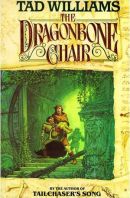
how the universe works themeTad Williams’s Memory Sorrow and Thorn is a classic Epic Fantasy series. Many of the themes and tropes he explores are rooted in J.R.R. Tolkien’s work. However, Williams took those themes and tropes down a darker, more violent path, laying bare the evil and the good of which humanity is capable.

This trilogy revolves around a schism in the family of the late king, Prester John. That enmity drives the larger narrative. In this 3-book series, the underpinning theme is the circle of life represented through birth, growth, degeneration, and death. A prominent theme driving the action is the family dynamics, warped by lies and secrets kept across three generations.

The other fundamental themes are the hero’s journey and coming of age. Both Simon (the kitchen boy turned hero) and Miriamele (the princess turned hero) are driven by these themes, as are Jiriki and Binabik to a certain extent.

I’ve mentioned before that theme is the backbone of the story. It’s an idea, a thread that winds through a plot arc and connects events that would otherwise appear random.

Themes are often polarized, good vs. evil, faith vs. doubt, fate vs. free will, human vs. nature,

Epic fantasy novels, being longer in word count than other genres, leaves room in the plot for multiple themes to appear. This creates opportunities for the subplots to add depth, revealing the backstory without an info dump.

Polarity is a fundamental aspect of the inferential layer of a story.

The inferential layer is the unspoken, the knowledge a reader gains by extrapolation, interpretation, and reasoning. It is the layer that requires the reader to think. Polarity guides the reader as they make sense of the clues.

300px-The_Dragonbone_ChairWhen the story opens with the first novel, The Dragonbone Chair, events show the royal family is fraught with violent emotions, creating conflict. King Prester John’s sons, Elias and Josua, appear to be the center of a storm that will destroy Osten Ard.
In any story that explores the relationships within a family as part of the larger narrative, we begin with the circle of life.

Hubris is another theme that drives the plot and is expressed in the character of the apparent antagonist, Pryrates. Hubris refers to excessive self-confidence and the terrible decisions that arise from it.

This conflict allows Williams to employ the subtheme of chaos and stability. Evil is portrayed by taking this theme to an extreme: Pryrates enables Elias’s possession by the true antagonist, the Storm King.

Williams also riffs on the Hero’s Journey, the bonds of friendship, and the gray area between good and evil—moral ambiguity.

A crucial consideration in planning a fantasy novel is plot structure or how the story is arranged. As in all works, the central underlying theme is introduced in the early pages and supports the plot through to the end.

Subthemes are introduced and combined with the main theme to create a backbone for the story. Without that backbone, the narrative can wander all over the place, and readers will lose interest.

The hero’s journey is a theme that allows authors to employ the subthemes of brother/sisterhood and love of family. These concepts are heavily featured in the books that inspired me, so they find their way into my writing.

Tad Williams supported his themes by adding these layers to his narrative:

  • character studies
  • allegories
  • imagery

These three layers are driven by the central themes and advance the story arc.

Williams’s large cast of characters is portrayed as if they are real people. They are a mix of good and bad at the same time. Some lean more toward good, others toward bad. Either way, he has them act and react with good, logical intentions. Each desperately wants what they think they deserve.

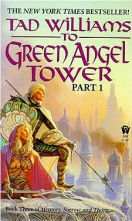
Green_Angel_Tower_P1By the end of the third book, To Green Angel Tower, Williams has employed the theme of Truth vs. Falsehoods to completely corrupt the Circle of Life theme. All the characters – the antagonists and the protagonists – deceive themselves about their own motives.

Regardless of their race, they share some characteristics with humans. Each character hides the truths they can’t face behind other, more palatable truths.

I always think that inserting a whiff of human frailty into a character makes them more interesting, more relatable.

Memory Sorrow and Thorn is considered a cornerstone of modern epic fantasy. This is because in the early 1980s, when Tad Williams began writing this trilogy, he took traditional themes and tropes and applied his original angle to them, along with modern prose and phrasing. He took each of the themes binding his narrative together and went one step farther, adding a hint of horror.

The horror would have been gratuitous if he hadn’t supported his narrative so well with all the themes and subthemes. Williams was inspired by Tolkien, and in turn, Memory, Sorrow, and Thorn has inspired countless authors.

Your assignment: on a new document, pick a theme from the following list, create a character or two, and write two paragraphs exploring that theme.

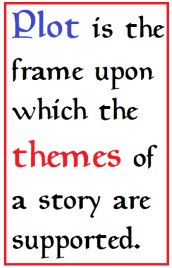
  • plot is the frame upon which the themes of a story are supportedFate vs. free will
  • Faith vs. doubt
  • Good vs. evil
  • Greed
  • Hubris
  • Humanity vs. nature
  • Justice
  • Lust for Power
  • Pursuit of Love
  • Revenge
  • Sacrificial Love
  • Survival against the odds
  • War

All genres are made specific by the tropes that define them. Epic fantasy shares some tropes with high fantasy.

It often includes elements such as elves, fairies, dwarves, dragons, demons, magic or sorcery, constructed languages, quests, coming-of-age themes, and multi-volume narratives.

My next post will discuss the tropes featured in the Memory, Sorrow, and Thorn trilogy and how the themes we’ve discussed support them.

3 Comments

Filed under writing

The Business Side of the Business – Choosing your Publishing Path

Authors just starting out, either Indie or traditionally published, rarely earn enough royalties to support their families. Regardless of the path you choose, if your spouse makes enough to support you in your early days, you can devote more time to advancing your career.

Its a BusinessBut not every author has that option.

Before you embark on either path, consider this: publishers, large and small, don’t waste budgets promoting work by unknown authors the way they do the few who have risen to the ranks of their guaranteed bestseller lists.

You will do the work of getting your name out there regardless of whether you choose the traditional route or not.

So, what are the perks of going traditional if you’re an unknown? Why go to the trouble of wooing an agent and trying to court a publisher? Even today, an air of ‘respectability’ clings to those who are traditionally published.

The traditional publishing industry does offer incentives to those who get their foot in the door. Once you are in their flock, you have an editor who works with you personally. Most of the time, you can forge a good working relationship with this editor.

Conversely, Indies must find an independent editor and pay them out of their own pocket.

While the traditional publisher may not treat a new author the way they do their highest sellers, they may dedicate a small budget to marketing your work with newspaper ads, or swag posters for bookstores to place as decoration. That small amount will be more money than you might be able to pay as an Indie.

Traditional publishers have contracts with markets like Target, Walmart, Costco, airports, and grocery store chains. That is a huge thing, assuming your publisher considers your work worthy of such a commitment on their part.

However, your first book most likely won’t see the inside of a Walmart right away. The publisher’s confidence must be earned. You can expect to find your work on the slow track for a while as the publisher tests the water and sees how well your work sells through Amazon and Barnes & Noble.

These are all valid reasons for attempting to go the traditional route.

However, there are equally valid reasons for going Indie. Your book will be published. If you seek a book contract, you must pass a gauntlet of gatekeepers: literary agents, acquisition editors, editorial committees, and publishing-house CEOs.

These people must answer to the international conglomerates that actually own most American publishing companies. This is why you are most likely to be stopped by a rejection letter.

It’s not the quality of your work. It’s the publishers’ perception of what the reading market will purchase and what it means to the accountants, who in turn must answer to their shareholders.

As an Indie, you may not be a bestseller, but you’ll make more money on what you do sell.

McLaine_Pond_In_July_©_2018_ConnieJJapsersonIn most standard book contracts, royalty terms for authors are terrible, and this is especially true for eBook sales. Most eBooks are sold through online retailers like Amazon. If you’re a traditionally published author and your publisher priced your eBook at $9.99, this is how the Amazon numbers break out. No matter what you think of Amazon, it is still the Big Fish in the Publishing and Bookselling Pond:
  1. Amazon takes 30% of the list price, leaving about $7.00 for the publisher, agent, and you to split.
  2. The publisher will keep 75% of that $7.00, or $5.25.
  3. The publisher will pay you 25% of that $7.00—just $1.75.
  4. You then must pay your agent her 15% commission—or 26 cents.
  5. You net just $1.49 on each $9.99 eBook sale. This is assuming your publisher honestly reports your sales and royalties, and in my personal experience, a few small publishers do not.

Unfortunately, traditional publishers usually charge far more than $9.99 for eBooks, charging more than they do for paperbacks in their effort to keep eBook sales down and drive paper sales.

If you self-publish your eBook at that same price, for each sale of your $9.99 eBook, Amazon takes its 30%, leaving you $7.00. I don’t recommend such a high eBook price, but at  $4.99 or even $2.99, you stand to sell books and make a decent profit.

You’ll receive royalties sooner. When a publisher accepts your book, he offers you an advance against sales. These are often paid in installments stretched out over long periods and are tied directly to how well or how poorly your book is doing in real market time. Publishers report sales and pay royalties slowly, as royalty statements are usually issued semiannually. Your royalty checks arrive later, so you can’t rely on this income until you have become an established author in their world.

Conversely, most eBook distributors like Draft2Digital, Barnes & Noble, and print-on-demand services such as Amazon KDP, report your sales virtually. Best of all, they pay your royalties monthly, with just a sixty-day lag from the day sales began.

Finally, and from my point of view, most importantly: You retain all rights to your work.

Legacy book contracts are a terrible danger zone for the author. The sheer complexity of negotiating a contract can be confusing and intimidating. I recommend you hire a lawyer specializing in literary contracts or risk unwittingly signing away secondary and subsidiary rights to your work forever.

Please, read this article, A Publishing Contract Should Not Be Forever, published on the Authors Guild website on July 28, 2015. It is an eye-opening look at the industry and its practices.

Now we arrive at marketing. As I said before, you must do the work of getting your name out there regardless of whether you choose the traditional route or not. You must still work your day job to feed your family.

Being an indie author or being published by a small press means you are on your own as far as getting the word out about your books. Even some traditionally published authors find that if they want their books seen at a convention, they must pay for the table, find their own hotel accommodations, and pay their own way there.

You pay upfront for your book stocks if you are an indie.

If you are traditionally published, the costs of your stock are deducted from future royalties. Publishing houses are not charities, so you will pay for stocking and restocking your inventory either way you choose.

If you choose the indie path, you pay for editing, beta reading, and proofreading. You will also need a graphic designer for book covers and should seek professional formatting services to create the files for your paperback book.

lute-clip-artHowever, to be considered for a traditional contract, you should hire an editor, beta reader, and proofreader to ensure the manuscript you submit to an agent or editor demonstrates your ability to turn out a good, professional product.
Either way, it’s a business, and you must factor these costs into your budget.

Both paths are reasonable in today’s market. There are positive rationales for choosing either direction, as well as negatives. You will have to work hard no matter which path you choose.

The publishing path is a critical choice for an author to make and is one we shouldn’t make lightly. A decision that affects your career as strongly as this deserves deep consideration of the many pros and cons.

13 Comments

Filed under writing

The Business Side of the Business: conferences and conventions #amwriting

If you are a regular here at Life in the Realm of Fantasy, you may have seen my two-part series on the business side of being an author. If not, and if you are interested, I will put the links to those articles at the bottom of this post.

Its a BusinessRegardless of your publishing path, you must budget for certain things. You can’t expect your royalties to pay for them early in your career – and many award-winning authors must still work at their day jobs to pay their bills.

But conferences and conventions are one way to meet agents and editors. Also, if you have a table at sci-fi and fantasy fan conventions (or whatever your genre), you will meet readers and create a fanbase for your work.

No author, indie or traditionally published, can live on their royalties at first, so attending conferences requires planning, possibly up to a year in advance. I suggest you work with your budget and set aside the money for conventions and seminars.

I do have some ways to keep your costs down.

First: Join the association offering the conference, as members get reduced conference fees and many other perks all year long. Take advantage of the early-bird discount if you can. I belong to three writers’ associations, and each one offers something I can use all year long.

Second: Does your library system offer occasional seminars by local authors? If it is a public library, these will likely be free.

Third: Use the internet – google “writers’ conferences in my area.” If you can find a local one, you can eat food that fits your dietary needs and sleep at home, which means you only pay for the conference itself.

Fourth: If you are planning to attend a large convention or conference where you will need to stay in a hotel, take simple foods that can be prepared without a stove, and which are filling. Being vegan, I tend to be an accomplished hotel-room chef, as most coffee bars don’t offer many plant-based options. While that bias is changing, I still go prepared.

road tripConferences are an extension of the self-education process. I have discovered so much about the craft of writing, the genres I write in, and the publishing industry as a whole—things I could only learn from other authors. I gained an extended professional network by joining The Pacific Northwest Writers Association in 2011 and going to their annual conferences.

This last weekend, I attended the first of three conferences I have budgeted for 2022. The Science-fiction & Fantasy Author’s Association held the 2022 Nebula Conference this last weekend. It was a virtual conference again this year, so my only cost was the conference fee itself. That cost was quite reasonable because I took advantage of both my membership discount and the early bird discount.

The Nebula Conference is normally held in Southern California, and I am not a happy flyer, so a virtual conference was optimal for me. I may not attend in person again. However, since SFWA is a global association of professional science fiction and fantasy authors, their conferences will also be available in virtual form from here on out.

The following two conferences I have scheduled will be in September and are in-person events. The first, Southwest Washington Writers Conference (SWWC), is local enough that I can commute from my home. The last one for this year is Pacific Northwest Writers Association (PNWA) in the Seattle area. It’s a 70-mile commute, so I will stay in the hotel. September is the start of virus season, so I expect many people (like me) will wear masks at both events.

Me working in a starbucks, through the fishbowl, copyright Dan Riffero 2013

Me writing in a Seattle Starbucks, taken through a fish tank. I was the big fish in that tank! Photo by Dan Riffero.

As a small fish in a very big ocean, attending these two local conferences puts me in contact with other authors and industry professionals. The attending authors are people I don’t usually come into contact with as they hail from all over Washington State, Oregon, Idaho, and British Columbia.

I always attend as many panels and workshops as I can fit into my schedule. I do this because the seminars offered at each of the three conferences have taught me as much about the craft as about the business of writing.

This weekend at the Nebula Conference, I attended many outstanding panel discussions by famous authors. All the authors on the panels were people who have achieved success, and they shared their insights on current trends in the publishing industry.

My favorite seminar out of all those stellar panels was the one discussing Speculative Fiction Poetry, which was held on Sunday morning. I have always written poetry and love reading it. Many spec fic poets are experimenting with sestinas, which (thanks to the pandemic) became my new favorite poetic form to write in during lockdown. Trying to adhere to a strict structural form challenges my creativity and forces me to grow in all areas of writing craft.

ICountMyself-FriendsSometimes I am invited to participate in panels or offer a workshop, and I can share my experiences with others. Either way, I learn things. In September, I will be on a panel with Lee French, Johanna Flynn, and Ellen King Rice at SWWC, talking about what we wished we had known when we first began writing professionally.
I feel honored (and a bit intimidated) to be a part of this group as they are award-winning writers. But more than that, they are women whose work I enjoy and respect. But facing your fear of public speaking is part of what growing your career entails – putting yourself out there, learning what you can, and sharing what you know.


Two previous posts on the Business side of the Business:

The Business Sequence for Writers, guest post by Ellen King Rice #writerlife | Life in the Realm of Fantasy (conniejjasperson.com)

The Business Side of the Business, part 2: Inventory #writerlife | Life in the Realm of Fantasy (conniejjasperson.com)

8 Comments

Filed under writing

How the Written Universe Works – Warping Time #amwriting

In cosmology, the concept of space-time combines space and time into a single abstract universe. Apparently, we all move through time. Here on earth, time either passes us, or we pass the time. It’s all relative (Einstein humor) to how fast you are going and a lot of sub-atomic particle stuff I can’t really take the time to explain here, and you aren’t interested in anyway.

How the written universe works - warping time.Time interests me because I mostly write fantasy, although I write contemporary short fiction and poetry. Fantasy, and all speculative fiction, relies heavily on worldbuilding, and managing time is a facet of that skill.
But all genres, including contemporary and literary, require worldbuilding. Every story, true or fiction, is set SOMEWHERE, either in this world we are familiar with or in an alternate fantasy universe.

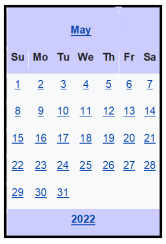
When I begin writing a book, I create a stylesheet in a spreadsheet program like Google Sheets or Excel for the universe, a workbook that has a page devoted to a glossary for that world, and a page for the calendar of events. A calendar is an essential tool that helps you with pacing and consistency.

  • Calendars are good for pacing, as they keep the events moving along the story arc.
  • They ensure you allow enough time to reasonably accomplish large tasks, enabling a reader to suspend their disbelief.
  • They ensure you don’t inadvertently jump from season to season in your visuals surrounding the characters.

So, for me, the calendar is a device that keeps the events happening logically.

Picture2HERE is where I confess my great regret: in 2008, a lunar calendar seemed like a good thing while creating my first world.
  • Thirteen months, twenty-eight days each,
  • one extra day at the end of the year,
  • a Holy Day on the winter solstice. They have two Holy Days and a big party every four years.

That arrangement of thirteen months is actually quite easy to work with. Where it becomes difficult is in the choices we made in naming things. You know how planning meetings are–ideas tossed at the wall like spaghetti and seeing what sticks.

We were just beginning to design the game, and while I had the plot and the synopsis, I didn’t have some details of the universe and the world figured out. So, in a burst of creative predictability, I went astrological in naming the months, to give the player a feeling of familiarity.

  • Caprica, Aquas, Piscus, (winter).
  • Arese, Taura, Geminis (spring)
  • Lunne, Leonid, Virga (summer)
  • Libre, Scorpius, Saggitus (harvest)
  • Holy Month (begins winter). Holy Day falls at the end of this thirteenth month, occurring on the winter solstice. The premise of the game was the War of the Gods, so religion is central.

strange thoughts 2In an even worse bout of predictability, I went with the names we currently use when I named the days, only I twisted them a bit and gave them the actual Norse god’s name. (The gods and goddesses of Neveyah are not Norse.)
That choice is an example of how what seems like a good idea at the time, may not be.

  1. Lunaday
  2. Tyrsday
  3. Odensday
  4. Torsday
  5. Frosday
  6. Sunnaday – this is the confusing day, as it falls where Saturday is in our normal calendar.
  7. Restday

One thing I did right was sticking to a twenty-four-hour day. I can’t stress enough how important it is to keep things simple when we are worldbuilding. Simple things are less likely to add to the chaos when the plot gets complicated.

That game was never built for several reasons, but I retained the rights to my work. I took my maps and the storyline and wrote Mountains of the Moon, an epic portal fantasy. That story was the genesis of an entire series set at various points along the timeline of that universe.

I couldn’t get that story out of my head and onto paper fast enough—it obsessed me. As I wrote, the calendar I had invented for the RPG was incorporated into the world of Neveyah, and now it is canon.

Time can be an abstract thing when we are writing the first draft of a story where many events must occur. Things are accomplished in too short a period to be logical, or we take too long.

Calendars are maps of time. They turn the abstract concept into an image we can understand.

Even though I regret how I named the days in Mountains of the Moon, my characters progress through their space-time continuum at a rate I can comprehend. I can move events forward or back in time by looking at and updating their calendar. The sequence of events forming the plot arc remains believable.

calendarI LEARNED from my mistakes – the timeline for the Billy’s Revenge 3-book series, Huw the Bard, Billy Ninefingers, and Julian Lackland, uses the familiar calendar we use today.
I heartily suggest you stick to a simple calendar. That is the advice I would give any new writer—stick to something close to the calendar we’re familiar with and don’t get too fancy.

Next up: Time and Distance – how calendars and rudimentary maps work together to keep the plot moving and believable.

2 Comments

Filed under writing

How the Written Universe Works: Structure of the Cosmos part 2 – expanding into a series #amwriting

Monday’s post opened the discussion of the multi-book series. Readers of fantasy and sci-fi enjoy reading multiple-book series. They don’t want to let go of the story when they are invested in a character.

How the written universe works - multibook series1Thus, it makes sense to consider whether your story is complex enough to hold up well across a series.
Today, we’re going deeper into planning. A series takes two forms.

  1. The infinite series of standalone stories. Some feature a particular group of characters, but others might feature a different protagonist. They are all set in a particular world, whether they follow one protagonist or several. The installments may feature different characters and often jump around in that universe’s historical timeline. Think Anne McCaffrey’s Pern series or L.E. Modesitt Jr.’s Recluce
  2. The finite series – a multi-volume series of books covering one group’s efforts to achieve a single epic goal. Think Tolkien’s Lord of the Rings series or Robert Jordan’s Wheel of Time

I ended up with my current multi-book series when I was at the 60,000-word point of my first draft. That is the point where I realized the story wouldn’t fit into one 90,000-word book. In fact, it will likely top out at 250,000 words after editing.

Because I am an indie, I need to keep my production costs in mind. The pandemic will end someday and purchasing stock for a book that runs 250,000 words will be excruciating once I begin going to book fairs or signings again. Not only that, the cost of formatting a book that size and having a cover made will break the bank here at Casa del Jasperson.

How do I know this? Experience.

A book that is 135,000 words long costs me $6.80 in its paper form. Purchasing stock for book fairs or signings becomes a worry. Not only that, in its paper form, it must sell through Amazon for not less than $17.99. They set the minimum price based on the options you choose at the time of publication.

So, I panic. It’s tough enough to squeeze all the costs of publishing a book of 90,000 words in length, when you are working with a normal family budget. This is an expensive business.

The best option for me is to write the whole thing and then break the book in half or thirds, creating a series that I will publish a month apart. The costs are the same in the long run, but the size of each book is far more manageable for a reader and spreads production costs over a longer period.

When I arrive at the 50,000-word mark, I go to my outline and see where I am in the projected story arc and timeline. Can I tell this tale in one book? If not, will it work in two?

Then, once I know how many books it will take, I decide what event will be the first finale, a satisfying stopping point for a reader. Even though several threads are left dangling at the end of each installment, the final event of each book must be a real, satisfying finish, or the reader will feel cheated.

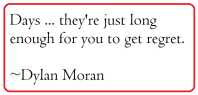
dylan moran quote TIMEIf you are done with your first draft and are just now realizing your novel could be the beginning of a saga, you should consider making notes as to what the future holds for your crew beyond the end. Otherwise, you may find yourself writing a continuation of book one, but with no goal, no purpose.
I follow several fantasy and sci-fi authors who write sagas, where the story of that world is told from multiple characters’ points of view. Each protagonist lives at different points in time, and each one is unique, detailing watershed events in the history of that world.

I also follow several mystery series featuring the cases solved by one detective. The Richard Jury series by Martha Grimes encompasses 25 books, each one different. Recurring characters in the series include his neighbors in his Islington flat, personnel at his New Scotland Yard office, and friends of his sidekick, Melrose Plant, in the Northamptonshire village of (fictional) Long Piddleton.

If you decide more than one book will be set in that universe, you should consider creating a page in your storyboard that notes the timeline and events for each book. Specifically, note what order each novel takes place in the history of that world. You don’t have to go nuts. Just write a brief description for your use.

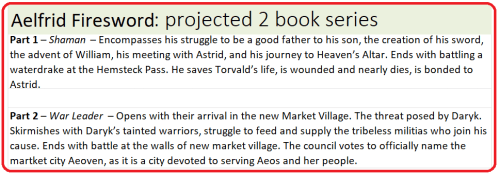
projected series Aelfrid FireswordSo, for a saga you might want to draw up an overall story arc for the entire series. For a standalone book featuring a recurring character, you likely won’t need to have an all-encompassing projected arc.

However, you would be wise to storyboard each book and note the dates of certain events, so you don’t contradict yourself, and so that a protagonist born in 1981 in book one doesn’t accidentally get younger as time goes on.

Next week we will look at creating a calendar for stories set a fictional world. We will look at some of my failures and see why simpler usually is better.

2 Comments

Filed under writing

How the Written Universe Works: Structure of the Cosmos – Designing a Series #amwriting

The universe is vast, but the further we look toward the outermost edges, the more we see the overall structure, the way patterns are repeated across the enormity.

How the written universe works - multibook series1Think about it – the universe contains all we can measure and know, all of space and time and their contents, including planets, stars, galaxies, and all forms of matter and energy. It likes balls and spirals and has a structure that repeats itself. This is reflected in the shape and behavior of the smallest particles to the largest quasars.
The universe began.

We don’t exactly know how it began, but we are here, so it must have started somehow. The universe emerged from somewhere as an infinitely small singularity, so named because it is singularly unexplainable.

From that unfathomable beginning, a mysterious dark energy pushes things apart, expanding the cosmos to what we see as the observable universe. And on the sub-galactic level, we who live on this rocky island in the center of that vast sea of space and time go about our lives, having no effect whatsoever on the universe at large.

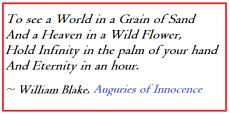
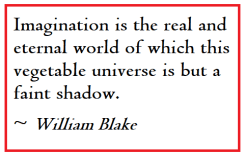
WilliamBlakeInfinityAndEternityLIRF05072022First off, no matter our conscious thoughts regarding the universe and God, writers don’t exist in reality. We exist in what we think reality is, and collectively, we create it as we go along, for good or ill.
No matter the genre, whether it is fiction, non-fiction, a textbook, or a technical manual – books are universes, static and frozen at a finite point for us to read and ponder their meanings.

Books begin with an idea, the singularity that bursts into existence. As it grows, the universe that is that proto-book takes on a recognizable shape.

A projected series featuring the lives of people set in a unique world is a cosmos unto itself. It is the story of that universe, told over the course of several books.

Many people are blinded by the quasars of inspiration, can’t conceive of that universe’s structure, and can’t imagine how the molecules of inspiration can become a universe. The brilliance of that first revelation blinds them to how attainable it is.

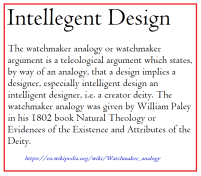
intellegent_designLIRF05072022But if you make a map of what you can see, your own intelligent design, you can create your series of books with less struggle.
First, I tell myself how I believe the story will go. This takes a little time and is relaxing, a matter of sitting in a tranquil place with a pen and pad of paper and visualizing the singular idea of the story.

As I ponder that idea, finite events will come to me. I write them down, and they become major plot points. By the time I have to go back to other household tasks, my notes will have the rough shape of the story, in only five to ten handwritten lines.

A current work in progress takes place in a world I began writing in in 2008. This subseries began on a sunny day, while sitting on my back porch, watching the scrub jays, and laughing at their avian marital squabbles.

Out of nowhere, an idea went nova, and I wrote it down. These are my very first notes for the first book in that subseries, copied word for word from my yellow notepad:

  • A shaman. A person with a life like everyone else. They make mistakes, but they learn from them.

That led to another thought:

  • Divorced, single parent, struggles to be a good father to his son. What is his line of work?

  • A blacksmith who creates a magic sword. Who cares for his son while he works?

And that last thought led to my contemplating his family. “Who is his support group?”

  • His grandfather, father, and brother.

  • How do they come into the story?

My protagonist starts page one as divorced. I asked myself, “Does romance wait in the wings?”

  • Why this woman, and who is she in her own right? Where is she, and why does he have to go there?

  • She is highly respected, a woman with some power. Healing? He’s a shaman, so his reason for going there must be something spiritual.

  • Vision quest at someplace dangerous and difficult. Atop a mountain?

I contemplated those few notes for several days, during which I began creating a stylesheet/storyboard. I noted each random idea, which eventually became scenes I could visualize.

That’s when my imagination took over. The God-view zoomed in until I could see the story at the atomic level, and the words flowed.

WilliamBlakeImaginationLIRF05072022As I wrote, the outline for that first book took its shape. The written universe is in constant flux, and the storyboard records the changes and keeps the fabric of time from warping.
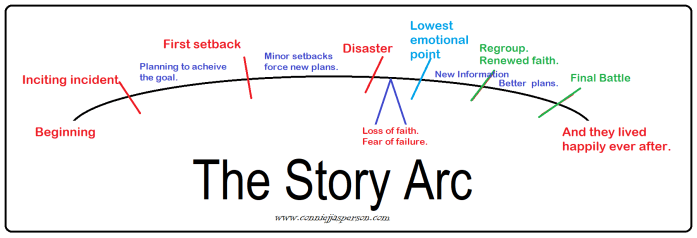
First, I decided how many words I intended for the novel’s length and divided that into fourths. I took those fourths and turned them into acts. I wanted to keep it at about 90,000 words, so this is how I planned the arc to go:

Act 1: 10,000 words, the beginning: We show the setting, the protagonist, and the opening situation.

Acts 2 and 3: 60,000 words. Two major hiccups, combined to form the novel’s center, starting at the first plot point or the inciting incident. The tension grows to a mid-point confrontation. We show the hero’s dire condition and how they deal with it. By act 4, there is no going back, no changing course.

Act 4: 20,000 words: Resolution. We try to end the misery in a way that feels good and rewards the reader for staying with the story. It must end as if it were a standalone novel, but a minor sub-thread will be left unfinished. That sub-thread is the real core of the two-book series.

storyArcLIRF10032021Once I have decided the proposed length, I know where the turning points are and what should happen at each. The outline ensures an arc to both the overall story and the characters’ personal growth.
This method works for me because I’m a linear thinker.

I have mentioned before that I use a spreadsheet program to outline my projects, but you can use a notebook or anything that works for you. You can do this by drawing columns on paper by hand or using post-it notes on a whiteboard or sticking them to the wall. Some people use a dedicated writer’s program like Scrivener.

Everyone thinks differently, so there is no one perfect way to create that fits everyone.

A storyboard/stylesheet should have a separate page for the glossary to ensure consistency. I wrote a post on creating a stylesheet, a.k.a. storyboard, for little or no cost, and the link is here: Designing the Story.

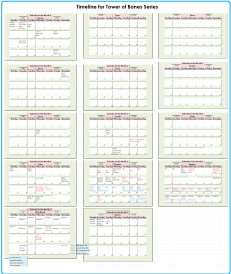
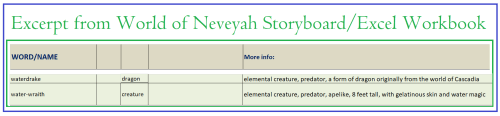
The workbook shown below is the stylesheet for the Tower of Bones series and has been evolving since 2009.

Excerpt from World of Neveyah Storyboard Glossary,

As we add to it, the written universe is constantly expanding. Sometimes, we have to adjust our ideas of how many words we will end up with, in total. The cosmos is a violent place. Even if we begin with a plan, we never really know how a story will go until we have written it. The outline keeps us mindful of the story arc and ensures the action doesn’t stall.

Try to get into the habit of writing new words every day. When you write every day, you develop strengths and knowledge of the craft. Give yourself the gift of half an hour of private writing time every day.

You’ll never know what you’re capable of until you try.

Again, the post discussing making a cost-free storyboard/stylesheet is Designing the Story.

I think you’ll find a storyboard is a valuable tool.

8 Comments

Filed under writing