Tag Archives: #amwriting

Into the Woods, a fantasy anthology

MyrddinAnthologyECoverWe at Myrddin Publishing Group are starting the new year with the launch of our anthology, Into the Woods. We’re even having an all-weekend-long Facebook party, with Myrddin Authors dropping in and out over the course of the next few days. There will be gifts, and prizes and just fun and games with the Myrddin crew. The online Facebook Party starts here, so stop on by and and hang out with us!

This collection of amazing tales came about almost by accident.

One day last summer I was looking through stock images I’d found for a cover I was designing for another author. I came across a wonderful image of a lonely house set in the woods. I’m not sure why, but suddenly, like the proverbial dog after a squirrel, I was off looking at images of houses in the woods–like that was going to get any work done.

Of course, my brain is hardwired to write stories, so I found myself imagining all sorts of scenarios and plots to go with these amazing images. Then, it occurred to me that if I was inspired to write by these images, my fellow authors here at Myrddin Publishing would also be.

I threw out a challenge to the group: Write a short story about a house in the woods. The only caveat was the tale had to fall under the genre of fantasy, and the theme was “a house in the woods.”

And wow! What a response– I received nine wildly different tales, ranging from humor to ghostly, to romantic, to horror. These ten tales are some of the best I have read.

In the first tale, “A Peculiar Symbiosis,” Alison DeLuca gives us a moving story of a man who discovers he loves his wife–but only after she is dead.

“The Forest House” is my own take on the Tam Lin tale. Tam Lin is a character in a legendary ballad originating from the Scottish Borders as collected by Francis Child, but there are many tales from all over northern Europe featuring variations on his name, and the story will have slight variations. It is also associated with a reel of the same name, also known as Glasgow Reel. I had always wondered if Tam Lin and the Faerie Queen had a child, and if they had, what would have happened to it when Janet rescued Tam?

In “A House in the Woods,” Stephen M. Swartz takes us back to the 1960s with this dark fantasy. Two boys playing in the woods come across an abandoned house, and discover a true ghost story.

Irene Roth Luvaul takes us deep into the forest in “The Guardian.” A woman discovers her family’s history, and the terrible secret a cabinet once held.

Ross M. Kitson offers up a A Matter of Faith.” In this dark prequel to Kitson’s epic Prism series, an uptight paladin must find a way to work with a free-thinking druid, if he is to be successful in finding and killing a demon.

In “If I Have to Spell it Out” Austin musician and author Marilyn Rucker lightens things up with her hilarious take on two cousins quarreling over the tenancy of their family home, via letters.

“A Haunted Castle” by Lisa Zhang Wharton shows us that a house can can also be a haunted castle in the Bavarian Forest, in her hilarious, hallucinogenic tale of ghosts, rottweilers, and a costume party.

Myrddin Publishing Group’s own master of horror, Shaun Allan, swings us back to the dark side with a horrifying twist on the Hansel and Gretel tale, with “Rose.” Told with his usual flair for words and style, this is a chilling story of demonic magic. Definitely not your mama’s Hansel and Gretel!

In “Hidden,” Carlie M.A. Cullen takes us deep into the woods, where two young women take shelter from a storm in an abandoned house, with terrible consequences.

For the final tale in this treasury, fantasy author Lee French presents us with a post-Civil War tale of star-crossed love, in her magical tale, “Forever.” Tara and Marcus share a forbidden love–and only one place is safe for them.

I am continually amazed and awed by the talent of the wonderful authors I am privileged to work with at Myrddin Publishing Group. You can purchase this wonderful collection of short stories at Amazon by clicking on the buy button below:

Into the Woods: a fantasy anthology

Amazon Buy Button PNG

1 Comment

Filed under Books, Fantasy, Literature, writing

#amwriting: L.E. Modesitt Jr.: creating depth without dumping info

Fall of AngelsOne of the most difficult aspects of writing is creating the sense of history without resorting to an info dump. It is a fine line to walk, because too much information will cause the reader to stop reading, and not enough will also make them close the book. What we are looking for is a happy medium, a narrative that incorporates some history, but only the bits that are needed to move the story forward.

That ability to create the past while describing the present is one that author L. E. Modesitt Jr. has, and is shown to its best advantage in his masterpiece Fall of Angels. Written in 1997, this is the sixth installment in one of the most enduring fantasy series of modern times, The Saga of Recluce.

This saga takes place over many generations and explores both sides of the conflict, with not usually more than two books dealing with a particular protagonist.

Modesitt Jr. knows his world. It is clear when you read his work that he understands the environments and societies he is writing about, and he knows the moral values of the three cultures who clash in this series of books. In Fall of Angels he takes the reader back  a thousand years, to the origins of the conflict that is explored in the previous five books, but the world the angels find themselves stranded on feels familiar–because the author knows every aspect of his world.

In this series as a whole, Modesitt Jr. examines two radically different magics–the black of order vs the white of chaos. This is the central theme of each tale in the saga, and the protagonist is either of the black or white persuasion. In a few books there is a grey area of magic where the protagonist embodies both, but always the price of magic and the responsibility of those who wield it is a central theme in this series.

In Fall of Angels, Modesitt explores the side of order, the black magic of healing and building.

The story opens on the bridge of a battle-cruiser, the Winterlance. The crew is human, and are in the military service of the UFA, which is comprised of the planets of Heaven.

The crew of the Winterlance is from the various cold planets of Heaven. Most are from Sybra, the coldest planet, but a few are from Svenn, a more moderate planet. This limits where the Angels can comfortably live, making high altitudes their favored homes.

They are about to enter a battle from which they will likely not return, fighting  against the Rationalists, the humans from warmer planets, and with whom they have been warring for thousands of years. The Rationalists are an extremely patriarchal society, and are also known as Demons.

In the opening pages we meet a crew that, by happenstance, is made up of women, with only three male crew members. Nylan is the ship’s engineer, and, as are all the officers, he is connected into the ships neuronet, the mental command center that completely controls the ship and its environment.

Ryba is the ship’s captain, and while she and Nylan have a sexual relationship, there is no doubt that she is in command. I didn’t say romantic, because though they sleep together and care for each other, there is no romance involved.

The energies expended during the battle are such that the Winterlance is thrown into an alternate universe, above a strange planet. With no way to return, they are forced to land.

Unfortunately the first thing that happens is they have landed on a world previously colonized. It probably happened in the same way, but by the Rationalists of the warmer worlds of Hell. The lord of the land immediately attacks them, and the conflict is on.

All Angels are not equal. Nylan is half-Svenn. The Sybrans cannot take the heat of their new world and are pretty much trapped in the cool mountains, but he can go lower, into the warmer areas, although he too suffers from the heat.

While the maps in this series are not very good, or really even useful, I feel sure the author must have a file with worldbuilding information for this series in it. Some forethought and planning went into creating Recluce, Candar, and the other continents that become locales for action in this series.

One type of tree is deciduous, with triangular gray leaves, and only loses half of them during the winter, the others curling up and remaining on the tree though the bitter cold. He knows the plant-life, and the animals native to this new world, and he knows the terrain and doesn’t contradict himself over the course of his narrative.

Modesitt Jr. shows us all of this, without resorting to telling. Information about the worlds of both Heaven and Hell and how the struggle to survive on the world of Recluce affects the marooned crew is doled out as needed, in conversations. The knowledge is dispensed organically, in such a way that the reader doesn’t see it as backstory.

Modesitt Jr. takes the concepts of traditional gender roles and twists them inside out. If she hadn’t been thrown out of her universe, Ryba would never have had the chance to rise any higher than she already had, as women are considered technically equal, but there is a glass ceiling that women rarely break through.

In their new world, Ryba makes sure the three men know they are now the ones with lesser stature. After viciously trouncing him bare-handed when he challenges her, Ryba coldly tells Gerlich, “I could amputate both your arms and you would still retain your stud value.” This comment is all we need: Ryba is determined to build a culture where women have all the power and men are simply a means to reproduction. She is deadly, calculating, and will ruthlessly use anyone to achieve her goal.

Her actions show us this. 

Nylan is a strong man but he is not a leader, and feels like he has no other options, other than to march along with plans Ryba sets down for them. Using their failing technology he forges the weapons and builds their tower so they can survive the first winter in their mountain home. Ryba develops a talent for prophecy and becomes a slave to ensuring her own visions come true, while Nylan develops the foundations of order magic.

the chaos balance l.e. modesitt jrAs events unfold and his relationship with Ryba disintegrates, he grows confused and unsure of what to do. He is a man with a temperate mind, believing in equality with neither sex having the upper hand. A few of the women feel the same way he does, but all are unwilling to go against Ryba, believing that while she is hard and unforgiving, she is better than the society created by the Rationalists, where women are property.

The characters themselves tell us this in their conversations, so the author doesn’t have to dump information.

Modesitt Jr. gives us a morality tale, as true speculative fiction does. But, rather than spelling everything out, he dishes it up through actions and conversations in such a way that the reader makes the connections themselves. While in many of his books Modesitt Jr. can be too cryptic, giving the reader little to no backstory to explain things, in Fall of Angels he strikes the perfect balance between too much information and not enough.

This balancing act between too much backstory and not enough creates a depth to the story that draws the reader in, suspending their disbelief, and holding their attention for the entire novel.

Comments Off on #amwriting: L.E. Modesitt Jr.: creating depth without dumping info

Filed under Publishing, writing

#Flashfic: Metamorphosis

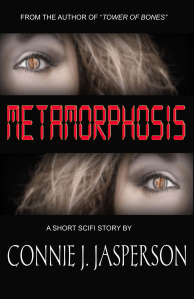
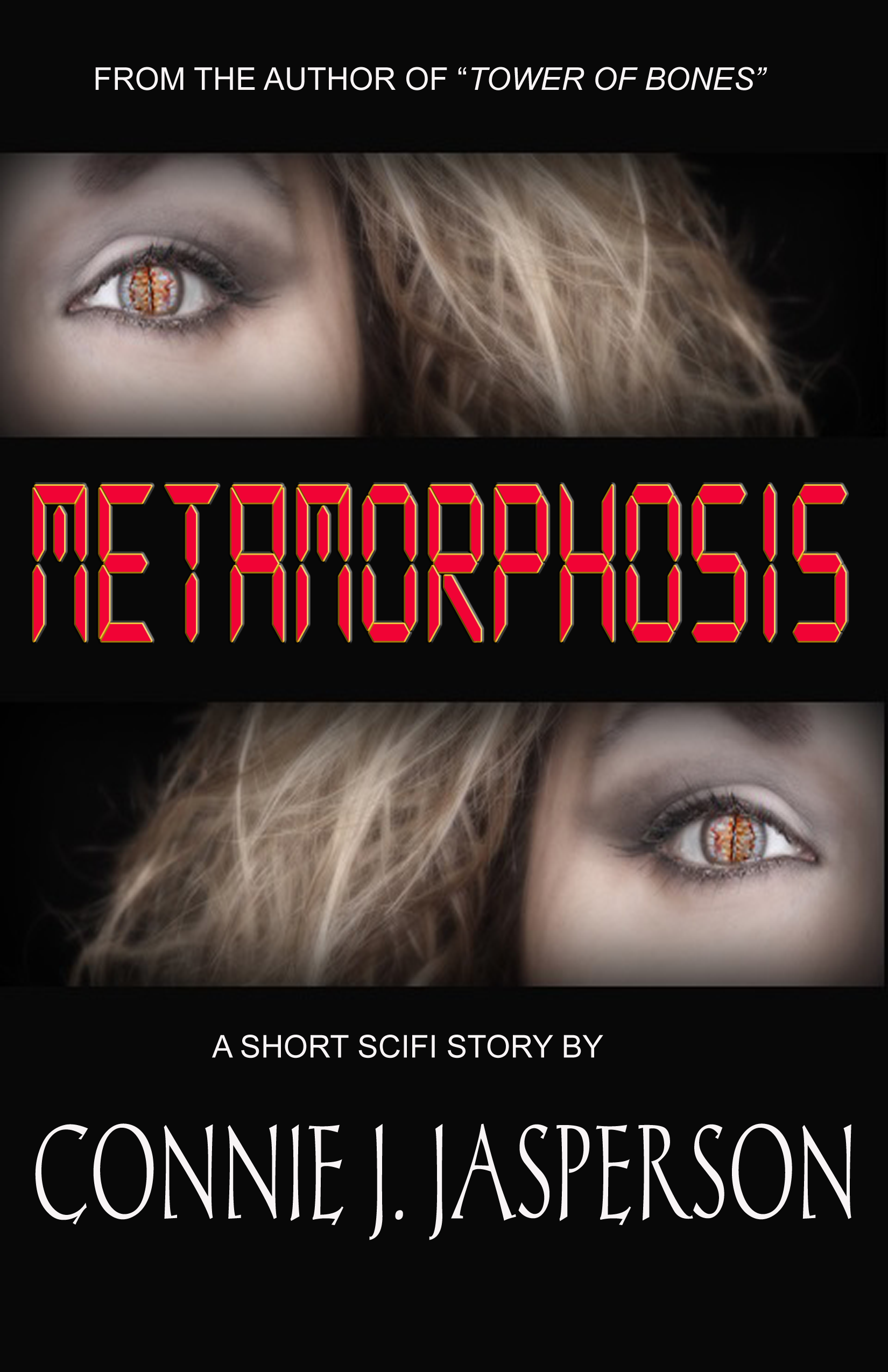
MetaMorphosis cover for WattPad copyYrena Rozhenko ran, not knowing if she was headed into something worse.  It didn’t matter—the transformation had begun and she couldn’t seem to halt it. One way or the other she had to get away from Benton.

The sounds of distant pursuit penetrated to her newly-altered hearing, spurring her on.

She took to the foliage. The shade and mottled light of the strange underbrush eased the pain in her eyes, dimming the glare. She raised her hand to her face, wondering why it felt so bruised. Hard nobs had begun to form above her eyebrows, turning them in ridges. Her heart nearly stopped when she saw the scales forming on her hands and long, deadly-looking talons where neatly manicured fingernails once had been.

What’s happening to me? We ate nothing and drank no water from this world. We touched nothing ungloved. Could it be the air?

Their mission was over. In the UFA records, they would be officially listed as MIA, something that happened frequently on first exploration missions. Benton had murdered Jackson. Jenner was either dead or in hiding, and she…she was changing into some…thing.

Was she going to die next? Benton’s fear and loathing of anything different made him…the only word she could think of was evil.

Why had he not begun to change? The answer came from all around her, from the forest. I was waiting for you. He is not worthy.

She heard Benton softly call her name, a sing-song taunt. “Rozhenko…come out, come out, wherever you are….”

What could she do? With those talons on her hands she wouldn’t be able to return to the ship, even if she could make it to the lander. Besides, she couldn’t leave without knowing if Jenner was alive, and if he was, she wouldn’t leave him behind.

And even if she made to the ship, what then? She knew the change was happening to her on a genetic level, as if this planet had claimed her. Something told her it was irreversible.

Gods, her back ached.  Her shoulder blades, her tailbone were like points of…gah! Whatever. She had to ignore it and get deeper into the brush.

Jackson had begun to change the first night. By dawn he’d transitioned into something…else.

The others had discussed his condition, deciding to take him back to Lodestar Station where the medical team was, despite it being a ten-day journey and meaning the end of their mission. They would have to declare Sirius C a class N Biohazard planet, meaning the established ecology was too dangerous for human settlement.

Benton had been the lone holdout, shouting they had to destroy Jackson before he destroyed them. “He’s a killer. Look at those claws—he’s not human anymore!”

When Yrena and Jenner shouted him down, he had walked up behind Jackson and shot him in cold blood, with no further conversation or discussion, murdering the man who’d been their commander with no qualm or shame.

He’d been proud that he’d done so and now claimed Jackson’s position as expedition leader.

Jenner had begun to change right after Benton murdered their commander, but he’d vanished while Yrena was in the shuttle sending the message detailing the hazard and Benton’s mutiny.

Yrena feared that Benton had killed Jenner while she was busy, but if he had, the body was nowhere to be found.

Benton had shown his true colors. He’d always bragged that he had what it took to rise to the top. He was a capable enough navigator and a solid geologist, but he’d never understood finesse or compassion. How he’d been put on their team in the first place, she didn’t know, but he’d been nothing but a sour pain in the…ass.

She suppressed a groan. Even her ass ached. She was afraid to reach back there and see why.

Some new instinct told her to get off the ground, that safety was in the tree-tops. Yrena’s new talons made excellent assists for rapid tree climbing. Perched high in the canopy and hidden by the triangular, golden leaves, she watched as Benton combed the forest floor, not even thinking to look up.

She had burst out of her shipsuit, which was now nothing but shreds. Carefully she balled it up and hid it in the hollow of the tree. She could nest there if she had to.

What was she thinking? She had to get back to…what was that? A glint of gold caught her eye. A gold-mottled form was perched on a branch near her, one sharp-taloned finger held to his scaly lips for silence. Relief swept through her—Jenner had completed the transformation.

She was not alone.

Benton passed under their tree. Yrena clung tightly to the trunk, remaining perfectly still. She needed a few more hours to complete the transformation, but if he looked up, she would never know what she was transforming into, never again know love or laughter or….

A flash of golden wings…Benton’s sudden strangled cry….

Yrena looked down and saw Benton’s bloody form lying in several pieces.

Jenner flew back up to perch beside her.  She let go of the trunk and went to sit beside him, their arms going around each other.

They had been colleagues but she’d not really known him well. He was all she had now.

The setting sun cast a ray that glanced off the abandoned shuttle. Above the forest, stars began to come out and a tiny star passed overhead. Once it had been a research vessel, but now it was an abandoned hulk ending its days as a small star in a new sky.


Metamorphosis © Connie J. Jasperson 2015  All Rights Reserved

Metamorphosis was first published July 10, 2015 on Edgewise Words Inn under the title “Transfiguration”

It was republished on Oct. 18, 2015 on WattPad under the title “Metamorphosis”

Comments Off on #Flashfic: Metamorphosis

Filed under Literature, Publishing, Uncategorized, writer, writing

#amwriting: 3 steps for keeping the story straight

1916 Momus Pinocchio via Wikimedia CommonsEvery liar knows it’s difficult to keep a story straight–the story keeps evolving and soon it’s out of control.  However, writers, those spinners of awesome lies on paper, must devise ways to avoid this little problem.

Some people use a program called Scrivener which is not too expensive, but which seems to have a tricky learning curve. I downloaded the free version but couldn’t make heads or tails of it and found it quite frustrating. Nevertheless, I understand that it works well for many people, and to them I say, “Good for you.”

For myself, I don’t want a fancy word-processing program. I just use MS Office, because I have been using the programs that come with that software since 1993, and I’ve been able to adapt to each upgrade they have made. It’s affordable, so I use Word to write and edit in, and occasionally use Excel  to make small charts that are my style guides for each  novel or tale I write, and also for every book I edit.

Helpful tip #1: Create a style sheet for every work-in-progress. Whether it is a handwritten list or spreadsheet–keep track of what you named people, places, and things.

Bleakbourne Style Sheet

By creating a visual guide that I can print out or  keep minimized until I need it, I will not inadvertently contradict myself later on in the tale. This particular chart is the style-sheet for a serial I am writing for Edgewise Words Inn, a small online blogzine.

Lets consider Lord Tenneriff, the name of a minor character. Because I noted it on the style sheet and gave a small explanation when I first used it, I will always remember that Lord Tenneriff was spelled with two ‘n’s and two ‘f’s, and with no ‘e’ at the end of it.  The heading of the sheet is like this:

Character Name       Word 1st appears      Other names       Meaning?

            Jason Tenneriff              chapter 1                                                      a local lord

                                                         chapter 2                   Bleakbourne             a village

By listing out the names of every character no matter how minor, even the horses, I will not have a continuity problem by the time I hit chapter 14 of this series. For my editing clients, I also list all magic spells, every god, demon or dwarf that comes into the tale. Anything that is named goes onto that style sheet exactly the way it was first mentioned, the chapter it was first mentioned in, and the brief description of what it means.

Every author has a different way of visualizing these things, and this is what works for me.

Helpful tip #2: Map it out:

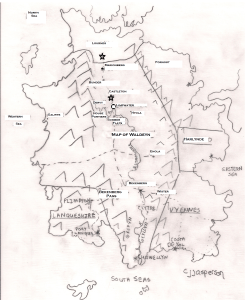
Map of WaldeynSo how do you visualize your country and the world you are creating? I have discussed this before–I draw maps.

They start out like this, all blotchy and hand-drawn, with whiteout covering the changes. After a while of refining them they end up looking more like real maps.

Its a gradual process, and the actual shapes and where the places are will evolve throughout writing the tale, but it will remain basically that way.

Many authors will use locales they are familiar with for their fantasy maps, just changing the names of major cities.  This is a good way to do it, because your world is already well defined for you, and Northwesterners know that Portland, Oregon is about 170 miles south of Seattle, Washington.  You are safe using currently existing terrain.

map of Waldeyn 2015 with lettering cooper black copyBut safe isn’t exactly my thing, so I had to invent both the world of Waldeyn (Huw the Bard), and the World of Neveyah (Tower of Bones). This is what the hand-drawn map of Waldeyn from above has evolved into————>

Helpful Tip #3: Version control:

When we first begin to write seriously we learn how critical it is to have proper naming of our files to ensure version control.  The most recent file will usually be the best edited unless you have accidentally saved an earlier version over it. ALWAYS use a separate file for each version, and ALWAYS use consistent file labeling practices to avoid this tragedy!

Use good file labeling practices, even if you have a fancy program that handles structuring your manuscript.

As an editor, I am particularly careful how I name the files of my clients.

  1. I use a specific sort of naming system. It will ALWAYS be Book_ AuthorName_script.doc .
    This is the main file folder for this book and this author!
  2.  The file folder will contain everything that pertains to this author and his work. There will be at least two folders in this file, and can have up to six. Version control is critical, so proper naming of the files is absolutely essential. If he should ever lose his files, I will have the most recent version on hand.
  3. The raw manuscript in its entirety is saved in this file, and I will name it:
  •  Book_ AuthorName_rawscript.doc

There will be 2 files for every step of the process this manuscript goes through with me: One file will be from the author’s desk to me, and the other will be from my desk to the author.  I will break the raw ms down into chapters, and label each chapter in that file consecutively:

  • Book title_Ch1_ author initials_cjj_edit_rnd1.doc

This tells me that this is Book A, chapter 1, by Author SoAndSo, and was edit round one of that ms.

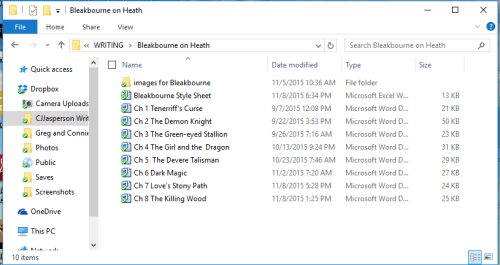
For my own work I label the files uniformly, like this: The main folder will be labeled with the working title, such as Bleakbourne on Heath. Inside the main folder will be the style sheet, and any images that will be used, including maps if needed.

Version Control 1

These three tips, creating a style guide, drawing a map, and labeling your files so you have good version control will help you navigate the shoals of the authoring business. You will always know who you are talking about, where you are, and you will be working in the most recent version of your work.

3 Comments

Filed under Publishing, writer, writing

#amwriting: creating religion within the context of the tale

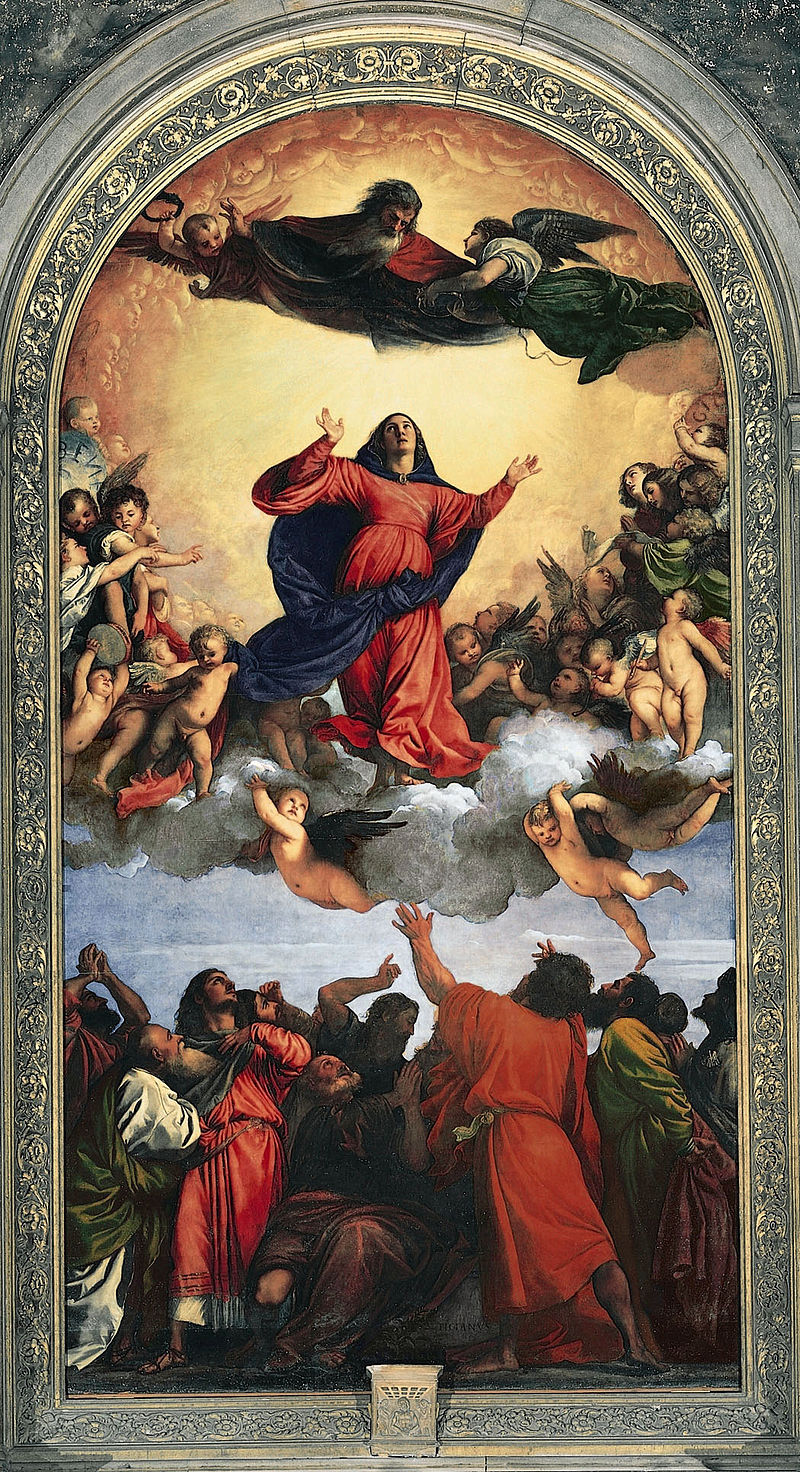
Assunta, by Titian, 1516-1518, via Wikimedia Commons

Assunta, by Titian, 1516-1518, via Wikimedia Commons

One thing we fantasy authors must occasionally deal with is developing religions within the context of the tale.

Most of what we will discuss here won’t actually make it into the written pages of your tale, but if you don’t have a good understanding of what you are writing about, you will inadvertently introduce discrepancies into your tale.

First, ask yourself “why does this religion matter?”  If it doesn’t matter, it doesn’t belong in your tale.

However, when you have a heavenly power-struggle, you have some intriguing opportunities for mayhem.

Are there many gods and goddesses? What is their relationship with each other and how does it play into your story?

If you choose to create a religion as a key plot point, here are some questions to ask:

  1. How central to the life of the protagonist or antagonist is religion? Is the protagonist a member of the priestly class, perhaps a priestess or priest of a particular god or goddess?
  2. What does the protagonist gain from following this deity?
  3. How jealous is this deity?
  4. What is the protagonist/antagonist willing to do for their faith? Will they die for their deity or is it a more abstract religion?
  5. The priesthood—who can join?
  6. Can only the nobility rise in the priesthood, or can anyone with the ability to learn gain power within the organization?
  7. How do the nobility and the priestly class get along? Do they have a good accord or are they jostling for power?
  8. And within that religious organization, who has the most power?
  9. What does that person do with their power?

How important is your religion politically? In Rome, the church was central to their government, in some cases having more power than the ruling nobility. During the Middle Ages, Rome slowly fell under the political control of the Papacy, which had settled in the city since the 1st century AD. In the 8th century, Rome became the capital of the Papal States, which lasted until 1870.

You don’t have to re-invent the wheel here–history is full of great ideas to draw upon.

A_Glass_of_Wine_with_Caesar_Borgia_-_John_Collier

Painting by John Collier, “A glass of wine with Caesar Borgia” via Wikimedia Commons

Consider the Borgias–Wikipedia, the fount of all knowledge says this about them: Especially during the reign of Alexander VI, they were suspected of many crimes, including adultery, incest, simony, theft, bribery, and murder (especially murder by arsenic poisoning). Because of their grasping for power, they made enemies of the Medici, the Sforza, and the Dominican friar Savonarola, among others. They were also patrons of the arts who contributed to the Renaissance.

See? Even George R.R. Martin knows that the renaissance offers great opportunity for good plot twists in your fantasy project.

Now let’s examine the political environments of the medieval city-states of Venice, Milan, Florence, Genoa, Pisa, Siena, Lucca, and CremonaRodney Stark, an American sociologist of religion, proposes that the city-state was a ‘marriage of responsive government, Christianity, and the birth of capitalism’ as we know it. He argues that these states were mostly republics, unlike the great European monarchies of France and Spain, where absolute power was vested in rulers who could and did stifle commerce.

It has been suggested (in Wikipedia, the fount of all knowledge) that by keeping both direct Church control and imperial power at arm’s length, the independent city republics of medieval Italy prospered because their commerce was based on early capitalist principles. The church was still involved in their daily lives, but this slight, deliberate separation of church and state ultimately created the societal conditions that brought about the artistic and intellectual flowering of the renaissance.

And for you, the author, understanding the commerce and economics of your fantasy society is extremely important, so that inconsistencies don’t get introduced. The reader won’t care, and doesn’t want the background info, but you need to know it.

If your protagonists are poor, why are they poor? Is poverty widespread, or is it only the one family? Where is all the money–is it in the hands of the church or is it in the hands of the middle-class? If it’s in the hands of the church–you’ve a good plot-point to work with.

Thus if religion of some sort is an integral part of your work, you as the author must have a good knowledge of what the influence of that institution is, the structure of the priesthood, the power they wield in society at large, how (or if) they control the economy, and how this organization is viewed by the ordinary citizen.

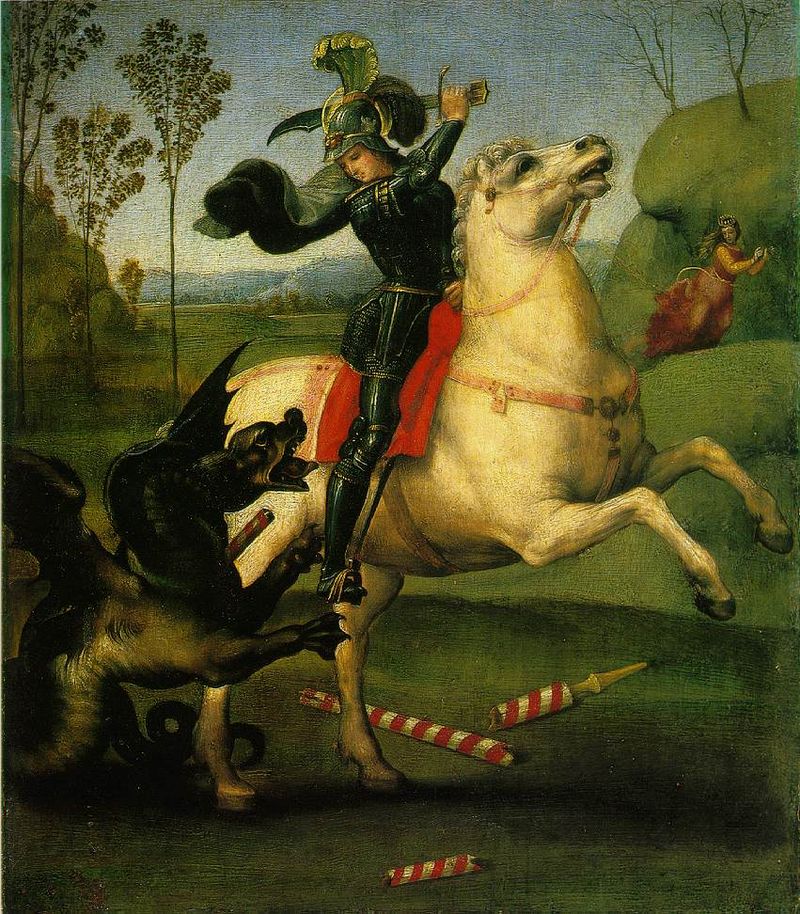
St. George and the Dragon, Raphael via Wikimedia Commons

St. George and the Dragon, Raphael via Wikimedia Commons

Many authors avoid this altogether, by having only a vague mention of religion, simply mentioning a connection with a particular deity as the reason for the ability to use and control magic.

Others make religion and opposing religions the foundation of their works. How you handle religion in your manuscript is up to you, but if you make it a central part of your tale, I suggest you create a document in which you establish the basics of your religion(s) clearly. Update it as the rules evolve, which they certainly will do over the first two drafts of your novel. During your writing process, refer back to this document regularly.

The reader doesn’t care about those details, and will put the book down if they are included. But if you don’t know what you are writing about, can’t remember what you wrote three chapter ago, and contradict yourself too often, your reader will lose the ability to suspend his disbelief.

Keeping the reader immersed in the tale, forgetting that it is only a fiction is the primary goal every author wants to achieve.

2 Comments

Filed under Fantasy, Publishing, Uncategorized, writing

#flashficfriday: TED (a drabble)

large dragon courtesy www.wallpaperfreehd.com

large dragon courtesy http://www.wallpaperfreehd.com

Drabbles are little short stories of 100 words in length, and writing them is good exercise.

Each time you write a drabble, you create possibilities that could evolve into larger stories. In 2013 I participated in a challenge to write a drabble every day for the month of May. The original prompt went as follows:

Write A 100 Word Story (“Drabble”) . . . although a 100 word story will probably take longer than expected, it can be done in a manageable amount of time.

To make a drabble work,
-Choose one or two characters
-Take one single moment/action/choice and show us how it unfolds
-Give one or two vibrant details in as few words as possible
-Hint at how this moment/action/choice is more significant than the characters probably realize in the moment

 Here is my first drabble, written May 1st, 2013:

TED

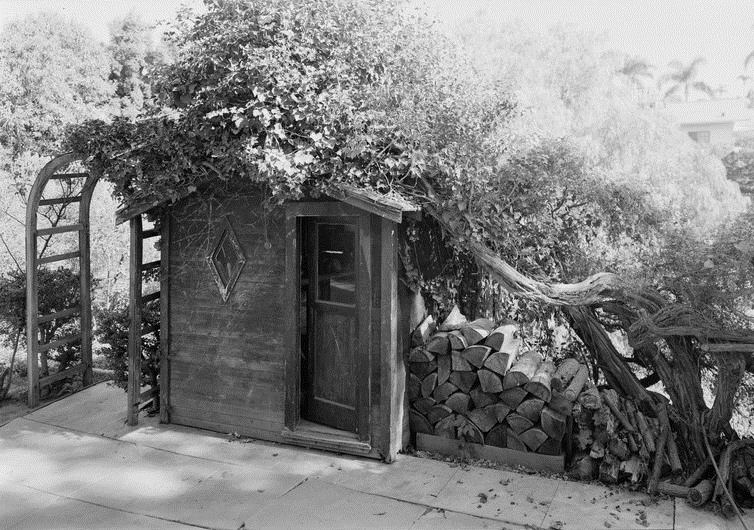
Edna stirred her coffee and looked out the window toward the shed.

“Did you feed the chickens?” Marion always asked, despite knowing Edna had.

Edna tore her gaze from the shed. “Of course.” Her eyes turned back to the small building. “We won’t be able to keep him in there much longer. He’s growing too big. We should have a barn built for him.”

“Ted was always a greedy boy.” Marion stirred her coffee. “I warned him he behaved like a beast, and now look.”

A rumbling bellow shook the shed. A long green tail snaked out of the door.

Garden Shed, Albatross Cottages, San Diego Public Domain Via Wikimedia

>><<<

I love that scene. I keep wondering about the two ladies, and also Ted. Who is he in relation to them, who are they in relation to each other, and what is their life like, apart from the secret in the shed?

Ted will become a longer short story in November, as part of my NaNoWriMo project. I will be writing a book of short stories this year, as I need to build my repertoire. I hope to have fifteen or twenty new short tales of 2000 to 5000 words in length by November 30.

Comments Off on #flashficfriday: TED (a drabble)

Filed under #FlashFictionFriday, Humor, Literature, Uncategorized, writing

#epilepsy: Life in the Fast Lane

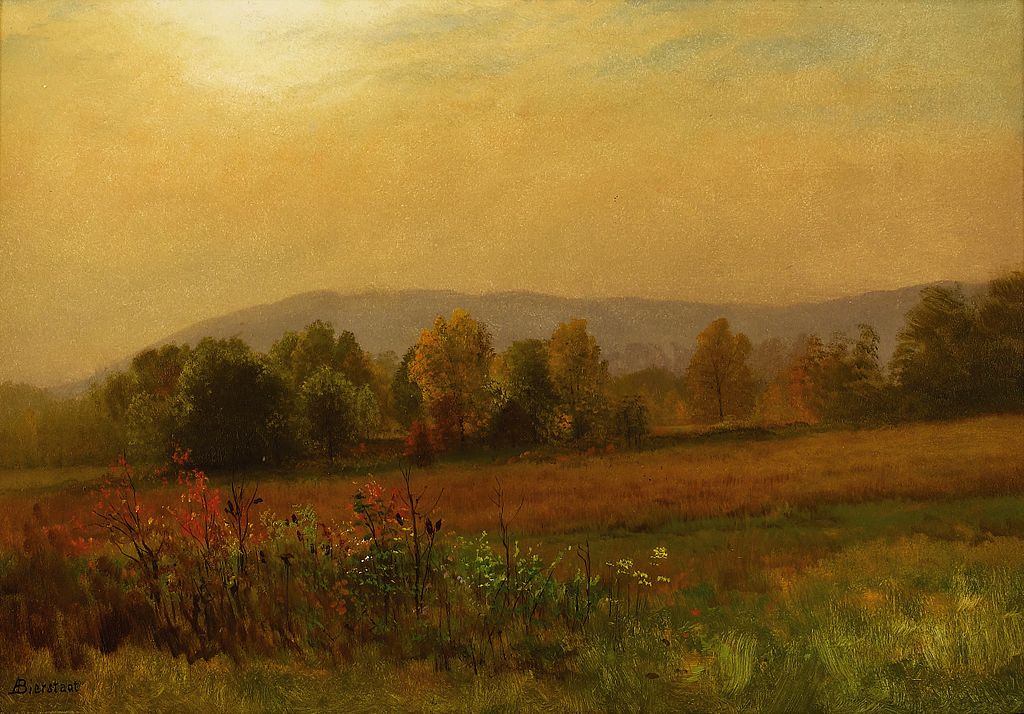
Albert Bierstadt - Autumn Landscape PD|100 via Wikimedia Commons

Albert Bierstadt – Autumn Landscape PD|100 via Wikimedia Commons

We have two adult children with epilepsy. Both were adults when they had their first seizures, with no prior warning signs.

Our daughter’s first serious seizure was at the age of 29. She has only been hospitalized once with serious injuries, and her medication controls her seizures well. She doesn’t like that she has it, but it doesn’t rule her life, and only rarely causes her trouble.

For our son, it hasn’t been that easy. He was 32 when he began having seizures. He has had more difficulty with his, both in accepting it and in getting it under control. Since the first major seizure, he has woken up in the hospital with serious injuries many times, not knowing how he got there.

Two weeks ago, our son had a breakthrough seizure and fell in a concrete parking lot, fracturing his skull. He had a severe concussion, an epidural hematoma, and lost a liter of blood.

This son is a software engineer and an entrepreneur. He was employed by Amazon for ten years, and was well compensated during his tenure there. He had just started his own company, writing software. He was completely focused on this, and was working 12 to 16 hour days, and getting little sleep, which is very bad for him.

But being who he is, he didn’t realize he was courting disaster.

We live two hours south of where this son lives. We got the phone call at 4:30 pm and threw our clothes into suitcases. Running out the door, we called a hotel near the hospital, and made the nerve-wracking trip up Interstate 5 to Redmond, Washington.

During the harrowing journey north, we discussed his possible long-term care, wondering how he could survive such a terrible injury with his intellect intact, wondering how we could care for him if his motor skills were too severely compromised.

But in a four-hour surgery, a wonderful neurosurgeon not only saved his life, but saved his quality of life. He emerged from the experience with no brain damage, and no loss of motor skills.

Our son’s head-injury was the same sort of thing that killed actors Ben Woolf and  Natasha Richardson. When you look at the way head head-injuries can kill otherwise healthy people, our son’s recovery is a miracle for which we are grateful.

Something intriguing happened with this incident. Our son has embraced life in a way he never has before. He woke up from the surgery in an incredibly different frame of mind.

Instead of wondering why this wretched condition has happened to him and focusing on the negativity of his situation, he is now looking at his life and appreciating it in a way he had not really done before.

When he left the hospital this time, his epilepsy was just something he has to deal with sometimes, and the rest of the time his life is good. His spirits are high and his recovery has been nothing short of miraculous.

If you couldn’t see the large wound on his head and the long, curving line of  stitches, reminiscent of a baseball seam in the way the long scar curves around his temple, you would never know he had undergone brain surgery only 12 days ago.

He is full of energy and ambition, and though he does tire easily, he will soon be back on track and moving forward with his current project which he intends to have on the market before January.

Sometimes, we find ourselves going for a spin in the blender of life. We never know what will happen next, and we have no control over how life affects us. But through all of this, the community of our friends supported us, and faith carried us through the dark hours when we didn’t know what his future would be.

There is so much worse out there–things that make this epilepsy thing pale in comparison. We are praying for a dear friend in Australia whose young daughter is fighting for her life, dealing with terrible complications of flu-b, necrotizing myositis. Her prognosis is grave, and  I know her parents are living in that land of fear and disbelief that I lived in for 24 hours.

We are supporting another friend here in the US, who is undergoing yet another surgery for kidney stones. What we have been through was scary, no doubt about it, but thanks to a wonderful neurosurgeon, it was nothing in the face of these ongoing life and death battles.

Epilepsy is a bitch, but it doesn’t have to rule our lives. Seizure incidents are inconvenient, and yes, we know they will occur when we least expect them. They can and will have a seriously negative impact on us. We know that the next time may not have such a good outcome but we can’t let fear ruin the joy and beauty that we have today.

The real news is not that our children have epilepsy–it is what happens the rest of the time.

We have five adult children with great careers and bright futures, two of whom also happen to have epilepsy.

8 Comments

Filed under Epilepsy, Humor, Uncategorized, writing

#amwriting: getting the word out

Old Restored booksYou have finished your book. It has been professionally edited and proofed. You hired an expensive cover designer to make the perfect cover that is both professional and eye-catching. You’ve done all the important things at Amazon and Goodreads, making author pages at both places.

You made a professional Facebook page, you are blogging once a week, you’ve joined twitter and use TweetDeck or Hootsuite to schedule tweets, and check it every day and sometimes retweet interesting things for other folks you are following. You’ve even joined Pinterest and  Instagram.

This all good, but even so, after the first rush, sales have dwindled off, and now you are at a loss of what to do to increase the visibility of your work.

Some folks join mutual promotion groups on Facebook. I have found them to be more aggravating than helpful as I get spammed by the same two authors daily–they are nice people, but they have no sense of how irritating that is. People on Facebook lose interest when they see the same books all the time.

Also, I have found the “99 cent boost groups” to be not as beneficial in the long-run as they promote themselves to be.

I’ve not figured out the magic key to gaining traction rapidly, but I do know that my Goodreads ad pays off in terms of sales, as when I receive more clicks on the ad, I sell more of those books.

Writing short stories and publishing my work gets my name out there, and each time I publish a chapter of the Bleakbourne on Heath series, on Edgewise Words Inn, I see a jump in sales. From what I can see, the only way to get your author name out there is to publish your work.

Shaun Allan has had great success getting his name out via WattPad, as has Paul Coelho. Yes, you are giving your work away, but it introduces YOUR work to potential readers who will buy your other work–and these two authors’ sales are excellent.

Asking other authors to promote your work is not really a good idea, because they have their own work to promote, and your agenda doesn’t always mesh with theirs.

If you have been out in the indie world for any length of time, you may have observed this scenario: Author A, charming and talented Facebook friend, asks Author B to be a part of their personal fan-club, working to get Author A more recognition. Author B does not have time for that–he is trying to get his own name out there. The author who was ‘recruited’  is shocked, and saddened that a friend has so little understanding and such a lack of respect for his work that she would expect that of him, but he doesn’t want to be unfriendly and thinks “well, maybe it’s only this once.”

But it’s not only the once. It’s a never-ending stream of “push my book, push my book.”

When he realizes he is being used as her personal assistant and free publicity agent, he refuses, as he feels that she has no respect for him as an author. She has a temperamental fit and unfriends him. He warns his other friends to beware of that author. While her rudeness may have been unintentional, it was a bit of an eye-opener to those who know her casually, a clue about her true character.

I’ve seen that scenario unfold several times–sometimes talented people are supremely egotistical and only associate with others if they will gain something from that association. Once they have achieved what they wanted, they have no further use for their ‘friend’ and quickly move on to more important pastures.

I try to stay away from toxic professional relationships, and believe me, the opportunities for that are plentiful in many author groups. When I like another author’s work, I would love to see that author succeed. If we are friends and they need a signal boost for a new book or an event, I will gladly tweet and perhaps mention what I like about their work on my blog. I will even mention that they are having an event, and will be signing books.

But I will not be their private publicity agent.

MetaMorphosis cover for WattPad copySo even though you desperately want to increase your visibility and sales, you have to be careful how you go about it. For indies, this is the sort of thing that has to flow two ways–Author A must support Author B as much as he/she expects Author B to support him/her.  Boosting the signal is a real bonus, and if a friend does this for you it should be reciprocated.

So do yourself a favor: post short stories on WattPad, and keep submitting to magazines and anthologies. Success is rarely an overnight thing–it is the culmination of the long hours and efforts you put into it.

Read METAMORPHOSIS on WattPad.

4 Comments

Filed under Publishing, Uncategorized, writing

#MindWandering: The Power of Downtime

Veneto,_Bartolomeo_-_Lucrezia_Borgia_(alleged),_detail_of_portraitDaydreaming…wasting time…selfish indulgence, or fountain of creativity?

WebMD says, quote:  “Daydreaming is looked upon negatively because it represents ‘non-doing’ in a society that emphasizes productivity,” says John McGrail, a clinical hypnotherapist in Los Angeles. “We are under constant pressure to do, achieve, produce, succeed.”

Wikipedia, the fount of all knowledge, describes Daydreaming as “a short-term detachment from one’s immediate surroundings, during which a person’s contact with reality is blurred and partially substituted by a visionary fantasy, especially one of happy, pleasant thoughts, hopes or ambitions, imagined as coming to pass, and experienced while awake.”

Apparently we daydream less as we get older. I wonder, is this nature, or nurture?

What really happens when we allow ourselves to just sit and think about nothing in particular? What happens on a neurological level when we let our minds off the leash, to run free and unencumbered?

One interesting fact is that apparently, if we daydream about the past, we tend to forget what we were doing before the daydream started. This happens to me all the time.

But most people don’t ponder the past. “Daydreaming is often about anticipating the future, especially in a fantasy context,” noted Peter Delaney, a psychologist at the University of North Carolina, Greensboro, in the July 3, 2013 issue of National Geographic.

'A_Girl_Copying_a_Drawing'_by_Martin_Drolling,_Pushkin_Museum PD 100 via wikimedia commonsAnd according to the Daily Mail, Prof. Moshe Bar, of the Gonda (Goldschmied) Multidisciplinary Brain Research Center, said, “Over the last 15 or 20 years, scientists have shown that – unlike the localized neural activity associated with specific tasks – mind wandering involves the activation of a gigantic default network involving many parts of the brain.”

Also, I have just learned that daydreaming turns off parts of your brain. It’s true–our brain has an analytic part that helps us make reasoned decisions, and an empathetic part that allows us to relate to others. Researchers have discovered that when you are daydreaming, your mind naturally cycles through the different modes of thinking, analytic and empathetic. Apparently, during this time the analytic and empathetic parts of your brain tend to turn each other off.

Another intriguing thing I have only just found out is that the physiology of the brain itself, and not the “mind” controls our daydreams. Anthony Jack, a cognitive scientist at Case Western Reserve University in Ohio says, “How we daydream and think depends on the brain’s structure. …(That) structure is constantly changing in small ways—as we learn new things the connections between nerve cells change.” (Read “Beyond the Brain” in National Geographic magazine.)

We have long known that creative people are often guilty of daydreaming, but researchers have shown that daydreaming makes you more creative.

“Many times the ‘dialogue’ that occurs when the daydreaming mind cycles through different parts of the brain accesses information that was dormant or out of reach,” notes Eugenio M. Rothe, a psychiatrist at Florida International University. “Likewise, the daydreaming mind may make an association between bits of information that the person had never considered in that particular way.”

Autumn_Landscape_With_Pond_And_Castle_Tower-Alfred_Glendening-1869According to a study published in the Proceedings of the National Academy of Sciences, a wandering mind can impart a distinct cognitive advantage.

This means that daydreaming is actually good for you. It boosts the brain, making our thought process more effective. Apparently letting the mind wander allows a kind of ‘default neural network’ to engage when our brain is at wakeful rest, as in meditation, rather than actively focused on the outside world. When we daydream, our brain is freed up to process tasks more effectively.

This is good to know, because as an author I spend an astounding amount of time daydreaming, and I would hate to be simply wasting time!

(This post was first published September 15, 2015 on Edgewise Words Inn)

9 Comments

Filed under Publishing, Uncategorized, writer