
In all my favorite science fiction and fantasy novels, the enemy has access to equal or better science or magic. The story is about how the characters overcome the limitations of their science, magic, or superpower and succeed in their quest.
 Magic should exist as an underlying, invisible layer of your written universe, the way gravity exists in reality. We know gravity works and accept it as a part of daily life.
Magic should operate with the same limitations that, say, light photons have. Photons can do some things, and they cannot do others.
Your story won’t contradict itself if you establish the known physics of magic before you begin using and abusing it.
As a confirmed lover of all things fantasy, I read a great deal of both indie and traditionally published work. Both sides of the publishing industry are guilty of publishing novels that aren’t well thought out.
Inconsistencies in the magic system are usually only one aspect of a poorly planned world. It’s easy to tell when an author doesn’t consider the possible contradictions that might emerge as the story progresses.
When the magic is mushy, the rest of the setting reads as if they just wrote whatever came into their head and didn’t check for logic or do much revising.
If all the typos are edited out of the manuscript, and the characters are brilliant and engaging, the author might be able to carry it off. Unfortunately, mushy magic or science usually results in a book I can’t recommend.
We have several things to consider in designing a story where magic and superpowers are fundamental plot elements.
 First, the ability to use magic is either learned through spells, an inherent gift, or both. Your world should establish which kind of path you are taking at the outset.
- Magic is not science as we know it but should be logical and rooted in solid theories.
As a reader, I can suspend my disbelief if magic is only possible when certain conditions have been met. The most believable magic occurs when the author creates a system that regulates what the characters can do.
Magic is believable if the number of people who can use it is restricted, how it can be used is limited, and most mages are constrained to one or two kinds of magic. It becomes more believable if only certain mages can use every type of magic.
Why restrict your beloved main character’s abilities? No one has all the skills in real life, no matter how good they are at their job.
 Consider musicians. A person who wins international piano competitions most likely won’t be a virtuoso at brass instruments.
This is because virtuosity requires hours of practice on one thing, working on the most minor details of technique and tone. That kind of intense focus doesn’t leave room for branching into other areas of music.
Magicians and wizards should develop skills and abilities the way musicians do. Virtuosity requires complete dedication and focus. Some are naturally talented but without practice they never rise to the top.
Magic becomes believable if the physics of magic define what each kind of magic can do.
Those rules should define the conditions under which magic works. The same physics should explain why it won’t work if those conditions are not met.
Are you writing a book that features magic? I have a few questions that you may want to consider:
Are there some conditions under which the magic will not work? Is the damage magic can do as a weapon, or is the healing it can perform somehow limited?
Does the mage or healer pay a physical/emotional price for using or abusing magic? Is the learning curve steep and sometimes lethal?
When you answer the above questions, you create the Science of Magic.
So, what about superpowers? Aren’t they magic?
Superpowers are both science and something that may seem like magic, but they are not. Think Spiderman. His abilities are conferred on him by a scientific experiment that goes wrong.
 Like science and magic, superpowers are believable when they are limited in what they can do.
If you haven’t considered the challenges your characters must overcome when learning to wield their magic/superpower, now is a good time to do it.
- Are they unable to fully use their abilities?
- If so, why?
- How does their inability affect their companions?
- How is their self-confidence affected by this inability?
- Do the companions face learning curves too?
- What has to happen before your hero can fully realize their abilities?
These limits are the roadblocks to success, and overcoming those roadblocks is what the story is all about. The struggle forces the characters out of their comfortable environment.
The roadblocks you put up force them to be creative, and through that creativity, your characters become more than they believe they are. The reader becomes invested in the outcome of the story.
The next post in this series will delve into powers that are familiar tropes of fantasy: healing and telepathy.
 Many of James’s books feature one common theme—lust.
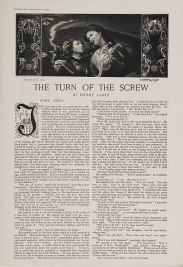 Henry James is famous for his novels and short stories laying bare the deepest motives and manipulations of the society he knew. However, he wrote one of the most famous novellas ever published,
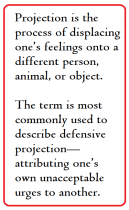 Projection
 It’s a platform where you can advertise your books and discuss your interests, and most importantly, talk about what you are writing.
 Writing blogposts requires me to become a thinking author, as well as a pantser. I can write using the “stream-of-consciousness” method or from an outline of whatever interests me at the time. I do the research, and the post begins to write itself.
 I love to see what questions people might want to have answered. Sometimes topics crop up at my writing group that no one has an answer to, and then I get to do a little research—my favorite thing. Other times I find interesting questions in the writers’ forums that I frequent.
 If you feel that it’s too much work, consider how you update your other social media. Try posting a haiku, a tweet-length post, or an Instagram-style post once or twice a week. Any social media platform post can be converted to serve as a blog post.
 Today, we continue that discussion with four more genres, each with many subgenres. First up is westerns. This is a popular genre with several common tropes and can be tricky to write respectfully and find a publisher for.
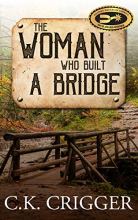 However, more and more, we are finding stories with female protagonists. An excellent example of this is the novel,
 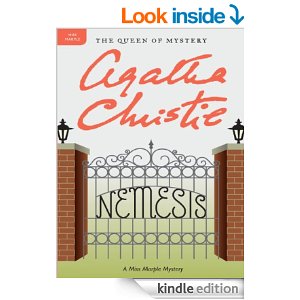 The Agatha Christie / Sherlock Holmes style of novel is the classic whodunnit. They feature a private detective with close ties to law enforcement but who is still an outsider. The detective sometimes has a sidekick who chronicles their cases. At times, the detectives butt heads with the police as resentment of the protagonist’s stepping on their turf crops up. This jealousy hinders the investigation. Clues are always inserted so that the reader doesn’t notice them until the denouement, and the sidekick never guesses right either.
 Definitions differ as to what constitutes a historical novel. On the one hand, the
  To know that, you must know the genre of the work you are trying to sell. So, what exactly are genres? Publisher and author
  Mainstream (general) fiction—Mainstream fiction is a general term that publishers and booksellers use to describe works that may appeal to the broadest range of readers and have some likelihood of commercial success. Mainstream authors often blend genre fiction practices with techniques considered unique to literary fiction. It will be both plot- and character-driven and may have a style of narrative that is not as lean as modern genre fiction but is not too stylistic either. The novel’s prose will at times delve into a more literary vein than genre fiction. The story will be driven by the events and actions that force the characters to grow.
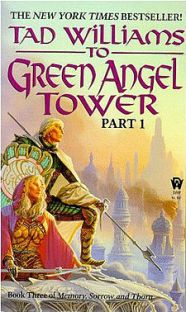 Fantasy is a fiction genre that commonly uses magic and other supernatural phenomena as a primary plot element, theme, or setting. Like sci-fi and literary fiction, fantasy has its share of snobs when it comes to defining the sub-genres. The tropes are:
 Literary fiction can be adventurous with the narrative. The style of the prose has prominence and may be experimental, requiring the reader to go over certain passages more than once. Stylistic writing, heavy use of allegory, the deep exploration of themes and ideas form the core of the piece.
 Novels consist of a string of moments united by a common theme. These scenes combine to form a story when you put them together in the right order and link them with a plot featuring a compelling protagonist who must overcome adversity.
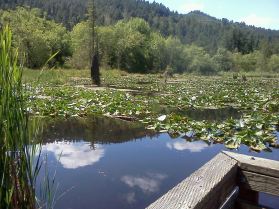 Strolling along, watching the birds and animals that make their homes there grounds me. When we leave, I feel spiritually rested, more rooted in the earth, stronger and at peace with myself. It is a serene place, a place of stillness and calm.
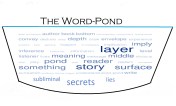 The components that form the visual layer appear to be the story. However, once a reader wades in, they discover unsuspected depths.
 The real story is how our characters interact and react to stresses within the overall framework of the environment and plot. Depth is found in the lessons the characters learn as they live through the events. Depth manifests in the changes of viewpoint and evolving differences in how they see themselves and the world.
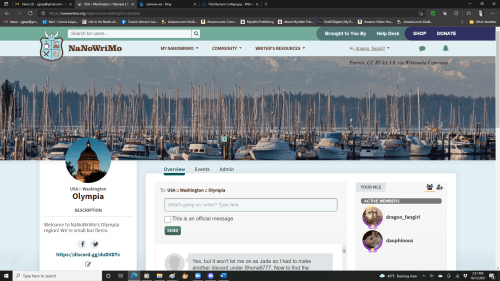
 Once there, create a profile. You don’t have to get fancy unless you are bored and uber-creative.
 You can play around with your personal page a little to get used to it. I use my NaNoWriMo avatar and name as my Discord name and avatar. This is because I only use Discord for NaNoWriMo and one other large organization of writers. (Next week, we’ll talk about Discord and why NaNoWriMo HQ wants us to use it for word sprints and virtual write-ins.)
 Next, check out the community tabs. If you are in full screen, the tabs will be across the top. If you have the screen minimized, the button for the dropdown menu will be in the upper right corner and will look like the blue/green and black square to the right of this paragraph.
 You may find the information you need in one of the many forums listed here.
 Make a master file folder that is just for your writing. I write professionally, so my files are in a master file labeled Writing.
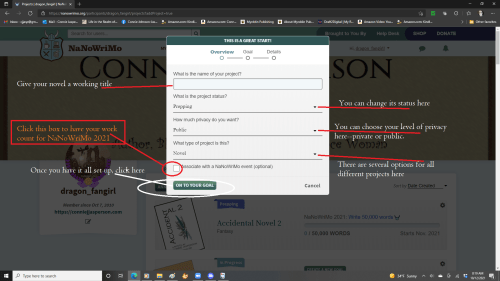
 Give your document a label that is simple and descriptive. My NaNoWriMo manuscript will be labeled: Accidental_Novel_2.
 Still, we can come together and support each other’s writing via the miracle of the internet. My region is finalizing a schedule for “Writer Support” meet-ups via Zoom – little gab sessions that will connect us and keep us fired up.
 If you haven’t heard of this before, it’s a worldwide event that happens in November. Each year thousands of people in all parts of the world dedicate themselves to writing a 50,000-word narrative in only thirty days.
 The first roadblock happens when reality sets in and the writers realize that it is work.
 But by November 30th last year, 70 writers out of the 175 in our region had made it to the 50,000-word mark, 3 made it to above 80,000, and 1 exceeded 100,000 words.
 But I got side-tracked. On day 5, I thought about an artifact’s origin that has a role in my still-unfinished novel. 80,000 words later, that bunny trail had become a novel, The Ruins of Abeyon.
 Succeeding in writing even a short story gives many authors the confidence to continue. In their case, NaNoWriMo is about writing and completing a novel they had wanted to write for years, something that had been in the back of their minds for all their lives.
 Over the next few weeks, we will focus on laying the groundwork for our novels so that we will be ready and able to write when November comes. Much of what I will be discussing has emerged from our experience and comes from my co-ML Lee’s prep work as much as from mine.
 My parents also had bought
 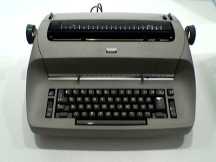 Then, in 1987, my father bought me a secondhand
  I’m proud to admit that my literary influences can be traced back to dragons, booze, elves,
  I shared what I wrote with other people and got feedback, some good, some bad. I learned from it all and kept trying. I bought books on the craft of writing.


 Life in the Realm of Fantasy

