Tag Archives: character development

#DecemberWriter – delving deeper into character #writing

November is over, and I did achieve my goal of writing a chapter a day for all 30 days. However, the story is not finished, and a great deal of work still remains to be done. In between working on other projects, I will spend several months doing three things:

  • Delving deeper into character arcs.
  • Firming up the plot
  • Identifying and cutting the chapters that don’t advance the main character’s story and turn them into short stories.

I always start with the characters.

MyWritingLife2021BAs stories unfold on paper, new characters enter. They bring their dramas and the story goes in a different direction than was planned. When I meet these imaginary people, I assign their personalities a verb and a noun.

As an example of how I work, let’s look at four characters from my novel, Julian Lackland, which was published in 2020. Each side character impacts Julian’s life for good or ill.

This novel had a rough beginning, and an even harder path to final product. I nearly shelved it forever, but I had the good fortune to attend a seminar given by romance author, Damon Suede. THAT high-energy seminar changed how I approached the story.

I took the story back to its foundations and in the final rewrite, I made a point of looking for the two words that best describe how each point-of-view character sees themselves. It changed everything, allowing the story to be shown the way I saw it in my mind.
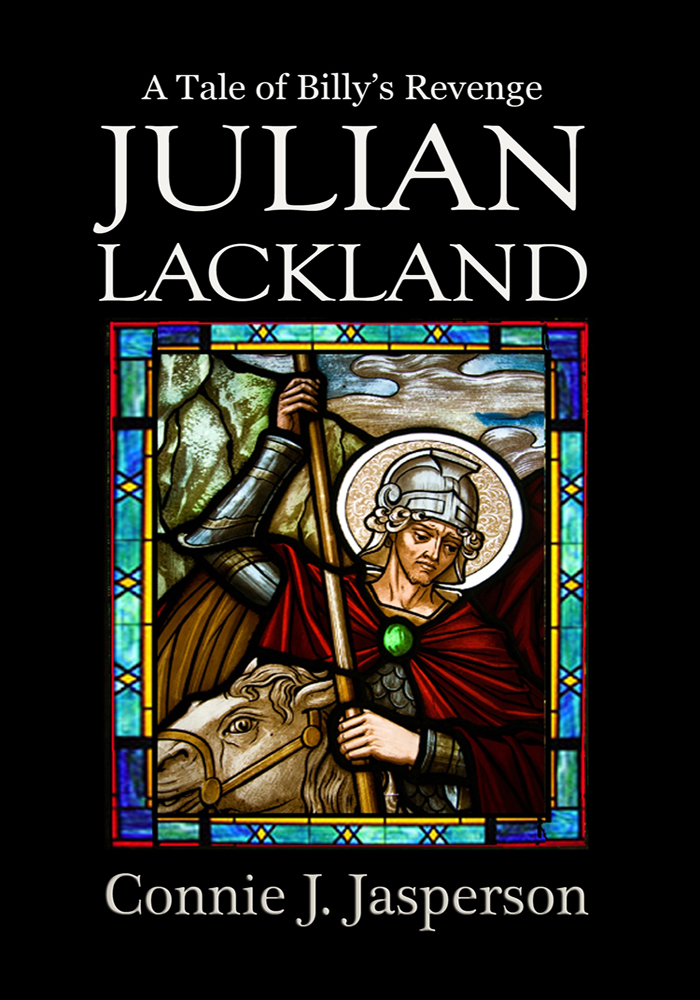
Julian_Lackland Cover 2019 for BowkersJulian’s noun is chivalry (Gallantry, Bravery, Daring, Courtliness, Valor, Love). He sees himself as a good knight and puts all his effort into being that person. He is in love with both Mags and Beau.

Beau’s noun is bravery (Courage, Loyalty, Daring, Gallantry, Passion). Golden Beau is also a good knight, but his view of himself is more pragmatic. He is Julian’s protector and is in love with both Mags and Julian.

Lady Mags’s noun is audacity (Daring, Courage). Mags defied her noble father and ran away from an arranged marriage to a duke in order to swing her sword as a mercenary. She will win at any cost and is not above lying or cheating to do so. She is in love with both Beau and Julian.

Bold Lora’s noun is bravado (Boldness, Brashness). Lora is in it for the fame. She doesn’t care about the people she is hired to protect, and makes enemies among every crew she is hired to serve in. As one unimpressed side character puts it, “If Lora rescues a cat from a tree, she wants songs of the amazing deed sung in every tavern.”

The way we see ourselves is the face we present to the world. These self-conceptions color how my characters react at the outset. By the end of the story, how they see themselves has changed because their experiences will both break and remake them.
Verbalize_Damon_SuedeNext, we assign a verb that describes their gut reactions, which will guide how they react to every situation. They might think one thing about themselves, but this verb is the truth. Again, we also look at sub-verbs and synonyms:

Julian has 2 Verbs. They are: DefendFight, (Preserve, Uphold, Protect)

Beau’s 2 Verbs are: Protect, Fight (Defend, Shield, Combat, Dare)

Lady Mags’s 2 Verbs are: Fight, Defy (Compete, Combat, Resist)

Bold Lora’s 2 Verbs are: Desire, Acquire (Want, Gain, Own)

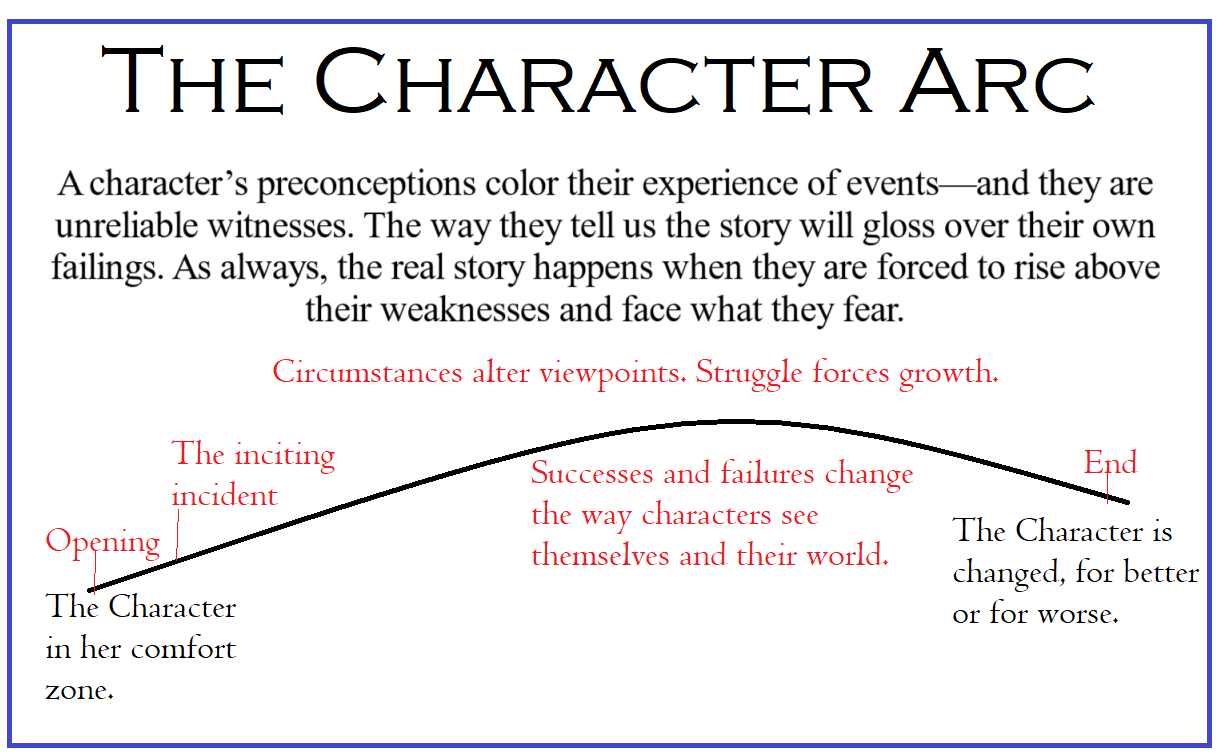
A character’s preconceptions color their experience of events—and they are unreliable witnesses. The way they tell us the story will gloss over their own failings. As always, the real story happens when they are forced to rise above their weaknesses and face what they fear.

As readers we see the story through the protagonist’s eyes, which shades how we perceive the incidents.

When I write my characters, I know how they believe they will react in a given situation. Why? Because I have drawn their portraits using words:

Julian must Fight for and Defend Chivalry. Julian’s commitment to defending innocents against inhumanity is his void, and ultimately it breaks his mind.

Golden Beau must Fight for and Protect Bravery. Beau’s deep love and commitment to protecting and concealing Julian’s madness is his void. Ultimately, it breaks Beau’s health.

Lady Mags must Fight for and Defy Audacity. She’s at war with herself in regard to her desire for a life with Julian and Beau. Despite the two knights’ often-expressed wish to have her with them, a triangular marriage goes against society’s conventions more than even a rebel like Mags is willing to do. That war destroys her chance at happiness and is her void.

Bold Lora must Fight for and Acquire Fame. She believes that to be famous is to be loved. Orphaned at a young age and raised by various indifferent guardians, she just wants to be loved by everyone. Julian’s fame has made him the object of her obsession. If she can own him, she will be famous, adored by all. This desperate striving for fame is Lora’s void.

The verb (action word) that drives them and the noun (object of the action) are the character traits that hold them back. It is their void, the emptiness they must fill.
activateHave you thought about the two words that describe the primary weaknesses of your characters, the thing that could be their ultimate ruin? In the case of Julian’s story, it was:

Julian Lackland: Obsession and Honor

Golden Beau Baker: Love and Loyalty

Lady Mags De Leon: Stubbornness and Fear (of Entrapment)

Bold Lora: Fear (of Being) Forgotten

So, in the novel, Julian Lackland, a girl who was ignored by everyone, a child who’d lived on the outside looking in and who was fostered by indifferent relatives, decides that the one person who had ever shown her kindness should become her lover. If she could have Julian, fame would follow.

The way she goes about it changes everything and is the core of Julian’s character arc.
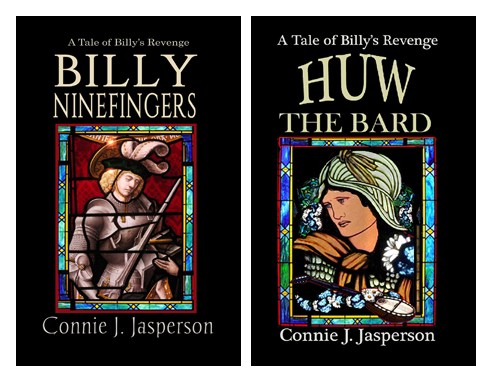
BNF_HTB_ 225_banner_boxJulian Lackland took ten years to get from the 2010 NaNoWriMo novel to the finished product. He spawned the books Huw the Bard and Billy Ninefingers, both of which were written and published before the final version of Julian’s story was completed. Billy and Huw play a huge role in shaping Julian’s life.

Placing a verb phrase (Fight for and Acquire) before a noun (Fame) in a personality description illuminates their core conflict. It lays bare their flaws and opens the way to building new strengths as they progress through the events.

Or it will be their destruction.

By the end of the book, the characters must have changed. Some have been made stronger and others weaker – but all must have an arc to their development.

Sometimes, as in the case of Julian Lackland, the path to publication is fraught with misery. Other times, the book writes itself and flies out the door. Who knows how my current unfinished novel will end? It’s in the final stretch, but nothing is certain.

I am a step ahead in this process, though. I already know my characters’ weaknesses, their verbs and nouns. As I learned from my experience writing Julian’s novel, I just need to know who they think they are, and then I must write the situations they believe they can’t handle.
character arc 2

Comments Off on #DecemberWriter – delving deeper into character #writing

Filed under writing

Random thoughts about #Writing #Romance

Fantasy is a popular genre because it involves people, and sometimes it features romantic love.  People are creatures of biology and emotion. When you throw them together in close quarters, romantic connections can form within the narrative.

WritingCraftSeries_romanceI’m not a Romance writer, but I do write about relationships. Readers expecting a standard romance would be disappointed in my work which is solidly fantasy. The people in my tales fall in love, and while they don’t always have a happily ever after, most do. The other aspect that would disappoint a Romance reader is the shortage of smut.

I think of sex the way I do violence. Both occur in life, and we want our characters to live. While I have been graphic when the story demanded it (Huw the Bard, Julian Lackland, and Billy Ninefingers), the stories are about them as people and how events shaped them. I’m more for allowing my characters a little privacy.

I flounder when writing without an outline. Even in the second draft, I’ve been known to lose my way.

I struggle when attempting to write the subtler nuances of attraction and antipathy. We are sometimes repulsed by a person, and when trying to show that, I find myself at a loss for words.

When I’m building the first draft, emotions seem to come out of nowhere and feel forced.

monkey_computer_via_microsoft

courtesy Office360 graphics

For me, the struggle is in foreshadowing these relationships and showing the gradual connection as it grows between two people.

I have friends who write Romance. I read their work, and I’ve attended workshops given by Romance writers and learned a great deal from them. However, being on the spectrum, as they say nowadays, I learn by pursuing independent study.

That works for me because I can’t pass up buying any book on the craft of writing.

Two books in my writing craft library that have seen heavy use were written by Damon Suede, who writes Romance. He explains how word choices can make or break the narrative.

As a reader, I have found his viewpoint to be accurate. As a writer, I have found putting it into practice takes work.

Verbalize_Damon_SuedeIn his book Verbalize, Mr. Suede explains how actions make other events possible. Crucially for me, he reminds us that even gentler, softer emotions must have verbs to set them in motion.

Emotions are nouns. I sometimes struggle to find the best verbs to push my nouns to action.

Matching nouns with verbs is key to bringing a scene to life.

This is where writing becomes work. It’s time to get out the Oxford Dictionary of Synonyms and Antonyms and delve into the many words that relate to and describe attraction. Or I can go online: ATTRACTION Synonyms: 33 Synonyms & Antonyms for ATTRACTION | Thesaurus.com

I make a list of the words that I think will fit my characters’ personalities. Then, I have to choose the words that say what I mean and fit them into the narrative. Sometimes, this means I will rewrite a sentence two or three times before it says what I intend and flows naturally.

desk_via_microsoft_stickers

courtesy Office 360 graphics

I have written two accidental novels. Both feature romances, and because the novels were spewed onto the page, the relationships developed without preplanning.

Now, I’m in the final stages of one of these novels. The last two years have been spent fine-tuning the attractions and showing the growth of their relationships while exploring the central theme through the events my protagonists experience. (Have I mentioned it takes me four years to get a book from concept to publication?)

For me as a person and as a reader, true Romance has an air of mystery, of something undiscovered. It has to be a little bit magical, or I can’t suspend my disbelief.

I have no trouble writing adventures for my people. I have no difficulty noticing when two characters are gravitating toward one another. Writing the mystery of attraction, injecting the feeling of magic into it is the tricky part.

Book- onstruction-sign copyWhen a beta reader tells me the relationship seems forced, I go back to the basics and make an outline of how that relationship should progress from page one through each chapter. I make a detailed note of what their status should be at the end. This gives me jumping-off points so that I don’t suffer from brain freeze when trying to show the scenes.
As I am rewriting the scenes involving a romance, I want to avoid weak phrasing. I look at the placement of verbs in my sentences. If it feels weak, as if told by an observer, I move the verbs to the beginning of the sentence so that my characters do things. I don’t want someone saying they did it. I want the reader to experience doing it.

    1. Nouns followed by verbs feel active. Bystanders narrate, but characters do.

Don’t get me wrong—some stories need an all-encompassing narrator. But most of the time, we’re not interested in being told what happened. We want to experience it ourselves, which is why I gravitate to one character’s point of view. Our characters are unreliable narrators, giving us their opinions and shading the truth, and are more interesting because of that.

lute-clip-artI think our characters have to be a little clueless about Romance, even if they are older. They need to doubt, need to worry. They need to fear they don’t have a chance, either to complete their quest or to find love.
Romance writers have it right: overcoming the roadblocks to happiness makes for great love stories. This is why I read in every genre. I try to learn what I can from the masters, seeing how they use their words to write their scenes and construct their stories.

Romance is drama, but it isn’t the entire story.

Adam Savage said something about drama and creativity on his recent podcast, talking about Stanley Kubrick’s creative process. He said that what Kubrick was good at was recognizing the points when a story could create drama.

And recognizing those places with potential is crucial to creating a great novel or short story. We will explore that thought further on Wednesday.

5 Comments

Filed under writing

Characterization: Layers of a Scene #amwriting

Our characters feel real to us, their creators, but the trick is making them seem natural to our readers.

WritingCraftSeries_character-arcWhen I begin writing a first draft, I try to approach writing each scene as if I were shooting a movie. We know that each conversation is an event that must advance the story, but it must also give us glimpses of who each person is.
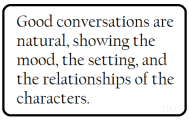
To that end, dialogue must do at least one (if not all) of these things:

  • Offer information the characters are only now learning.
  • Show the state of mind the characters are experiencing.
  • Show the relationship of the characters to each other.
  • Show the relationship of the characters to their world.

However, dialogue is only one layer of the scene. We try to establish the world environment in the opening pages but world-building is an ongoing task and is a foundational layer of each scene.

  • We continue world-building by showing our characters as they interact with the immediate environment.

In the first stage of the rough draft, I sit down and picture the characters and their relationships, with those goals in mind.

  • Then, I write just the dialogue for several back-and-forth exchanges. I use minimal speech tags for this because I want to get the discussion written down the way I hear it.

I do this in short bursts, getting the basic words down. It’s a two-stage process—the scenery and background get filled in after the dialogue has been written. Here is an example of four lines of dialogue:

Ann: “What are you doing?”

Jon: “Oh, just drawing.”

Ann: “Drawing what?”

Jon: “You’ll laugh or find a reason to mock me for it.”

good_conversations_LIRFmemeHaving the fundamentals of the conversation to work with sharpens the scene in my mind, enabling me to frame it properly. Once I know what they are talking about and have the rudimentary dialogue straight, I add the scenery. Then, I insert the props and add the speech tags. The interaction grows, shedding more light on their relationship.
So let’s take those four lines of dialogue and set them in a kitchen. We have two characters who are wary of each other and have radically different views of their relationship.

The following day, when Ann came down for coffee, she found her stepson was once again working on something in his sketchbook. He stood when she entered, gathering his pens. “The coffee should be ready.”

“What are you doing?” Ann’s clipped tones cut the silence.

“Oh, just drawing.”

“Drawing what?”

Jon’s expression was closed, indecipherable. “You’ll laugh or find a reason to mock me for it.” He shut his sketchbook and stood, intending to leave her to her breakfast.

“Show me. Please.” When Ann repeated her demand, he reluctantly opened the book. Page after page was covered in stylized dragons, leafy vines, and runes. “Why do you waste your time with this crap? You could be brilliant, but no. People want real art, not fairies and dragons.”

“Art is not reserved just for some elite aficionado. Everyone has a different idea of it, and what appeals to you doesn’t appeal to everyone. This is how I earn my living, even though it’s not up to your standards.”

Ann poured herself a cup of coffee. “You could do so much better. I’ve tried to steer you toward success, but—”

“Stop it. I’m happy with my life.” Jon reclaimed the sketchbook. “Tim was right. Coming back was a mistake. We did it because Dad asked us to and because it’s Christmas.” He opened the door to the dining room. “Enjoy your breakfast, and don’t start in on Tim when he gets up.” The door closed behind him.

Ann gripped her cup. Where had she gone wrong? Why couldn’t the boys see how much she cared? All she had ever wanted was for them to be successful and happy.

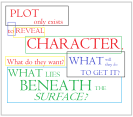
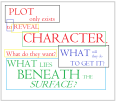
Plot-exists-to-reveal-characterMy above sample is not perfect, as it is from the first draft of a short story I never actually finished, but you get the idea. We learn more about the characters’ relationship with each other and see their place in this environment. The layers that form this scene are:
Action: Jon, one of our protagonists, has risen first and made coffee. He sits in the kitchen drawing in his sketchbook. An adversarial conversation ensues. Later he gathers his pens, stands, and leaves the room.

Dialogue: The conversation illuminates long-simmering differences between the two players and gives us a time reference—it’s Christmas. It also hints that the father wants the family to be reunited.

Internal Dialogue: Ann’s thoughts offer us the first glimpse of her reasoning. Tim and Jon are stepbrothers, but they were raised together and consider themselves brothers. Ann loves them fiercely, Jon as much as Tim, and we see the first indication of her inner battle in the story. We learn more about the family dynamics that must be overcome if their Christmas is to be saved.

Environment: a kitchen, closed off from the rest of the house. In this story, the woman’s closed-off kitchen symbolizes her closed-off personality. The place that is the heart of a home is closed off.

As the story progresses, we find Ann is at odds with her own son as well as her stepson and is gradually losing her husband to dementia. She’s afraid and needs emotional support from Tim and Jon but is her own worst enemy.

No matter the plot or setting, each scene we write should be formed of layers:

  • environment
  • props
  • characters

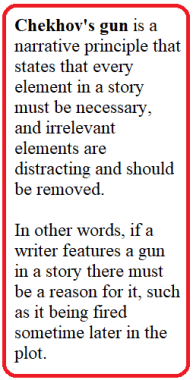
chekhovs gun layers of a sceneSet dressing (the props you place in the scene) shows the immediate environment. Having characters interact with props provides opportunities to insert hints that a deeper backstory exists. However, only have them interact with props that are organic or crucial to the story. This eliminates the problem of Chekhov’s Gun.
Because they are layered into the work, the scenery and props become unobtrusive. This allows the conversation to show the reader everything they need to know about our characters at a singular moment in time. It also gives us logical places for introspection and foreshadowing, integral aspects of pacing.

I can get the words down before I forget them by starting with the dialogue that will form the basis for each scene. Then I can concentrate on visualizing the conversation’s setting and decide what props to insert. The items I place in that scene must show something about the characters who interact with them.

As the story progresses along the plot arc, readers are gradually shown the world these characters live in. They will see that world without our having to dump a floor plan or itinerary on the reader. Remember our basic conversation?

“What are you doing?”

“Oh, just drawing.”

“Drawing what?”

“You’ll laugh or find a reason to mock me for it.”

We could put that exact dialogue and the notebook into a fantasy setting, sci-fi, or any other genre. The book’s plot would change what the conversation reveals about the two characters.

Each scene has a purpose, which is to reveal information and move the plot forward. All it takes is a few lines of dialogue and a moment of introspection on the part of the point-of-view character.

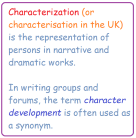
Characterization definitionBy beginning with the conversation and envisioning each scene as if I were filming a movie, I can flesh it out and show everything the reader needs to hang their imagination on. The reader’s mind will supply the details of the immediate setting depending on the clues I give.

We try to layer conversations and world-building to bring depth to our characters. When we do it right, the possibilities are endless.

18 Comments

Filed under writing

Heroes and Villains part 3 – Drawing on the Shadow Within #amwriting

Today we’re continuing to explore character creation and the dark energy the villain of a piece brings to a story.

WritingCraft_Dark_EnergyIn his book, The Writer’s Journey, Mythic Structure for Writers, Christopher Vogler discusses how the villain of a piece represents the shadow. The antagonist provides the momentum of the dark side, and their influence on the protagonist and the narrative should be profound.

The shadow character serves several purposes.

  • He/she/it is usually the main antagonist and represents darkness(evil) against which light (good) is shown more clearly.
  • The shadow, whether a person, place, or thing, provides the roadblocks, the reason the protagonist must struggle.

The shadow lives within us all, and our heroes must also struggle with it. The most obvious example of this in pop culture is that of “Batman.”

About the original concept of Batman, via Wikipedia:

Batman_InfoboxBatman is a superhero appearing in American comic books published by DC Comics. The character was created by artist Bob Kane and writer Bill Finger, and debuted in the 27th issue of the comic book Detective Comics on March 30, 1939. In the DC Universe continuity, Batman is the alias of Bruce Wayne, a wealthy American playboy, philanthropist, and industrialist who resides in Gotham CityBatman’s origin story features him swearing vengeance against criminals after witnessing the murder of his parents Thomas and Martha as a child, a vendetta tempered with the ideal of justice. He trains himself physically and intellectually, crafts a bat-inspired persona, and monitors the Gotham streets at night. Kane, Finger, and other creators accompanied Batman with supporting characters, including his sidekicks Robin and Batgirl; allies Alfred PennyworthJames Gordon, and Catwoman; and foes such as the Penguin, the RiddlerTwo-Face, and his archenemy, the Joker. [1]

Bruce Wayne is a flawed character. He is both a generous benefactor of many charities and a vigilante with little or no remorse for his actions. As Batman, he is a hero, a defender of the weak and defenseless. Much of what makes his story compelling is how he justifies indulging his darker side.

The story of Batman is complex, which is why so many movies have emerged exploring his story. We sit in theaters and applaud Batman’s dark side because it’s confined to taking on criminals.

The evil in a narrative is not always represented by a person. Sometimes war is the villain. Hurricanes, tornadoes, earthquakes, wildfires—nature has a pantheon of calamities for us to overcome and no end of stories that emerge from such events.

True heroes don’t necessarily wear capes, and the evils they fight against are often disasters of epic proportions. Ordinary people can become heroes when faced with disasters of any sort.

Consider the true-life events of April 11 through the 17th, 1970. Via Wikipedia:

Apollo_13_liftoff-KSC-70PC-160HRApollo 13 (April 11–17, 1970) was the seventh crewed mission in the Apollo space program and the third meant to land on the Moon. The craft was launched from Kennedy Space Center on April 11, 1970, but the lunar landing was aborted after an oxygen tank in the service module (SM) failed two days into the mission. The crew instead looped around the Moon and returned safely to Earth on April 17. The mission was commanded by Jim Lovell, with Jack Swigert as command module (CM) pilot and Fred Haise as Lunar Module (LM) pilot. Swigert was a late replacement for Ken Mattingly, who was grounded after exposure to rubella. [2]
The villain in that epic space adventure was mechanical failure. The heroic efforts of the ground crew to brainstorm ways to get the astronauts home is one of the most powerful stories of the 20th century. We were glued to the television, watching as remedies for each disaster were devised, celebrating as the crew made their way home safely.

The villains we write into our stories represent humanity’s darker side, whether they are a person, a mechanical failure, a dangerous animal, or a natural disaster. They bring ethical and moral quandaries to the story, raising questions of morality, dilemmas we should examine more closely.

When the protagonist must face and overcome the shadow on a profoundly personal level, they are placed in true danger. Which way will they go? This is where my characters have agency, and they sometimes surprise me. They may unknowingly offer up their souls if they stray from the light.

Every character has a different personality and should respond to each event differently. The freedom you allow the protagonist and antagonist to steer the events is crucial for them to emerge as real to the reader.

Sometimes my characters make their own choices. Other times, they go along as I, their creator, have planned for them. Ultimately, they do things their own way and with their own style.

Our fictional heroes must recognize and confront the darkness within themselves. As they do so, the reader also faces it. The hero must choose their own path—will they fight to uphold the light? Will they walk in that gray area between? Bruce Wayne is a good example of one who walks the gray area.

The reader forms opinions and makes choices too, and these subliminal ideas sometimes challenge their ethics.


Credits and Attributions:

[1] Wikipedia contributors, “Batman,” Wikipedia, The Free Encyclopedia, https://en.wikipedia.org/w/index.php?title=Batman&oldid=1135964072 (accessed January 30, 2023).

[2] Wikipedia contributors, “Apollo 13,” Wikipedia, The Free Encyclopedia, https://en.wikipedia.org/w/index.php?title=Apollo_13&oldid=1133889788 (accessed January 30, 2023).

Image: Batman, drawn by Jim Lee for the cover of Batman: Hush. Created by       Bob Kane and Bill Finger. DC Comics; 15794th edition (December 6, 2011) (Fair Use) Wikipedia, The Free Encyclopedia, https://en.wikipedia.org/w/index.php?title=Batman&oldid=1135964072 (accessed January 30, 2023).

Image: Apollo 13 Lift off, Wikimedia Commons contributors, “File:Apollo 13 liftoff-KSC-70PC-160HR.jpg,” Wikimedia Commons, the free media repository, https://commons.wikimedia.org/w/index.php?title=File:Apollo_13_liftoff-KSC-70PC-160HR.jpg&oldid=560250836 (accessed January 30, 2023). Public Domain.

3 Comments

Filed under writing

Heroes and Villains part 2: Who are they, and why should we care? #amwriting

When we begin planning a novel, we might have the plot for an award-winning narrative in our head and an amazing cast of characters eager to leap onto the page. But until we know who the hero and the antagonist are when they are off duty, we don’t really know them. And until we know what they want, we have no story.

depth-of-characterNo matter what genre we write in, when we design the story, we build it around a need that must be fulfilled, a quest of some sort.
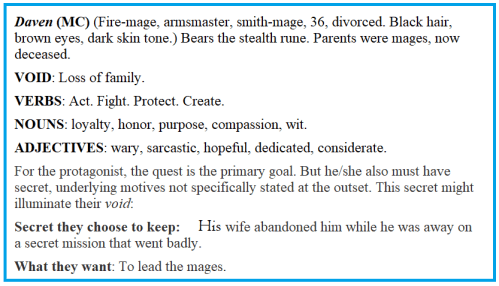
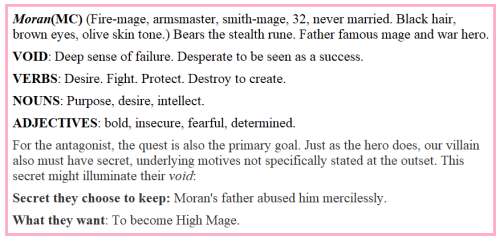
For the protagonist, the quest is the primary goal. But they must also have secrets, underlying motives not explicitly stated at the outset.

The supporting characters also have agendas, and their involvement in that storyline is affected by their personal ambitions and desires.

Our task is to ensure that each of our characters’ stories intersect seamlessly. Motivations must be clearly defined.

We must know how the person thinks and reacts as an individual.

  • To that end, we assign verbs, action words that reflect their gut reactions.

What drives them?

  • This is where we give them a void, a lack or loss that colors their personality.
  • We assign nouns that describe their personalities.

Finally, we ask ourselves, “What are their moral boundaries, and what is out of character for them?”

  • Why are they in this story? What is their role?
  • What lengths will they go to in the effort to achieve their goal?
  • Conversely, what will they NOT do? Even supervillains have something they draw the line at doing.

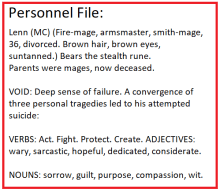
So now we create their file:

PersonenelExample001

The antagonist also has motives, both stated and unstated. They have a deep desire to thwart the protagonist and have reasons for that wish. They have a history that goes beyond the obvious “they needed a bad guy, and I’m it” of the cartoon villain.

No one goes through life acting on impulses for no reason whatsoever. On the surface, an action may seem random and mindless. The person involved might claim there was no reason or even be accused of it—but that is a fallacy, a lame excuse they might offer to conceal the secret that really drives them.

The antagonist also gets a personnel file:

PersonenelExample002

One thing we must ask of each character is this: what will happen if they don’t achieve their goal? Who has the most to lose?

Once we know who has the most to lose and what motivates each character, we know who has the most compelling story. At that point, we have our protagonist and our antagonist

In the beginning stages of planning, we see a large picture, and the details are blurry. At first, we have an overall idea of what the story could be. We have the basics of who the characters are:

  • Sex and age
  • Physical description—coloring, clothes
  • Overall personality—light or dark, upbeat or a downer

A reader will want to know a little more than that. Good characterization shows those things but also offers hints of:

  • An individual’s speech habits.
  • An individual with a history.
  • An individual’s personal style.

As my characters develop, I ask more questions:

  • Are they an individual with or without boundaries? What are things they will or will not do?
  • What are the secrets they believe no one knows?
  • What are the secrets they will admit to?
  • What secrets will they carry to the grave?

Sometimes identifying just whose emotional and physical journey you will be following is easier said than done. When faced with a pantheon of great characters, ask yourself these questions (listed here in no particular order):

  • Which character do you find the most interesting?
  • Whose personal story inspired this tale in the first place?
  • Who among these people has the most to lose?
  • Who will be best suited to taking full advantage of all this plot’s possibilities?

The character who best answers those questions must become the protagonist. It is okay to scrap that original draft and start a new one to reflect that change. Many parts of the first manuscript can be reused.

Author-thoughtsI recently had a manuscript undergo a complete change from what I originally planned. The original antagonist had such an engaging story that he had become more important to me than the protagonists.
At that point, the plot stalled. I had no idea how to get it going again.

I had to find a new villain—and then the solution occurred to me. One of the side characters was poised for that position, lending a little treachery to the mix.

That happy bit of treason kicked the plot in a new direction, and once again, I was having a good time, feeling energized as I wrote.

We were taught to use the “five Ws” of journalism in our essays in elementary school. These five words that begin with the letter ‘W’ form the core of every story.

Who did whatWhen and where did it happen?

Why did they do it?

Who are youAs a reader, I dislike discovering the author is at a loss as to what their protagonist wants. Without that impetus, they don’t have a good reason for the villain to be there either. Random events inserted to keep things interesting don’t advance the story, but motivation does.
Character creation crosses all genres. Even if you are writing a memoir detailing your childhood, you must have a fix on the person you were in those days. You must portray your gut reactions, hopes, and fears with immediacy, a sense of what it felt like. You want the reader to see the events that shaped you, not through the lens of memory, but as if they are observing as the events unfold.

Who are your characters? Who do they love, and who do they despise? What is their goal? Why is this goal so important?

When you answer those questions, you will know them well enough to write their stories.

11 Comments

Filed under writing

Heroes and Villains part 1 – One Coin, Two Sides #amwriting

You have a hero.

You have a villain.

WritingCraftSeries_character-arcYou’ve taken them through two revisions and think these characters are awesome, perfectly drawn as you intend. The overall theme of the narrative supports the plot arc, and the events are timed perfectly, so the pacing is good.
But then you discover that, while the story is engaging, your beta readers aren’t as impressed with the characters as you are.

This has been my problem in the past, and at this stage, I go to my writing group. Someone in that wonderful circle of friends will offer an opinion as to why the characters aren’t as strongly defined as I need them to be.

The problem is, it may take several drafts before my characters translate to paper the way I envision them. When creating their personnel file, I now try to give each character, hero, villain, or sidekick a theme, a sub-thread that is solely theirs.

A personal theme clarifies what drives each character and underscores their motivations. It is both a strength and a weakness.

  • A villain’s personal theme might be hubris – an excess of self-confidence. It is arrogance to a high degree, and terrible decisions can arise from it.
  • A hero’s personal theme might be honor and loyalty. This can undermine their ability to act decisively. The good of the one can exceed the good of the many—and people will die that could have been saved. Who is the villain, then?

Strong personal themes inform how each character reacts and interacts throughout the narrative.

Plot-exists-to-reveal-characterBut in real life, I often find little distinction between heroes and villains. Heroes are often jackasses who need to be taken down a notch. Villains will extort protection money from a store owner and then turn around and open a soup kitchen to feed the unemployed.
Al Capone famously did just that. Mobster Al Capone Ran a Soup Kitchen During the Great Depression – HISTORY.

In reality, heroes are flawed because no one is perfect. I prefer narratives that reflect that. What similarities might blur the boundaries of our heroes and villains and lend some texture to their narratives?

  • Both must see themselves as the hero.
  • Both must take unnecessary risks.
  • Both must believe they will ultimately win.

When I create my two most important characters, my hero and villain, I assign them verbs, nouns, and adjectives, traits they embody. They must also have a void – an emotional emptiness, a wound of some sort.

This void is vital because characters must overcome cowardice to face it. As a reader, one characteristic I’ve noticed in my favorite characters is they each have a hint of self-deception. All the characters – the antagonists and the protagonists – deceive themselves about their own motives.

The heroes come to recognize that fault and are made stronger and more able to do what is necessary. The villains may also acknowledge their fatal flaw but use it to justify and empower their actions.

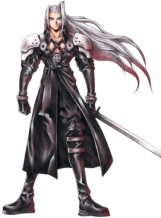
SephirothBoth heroes and villains must have possibilities – the chance that the villain might be redeemed, or the hero might become the villain. As an avid gamer, I think of this as the “Sephiroth factor.”
He is featured in the metaseries Compilation of Final Fantasy VII, which includes other products related to the original game of Final Fantasy VII. It is a series originally begun in 1997 as a game for Sony’s PlayStation 1 and which became wildly popular among RPG players.

This game has become legendary with a huge cult following because of the well-thought-out, intense and layered storyline and the cast of instantly relatable characters.

In Sephiroth’s storyline, he begins as a hero, the most powerful member of SOLDIER, Shinra’s elite military division. He was revered, a heroic, invincible veteran of the Shinra-Wutai war.

Final Fantasy VII Crisis Core (which was made for PlayStation Portable) is a prequel to the original game. We get to know Sephiroth as he once was and meet other members of this elite unit. Over the course of that game, the three most beloved heroes of the Wutai war suddenly abandon their posts and go rogue.

From the outset of Final Fantasy VII Crisis Core, Sephiroth is the kind of hero that makes one wonder just what is going on inside him. He has begun to have doubts and, at one point, indicates that he might leave SOLDIER.

Toward the middle of Crisis Core, Sephiroth, Zack Fair, and Cloud Strife (who is only an infantryman when we first meet him in Crisis Core) are sent on a mission to the village of Nibelheim. There, Sephiroth discovers that he is the product of a biological experiment combining a human fetus with tissue from the extraterrestrial lifeform, Jenova.

This knowledge breaks Sephiroth’s mind, and he goes on a rampage, destroying the village. He is ultimately killed, but his physical death brings about his evolution into the ultimate enemy the true heroes of that RPG game series must battle.

In the end, only one SOLDIER first class remains, Zack Fair. He, too, abandons Shinra and is ultimately hunted down. Zack’s death sows the seeds of the delusion that creates the true hero of the piece, Cloud Strife.

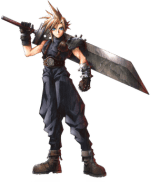
Cloud_StrifeIn Final Fantasy VII, the 1997 game that started it all, we meet Cloud Strife, a mercenary with a mysterious past. Gradually, we discover that, unbeknownst to himself, he is living a lie that he must face and overcome to be the hero we all need him to be.
The fallen angel, the tragic hero who becomes the villain is good fodder for those of us who write fantasy. So is the broken hero, the one who rises from the ruins of their life to save the world.

However, if you strip away the fantasy tropes and the outrageous video game weapons, the hero in any story written in any genre can become the villain, and any villain can change course before it’s too late.

The way my creative mind works, plots and characters evolve together. When I sit down to create a story arc, my characters offer me hints as to how they will develop. This evolution can change the course of the original plot.

In a current work-in-progress, two characters, hero and villain, switched roles, requiring a total rewrite.

Who in your work will be best suited to play the villain? Character B?

Conversely, why is character A the hero?

The next installment of this series will drill down a little further into the nuts and bolts of creating fully realized characters, focusing on the protagonist and the antagonist.

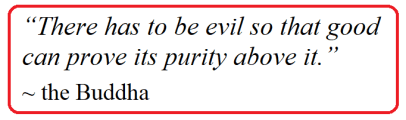
Buddha quote


Credits and Attributions:

Sephiroth, designed by Tetsuya Nomura for Square / Square Enix Final Fantasy VII, © 1997. Fair use.

Cloud Strife, designed by Tetsuya Nomura for Square/Square Enix Final Fantasy VII, © 1997. Fair use.

18 Comments

Filed under writing

Managing the Large Cast of Characters #amwriting

Today we begin a series on character creation. A large cast of characters can be difficult to write well. We want each character to have an evolving personality. The reader wants to know them as friends, to see them to grow in a positive or negative way as the events of the story unfold.

MyWritingLife2021BI try to keep the ensemble narrow in my work, limiting points of view to only one, two, or three characters at most. I keep the core cast limited to four or five, as it takes a lot of effort to show more people than that as being separate and unique.
Any number of evolutionary occurrences can happen in the first draft, and the plot will often change from what was originally planned. I use a stylesheet, also known as a storyboard, to keep track of the plot and the characters.

  • I update my stylesheet/storyboard whenever a significant change occurs. This avoids errors such as a character’s name being a duplicate.

So, let’s talk about books with large casts of characters. How do other authors keep large casts separate and prevent their readers from becoming confused? How do they do this and ensure the plot rolls forward at a good pace?

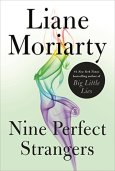
Several years ago, I read Nine Perfect Strangers by Australian author Liane Moriarty and talked about it on this blog. The book details the experiences of nine people booked into an exclusive Australian health spa and three staff members.

Nine_Perfect_Strangers_Liane_MoriartyMoriarty’s characters are immediately engaging. They sucked me into their world in the opening pages. I couldn’t set the book down, as I wanted to know everyone’s dark secrets. I was hooked; I had to understand what led these people to book themselves into that exceedingly unusual health spa.

  • Moriarty introduces us to the cast by opening with Yao and his experience as an EMT and introducing us to Masha as she suffers a heart attack.

The story picks up a decade later when nine people meet at a remote Australian health spa. They’ve all been lured there by word-of-mouth and brochures that promise to transform their lives. They are guaranteed a complete transformation in only ten days, which seems impossible.

  • All have deeply personal reasons for wanting their life to be changed for the better.

The characters are wary, as the reviews they have read are glowing, and so are the recommendations by their friends. But no one will explain how such a change will be accomplished.

  • Each guest arrives with emotional baggage.

So—everyone steps onto the stage with reasons for being there. This sucked me in and made me like or dislike each guest from the outset. And whether I liked them or not, I wanted to know their secrets.

  • Several chapters in, Masha, whom Yao rescued from a heart attack in the opening pages, is revealed as the benevolent antagonist.
  • Yao has become her ardent disciple.

The pair was exceedingly mysterious. I couldn’t tell exactly what their relationship was, and it intrigued me. Was Yao her lover, her henchman, or both?

  • How had Masha and Yao come to form this strange partnership? They had only met in the line of duty because of her heart attack.
  • At the outset, I had to know Masha’s secret and how she had become this guru.
  • I needed to know what she and Yao were up to.

This novel demonstrates that one doesn’t have to follow every literary rule to make a great, engaging narrative. Structurally, the plot is choppy, and the ending is a series of infodumps.

But it works because Moriarty establishes each character as an individual at the outset. Each one is infinitely relatable, and their personal stories are layered into the plot-arc, forming an onion-like narrative. I had to read, had to keep peeling that onion, eager to get to the core.

  • She gives them each a vivid personality, a physical appearance that is only theirs, and a unique history.
  • Each guest embodies a mystery that unfolds as the plot progresses.

Who are youThe guests are immediately thrust into an unknown and possibly dangerous environment. The food they are offered is high quality but not what they are used to and varies from guest to guest.
PLOT POINT: The nine guests are required to ingest certain vitamins and minerals that Yao and Masha prescribe for them.

  • Their diets, vitamins, and medicines are carefully tailored to what Yao and Masha have determined are their individual needs.
  • The diet of fruits, cereals, and vegetables is not universally loved.
  • An exercise program is also enforced.

These stresses impact each character’s evolution, some for good and others, not.

Even later in the middle of the narrative, I had no trouble following who was who, as each character has an unmistakable surface persona.

  • This means each character’s outward personality is different from the others.

Soon after meeting the cast, Moriarty gives us small glimpses of weaknesses and fears, hinting at the secrets each character brings with them to the spa. As the story progresses, we learn more about the sorrows, guilts, and regrets that drive them.

The nine guests have each signed contracts before arriving at the wilderness spa. When it becomes clear the rules they have agreed to obey are iron-clad and strictly enforced, they become angry and afraid. Each guest reacts in a way that is true to their established personality.

  • Some vent their rage, some rebel, and others accept it as what they signed up for.
  • Yet, each character is willing to continue because they are desperate to heal a void in their lives.

Characterization is a core aspect of a story. When I am revising a first draft, I try to discover and reveal snippets of their history, gradually melding those secrets into the evolving plot. My stylesheet/storyboard helps me stay on task.

Even if you don’t make a stylesheet, I suggest you create a personnel file for each character. This will help you understand what makes each one different from the others.

A personnel file should contain:

personnel fileCharacter Names. I list the essential characters by name and the critical places where the story will be set.
About: What their role is, a note about that person or place, a brief description of who and what they are.

Personality traits: Are they sunny and upbeat or dark and brooding? Are they somewhere in between?

Physical appearance: Coloring, hair color, eye color, short or tall, physical build.  Are they smartly dressed, or uncaring of clothing styles?

Their problem: What is their void, their core conflict?

What do they want? What does each character desire?

What will they do to get it? How far will they go to achieve their desire?

What secret will they take to their grave?

Don’t worry if you do things in a way that might not be technically correct. Books like Nine Perfect Strangers prove that good prose, compelling storylines, and strong character arcs engage the reader and overcome most writing wrongs.

In my next post, we’ll talk about the fine line between villains and heroes and how flaws and imperfections in our characters can improve the narrative.

18 Comments

Filed under writing

#NaNoWriMo prep part 2: Character Creation #amwriting

Today is part two of my October NaNo Prep series. This post explores character creation. Often, we have ideas for great characters but no story for them. For those who don’t write daily, it’s a way to help get you into the habit.

nano prep namesThese exercises will only take a few minutes unless you want to spend more time on them. They’re just a warmup, getting you thinking about your writing project. Each post will tackle a different aspect of preparation and won’t take more than ten or fifteen minutes to complete. By the end of this series, my goal is for you to have a framework that will get your project started.

SO—let’s begin with characters. Some will be heroes, others will be sidekicks, and still others will be villains to one degree or another.

rudimentary stylesheetI recommend you create a file that contains all the ideas you have in regard to your fictional world, including the personnel files you are creating. I list all my information in an Excel workbook for each book or series, but you can use any kind of document, even handwritten. You just need to write your ideas down. See my post, Ensuring Consistency: the Stylesheet.
Perhaps you already have an idea for the characters you intend to people your story with. Even if you don’t, take a moment to sit back and think about who they might be.

No matter the genre or the setting, humans will be humans and have certain recognizable personality traits.

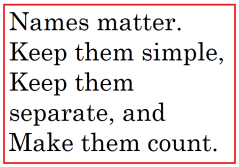
names keep them simpleSo, who is the protagonist of my intended story? Truthfully, in some aspect or another, they will be the person I wish I were. That is how it always is for me—living a fantasy in the safe environment of the novel. Bilbo was J.R.R. Tolkien’s younger self, an inexperienced man discovering the broader world through his wartime experiences. Luke Skywalker was the hero George Lucas always wanted to be.
For me, a story is the people—the characters, their interactions, their thoughts, and how the arc of the plot changes them. In return, writing the events they experience enables me to see my values and beliefs more clearly. I begin to understand myself.

I feel an author should introduce however many characters it takes to tell the story. But we must also use common sense. Too many named characters is too many.

So, let’s start with one character, our protagonist. First, we need a name, even if it’s just a placeholder. I have learned to keep in mind simplicity of spelling and ease of pronunciation when I name my characters. My advice is to keep it simple and be vigilant—don’t give two characters names that are nearly identical and that begin and end with the same letter.

Have you ever read a book where you couldn’t figure out how to pronounce a name? Speaking as a reader, it aggravates me no end: Brvgailys tossed her lush hair over her shoulder. (BTW—I won’t be recommending that book to anyone.) (Ever.)

You might think of the unusual spellings as part of your world-building. I get that, but there is another reason to consider making names easily pronounceable, no matter how fancy and other-worldly they look if spelled oddly. You may decide to have your book made into an audiobook, and the process will go more smoothly if your names are uncomplicated. I only have one audiobook, and the experience of making that book taught me to spell names simply.

Now that we have a name, even if it’s just a placeholder, we can move on to the next step. Then we write a brief description. One thing that helps when creating a character is identifying the verbs embodied by each individual’s personality. What pushes them to do the crazy stuff they do?

The person our protagonist appears to be on page one, and the motivations they start out with must be clearly defined. Identifying these two aspects is central to who your character is:

  • VOID: Each person lacks something, a void in their life. What need drives them?
  • VERBS: What is their action word, the verb that defines their personality? How does each character act and react on a gut level?

the hobbitIf we know their void, we should write it down now, along with any quirky traits they may have. Next, we decide on verbs that will be the driving force of their personality at the story’s opening. Add some adjectives to describe how they interact with the world and assign nouns to show their characteristics.
Example:

Maia (healer, 25 yrs. old, black ringlets, dark skin, brown eyes with golden flecks.) Parents were mages, father an earth-mage who builds and repairs levees in the cities along the River Fleet. VOID: Mother murdered by a priest of the Bull God. Father never got over it. Maia is not good with tools and unintentionally breaks or loses things. VERBS: Nurture. Protect. ADJECTIVES: awkward, impulsive, focused, motivated, loyal, caring. NOUNS: empathy, purpose, wit.

Once I do this for the protagonist and her sidekicks, I will ask myself, “Who is the antagonist? What do they want?”

Nord, a tribeless mage, turned rogue. Warlord desiring control of Kyrano Citadel. Intent on making a better life for his children and will achieve it at any cost. VOID: Born into a poor woodcutter’s family. Father abusive drunk, mother weak, didn’t protect him. VERBS: Fight, Desire, Acquire. ADJECTIVES: arrogant, organized, decisive, direct, focused, loyal. NOUNS: purpose, leadership, authority.

Our characters will meet and interact with other characters. Some are sidekicks, and some are enemies. Don’t bother giving pass-through characters’ names, as a name shouts that a character is an integral part of the story and must be remembered.

Your project could be anything from a memoir to an action-adventure. No matter the genre, the characters must be individuals with secrets only they know about themselves. This is especially true if you are writing a memoir. Over the next few days, list these traits as they come to mind.

Name your characters as they occur to you. Assign genders and preferences and give a loose description of their physical traits. If you like, use your favorite movie stars or television stars as your prompts.

We are changed in real life by what we experience as human beings. Each person grows and develops in a way that is distinctively them. Some people become jaded and cynical. Others become more compassionate and forgiving.

Everyone perceives things in a unique way and is affected differently than their companions. In a given situation, other people’s gut reactions vary in intensity from mine or yours. Whether we are writing a romance, a sci-fi novel, a literary novel, or even a memoir, we must know who the protagonist is on page one.

That means we need to create their backstory, just a paragraph or two. This will grow in length over time as the story takes shape. As we write each personnel file, we will begin to see their past, present, and possible future.

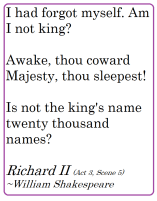
name quote, richard II shakespeareMaking lists of names is essential. You want their spellings to remain consistent and being able to return to what you initially planned is a big help later on. When we commence writing the actual narrative, each character will have an arc of growth, and sometimes names will change as the story progresses. Do remember to make notes of those changes.
Heroes who arrive perfect in every way on page one are uninteresting. For me, the characters and all their strengths and flaws are the core of any story. The events of the piece exist only to force growth upon them.

Posts in this series to date:

#NaNoWriMo prep part 1: Deciding on the Project #amwriting


Credits and Attributions:

Dustcover of the first edition of The Hobbit, taken from a design by the author, J.R.R. Tolkien.

17 Comments

Filed under writing

Verbs and Character Creation #amwriting

This morning I am writing beneath an overcast sky to the sounds of seabirds and waves. It’s the perfect soundtrack for the moment. Later today, the sun will emerge from the mists, and the air will be full of laughter and excited chatter. Knots of parents, children, and dogs will dot the sandy shore, along with all the paraphernalia that goes along with a visit to the beach.

Words-And-How-We-Use-ThemUnfortunately, although we asked for a ground-floor condo, we were assigned a second-floor unit. My husband is managing the stairs – slowly. On the good side, we have the god’s-eye view of a wide stretch of beach, the perfect deck overlooking it all.
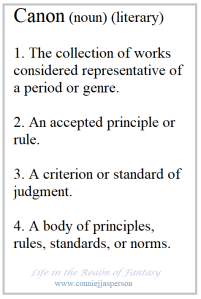
canon definitionWriting is going as well as ever, a little up and down. I’m building the framework for a new story, which I will begin writing on November 1st. The world is already built; it’s an established world with many things that are canon and can’t be changed. So, I’m working my way through the bag of tricks that help me jar things loose.
One thing that helps when creating a character is identifying the verbs embodied by each individual’s personality. I am searching for their motivation, the metaphorical “hole” in their life. What pushes them to do the crazy stuff they do? In several seminars I’ve attended, this aspect of character creation was referred to as their void.

Anyway, I’m thinking. I’m identifying the void that blights the lives of each character. I’m letting my mind off its leash and taking notes.

So let’s pretend we’re plotting a novel, and we’re going to use verbs to do it. It could be any kind of novel, but for the sake of this post, we’ll plot a romance novel.

Jack Kerouak on writing LIRF07252022Protagonist HER: Anna Lundquist, an unemployed game developer. She inherited an old farm and has moved there. She embarks on creating her own business designing anime-based computer games. Anna is shy, not good with men unless discussing books or computer games. VOID: Loss of family. VERBS: Create, Build, Seek, Defend, Fight, Nurture. Modifiers: Adaptable, ambitious, focused, independent, industrious, mature, nurturing, private, resourceful, responsible, simple, thrifty.
Protagonist HIM: Cameron (Cam) Berglund, a handsome and charismatic lawyer. His parents divorced, and he was raised in his mother’s home city. He inherited his father’s failing family law firm when his father committed suicide. VOID: Fears to trust. VERBS: Charm, Fix, Mediate, Heal, Advocate. Modifiers: Analytical, cautious, discreet, ethical, honorable, independent, just, pensive, observant, perceptive, private, proactive.

But if we’re writing romance, there must be a little drama before Anna settles on the right man:

Alternate Almost Protagonist HIM: Nic Jones is a ski bum and the charming owner of a coffee shop where Anna uses the internet for the first week until her cable is hooked up. He is writing a novel. VOID: Parents were killed in a plane crash. VERBS: charm, feed, desire, embrace. Modifiers: Ambitious, charming, courteous, disciplined, empathetic, flirtatious, imaginative, independent, pensive, persistent, private, quirky.

Two of Anna’s verbs are “fight” and “defend.” This forces us to ask ourselves why those verbs apply to her. Enter the antagonist:

antagonistAntagonist HIM: Matt Gentry, owner of MGPopularGames and Anna’s former boss, is angry at Anna for leaving his firm. On a skiing trip with an old fraternity brother who owns an art supply store in Starfall Ridge, he sees her entering Nic’s coffeeshop. Matt discovers that Anna is now living in that town. He learns she has started her own company and is building an anime-based RPG. He goes back to Seattle and files an injunction to stop her, claiming that he owns the rights to her intellectual property. VOID: Narcissist. VERBS: Possess, Control, Desire, Covet, Steal, Lie, Torment.
As we go through the process of sorting out the voids, verbs, and modifiers for these characters, we have some of the bones to form the skeleton of a novel. It’s still incomplete, but it’s a beginning. If we were actually writing this story, we would need to research how narcissists behave to ensure our antagonist fits the classic narcissist description but doesn’t become cartoonish.

In my current work-in-progress, a fantasy novel set in my world of Neveyah, the plot is going in the direction of a murder mystery. I haven’t identified the antagonist yet, but I’m inching closer.

I almost have a grip on my two main characters. I know their voids and main verbs, but their secondary verbs and modifiers are still eluding me. Lenn is a fire-mage, and his main verb is “act” (as in to take action). Dalya is an air-mage/healer whose main verb is “nurture.”

Both mages are members of a sect that hunts rogue mages when necessary and have certain powers that come along with that task. I will have my characters built and my plot fully outlined when NaNoWriMo begins. Ironing out this issue is the perfect excuse to sit and watch the seabirds quarreling with each other.

Next week I will continue thinking about verbs and how they do so much more than set a scene in motion. Some verbs push the action, some pull us in, and some don’t work as intended. All verbs set the mood, portraying the action in the light you, as their creator, envision.

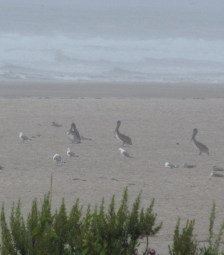
pelicans-seagulls-Cannon-Beach August 20, 2021

Pelicans and seagulls on Cannon Beach in August. © Connie Jasperson 2022

Right now, my personal verb is “observe.”

I know it looks like I’m sitting here doing nothing, just gazing at the wildlife with a silly grin.

But actually, I’m working. See this notepad and pencil? See the wind-sculpted Einstein-esque hairstyle I’m rocking? This is how great minds look when they’re working.

Honest.


Credits and Attributions:

The image of pelicans and seagulls in the fog on Cannon Beach is from Connie Jasperson’s private collection and is copyrighted.

11 Comments

Filed under writing

Creating Characters vs. Defamation of Character #amwriting

Real-life has moments that are far stranger than anything I could dream up. I’m not alone in this—everyone has a story. That story will have moments that are difficult to hear and others that are amazing.

DangerWriting fiction allows me to put reality into more palatable chunks. It’s easier to cope with that way.

One of the ways I design my worlds is by drawing on the real world to help develop the unreal. Reshaping and reusing the scenery and terrain around you are habits of good world-building.

However, crafting characters is different. We shouldn’t use the real names and exact situations of people we are acquainted with for any reason. Don’t thinly disguise your hated boss or neighbor with a different name because they could recognize themselves and sue you.

This was made clear by the late Betty MacDonald’s situation. Her first published book was picked up by J.B. Lippincott. The Egg and I is a fictionalized account of Betty’s life as a chicken farmer. It was set in Chimacum, a small community in rural Washington State.

Many members of my family were from that area of Puget Sound and still lived there during the post-WWII years, the time frame in which Betty’s book was set.

A wide disparity in education and social services existed between urban and rural communities at that time. Only a basic education was available to most families of loggers, brush pickers, and small farmers in Washington.

Thanks to the US government’s efforts, the indigenous people were in dire straits. Traditionally, Puget Sound tribes were mainly hunter/gatherers and now suffered extreme deprivation. They had lost access to their traditional hunting and fishing territories. They were losing the culture that had been their foundation for untold thousands of years.

Betty MacDonald’s book was a success in that era and moral climate, selling well over a million copies and spinning off several movie adaptations.

The Egg and I fell into disfavor in the 1970s because cultural awareness had changed the way we view indigenous people. Critics now saw a lack of understanding and cliched treatment of our local Native people in the book.

This post isn’t intended to address or pass judgment on a 1940’s treatment of cultural issues. These are things we avoid in our modern connected society, but which people took for granted in 1946 when the book was written. Instead, we need to focus on the moral and financial repercussions of writing fictional characters too close to life.

Betty’s book motivated several lawsuits against her and her publisher for defamation of character.

From Wikipedia:

Post-publication lawsuits

Following the success of the book and film, lawsuits were filed by members of the Chimacum community. They claimed that characters in The Egg and I had been based on them, and that they had been identified in their community as the real-life versions of those characters, subjecting them to ridicule and humiliation. The family of Albert and Susanna Bishop claimed they had been negatively portrayed as the Kettles. Their oldest son Edward and his wife Ilah Bishop filed the first lawsuit, which was settled out of court for an undisclosed amount.

The second lawsuit was filed against MacDonald, publisher J. B. Lippincott Company, and The Bon Marché (a Seattle department store which had promoted and distributed the book) for total damages of $975,000, as sought by nine other members of the Bishop family ($100,000 each) and Raymond H. Johnson ($75,000), who claimed he had been portrayed as the Indian “Crowbar.” The case was heard before a jury in Judge William J. Willkins’ (who was also one of the presiding judges at the Nuremberg Trials) courtroom in King County Superior Court beginning February 6, 1951. MacDonald testified that the characters in her book were composite sketches of various people she had met. The defense produced evidence that the Bishop family had actually been trying to profit from the fame the book and movie had brought them, including testimony that son Walter Bishop had had his father Albert appear onstage at his Belfair, Washington, dance hall with chickens under his arm, introducing him as “Pa Kettle.” On February 10, 1951, the jury decided in favor of the defendants. [1]

stoplightWe all draw inspiration from real life, whether consciously or not. However, if we are writing fiction, we must never detail people we are acquainted with, even if we change their names.
If you become a success, some people may see that as their ticket to a little extra money at your expense. This, despite the disclaimer we put on the copyright page:

This is a work of fiction. Names, characters, places, and incidents are products of the author’s imagination or are used fictitiously and are not to be construed as real. Any resemblance to actual events, locales, organizations, or persons, living or deceased, is entirely coincidental.

However, we can and will draw impressions from the people around us.

A common “coffee shop” game is a good way to develop characters for your stories and won’t get you sued. Now that the pandemic is winding down, many coffee shops offer indoor seating once again. Pick a place that is new to you and have your pen and notepad or laptop at the ready. Watch your fellow patrons. Observe their behavior, their speech habits, and their unconscious mannerisms. You can build an entire fantasy life for them.

Each character sketch is the kernel that can be the start of a short story or even a novel–and all of it is fiction.

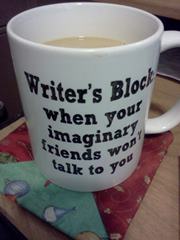
My Coffee Cup © cjjasp 2013The best thing is that you don’t actually know a thing about them other than they like a Double Tall Hazelnut Latte. Peoples’ conversations are unguarded in coffee shops, openly talking about what moves them or holds them back. They are lovers or haters, quiet or loud, and most importantly, anonymous.

The moods and mannerisms, idiosyncrasies, and habitual quirks that you see can give rise to a character you can use without risking your financial security and your reputation. People-watching is a necessary habit for the author to develop.


Credits and Attributions:

[1] Wikipedia contributors, “The Egg and I,” Wikipedia, The Free Encyclopedia, https://en.wikipedia.org/w/index.php?title=The_Egg_and_I&oldid=1050662692 (accessed February 8, 2022).

13 Comments

Filed under writing