
Real-life has moments that are far stranger than anything I could dream up. I’m not alone in this—everyone has a story. That story will have moments that are difficult to hear and others that are amazing.
 Writing fiction allows me to put reality into more palatable chunks. It’s easier to cope with that way.
One of the ways I design my worlds is by drawing on the real world to help develop the unreal. Reshaping and reusing the scenery and terrain around you are habits of good world-building.
However, crafting characters is different. We shouldn’t use the real names and exact situations of people we are acquainted with for any reason. Don’t thinly disguise your hated boss or neighbor with a different name because they could recognize themselves and sue you.
This was made clear by the late Betty MacDonald’s situation. Her first published book was picked up by J.B. Lippincott. The Egg and I is a fictionalized account of Betty’s life as a chicken farmer. It was set in Chimacum, a small community in rural Washington State.
Many members of my family were from that area of Puget Sound and still lived there during the post-WWII years, the time frame in which Betty’s book was set.
A wide disparity in education and social services existed between urban and rural communities at that time. Only a basic education was available to most families of loggers, brush pickers, and small farmers in Washington.
Thanks to the US government’s efforts, the indigenous people were in dire straits. Traditionally, Puget Sound tribes were mainly hunter/gatherers and now suffered extreme deprivation. They had lost access to their traditional hunting and fishing territories. They were losing the culture that had been their foundation for untold thousands of years.
Betty MacDonald’s book was a success in that era and moral climate, selling well over a million copies and spinning off several movie adaptations.
The Egg and I fell into disfavor in the 1970s because cultural awareness had changed the way we view indigenous people. Critics now saw a lack of understanding and cliched treatment of our local Native people in the book.
This post isn’t intended to address or pass judgment on a 1940’s treatment of cultural issues. These are things we avoid in our modern connected society, but which people took for granted in 1946 when the book was written. Instead, we need to focus on the moral and financial repercussions of writing fictional characters too close to life.
Betty’s book motivated several lawsuits against her and her publisher for defamation of character.
From Wikipedia:
Post-publication lawsuits
Following the success of the book and film, lawsuits were filed by members of the Chimacum community. They claimed that characters in The Egg and I had been based on them, and that they had been identified in their community as the real-life versions of those characters, subjecting them to ridicule and humiliation. The family of Albert and Susanna Bishop claimed they had been negatively portrayed as the Kettles. Their oldest son Edward and his wife Ilah Bishop filed the first lawsuit, which was settled out of court for an undisclosed amount.
The second lawsuit was filed against MacDonald, publisher J. B. Lippincott Company, and The Bon Marché (a Seattle department store which had promoted and distributed the book) for total damages of $975,000, as sought by nine other members of the Bishop family ($100,000 each) and Raymond H. Johnson ($75,000), who claimed he had been portrayed as the Indian “Crowbar.” The case was heard before a jury in Judge William J. Willkins’ (who was also one of the presiding judges at the Nuremberg Trials) courtroom in King County Superior Court beginning February 6, 1951. MacDonald testified that the characters in her book were composite sketches of various people she had met. The defense produced evidence that the Bishop family had actually been trying to profit from the fame the book and movie had brought them, including testimony that son Walter Bishop had had his father Albert appear onstage at his Belfair, Washington, dance hall with chickens under his arm, introducing him as “Pa Kettle.” On February 10, 1951, the jury decided in favor of the defendants. [1]
 We all draw inspiration from real life, whether consciously or not. However, if we are writing fiction, we must never detail people we are acquainted with, even if we change their names.
If you become a success, some people may see that as their ticket to a little extra money at your expense. This, despite the disclaimer we put on the copyright page:
This is a work of fiction. Names, characters, places, and incidents are products of the author’s imagination or are used fictitiously and are not to be construed as real. Any resemblance to actual events, locales, organizations, or persons, living or deceased, is entirely coincidental.
However, we can and will draw impressions from the people around us.
A common “coffee shop” game is a good way to develop characters for your stories and won’t get you sued. Now that the pandemic is winding down, many coffee shops offer indoor seating once again. Pick a place that is new to you and have your pen and notepad or laptop at the ready. Watch your fellow patrons. Observe their behavior, their speech habits, and their unconscious mannerisms. You can build an entire fantasy life for them.
Each character sketch is the kernel that can be the start of a short story or even a novel–and all of it is fiction.
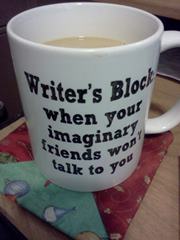 The best thing is that you don’t actually know a thing about them other than they like a Double Tall Hazelnut Latte. Peoples’ conversations are unguarded in coffee shops, openly talking about what moves them or holds them back. They are lovers or haters, quiet or loud, and most importantly, anonymous.
The moods and mannerisms, idiosyncrasies, and habitual quirks that you see can give rise to a character you can use without risking your financial security and your reputation. People-watching is a necessary habit for the author to develop.
Credits and Attributions:
[1] Wikipedia contributors, “The Egg and I,” Wikipedia, The Free Encyclopedia, https://en.wikipedia.org/w/index.php?title=The_Egg_and_I&oldid=1050662692 (accessed February 8, 2022).
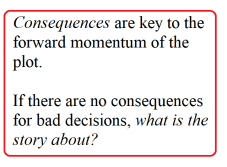
 Let’s look at both the meanings and synonyms for the word consequences.
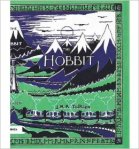
 In the morning, after the unexpected (and unwanted) guests leave, he has two choices, to stay in the safety of Bag End, or hare off on a journey into the unknown. He chooses to run after the dwarves, and so begins the real story—how a respectable hobbit became a burglar and became a hero in the process.
 The blade does not acquire its name until later in the adventure, after Bilbo, lost in the forest of Mirkwood, uses it to kill a giant spider and rescue the Dwarves. This is when Bilbo’s decisions become more thoughtful, and his courageous side begins to emerge.
 This is an excellent time to look at the freedom we give our characters to act and react within the story. I have mentioned many times that I am a plotter. However, when I am in the process of writing the first draft of a novel, the characters sometimes take over. The plot veers far from what I had intended when I began writing it.
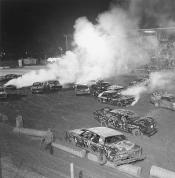 This happens because my work is character-driven, and sometimes, they’re like demolition derby drivers.
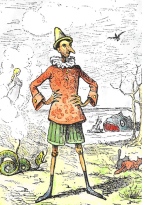 This is called giving your characters “agency.” Agency is an integral aspect of the craft of writing. It means that you allow your characters to make decisions that don’t necessarily follow the original plot outline. This gives them a chance to become real, the way
 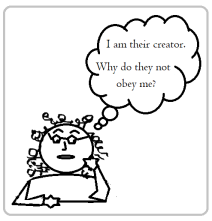 No matter how they respond, they will be placed in situations where they have no choice but to go forward. After all, I am their creator, the deity of their universe. I have an outline that predestines them to specific fates, and nothing they can do will stop that train.
 So, what do we need to have in place during the next seven days before the big event?
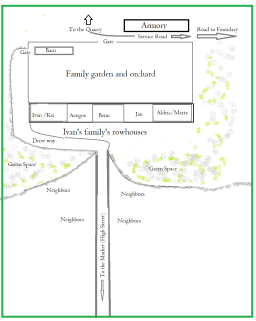 Environment: Ivan and Kai live in Weiland, Tribe Weila’s riverport and mining center. Ivan’s extended family has five rowhouses at the upper end of High Street. It’s a steep but easy walk to the market for his grandfather, who lives next door and watches the children while Ivan and Kai work. I drew a little map for my notes, so I know the layout of where everything is in regard to their home and businesses. It could change, but I have something to start with.
 A common theme in fantasy is the juxtaposition of chaos and stability (or order). This subtheme will feature strongly in my novel. Good vs. evil is a
  Writing is easier once it becomes a daily
  We have this perception that taking time for creativity is selfish, and that will be your biggest hurdle. Trust me, it is not asking too much of your family for you to have some time every day that is sacred and dedicated to writing.
 Write for five minutes here and ten minutes there all day long if that is all you can do. Every word counts toward your finished manuscript. I took my lunch to work and wrote during my lunch half-hour whenever possible. I also wrote on the bus when I didn’t own a car.
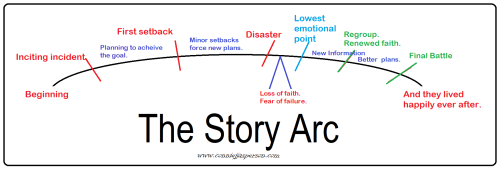
 Remember, what you are writing is a rough draft, so your story arc will be bumpy and uneven. It doesn’t have to be perfect, so don’t worry about making it so. The goal of NaNoWriMo is to get that first draft written in thirty days. So, every time you have fifteen minutes to spare, sit down and write as much as you can in that short length of time. Spew your story as fast as you can in those moments before you are pulled away. With six or seven short bursts of writing, you can really rack up the word count.
 But sometimes, when writing the first draft, we realize our manuscript has gone way off track and is no longer fun to write. That is where the storyboard and my loose outline become important.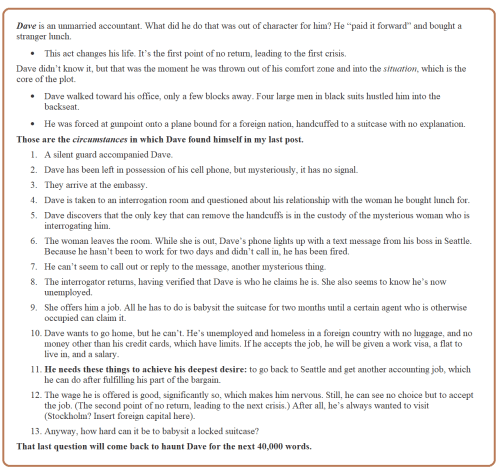
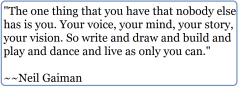 Every novel is different, has a different genesis, and emerges from the author’s mind with its own personality.
 Whether you hope to be published traditionally or plan to go indie, you must know what the reading public is buying. You will probably write a book that is squarely set in your favorite genre.
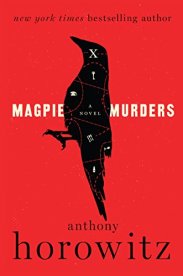 When editor Susan Ryeland is given the manuscript of Alan Conway’s latest novel, she has no reason to think it will be much different from any of his others. After working with the bestselling crime writer for years, she’s intimately familiar with his detective, Atticus Pünd, who solves mysteries disturbing sleepy English villages. An homage to queens of classic British crime such as Agatha Christie and Dorothy Sayers, Alan’s traditional formula has proved hugely successful. So successful that Susan must continue to put up with his troubling behavior if she wants to keep her job.
 Now, let’s talk MECHANICS. The author of the Magpie Murders has worked as a journalist. He has taken the time to become educated in grammar and understands common industry standards.

 I know that world because I based the plants and topography on the Pacific Northwest, where I live. Other than the Escarpment, which is the visible scar left behind by the Sundering of the Worlds, the plants and geography are directly pulled from the forested hills and farmlands of Southern Puget Sound and Western Washington State.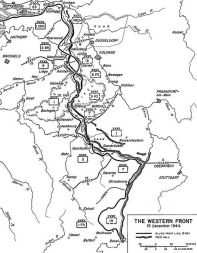
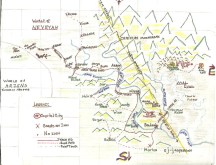
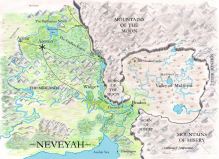
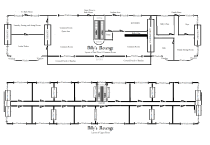 If your work is sci-fi, consider making a map of the place where the action happens. It could be a pencil-drawn floor-plan of a space station/ship or the line drawing of part of an alien world. I drew the floorplan of Billy’s Revenge for my reference, as most of the novel, Billy Ninefingers, takes place there.
 Open your
  Authors of sci-fi must research and understand the
  Satisfying these conditions sets the stage for you to create the Science of Magic. This is an underlying, invisible layer of the world. By creating and following the arbitrary rules of this “science,” your story won’t contradict itself.
 Conflict forces the characters out of their comfortable environment. The roadblocks you put up force the protagonist to be creative. Through that creativity, your characters become stronger than they believe they are.
 If you design this now, on November 1st, you will have the framework to showcase your characters ambitions, the drive to acquire more personal power, and the lengths characters will go to in their efforts to gain an edge over their opponents. Everything will be in place for a free-wheeling dive deep into the consequences of your protagonist’s struggle.


 Life in the Realm of Fantasy