Tag Archives: fantasy

flippin’ it

An elf markswoman from the Wesnoth fantasy setting, created by Kathrin "Kitty" Polikeit for the homepage of WTactics, the customizable card game project based on The Battle for Wesnoth via Wikimedia Commons

An elf markswoman from the Wesnoth fantasy setting, created by Kathrin “Kitty” Polikeit for the homepage of WTactics, the customizable card game project based on The Battle for Wesnoth via Wikimedia Commons

You know you’ve taken a dip into the realm of fantasy when you’re editing a manuscript and one of your comments in the sidebar reads:  ? maybe a word or two to signify it wasn’t a random customer? Does he mean the elf?  

For some reason when I found myself making that particular comment I laughed like a loon.

I  marvel at my  ‘fantasy life’.  I’m really talking about an elf, and the author whose book I am editing won’t think I’ve ‘flipped it’ again. She has ‘flipped it’ too.

Flippin’ it‘ is an occupational hazard for authors, judging from what I see on Facebook!

When I was young, in my twenties and thirties and even into my fifties, I thought sixty was old, and that I would probably be too decrepit to enjoy life once I devolved to such an old age. However, I’ve been pleasantly surprised to discover my childhood lasted through my forties, and now here I am, sixty years old and feeling like the queen of everything!

Young adulthood is a a time of living in limbo–you go to work, you get married and have kids. It’s your fertile years after all, and your biology insists you take advantage of it!Young Woman Sitting Looking at Laptop Screen In your twenties, thirties and even forties,  creativity is something you pursue only in your free time, feeling guilty for taking time away from your obligations and from your children. You enjoy life, yes and you do find ways to have a satisfying and creative existence, but it’s on hold, and something in the back of your mind asks, “Is this it? Is this all there is?” You feel guilty for even thinking such a heinous thought. How could a lovely family, a good job and all the trappings of modern life not be satisfying? Of course you’re going to write that book someday, but…Jackie has soccer, David has piano lessons,  and you’ve a briefcase full of work to do when dinner is done. That’s if they don’t need too much help with their homework. If you fall into bed by eleven you’re doing well!

These years are the foundation years, the years of your late childhood, preparing you for the real adulthood that only begins once you are free of those responsibilities.
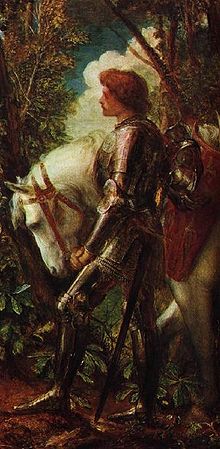
220px-Sir_Galahad_(Watts)Life gets put on hold until that blessed day when the last child leaves the nest. On that day, your real life begins. Yes, you will still need to work, but your life has gained that one rare and beautiful commodity you never had before: free time. Time to spend doing what you want in the evening–time to paint, or time to write. Time to be selfish and no one to make you feel guilty.

Yeah, you’re glad to hear from the kids, that won’t change.  You love being with them and look forward to seeing them for family get-togethers and visits, but you don’t live only for them any more.

There will be separation anxiety. It surprises them that you don’t call every hour to check on them, but they will get used to it, and even learn to accept your independence.

Eventually they will stop fearing that your not calling every hour means you’ve fallen and can’t get up. Promise them that if that becomes a valid concern, you will get a life-alert and life will go on.

They’ll get used to you traveling on your own, and making decisions for yourself. One day they will experience this part of life for themselves. They will realize they can count on you to be there when they need you, and accept that when the crisis is over, you will load your suitcase into the car and let them get on with living the first half of their lives.

You discover that you have a meaning and a purpose in your life that goes far beyond parenthood and biological imperatives, even if it’s a purpose only you and a few friends in your writing group understand.

The first half of my life I spent working three jobs and raising kids, writing only when I could, and too embarrassed to show it to anyone. Now, here I am embarking on the second half of my life, the part where my life really begins and I not only have a career that absorbs me, I get to read all I want! 

Of course I’ve ‘flipped it’. I love the freedom of writing fantasy, and the pleasure of being involved in editing awesome books by amazing authors. It doesn’t get any better than that!


4 Comments

Filed under Adventure, Battles, Fantasy, Food, Humor, Literature, Uncategorized, writer, writing

Grandma’s Ferrari and Style

chicago manual of styleOh golly gee–it’s that time of year again. What do I use,  “that” or “which?”   And what the heck are those rules again? Good grief…where did I put that bookmark for the online Chicago Manual of Style….

What? Doesn’t everyone have a bookmark in their list of favorites so they can immediately access a FREE style manual when questions of  style arise? Good lord people–we aren’t talking shoes and handbags here! We’re talking RULES! Specifically, the rules fer writin’ and ropin’ in them thar clauses!

And always remember–for the indie author, free is good. If you don’t have the funds to buy Strunk and White’s Elements of Style, for the love of Dickens, use the internet, Tiny Tim!

Personally, I use both manuals.

The traditional approach to the question of “that versus which” is to use “that” with restrictive clauses and “which” with nonrestrictive clauses. While some writers seem to have abandoned the distinction entirely, no better rule has come along to replace the traditional rule. Moreover, the rule is easy to master.

But what, you ask, is a stinking restrictive clause and why do you need one?

799px-Handcuffs01_2003-06-021.   A restrictive clause is one that limits — or restricts –the identity of the subject in some way. When writing a restrictive clause, introduce it with the word “that” and no comma. (However, if the subject is or was a human being, use “who” to introduce the clause.) This is where “that” goes:

Correct Restrictive Use:

The photograph that was hanging in the hotel lobby was stolen.

The use of “that” in this sentence is correct if the reader intends to single out the one photograph that was in the hotel lobby as the stolen photograph. However, if there were several photographs hanging in the lobby, this use would be incorrect, since it would mislead the reader into believing that there had been only one photograph in the hotel lobby. The restriction here tells us that the one photograph that had been hanging in the hotel lobby was stolen — not the photograph in the cocktail lounge, or the one in the guest library, or any of those in the restaurant.

MH9004387282.  Use “which” with nonrestrictive clauses. A nonrestrictive clause may tell us something interesting or incidental about a subject, but it does not define that subject. When writing a nonrestrictive clause, introduce it with “which” and insert commas around the clause. (However, if the subject is or was a human being, use “who” to introduce the clause and insert commas around the clause.)

According to Wikipedia, the Fount of all Knowledge: non-restrictive clause is a clause in which a noun phrase that is used to avoid repetition (as the referent of an anaphor, meaning that it is substituted by another word but refers to the same noun) is determined by its antecedent where the dependent is peripheral (non-essential) in the secondary constituent, as opposed to a restrictive clause, where the dependent is central (essential) to its primary constituent. A non-restrictive clause does not identify the referent of its noun, but only provides information about it.

220px-Metropolitan_police_BMW_3_seriesRestrictive example:

The officer helped the civilians who had been shot.

or

The officer helped those civilians who had been shot.

In this example, there is no comma before “who”. Therefore, what follows is a restrictive clause (not all of the civilians had been shot).

Non-restrictive example:

The officer helped the civilians, who had been shot.

Here, there is a comma before “who”. Therefore, what follows is a non-restrictive clause. It changes the sentence to mean that all the civilians had been shot.[1]

Correct Nonrestrictive Use:

The photograph, which was hanging in the hotel lobby, was stolen.

Explanation: While this nonrestrictive use tells us that the photograph was hanging in the hotel lobby, it does not tell us which of the several photographs in the hotel lobby was the stolen photograph. It would be incorrect to use this nonrestrictive clause if there had been only one photograph in the hotel lobby, as the sentence leaves open the possibility that there were others.

  1. Combining Restrictive and Nonrestrictive Clauses. One can provide both limiting and nonlimiting information about a subject in a single sentence. Consider the following.

Correct Use of Both Restrictive and Nonrestrictive Clauses:

220px-Looking_across_lake_toward_mountains,_-Evening,_McDonald_Lake,_Glacier_National_Park,-_Montana.,_1933_-_1942_-_Ansel AdamsThe Ansel Adams photograph that was hanging in the hotel lobby, which was purchased in 1969 for $100,000, was stolen.

The restrictive clause beginning with “that” tells us that only one Ansel Adams photograph was hanging in the hotel lobby and that it was stolen. The nonrestrictive clause beginning with “which” tells us what the owner had paid for the photograph, but it does not tell us that the owner did not pay another $100,000 for another photograph in the same year. It does not limit the possibilities to the Ansel Adams photograph that was in the lobby.

Restrictive and Nonrestrictive Clauses beginning with “Who.” When writing about human beings, we use “who” rather than “that” or “which” to introduce a clause telling us something about that human being. Since “who” is the only option, we distinguish between a restrictive use and a nonrestrictive use by the use of commas.


Ferrari_AssetResizeImageOld Mrs. Jasperson, who drives a Ferrari, is going through her second childhood.

Yes, I am a dreamer. Indies are lucky to be able to afford bus passes.

Anyway, that “who clause” is nonrestrictive because the information in the clause doesn’t restrict or limit the noun it modifies (Old Mrs. Jasperson.) The commas signify that the adjective clause provides added, but not essential, information. Use a pair of commas to set off words, phrases, or clauses that interrupt a sentence, as in these quotes:

Rudyard Kipling said, “Words are, of course, the most powerful drug used by mankind.”

Anthony Burgess said, “Literature is all, or mostly, about sex.”

But don’t use commas to set off words that directly affect the fundamental meaning of the sentence:

Samuel Johnson said, “Your manuscript is both good and original. But the part that is good is not original, and the part that is original is not good.”

400px-CH_cow_2See? I do understand the principles, and when it comes to theory, I can talk clauses and quarks ’til the cows come home.

But truthfully folks, when I am in the zone, I just bash out the words and trust that my editors will not only rein me in when  I get too free with my commas, they will weed out all the extraneous “thats” and “whiches” that creep into every author’s raw manuscript.

Comments Off on Grandma’s Ferrari and Style

Filed under Adventure, Battles, Books, Fantasy, Food, Humor, Literature, Uncategorized, Vegan, writer, writing

Alien Abduction or How I Spent my Summer Vacation

©Anthony May Photography, courtesy of seattle pi

©Anthony May Photography, courtesy of seattle pi

The days are shorter, but still warm and oh, so humid. The dry days of August have waved goodbye, and the monsoons of the Pacific Northwest fall have once again made their presence felt…three weeks ahead of schedule. Lightning flashes across the sky and thunder rolls, shaking the house and waking the occupants, who turn in their bed and hug each other for comfort.

The mornings are dark, and the kitchen feels warm and safe. The coffeemaker gurgles to a finish and I feel a sense of sadness, once again feeling as if I somehow missed the summer this year.

My husband walks quickly out to the old Forester and leaps in as nimbly as any strong old man might, dodging the wind and rain. He drives away through the dark, in the pouring rain.  I, faced with the dark house and a mountain of work in my office,  feel somehow abandoned by the gods of weather.

how-to-play-gin-rummy-1Where were the card games at my sister’s house that normally make the summers so much fun? How did the entire summer go by without even one game of San Felipe Rummy?

We didn’t have many dinners on the back porch. I don’t recall sitting in the pool more than once.

I don’t recall having my morning coffee on the back porch and that is something I look forward to all winter.

Was I abducted by aliens? Thinking logically, I must doubt that theory. My blog posts and work calendar all indicate I was here, apparently doing what I was supposed to be doing, but I don’t recall enjoying the rare bursts of sunshine that turn the summer skies a magical shade of blue here in Olympia.

clouds ms clipartI was here, because I definitely published a novella, Tales From the Dreamtime, a collection of three short stories, and I think it’s my best work yet. I’ve made a great deal of headway on various editing projects for private clients, and I have made headway on my own work. I wrote two posts a week for this blog, some of which I think are rather good posts.  I read at least two books a week all summer, and blogged about them on Best In Fantasy.  All these are proof I was here, but how did I miss the summer?

Both my mind and my Google Calendar say I was not abducted.

Nevertheless, I believe at least my mind was taken elsewhere, because summer has come and gone, and I have no recollection of it.

The rain pounds on the roof, and rattles the gutters. It flattens the grass and the flowers,  and thunder rolls down our little valley. The rain is our identity, and our curse: the one thing we can count on.

A patch of blue becomes a jewel, a treasure in the eye of the beholder.

6 Comments

Filed under Adventure, Books, Fantasy, Food, Humor, Literature, Uncategorized, Vegan, writing

What I’ve learned from Tad Williams and Neil Gaiman

Over the course of my vacation I read two books, besides working on my own. I love to read the works of other authors, immersing myself in the way they handle plot twists and show the mood of a tale.  Oddly enough, both tales are told from the first person point of view, something I usually don’t gravitate to.

the dirty streets of heaven, Tad WilliamsFirst up, I read Tad Williams’s  irreverent thriller, The Dirty Streets of Heaven, Book I of Bobby Dollar.  That was fun, a real trip down the sometimes mean streets of the afterlife.

Tad Williams’s style of writing in the Bobby Dollar series is a non-traditional take on the traditional in-your-face, hard-boiled detective novel. Bobby is an angel, but even angels have their problems.

With the first sentence on page one, Williams establishes the mood of the piece and the society Bobby Dollar lives in, and he remains true to that concept throughout the entire tale.

“I was just stepping out of the elevator on the 43rd floor of the Five Page Mill building when the alarms began going off–those nightmarish, clear the building kind like the screams of tortured robots–and I realized I’d pretty much lost any chance at the subtle approach.”

Tad Williams’s work encompasses an incredibly wide range of styles, from fairy tales, to epic fantasy, to this hard-boiled detective story with his own paranormal twist.  At no point in the manuscript does the author forget where he is, or whose point of view the tale is told from. He never loses control of the many threads interwoven into this plot. The atmosphere is dark and seedy, and the demons Bobby Dollar deals with are some of the nicest people he knows.  Every sentence, every paragraph remains true to the mood established in that first sentence.

The ocean at the end of the lane Neil GaimonThe second book I read this last week was a completely different kind of tale, but it too was told in the first person.  Neil Gaiman’s The Ocean at the End of the Lane.

Neil Gaiman’s prose is astonishingly beautiful. It is told in the style of an old-fashioned fairy-tale, and the protagonist is never named. Ordinarily, the fact the protagonist is never named would have irritated the heck out of me, but the tale captivated me at the first line and held me enthralled to the final page. This is a stunning, harsh tale, frightening and yet comforting in a strange way.

“It was only a duck pond, out back of the farm. It wasn’t very big.

Lettie Hempsteck said it was an ocean, but I knew that was silly. She said they’d come here across the ocean from the old country.”

I didn’t buy this book for the blurb or the cover– the blurb is nonexistent, and the cover is merely okay–I bought it for the title, and for Neil Gaiman.  I knew without a doubt his prose  would more than make up for the cover and I was not wrong. The protagonist is a man of late middle age on his way to the funeral for a loved one. He stops at his childhood home, and also visits the neighbor. While there he is transported in his memories back to a terrible time in his life.  There is magic, and there is mystery here, and he tells this tale from the point of view of a seven-year-old child viewing adult situations he has only a dim grasp of. The mood is dark, and yet magic.

MH900442497We indies must continually strive to produce this kind of variety and excellence in our own work.

Sometimes we are writing in a desert, a place where the words won’t come. We feel that our work is dry and uninspiring.

But I guarantee the most famous and well-loved authors have suffered the same dry-spells, suffered the same feelings of miserable failure we aspiring indies feel.

When I read their beautiful, harsh and diverse work I am inspired to believe I can do this crazy thing. I remind myself that, for me, it’s not about numbers and sales, because it can’t be. My sales are sort of dismal at best, as I don’t really push them through the traditional indie route of obsessively nagging people to death on Facebook and other social media. For me it has to be about improving the quality of my work and the telling of the tales I have locked in my brain, and getting them out there in book form to the best of my ability.

Reading and understanding how the great authors write is one of the keys to unlocking our own potential. We indies have to use every tool we have available in this rough business, and we have to know what we want to achieve. I want to achieve great sales, of course. But more than that I want to write compelling tales that move my readers. I may never achieve the first, but I think I can do the second.

Comments Off on What I’ve learned from Tad Williams and Neil Gaiman

Filed under Books, Fantasy, Humor, Literature, Vegan, writer, writing

The art of procrastination

MH900341616I have mad skills at the fine art of procrastination.  I can conjure the most amazing reasons to avoid doing tasks that would be so much simpler if I just got off my *** and did them.

I was gone all week last week, and still my house is  trashed. A mountain of dirty laundry lurks in the hall by the washer. Every inch of counter-top in the kitchen has some item (non-perishable)  of food waiting to be put away.  Sand from the beach made the journey home in our clothes and now the carpet needs a good vacuuming and perhaps a shampooing, but that’s another story.

We got home late Saturday night, and we did manage to unload the car.

That was about it. Oh yeah, the food that had to be refrigerated got put away, but the rest of it? Not so much.

MH900383000Everything sits where it was dropped, and gradually the detritus of our holiday is finding its way to the proper place.

And I don’t really find myself too bothered by the chaos. That is odd, for me.

Recovering from being sick for most of the summer and not being allowed to lift more than 10 lbs has put a bit of a damper on the cleaning frenzy I usually indulged in following our past years’ vacations.

I sit and write, and then get up and do a bit of putting away, then I sit and write again.  While in Cannon Beach I made serious headway on one of the new sections of Lackland’s tale, and yesterday, instead of cleaning house, I finished it.

Sort of.

Now I just have to flesh-out the chapter I just finished, and then there are two chapters left to write. The problem is, I know what I have to write for those chapters, because I’ve outlined them, and they are really good, action-packed chapters. It will be simple, and for me, it’s a tale that practically writes itself.

MH900399384But I can’t make myself do it.

Some will die.

I will be letting go of people I love, saying goodbye forever.

I will do many crazy things to avoid that, even if it means I actually finally clean my house.

In fact, I probably should make hummus.  Clean the kitchen, do the laundry and make hummus…avoid the whole end of the book problem….

2 Comments

Filed under Adventure, Battles, Fantasy, Humor, Literature, Vegan, writing

Cover reveal,Tales from the Dreamtime

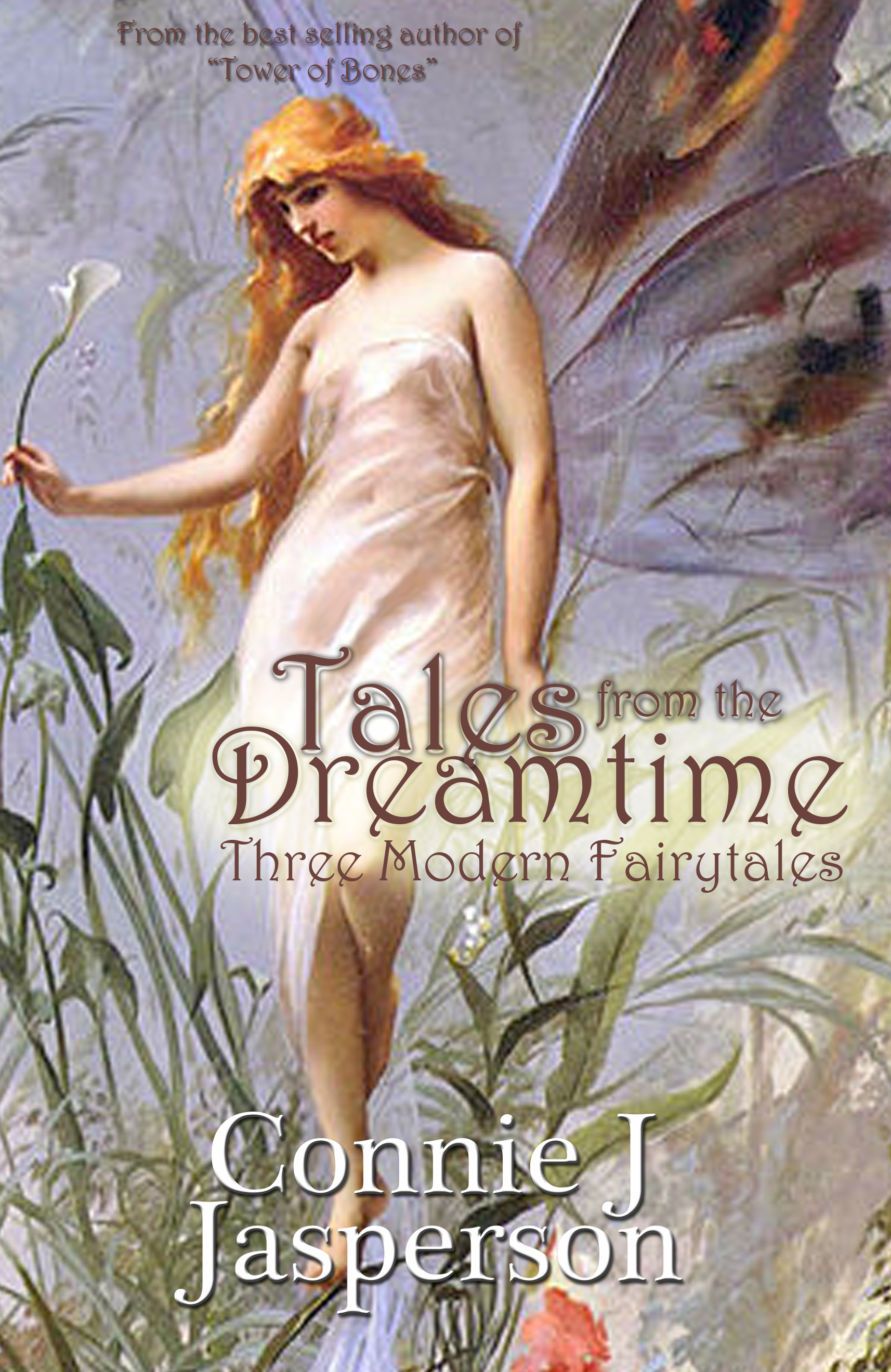
Tales from the Dreamstime jpg 2013Great covers sell books! I love great covers, but haven’t always been that good at creating them.

This is the cover of my soon-to-be-released book, Tales from the Dreamtime, a collection of two short stories and one novella.

The image is The Lily Fairy by Falero Luis Ricardo. The image itself is in the public domain, because the original author or artist passed away over 100 years ago. Thus, instead of crediting the artist with a © symbol, we use a different  method:


Luis Ricardo Falero Lily Fairy 1888.

{{PD-Art|PD-old-100}}

The credit line is extremely important, as you must always clearly represent on the copyright page of your book each person with an interest in the work.  You must have on file a license clearly granting you permission to use the image in way you intend to use it.

In the case of public domain artwork, a good source of free artwork with clearly written  creative-commons licenses is Wikimedia Commons.  There is a limited number of works that are suitable for my purposes, and some of the best ones have restrictions clearly stated on them. This picture, however, has the following provenance clearly stated on the bottom half of the page beneath the picture:

Author
[show]Luis Ricardo Falero (1851–1896) Link back to Creator infobox template wikidata:Q2744493
Description
Lily Fairy
Date 1888
Medium oil on canvas
Source/Photographer [1]
Permission
(Reusing this file)
Author died more than 70 years ago – public domain
This is a faithful photographic reproduction of an original two-dimensional work of art. The work of art itself is in the public domain for the following reason:
Public domain This work is in the public domain in the United States, and those countries with a copyright term of life of the author plus 100 years or less.
This file has been identified as being free of known restrictions under copyright law, including all related and neighboring rights.

The way you are to credit the artist is also clearly expressed in a link:

Courtesy credit lines[edit]

Public Domain media do not require credit line or any kind of attribution; however, reusers are encouraged to attribute author (if known) and inform users that the work was released into public domain. Below are suggested creditline formats for the reusers:

License Author Source Credit line
{{PD-self}}
{{PD-author}}
{{PD-heirs}}
John Doe Own work John Doe / Wikimedia Commons / Public Domain
{{PD-old}} John Doe publication / self-scanned John Doe / Public Domain
{{PD-self}} [[user:JohnDoe]] Own work user:JohnDoe / Wikimedia Commons / Public Domain
{{anonymous-EU}}
{{PD-anon-1923}}
{{anonymous work}}
anonymous publication Public Domain

582px-Il_Pordenone_001b_detail_sheet_music

I have found many old masters that I use on this blog on Wikimedia Commons.

“Public domain” means nobody claims any rights to the property, either because they gave them up or because time or some other factor ended copyright. Anyone can use it for any purpose. For instance, anyone can publish and sell a copy of “A Christmas Carol” because it is no longer copyright due to age.

“Royalty free” means “I own it, but I am allowing you to use it under specific conditions without paying me royalties for it” A Royalty free license does have qualifications. For instance it might allow you to use the work but not to sell copies. Many times you pay the artist a onetime fee and then you have the rights to use the work within the limits of your contract.

Bedermann dreamstime_14266940Affordable Royalty Free art can be found on Dreamstime.com, and the price ranges from $1.00 to $75.00. There are thousands of images on that website. iStock.com is another great royalty free website.  Their contracts are clear and printable and the credit lines are also clear. You always have a record of your purchases through them, on the website so your provenance is never in doubt.

Being an indie is a lot of work, and you really have to be your own art department. It is a lot of fun, I find. I have even tried making my own cover art, with mixed results, but I really learn a lot from these sorts of experiences.

Being an indie is a s much about the learning the ropes of the publishing business as it is anything else.  I have learned that just owning the rights to use the art is only the first step to a good cover. You must either be able to use Photoshop (mondo expensive) or Gimp (free), both of which are startlingly difficult to learn the ropes of.  Not only that, you must understand how a book cover is laid out. There are YouTube and Amazon walkthroughs, which is a free education but also which is complicated.

My advice? Hire a graphic designer with experience in designing book covers. It is well worth it. My own choice of artwork is dictated by my both my pocketbook and the image’s relevance to the story, but I find that good graphics can really make a great cover.

I have a graphic designer, Ceri Clark, who does the graphics on my book covers, because I don’t have the eye for them. My advice? Hire a graphic designer with experience in designing book covers. I know I already said that, but that is my advice, lol!

So here is the blurb for my new book, Tales from the Dreamtime

Three grownup Tales from the Dreamtime in one novella…

A conversation with Galahad
A prince on a quest and a goddess in mourning
A stolen kingdom and the Fractal Mirror 
Three tales of wonder and great deeds 
Three tales of heroes and villains 

Open the door and enter the Dreamtime, the world of fairytales, the flower of all that is delightful and mysterious, frightening and amazing.

It will be offered for sale as an ebook by Monday August 12,2013 if all goes as planned.It contains three tales:

TABLE    OF    CONTENTS

1     Galahad Hawke (a short story)

2    The Tale of Prince Darién (a short story)

3    Arrabelle and the Prince of Thieves (a novella)

Each tale is written with my own particular brand of let-the-chips-fall -where-they-may take on traditional fairytales.

I may yield to pressure and pick up the story at the end of  Galahad, turning him into a novel during NaNoWriMo this year–he is an Arthurian tale with a Steampunk twist. Nothing is certain yet!

7 Comments

Filed under Adventure, Books, Dragons, Fairies, Fantasy, Literature, Steampunk, Uncategorized, writer, writing

What I’ve learned from Greg Bear

Wow.  I just made me a new BFF! I’m never going to wash my ears again (insert starry eyes here.)  I am currently at the Pacific Northwest Writers Association Conference in Seattle, Washington with my real BFF, Irene Roth Luvaul. We are having the best time and even though we are only on the second day of the event, with two more days to go, this thing has already paid for itself in what we have learned about writing, editing and the publishing industry in general.

Greg Bear - portrait-mediumThe keynote speaker was none other than Greg Bear (cue the angels) and what he had to say was more than entertaining–it was inspirational.

While still in high-school, this man and his gang of sci-fi fanatic friends used to hang out with mentor Ray Bradbury! THAT connection was invaluable to his career as writer and storyteller, working in the less-than-respectable genre of speculative fiction.

Greg’s complete dedication to the craft of writing and his passion for the genre of science fiction and fantasy comes across in his talks. He is very frank and has a sense of the ridiculous that resonates with his audience. He is a humble man, who told me he worked to deadlines because he has to pay the mortgage, and publishers frequently have deadlines.

cover_foundation and chaos, Greg BearGreg spoke about working on the foundation series after Asimov’s death, and how he frequently felt he heard the man’s voice in his head, guiding him as he was writing Foundation and Chaos. 

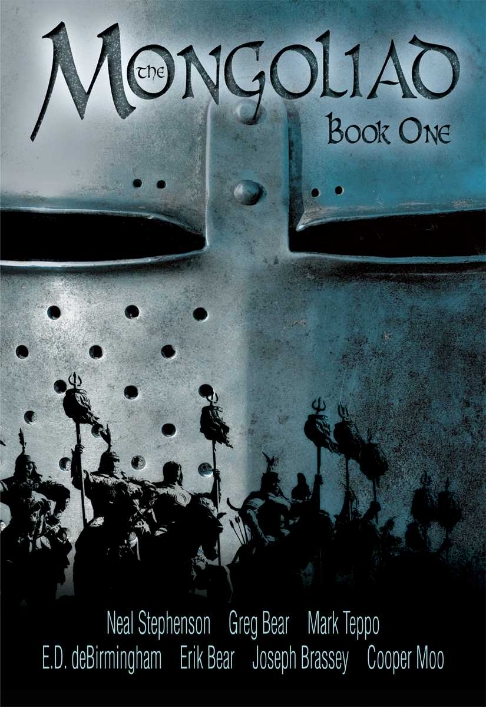
The best part of the evening for me was meeting the man and getting his signature on my copy of the Mongoliad, book 1. 

Irene is a champ at getting things done.  She got me moving so I was fourth in line to meet him and get his signature. I’m just going to say it–Nothing is more undignified than an old fat woman who has just met god.

cover_hull Greg BearYou will be so proud of me!  I made it all the way out of the room before SQUEEEEEing like a school girl with a front row ticket to see One Direction. I am fully convinced that by virtue of having exchanged pleasantries while he signed my copy of his book, Greg Bear and I are now best chums and will be forever.

Irene managed to get me peeled off the ceiling and back to earth, but it was dicey there, for a while.

What I learned from Greg Bear is this:  to be a writer, you must write. You must have passion for your story and you must be obsessed with your universe and the worlds therein. His passion and obsession for the craft of writing really come across in his speech. He lives in his worlds, he knows his characters and their lives better than he knows his own.

Another thing I have learned from Greg Bear is to attend writers conventions if you can.

mongoliad book 1These forums offer us the tools to advance our careers. With the huge boom in indie publishing, it is even more crucial than ever for those of us who intend to remain indies to have the edge that knowledge of the way the industry works gives us. We have to stand out of the crowd, and to do that we must have a professional product and a real marketing plan. If we intend to compete, we have to know and understand the competition.

For the indie author, the competition is the high quality of the finished product put out by traditional publishing houses who are blessed with talented staffs of editors and cover designers and their long established connections  with literary publicity publications.

We can compete. We have to put out the best, most professional product we are able to create. We have to hire editors, and pay for good covers. We have to write ‘blurbs’ that intrigue our readers. Our personal online presence when we are googled must be consistent and professional.  Attending conventions offers us the opportunity to meet people in the industry and make professional connections. It is so much more than just being an elderly fangirl.

I am inspired to write. More than ever I am driven to live this writing life, inventing improbable plots and eccentric people. And I am empowered to believe I can succeed because great storytellers like Greg Bear have gone before me, and paved the way.

7 Comments

Filed under Adventure, Books, Fantasy, Humor, Literature, writer

One small word; one large demon-spawn of heck for author-kind

over used words - scrn prntWhee!!! I am merrily spinning through my mental universe, spewing my thoughts onto the keyboard when suddenly I am brought up short by none other than the dreaded Over Used Word.

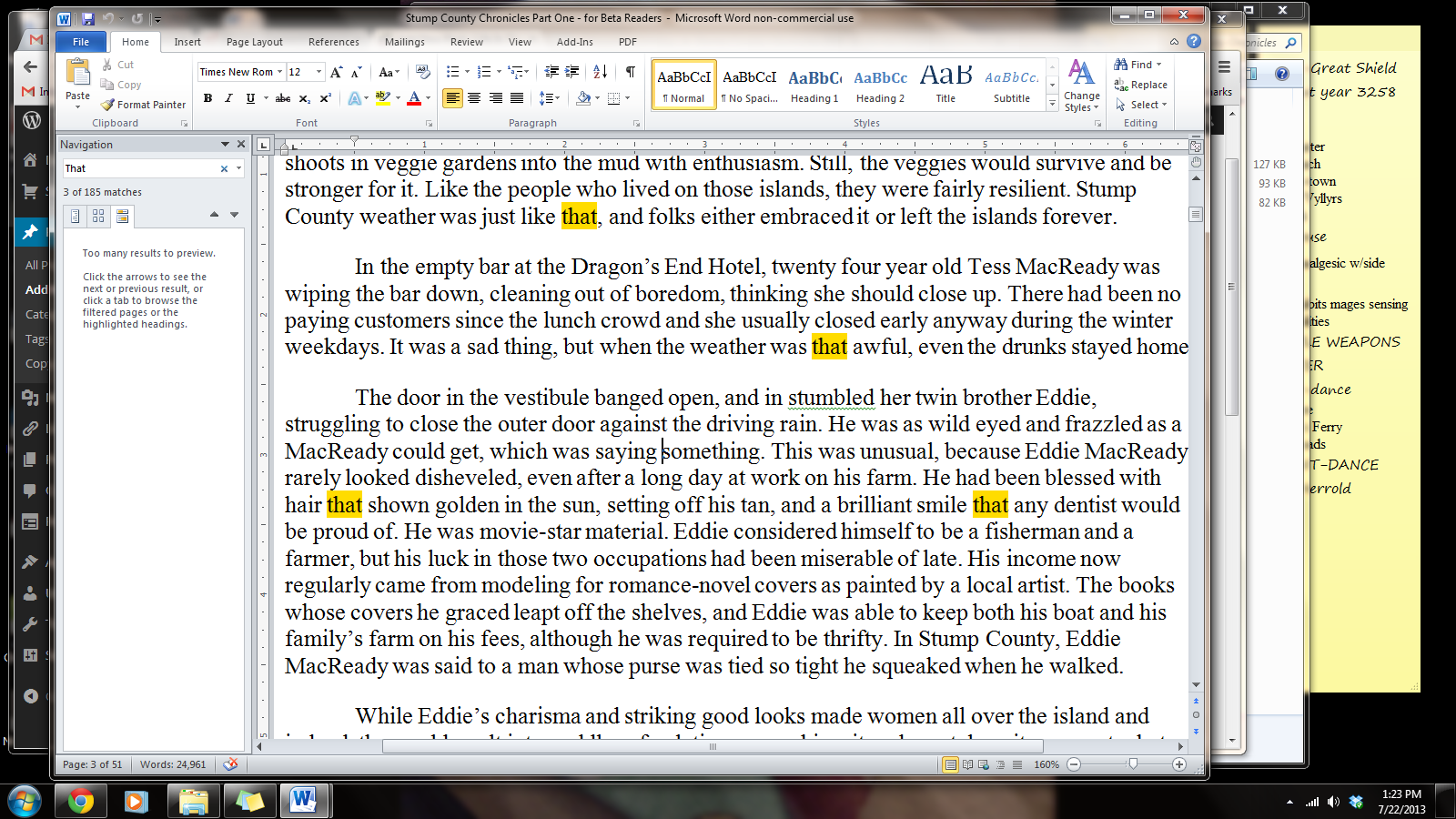
Somebody shoot me now!  But at least I have that magic tool “Control-F’ to help me search for words that seem to come up too frequently. By clicking the down arrow on the menu on the left, I can navigate easily to each instance of the word and decide whether to keep it or remove it.  Many times, removing it is the solution, and often you don’t have to replace it with anything at all.  The sentence can be stronger for not having the word at all.

When I look back on my work I can see where my mind seemed to run out of options and I developed a ‘fall-back’ habit, which in turn, leads to a stale narrative.  Some of my favorite fall-back words?

Scrnprnt over used words part 2As. This word can be useful, but insidious. Like bamboo in an unwary gardener’s first garden, ‘As’ creeps into every paragraph if not kept in containers. To search for it, hit control-F. When the navigation box pops up on the left, key a space before and a space after to isolate only the two-letter word as, or every instance of any word containing those letters together will pop up. ( as )

prnt scn 3 over used wordsThat. Many times, removing it is  ideal the solution, and often you don’t have to replace it with anything at all.  Once again, the sentence will be stronger for not having the word at all.

Searching for these words and others like them in our precious manuscript can seem to be a daunting task, but with this tool it is much less trouble to do than it seems like it will be at first. It must be done on a word by word basis, because Global changes can inadvertently  wreak unimaginable havoc with your manuscript! Think of how many words in the English language have the two letters ‘a’ and ‘s’ next to each other in them?  Was, Assign, Bass–you see the problem with global changes.  Never click ‘Replace All’!

For small words that are frequently found inside of larger words, use the ‘space word space’ trick and you will have much better results.

And now here is my list of handy-dandy overused and the alternatives that I fall back on:

Overused Words and some alternatives

about – approximately, nearly, almost, approaching, close to

absolutely – unconditionally, perfectly, completely, ideally, purely

activity – action, movement, operation, labor, exertion, enterprise, project, pursuit, endeavor, job, assignment, pastime, scheme, task

add – attach, affix, join, unite, append, increase, amplify

affect – adjust, influence, transform, moderate, incline, motivate, prompt

amazing – overwhelming, astonishing, startling, unexpected, stunning, dazzling, remarkable

awesome – impressive, stupendous, fabulous, astonishing, outstanding

bad – defective, inadequate, poor, unsatisfactory, disagreeable, offensive, repulsive, corrupt, wicked, naughty, harmful, injurious, unfavorable

basic – essential, necessary, indispensable, vital, fundamental, elementary

beautiful – attractive, appealing, alluring, exquisite, gorgeous, handsome, stunning

begin – commence, found, initiate, introduce, launch, originate

better – preferable, superior, worthier

big – enormous, extensive, huge, immense, massive

boring – commonplace, monotonous, tedious, tiresome

bring – accompany, cause, convey, create, conduct, deliver, produce

cause – origin, stimulus, inspiration, motive

certain –  sure, unquestionable, incontrovertible, unmistakable, indubitable, assured, confident

change – alter, transform, vary, replace, diversify

choose – select, elect, nominate, prefer, identify

decent – respectable, adequate, fair, suitable

definitely – unquestionably, clearly, precisely, positively, inescapably

easy – effortless, natural, comfortable, undemanding, pleasant, relaxed

effective – powerful, successful, efficient

emphasize – underscore, feature, accentuate

end – limit, boundary, finish, conclusion, finale, resolution

energy – vitality, vigor, force, dynamism

enjoy – savor, relish, revel, benefit

entire – complete, inclusive, unbroken, integral

excellent – superior, remarkable, splendid, unsurpassed, superb, magnificent

exciting – thrilling, stirring, rousing, dramatic

far – distant, remote

fast – swift, quick, fleet, hasty, instant, accelerated

fill – occupy, suffuse, pervade, saturate, inflate, stock

finish – complete, conclude, cease, achieve, exhaust, deplete, consume

funny – comical, ludicrous, amusing, droll, entertaining, bizarre, unusual, uncommon

get – obtain, receive, acquire, procure, achieve

give – bestow, donate, supply, deliver, distribute, impart

go – proceed, progress, advance, move

good – satisfactory, serviceable, functional, competent, virtuous, striking

great – tremendous, superior, remarkable, eminent, proficient, expert

happy – pleased, joyous, elated, jubilant, cheerful, delighted

hard – arduous, formidable, complex, complicated, rigorous, harsh

help – assist, aid, support, sustain, serve

hurt – injure, harm, damage, wound, impair

immense – huge, vast, enormous, massive, gigantic, mammoth, colossal

important – significant, substantial, weighty, meaningful, critical, vital, notable

interesting – absorbing, appealing, entertaining, fascinating, thought-provoking

job – task, work, business, undertaking, occupation, vocation, chore, duty, assignment

keep – retain, control, possess

kind – type, variety, sort, form

know – comprehend, understand, realize, perceive, discern

like – similar, equivalent, parallel

like– enjoy, relish, appreciate

main – primary, foremost, dominant

make – build, construct, produce, assemble, fashion, manufacture

mean – plan, intend, suggest, propose, indicate

mean – small, cheap, hurtful

more – supplementary, additional, replenishment

need – essential, necessity, want, require, requirement, prerequisite, basic, must, requisite

new– recent, modern, current, novel

next – subsequently, thereafter, successively

nice – pleasant, satisfying, gracious, charming

old – aged, mature, experienced, used, worn, former, previous

open – unobstructed, accessible

part – section, portion, segment, detail, element, component

perfect – flawless, faultless, ideal, consummate

plan – scheme, design, system, plot

pleasant – agreeable, gratifying, refreshing, welcome

prove – demonstrate, confirm, validate, verify, corroborate

quick – brisk, prompt, responsive, rapid, nimble, hasty

really – truly, genuinely, extremely, undeniably

regular – standard, routine, customary, habitual

see – regard, behold, witness, gaze, realize, notice

small – diminutive, miniature, minor, insignificant, slight, trivial, mean

sometimes – occasionally, intermittently, sporadically, periodically

take – grasp, capture, choose, select, tolerate, endure

terrific – extraordinary, magnificent, marvelous

think – conceive, imagine, ponder, reflect, contemplate

try – attempt, endeavor, venture, test

use – employ, operate, utilize

very – unusually, extremely, deeply, exceedingly, profoundly

want – desire, crave, yearn, long

It is strange how these words seem to crop up all the time in the rough draft of my work and I have to stay on top of them, using my wide vocabulary!  The point is, you must make a list of words YOU use too often, and find alternatives or eliminate them if they are not necessary.  Believe me, this list of words to watch for and solutions for expressing that thought without being repetitive grows and evolves all the time, just as my writing does.

Many of these first draft bloopers are descriptors -‘ly’ words.  Like salt and pepper, they are usually not required in too large of quantities so closely examine your ms to make sure it isn’t so thick with description your reader’s teeth hurt from the sweetness!

Happy writing, and may the over-used words of heck NOT bloop in your manuscript!

250px-Eastern_Bluebird-27527-2

8 Comments

Filed under Adventure, Books, Fantasy, Humor, Literature, writer, writing

‘Like’ me

Frustrated Woman at Computer With Stack of PaperThis weekend my professional Facebook page was suddenly ‘liked’ by 6 people in the space of 5 minutes.   I was sort of wondering what was going on, as it was a little unusual. It gets a few likes each week  under normal circumstances but this was different.

A few minutes later I got a fb personal message from an author I met through Goodreads.  It read:

“This LIKE is being sent along with another like from J***, on behalf of our friend, M*******. She left for a 6 week writing vacation, so we are wanting to surprise her with hopefully 25 more page likes. If you’ll like her page, you’ll get 2 fer 1, and possibly 3 likes for your one to her page. 

**PS. Please remember to like from your personal page as likes from fan page to fan page do NOT roll the counter.

>Thank you in advance, especially if you’ve already liked her page. Best of Luck with your writing:) 
M***”

I felt like I had just been shaken down for my lunch money.  But then I thought, “This is a kind gesture on the part of her friends, but the wrong way to go about it.”

Don’t get me wrong, I like M*******, and while she writes romances, which usually don’t attract me, she writes well enough.

I just don’t like being coerced, and that is what I felt her friends did. It’s all about manners, in this business.

Office Workers Clapping at Office PartySO – how do we encourage people to ‘like’ our professional Facebook page?  After all, we are all trying to get exposure for our books.

In my opinion, people will look you up and like your page as they become fans of your work. You will gain followers, just not real rapidly.

Identify your target market.  Are you trying to sell books only to other authors?  That is what you are doing when the only place you post the link to your page is in a page-swap forum.  If the only people who are ‘liking’ your fan-page are authors, you are shooting yourself in the foot. You are limiting your visibility to a small number of people who most likely won’t buy your book, as they’ve books of their own to write, and you don’t write in their genre.

You need to make it easy for your fans to like your page by posting the link on your blog, and on your Goodreads or Smashwords profile.  Have the link on your Amazon author page too!  Those places are where people who buy your books will look, and that is how fans will find you.

Identify who your target audience is.  Make sure your Facebook link is prominently displayed and let it do its thing.

We live in a society where instant gratification is the norm, and everything wonderful has to happen right now. I wondered, “Do we get some sort of award for having a lot of likes on our fan page?” Not that I am aware of–it’s only a number. The higher your number, the more likely fb will boost your visibility in the news feeds.  You earn that visibility gradually.

But for those who are too impatient to wait, they can join a Goodreads page-swapping event, where the participants all go out and like each others’ pages.  This is voluntary and I’ve been involved with that.  I liked about 50 authors and 15 liked me back. 6 of them used their fan page despite being asked to use their personal page, and their likes didn’t raise my count.

So, that didn’t go as well as I thought it would.

Portrait of Vsevolod Mikhailovich Garshin by Ilya RepinAnd don’t even get me started about the inconsiderate authors who posted links to their books and pages smack dab in the middle of MY fan-page.

Delete.

Delete. Delete. Delete.

(Die! Die! Die!)

Most of the indie authors I know are lovely people, polite and sensitive. They have a basic understanding of manners. They are a joy to work with, and I would do anything for them because of that. They make up 98% of the authors I have met.

There are those few who are as delicate as battering-rams, and they ruin it for everyone. They are the same people professionally that they are in the real world–immature, selfish, and rude. They meet other aspiring authors in forums and then make all sorts of small requests, expecting that you will drop everything and go out of your way for them, because they are so damned important.

If you choose to be kind to them, don’t expect anything in return, because it’s just not going to happen. The next time you see them will be when they need some other small service from you. “Tweet my book.” “Interview me.” “I just need five more likes….”

The Facebook Fan-page is a thing we have to do in this modern world of self promotion, but it sucks.

I have one and I am keeping it, but I am feeling quite rebellious about it just now.

4 Comments

Filed under Adventure, Books, Fantasy, Humor, Literature, Uncategorized, writing

Thoughts on Internal Monologues

Young Woman Sitting Looking at Laptop ScreenI had a conversation with a friend in my writing group the other day. He paid for an expensive edit, but was not pleased with the results. The editor gave his ms only one fairly good look, and gave him a report with suggestions and ideas, but he was left more confused than ever. She has not worked with him to help him resolve those issues, and wants to be paid for a second look. This was more of a beta read than an edit, and that fact should have been disclosed when he hired her.

The professional editors I know do expect to be paid for their work, but they also work closely with the authors to help their clients turn out books that are finished to the best of their ability, thus giving the author their money’s worth. This involves many revisions of entire sections and lots of back and forth communication between the editor and the author.

When I looked at his ms, I could see one thing that stood out immediately.  His characters have a lot of internal dialogue. The editor told him not to set it off with italics, and technically she was correct, but she offered no insight to him on how to correctly portray his character’s thoughts. Unfortunately, with no way of distinguishing it, I found it difficult to differentiate the internal dialogue.

Now don’t get me wrong, the editor was technically correct. The  Chicago Manual of Style agrees with her, and in some ways, so do I.  As a reader, a wall of italics is daunting, and causes the eyes to get tired. If she was truly acting in his best interest, she could have shown him ways to get around the whole issue of internal dialogue, instead of just saying don’t use italics.

But I do use italics to set off certain thoughts in my own work, so how do I balance this apparent hypocrisy?  I have learned to use less internal dialogue, trying to only use it now when it is natural in the context of the scene.

As I look at my body of work, I can see it evolving toward a leaner style of writing, and less emphasis on idle thoughts is key to that style. My early work is rife with internal dialogue. In my recent work there is some internal dialogue, but not as much. The context of the story determines whether it is necessary or not.

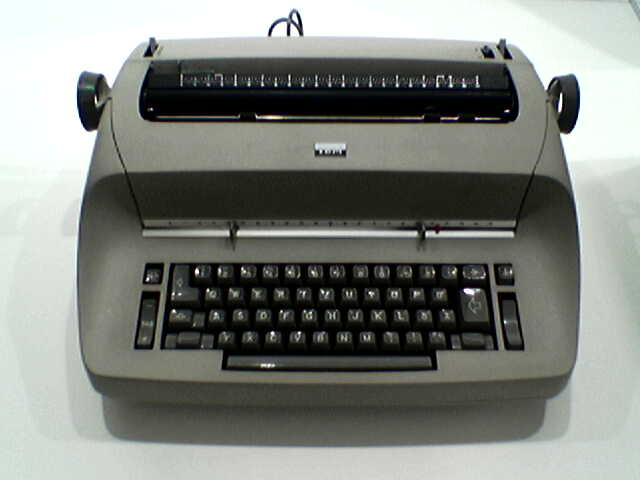
IBM_SelectricIn the days before computerized word processing and desktop publishing, the publishing process began with a manuscript and/or a typescript that was sent to a print shop where it would be prepared for publication and printed. In order to show emphasis—to highlight the title of a book, to refer to a word itself as a word, or to indicate a foreign word or phrase—the writer would use underlining in the typescript, which would signal the typesetter at the print shop to use italic font for those words.

Nowadays we have word-processors.  Authors can italicize to their hearts’ content and the ms will not be full of underlined words that distract the editor.  This has lead to some authors being a bit too free with italics, and I have been guilty of that.

The important thing to remember is that everything your  main characters think does not have to be written. When it is necessary, there are ways to get it across without resorting to italics except in the most important instances.

Indie author Karen Fox has an awesome post on common mistakes made by authors.  She says, (and I am directly quoting from http://www.karenafox.com/commonmistakes.htm,)

(Interior Monologues are) very important in writing. Reveals parts of the story not available through dialogue. A powerful way to establish character, but often overwritten. Again don’t explain if emotions or details are already shown through dialogue or action. This should be unobtrusive. Long passages of internal monologue often become ways of telling the reader information instead of showing.

One way to do this is to get rid of speaker attributions. Instead of Why had she said that? Because he drove her crazy, she thought, use Why had she said that? Because he drove her crazy.  He wondered what he’d done to make her leave can be transformed  to What had he done to make her leave?

Interior monologue helps set point of view. It is not the same thing as description, though the two can blend together.  Use impressions obtained through the POV character’s senses.  We use our sight, hearing, smell without thinking about it.   Your character will, too.

You can use italics to show a character’s thought, but use sparingly. Too many italics are irritating, but they can be a good way to set off a more important thought in the middle of a monologue.”

MP900321209Internal dialogue is necessary, but not if it is a crutch.  Authors tend to be lazy. Once we find an easy way to get a point across it becomes our go-to tool when a particularly tough scene is refusing to unravel for us. We tell ourselves it is “our voice” and therefore it is our style.

Yes, that can be true, but we must never rely on easy tricks to tell our stories.  Readers always notice, and it makes our work less enjoyable for them.

8 Comments

Filed under Adventure, Books, Humor, Uncategorized, Vegan, writing