Tag Archives: fantasy

#FlashFictionFriday: The Cat, the Jeweler, and the Thief

Barliman gazed at the statue of the cat, and then out the polished window, not seeing the passersby. His eyes turned back to the stylishly dressed thief who stood before him. “It’s a nice enough  statue, well-made. What makes it worth the amount you are asking?”

Scuttle smiled. “It’s more than merely well-made. It’s brilliant. Look at it—have you ever seen such detail rendered in marble?” Thin, with a face slightly resembling that of a pleasant, well-favored weasel, he kept his desperation tightly tamped beneath a business-like demeanor.

Scuttle’s lady, Mari, was so ill that an ordinary herb doctor wouldn’t do. Their landlady believed she had contracted river fever and insisted only a healer from the Church could resolve it. But the Church never healed the poor; only the wealthy could afford a Church Healer. For that reason, Scuttle had to have those coins. He put on his most persuasive voice. “This is a miracle of art, created in marble. The hand of a master freed this cat from the stone.”

“I agree it’s beautiful, but I doubt you came by it honestly. I will be limited in who I can resell it to. Who made it? If I can at least tell a prospective purchaser whose hand created it, I will understand its value, and be better able to get a fair price for it.”

Scuttle snorted. “A fair price…usury has no concept of ‘fair.’ But all right, I’ll tell you who I believe to have made it. Benevolio.” Raising his hand, he forestalled Barliman’s comment. “I have no proof, and there is no maker’s mark on it anywhere.” Picking up the statue he held it to the light, turning it to reveal the remarkable craftsmanship. “Look at the face. Each hair, each whisker, every feature is there in the most minute detail, as if a cat had turned to stone as it sat there. Even soles of the paws which can’t be seen unless one picks the statue up–only Benevolio himself could have created such a masterpiece.”

Silence reigned in the shop as Barliman digested that comment. He pulled his magnifier from his pocket and examined the life-sized statue inch by inch. Scuttle had expected he would, and occupied himself with calculating the value of the objects displayed in the shop. Silver tea services, gold-handled cutlery, delicate jewelry set with precious stones—all rested on dark velvet in glass cases, gleaming in the light cast by wide diamond-paned windows. The fact they were on display meant those items had been purchased from more reputable sources.

The thief had come to Barliman because the jeweler sometimes supplied the wealthier class with things they could acquire nowhere else. Scuttle was a discreet thief, a man who ordinarily only stole on commission. However, the cat had been liberated from the house of a prosperous merchant newly in town, something he had only done because of Mari’s illness. The fact he was there in person to sell the statue indicated to the jeweler that this had been a private matter, making Scuttle’s bargaining position perilous. The jeweler was his only resort–no one else would have given him a copper for the statue, much less what he needed.

What Mari needed.

Barliman set the cat back down on the counter. He replaced the magnifier in the pocket of his vest. “With no maker’s mark, I can’t guarantee authenticity. That will substantially lower the price I can get for it. Therefore, I can’t give six golds coins. Three is my offer–consider, it please. It comes to three months wages for an ordinary man.”

“Five would be less than fair for a statue of this quality, and you would still make an absurd profit. If you can’t offer five, I must withdraw it.” Scuttle had no idea what he would do if Barliman refused. He didn’t dare take the time to go all the way to Westerberg. Three days there and back—Mari would be dead before he returned.

Barliman pursed his lips, deliberating. “Five golds, then.”

Though he felt like dancing, Scuttle comported himself with dignity as the coins were handed over. Barliman placed the cat statue beneath the counter and bowing, the thief departed the shop.

>>><<<

As the door closed behind the thief, the curtain behind the jeweler whisked open. Cardinal Valente stood framed in the doorway. “Good.” The Cardinal’s acidic tones fell like lead in the shop. “Here is your five golds, plus fifteen more for your trouble.”

Barliman handed Valente the heavy, marble statue. “Whose hand created this cat?” he asked. “Even Benevolio could never have done such fine work.”

Instead of answering, the Cardinal set the statue on the counter. “Observe.” He muttered some incomprehensible words, passing his hands over the cat.
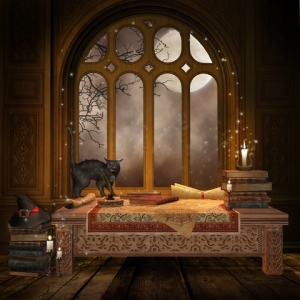
Fantasy Desk With Books And Scrolls © Unholyvault | Dreamstime.com

Fantasy Desk With Books And Scrolls © Unholyvault | Dreamstime.com

To Barliman’s surprise, the statue stretched and yawned, then stood up and jumped down. Twining about the Cardinal’s ankles, the cat purred.

“God’s hand created this cat. A spell turned it to stone, and I placed it in the home of my concubine. Then I allowed rumors of its existence to come to Scuttle’s ears.”

Barliman could not conceal his dismay. “Why? Was it to trap him? He has…skills. He’s useful, and not only to me. Imprisoning him would be bad for my business.”

“He is indeed useful. However, a personal matter  interfered with my thief’s ability to gain an artifact I must have. He needs coins to resolve the issue but he is not a man to ask for charity, and I am not known for my generosity. Hence, I devised a way for him to help himself.” The Cardinal laughed, a grating sound. “By the day after tomorrow at the latest, my thief will resume the important task I have set before him, and soon I will have my artifact.” A sly smirk lit his bony features. “And now I know what matters most in the world to my thief, and where to lay my hands on it if I should ever need a bargaining chip. That knowledge alone was worth twenty golds. Never forget this: knowledge is power, Barliman. It’s good to be the one with the knowledge.”


The Cat, the Jeweler, and the Thief © Connie J. Jasperson 2016 All Rights Reserved

Comments Off on #FlashFictionFriday: The Cat, the Jeweler, and the Thief

Filed under #FlashFictionFriday, Fantasy, Literature

Into the Woods, a fantasy anthology

MyrddinAnthologyECoverWe at Myrddin Publishing Group are starting the new year with the launch of our anthology, Into the Woods. We’re even having an all-weekend-long Facebook party, with Myrddin Authors dropping in and out over the course of the next few days. There will be gifts, and prizes and just fun and games with the Myrddin crew. The online Facebook Party starts here, so stop on by and and hang out with us!

This collection of amazing tales came about almost by accident.

One day last summer I was looking through stock images I’d found for a cover I was designing for another author. I came across a wonderful image of a lonely house set in the woods. I’m not sure why, but suddenly, like the proverbial dog after a squirrel, I was off looking at images of houses in the woods–like that was going to get any work done.

Of course, my brain is hardwired to write stories, so I found myself imagining all sorts of scenarios and plots to go with these amazing images. Then, it occurred to me that if I was inspired to write by these images, my fellow authors here at Myrddin Publishing would also be.

I threw out a challenge to the group: Write a short story about a house in the woods. The only caveat was the tale had to fall under the genre of fantasy, and the theme was “a house in the woods.”

And wow! What a response– I received nine wildly different tales, ranging from humor to ghostly, to romantic, to horror. These ten tales are some of the best I have read.

In the first tale, “A Peculiar Symbiosis,” Alison DeLuca gives us a moving story of a man who discovers he loves his wife–but only after she is dead.

“The Forest House” is my own take on the Tam Lin tale. Tam Lin is a character in a legendary ballad originating from the Scottish Borders as collected by Francis Child, but there are many tales from all over northern Europe featuring variations on his name, and the story will have slight variations. It is also associated with a reel of the same name, also known as Glasgow Reel. I had always wondered if Tam Lin and the Faerie Queen had a child, and if they had, what would have happened to it when Janet rescued Tam?

In “A House in the Woods,” Stephen M. Swartz takes us back to the 1960s with this dark fantasy. Two boys playing in the woods come across an abandoned house, and discover a true ghost story.

Irene Roth Luvaul takes us deep into the forest in “The Guardian.” A woman discovers her family’s history, and the terrible secret a cabinet once held.

Ross M. Kitson offers up a A Matter of Faith.” In this dark prequel to Kitson’s epic Prism series, an uptight paladin must find a way to work with a free-thinking druid, if he is to be successful in finding and killing a demon.

In “If I Have to Spell it Out” Austin musician and author Marilyn Rucker lightens things up with her hilarious take on two cousins quarreling over the tenancy of their family home, via letters.

“A Haunted Castle” by Lisa Zhang Wharton shows us that a house can can also be a haunted castle in the Bavarian Forest, in her hilarious, hallucinogenic tale of ghosts, rottweilers, and a costume party.

Myrddin Publishing Group’s own master of horror, Shaun Allan, swings us back to the dark side with a horrifying twist on the Hansel and Gretel tale, with “Rose.” Told with his usual flair for words and style, this is a chilling story of demonic magic. Definitely not your mama’s Hansel and Gretel!

In “Hidden,” Carlie M.A. Cullen takes us deep into the woods, where two young women take shelter from a storm in an abandoned house, with terrible consequences.

For the final tale in this treasury, fantasy author Lee French presents us with a post-Civil War tale of star-crossed love, in her magical tale, “Forever.” Tara and Marcus share a forbidden love–and only one place is safe for them.

I am continually amazed and awed by the talent of the wonderful authors I am privileged to work with at Myrddin Publishing Group. You can purchase this wonderful collection of short stories at Amazon by clicking on the buy button below:

Into the Woods: a fantasy anthology

Amazon Buy Button PNG

1 Comment

Filed under Books, Fantasy, Literature, writing

#TalesFromBlackFriday : The Marriage Counselor

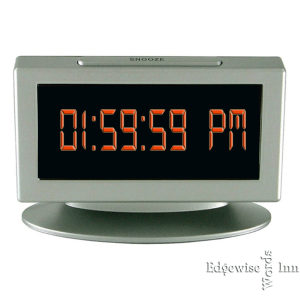
Digital Clock FaceI shook my head to get rid of the sudden, loud buzzing sound in my ears. Feeling a little disoriented, I looked at the calendar, which said Thursday, the day I dreaded most. Sometimes I felt like it was always Thursday. It was nearly time for my regular two o’clock appointment…the couple from hell, pardon my cursing. After my heart attack about six months before, they had begun coming to me, and were likely to give me another one. They never missed an appointment no matter how I wished they would.

I watched the clock tick from one fifty-nine to two o’clock.

My receptionist opened the door. “Mr. and Mrs. Haydes are here. Shall I show them in?”

 ***

I lifted my pen from the notepad and regarded the couple seated across from me. “Would you listen to yourselves? You make marriage sound like hell. It doesn’t have to be that way. You both sabotage it every chance you get.”

“Of course marriage is hell,” said the husband across from me, dressed in a double-breasted, blue suit, giving him an almost nautical appearance. Add a captain’s hat and he’d look like a cast member on The Love Boat. “It’s the absolute worst thing that could possibly have happened to a once-studly man like myself. But just like the moth flying into the flame, I had to do it. ‘Don’t go toward the light,’ my friends all said. But did I listen? Hell, no!”

His wife snorted. “Luke always does the exact opposite of what anyone advises him to do. That’s what he gets for being a devil-may-care, I’m-gonna-do-it-my-way sort of a guy. He’s Satan. That makes me Satan’s wife. Of course it’s hell—it comes with the territory. If I can put up with him, he can put up with me.” This week she wore little makeup and was neatly coiffed, with not a hair out of place. In a counterpoint to Luke’s dashing attire, she wore a beige wool suit, cut to just below her modestly crossed knees, with low-heeled pumps. Mrs. Haydes could have been a proper matron from any Protestant congregation, right down to her puritanical sense of morality.

This forty-five minute session of misery began promptly at two o’clock every Thursday. They booked their appointments under the pseudonyms, Lucifer and Persephone Haydes. He preferred to be called Luke, and she preferred to be called Mrs. Haydes. After six months of working with this pair of nut cases, I was beginning to suspect they were playing a game of mess-with-the-counselor.

Last week she’d been dressed like a teenaged skateboarder, and he as an English literature professor. The week before that, she was a hippie, complete with headband and love beads, and he was a cricket player.

Every week it was something different but always opposites. Mrs. Haydes seemed to choose her wardrobe based on what she thought would annoy him most, and he went with the opposite because he really couldn’t do anything else. He had the worst case of oppositional defiant disorder I had ever seen.

“Why are you here?” I had to ask, despite knowing I wouldn’t get an answer. “I no longer understand what you are trying to save here. You never take my advice. And you’ve been aware since the outset that I am a pastor, not a magician. What do you hope to gain from this?” I tapped my foot and looked at the clock. We were only fifteen minutes into this session, and I was already exhausted. “What you really need is a good divorce lawyer, not a counselor. I can tell you every reason why you should stay married, and if you are looking for religious affirmation, I can give you chapter and verse on the apostle Paul’s views regarding marriage. Over the last six months, I have done so repeatedly.  We’ve discussed what you originally saw in each other and what you each want from your relationship, but you’re still at this impasse.  I think that at this stage divorce is the only answer for the two of you.”

Luke snorted. “Don’t bother telling me anything the apostle Paul said—I wrote that book. I was delusional.”

“I think the pastor is right,” said Mrs. Haydes, primly folding her hands. “Divorce is the only option. I’m sure no one would blame me for leaving a devil like you.”

“I’m not giving up half of everything I own,” said Luke, clearly aghast at the notion. “Do you know how many divorce lawyers she has access to? No way am I going to let her off so easily.”

“I come from a broken family,” said Mrs. Haydes, discreetly wiping a tear. “I don’t want our children to grow up in a broken home. But it would be better than Anaheim. It’s a bad environment to raise children in. I want to move back to our palace in Hell. All it needs is a little remodeling.”

I couldn’t stop myself. I had to ask it. “And you think Hell is a good environment to raise kids in?”

“Well, at least there’s no crime in hell. We have the finest law enforcement professionals in the universe.” She glared at me defensively. “Where should I be raising them? Seattle? I’m not exposing my children to a bunch of pot-smoking vegans who ride bicycles and wear socks with sandals.”

Luke brightened up. “I love Seattle—perhaps we should move there. I could get some goats or raise alpacas. They have the best coffee in the world!”

Mrs. Haydes sniffed. “The place is full of vulgar vegetarians. They’re always taking their children to yoga and soccer, where everyone gets a trophy whether they win or lose—it’s just wrong. We will most certainly not be moving to Seattle.”

“Enough,” said Luke. “I’m going vegan and we’re moving to Seattle and that’s final.” He turned to me, missing her small, satisfied smile. “What I really want to talk about is the stint we did on ‘Home Hunters.’ She destroyed me in front of millions of people, and I have to watch it every time they rerun that episode, which they seem to do three times a week.”

“Well dear, it airs on one of your networks, and you make the rules. You’re the one who decides why the television viewing public has 999 channels available to them, and all but three of them at any given time are showing the same reruns of Pawn Shop Heroes, Home Hunters, or Gator Boys.”

From the look on Luke’s face, I could see that Mrs. Haydes had the knife and was twisting it for all she was worth.

“Besides, I said very clearly that I wanted the extremely modern condo, with all the sleek furnishings and the gorgeous, terrazzo floors. I said it at least six times. It’s on the videotape of the show.” She smiled at him smugly. “You just had your heart set on that cozy, little pink bungalow with the seventies’ décor and the orange shag carpet. You insisted, and so, of course, I gave in. Once you make up your mind, it’s impossible to change it.”

“See?” Luke exploded. “See how she manipulates me? How could I not go for the house she said she didn’t want? It was like asking the dog not to eat the chocolate you left on the coffee table. I’m Satan! I’m not really an agreeable sort of guy, and she knows exactly how to manipulate me, so now, twice a week, everyone in America gets to watch me buying grandma’s overpriced, decorating nightmare. It’s been voted the most popular episode of all time! She embarrassed me in front of God and the world.” He dropped his head into his hands. “We’re moving to Seattle now, and it’s going to be hell trying to sell that dump in Anaheim. I won’t even be able to rent it out for enough to cover the carrying costs. What a life!”

I knew this session was going nowhere. Their sessions never went anywhere positive because they were masters at circular reasoning. “What is it you want from me? You must have some reason for putting me through this agony every week.”

“I despise him, so I want a divorce, of course,” said Mrs. Haydes, with a smug, little smile. “I’ll be happy with my half of everything, and, of course, alimony. I gave up my career to raise our children, you know, and of course, they will need child support.” She aimed her tight, fundamentalist smirk  at me. “We won’t waste your time any further.”

“No. No. No!” Luke’s eyes popped out of his head. “No divorce. I adore you, Persey—you’re the love of my life!” He kissed her hand.  “I would be lost without you. Think of the children.”

“I love you too, Luke—I just hate being around you. And now you’re going to be forcing all your hippy, vegetarian food on me.” She turned away from him, primly pursing her lips. “You know how I love steak.”

“No dear, not vegetarian. Vegan. It’s good for you, you’ll love it. Why, I’ve a recipe for smoked tofu that will put a smile on that pretty face in no time.” Luke smiled his most charming smile. “If there is one thing I understand, it’s how to barbecue. You’ll adore my smoked tofu salad.”

“If you say so, dear. I’ll likely throw up.”

The two rose and left my office. I sighed.

Luke might claim to be Satan, and yes, it was even possible given how contrary he was, but if that was case, Mrs. Haydes ruled in Hell. There was no mistake about that.

I heard my receptionist speaking in the anteroom. Yes, Mrs. Haydes was scheduling another appointment…two o’clock next Thursday.

Satan might move to Seattle, or he might not. Somehow, I knew his new penchant for tofu and coffee wouldn’t get me off the hook.

I shook my head to get rid of the sudden, loud buzzing sound in my ears. Feeling a little disoriented, I looked at the calendar, which said Thursday, the day I dreaded most. Sometimes I felt like it was always Thursday. It was nearly time for my regular two o’clock appointment…the couple from hell, pardon my cursing. After my heart attack about six months before, they had begun coming to me, and were likely to give me another one. They never missed an appointment no matter how I wished they would.

I watched the clock tick from one fifty-nine to two o’clock.

My receptionist opened the door. “Mr. and Mrs. Haydes are here. Shall I show them in?”


The Marriage Counselor © Connie J. Jasperson 2015

“The Marriage Counselor” was first published March 6, 2015  on Edgewise Words Inn

2 Comments

Filed under Fantasy, Humor, Literature, writing

#amwriting: consider the weather

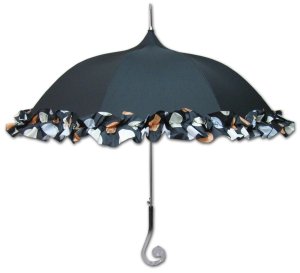
81UuqzVF-1L._SL1500_Something about the  wind-driven rain-bullets here in our part of the world can be death on umbrellas, even expensive ones. Even the cutest umbrellas frequently end up in street-corner trash-bins, ending their days as the tattered and broken relics of impulse purchases.

Despite the carnage, I feel compelled to keep buying umbrellas, feeling sure the next purchase will be the one–the true umbrella for all seasons, able to withstand 40 mph winds and sideways rain.  So far, the decidedly unromantic golf umbrella is the bumbershoot I carry.

But while golfers look fine carrying them, I long for beauty. I just know that my desire to have some cheery vestige of spring in the form of a floral print over my head will somehow work out and I will manage to remain both dry and stylish.

And this brings me to my point: You may not realize it but weather is a huge factor in your characters’ ability to go from point A to point B. For those of us who are writing fantasy, our characters are likely to be riding horses or walking. Weather will be a large part of what impedes them, or enables them to travel faster than they had planned.

Traveling on foot in the dark during a heavy storm is extremely difficult. Prior to the advent of the automobile, people didn’t travel during storms unless some terrible reason forced them to.

helly hansen raingear comboWeather is something I understand. In the 1980s, newly divorced and unqualified for any well-paying job, I worked for a Christmas tree grower. In the summer, we started work at 5:30 am so we could be finished and out of the field by 2:30, during the hottest part of the day.

I’ve never been a fan of using too much sunscreen—it’s greasy and full of things I can’t pronounce, it gets in your food, and I’m not so sure eating it is good for you. So, in those days I wore light, long-sleeved shirts to keep the sun off me, and wide-brimmed hats that kept the sun off my face. That is old-school, low-tech farm garb, and is how I still roll when it comes to dealing with the sun.

But when November arrived, we field hands were still working outside. With the advent of a Northwest Winter, we wore layers, 2 pairs of wool socks, barn-boots, and raingear. Good old Helly Hansen—his fine product kept me dry and warm while I worked to bring Christmas trees into every home. But, working outside in the cold and rain requires a certain amount of preparation, or you can become hypothermic, and unable to function.

Howey Christmas Tree Baler

Howey Christmas Tree Baler via Flicker

Every year, when cutting-and-baling season started we would have a new crop of people who had never worked out of doors, and who didn’t understand the sense of investing in long-johns and raingear. The company offered decent gear (boots, gloves, and raingear) at reasonable prices, but many would not  spend the money, refusing to believe that it was a war the weather would win.

So I discovered that if you were going to work outdoors year-round, you needed better quality gear than the company offered. In 1982, the best gear available was: LL Bean thermal underwear, and Helly Hansen foul-weather gear, and the mail-order catalogue was the place to get it.

My point with this is that if your novel’s setting is a low-tech society, weather affects what your characters can do. It affects the speed with which they can travel great distances, and it affects how they dress. It affects their horses, and that is a serious point to consider.

Medieval society had ways of dealing with the weather when they had to be out in it, and the internet is your friend. In medieval times, people of England, Wales, and Ireland didn’t have to deal with extreme temperatures the people of Northern Europe experienced in the 17th and 18th centuries, as it was a warmer time. However, they did get some occasional snow and cold in the winter, and at times they suffered heat waves during the summer.

How did they protect themselves against the weather? Here are several good websites for research:

Sarah Woodbury, Romance and Fantasy in the Middle Ages

Medieval Gloves, etc.

Castles and Manor Houses

In a cold, wet winter, a simple shawl won’t cut it. Layers are critical, and the materials they would use are simple and readily available—linen, and wool.

414-2-blue-robed-santa-claus-christmas-vintage-postcardIn a lower-tech society fur-trapping is a common way of earning money, but only the wealthier classes, merchants and nobility, can afford to buy those furs.

The average medieval agrarian society will have access to fleeces, though, especially if they are a Northern European type of society. Also, in the more urban centers of a low-tech society, the average person’s winter garments, hooded cloaks and gloves, and even bedding would be made of thick wool, layered and felted.

Wool has been a winter mainstay since humans first began making cloth. Some garments will be made of heavy canvas, or oil-cloth. Oilcloth, close-woven cotton canvas  or linen cloth with a coating of boiled linseed oil,  was a product available from the late middle ages on.

Clothing and cold weather gear will make their appearance in relatively few sentences in your novel, but a little research on your part regarding what technology might be plausible in your society will lend a sense of realism to your work.

2 Comments

Filed under Publishing, Uncategorized, writer, writing

#flashficfriday: TED (a drabble)

large dragon courtesy www.wallpaperfreehd.com

large dragon courtesy http://www.wallpaperfreehd.com

Drabbles are little short stories of 100 words in length, and writing them is good exercise.

Each time you write a drabble, you create possibilities that could evolve into larger stories. In 2013 I participated in a challenge to write a drabble every day for the month of May. The original prompt went as follows:

Write A 100 Word Story (“Drabble”) . . . although a 100 word story will probably take longer than expected, it can be done in a manageable amount of time.

To make a drabble work,
-Choose one or two characters
-Take one single moment/action/choice and show us how it unfolds
-Give one or two vibrant details in as few words as possible
-Hint at how this moment/action/choice is more significant than the characters probably realize in the moment

 Here is my first drabble, written May 1st, 2013:

TED

Edna stirred her coffee and looked out the window toward the shed.

“Did you feed the chickens?” Marion always asked, despite knowing Edna had.

Edna tore her gaze from the shed. “Of course.” Her eyes turned back to the small building. “We won’t be able to keep him in there much longer. He’s growing too big. We should have a barn built for him.”

“Ted was always a greedy boy.” Marion stirred her coffee. “I warned him he behaved like a beast, and now look.”

A rumbling bellow shook the shed. A long green tail snaked out of the door.

Garden Shed, Albatross Cottages, San Diego Public Domain Via Wikimedia

>><<<

I love that scene. I keep wondering about the two ladies, and also Ted. Who is he in relation to them, who are they in relation to each other, and what is their life like, apart from the secret in the shed?

Ted will become a longer short story in November, as part of my NaNoWriMo project. I will be writing a book of short stories this year, as I need to build my repertoire. I hope to have fifteen or twenty new short tales of 2000 to 5000 words in length by November 30.

Comments Off on #flashficfriday: TED (a drabble)

Filed under #FlashFictionFriday, Humor, Literature, Uncategorized, writing

#amwriting: the external eye

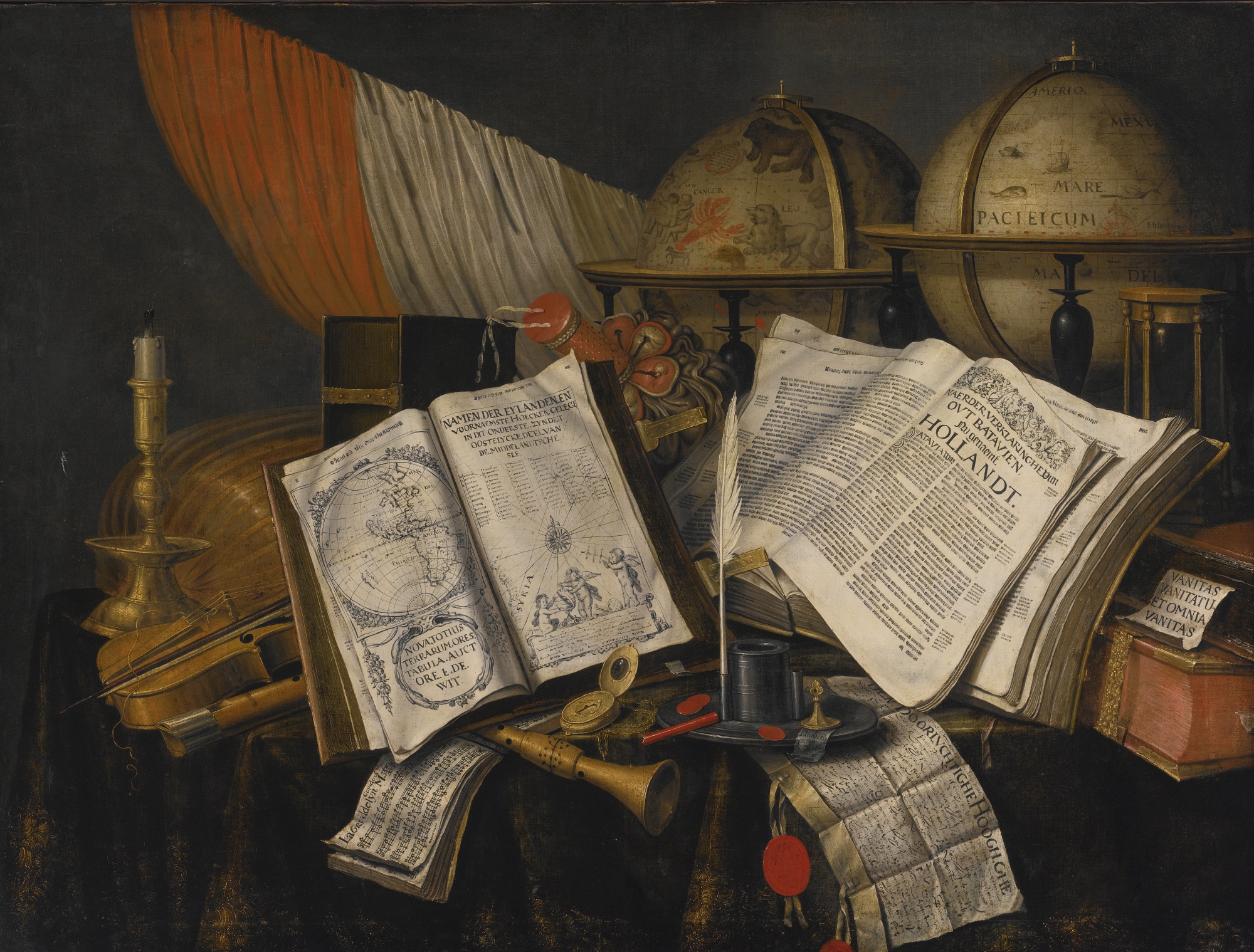
EDWAERT_COLLIER_VANITAS_STILL_LIFEMore people than ever are writing books. In today’s marketplace, every author must find ways to get his/her manuscript in as perfect shape as they can before they begin shopping for agents and publishers.  At every seminar I attend this one fact is stressed most firmly.

What this tells me is that agents and editors at the large publishing houses see so many submissions on a daily basis that they don’t have time to do more than look at the first page or two before deciding to look further. If it is not formatted to industry standard, or if it is a rough draft, it goes into the trash, based on that quick glance. (See my post, How to Format Your Manuscript for Submission.)

Therefore, we make our manuscript as good as we can before we send it off to an agent or a large publishing house, or take the plunge and self publish. To this end, during the second or third draft we may consult what has become known as the beta-reader, volunteers who read our work, knowing it is in its infancy.

You can find many good freelance editors who offer this service, but I do recommend you ask them what it involves and what kind of report you will get back before you commit your funds to it. I can also recommend Critters Writers Workshop, a free author-driven service. Or you may have a spouse or good friends who will help you with this.

A word to the wise: Editors and other authors make terrible beta readers, because it is their nature to dismantle the manuscript and tell you how to fix it.

But what if you don’t have the luxury of a reader who both likes the kind of work you write and who also is willing to spend the time reading your work?  Consider asking them to read a selected chapter, instead of asking them to read the whole thing.

I suggest this, because reading the rough-draft of an entire novel is a huge commitment to ask of someone. It is not reading for pleasure, although we hope they enjoy it.

Give your reader this list of questions, and ask him/her to please answer them, explaining that you can’t continue until you hear back from them:

  1. Were the characters likable?
  2. Where did the plot bog down and get boring?
  3. Were there any places that were confusing?
  4. What did the reader like? What did they dislike?
  5. What do they think will happen next?

You need a reader who reads your genre, reads fairly quickly, and won’t devolve into an editor.  Questions two and three are the most important: Where is it boring, and where is it confusing? Having it read in small chunks will give you a good idea of what you need to do with the ms as a whole.

I usually send my  manuscripts  in short pieces to my trusted crew when I need to know if I am on the right track. But the final ms in the Tower of Bones series is different. I hope to have it ready for publication by spring, so I have taken the plunge and sent Valley of Sorrows to David Cantrell for a structural edit. Dave and I have worked together on many projects.

Structural editing is digging deep. This is a tricky novel, because it tells two separate but entwined story-lines, Edwin’s and Lourdan’s, so I need an interested, but surgical, eye on it before I begin the final revisions. Dave has read Tower of Bones, and knows the world, the magic system, and the characters.

I hear you asking, what if he asks me to cut something I think is an integral part of the piece? I will have to decide what to do after I:

  • Re-read the section in question: Is it garbled? Was my intention not clear when I wrote it?
  • Look at the section in the context of the entire manuscript: Will losing this section change the story in a way that I don’t want? Or will cutting that section allow a more important point to shine?
  • Decide how married I am to that plot point. Sometimes divorce is the only answer.

In my own work I have discovered that if a passage seems flawed, but I can’t identify what is wrong with it, my eye wants to skip it.

But another person will see the flaw, and they will show me what is wrong there. That is why I rely on the external eye, and work with a structural editor.

4 Comments

Filed under Literature, Publishing, Uncategorized, writer, writing

#amwriting: Rothfuss and Gaiman, crafting good prose

Stardust, Neil GaimanSome fantasy qualifies as literary fiction because of the way in which the story is delivered.

One example of what I think of as literary fantasy is Neil Gaiman’s Stardust. In the very first sentence of chapter one, Gaiman commits the most heinous crime an author can commit, according to those critique groups armed with a little dangerous knowledge:

Quote: There once was a young man who wished to gain his hearts desire. 

And then, to make matters worse, he throws out a bit of background:

  1. Our story starts in the village of Wall, a tiny town about a night’s drive from London. A giant wall stands next to the town, giving it its name.
  2. There’s only one spot to pass through this huge grey rock wall, and it’s always guarded by two villagers at a time, and they are vigilant at their task.
  3. This is peculiar, because all one can see through the break in the wall is meadows and trees. It looks as if nothing frightening or strange could be happening there, but no one is allowed to go through the break in the wall.
  4. The guards only take a break from the wall once every nine years, on May Day, when a fair comes to the meadow

omg! Did he really do that? What was he thinking, starting a fantasy novel with a TELLING, PASSIVE sentence followed by an info dump?  To answer your question, he thought he was offering up a good story, and guess what? HE WAS!

And he did it with beautiful, immersive prose.

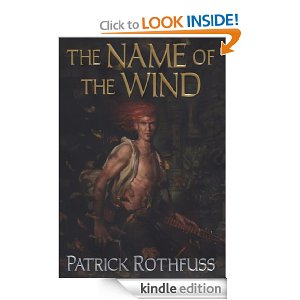
name of the wind -patrick rothfussWho else writes great prose? Patrick Rothfuss, for one. Take the first lines of The Name of the Wind. 

Quote:  It was night again. The Waystone Inn lay in silence, and it was a silence of three parts.

Rothfuss then goes on to commit what some purists (aka trolls) consider a heinous crime–he DESCRIBES THE SILENCE. He does this on the first page and guess what–the reader is sucked into the story and has no desire to leave.  To compound that crime, the story is a story within a story, told to a chronicler, and what most would use as the prologue actually comes after the first chapter, in chapter eight:

(quote) If this story is to be something resembling my book of deeds, we must begin at the beginning. At the heart of who I truly am. To do this, you must remember that before I was anything else, I was one of the Edema Ruh.

When we write, we are writing because we have a story to tell. (Yes, I said tell). To that end, every word must count, every idea must be conveyed with meaningful words, and sometimes you can just have a little fun with it.

In the opening lines of Gaiman’s Stardust, nothing unimportant is mentioned although the prose meanders in a literary way. Yes, he takes the long way, but the attitudes, mores, and personalities of Tristam’s village are conveyed with humor and the journey is the best part of this fairytale. He never devolves into purple prose.

The Elements of Style calls “Purple Prose” “hard to digest, generally unwholesome, and sometimes nauseating.”  To be fair, purple prose is subjective and each reader has a different level of tolerance for it, but it is something we definitely don’t want. What do you want to convey? Choose your words based on what you want the reader to see and feel:

  • Plain: He set the mug down. (conveys action–what’s going to happen next?)
  • Somewhere in the middle: He eased the tankard onto the table. (conveys a medieval atmosphere–what’s going to happen next?)
  • Bleah: Without haste, the tall, blond barbarian set the immense, pewter, ale-filled cup with a wooden handle onto the stained surface of the rough, wooden table. (conveys nausea–don’t care what happens next.)

Of course you are not going to devolve into sticky-sweet goo in your attempts to show the mood and atmosphere. But please, if I may use a cliché here, don’t “throw  the baby out with the bathwater.” Lean prose with well chosen imagery will express your ideas in such a way that the reader can hang their imagination on your words.

In direct contrast to Gaiman’s lighthearted opening prose in Stardust, the opening lines of Rothfuss’ The Name of the Wind, are dark and heavy with portent.  Rothfuss sets the mood, and conveys the subtle power kept restrained by Kote/Kvote, and he uses this atmosphere to drive the tale.

Both Rothfuss and Gaiman use words chosen for their imagery. Gaiman’s story is told with sardonic humor, which makes it all the darker, and Rothfuss’ prose evokes the dark of nightmares. They write with widely different styles, but both books are dark, both books are fantasy, and both books moved me.

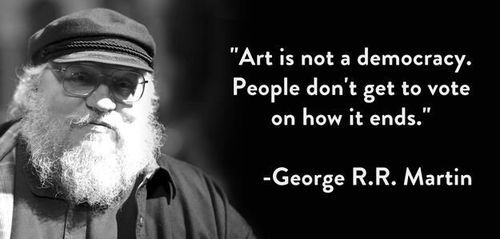
Both authors write so well that the internet is rife with haters and trolls who can’t wait to trash their next book. THAT, sadly, is the mark of success, or genius, in today’s world of fanatics in dark rooms, armed with a rigid idea of what fantasy should be, and waging war via the internet on authors who dare to write outside those boundaries .

GRRM Meme 3Write from your heart, and dare to write what moves you. Think about the rush of “yeah, this is it!” that you get when you read a piece that takes you out of this world and changes your life for a few brief moments. That author knows something about the craft, or you would not have been so moved by it.

Study the prose of those whose work shocks, rocks, and shakes you. See how they craft the sentences, and form the moods and emotions that drive the plot. Learn from them how to show the true character of a protagonist, or the smell of an alley by the wharves. Read, and then apply what you’ve learned from the masters to your own work.

4 Comments

Filed under Fantasy, Humor, Literature, Publishing, writer, writing

Elements of the story: Crafting magic systems

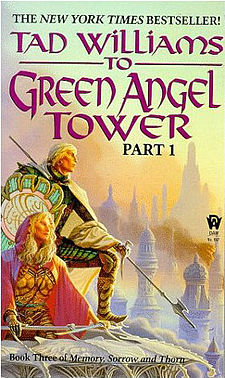
Green_Angel_Tower_P1I am thrilled that Tad Williams is writing another series of books set in Osten Ard. Tad is an author who  absolutely understands the craft of writing fantasy. He knows what makes epic fantasy EPIC. There is just the slightest hint of the rebellious indie in his work, which makes it a little wild. But more than that, Tad understand how important it is to make the limitations and roadblocks forced on the protagonists power the narrative.

If you love epic fantasy and have not read his powerful trilogy, Memory, Sorrow, and Thorn–you should.

In Tad’s work, magic systems feel natural, organic and are not all powerful. I love epic fantasy books where the magic systems have been as well thought out as the political systems, and the characters are limited in what they can do with them.

I despise books where the hero/heroine can do anything, and be as awesome as she/he needs to be, all because he/she has a special power. No need to worry about planning that mission, because our hero can read minds and predict the future–he knows exactly how to thwart Evil Badguy. Several boring scenes later, an opportunity for something interesting turns up, but no! The author has blessed his favorite supercharacter with (cue the fanfare) amazing magic powers that have no explanation, and apparently no limits.

If you are writing fantasy, consider this–Infinite abilities instills infinite boredom in me as a reader.

Let’s talk about magic. Who has magic? What kind of magic–healing or offensive or both? What are the rules for using that magic and why do those rules exist? Magic is an intriguing tool in fantasy, but it should only be used if certain conditions have been met:

  1. if the number of people who can use it is limited
  2. if the ways in which it can be used are limited
  3. if not every mage can use every kind of magic
  4. if there are strict, inviolable rules regarding what each magic can do and the conditions under which it will work.
  5. if there are some conditions under which the magic will not work
  6. if the learning curve is steep and sometimes lethal

Even if it does not come into the story, you should decide who is in charge of teaching the magic, how that wisdom is dispensed, and who will be allowed to gain that knowledge.

  1. is the prospective mage born with the ability to use magic or
  2. is it spell-based, and any reasonably intelligent person can learn it if they can find a teacher?

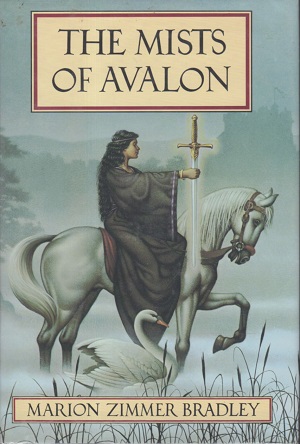
Mists_of_Avalon-1st_edMagic and the ability to wield it usually denotes power. That means the enemy must be their equal or perhaps their better. So if they are not from the same school, you now have two systems to design. You must create the ‘rules of magic.’  Take the time to write them out, and don’t break the laws, without having a damned good explanation for why that particular breaking of the rules is possible.

Limits make for better, more creative characters. In the Mists of Avalon, Marion Zimmer Bradley made the magic a natural outcome of religion, something only a few characters had access to, and they paid a great price each time they used it.

Lets pretend we have a mage, Gerald—we’ll make him a lowly journeyman mage, just allowed out of magic school on his own. Events beyond his control occur, and only he can rid the world of Stinky Sam. Sam is a very powerful, very naughty wizard, who will crush young, untried Gerald with no effort whatsoever.

Let’s say Gerald has a few skills at the beginning: he can draw water out of the air for drinking, and maybe he can use the elements of fire and lightning as weapons. Can he also use magic to heal people?  Can he heal himself?  What are the rules governing these abilities and how do these rules affect the progress of the story?  When it comes to magic, limitations open up many possibilities for plot development.

For this to be a good story, our bad guy, Stinky Sam, must be a master in whatever area Gerald has chosen–and he should have a few skills and abilities Gerald might never learn.

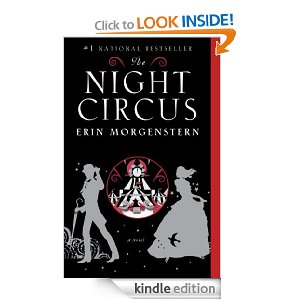
the night circus by erin morgensternThis means Gerald must work hard to overcome the obstacles set in his path by Stinky Sam.  With the successful completion of difficult tasks, and overcoming great hardships, Gerald will learn what he needs to know about his magic/gifts, and acquire the ability to counter Stinky Sam’s best efforts in the final showdown, although it will be difficult.

In great fantasy, evil is very strong, and has great magic–but there are rules.  The evil one might be a bully and he may have some awesome skills, but he’s not omnipotent, or there would be no story. All magic systems have limits, which means he has a weakness. With the discovery of the antagonist’s limitations, your character has the opportunity to grow and develop to his fullest potential in process of finding and exploiting it.

2 Comments

Filed under Fantasy, Publishing, writer, writing

Is it damn fool, damnfool, or damned fool?

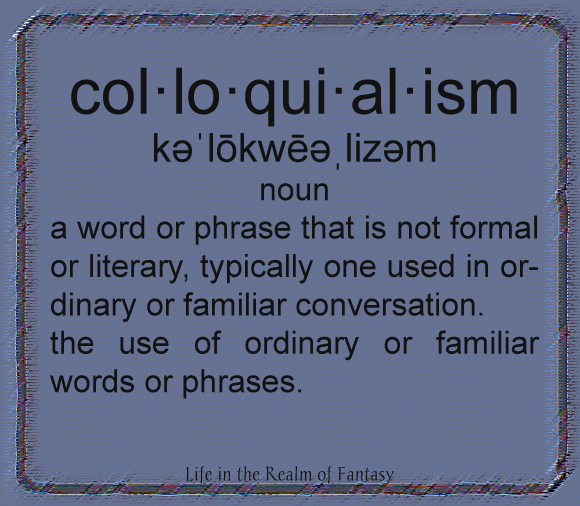
colloquialism memeOne of the more interesting things about being an editor is the amazing amount of time you spend stopping what you are doing and doing a little research. This is especially true if you are editing a piece that has a lot of colloquialisms in it.

Fortunately, some colloquialisms have made it into the Webster’s Dictionary, and the rest are out there on the internet somewhere.

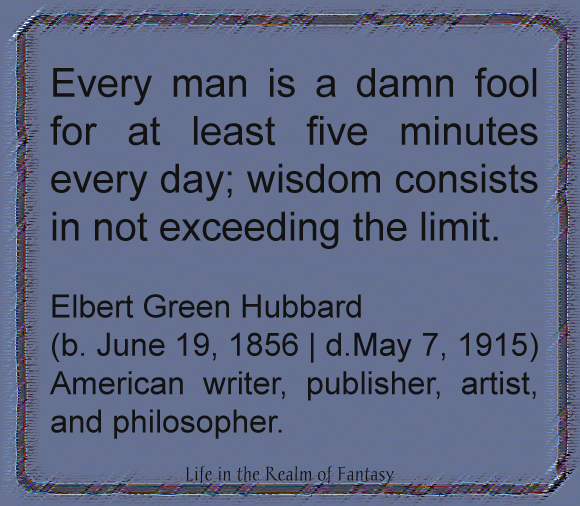
Let’s consider the question of if we mean damn fool, damnfool, or damned fool:

According to the Urban Dictionary

  • A person who is extremely foolish. Their actions are not only irresponsible to themselves, but can possibly be harmful towards others.
  • If a guy tries and talk you out of using a condom, he is a damn fool. (You can’t make this stuff up–you have to go to the internet for it.)
  • Did you see that damned fool? He was swerving all over the road. (end quoted text)
And just for fun, lets see what Wiktionary has to say:
  • damn fool (adjective)
  • damnfool 
  1. (informal) Contemptibly foolish. (end quoted text)
He was a damned fool.

Ellbert Hubbard memeHow I see it:

  1. He was a damned fool. (I just cursed him to hell.)
  2. He was a damn fool. (He was contemptibly foolish)
  3. He did a damnfool thing. (He was contemptibly foolish and I will curse him to hell.)
Now this can be tricky if you are unsure which of these damnfool things the author meant, so this is where I insert a comment asking the author what kind of a damned fool she is writing about.
.
What other fun little “OMG I have to stop and look this up” things do I play with when I should be working?
  • I love looking up Pagan rituals, or indigenous peoples’ religious rituals.
  • I love anything to do with history, and exact dates.
  • Ooh! Ooh! Let me look it up on a map!
Yep–looking things up is part and parcel of the fun. I’m just not as keen on looking up where to properly place commas–the rules make my head hurt.
 .
So let’s talk commas and where to stick ’em, or better yet, where NOT to stick ’em. I found a wonderful website that has a handy-dandy list of comma don’ts phrased in simple language that did not make my eyes go numb: The Proper Care & Feeding of Commas
 .
chicago manual of styleImproperly installed commas can wreak havoc in a paragraph. This is because they are punctuation: “…the act or practice of inserting standardized marks or signs in written matter to clarify the meaning (of a sentence.)” (quoted from Google)
.
Commas are there to separate clauses and to make sentences understandable. Consistently used according to the accepted rules, commas make it so that every English-speaking reader understands what you have written. We don’t put them in to indicate to the reader where we pause or take a breatheveryone pauses and breathes differently and what makes sense to you will not make sense to someone else.
.
These are the same rules for everyone, which make our work understandable in Brisbane, Houston, London, Hong Kong or Seattle. But the rules in the Chicago Manual of Style (my go-to manual) are often ambiguously phrased and are hard to remember. SO, when checking on simple points, I love this website for a quick list of comma dos: Your Dictionary: Comma Rules
 .
Dialect and local sayings play a huge part in contemporary work–sometimes I get a piece that was written by a UK author.  Perhaps it is an Urban Fantasy and it will have all sorts of words I have never heard of: again, I go to Your Dictionary: Common UK Expressions. This  is also a problem with American dialects and local slangs–the internet is my friend! Texas-talk is “a whole nuther thang” and sometimes more difficult to follow than Cockney EnglishHowdy Get Rowdy
 .
It is an editor’s job to do a certain amount of research whenever a question arises in the manuscript to ensure his comments will help the author clarify ambiguous and hard-to-understand areas. Having fun surfing the internet looking up obscure and interesting facts is just one of the perks!
.
keep-calm-and-say-you-fool-you-damn-fool

2 Comments

Filed under Books, Fantasy, Humor, Literature, Publishing, Uncategorized, writer, writing

Three audiobooks and why I liked them

First of all I love books. I’m the kid who was so desperate for books I would read the Encyclopædia Britannica  when the rainy Northwest summers got boring and I had read everything else. But now, beside writing, I freelance as a structural editor.

When I am editing for clients I don’t read, as it is hard to set aside my critical eye and just read for pleasure. I can’t go with out books, though, so when I am in editing mode, I rely on Audible Books to entertain me.

Three audio books that I heard over the last year really stand out. Two of them I would classify as literary fantasy and one is genre fantasy–but all are fantasy in the fullest sense.

Tenth of December, George Saunders1. Tenth of December, written by George Saunders and also read by George Saunders.

Saunders has the ability to get inside each of his characters’ heads, showing them sharply as unique individuals. They aren’t always nice, and certainly not always moral as I see morality, but Saunders portrays them with such vivid strokes that you feel as if you understand their reasoning.

For me, the most powerful tale in this collection of stunning tales was “Escape from Spiderhead.” This sci-fi tale has an almost Vonnegut-like flavor. It is a stark journey into the depths to which we humans are capable of sinking in the pursuit of knowledge for the sake of knowledge. Where does punishment end and inhumanity begin? This story lays bare concepts regarding our view of crime and punishment that are difficult, but which are important to consider. The scenario is exaggerated, as it is set in a future world, but it exposes the callous view society has in regard to criminals and what punishment they might deserve.
.

George Saunders reads this book himself and he is an amazing narrator. This was an excellent, entertaining book to listen to, and I liked the audio book so much I bought the hard copy to take with me later this summer when I go on vacation.

Just so you know–I rarely buy hard copies of anything.

>>><<<

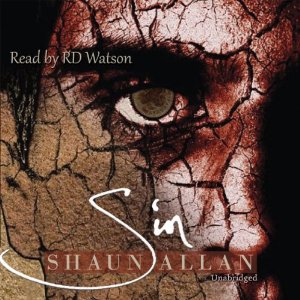
Sin audiobook coverI also listened to Sin, British author Shaun Allan’s masterpiece of stream-of-consciousness and fantasy, narrated by R.D. Watson. Allan breaks every rule of writing, and his work is powerful.

Sin is a dark, urban fantasy, written with a large dose of sardonic humor. We hear the tale from the man who was given the name ‘Sin Mathews’ at birth, but who goes by the name of Sin only, as the last name doesn’t matter; only the name which is the sum of his parts matters. R.D. Watson’s reading of Allan’s shining, witty, prose is moving and brilliant in every aspect. He gets into Sin’s head, and you are completely spellbound.

The atmosphere throughout is surrealistic, but it is well-balanced. I adore Allan’s lyrical, intimate style of prose, as in this series of images describing Sin’s disorientation, “History doesn’t relate whether Jonah, Gepetto, and Pinocchio sat around a table eating pizza, sharing stories of prophecy and puppetry while in the belly of the whale, but I thought that I could relate to being swallowed whole.”

Throughout the novel, Sin’s ruminations are self-mocking, and world-weary, yet naive and innocent.  He bears the guilt of the world, and suffers the unbearable pain of being the cause of so many deaths, but still he finds ironic humor in every situation. His sister, Joy, is grounded and guides him to the truth, but is not allowed to tell him anything.

Nothing is what it seems in this tale, and right up to the end, you are not sure which reality is real.

>>><<<

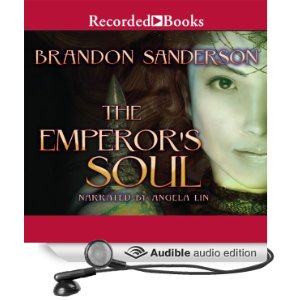
The Emperor's Soul - Brandon Sanderson. audibleThe Emperor’s Soul, by Brandon Sanderson and narrated by Angela Lin.

Shai is thief, but not just any kind of a thief. Shai has been trained to forge a replica of the original item to leave in its place. Her replicas are masterful. in many ways her replicas are better than the originals. The power of her work as she remakes her surroundings amazes Gatona, a man who holds her life in his hands, and every day he is more confused by her. This is not a love story–Gaotona struggles to understand why an artist of her caliber, who loves the craft as much as she does prostitutes her gift by making forgeries.
Two factions now control her fate. They have something she needs, and she has something they need, but for how long? The Emperor Ashravan’s condition has opened up new possibilities for some on the council, and they are ruthless. Shai is safe for the moment, but she knows her life hangs by a thread and only a miracle will save her.

In Shai, Sanderson has created a character who is compelling and completely believable. Shai is more than merely a forger, she is an artist.  She takes pride in her work, and rightfully so. The way she is portrayed is a departure for Sanderson, in that she is most definitely a woman, and she is the central figure. There is a strong sense of history to this tale, and the structure of their society is clearly drawn in only a few well-crafted words.

>>><<<

Audio books are great in the car, I think we all know that–but for me they are a way to access wonderful books when I am in too critical a state of mind to read for enjoyment. For my downtime I love to sit on my back porch and just listen to someone reading me a story.

Comments Off on Three audiobooks and why I liked them

Filed under Books, Fantasy, Literature, Publishing