Tag Archives: humor

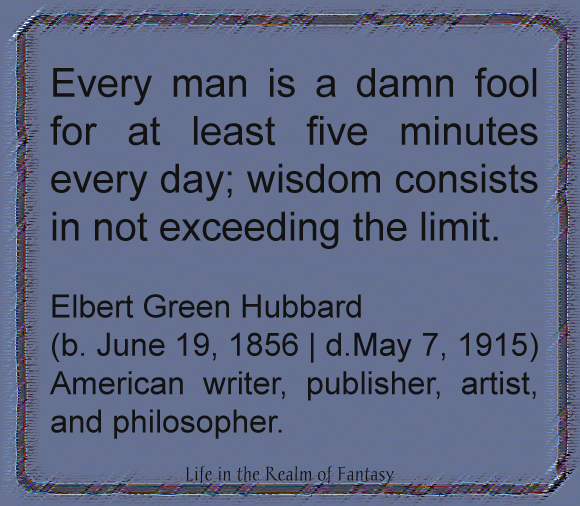
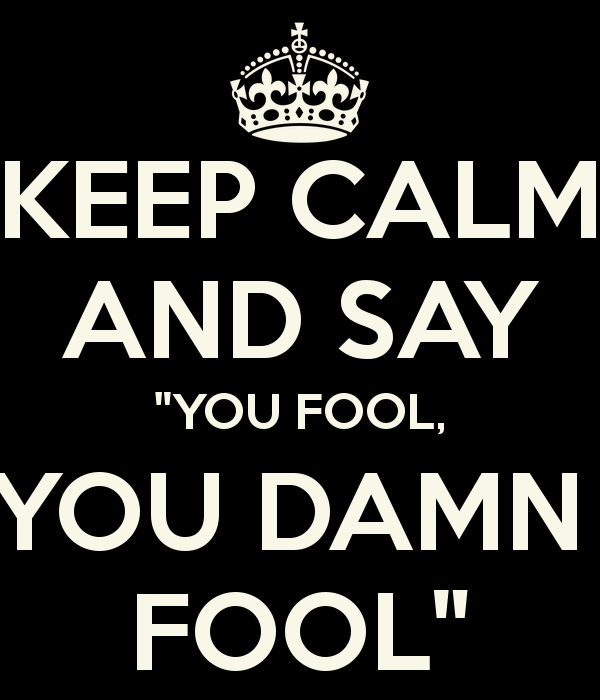
Is it damn fool, damnfool, or damned fool?

colloquialism memeOne of the more interesting things about being an editor is the amazing amount of time you spend stopping what you are doing and doing a little research. This is especially true if you are editing a piece that has a lot of colloquialisms in it.

Fortunately, some colloquialisms have made it into the Webster’s Dictionary, and the rest are out there on the internet somewhere.

Let’s consider the question of if we mean damn fool, damnfool, or damned fool:

According to the Urban Dictionary

  • A person who is extremely foolish. Their actions are not only irresponsible to themselves, but can possibly be harmful towards others.
  • If a guy tries and talk you out of using a condom, he is a damn fool. (You can’t make this stuff up–you have to go to the internet for it.)
  • Did you see that damned fool? He was swerving all over the road. (end quoted text)
And just for fun, lets see what Wiktionary has to say:
  • damn fool (adjective)
  • damnfool 
  1. (informal) Contemptibly foolish. (end quoted text)
He was a damned fool.
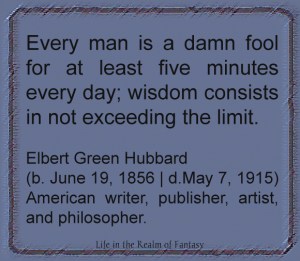
Ellbert Hubbard memeHow I see it:

  1. He was a damned fool. (I just cursed him to hell.)
  2. He was a damn fool. (He was contemptibly foolish)
  3. He did a damnfool thing. (He was contemptibly foolish and I will curse him to hell.)
Now this can be tricky if you are unsure which of these damnfool things the author meant, so this is where I insert a comment asking the author what kind of a damned fool she is writing about.
.
What other fun little “OMG I have to stop and look this up” things do I play with when I should be working?
  • I love looking up Pagan rituals, or indigenous peoples’ religious rituals.
  • I love anything to do with history, and exact dates.
  • Ooh! Ooh! Let me look it up on a map!
Yep–looking things up is part and parcel of the fun. I’m just not as keen on looking up where to properly place commas–the rules make my head hurt.
 .
So let’s talk commas and where to stick ’em, or better yet, where NOT to stick ’em. I found a wonderful website that has a handy-dandy list of comma don’ts phrased in simple language that did not make my eyes go numb: The Proper Care & Feeding of Commas
 .
chicago manual of styleImproperly installed commas can wreak havoc in a paragraph. This is because they are punctuation: “…the act or practice of inserting standardized marks or signs in written matter to clarify the meaning (of a sentence.)” (quoted from Google)
.
Commas are there to separate clauses and to make sentences understandable. Consistently used according to the accepted rules, commas make it so that every English-speaking reader understands what you have written. We don’t put them in to indicate to the reader where we pause or take a breatheveryone pauses and breathes differently and what makes sense to you will not make sense to someone else.
.
These are the same rules for everyone, which make our work understandable in Brisbane, Houston, London, Hong Kong or Seattle. But the rules in the Chicago Manual of Style (my go-to manual) are often ambiguously phrased and are hard to remember. SO, when checking on simple points, I love this website for a quick list of comma dos: Your Dictionary: Comma Rules
 .
Dialect and local sayings play a huge part in contemporary work–sometimes I get a piece that was written by a UK author.  Perhaps it is an Urban Fantasy and it will have all sorts of words I have never heard of: again, I go to Your Dictionary: Common UK Expressions. This  is also a problem with American dialects and local slangs–the internet is my friend! Texas-talk is “a whole nuther thang” and sometimes more difficult to follow than Cockney EnglishHowdy Get Rowdy
 .
It is an editor’s job to do a certain amount of research whenever a question arises in the manuscript to ensure his comments will help the author clarify ambiguous and hard-to-understand areas. Having fun surfing the internet looking up obscure and interesting facts is just one of the perks!
.
keep-calm-and-say-you-fool-you-damn-fool

2 Comments

Filed under Books, Fantasy, Humor, Literature, Publishing, Uncategorized, writer, writing

Crafting the narrative: the potty-mouthed vicar

Portrait of Vsevolod Mikhailovich Garshin by Ilya Repin

Portrait of Vsevolod Mikhailovich Garshin by Ilya Repin PD|100 via Wikimedia Commons

Look at poor Vsevolod Mikhailovich Garshin. The artist immortalized him at the unfortunate moment he realized he was faced with a gazillion hours of searching for overused words in his manuscript–and all of them in Russian.

Heh heh.

I wrote a post on this subject three years ago, but it’s time to  dust it off and play with it again. Overused words can be fun if done right:

Mark Twain said, “Substitute “damn” every time you’re inclined to write “very”; your editor will delete it and the writing will be just as it should be.”

Well now, we could have some fun with that!

Think of how often some beginning authors use the word very in their work:

“We are doing very well, thank you,” replied the vicar. “The weather is very nice, and the food  is very good.” 

Let’s do as Twain suggests and see what happens:

“We are doing damn well, thank you,” replied the vicar. “The weather is damn nice and the food is damn good.”

That was fun. The word ‘damn’ leaps out at you, because you don’t really expect it. I personally enjoyed replacing ‘very’ with ‘damn.’  But, hilarious though it is to give the vicar potty-mouth, in reality it’s unnecessary. Simply eliminating ‘very’ and not replacing it with anything goes a long way toward improving it:

“We are doing well, thank you,” replied the vicar. “The weather is nice and the food is good.”

Some times we repeat certain words and phrases for emphasis. This article is not about using repetition when crafting narrative. Instead, we are thinking about words that are overused, and which we can often do without.

In our rough drafts we overuse certain words because we are flying along and they are easy–they say what we want and we can keep on moving.

But in the second draft, we must look for them. Let take the word ‘very.’

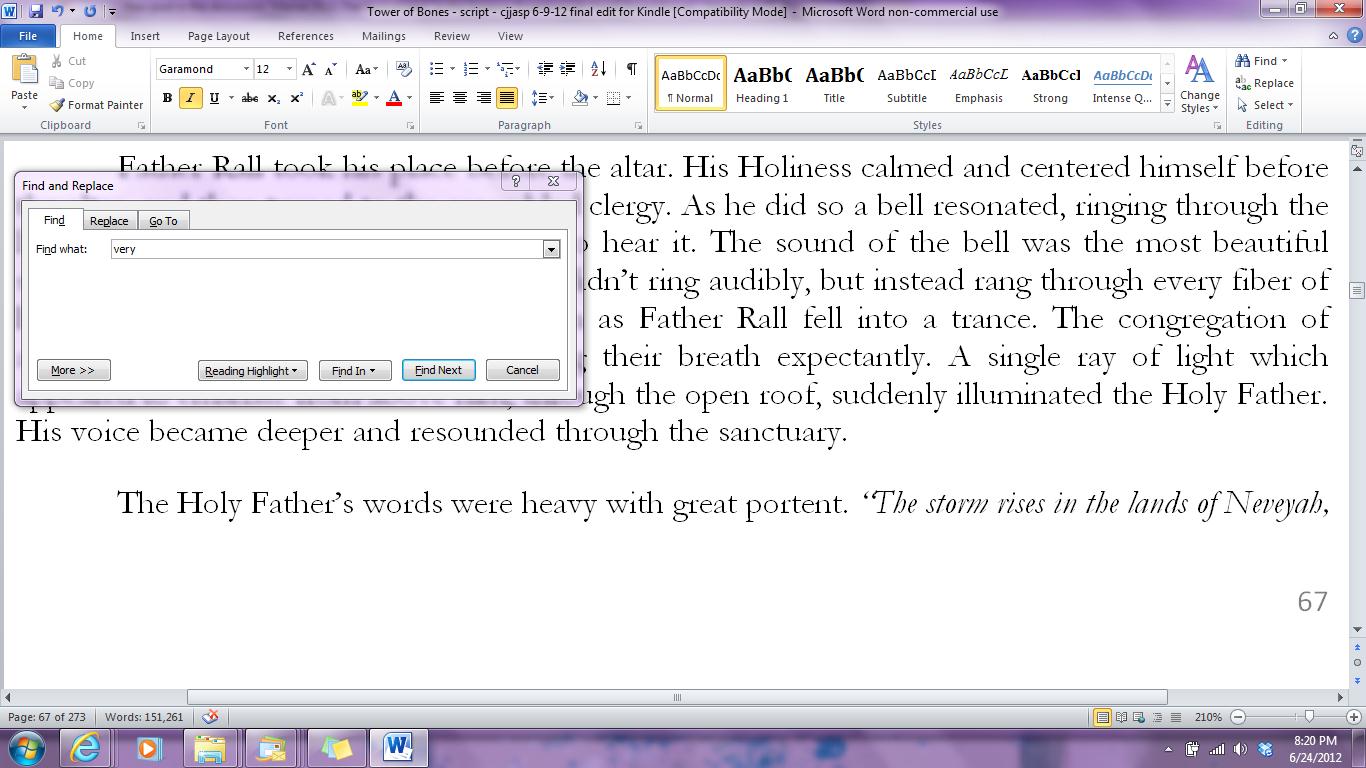
Once you are finished with your first draft, do what is called a global search – in Microsoft WORD you click on the ‘Home’ tab, and at the far right hand side click on ‘Find,’ OR press the ‘Ctrl’ key and the ‘F’ key at the same time.  This will open the ‘find and replace’ menu:

find graphics

In the ‘find and replace menu, type the word ‘very’ and click on ‘find next’.  The word ‘very’ will be highlighted in blue, and you can delete it.  I don’t recommend doing ‘replace all’ with any overused modifier, because you will create more problems than you can imagine!  Look at each individual instance of the word, and either delete it or change it to a stronger word.

Deleting them or changing to a stronger word will help you grow as writer.  You will begin to think about your sentences and stretch your vocabulary.

Next do the same with ‘that’ and ‘had.’ These are words  we all use too freely in our first draft, and until an editor pointed it out to me, I had no idea how they weakened my work. They are good words, used infrequently and only when another won’t do the job.

Here is a list of words that can appear with great frequency in your rough drafts, some of which are considered ‘tired.’ Some of these words can be made into contractions to eliminate wordiness. Some can be cut altogether, and some will need to stay. However, some of these words are ‘telling’ words, and we want to avoid that wherever possible. Look at each instance and make that decision.

  • about
  • am
  • are
  • bad
  • beautiful
  • big
  • could
  • did
  • fine
  • good
  • great
  • had
  • has
  • have
  • is
  • look
  • looked
  • nice
  • quite
  • seems
  • so
  • some
  • that
  • then
  • think
  • very
  • was
  • well
  • went

We all use these to excess in our rough draft, because we are laying the roadbed of the superhighway that is our book. The words we spew at this point are the framework we are going to build the true story around, the story that was in our heads, but that the rough draft doesn’t do justice to.

Historical_ThesaurusThis is where our thesaurus comes in handy. We need to express the thoughts our overused words evoke, but we don’t want to repeat them over and over. When a word seems to be cropping up with great frequency, try using the global search option. It will tell you how many instances of the word appears in your manuscript, and you might be surprised.

Highlight the word and right-click on it. A pop-up menu will appear. From that menu, choose ‘synonyms.’ Click on that, and a list of words with similar meanings will appear. If you need more than can be found in that list, click on ‘Thesaurus’ (at the bottom of the list) or google the word and add ‘synonyms’ to your search.

Consider my recent experience with gaped–a beta reader pointed out that I had my characters gaping at each other far too regularly. I had to go through it and have them stare, exchange glances, or simply look away. In several instances, I cut that sentence because it wasn’t really needed.

It can be difficult to see the words you have overused when it is your own work. But you can run your ms through a free, online  program like Word Count Tools and that will give you a heads up on how many times you have used each word.

2 Comments

Filed under Books, Literature, Publishing, Self Publishing, Uncategorized, writer, writing

Lay, lie, laid

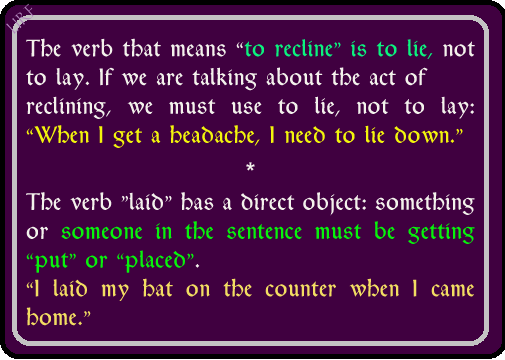
to lie means to restIs it to lay, to lie, or what? I want to get this right but these words can be a complicated morass of misery. It boils down to a simple concept: is it RECLINING  or was it PLACED THERE?

“Lay” is a verb meaning to put or place something somewhere. It has a direct object. Its principal parts are “lay,” “laid,” “laid,” and “laying.”

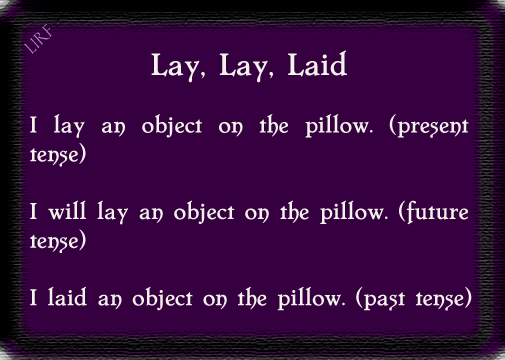
What the words refer to is the action: If you set it (object) there, it is laying there. Lay it there. Lay it on the pillow.

If it is resting or reclining, it is lying there. Lie down. Lying down. Lie down, Sally. (Clapton had it wrong? Say it isn’t so!)

The internet is your friend, and can teach you many things besides how to make cute kitty memes. Quote from the wonderful website Get it Write: The verbs to lie and to lay have very different meanings. Simply put, to lie means “to rest,” “to assume or be situated in a horizontal position,” and to lay means “to put or place.” (Of course, a second verb to lie, means “to deceive,” “to pass off false information as if it were the truth,” but here we are focusing on the meaning of to lie that gives writers the most grief.)

As another great resource, in his July 7th, 2015 post on this subject for Writers’ Digest,  Brian A. Klems gave us a useful chart:

Lay vs. Lie Chart


Infinitive    Definition         Present    Past    Past Participle    Present Participle


to lay      to put or place     lay(s)           laid     laid                     laying
something down

to lie     to rest or recline    lie(s)            lay      lain                     lying

“end of quoted text” 
Brian A. Klems is an awesome author and blogger. Check out his personal blog at The Life of Dad.

>>><<<

This is where things get tense: present, past and future.

A ring lay on the pillow. 

Lay, Lie, Laid

But I needed to rest:

LYING AS IN RESTING copy

So what this all boils down to is:

final comment lay laid

But just to confuse things:

A living body lies down and rests as is needed.

A dead body is cleaned up and laid out by other people,  if said corpse was important to them. However, after having been laid out, said corpse is lying in state to allow mourners to pay their respects.

5 Comments

Filed under Humor, Literature, Publishing, Uncategorized, writer, writing

Three audiobooks and why I liked them

First of all I love books. I’m the kid who was so desperate for books I would read the Encyclopædia Britannica  when the rainy Northwest summers got boring and I had read everything else. But now, beside writing, I freelance as a structural editor.

When I am editing for clients I don’t read, as it is hard to set aside my critical eye and just read for pleasure. I can’t go with out books, though, so when I am in editing mode, I rely on Audible Books to entertain me.

Three audio books that I heard over the last year really stand out. Two of them I would classify as literary fantasy and one is genre fantasy–but all are fantasy in the fullest sense.

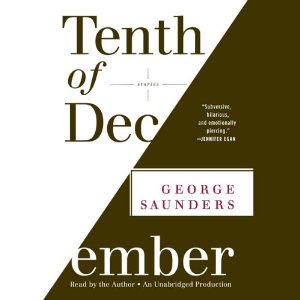
Tenth of December, George Saunders1. Tenth of December, written by George Saunders and also read by George Saunders.

Saunders has the ability to get inside each of his characters’ heads, showing them sharply as unique individuals. They aren’t always nice, and certainly not always moral as I see morality, but Saunders portrays them with such vivid strokes that you feel as if you understand their reasoning.

For me, the most powerful tale in this collection of stunning tales was “Escape from Spiderhead.” This sci-fi tale has an almost Vonnegut-like flavor. It is a stark journey into the depths to which we humans are capable of sinking in the pursuit of knowledge for the sake of knowledge. Where does punishment end and inhumanity begin? This story lays bare concepts regarding our view of crime and punishment that are difficult, but which are important to consider. The scenario is exaggerated, as it is set in a future world, but it exposes the callous view society has in regard to criminals and what punishment they might deserve.
.

George Saunders reads this book himself and he is an amazing narrator. This was an excellent, entertaining book to listen to, and I liked the audio book so much I bought the hard copy to take with me later this summer when I go on vacation.

Just so you know–I rarely buy hard copies of anything.

>>><<<

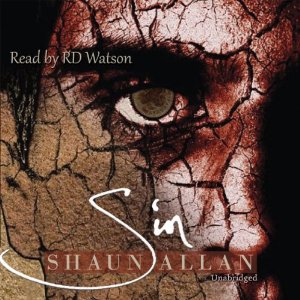
Sin audiobook coverI also listened to Sin, British author Shaun Allan’s masterpiece of stream-of-consciousness and fantasy, narrated by R.D. Watson. Allan breaks every rule of writing, and his work is powerful.

Sin is a dark, urban fantasy, written with a large dose of sardonic humor. We hear the tale from the man who was given the name ‘Sin Mathews’ at birth, but who goes by the name of Sin only, as the last name doesn’t matter; only the name which is the sum of his parts matters. R.D. Watson’s reading of Allan’s shining, witty, prose is moving and brilliant in every aspect. He gets into Sin’s head, and you are completely spellbound.

The atmosphere throughout is surrealistic, but it is well-balanced. I adore Allan’s lyrical, intimate style of prose, as in this series of images describing Sin’s disorientation, “History doesn’t relate whether Jonah, Gepetto, and Pinocchio sat around a table eating pizza, sharing stories of prophecy and puppetry while in the belly of the whale, but I thought that I could relate to being swallowed whole.”

Throughout the novel, Sin’s ruminations are self-mocking, and world-weary, yet naive and innocent.  He bears the guilt of the world, and suffers the unbearable pain of being the cause of so many deaths, but still he finds ironic humor in every situation. His sister, Joy, is grounded and guides him to the truth, but is not allowed to tell him anything.

Nothing is what it seems in this tale, and right up to the end, you are not sure which reality is real.

>>><<<

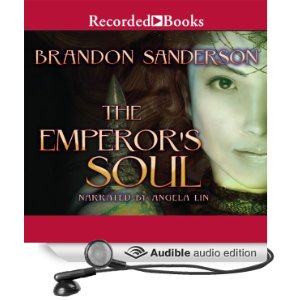
The Emperor's Soul - Brandon Sanderson. audibleThe Emperor’s Soul, by Brandon Sanderson and narrated by Angela Lin.

Shai is thief, but not just any kind of a thief. Shai has been trained to forge a replica of the original item to leave in its place. Her replicas are masterful. in many ways her replicas are better than the originals. The power of her work as she remakes her surroundings amazes Gatona, a man who holds her life in his hands, and every day he is more confused by her. This is not a love story–Gaotona struggles to understand why an artist of her caliber, who loves the craft as much as she does prostitutes her gift by making forgeries.
Two factions now control her fate. They have something she needs, and she has something they need, but for how long? The Emperor Ashravan’s condition has opened up new possibilities for some on the council, and they are ruthless. Shai is safe for the moment, but she knows her life hangs by a thread and only a miracle will save her.

In Shai, Sanderson has created a character who is compelling and completely believable. Shai is more than merely a forger, she is an artist.  She takes pride in her work, and rightfully so. The way she is portrayed is a departure for Sanderson, in that she is most definitely a woman, and she is the central figure. There is a strong sense of history to this tale, and the structure of their society is clearly drawn in only a few well-crafted words.

>>><<<

Audio books are great in the car, I think we all know that–but for me they are a way to access wonderful books when I am in too critical a state of mind to read for enjoyment. For my downtime I love to sit on my back porch and just listen to someone reading me a story.

Comments Off on Three audiobooks and why I liked them

Filed under Books, Fantasy, Literature, Publishing

Gearing up for #PNWA2015

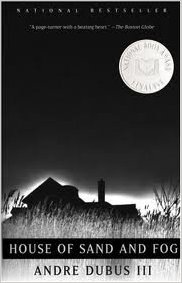
House of Sand and Fog Andre Dubus III

I love conventions. Especially writer’s conventions, where the craft of writing is the central theme, so that is why I look forward to the PNWA convention every year. Two weeks from now, that is where I will be, along with fellow Myrddin Publishing Group editor and bff, Irene Roth Luvaul.

It is horribly expensive, but for me, it is so worth it.

This year, Andre Dubus III will be the keynote speaker. While I frequently read literary fiction, I have to say I didn’t really enjoy his book, House of Sand and Fog, although it was excellently crafted. I found it exceedingly depressing, as I did most books touted by Oprah’s Book Club, which I generally don’t find to be much of a recommendation any more. Oprah is a wonderful lady, but her tastes in literature are far different than mine.

Let’s face it–I’m an escape-reader. I read to get away from the misery of the world, so while the story is thought-provoking, and worthy of every honor it has received, I didn’t enjoy it. I prefer happy endings.

But that doesn’t really matter–I want to hear what he has to say. I don’t care for George R.R. Martin‘s work either. But I love to hear George speak, and so I am looking forward to hearing what Andre Dubus III has to say.

SUPPORT YOUR LOCAL AUTHORSMy hubby took a vacation-day yesterday, giving himself a 4 day weekend to help me take my books 75 miles north to Bellevue. 3 hours each direction, inching along I-5 and I-405 in 90 degree heat–what fun!

This was so they can  be included in the PNWA July 16-19 convention’s Friday Autograph Party event. I’m pretty excited about that. My good friend, Lindsay Schopfer will also be signing books, as will 58 other authors.

I’ll be showcasing the World of Neveyah series, and Huw the Bard, so 4 books for the signing event. But all my books will be there.

Every attendee will receive an Ebook copy of Tales from the Dreamtime courtesy of Smashwords. I so wish I could give them each a copy of the audio book–Craig Allen’s narration is simply amazing.

I really enjoy the PNWA conference. A lot of people who are going the traditional route use it to pitch to agents and editors, but that doesn’t interest me. I am happy as an indie and have no plans to court a large publisher.

What I am interested in are the seminars on the craft of writing. Every year I come away from this event feeling completely inspired, and ready to write.

Friday morning Irene and I will attend the annual meeting. I do have some concerns which I have made a list of, and wish I lived closer to Seattle to be more of a volunteer. Living 75 miles away limits what I can do to help out, but I could do some virtual assisting, if there is an option for that.

Also, I will be attending seminars given by Scott Driscoll, Robert Dugoni, and Lindsay Schopfer.

creamy_wild_rice_and_mushroom_soup_recipe

creamy wild rice and mushroom soup w/coconut milk

All in all, I think it will be a fun event, and am planning my food ahead for it, as the vegan can never count on the kindness of strangers when it comes to food. The wise vegan author travels well-prepared to stay in a room with no microwave, in a hotel that is less than understanding about what constitutes a vegan meal.

I can honestly say I am NOT looking forward to the dinners, but will be well-able to provide for myself, and who needs food anyway–were gonna be talking books!

Comments Off on Gearing up for #PNWA2015

Filed under Literature, Publishing, writer

Jonesing for affirmation

Der Arme Poet

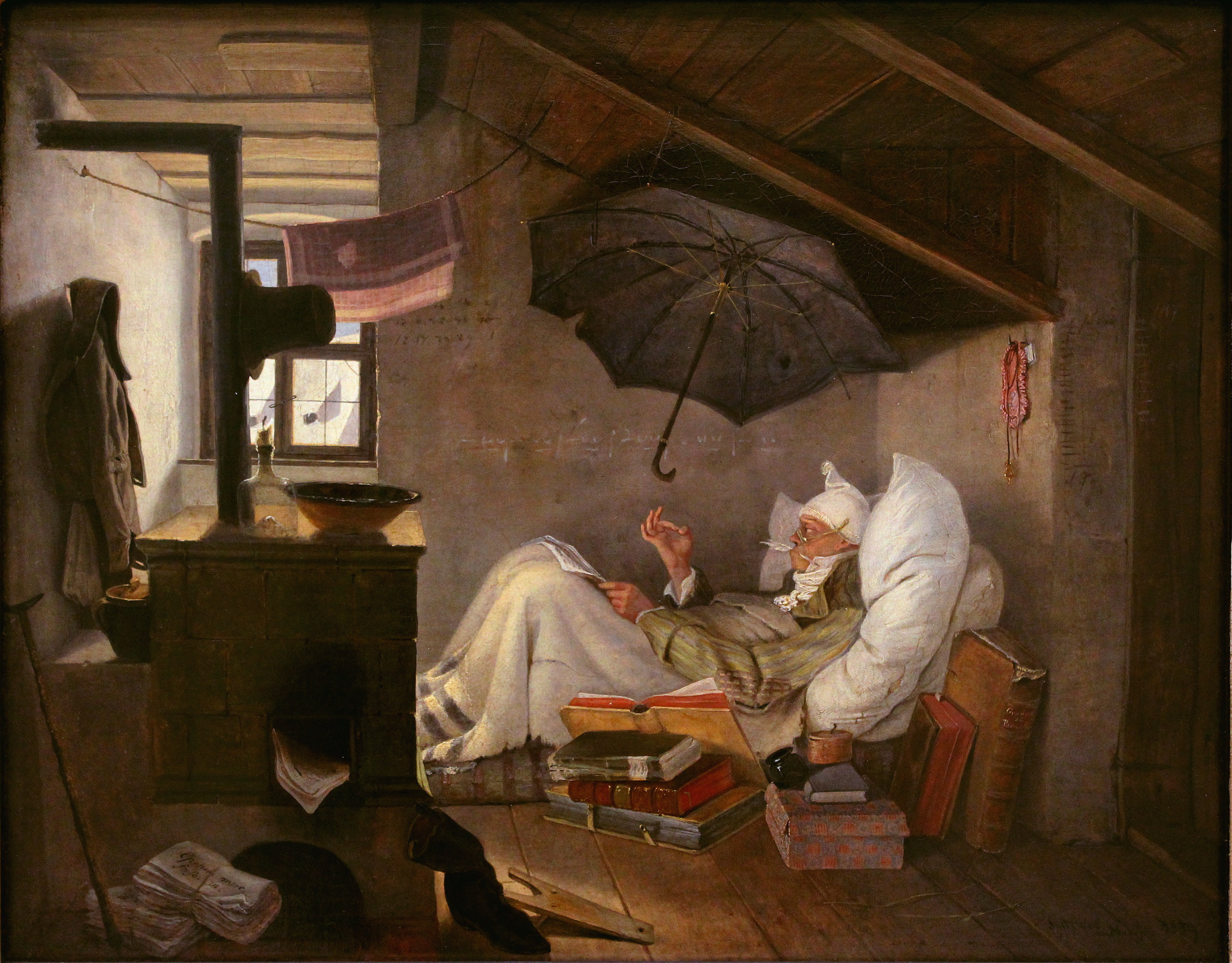
Carl Spitzweg, The poor poet,1839 PD|100 yrs via Wikimedia Commons

Writing is an addiction. Oh, we don’t start out as garret-dwelling addicts. No, we start out as young people with bright futures, occasionally toying with that gateway drug–short-fiction.

At first it’s just thrill-seeking–writing a few short-stories and flash-fiction, just to see if we can. However, once we’ve felt the rush of  hearing the incredulous words, “You wrote this? This is good!” we are hooked.

The next step is often NaNoWriMo. Once you’ve done that first NaNoWriMo, you’ll never be the same.

Some fortunate people manage to walk away from it–they just do one NaNoWriMo, and quit, forever.

But for the rest of us, we are now on an eternal cycle of getting our word count and stream-of-consciousness-writing, and it will take us to the gates of perdition. Or to a local writing group–same thing, I am told.

No sane person thinks we can actually write for a living, but we can’t fight the urge.  We know we can do it, if we just keep at it. We crave that affirmation again, that incredible rush of “Oh yeah–I knew that story was all that, and I wrote it!”

At first, we still have some basic common sense. We know it isn’t cool to just quit our jobs and expect our family to live in a garret, starving, so we hang on to our day jobs and begin sneaking around, writing in secret, hiding it from our closest loved ones until we accidentally blow it–we are so high on the adrenaline rush from the incredible scene we just finished writing that we just have to tell someone.

After all, that scene is the turning point for the entire novel, and it’s golden!

So, not wanting to see the glazed look in your spouse’s eyes again, you tell the dog. Of course, the dog just has to tattle on you. Dogs can’t keep secrets, you should know that.

tumblr_ndi15fZRpu1syd000o1_500That is when it finally comes out that your every waking moment is spent on some aspect of the writing craft. Our family knew something was going on,and they were worried about our behavior.

But we’re so far gone by now that we don’t care.

If we’re lucky, the family is comprised of consummate enablers. Desperate to have some normalcy in their lives, they will try to keep us from becoming unkempt, shabby, pajama-clad writing-seminar junkies, bankrupting them with our endless, rather costly, efforts to “improve our work.”

They tell themselves that we’ll out grow the habit if they help us control our addiction. They encourage us to join free online writing and critique groups. They toss us a bone by giving us the occasional second-hand book on the craft of writing, usually by a famous author.

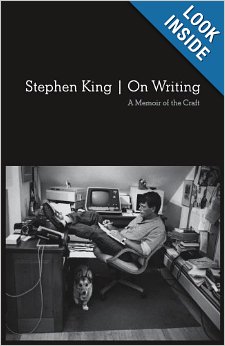
on writingThey have no idea just how potent an injection of inspiration that garage-sale edition of “On Writing” by Stephen King is to a hopeful author, and unknowingly they just make our condition worse.

At parties we have a sixth sense, always knowing who the other writers are just by the way they can’t focus on the conversation, and can’t wait to get  back to their work in progress, surreptitiously keying notes into their cell-phone and pretending they are texting.

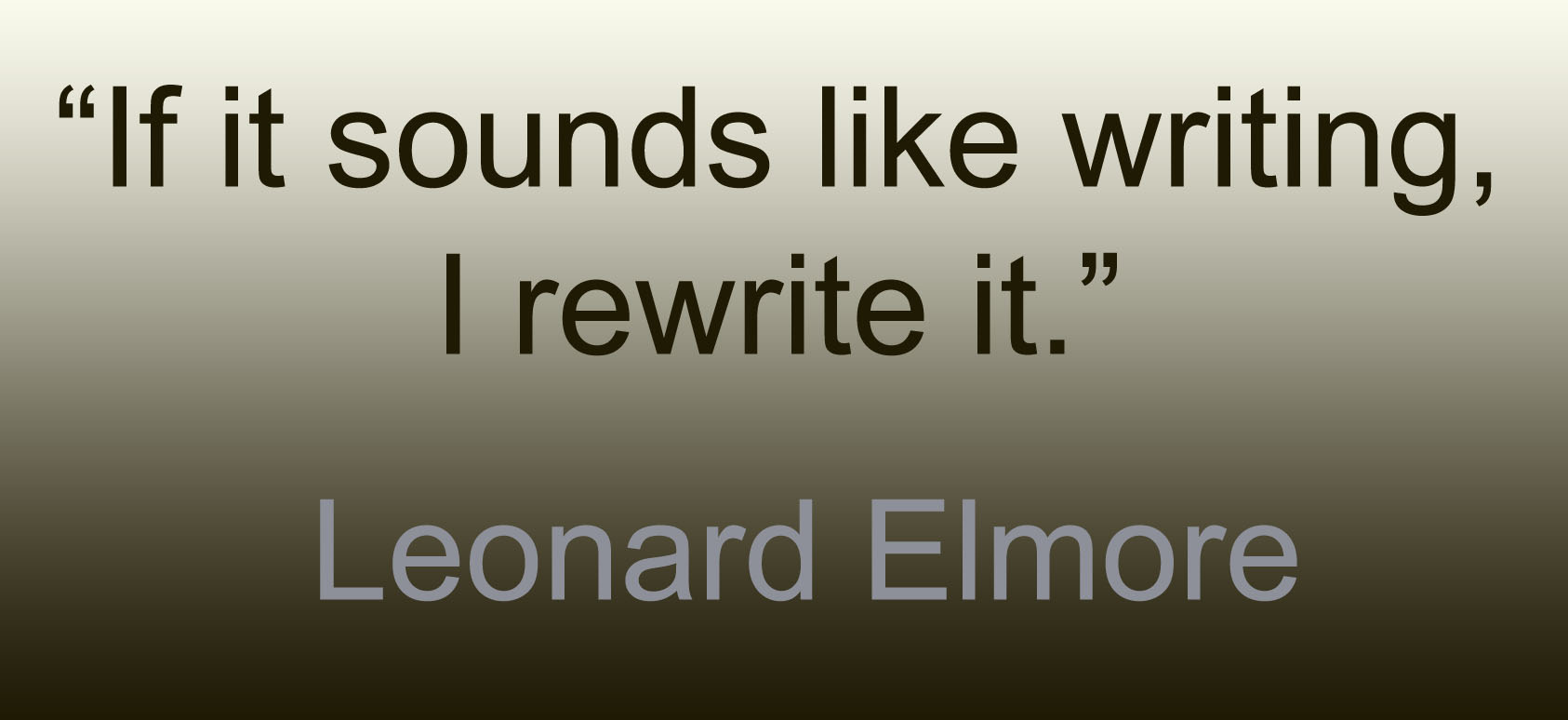
We’ve never met them before, but we find ourselves exchanging knowing glances and sneaking out to the patio with our new best friend, bingeing on Leonard Elmore quotes about writing, and sharing a few morsels of Orson Scott Card’s writerly wisdom.

leonard elmore quoteA new brother-in-arms and Leonard Elmore–we’re high as a kite and having fun now. What a great party!

Shocked faces stare out the window–it’s apparent we’re having too much fun, and our families suspect we’re “ranting about our novel again.” They drag us back into the light, despairing of ever having a “normal” life again.

An intervention and rehab looms in our future.

It won’t work. It’s not an addiction you can just walk away from. When they’ve taken your laptop away and hidden the pencils, and still they catch you forming little sentences out of the ‘o’s in your cereal bowl, they will know there is no such thing as recovery for the writing addict.

Don’t worry. Soon, they will be begging you to just go to that bloody writers’ convention and get it out of your system.

Heh heh. Like that’s ever going to happen. Soon, you will be hanging out at the local coffee-shops, looking for people with their laptops open, trying to make unsuspecting new converts to your dirty little habit.

“Are you a writer too? Ever do any NaNoWriMo?”

“Wanna share a little “Writer’s Digest? C’mon, what’s the worst that can happen? It’s not like it’s illegal, or anything.”

4 Comments

Filed under Books, Humor, Literature, Publishing, writer, writing

Phrasal verbs–minions of evil, or sometimes useful?

Book- onstruction-sign copyPhrasal verbs are usually two-or three-word phrases consisting of a verb plus an adverb, or a verb plus a preposition, or both. They are just another aspect of English vocabulary, and can be considered a form of compound verbs.  We use them all the time, but what, exactly, are they?

First, what is an adverb?

The term adverb is somewhat of a catchall word to describe many kinds of words having little in common other than the fact they don’t fit into any of the other available categories (noun, adjective, preposition, etc.) and they modify an action word—a verb.

The principal function of adverbs is to act as modifiers of verbs or verb phrases. An adverb used in this way gives information about the manner, place, time, frequency, certainty, or other circumstances of the activity denoted by the verb or verb phrase. Too many modifiers in your narrative and voila! Purple prose.

phrasal verbsThere are three main types of phrasal verb constructions depending upon whether the verb combines with a preposition, a particle, or both.

Wikipedia, the fount of all knowledge, has a good example of these three forms:

Verb + preposition (prepositional phrasal verbs)

  1. Who is looking after the kids? – after is a preposition that introduces the prepositional phrase after the kids.
  2. They picked on nobody. – on is a preposition that introduces the prepositional phrase on nobody.
  3. ran into an old friend. – into is a preposition that introduces the prepositional phrase into an old friend.
  4. She takes after her mother. – after is a preposition that introduces the prepositional phrase after her mother.
  5. Sam passes for a linguist. – for is a preposition that introduces the prepositional phrase for a linguist.
  6. You should stand by your friend. – by is a preposition that introduces the prepositional phrase by your friend.

Verb + particle (particle phrasal verbs)

  1. They brought that up twice. – up is a particle, not a preposition.
  2. You should think it over. – over is a particle, not a preposition.
  3. Why does he always dress down? – down is a particle, not a preposition.
  4. You should not give in so quickly. – in is a particle, not a preposition.
  5. Where do they want to hang out? – out is a particle, not a preposition.
  6. She handed it in. – in is a particle, not a preposition.

Verb + particle + preposition (particle-prepositional phrasal verbs)

  1. Who can put up with that? – up is a particle and with is a preposition.
  2. She is looking forward to a rest. – forward is a particle and to is a preposition.
  3. The other tanks were bearing down on my panther. – down is a particle and on is a preposition.
  4. They were really teeing off on me. – off is a particle and on is a preposition.
  5. We loaded up on Mountain Dew and chips. – up is a particle and on is a preposition
  6. Susan has been sitting in for me. – in is a particle and for is a preposition.

(end of quoted example, thank you Wikipedia)

We use phrasal verbs all the time in our daily speech and in our writing. However, whenever it’s possible we should look for simpler ways to phrase our thoughts when writing, unless we are writing conversations spoken in the local vernacular.

Why do I feel that way? The way I see them, phrasal verbs are  two-or-three words (an action word and modifiers) forming what can be considered a separate verb-unit with a specific meaning. In other words, they use more words than is really needed to express a thought:

  • Who is looking after (verb unit) the kids? == Who is watching the kids?
  • They brought that up (verb unit) twice. == They mentioned it twice.
  • Who can put up with (verb unit) that? == Who can endure that?

We use these phrasings because they sound natural to us—that is the way people in your area might speak. But when used too frequently in a written piece, phrasal verbs junk up the narrative. They subtly contribute to what we call “purple prose” because the overuse of them separates the reader from the story.

Unless you are writing poetry, simplicity is best, because you want to immerse your reader in the experience.

ok to write garbage quote c j cherryhWhen we are revising our first draft, and tightening our narrative we should be examining the prose for weak phrasing. Each time you come across phrasal verbs in your work, look at the sentence it occurs in as if it were an isolated incident and ask yourself if it needs to be there. Many times a phrasal verb really is  the only way to express what you are trying to say, but equally often a more concise way can be found.

Phrasal verbs have their places, but if you can simplify a thought and make the sentence stronger, do so.

2 Comments

Filed under Literature, Publishing, Uncategorized, writer, writing

#Inspiration: Oppression, rebellion and art

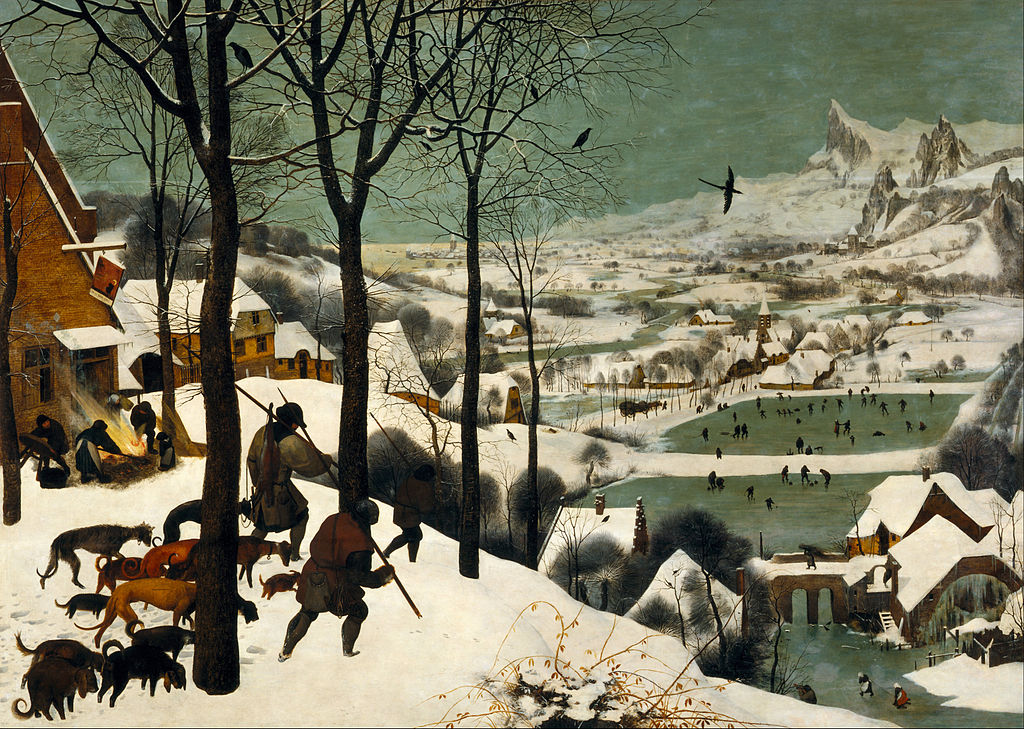
Hunters in the Snow, Pieter Bruegel the Elder, via Wikimedia Commons

Hunters in the Snow, Pieter Bruegel the Elder, via Wikimedia Commons

Writing, even writing fantasy, involves a certain amount of reality checking. You need to know how things actually worked.

Say you need to know what clothing the common European people wore during the renaissance looked like and how they dressed, both for celebrations, and for working.

I go to the 16th and 17th century painters and artists for that information. They always painted their subject with a heavy dose of religious allegory, but that was a part of village life–both the inquisition and the reformation was under way and the politics of religion was in the very air they breathed.

Any time you want an idea of average European village life in the Late Middle Ages through the 17th century, you need look no further than Wikimedia Commons.  There, under the heading  Category:Painters from the Northern Netherlands (before 1830) you will find the brilliant works of the Dutch Masters. These were artists living in what is now The Netherlands, and who were creating accurate records of the everyday life of the common people, along with stylized religious images.

During the 16th century, the Netherlands fought an 80 year war, trying to gain their independence from Spain, during the heart of the Spanish Inquisition. This was a period of extreme oppression and religious rebellion, and the art of times portrayed that very clearly.

I have learned, by rooting around the internet (so it must be true), that everything in the paintings of the time, no matter how commonplace, was allegorical, symbolic of some higher message. In art history (which I have always wanted to study), iconography is a visual language. This means that the way a subject is depicted and the way the image is organized, such as the number of figures used, their placing and gestures, all have specific meanings. The allegories they painted made heavy use of this visual language.

One particular family of of early Dutch painters from the county of Flanders pique my interest, the Brueghel Family. Five generations of their family were well-known painters, and print-makers.

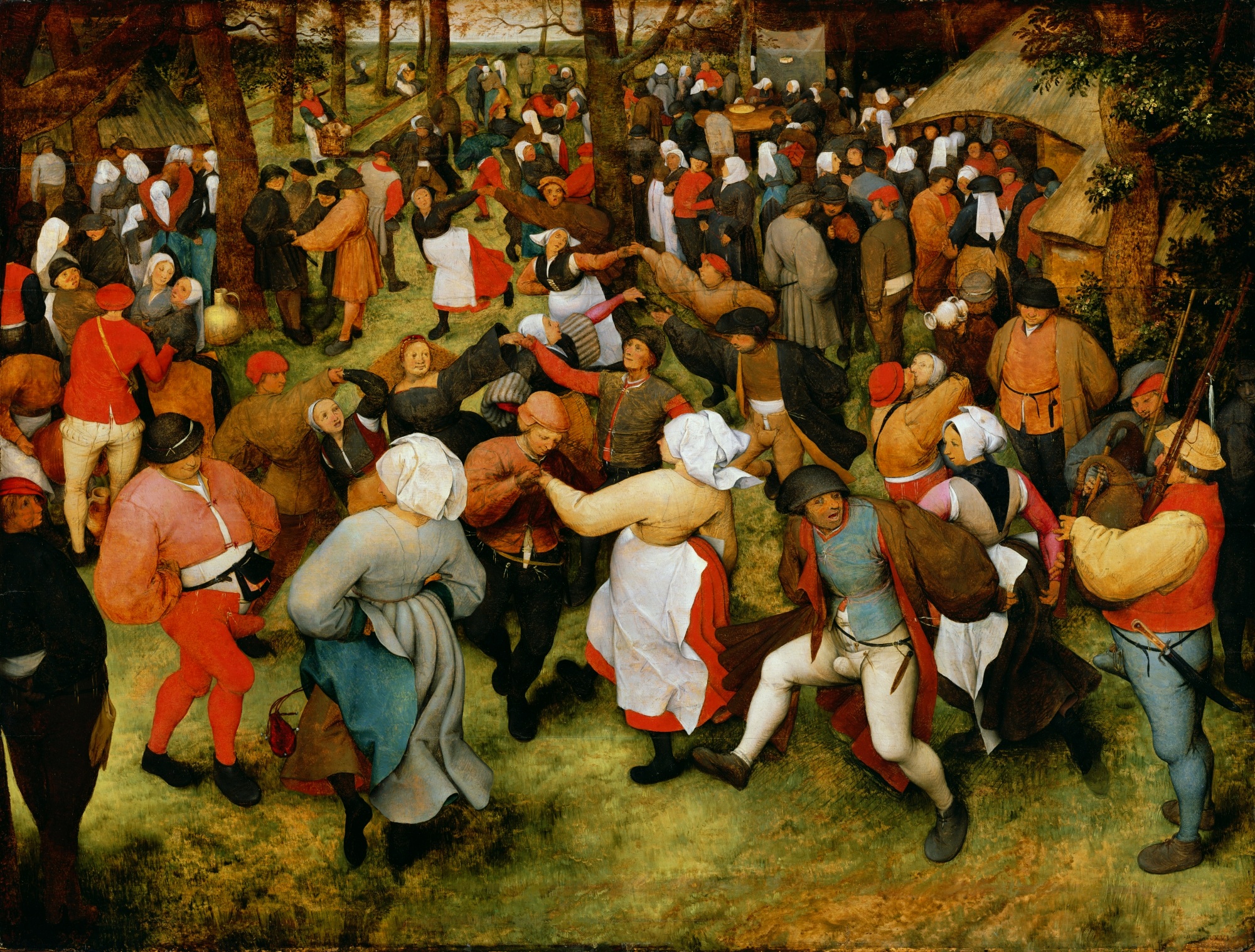
One of my favorite early Dutch paintings is the Wedding Dance, by Pieter Brueghel the Elder:

The Wedding Dance, c.1566 (oil on panel) by Bruegel, Pieter the Elder (c.1525-69)

The Wedding Dance, c.1566 (oil on panel) by Bruegel, Pieter the Elder (c.1525-69)

What makes this painting so spectacular to me is the amazing detail of the clothing. They loved color. From Wikipedia: The painting depicts 125 wedding guests. As was customary in the Renaissance period, the brides wore black and men wore codpieces. Voyeurism is depicted throughout the entire art work; dancing was tabooed at the time by the authorities and the church, and the painting can be seen as both a critique and comic depiction of a stereotypical oversexed, overindulgent, peasant class of the times.

All of these people are depicted as plump, which was a desirable trait–they were prosperous and not starving. All the things that (to this day) make a great party are there: music, food, and dancing. The men wear codpieces, emphasizing their male anatomy in the same way that in today’s society, women’s breasts are hyper-sexualized.  Perhaps codpieces should make a comeback in the men’s fashion world. I’ll show off my babyfeeders, if you parade your babymaker–that way we’ll both be sure we are getting something worth having. (or not.)

Anyway, back to the renaissance. They paid taxes, and this his how their IRS office looked to Brueghel’s eldest son, Pieter Jr. As you can see, not a lot has changed between then and now–we still pay in chickens and eggs. (heh heh.)

Pieter_Brueghel_the_Younger_(or_workshop)_The_Payment_of_the_Tithes_

The Payment of the Tithes (The tax-collector), also known as Village Lawyer, Pieter Bruegel, the Younger, signed P Brueghel

Brueghel’s eldest son, Pieter the Younger,  was never considered as fine a painter as his father or his brother, Jan Brueghel. He was considered a fine print-maker and his work shop was highly regarded. But he was not respected as an artist. Critics of the day felt he copied his father’s style, rather than developing his own. While he did paint in a folk-art style reminiscent of his father’s, his is sharper, more refined, taking it to the next level.

Notice how the people in the above picture are looking lean and ragged though, as opposed to the wedding picture painted by Pieter the Elder. The Little Ice Age had really gripped Europe, and times were hard.

So here is a painting by the second son of Pieter Brueghel the Elder, and a man who fathered his own dynasty of artists, Jan Bruegel the Elder. This is called People Dancing on a Riverbank and by their dress, with the neck-ruffs, you can see it depicts a wealthier class than his brother’s images, perhaps the merchant class rather than the peasants.

People_dancing_on_a_river_bank_by_Jan_Brueghel_the_elder

People Dancing on a riverbank, Jan Bruegel the elder, via Wikimedia Commons

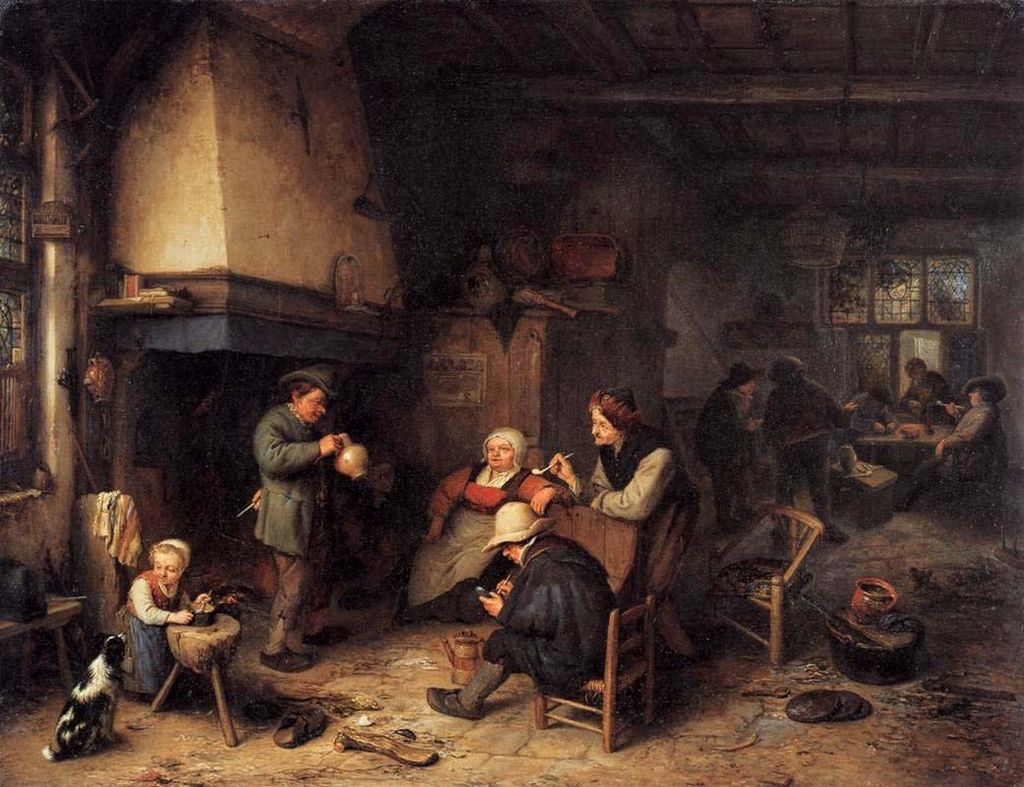
One hundred years later, the Dutch were famous for their painters–and everyone wanted to own a Dutch masterpiece. Times had become quite hard, as the climate had cooled and crops regularly failed. Once-prosperous families often lived in the ruins of their family manors.

Peasants_in_an_Interior_(1661)_Adriaen_van_Ostade

Peasants in an Interior, Adriaen Van Ostade (1661) via Wikimedia Commons

In the above picture by Adriaen Van Ostade, these peasants are living in an enormous, decrepit farmhouse, almost like squatters. They are no longer plump, and are living in filthy conditions. The fire in the fireplace is very low, as if fuel was scarce.

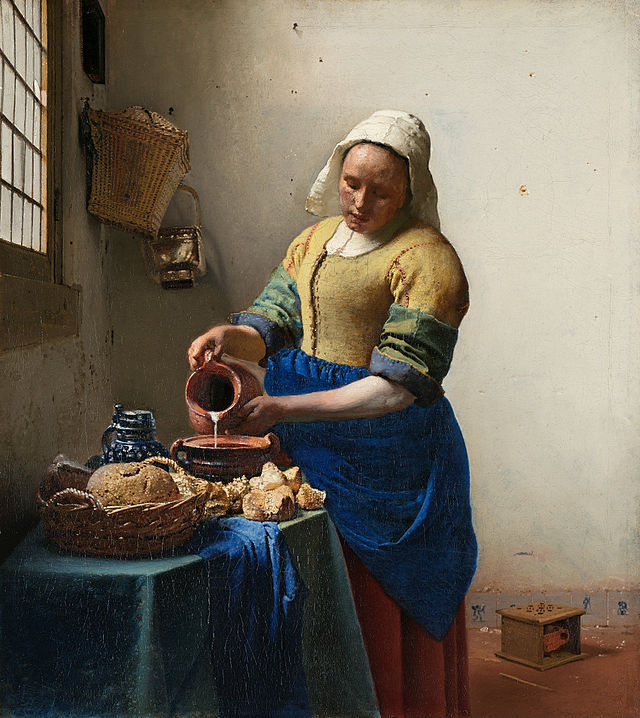
Another famous Dutch painting, from the same time period but showing a different segment of society is The Milkmaid, by Johannes Vermeer. In this painting, Vermeer shows an everyday task, a small glimpse of something that occurred daily in every household, a woman cooking.

The Milkmaid, Johannes Vermeer, via Wikimedia Commons

The Milkmaid, Johannes Vermeer, via Wikimedia Commons

In the background on the floor is a foot-warmer which was filled with coals and was an essential luxury, showing this was one of the wealthier households.

According to Wikipedia, the fount of all knowledge: By depicting the working maid in the act of careful cooking, the artist presents not just a picture of an everyday scene, but one with ethical and social value. The humble woman is using common ingredients and otherwise useless stale bread to create a pleasurable product for the household.

I love art depicting the lives of ordinary people. I find the small details intriguing. It shows us that in many ways we are not that different than they were. We want food, decent shelter, and of course, stylish clothes to attract a mate.

And back then as it does now, a hint of anything taboo would most certainly find its way into even a religious painting.

The best part of all this is, a woman with an average education and on a tight budget (like me) can enjoy these wonderful works of art at will. I can examine them  in as much detail as I want, and take all the time I want, and no one will stop me or throw me out of their museum for loitering, because the internet is open all hours and is free.

Wikimedia Commons is a great resource to just roam around in, even when you are not looking for something specific.

8 Comments

Filed under Books, Humor, Literature, writer, writing

More Disintegrating Eglish…Enlish…#language

gibberish-american businesses onlineThis weekend I happened to be out on Facebook. A friend of mine had a fun thread going, regarding the way English seems to sliding in a new direction. I find this interesting in same the way a cat finds a snake intriguing.

I want to play with it, but it may bite me.

I’ve said it before and I will say it again, English is the ever-disintegrating language. The very roots of English encourage this continual evolution.

Think about it–a bunch of smart guys in Victorian England applied the rules of a dead language, Latin, to an evolving language with completely different roots, Frisian, added a bunch of mish-mash words and usages invented by William Shakespeare, and called it “Grammar.”

We had a short discussion about words that either signify lazy speech habits or a shift in the language and came up with this short list, that is only the tip of the pox-ridden iceberg:

gibberish quoteSupposably…oh wait, did you mean supposedly?

Liberry…no sir you must go to the library for those books–the liberry can only give you hives.

Feberry...I hope you mean it will happen in February, because Feberry will never come.

Honestness...In all honesty I am not sure what to make of that one.

But my particular favorite is Prolly, which my granddaughters seem to think means Probably, but in all honestness, doesn’t.

It’s not a new problem. Jonathan Swift, writer and dean of St. Patrick’s Cathedral in Dublin, complained to Robert Harley, 1st Earl of Oxford and Earl Mortimer, in 1712: “Our Language is extremely imperfect. Its daily Improvements are by no means in proportion to its daily Corruptions; and the Pretenders to polish and refine it, have chiefly multiplied Abuses and Absurdities.” He went so far as to say, “In many Instances, it offends against every Part of Grammar.”

Well, that is prolly a little harsh.

English is like water–it shifts, it flows, it steals what it wants from every other language it comes across. That is what makes it so fun to play with. And also is what makes it so difficult to work with.


4 Comments

Filed under Humor, Literature, Publishing, writing

My Writing Life: David P. Cantrell

My Writing LifeToday indie author and blogger, David P. Cantrell, has consented to answer a few questions for us. Dave is a fellow staff-member at Edgewise Words Inn, a reader-oriented blog where Dave Cantrell, Lee French, and I post a variety of short articles, human interest stories, some short stories, memes, and generally have a great time just writing. At the end of this post, I will be reblogging Dave’s most recent post on Edgewise Words Inn, a little thing called “Ten Things I’ve learned as a Quadriplegic.” I think you’ll find that post as interesting and inspiring as I did.

But first, my virtual interview with Dave:

CJJ: Tell us a little of early life and how you began writing:
DPC: I grew up in Southern California after immigrating from Indiana at age five. I was a mediocre student in grade school, sports were much more interesting, but sadly, I was a mediocre athlete too. I wasn’t horrible at either of them, mind you—I got by.

I’ve often wondered where I’d be today if my family hadn’t moved to a new school district. I had completed one semester of eighth grade before the summer of the move. The new district couldn’t accommodate split semesters and required me to restart the grade. I became very bored in math and petitioned to join an experimental math class (eighth grade algebra—it sounds quaint now.)

The math teacher let me in for a semester with the proviso that I earn a Cee or better, otherwise it was back to regular math. I struggled, but the teacher worked with me, and I didn’t want to be put back. I think she took pity on me when she wrote a Cee on my report card. Whether she did or not, I’ll never know, but that Cee changed my life. Ultimately, I got a Bee in the subject, and took Geometry during the summer following middle school—No I wasn’t that nerdy, my girlfriend wanted company. I started high school taking a junior level math class.

I learned to enjoy reading in eighth grade. It’s difficult to remember which book lit the flame, but I think it was I Robot by Isaac Asimov. At any rate, reading eventually ignited the writing flame.

CJJ: You are right–the love of reading is the jumping-off-point to attempting to write. I happen to know what you are working on, but my readers don’t, so let’s talk about your current work in progress. 

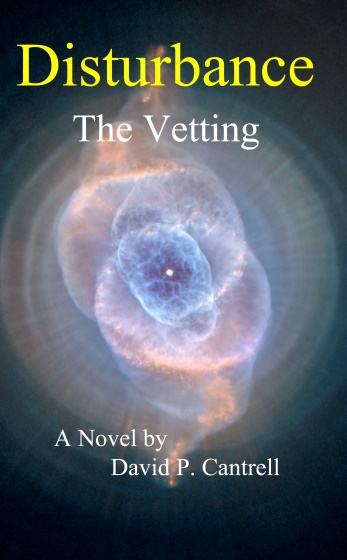
Disturbance - the VettingDPC: My one and only book is a work in progress. I published part one, Disturbance: The Vetting, in July 2014 and took it off the market in January 2015. The initial publishing was a mistake, but I’m glad I made it. I’ve learned a good deal about the process of writing, formatting and editing because of the mistake. I’ve met wonderful, supportive authors from around the globe as a result of it too.

CJJ: How did you come to write this novel?
DPC: Well-meaning idiots made me do it. That’s mean, but true in a sense. I started posting short “Slice-of-Life” stories on Facebook, items like “The Chicken Parmesan Saga.” I was encouraged to create a blog and gave it a go. I beta read Sci-Fi novels for a talented author, Jasper T. Scott. His comments gave me the idea that I might be able to write. I jumped into the deep-end.

CJJ: I’m mostly an outliner, myself. Do you have a specific ‘Creative Process’ that you follow, such as outlining or do you ‘wing it’?
DPC: Please define creative process. I tried to outline, but got hung-up on the order of things. What comes first, character or story? Can they exist independently? I’m a wing-it writer that prays for an outline to magically appear, and in it does sometimes.

CJJ: This is the question I hate to be asked, but here I am asking you: how does your work differ from others of its genre?
DPC: I want to write stories that make the reader think or learn something new. I love action oriented stories as much as the next person, but I want to write page turner’s that make the reader stop and think about what they’ve just read every once in a while. I get frustrated by the mantra to keep the story moving forward, if the words don’t keep it moving they are useless, not necessary.

CJJ: Why do you write what you do?
DPC: I write for the joy of research (I love an excuse to learn new things) and the hope to touch a stranger with my words.  Touching strangers is why I smile and say hello to them as they walk their dog down my block. Their response makes me feel good.

I recall a day my wife asked me to pick up something from our local grocer on my way home from work. It must have been summer because daylight abounded. I was a middle aged over-weight man walking across a parking lot and saw a stunning mid-twenties women dressed to the nines walking to her own car with a bottle of wine.  I worried if I said anything she’d think I was perverted. As I passed her we made brief eye contact and I said, “You look beautiful the evening.”  The smile on her face brings tears to my eyes as I write this.

CJJ: I like that little vignette you just painted for us, and feel somewhat the same myself when it comes to making people smile. So, when it comes to publishing, I know why I chose the indie route for my work, but I’m curious as to why you’ve chosen this path.
DPC: Is there a better way for an unknown to get their work before a world audience? I don’t care if I make a lot of money selling books. Don’t get me wrong, I’d love to do it, but it isn’t why I’m writing. I want to touch others, and honestly, I want the ego stroke that comes with it.

CJJ: What advice would you offer an author trying to decide whether to go indie or take the traditional path?
DPC: If money is your goal, try the traditional path. No one can promise better odds of making money on that path, but if you don’t give it a go you’ll always think you should have.

Dave Cantrell Author pictureDavid P. Cantrell lives with his wife of nearly four decades in the beautiful coastal community of Arroyo Grande< California. He is a retired CPA, enthusiastic (but not particularly good) home cook and avid reader. He enjoys history, historical novels, science fiction, non-fiction, fantasy, crime, thrillers, contemporary fiction and even a western now and again.

Before a spinal cord injury in 2009, he spent his creative efforts writing IRS defenses for his clients and on woodworking; building a variety of items, from chessboards to a Murphy Bed. The spinal cord injury left him paralyzed from the neck down, but with the help and love of his wife and caring therapists, he was able to recover significant function. Woodworking was behind him, and he accepted that.

Thank you Dave—you are a joy to know and to have as a friend, and you are an integral part of my personal writing life.

And now, “Ten Things I’ve learned as a Quadriplegic” By David P. Cantrell

(Reblogged from Edgewise Words Inn)

Being a quadriplegic (aka tetraplegic) is a learning opportunity. I found my opportunity when a confluence of events left me prostrate. Actually, I don’t remember being on the floor, I learned it later from my wife. She also told me I repeatedly asked if I’d had a heart attack while in the local ER. I don’t remember that either, but I’m not surprised. After all, I was an overweight, hypertensive, diabetic, chain-smoking CPA working on a deadline.

The first thing I clearly remember is the voice of an EMT talking to his ambulance driver as we arrived at a bigger hospital. I wasn’t sure why I was in the ambulance, but I knew something very strange was happening. I learned a good deal about myself over the following months.

  1. Paralyzed means: Crap, I can’t move and I don’t mean immobile.
    There’s a big difference between the two. Immobile means I can’t move right now because I’m drugged, strapped down or really-really sleepy, perhaps all three. Paralysis means so much more.
  1. Disrespect or abuse of a good woman’s love and support deserves retribution.
    If I’ve done either, shame on me. The memory of ICU, day one, is vague, but real. My teary-eyed wife held my hand, which I could not feel, and said, ‘I have your heart and your mind, that’s all I need.’ To this day, it’s our motto ….(To read the rest, click here to be transferred to Edgewise Words Inn and the rest of Ten Things I’ve Learned as a Quadriplegic)

Comments Off on My Writing Life: David P. Cantrell

Filed under Adventure, Battles, Books, Fantasy, Humor, Literature, Uncategorized, writer, writing