Tag Archives: Literary Fantasy

Pacing part 2 – plotting the midpoint #amwriting

As I said in my previous post, Foreshadowing and the Strong Opening, I am writing the first draft of a new novel. I am filling in and altering the outline as I go. This means that nothing is canon, and many plot points, even major ones, will have changed by the time I am ready to publish this mess.
Words-And-How-We-Use-ThemSome novels are character-driven, others are event-driven, but all follow an arc. I’m a poet, and while I read in every genre, I seek out literary fantasy, novels with a character-driven plot. These are works by authors like Naomi Novik,  Tad Williams, and Patrick Rothfuss. These writers spend time crafting every aspect of their novels. For that reason, they cannot churn a new book out every year or even every two years.

Literary fantasy is a subgenre whose novels appeal to dedicated and determined readers. The authors spend time crafting prose that reflects a deep and often dark storyline, so if you prefer easily-digested fantasy, this is not for you. Complex themes play with and sometimes warp the expected fantasy tropes.

This subgenre focuses on the characters and how they are changed by their circumstances. Plot elements take place in a richly developed fantasy world. However, both setting and events are not the point of the story—they only frame and enable a character’s evolution.
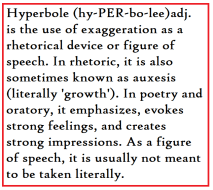
hyperboleAnd the prose … words with impact, words combined with other words, set down in such a way that I feel silly even thinking I can write such works. Thankfully, my editor weeds out pretentious hyperbole and slaps me back to reality.

I am working on the first draft of a character-driven novel, trying to get the plot out of my head and noting events in the outline as I go. I have the first quarter nailed down reasonably well.

The midpoint of a novel is the longest section. It covers the second and third quarters of the book’s overall word count. In this section, emotions intensify, and the action does too. From this point on, the forces driving the plot are a train on a downhill run, picking up speed, and there is no stopping it or turning back now. The characters continue to be put to the test, and subplots kick into gear.

From the midpoint to the final plot point, pacing is critical.

And this is where I struggle as a writer.

These events tear the heroes down. They must break them emotionally and physically so that in the book’s final quarter, they can be rebuilt, stronger, and ready to face the enemy on equal terms.

As you approach the midpoint of the story arc, personal growth begins to drive the plot.

In the story I am plotting, two of the protagonists lose faith in themselves. One has a crisis of conscience, which is the result of the inciting incident. The other carries on doing what hasn’t worked in the past. Both have heavy burdens of guilt that must be shed.

Each must learn to live with who they are rather than who they wish to be.

Other characters know bits of the history behind these two, but no one knows everything. In this section, information must gradually emerge, showing the reader why they react the way they do. In the process, the four will learn to work together, setting aside their insecurities. By the final act, they must be hardened, able to function as a team, and determined to finish the task.
Book- onstruction-sign copyThis part of the novel is often difficult for me to get right. The protagonist must be put through a personal crisis. Their inner world must be shaken to the foundations.

But what is the lynchpin of this disaster?

It must be a logical outcome of events to that moment. My editor must be able to say, “Yes, that’s how it would happen.”

So now I need a terrible event. At this point in laying down the story, I don’t know what it is, but somehow, the protagonists have suffered a severe loss.

  • How are they emotionally destroyed by the events?
  • How was their own weakness responsible for the bad outcome?
  • How does this cause the protagonist to question everything they once believed in?
  • What gives them the courage to keep on going?
  • How does this personal death and rebirth event change them?

The midpoint is crucial because the truth underlying the conflict now emerges. As we approach the final act, the enemy’s weaknesses become apparent. My protagonists will overcome their crises and exploit those flaws—I just don’t know how yet.

I do know part of the plot. I have plans for the midpoint’s second half, an event where the protagonists must make hard decisions. They will scrape up the courage to do what must be done.

I haven’t discussed the enemy much, but I haven’t neglected them. They have had their day in the sun, and to my protagonists, it looks like the opponent has won. But even so, our heroes will reach into the depths of their souls and do what must be done, make that final effort.
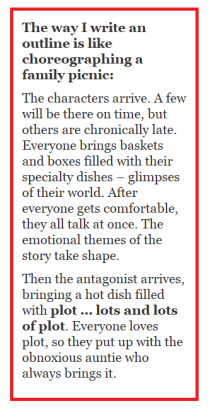
plotting as a family picnicThis emotional low point is necessary for our characters’ personal arcs. It is the place where they are forced to face their weaknesses and rebuild themselves. They must discover they are stronger than they ever knew.

At this point in the novel, if I have done it right, my editor (who is also my first reader) will be worried, hoping everyone can hold it together long enough to overcome the hardships.

Fingers crossed, and with a fully fleshed-out outline at hand, it might happen. My writing group is a resource I will turn to as the plot progresses. They will kindly keep me from going off the rails, and that is a blessing.

Other posts in this series:

Pacing part one: foreshadowing and the strong opening #amwriting | Life in the Realm of Fantasy (conniejjasperson.com)

6 Comments

Filed under writing

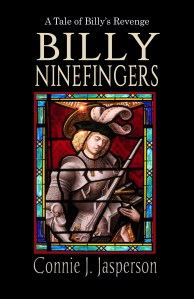
Billy Ninefingers #amreading #books

My newest novel in the Billy’s Revenge series, Billy Ninefingers is now on sale at Amazon and all other fine eBook sellers. A literary fantasy, it is set in the same world as Huw the Bard and features some of the same characters.

Billy’s story was begun in 2010. My original view of my protagonist, Billy MacNess, was more callous, more of a pirate than he is today.

For a variety of reasons, I set Billy’s novel aside and moved on to writing Huw the Bard, which was a more intriguing story to me at the time. (I’m still in love with Huw.) Billy appears toward the end of Huw’s book, much as he is today. But, instead of going back to Billy’s story, I wrote three more novels in the Tower of Bones series, and many short stories, both contemporary and fantasy.

In the back of my mind, I always intended to get back to Billy’s story, but never really did until 2016. Over the course of six years, he had appeared in several other works set in his world, which set him and his circumstances more clearly in my mind.

I went back and pulled the original manuscript out of storage and rediscovered a character I had always loved but didn’t know well. With a new goal in mind, I began rewriting it.

Billy’s story is more lighthearted than Huw’s, but it does have its dark moments. His loyal dog, Bisket, keeps him grounded when everything is about to fly apart.

Excerpt: About an hour before supper, a knock sounded on his door. “Captain Billy! It’s me, Willie.”

“I know it’s you. What do you need?”

“It’s Bisket. He almost fell down that old, dry well again. This time he was chasing a skunk.”

Billy opened the door, gazing down at his beloved yellow hound of uncertain parentage. All he needed was for the pooch to fall into a well. Reaching down with his good hand, he scratched Bisket’s ears, receiving an apologetic lick in return. “What am I going to do about you?”

“I only just barely caught him by the tail before he went down.” Willie shivered. “I don’t think Slippery Jack would have let you lower him down it again, just to save a dog that’s stupid enough to keep falling down the same well.”

Billy laughed. “You’re probably right. Lay some boards over it. I’ll do something about it next week, once I’ve healed up a bit. There’s a lot of things I’ve let go around here, and filling in that abandoned well is one of them.” Considering all the projects he and his dad had never gotten around to, he thought that at least he wouldn’t be too bored.

Billy’s story had always intrigued me. I admired how he took the hard knocks life had handed him and made them into something he could live with. The people he attracted were wonderful, and in so many ways their story was his story too.

And so, dear readers, Billy Ninefingers is now available at all fine eBook retailers, including Amazon, Kobo, Nook, Apple, and many, many more. He is also available in paper from Amazon.


But first, THE BLURB:

Billy Ninefingers knows three things.

First, the feud that cost him the use of his sword hand is not over.

Second, if he doesn’t pull himself together and become the leader the Rowdies need, he’ll lose everything his father left him.

Third, despite Bastard John’s best efforts, there’s no way he’ll ever take up farming.

All he needs is a plan, a mountain of luck, and the love of a good woman.

Well, she doesn’t have to be good, but a few scruples would make a nice change. A plan would be nice too, since luck is never on Billy’s side.

Billy Ninefingers knows one thing.

He’s doomed.


Billy Ninefingers is available at Amazon for $2.99 Kindle and $12.99 paperback

Not a fan of Amazon? Click here to purchase Billy Ninefingers from these fine Ebook Sellers for $2.99

5 Comments

Filed under writing

#amwriting: Literature and Language: Gormenghast and Lyonesse

Two series of fantasy novels that had a profound effect on me as a reader are the Gormenghast series of novels, written by Mervyn Peake, and The Lyonesse Trilogy by Jack Vance. Both series are literary, yet still fantastic,

They are both considered a fantasy of manners, yet they are wildly different from each other. Both combine the comedy of manners with the hero’s journey of traditional high fantasy. Gormenghast is dark and gothic, while Lyonesse is set in an alternate Arthurian world.

The Washington Post Book World had this to say about the Gormenghast series:  “This extravagant epic about a labyrinthine castle populated with conniving Dickensian grotesques is the true fantasy classic of our time.”

The immense, labyrinthine Hayholt, featured in Tad Williams’ epic masterpiece, Memory, Sorrow, and Thorn, seemed reminiscent of castle Gormenghast to a certain extent when I first read that series. I don’t know if Williams is a Gormenghast fan–I’ve never asked him, although I should. I do know he is not afraid to write great literary fantasy.

Vance’s vision of Lyonesse has influenced fantasy literature in the most subtle of ways, creating a canon for those who write alternate Arthurian history that is nearly set in stone.

Wikipedia says, Vance builds the history of his world using layers of facts, names and religions taken from various European cultures — Greeks, Romans, Celts, pre-Carolingian French and Spanish “kingdoms” etc., and adding in places and peoples imagined by those same cultures — Atlantis, Ys, Avalon, Formor and so on. This fantastical/factual mix is used to ground his tale in “history.” It also seems to give some of the same depth that a longer series of books might develop where place, relationships, and plot are built up over time (as in Thomas Hardy’s “Wessex” or Trollope’s “Barsetshire”). It seems to provide the believability that develops where a story is set in a well-known, well-defined historical setting as if the reader holds merely a hitherto untold story.

These complicated, convoluted books are not for everyone. They are beautifully written, but the less perceptive, more impatient type of reader will find Gormenghast confusing and plot-less. Despite being a dark, Gothic fantasy, the prose is literary.

For some casual readers, both Gormenghast and Lyonesse will be considered too heavy on the descriptions.

But for those readers like me, readers who adore beautiful prose, deep, involving books, and darkly baroque settings peopled with unforgettable characters, these two watershed works strike a chord deep within the soul.

These books must be savored, experienced in the fullest sense of the word. The focus is on the breathtaking visual descriptions, and while I am thrilled by it, the verbal beauty of Mervyn Peake and Jack Vance’s prose is what will leave many impatient modern readers cold.

When you are reading these novels, the journey itself is more important than the destination. While Gormenghast is often compared to Tolkien’s work, there is little similarity between the two, other than they are both extremely well written fantasy, written by authors with a good command of the English language and all its nuances.

Literature drives changes in language and is in turn driven by changes in language. For me, Gormenghast is a surreal, visual painting, created of beautifully crafted words.  The prose of Jack Vance’s Lyonesse is equally beautiful, describing a time and place that never was but could have been.


Sources and Attributions:

Wikipedia contributors, “Lyonesse Trilogy,” Wikipedia, The Free Encyclopedia, https://en.wikipedia.org/w/index.php?title=Lyonesse_Trilogy&oldid=782651719 (accessed June 4, 2017).

Wikipedia contributors, “Titus Groan,” Wikipedia, The Free Encyclopedia, https://en.wikipedia.org/w/index.php?title=Titus_Groan&oldid=769262142 (accessedJune 4, 2017).

Cover illustration of the 1983 trade paperback edition of Lyonesse by Jack Vance. Low-res scan for fair use purpose. Illustration by James C. Christensen. via Wikimedia Commons https://en.wikipedia.org/wiki/File:Vance-Lyonesse.jpg

Titus Groan, by Mervyn Peake, cover art also by Mervyn Peake, published by Eyre & Spottiswoode 1946 https://en.wikipedia.org/w/index.php?title=Titus_Groan&oldid=769262142 (accessed June 4, 2017).

2 Comments

Filed under writing

The Gormenghast Novels

Gormenghast trilogyOne of the strangest, most compelling series of books I ever read was the literary, yet still fantastic, Gormenghast series of novels, written by the late Mervyn Peake during the years following WWII.

It has been said of this series that it is the the first true fantasy of manners.

Satirizing the manners and affectations of a social class or of multiple classes, often represented by stereotypical stock characters, a “Fantasy of manners” is fantasy literature that owes as much or more to the comedy of manners as it does to the traditional heroic fantasy of J. R. R. Tolkien and other authors of high fantasy.

The Washington Post Book World had this to say about the series:  “This extravagant epic about a labyrinthine castle populated with conniving Dickensian grotesques is the true fantasy classic of our time.” 

The immense,  labyrinthine Hayholt, featured in Tad Williams’ epic masterpiece, Memory, Sorrow, and Thorn,  seemed reminiscent of castle Gormenghast to a certain extent, when I first read that series. I don’t know if Williams is a Gormenghast fan–I’ve never asked him, although I should. I do know he is not afraid to write great literary fantasy.

The Gormenghast series opens with the book, Titus Groan. Although the book takes its name from Titus, and he  is technically the main character, the book only covers the first two years of his life. Titus-the-baby appears infrequently throughout, but is still an integral part of the plot, inciting change in the routine of the immense castle. At the age of one, he becomes the Earl of Groan. The great library has been deliberately burned, sending the old earl, his father, spiraling into madness. He vanishes, having been eaten by Death Owls (!) while attempting to hide the body of his murdered chef, Swelter, who was murdered by another of his servants.

225px-Titus Groan novel

Mark Robertson’s cover illustration for the Mandarin paperback edition

Wikipedia gives this as the plot introduction for the series: “The book is set in the huge castle of Gormenghast, a vast landscape of crumbling towers and ivy-filled quadrangles that has for centuries been the hereditary residence of the Groan family and with them a legion of servants.

“The Groan family is headed by Lord Sepulchrave, the seventy-sixth Earl of Groan. He is a melancholy man who feels shackled by his duties as Earl, although he never questions them. His only escape is reading in his library. His wife is the Countess Gertrude. A large-framed woman with dark red hair, she pays no attention to her family or the rest of Gormenghast. Instead, she spends her time locked away in her bedroom, in the company of a legion of cats and birds, the only things toward which she shows affection.”

GORMENGHAST-72dpiThese complicated, convoluted books of nonsense are not for everyone. They are beautifully written, but the less perceptive, more impatient type of reader will find this series confusing and plot-less. Despite being a dark, Gothic fantasy, the prose is literary. For some casual readers, this work will be considered too heavy on the descriptions  It may also contain too many “ten-dollar” English words–words of more than one syllable.

But for those readers like me, readers who adore beautiful prose, deep, involving  books, and darkly baroque settings peopled with unforgettable characters, the Gormenghast Novels strike a chord deep within the soul. These books must be savored, experienced in the fullest sense of the word. The focus is on the breathtaking visual descriptions, and while I am thrilled by it, the verbal beauty of Gormenghast is what will leave many impatient modern readers cold.

For me, Gormenghast is a surreal, visual painting, created of beautifully crafted words., and frankly, I say to hell with anyone who mocks my enjoyment of it.

Mark Robertson's cover illustration for the Mandarin paperback edition

Mark Robertson’s cover illustration for the Mandarin paperback edition

Just like J.R.R. Tolkien’s work, when you are reading this series of novels, the journey itself is more important than the destination. And speaking of J.R.R.–I just want to say that while this series is often compared to Tolkien’s work, there is very little similarity between the two, other than they are both extremely well written fantasy, written by authors with a good command of the English language and all its nuances.

Mervyn Peake was famous as a writer, portrait artist, and illustrator, and was considered brilliant in both fields. In 1959, after the publication of the third of his Gormenghast novels, the dreadful disease of dementia finally claimed him, eventually robbing him of his ability to draw.

Tragically Peake was unable to live normally for the last years of his life, and died in a nursing home 1968 at the age of 57, having left his literary masterpiece uncompleted in the way he had envisioned it.


10 Comments

Filed under Adventure, Books, Fantasy, Humor, Literature, Publishing, Self Publishing, Uncategorized, writer, writing