 Both poetry and prose have evolved over the last two-hundred years. In 1816 words were art, and they were frequently crafted into a piece as if you were decorating a house–the author placed them in such a way as to be artistic as well as impactful.
Think Dickens, and Byron, and Mary Shelley.
A random comment in another forum led me to think about poetry and prose, which of course, led to a blog post.
Much of the time, modern poetry doesn’t rhyme. And even without rhyme, some authors write poetic narratives. But if it doesn’t rhyme, what makes poetry “poetic?” And where does it fit into modern prose?
As always, I turned to the “college of the internet” and did some research. Wikipedia, the fount of all knowledge says, “Poetry is a form of literature that uses aesthetic and rhythmic qualities of language—such as phonaesthetics, sound symbolism, and metre—to evoke meanings in addition to, or in place of, the prosaic ostensible meaning.” (End quoted text.)
In his April 19, 2012 blog post for Harriet, (the Poetry Foundation’s blog for poetry and related news) titled The Difference Between Poetry and Prose, Martin Earl says a number of things.
Quote: “Prose is all about accumulation (a morality of work), while poetry as it is practiced today is about the isolation of feelings (an aesthetics of omission).”
Well, that didn’t help. Taken individually, I understood each of the words that make up that sentence. Unfortunately, I didn’t understand what Mr. Earl intended to say by combining them so incomprehensibly.
I realized I would need an interpreter. So I prevailed upon Stephen Swartz, author, and professor of English at a well-known university, who is also a good friend of mine.
Stephen explained what Martin Earl may have meant: “I can only take that to mean that the writing of prose is, e.g. like a description, a compiling of details. a productive activity. I agree with the definition of poetry being a limitation of words/details in the service of presenting something esoteric such as thoughts and feelings, abstractions rather than the concrete. For prose, we accumulate words; for poetry we try to do more with less.”
Now THAT made sense to me.
However, I did find a portion of Martin Earl’s post to be understandable without the aid of my friendly neighborhood professor. Toward the middle, he explains the evolution of how poetry became prose, places it in a historical context and then explains that continued progression away from poetic prose in modern literature.
Earl writes, “In both classical and modern languages it is poetry that evolves first and is only much later followed by prose, as though in a language’s childhood, as in our own, poetry were the more efficient communicator of ideas.”
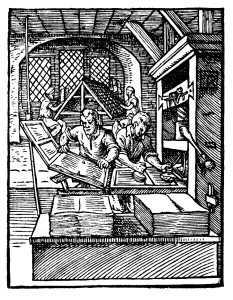
He goes on to say, “With the spread of the printing press after 1440, texts no longer had to be memorized. Poetry’s inbuilt mnemonics (rhyme, meter, refrain, line breaks) were no longer essential for processing and holding on to knowledge. Little hard drives were suddenly everywhere available.” (End quoted text.)
That makes complete sense to me on a personal level. I can remember anything I can set to a rhyme, or make into a song.
I believe using rhymes as mnemonics (which is defined as a memory device) is fundamental to human nature. We developed complex languages within our tribal communities while we were still in Africa, before the great diaspora. It was there in the earliest stages of our humanity that we gained the ability to describe the wider world to our children. With that, we had the capacity to understand and describe the motives of another person. We could explain the how and why of an incident. We saw the divine in every aspect of life and developed mythologies combining all of these concepts to explain the world around us and our place in it.
 We learned ways to memorize and pass on ideas as abstract as legends or sagas. Through those stories, we could learn larger lessons from the mistakes and heroism of our ancestors. My theory is that we developed poetry at the same time as we developed language.
Every tribe, every culture that ever arose in our world had this same tradition of passing down stories and legends using rhyme and meter. Rhyme combined with repetition and rhythmic simplicity enabled us to remember and pass on wisdom to our children.
Wikipedia describes poetry as: “a form of literary art in which language is used for its aesthetic and evocative qualities in addition to, or in lieu of, its apparent meaning.”
It also describes prose as: “the most typical form of language. The English word ‘prose’ is derived from the Latin prōsa, which literally translates as ‘straight-forward.’”
In poetry, saying more with fewer words forces us to think on an abstract level. We have to choose our words based on the emotions they evoke, and the way they portray the environment around us. This is why I seem to gravitate to narratives written by authors who are also poets—the creative use of words elevates what could be mundane to a higher level of expression, and when it’s done well, the reader doesn’t consciously notice the prose, but they are moved by it.
We have no need to memorize our cultural knowledge anymore, just as we no longer need the ability to accurately tally long strings of numbers in our head. We’ve begun to like our books with straightforward prose. Flowery language is no longer acceptable in the books we read.
This is also true of modern poetry.
The love of poetry continues, and new generations seek out the poems of the past while creating powerful poetry of their own.
Authors craft incredible narratives, often without knowing they are poets.
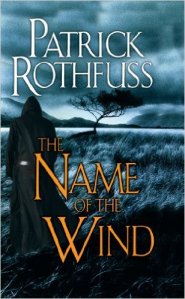 Patrick Rothfuss, The Name of the Wind:
“It was night again. The Waystone Inn lay in silence, and it was a silence of three parts.
“The most obvious part was a hollow, echoing quiet, made by things that were lacking. If there had been a wind it would have sighed through the trees, set the inn’s sign creaking on its hooks, and brushed the silence down the road like trailing autumn leaves. If there had been a crowd, even a handful of men inside the inn, they would have filled the silence with conversation and laughter, the clatter and clamor one expects from a drinking house during the dark hours of night. If there had been music…but no, of course there was no music. In fact there were none of these things, and so the silence remained.” (End quoted text)
That is some powerful prose. It is both straightforward, and poetic.
That is where craft comes in. Choosing words for the emotions they evoke and the way they portray the environment the author has imagined is what lends great narrative prose its power. We can still appreciate beauty combined with impact when it comes to our prose.

 Once again, I am embarking on a new project, and struggling with getting the idea down on paper. Therefore, it’s time for me to face the demon that haunts all writers–that moment when you have the brilliant idea, and know what you have to say, but can’t find the words. I will defeat this demon by embracing it into submission, as I do all who oppose me. (Did I just say that? Oh, well. It’s out there now.) I will write, no matter how hokey and lame my prose is, because revisions are my friends, and I am not afraid to write garbage. I just need to get these ideas down and on paper before I forget them.




 Life in the Realm of Fantasy