Tag Archives: style

Narrative Voice: Beliefs and Attitudes #amwriting

Today’s post is the final installment of the four-part series on narrative voice, or an author’s style. Over the last two weeks, we’ve discussed how the way we use punctuation, and how the habitual choice of words shapes the tone of our writing. Every story, poem, newspaper article, or song has a recognizable fingerprint: the author’s voice and style.
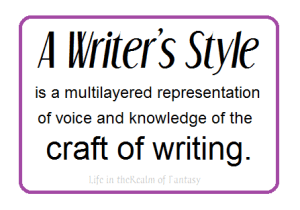
a writer's styleThe final aspect of narrative voice or style arises from our deeply held beliefs and attitudes. We may or may not consciously intend to do it, but our convictions emerge in our writing, shaping character and plot arcs.

Our values can be seen in the contrasts we employ in the setting and how we portray the layers of society. They are shown in the arc of growth we give each character, changing for good or bad as the story progresses. As a reader, I believe the characters are the story, and the events of a narrative exist only to force growth upon them.

The way a world is portrayed reflects the author’s innermost concerns and values. The author might have considered them at length or might not. Possibly they couldn’t explain them. However, these core values remain beneath the surface and influence how the written characters see their world. They shape a narrative’s actions, and reactions.

The hero embodies what the author considers right and moral, and the antagonist embodies the author’s perception of wrongdoing.

Some authors see good and evil as black-and-white. One is good or evil, with no middle ground. Often a simple story of good and evil is precisely what I want.

Other authors are more aware of the gray area between and write wonderful novels exploring that concept. Sometimes I’m looking for that sort of story.
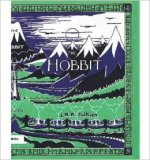
the hobbitWhether or not we are aware of it, our societal and religious beliefs emerge in our writings. Subliminal fears of climate change, worry about a world on the edge of economic collapse, and our hopes for a better society come out in our plot arcs and world-building. How they appear may have nothing to do with real life, but they add color to our worlds.

In many ways, writing is undertaking a pilgrimage. We go on pilgrimages for many reasons, often in search of moral or spiritual wisdom. Sometimes we go to a location that has significance to our beliefs and faith. Other times, we undertake an inner, symbolic journey. Creating a world and writing a society involves delving into our principles and values.

People are often changed by a journey to a different place and seeing how other people live. We evolve as human beings through our experiences and interactions.

Writing has the same effect on us as a journey. In the process of writing, we explore experiences that affect our emotions and challenge our values. We usually don’t realize it, but writing helps us identify our beliefs and firms our understanding of our own moral code. It’s as if we are brainstorming our principles and philosophies.
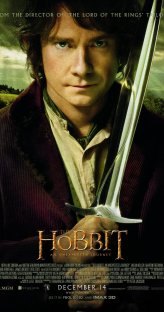
the hobbit movie posterWe each grow and develop in a way that is unique to us. Sometimes we are hardened by our life experiences, and our protagonists have that jaded sensibility. Other times, we accept our own human frailties, and our protagonists are more forgiving.

J.R.R. Tolkien wrote fantasy showing the evil the world was capable of in the first part of the 20th century. He also laid bare his hope for a better future. He understood how the masses are swayed by charismatic leaders and how tenuous the difference between what is right and moral and that which is expedient and easily glossed over can be.

He understood how societies lie to themselves and justify their actions.

In the Hobbit, J.R.R. Tolkien put a face on the Engine of War. In our real world, the Engine of War is an evil that seems unstoppable, an endlessly hungry entity made up of faceless soldiers acting on commands given by faceless leaders, committing unspeakable violence against faceless people.

Tolkien had been a soldier in one of the most horrific conflicts in history – World War One. He wrote about his experiences and how they had changed his values but framed them in fantasy. Bilbo is yanked out of his comfortable middle-class existence. Over the next year, he experiences many things. Where once our hobbit was a little xenophobic and slightly disdainful of anything not of The Shire, he discovers that other cultures are as valuable as his, meeting people of different races whom he comes to love and trust. He experiences the loss of friends and gains compassion.

When Bilbo returns to the Shire, he is a different person than he was when he ran out his front door without even a handkerchief.

Whether we write fantasy, literary fiction, comedy, sci-fi, or romance—our characters must be changed by their experiences. Their long-held views of morality must be challenged or put to the test. How they are changed by these experiences is up to us.

Most of us don’t intentionally write to preach to people, but the philosophies we hold dear do come out.
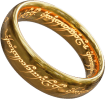
959px-One_Ring_Blender_Render

The One Ring, Peter J. Yost, CC BY-SA 4.0

The works that I love are those in which the events are the catalysts of personal growth for me, the reader, as well as the protagonist. In the process of writing, we might find ourselves looking at things differently. Our deeply cherished views might be challenged – and how will we react to that?

Historically, the authors whose works resonate down the centuries had opinions about politics, religion, and society in general. Their views were written into their work, sometimes more bluntly than others. Those values and motifs are why certain novels are considered classics despite having been written more than one or two centuries ago.

Wuthering Heights by Emily Bronte – Wikipedia challenges Victorian morality and addresses mental and physical cruelty, including domestic abuse.

A Christmas Carol by Charles Dickens – Wikipedia addresses society’s view of who is responsible for poverty and challenges the idea the poor are impoverished because they are lazy and deserve it.

The Hobbit by J.R.R. Tolkien – Wikipedia depicts how greed and selfishness are insidious and can destroy even good people. The Desolation of Smaug warns us against repeating the tragedies of WWI, which of course, we did, and do, and will do again.


CREDITS AND ATTRIBUTIONS:

Dustcover of the first edition of The Hobbit, taken from a design by the author, J.R.R. Tolkien.

The Hobbit – An Unexpected Journey, Theatrical release poster © 2012 New Line Cinema, Metro-Goldwyn-Mayer, WingNut Films, Distributed by Warner Bros. Pictures, Fair Use.
11 Comments

Filed under writing

Narrative voice: more words and how we choose them #amwriting

We all use the same words to tell the same stories.

Words-And-How-We-Use-ThemWhy do I say such a terrible thing? It’s true. All stories are derived from a few basic plots, and we have only so many words in the English language with which to tell them.
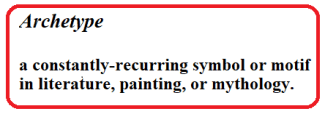
Plot Archetypes as defined by Christopher Booker in his work, The Seven Basic Plots:

  1. Archetype MeaningOvercoming the monster
  2. The quest
  3. Voyage and return
  4. Comedy
  5. Tragedy
  6. Rebirth
  7. The Rule of Three

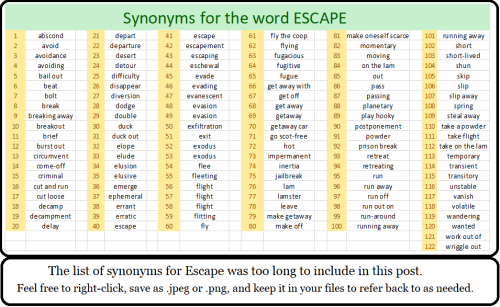
The words we habitually use to show a scene will be recognizable as our voice. I know a lot of words and their alternatives, and I try to learn new ones every day. But I often find myself stuck when pounding out a first draft, using a particular word over and over. My brain knows what I’m trying to say but can’t be too creative.

Fortunately, this sin is noticeable when I get to revisions, and that is when I hunt down the synonyms, alternative words that mean the same thing.

Words with only a small number of alternatives become problems for me. This happens in my work with the word sword. The other options for the word sword are many. Unfortunately, most describe a specific type of weapon – epee, rapier, cutlass, saber/sabre, etc.

Unfortunately, my swords are only broadswords or claymores. Thus, I am limited to sword, blade, weapon … you get the drift. The lack of alternatives does one good thing, though – it keeps me from indulging in long, drawn-out fight scenes.

Other words cause problems too. Sometimes, the thesaurus available in my word-processing program doesn’t offer me enough substitutes to make a good choice.

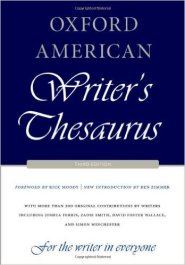
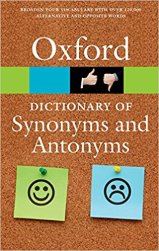
ozford-american-writers-thesaurusFor that reason, I have the Oxford Dictionary of Synonyms and Antonyms and Oxford American Writers’ Thesaurus near to hand. I also have a book called Activate, written by Damon Suede, a thesaurus of verbs, actions, and tactics. I refer to these books when I must search for an alternative to a word I am leaning too heavily on.

Which happens far too often.

Memory is a mushy thing. I prefer a hard copy reference book rather than the internet, as I remember what I read on paper better than what I read on screen. However, the internet is a perfectly reasonable cost-free alternative. I get sidetracked too easily when doing research on the net. Hard copies of reference books encourage me to do the research and get back to work.

So, we know that we all tell stories with fundamentally similar plots, and we all must use words with the same meanings.

But we sound different on the page. Why is this?

The way we habitually write prose is our unique voice. The word I select might mean the same as the one you use, but I might choose a different form.

When we write, we build a specific image for our readers. We select words intentionally for their nuances (distinctions, subtleties, shades, refinements, etc.).

We use words that convey our vision of the mood, atmosphere, and information. You and I may be writing the same plot, but my vision of it is different from yours.

Let’s write a story about a hero who finds a magical object and an evil entity who wants possession of it.

J.R.R. Tolkien may have used that plot in the Lord of the Rings, but what we write will be ours, not his. Your words will show the hero in a setting and communicate an atmosphere completely different from what my words express.

How do our word choices add depth to world-building? An example might be sound or color. How do you show an intense sound or color? Loud is a word that works for both sound and color.

Thunderous conveys more power than loud, even though they mean the same thing in the context of sound.

Lurid conveys more power than loud, and in the context of color, they mean the same thing.

Let’s look more closely at the word loud:

  • oxford_synonym_antonymNoisy
  • Boisterous
  • Deafening
  • Raucous
  • Lurid
  • Flamboyant
  • Ostentatious
  • Thunderous
  • Strident
  • Vulgar
  • Loudmouthed

These are only a few of the many options we have to work with. The website www.PowerThesaurus.com lists 1,992 alternatives for the word loud.

How about the word “disruptive”? It’s a straightforward, blunt adjective. Maybe you don’t want to say it bluntly. Would you choose the word obstreperous or the more common form, argumentative? They mean the same thing, but both begin with a vowel and feel passive.

Hostileconfrontationalsurly—many common words convey the information that a person is being difficult in a simple but powerful way. The synonyms for disruptive express many different shades of meaning and might be more appropriate to your narrative.

Use your vocabulary but don’t get too creative. Do your readers a favor and use words that most people won’t need a dictionary to understand.

I don’t mean to say that rarely used words should be ignored. Our prose should never be “dumbed-down,” but we shouldn’t use big words just to show how literate we are.

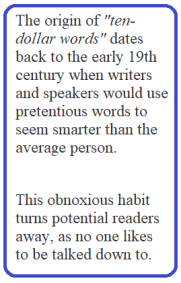
ten dollar wordsMy Texan editor refers to those convoluted morsels of madness as “ten-dollar words.” A ten-dollar word is a long obscure word used in place of one that is smaller and more well-known. This is why I probably wouldn’t use obstreperous in place of disruptive, but I might choose rebellious or confrontational.
The problem is, sometimes, I can’t find the right words to show what I envision. I can see it but can’t express it. It annoys me to leave that scene and come back to it later.

Other times I have all the words I need, and those are the best days, the days I am glad to be a writer.

We imagine and assemble stories for other people’s entertainment. We paint those images with words carefully chosen to draw the most precise framework for the reader to hang their imagination on.

The real story happens inside the reader’s head.

The words we choose make the reader’s experience richer or poorer. As a reader, I live for those books written by authors who are bold when they choose their words.

Escape-synonyms-01112021LIRF

17 Comments

Filed under writing

Style and Voice #amwriting

The literary voice is the way a story is told. Literary voice has been compared to  music. We’ve all noticed how a well-known song can sound so different, depending on who is performing it. The words are the same, the basic melody is there, but some performances shine while others miss the mark.

The distinctive style of each writer forms when we engage personally with a topic and impart our personality to that piece of literature. We are each islands in a vast sea of writers, and the view from our place in the universe is slightly different from that of our fellows.

Therefore, how we convey what we see and imagine has an identifiable sound that is ours alone. Phrasing, word choices, these are the recognizable sounds of our literary style. Our habitual writing style is our unique fingerprint, the author’s voice.

However, voice is often what we love or hate about a certain author’s work. Editors for publications are readers who are looking for the best work to publish in their magazine or anthology. If a story has great characters and a good story arc, voice is what will attract or repel them.

These are the holy trinity that combines to make a classic tale:

  • great characters
  • unique voice
  • gripping plot

You may have noticed plot is listed last—and it is last for a reason. If the characters are not engaging and the writer’s style isn’t to my taste, the plot alone won’t sell me that book.

What is the writer’s voice? Wikipedia, the fount of all knowledge, says:  The writer’s voice is the individual writing style of an author, a combination of their common usage of syntax, diction, punctuation, character development, dialogue, etc., within a given body of text (or across several works).

Don’t confuse lazy writing with style. Lazy writers

  • Use too many quantifiers “It was really big.” “It was incredibly awesome.”
  • “Tell” the story instead of showing it: “Bert was mad.”
  • Swamp the reader with minute details: “Mary’s eyebrows drew together, her lips turned down, and her cheeks popped a dimple.”
  • Ruin the taste of their work with an avalanche of prettily written descriptors: “-ly” words
  • Have their characters natter on about nothing just to kill time. It doesn’t show them as human, it shows them as boring.

Lazy writers don’t realize how smart their readers are. We don’t have to offer up every minute detail of breakfast. Broad strokes will paint the picture.

In contrast, some enthusiastic writers go overboard in trying to create beautiful, literary prose. They’re confusing contrived writing with literary style.

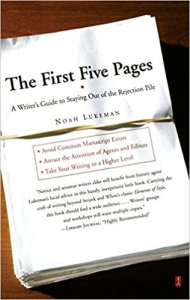
Literary agent, Noah Lukeman, in his book The First Five Pages: A Writer’s Guide To Staying Out of the Rejection Pile, says, “All of these writers think they add a distinctive flavor, a ‘richness’ to the text, but more often than not they are just indulging themselves—thus the term ‘self-indulgent’—a common symptom of the over-styled manuscript.”

As we grow in the craft, our style becomes more cohesive, less self-indulgent, and more able to reflect our ideas. Certain habits will remain, the core of who we are and how we express ourselves. This is our voice.

It gets a little confusing when voice can also mean the tense in which the narrative is presented. English is a language where one word can have a multitude of meanings and context is critical. Some writers incorrectly use the terms voice and point of view interchangeably, so when they are talking about third voice, they mean Third Person Point of View. In this case, they are speaking of the main character’s voice, how she tells her story.

In this aspect, there are two voices to every narrative: the author’s voice, and the character’s voice.

Narration is the use of a written or spoken commentary to convey a story to an audience. Perspective and voice are components of the narrative.

Wikipedia says “Narrative point of view or narrative perspective describes the position of the narrator, that is, the character of the storyteller, in relation to the story being told. It can be thought of as a camera mounted on the narrator’s shoulder that can also look back inside the narrator’s mind.” It also explains that a narrative consists of three components:

  • Narrative point of view: the perspective (or type of personal or non-personal “lens”) through which a story is communicated.
  • Narrative voice: the format (or type presentational form) through which a story is communicated.
  • Narrative time: the grammatical placement  of the story’s time-frame in the past, the present, or the future.

Anyone who is a member of a critique group is regularly beaten over the head with certain basically good, but occasionally clichéd, rules. Improperly applied, this mindless interpretation of proper grammatical style can inhibit an author’s growth.

These rules are fundamentally sound but cannot be rigidly applied across the board to every sentence. For editing and also for writing, when I have questions about grammar I rely on The Chicago Manual of Style, but I also understand common sense.

Again it’s all about context. Sometimes a sentence that is grammatically incorrect sounds better, especially in dialogue. The bold writer sometimes breaks grammatical laws to write great books. How they habitually break those laws is their fingerprint, their style.

English is a living language. As such it is in a continual state of evolution and phrasing that made sense one-hundred years ago may not work well in today’s English. We may be writing a period piece, but we are writing it for modern readers. Nevertheless,

  • You can split an infinitive: it is acceptable to boldly go where you will.
  • You can begin a sentence with a conjunction if you so choose. And no one will die if you do.

How you apply grammar, the words you gravitate to, the point of view you work best in—these are the identifiable aspects of your voice as an author. Your writing style is a combination of how you speak through your pen or keyboard, how you craft your prose—your voice.

As Noah Lukeman’s book tells us, your author’s voice should not be so distinct and loud that it makes your prose obnoxious. Sharing your work in the early stages with an interested reader who will be honest with you can help you avoid some of the pitfalls in developing your style and voice. Find a good editor you can work with, one who will understand your stylistic choices, but who will guide you away from bad writing. This is money that is well spent.

Write something new every day, even if it is only a paragraph. Of all the advice I have to offer, this is the most important because if you don’t write, you have no voice, no style, no story.


Credits and Attributions:

Quote from The First Five Pages: A Writer’s Guide To Staying Out of the Rejection Pile, by Noah Lukeman, published by Simon and Shuster, © 2000.

Wikipedia contributors, “Narration,” Wikipedia, The Free Encyclopedia, https://en.wikipedia.org/w/index.php?title=Narration&oldid=777375141 (accessed Mar 18, 2018).


12 Comments

Filed under writing

#Writerlife101 Day 7: Worst writing advice #amwriting

Writing advice is good because beginning authors need to learn the craft, and simple sayings are easy to remember. They encourage us to write lean, descriptive prose and craft engaging conversations. The craft of writing involves learning the rules of grammar, developing a wider vocabulary, learning how to develop characters, build worlds, etc., etc. Authors spend a lifetime learning their craft and never learn all there is to know about the subject.

Writing advice is bad because it is so frequently taken to extremes by novice authors armed with a little dangerous knowledge.

  • Remove all adverbs.
    This advice is complete crap. Use common sense and don’t use unnecessary adverbs.
  • Don’t use speech tags.
    What? Who said that and why are there no speech tags in this drivel?
  • Show, Don’t Tell. Don’t Ever Don’t do it!

Quote from Susan Defreitas for Lit Reactor: Sure, hot tears, a pounding pulse, and clenched fists can stand in for sadness, fear, and anger. But that type of showing can not only become cartoony, it doesn’t actually show what this specific character is specifically feeling. In order to do that, you either have to relay the thought process giving rise to those emotions or you should have already set up some key bits of exposition.

  • Write what you know.

Well, that takes all the adventure out of writing. Did Tolkien actually go to Middle Earth and visit a volcano? No, but he did serve in WWI, and lived and worked in Oxford, which is not notable for abounding in elves, hobbits, or orcs. Your life experiences and interests shape your writing, but your imagination is the fuel and the source of the story.

  • If you’re bored with your story, your reader will be too.

Quote from Helen Scheuerer for Writer’s Edit: Your reader hasn’t spent the last year or more combing through your novel like you have, so that’s just silly. I’ve seen this advice everywhere in the last year, and it bothers me – it just doesn’t take into consideration how hard writing is. Yes, we love it, yes, we don’t want to do anything else, but that doesn’t mean it’s not a challenge at times, it doesn’t mean that it’s not work.

Bad writing advice goes on and on.

Kill your darlings. It’s true we shouldn’t be married to our favorite prose. Sometimes we must cut a paragraph or chapter we love because it no longer fits the story. But just because you like something you wrote doesn’t mean you should cut it. Maybe it does belong there—maybe it was the best part of that paragraph.

Cut all exposition. So, why we are in this handbasket, and where we are going? Some background is essential. How you deploy the exposition is what makes a great story.

Bad advice is good advice taken to an extreme. It has become a part of our writing culture because all writing advice has roots in truth.

  • Overuse of adverbs ruins the taste of an author’s work.
  • Too many speech tags can stop the eye, especially if the characters are snorting, hissing, and ejaculating their dialogue.
  • Too much telling takes the adventure out of the reading experience.
  • Too much showing is boring and can be disgusting. Find that happy medium!
  • Know your subject . Do the research and if necessary, interview people in that profession. Readers often know more than you do about certain things.

New authors rely on handy, commonly debated mantras because they must educate themselves. Unless they are fortunate enough to be able to get a formal education in the subject, beginning authors must rely on the internet and handy self-help guides to learn the many nuances of writing craft. These guides are great, useful books, but they are written by people who assume you will use common sense as you develop your voice and style.

Hack writers bludgeon their work to death, desperately trying to fit their square work into round holes. In the process, every bit of creativity is shaved off the corners, and a great story with immense possibilities becomes boring and difficult to read. As an avid reader and reviewer, I see this all too often.

Great authors learn the craft of writing and apply the advice of the gurus gently, producing work that stays with the reader long after the last line has been read.


Credits and Attributions:

The Ten Worst Pieces of Writing Advice You Will Ever Hear (and Probably Already Have), by Susan Defreitas April 11, 2014, https://litreactor.com/columns/the-ten-worst-pieces-of-writing-advice-you-will-ever-hear-and-probably-already-have,  © 2016 LitReactor, LLC (Accessed 05 February 2018.)

The Worst Writing Advice, by Helen Scheuerer, https://writersedit.com/fiction-writing/worst-writing-advice/, Writer’s Edit Copyright © 2018. (Accessed 05 February 2018.)

46 Comments

Filed under writing

What language are we speaking today? Understanding Stephen Swartz

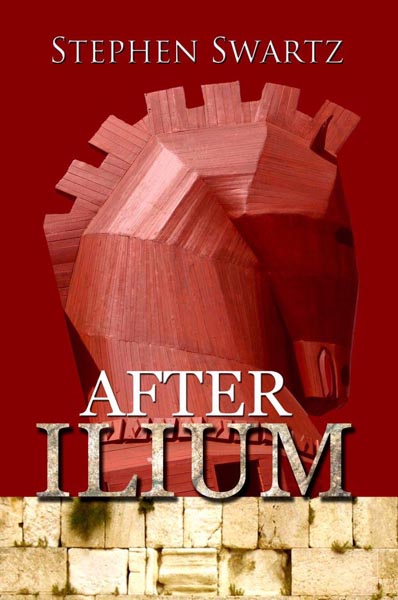
Swartz_After Ilium_FrontCvr_200dpi_3inOne of my dearest friends is author Stephen Swartz, a true renaissance man. A professor of English and a linguist, Stephen’s work frequently involves foreign settings, and with those exoctic places, come the exotic languages. He has devised a chart (you know how happy charts make me) to keep the many languages his characters speak straight. It is an easy way to do so, and is a great way to make what editors call a ‘style guide’ when you are working in different worlds.

For more about Stephen’s chart and his books, go to:

DeConstruction of the Sekuatean Empire: What language are we speaking today? Understanding the worlds of Stephen Swartz

But what if we don’t work in earthly languages? What if our reality is, in truth, UNreality?

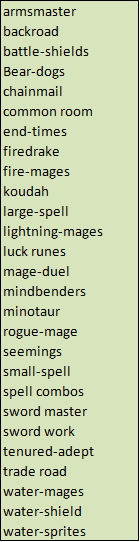
All the more important to make yourself a style guide for your project. This will ensure consistency, especially when you are making up words.  Readers will notice inconsistencies, even though we as authors rarely see them in our own work.

Some things to consider:

What words need to capitalized at all times? Temple

What words must be hyphenated at all times? Battle-mage

How do you spell that city’s name again? Ludwellyn

Stephen’s Chart can be adapted to create a style guide for your work quite easily.  I think I’ll have me some fun with excel today!

style guide for Neveyah


2 Comments

Filed under Battles, Books, Fantasy, Humor, Literature, Publishing, Self Publishing, Uncategorized, writer, writing