Tag Archives: the inferential layer of a story

Exploring Depth #writing

We often talk about the story arc and its component parts and features. But to explain depth, we must put all the parts and pieces back together and examine the story as a whole.
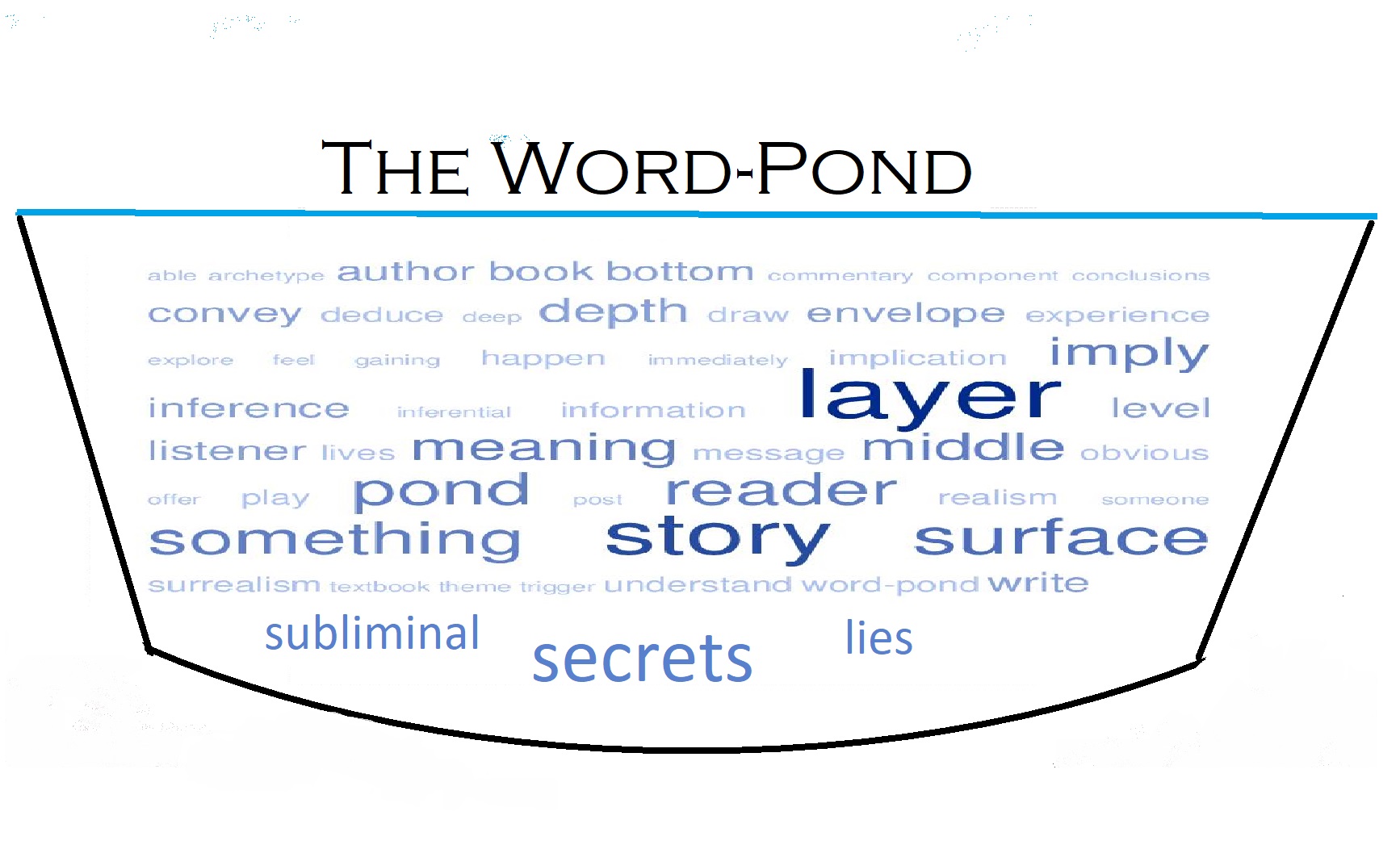
A story is like a pond filled with layers and meanings.So, what is depth, exactly? It is the component of the narrative that supports and informs the story’s arc. It is also comprised of layers.

When you look at a pond, you see the surface. It could be calm, or if a storm is brewing, it will be ruffled and moving. But it is deep and conceals many things beneath that calm surface. A narrative also comprises several layers.

Layer One is the surface layer. It is the Literal Layer; the what-you-see-is-what-you-get layer. The components of the story’s surface are:

  • the setting
  • the action
  • the visual/physical experience of the characters as they go about their lives.

When the reader sees something, they recognize it. Trees are trees, a bus is a bus, and we all recognize those aspects of worldbuilding. The surface layer also shows the characters’ actions in real time, so readers immediately feel they know what is going on.
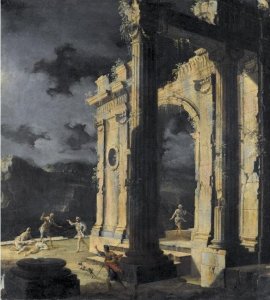
The reader sees it when a figure steps from behind a tree. A gun was drawn and fired. What happened was clear and easy to understand.

Some authors play with the surface layer, choosing realism, surrealism, or a blend of the two.

  • Realism is serious, a depiction of what undisputedly is.
  • Surrealism takes what is real and warps it to convey a subtler meaning.

Layer Two: The layer below the surface is an area of unknown quantity. It is the Inferential Layer. This is the layer where inference and implication come into play, hints and allegations.

We show why the gun is drawn. Clues and hints imply reasons for the characters’ actions. The author offers ideas to explain how the shooter arrives at the point in the story where they squeeze the trigger, and the reader makes assumptions.

Authors drop clues and hints but allow the reader to draw their own conclusions.

In a murder mystery, the path to the moment the trigger was pulled is complicated. Perhaps no one knows exactly what led to it, but the author’s task is to include enough clues, hints, and allegations without an info dump.
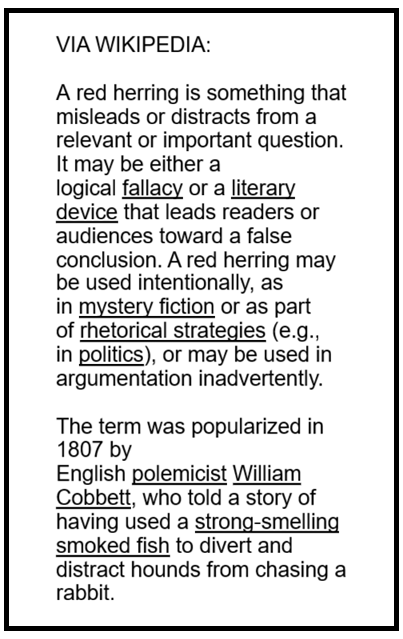
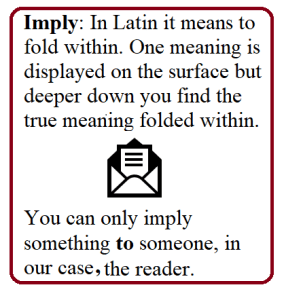
A red herring is something that misleads or distracts from a relevant or important question. Authors insert clues that imply something to the reader, hints that may be red herrings. One meaning is displayed on the surface, but by using hints and clues, we enclose the secrets within the narrative. The message (inference) in the story is conveyed to the reader, but only if they pick up on the clues.

The author has to do their job well because we want the reader to feel as if they have earned the information they are gaining. They must be able to deduce what you imply. A reader can only extrapolate knowledge from the information the author offers them.

Serious readers want this layer to mean something on a level that isn’t obvious. They want to experience that feeling of triumph for having caught the meaning. That surge of endorphins keeps them involved and makes them want more of your work.

This middle layer is, in my opinion, the toughest layer for an author to get a grip on.

Below and sort of intertwined with the middle layer is Layer Three, the Interpretive Layer. This layer will be shallower in Romance novels because the point of the book isn’t a deeper meaning. It’s interpersonal relationships on a surface level. However, there will still be some areas of mystery that aren’t spelled out completely because the interpersonal intrigues are the story.

Books for younger readers might also be less deep on this level because they don’t yet have the real-world experience to understand what is implied.

Layer three is comprised of:

  • Themes
  • Commentary
  • Message
  • Symbolism
  • Archetypes

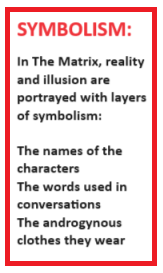
Symbolism in the matrix is shown by meaningful names and objects in the environment.This layer is sometimes the easiest for me to discuss because we are dealing with finite concepts. Theme is one of my favorite subjects to write about, as is symbolism. It is an aspect of the narrative I haven’t talked about lately, nor have I really discussed conveying messages. Archetype is another facet I haven’t discussed recently, and yet it is a fundamental underpinning of character building.

For the purposes of this post, commentary is the word that describes the expression of opinions or explanations about an event or situation. Perhaps you are writing a narrative that explores current real-world morals and hypocrisies. If so, this is an important aspect of your work.

I am looking forward to gaining a deeper understanding of the subtler, more abstract aspects of writing as I explore narrative depth. As always, when I come across a book or website with good information, I will share it with you.

In the meantime, a good core textbook is “Story” by Robert McKee. If you haven’t already gotten it, you might want to. It can be found second-hand at Amazon.

Another excellent and more affordable textbook for this is “Damn Fine Story” by Chuck Wendig. Chuck delivers his wisdom in pithy, witty, concise packets. If you fear potty-mouth, don’t buy it. However, if you have the courage to be challenged, this is the book for you.
2 Comments

Filed under writing

Mood and Atmosphere: Where Inference meets Interpretation #amwriting

Mood and atmosphere exist in the inferential layer of the story. They are two separate but entwined forces that form subliminal impressions in the awareness of the reader. Where you find atmosphere in the setting, you also find mood in the characters.

What is the interpretive aspect of this layer? The author’s job is to deploy inference in such a way that the reader can interpret their intention. That is, they can effortlessly understand where the author was going with that thought.

The aspects we call mood and atmosphere are created by inference, a word-picture that is shown rather than bluntly stated. Writers infer, readers interpret.

Books have two authors. The first author is obviously the writer.

The second author is intangible, a ghost, and doesn’t influence the story until after it is published. It is the intended reader whose imagination will recreate the story as they read the words on the page.

How a reader feels the emotion and absorbs the atmosphere is the interpretive layer.

Emotion is a constant force in our lives. On the page, it must be truthful, or it becomes maudlin. A character’s mood is an emotional backdrop that begins with their experiences. It encompasses the reader as they immerse themselves in a story.

The way emotional inference is conveyed on the page determines the success or failure of the author’s intention.

Let’s explore one of the all-time masterpieces of atmosphere and mood: Wuthering Heights, the 1847 gothic novel by Emily Brontë.

The word Gothic in a novel’s description immediately tells us we are looking at a dark, moody piece set in a stark, desolate environment, and it will include some supernatural elements. In classic Gothic novels, these elements are circumstantial and often later proven to be figments of the protagonist’s mind.

Also, the word Gothic in a novel description means a story will be fraught with emotion and intensity, and take place in a dark, forbidding setting.

The general mood is heavily influenced by other aspects of the narrative: setting, theme, ambiance, and phrasing. These form the inferential layer.

A reader’s perception of a setting’s atmosphere is affected by a character’s emotions. Emotion, as written on the page, is the character’s experience of transitioning from the negative to the positive and back again.  As the characters’ emotions change from high to low throughout the story, the overall mood is influenced.

This is because the reader has suffered through emotions in real life and can easily recognize and relate to a character’s experience.

Consequently, for the atmosphere and mood of a setting to affect the reader’s interpretation of a story, the author must convey a sense of familiarity to a place the reader has never been.

“Familiar” does not mean safe or comforting. It means the elements of the environment are recognizable on a subliminal level, something the reader can understand without having experienced it, or being bluntly told.

In this layer, visual objects in a room or an outdoor space color the atmosphere and affect the characters’ moods. Gothic atmosphere has a winter feel to it even in summer.

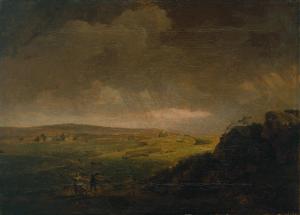
Barren landscapes and low windswept hills feel gothic to me.

The atmosphere/mood dynamic of any narrative is there to make the emotional experience of the story specific. The atmosphere of a setting is not a substitute for emotions that an author can’t figure out how to write.

However, creating the right atmosphere leads to shaping the characters’ overall mood, and the right mood can help you articulate the specific emotions.

In Wuthering Heights, the atmosphere contributes to and magnifies certain characters’ obsessions. It lays bare hate, selfishness, and revenge. These elements are demonstrated in the course of exploring the destructive power of obsession and fixated, unchanging love.

The Gothic aspects of Wuthering Heights expose how upper-class Victorians benefitted from and perpetuated gender inequality within their society.

Environmental symbols are subliminal landmarks for the reader. In Wuthering Heights, the landscape is comprised primarily of moors. These desolate places are wild and starkly beautiful. They are vast expanses, which although high in elevation, are dangerously boggy. These moorlands are often made of peat, a high-carbon-content muck composed of decomposing vegetation.

About Dartmoor, via Wikipedia:

Much more rain falls on Dartmoor than in the surrounding lowlands. As much of the national park is covered in thick layers of peat (decaying vegetation), the rain is usually absorbed quickly and distributed slowly, so the moor is rarely dry. In areas where water accumulates, dangerous bogs or mires can result. Some of these, topped with bright green moss, are known to locals as “feather beds” or “quakers” because they can shift (or ‘quake’) beneath a person’s feet. Quakers result from sphagnum moss growing over the water that accumulates in the hollows in the granite. [1]

Historically, we find many accounts of people drowning in bogs. Moorlands, as a setting for a novel, present a recognizable danger. People and animals are known to stumble into waterlogged places and drown. Becoming lost and drowning is a possibility that is raised several times throughout the novel.

Thus, the environment of the moors sets the mood by raising the specter of murderous, untamed nature. Setting the story in that environment immediately implies infertility and death.

Another aspect of this setting that contributes to the atmosphere is graphic: Moorland is visually the same wherever you look, so the lack of visible landmarks makes it easy to lose your way. In this novel, the setting conveys a powerful emotion: the fear of being both lost and trapped.

Most of the action occurs at Wuthering Heights, which is the manor from which the novel takes its name. The neighboring house, where other scenes are set, is Thrushcross Grange. They are neighbors, but a vast stretch of moorland lies between the two houses. These houses are far from neighboring towns, in their words, “far from the stir of society.” Distance emphasizes the loneliness of the setting.

Thinking about and planning symbolism in an environment is key to developing the general atmosphere and affecting the mood. Brontë made each house symbolic of its inhabitants.

Those who reside at Wuthering Heights tend to be intense, wild, and passionate—untamed like the moorlands.

Conversely, the characters living at Thrushcross Grange are closer to town, and are passive, civilized, and calm.

That underlying threat of danger in the environment affects the mood and emotions of the characters. It affects the overall atmosphere of the novel.

Thus, before we are even introduced to the characters’ motives or the plot, we find that the mood/atmosphere of Wuthering Heights is dark and gothic.

And so, to wind this up, atmosphere and mood are intertwined. They are fundamental aspects of the inferential and interpretive layers of the story and getting them right takes a bit of work.

But making the effort can result in a novel that is deep and well worth reading.


Credits and Attributions:

[1] Wikipedia contributors, “Dartmoor,” Wikipedia, The Free Encyclopedia, https://en.wikipedia.org/w/index.php?title=Dartmoor&oldid=959755158 (accessed June 14, 2020).

Moorland Landscape with Rainstorm by George Lambert. Wikimedia Commons contributors, “File:George Lambert – Moorland Landscape with Rainstorm (1751).jpg,” Wikimedia Commons, the free media repository,https://commons.wikimedia.org/w/index.php?title=File:George_Lambert_-_Moorland_Landscape_with_Rainstorm_(1751).jpg&oldid=234912081 (accessed July 16, 2019).

Wikimedia Commons contributors, “File:An architectural capriccio with figures amongst ruins under a stormy night sky, oil on canvas painting by Leonardo Coccorante.jpg,” Wikimedia Commons, the free media repository, https://commons.wikimedia.org/w/index.php?title=File:An_architectural_capriccio_with_figures_amongst_ruins_under_a_stormy_night_sky,_oil_on_canvas_painting_by_Leonardo_Coccorante.jpg&oldid=291488853 (accessed May 19, 2019).

6 Comments

Filed under writing

The Inferential layer: A wide layer of unknown quantity #amwriting

The inferential layer lies just below the surface of our story. Here is where we attempt to show why Chekhov’s gun hangs on the wall. We insert small clues in the early pages, hints that raise the specter of chance, the suspicion that the weapon will be fired.

We offer conflicting hints that might explain who will fire it and show their journey to the place in the story where they squeeze the trigger.

Who will take down the gun and fire it? Which of several possibilities will be the victim?

And when the gun finally does go off, everything that has gone before, all the hints and allegations—it all comes together in the reader’s mind.

The inferential layer of any story, not just murder mysteries, is the realm of conjecture and suggestion.

In this part, the pieces of the puzzle are placed on the table, seemingly randomly.

We insert implications along with a few false clues about the core problem, hoping the reader will draw their own conclusions. If they guess wrong, we hope they aren’t disappointed.

The path to the moment of the final event should be logical but complicated. Perhaps no one knows precisely what led to it, but your task is to fill the layer with clues, hints, and allegations.

This is where inference and implication are good tools to employ. If the reader is given hints regarding the deeper story, they will stay with it, hoping to uncover more information on the next page or the one after that.

Humans are as curious and tenacious as cats.

The apparent story is displayed on the surface. Perhaps you bought a sci-fi book featuring a murder on a space station.

As you get deeper into the narrative, you might discover a profound philosophical story folded within the outward mystery.

Consider an envelope with the word “murder” written on it.  Inside is a folded note, and when that is opened, you find only one word, “avenger.” The story of the murder is the plot, the outer shell.

Folded within the first note is a smaller folded note, one with the words “honor,” “betrayal,” and “abandonment” written on it. We’ll say that in this case, an officer’s overconfidence is the “what,” the mechanism that starts the dominoes falling toward the inciting incident.

And finally, the core note, folded in the shape of an origami swan. When you unfold it, you see only one word: “sin.”

Whose sin? What sin? Why is it so egregious that someone had to die for it? The dominoes stop falling here: An older brother’s death in a preventable accident is the why of the story.

In reading the inferential layer of the story, readers open the metaphorical envelope, draw out the notes, and begin deducing the meaning of what is about to happen.

Serious readers want this layer to mean something on a level that isn’t obvious. They want to experience that feeling of triumph for having caught the meaning. That surge of endorphins keeps them involved and makes them want more of your work.

Murder is not confined to political thrillers and cozy mysteries. It’s an event that can be written into any kind of setting, from romance to sci-fi to fantasy, and makes for brilliant westerns.

In this story, grief is our theme. Grief is an emotion common to the human experience, and one we can all relate to.

But it’s not the only theme in this story. There could be one or more supporting themes, all of which add substance and depth to it:

  • Ambition
  • Fall from Grace
  • Redemption
  • Coming of age
  • Alienation/loneliness
  • War
  • Bullying/Abuse

Supporting themes are shown through:

  • Actions taken by the characters
  • Random thoughts and conversations
  • Symbolic settings/places
  • Allegorical objects deliberately placed within the setting

Symbolism in the visual setting can reinforce the overall theme and the subthemes. Dark objects, sharp objects, photographs, private mementos—take, for example, a locket containing the picture of a deceased brother as a young cadet.

These are subtle nuances and don’t work well if they are shoved out into the open.

Imagine: the MC is dressing for her shift. She picks up the locket, opens it, and gazes at the picture before she closes it and puts it around her neck, concealing it under her shipsuit. She goes to her job on the bridge, where she does the work of a science officer, and the day begins uneventfully. The reader is introduced to the other players, all of whom seem like good people with no dark secrets.

The scene with the locket is a good clue that some more profound event is in the works.

Getting the hints into the story so that they are just visible but not glaring requires thought and careful planning.

We have to be cautious about how we apply this layer. Not too much, because readers of all genres love to puzzle things out for themselves.

Yet, we need to insert some clues as to the fundamental cause of the murder, or the reader will be left with the dreaded “WTF?” reaction—something we never want.

This layer is best applied in the second draft of a novel. Because the story is written, you know just what clues the reader will need.

Foreknowledge is good. Armed with the logical plot, the author can instill the subtler hints and also insert the occasional misdirection while keeping the flow of the story plausible.

That quality of intrigue and plausibility is what I as reader will seek out when I am in the mood for a good sci-fi novel.

One of my favorite sci-fi novels is 1992’s Starliner, by David Drake, an action adventure written in a leisurely style. Politics, racism, and the privilege of class and wealth dominate this tale of a cruise gone bad.

Drake applies the sort of attention to detail that one might find in an Agatha Christie novel, if she had decided to write political thrillers set in interstellar space. In some ways, despite being solidly sci-fi, it’s a period piece.

When I look at the many layers that make up this book, I see a classic example of the inferential layer done right.

8 Comments

Filed under writing