
Negative feedback is a necessary part of growth. When we submit our work to a critique group, we will get feedback, some of which will be perceived as unfavorable. The writing life is a rough playground. Some of us handle rejection or a thorough critique with grace and dignity, and others make an uncomfortable situation worse.
 We are emotional creatures. When we are just starting on this path, getting an unbiased critique for something you think is the best thing you ever wrote can feel unfair.
But it isn’t. No one writes perfect work all the time, but we have our moments of brilliance. It’s just they are moments, and some areas of a good work-in-progress will need revising and line editing to make it shine. A writers’ group can help you find the weaknesses in the overall story arc.
I have received my share of criticisms and rejections. At first, it hurt, but after a while of growing, I began to see what my fellow writers were trying to show me. I also began to understand why my work didn’t win prizes or get accepted into publications.
When I look back on my earlier work it is clear that I had no idea what a finished manuscript should look like. Nor did I understand how to get it to look that way. I didn’t understand how to write to a specified theme.
I didn’t understand how vital a strong, unifying theme is when an editor assembles the works of many authors into one book or magazine. That lack of knowledge on my part was why my work was rejected.
In those days, I always received a standard rejection that boiled down to “Sorry, but no.”
In my experience, boiler-plate rejections are bad only because they don’t tell us why the piece wasn’t acceptable. You never know whether the piece was merely not what the editor was looking for that day or if it is something they wouldn’t take for any reason.
When my work doesn’t make the cut, it’s because I have misread what the editors wanted, not quite nailing the theme as firmly as other writers did. Or, maybe what I thought was a great plot was cliched and boring, or perhaps it was too farfetched.
The key to peace of mind is to understand that most of what you write will NOT resonate with everyone you submit it to. Even if your writing group loved it.
If you put two people in a room and hand them the most thrilling novel you’ve ever read, you’ll get two different opinions.
Good rejections offer a little encouragement. “Try us again.” That means exactly what it says, so the next time you have something you think will fit with that anthology or magazine’s editor, send them a submission.
For me, the best kind of rejections are those that follow a story being optioned for an anthology, and then for one reason or another, the editor releases it back to you. Yes, it is disappointing when a story that was optioned doesn’t get printed after all, because money is nice. But they are good, because the editor liked it enough to option it, and if you handle that disappointment with grace, they will probably print the next story you send them.
I know it doesn’t make sense, but the more an editor writes in a letter about why they have rejected a piece, the more likely the author will be hurt and angry. This is because it’s a rejection and may contain details about why it wasn’t acceptable for that publication.
I once got a rejection from an anthology in the form of a terse note with one handwritten sentence, signed by the editor. “This subject has been done before.”
I was surprised by the curtness of the note, but after a moment, I realized that was just this particular editor’s way. He’s a busy man but took the time to send me a note instead of a form letter.
The single blunt sentence was a bit off-putting, but I learned a lot from that particular rejection. I have to try harder to imagine original situations instead of trying to write what I think will sell. I have to write from the heart and not worry about whether or not I’m writing a commercially viable story.
 I could have embarrassed myself and responded childishly, but that would have been foolish and self-defeating. When I really thought about it, I realized that particular plot twist had been done many times before. I thanked him for his time because I had learned something valuable from that experience.
I still love the concept of that story and the characters, but it’s an unmarketable story the way it was written. I have that tale in a file, and someday I will rewrite it, but with a more imaginative quest for the plot.
We must have a care about the way we behave. We are judged by how we act and react in every professional interaction. If you respond to a peer’s criticism without cooling down and thinking it through, you risk irreparable damage to your career.
You really don’t want your name to be a prominent entry on that editor’s “no way in hell” list.
An editor’s personal response that is a rejection means they have read your work and gone to some trouble for you.
DO NOT respond to the letter with a flame-mail, and DO NOT bad-mouth that editor or publication in your favorite writers’ forums. Editors are also authors, and they have friends who are authors. They may be involved with the same forums and all the many social platforms you are, so have a care what you say online.
They’re just like the rest of us—and they’ve experienced their share of rejection. If you respond publicly and unprofessionally, innocent bystanders will remember you and won’t want to work with you either.
But what if you received a request for revisions? Don’t be insulted! Celebrate and get cracking. Make those revisions. Do what that editor has asked and make no complaint.
When an editor wants changes, they like the work but can see how it could be made stellar. Be a professional and work with them. You might learn something.
Finally, never be less than gracious to the editor when you communicate with them.
 Treat all your professional contacts with courtesy, no matter how angry you are. Allow yourself some time to cool off. Don’t have a tantrum and immediately respond with an angst-riddled rant.
Sometimes we forget that how we interact online with others is public information and is visible to the world. When an interested reader Googles our author name, our online interactions and petty tantrums on Goodreads, Twitter, and every other public forum will be available for eternity.
Be respectful, even if the magazine or anthology you were rejected from is a minor player in the publishing world. Don’t say, “Well, that editor’s a nobody.”
Every famous editor/author begins as a nobody. All editors receive work that must be rejected.
How you respond to criticisms and rejections is where you have the chance to cross the invisible line between amateur and professional. Always take the high ground. If an editor has sent you a detailed rejection, it’s appropriate to respond with a simple “thank you for your time.”
 February here in my little town was dryer than usual, far less rainy than in other parts of the Northwest. We have seen the sun much more than usual over the last two weeks, which doesn’t bode well for the summer. I can’t help but think of the horrible heat we had last June. We don’t like it when it gets up to 110 degrees Fahrenheit (43.3 Celsius). It’s literally hell when you realize most people here don’t have air conditioning in their homes. Up through the 1980s, we never needed it, as summers rarely topped 80 degrees (26.6).
 Edible mushrooms of all sorts abounded. One I hadn’t seen before, the lion’s mane mushroom, was the central feature in the displays of the two local craft fungi growers. It was interesting to look at, but … no.
 On the writing front, last week was quite productive. I received the final chapters back for my blended novel from my editor and am now going over the manuscript one last time. This is a merging of the stories of two characters and the events of one overarching plot arc. It’s the parallel stories of two battle mages, a father and son, told from their unique generational viewpoints.
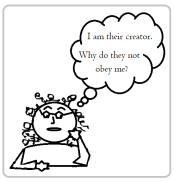 This merger of two novels into one involved cutting a number of chapters out of each and layering the stories so that the timeline moves forward at the right pace and doesn’t repeat what we already know.
 Also, I submitted my 2020 NaNoWriMo novel to
  Several years ago, I read a fantasy book where the author clearly spent many hours on the food of her fantasy world and the various animals. She gave each kind of fruit, bird, or herd beast a different, usually unpronounceable, name in the language of her fantasy culture.
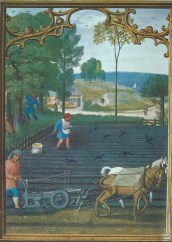 As many of you know, I have been vegan since 2012. However, during the 1980s, my second ex-husband and I raised sheep. Most of the meat we served in our home was raised on his family’s communal farm. Our chickens and rabbits roamed their yard and had good lives, and our family’s herd of twenty sheep was managed using simple, old-style farming methods.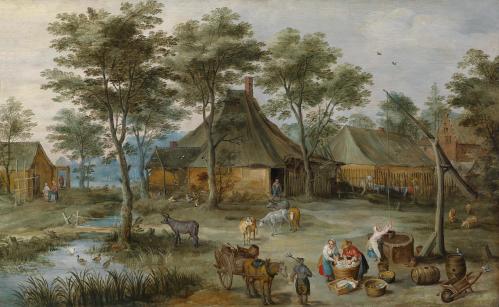
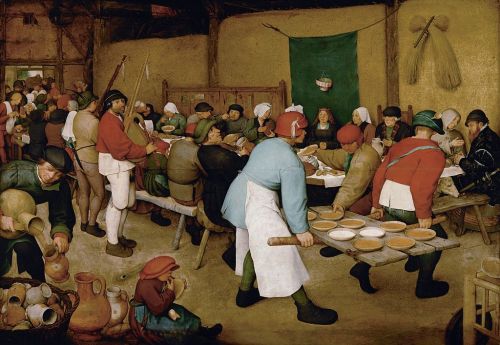
 Knowing what to feed your people keeps you from introducing jarring components into your narrative. In
  Let’s look at both the meanings and synonyms for the word consequences.
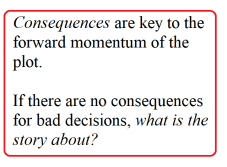 In the morning, after the unexpected (and unwanted) guests leave, he has two choices, to stay in the safety of Bag End, or hare off on a journey into the unknown. He chooses to run after the dwarves, and so begins the real story—how a respectable hobbit became a burglar and became a hero in the process.
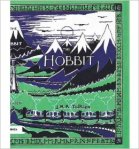 The blade does not acquire its name until later in the adventure, after Bilbo, lost in the forest of Mirkwood, uses it to kill a giant spider and rescue the Dwarves. This is when Bilbo’s decisions become more thoughtful, and his courageous side begins to emerge.
 But more importantly, even if you are traditionally published, you pay for the books you sell at shows.


 She also wrote the brilliant, hilarious standalone novel,
 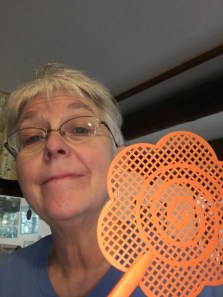 About Ellen King Rice: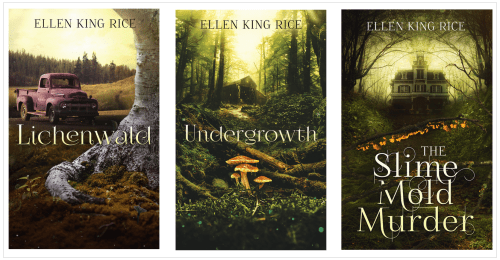
 In an instant, an entire manuscript is gone, wiping away hundreds of hours of work on their labor of love.
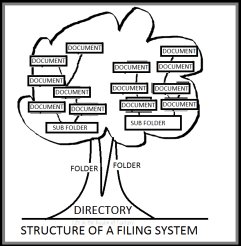
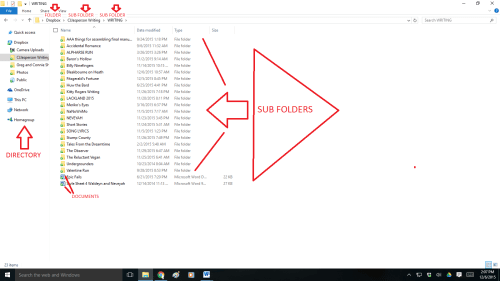 A filing system is quite simple, rather like a tree from the ground up. For most documents, my system is a standard office-type system that consists of:
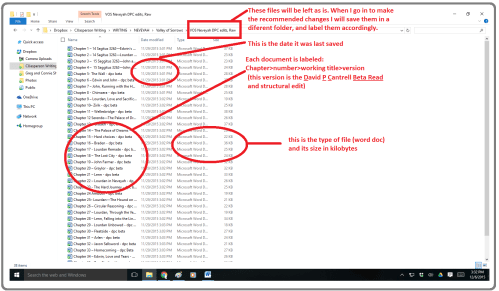 Name your files consistently and save each version in a separate folder within the master folder. Below is the master file for Valley of Sorrows.
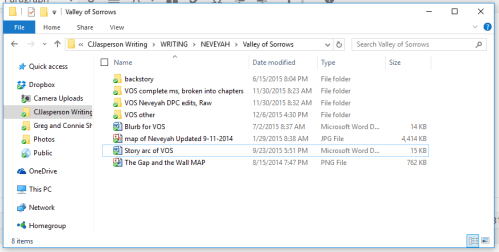 You may create many versions of your manuscript. YOU MUST manage your versions with meticulous care, or you will lose files, have to rewrite sections you just wrote, and which were brilliant, or any number of horrible, irritating situations.
 It’s a platform where you can advertise your books and discuss your interests, and most importantly, talk about what you are writing.
 Writing blogposts requires me to become a thinking author, as well as a pantser. I can write using the “stream-of-consciousness” method or from an outline of whatever interests me at the time. I do the research, and the post begins to write itself.
 I love to see what questions people might want to have answered. Sometimes topics crop up at my writing group that no one has an answer to, and then I get to do a little research—my favorite thing. Other times I find interesting questions in the writers’ forums that I frequent.
 If you feel that it’s too much work, consider how you update your other social media. Try posting a haiku, a tweet-length post, or an Instagram-style post once or twice a week. Any social media platform post can be converted to serve as a blog post.
 The rules of the category I am entering (Genre Fantasy/Sci-Fi) are clear: submissions must be of new, never-before-published novels. You can include only the first 25 pages of the manuscript, which will follow the synopsis.
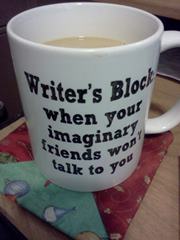 This is a task I would have found far more daunting without the support of my Tuesday morning writing group.
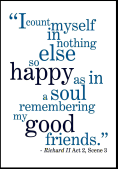 Attend a few meetings as an observer to see if this group is a good fit for you.
 Daily writing becomes easier once you make it a
 A prompt is a word or visual image that kick starts the story in your head. If you need an idea, go to
 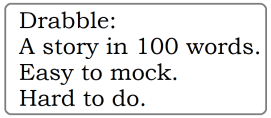 When you write to a strict word count limit, every word is precious and must be used to the greatest effect. By shaving away the unneeded info in the short story, the author has more room to expand on the story’s theme and how it supports the plot.


 Life in the Realm of Fantasy
