
Worlds are comprised of plants, animals, and geology. But if intelligent life forms live in that world, societies will also exist.
 We humans are tribal. We prefer an overarching power structure leading us because someone has to be the leader. We call that power structure a government.
As a society, the habits we develop, the gods we worship, the things we create and find beautiful, and the foods we eat are evidence of our culture.
If your society is set in modern suburbia, that culture and those values will affect your characters’ view of their world. You will still have to build that world on paper. But the information and maps are all readily available, perhaps in your own backyard.
But what if you are writing a sci-fi or fantasy novel? You must create the background material to show your world logically and without contradictions.
- Authors must know how society works in their created cities and towns.
- They must know the technology whether it is set in a medieval world or on a space station.
Merchants, scientists, priests, soldiers, teachers, healers, thieves – no matter the setting, each occupation has specific technology. They may also have a place in the social hierarchy, people they can and cannot associate with.
Society is always composed of many layers and classes. Below is a list of what I think of as “porch questions.”
This is the stage where I sit on the back porch and consider the world my characters will inhabit. Going somewhere quiet and pondering these questions brings clarity to my vague ideas.
The following is a list of points to consider when creating a society. Feel free to copy and paste it to a page you can print out. Jot the answers next to the questions and refer back to it if the plot raises one of these questions.
How is your society divided? Who has the wealth?
- Is there a noble class?
- Is there a servant class?
- Is there a merchant class
- Is there a large middle class?
- Who makes up the most impoverished class?
- Who has the power, men or women—or is it a society based on mutual respect?
Ethics and Values: What constitutes morality, and how do we treat each other?
- Is marriage required?
- How are women treated?
- How are men treated?
- How are the different races viewed?
- Is there a cisgenderbias, or an acceptance of different gender identities?
- How are same-sex relationships viewed?
- How are unmarried sexual relationships seen in the eyes of society?
- How important is human life?
- How is murder punished?
- How are betrayal, hypocrisy, envy, and avarice looked upon?
- What about drunkenness?
- How important is the truth?
- What constitutes immorality?
- How important is it to be seen as honest and trustworthy?
- What is taboo? What is “simply not done” among that group?
 Power structures are the hierarchies encompassing the leaders and the people with the power. Government is an overall system of restraint and control among selected members of a group. Think of it as a pyramid, a few at the top governing a wide base of citizens.
Religion is rarely a sci-fi trope but often figures prominently in fantasy work. In sci-fi, science and technology often take the place of religion or are at odds with it. They both have similar hierarchies and fanatics, but with different job titles.
Archbishop might be replaced with Head of Research and Development.
Cardinal or Pope might be replaced with General, Admiral, or CEO (Chief Executive Officer).
Level of Technology: What tools and amenities are available to them? What about transport?
- Hunter/Gatherers?
- Agricultural/farming?
- Greco-Roman metallurgy and technology?
- Medieval metallurgy and technology?
- Pre-industrial revolution or late Victorian?
- Modern-day?
- Or do they have a magic-based technology?
- How do we get around, and how do we transport goods? On foot, by horse & wagon, train, or space shuttle?
Government: There will be a government somewhere, even if it is just the local warlord. Someone is always in charge because it’s easier for the rest of us that way:
- Is it a monarchy, theocracy, or a democratic form of government?
- How does the government fund itself?
- How are taxes levied?
- Is it a feudal society?
- Is it a clan-based society?
- How does the government use and share the available wealth?
- How do the citizens view the government?
Crime and the Legal System: What constitutes criminal behavior, and how are criminals treated?
Foreign Relations: Does your country coexist well with its neighbors?
- If not, why? What causes the tension?
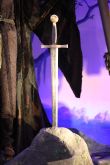
Excalibur, London Film Museum via Wikipedia
Waging War: This is another area where we have to ask what their level of technology is. It is critical for you, as the author, to understand what weapons your characters will bring to the front. You must also know what the enemy will be packing. Do the research and choose weaponry that fits your established level of technology.
- What kind of weaponry will they use?
- How are they trained?
- Who goes to battle? Men, women, or both?
- How does social status affect your ability to gain rank in the military?
A common trope in fantasy is magic, which brings up the need to train magic-gifted people. Do your sorcerers/mages rely on
- dumb luck and experimentation?
- apprenticing to sorcerers?
- training by religious orders?
- or as in the case of Harry Potter, a school of some sort? What are the rules of your magic?
The Church/Temple is the governing power in many real-world historical societies. The head of the religion is the ruler, and the higher one rises within the religious organization, the more power one has. The same is true of both universities and research facilities.
Power in the hands of only a few people offers many opportunities for mayhem. Zealous followers may inadvertently create a situation where the leader believes they are anointed by the Supreme Deity. Even better, they may become the God-Emperor/Empress.
 The same sort of God complex occurs among academicians and scientists. Some people are prone to excess when presented with the opportunity to become all-powerful.
If you were unsure what your plot was before you got to this stage, now you might have a real villain, one presented to you by your society.
What sort of society do you envision in your world? How does that culture shape your characters?
Being the leader means bearing responsibility when things go wrong. Scrambling to keep things afloat occurs far more often than basking in the glory.
When things are going well, it’s good to be the queen.
However, the Tiara of Shame weighs heavily when things go awry—and that is when we have a story.
 Some people call this writers’ block. I think of it as a temporary lull in my creativity.
 Sometimes, the problem is that your mind has seen a shiny thing, a different project that wants to be written, and you can’t focus on the job at hand. If that is the case, work on the project that is on your mind. Let that creative energy flow, and you can reconnect with the first project once the new project is out of the way.
 In my real life, getting our house ready to put on the market saps my creativity, but I am muddling along. Boxes here and there, getting rid of this and that—it’s exhausting. Sometimes I don’t have the energy to write.
 When we daydream, our brain is free to process tasks more effectively.
 Every writer knows the backstory is what tells us who the characters are as people and why they’re the way they are. At the beginning of our career, it seems logical to inform the reader of that history upfront. “Before you can understand that, you need to know this.”
 But knowing this and putting it into action are two different things.
 Be aware: if you are writing from an omniscient POV, this can be tricky and lead to “
 Romance novels average 50,000 to 70,000 words. In shorter novels, there is no room for sweeping, epic backstories. Instead, information and backstory are meted out only as needed through conversations and internal dialogue/introspection.
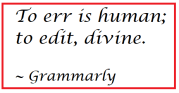 Even with all the effort I apply to it, my editor will find things that don’t matter. She will gently take a metaphorical axe to it, highlighting that which doesn’t advance the story or add to the intrigue.
 In his book,
 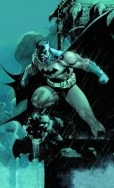 Batman is a
  Apollo 13 (April 11–17, 1970) was the seventh crewed mission in the
  Authors make readers when they do in-person book signings. We have the chance to connect with potential readers on a personal level, and they might buy a paper book. If we are personable and friendly, they might tell their friends how much they liked meeting us. Those friends will buy eBooks. (We hope!)


 She also wrote the brilliant, hilarious standalone novel,
 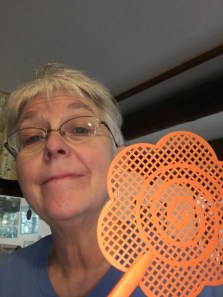 About Ellen King Rice: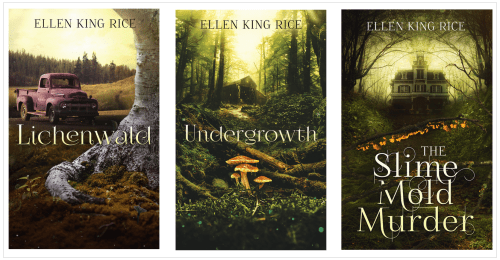
 A new year has begun, and open calls for spring and summer contests and anthologies will start appearing in various forums that I frequent. Finding places to submit your work can be challenging, but here are links to two groups on Facebook where publishers post open calls for short stories.
 My problem is this: all my stories want to grow longer than 1,000 words. It requires weeks of effort to get my work to fit within that parameter. So, I often write practice stories, limiting myself to telling the whole story in 1000 words or less. These practice shorts serve several purposes: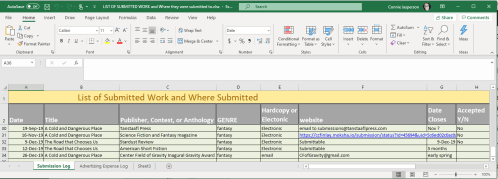
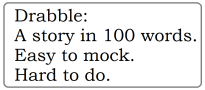 As a poet, I find it far easier to tell a story in 100 words than in 1,000. That 100-word story is called a
  That way, you won’t be left wondering how to attend a conference and still cover your household bills.
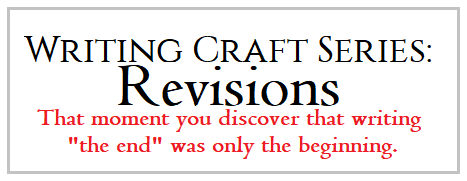 For me, revisions begin with the second draft and sometimes involve radical changes to the storyline or character arcs. I may take a manuscript through many drafts before finally getting the story right.
 NEVER DELETE months of work. Don’t trash what could be the seeds of another novel. Save it in an outtakes file and use it later. I give the subfile a name like HA_outtakes_20Dec2022. That file name tells me the cut chapters were last changed on December 20, 2022.
 Then, I give the second draft a new file name: Heavens_Altar_version_2, which becomes the version I work on out of the main file folder.
 Either way, the characters will be profoundly changed from who they thought they were on page one, becoming who they are when the final sentence is written. The character arc is formed by their experiences.
 True inspiration is not an everlasting firehose of ideas. Sometimes there are dry spells. If you take another look at the work you have cut and saved in an outtakes file, you might see it with fresh eyes. You might see the seeds of a different story, and the fire for writing will be reignited.
 When a manuscript comes across their desk, editors and publishers create a list of names, places, created words, and other things that may be repeated and pertain only to that manuscript. This is called a stylesheet.
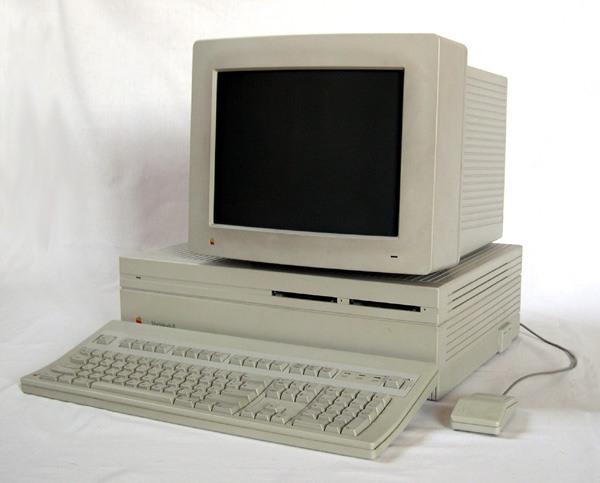 For short stories, the stylesheet will probably be a Word document. I have written them out by hand on occasion. You can create them in Google Sheets or Docs, which is free.
 Page Two: The projected story arc will be on page two of the workbook. I list each chapter by the events that need to be resolved at various points in the manuscript.
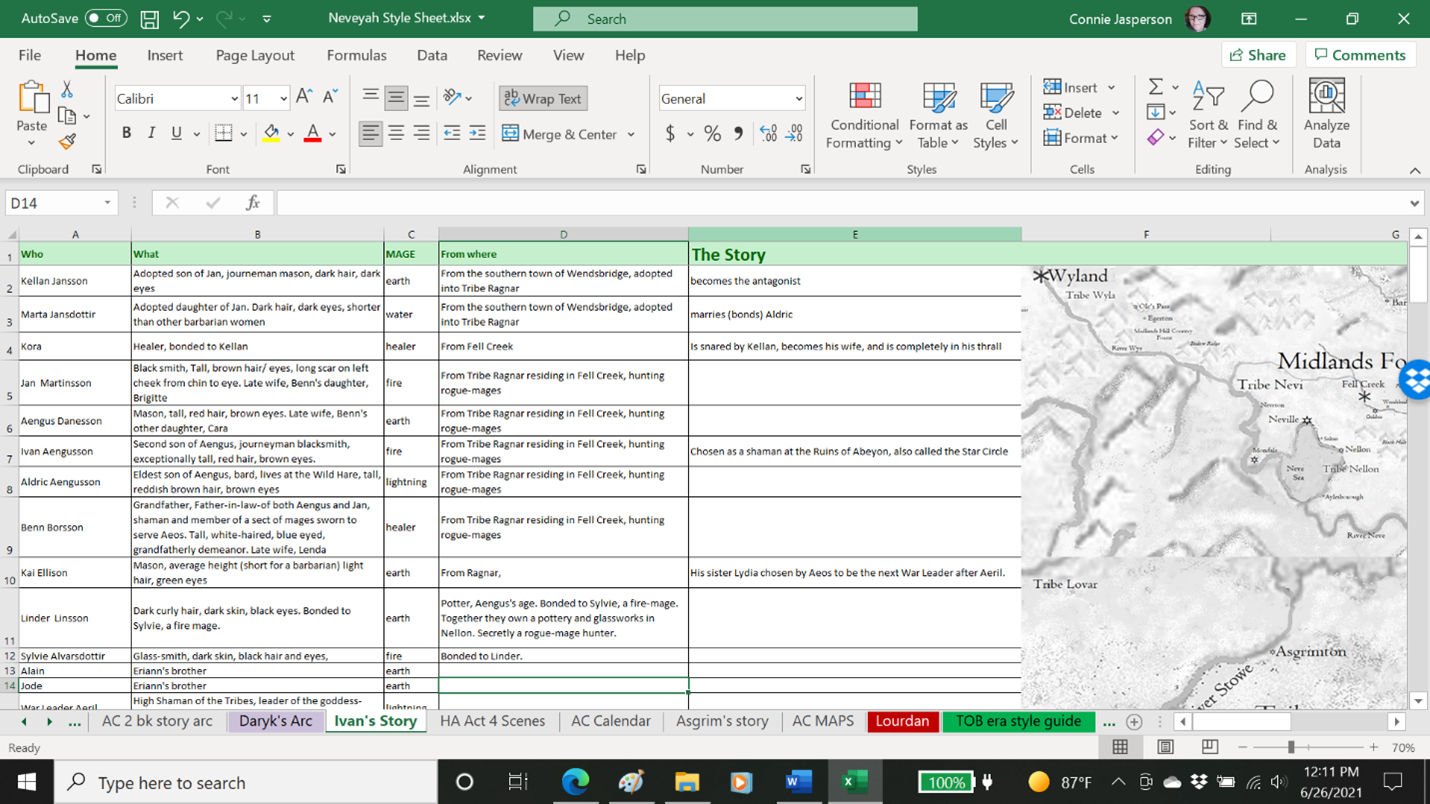 We never really know how a story will go, even if we begin with a plan. We will probably deviate some from the original outline. Usually, for me, the major events will remain as they were plotted in advance, even though side themes will evolve. The outline keeps me on track with length and ensures the action doesn’t stall.
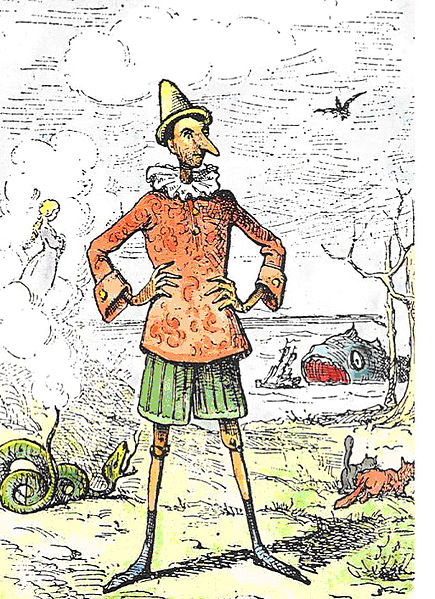 The plot usually evolves as I write each event and connect the dots. In one instance, it was completely changed. The original plot didn’t work at all, so drastic measures had to be taken.
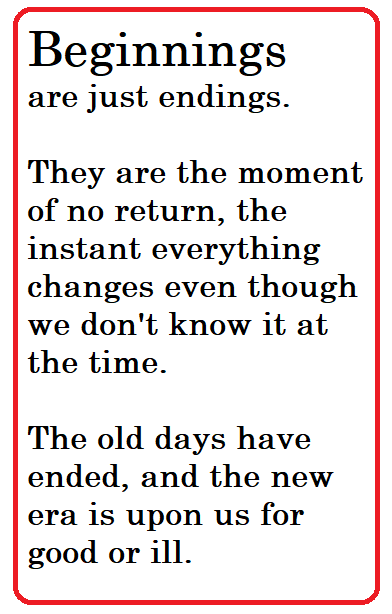 Today, we will pinpoint the moment in our protagonist(s) life where the story starts. We’re locating the point where this particular memoir, poem, novel, or short story begins.
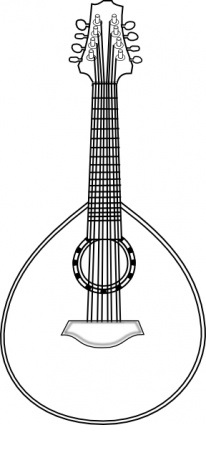 Setting: Venice in the year 1430.The weather is unseasonably cold. A bard is concealed amongst the filth and shadows in a dark, narrow alley. Sebastian hides from the soldiers of a prince he has unwisely humiliated in a comic song.
 But the opening moment, the scene showing a lowly bard hiding behind a rubbish heap, is the moment in Sebastian’s life where the story the reader wants to hear starts. That scene is where this story begins regardless of how interesting Sebastian’s story, Venice’s story, or the Warlock Prince’s story was before that day. It is the beginning because this is the point where all the essential characters are in one place and are introduced: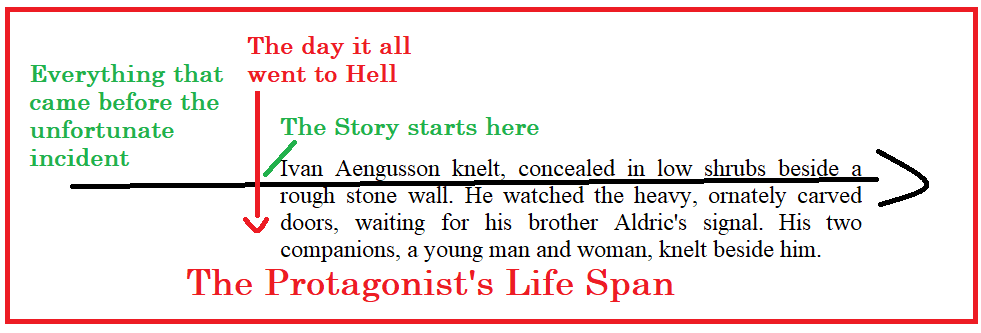


 Life in the Realm of Fantasy