Tag Archives: writing craft

Developing Discipline #NaNoPrep #NaNoWriMo2017

Every author knows that writing is about so much more than merely laying words down on a page.  Most people with a minimal education can do that, and can even whack out a creditable paragraph or two. However, sustaining the momentum and carrying that vision through an entire novel is quite another thing.

Over the years, I’ve seen disparaging articles where people have expressed their scorn and disdain of authors who participate in Nation Novel Writing Month, mocking the notion of a “competition,” deriding both the authors and work that emerges from this month of madness and frozen pot pies.

They’re missing one important point: to write a novel one must begin a novel and make the time to complete it. It takes discipline to write 50,000 words in 30 days. Most people don’t have what it takes to commit to that kind of regimen. Participating in NaNoWriMo forces the author to sit and write a minimum of 1,667 new words every day. If the participant does only that, they will have completed a 50,000 word novel in 30 days. I generally manage between 2,000 and 4,000 words a day during NaNoWriMo.

So, to the naysayers, I say, “Fine. If it takes a special month of writing and a group frenzy to get some people fired up about an idea they’ve had rolling around in their heads, who am I to complain?” I am a reader as much as I am an author. The more books that are written, the merrier I will be.

Here’s a short list of well-known novels to emerge from NaNoWriMo particpants:

  1. Water for Elephants, by Sara Gruen. On the best-seller lists for over a year, turned into a movie starring Reese Witherspoon and Robert Pattinson, started as a NaNo novel.
  2. The Night Circus, by Erin Morgenstern. What eventually became The Night Circus began life in 2004, seven years before it was finally published, started as a NaNo novel.
  3. Wool, by Hugh Howey. Howey’s dystopian sci-fi novel is one of those credited with putting self-publishing on the map, started as a NaNo novel.

Authors all begin knowing very little about how to write something another person would want to read. But if you maintain the dedication you develop in November, you can learn how to express what your heart feels. Work at learning the craft as hard as you worked to get your wordcount, and you will develop that talent for storytelling.

I think of the many authors to come who will gain both discipline and love of the craft through participating in NaNoWriMo. Many truly talented people are now embarking on learning a craft, committing their time and resources to educating themselves about how to write a novel that others will want to read. Several years down the road, who knows what wonderful works of fiction will have emerged from this year’s madness?

I only know that I am always looking for a good book, and so I will be first in line, hoping to be impressed by a fresh, new work of art. Therefore, I volunteer as a Municipal Liaison for NaNoWriMo. Every year we have new, young writers, with fresh, amazing ideas. But we also have many new older people who are writing their first novel, embarking on a dream they always had but never thought they could do.

The fact is, most people who begin a novel in November do not reach their goal of 50,000 words and never finish those novels. They do not have the discipline to sit down every day and dedicate a portion of their time to this project.

A great number of NaNo authors discover that doing NaNoWriMo is just like doing karaoke. They love to read, and they want to write the next Gone with the Wind, but their work reads as pleasantly as a tone-deaf drunk singing Wind Beneath my Wings. They are not talented writers, and their work isn’t stellar. Just because the rough draft was finished in thirty days and the author got the winner’s certificate of completion, it doesn’t mean that what they wrote was good. It just means they had the discipline to write it.

But despite the high number of would-be authors who fail to finish their novel, a few writers in each age group will continue writing after the month of madness is over. They will embark on the process of educating themselves in the craft.

These authors see the goal and are filled with the desire to finish what they started, knowing they will have to rewrite, edit, revise, and edit again to truly finish their book. When I talk to them and hear how fired up and passionate they are, I am proud to have been a part of their writing life.

Whatever gets a writer fired up and writing is fine by me, and we are all the better for the experience.

7 Comments

Filed under writing

Writing to a Theme #NaNoWriMo2017 #amwriting

November 1st begins the merry month of madness known as NaNoWriMo. Once again, as I have for the last seven years, I will spend the thirty days of November on an intensive writing binge.

Every day I will sit and write at least 1,667 NEW words on my current work in progress. If I do only that, I will have 50,000 words by Nov. 30th, which will bring the rough draft of that book nearly to completion.

But I generally manage between 2,000 and 4,000 words a day, and I work on several different projects. This year, while I WILL work on the rough draft of my current work-in-progress, my official project is another collection of short stories, poems, and flash fictions, all of which will be written to a variety of different themes.

The reason I need to build the backlog with a wide variety of themes is that most anthologies and many publications will call for submissions based around a central idea–such as  redemption, bridges, asylum–a large concept that  unifies the disparate stories.

So, my plan is to write to as many different themes as I can think of. Hopefully, if an opportunity presents itself later, I will have the perfect story ready, one that will only need some revising and editing.

One question I hear often is “how do I identify the theme of my story?” I have discussed this before, but it bears mentioning again. Theme is what the story is about on a deeper level than what is seen on the surface. It’s the big meaning, a thread that is woven through the entire story, and often it’s a moral. Love, honor, family, redemption, and revenge are all common, underlying themes.

Sometimes it’s difficult to write a short story unless you start out with a theme in mind. The same can be said for novels, although the theme can emerge more slowly than in short stories. For me, writing to a theme makes the process easier because half the work is done—I know what I’m writing about.

Several of the stories I will be working on are for themed anthologies with open calls for submission, but whose closing dates are rapidly approaching. When I made my list of proposed stories, I searched Submittable for open calls, so I know the desirable themes in advance. Some publications have submission dates that are quite a ways out, some have short deadlines.

Knowing the trending themes publishers are asking for is crucial to building your backlog with salable stories, so if you don’t have a Submittable account, you should get one.

What I hope to do in each story is to layer character studies, allegory, and imagery to emphasize the central theme and support the story arc. Sometimes I am successful, other times, not so much, but I still keep trying.

Most of my books are based around the hero’s journey, and how the events my protagonists experience shape their reactions and personal growth. The hero’s journey allows me to employ the theme of good vs. evil and the sub-themes of brotherhood, and love of family.

These concepts are important to me on a personal level, and so they find their way into my writing.

What themes are important to you? When you look for a book, what catches your interest? I am not talking genre here, I am speaking of the deeper story. When you look at it from a distance, what do all the stories you love best have in common?

Political thrillers: Set against the backdrop of a political power struggle. Political corruption, terrorism, and warfare are common themes.

Romance Novel: Two people as they develop romantic love for each other and work to build a relationship. Both the conflict and the climax of the novel are directly related to that core theme of developing a romantic relationship, although the novel can also contain subplots that do not specifically relate to the main characters’ romantic love.

Literary fiction focuses on the protagonist of the narrative, creating introspective. These are in-depth character studies featuring interesting, complex and developed characters. Action and setting are not the primary drivers of the story arc here. Instead, action and setting are carefully developed in such a way they frame the character, and provide a visual perspective. Allegory is a featured motif in many literary fiction novels.

Science Fiction: realistic speculation about possible future events, based solidly on adequate knowledge of the real world, past and present, and on a thorough understanding of the nature and significance of the scientific method. Science and technology are a dominant theme but based on current reality. Characters are still subject to sub-themes such as morality and love, but setting and science are the main themes.

Fantasy: Often set in alternate Earths, medieval times, or ancient worlds, the common themes are good vs. evil, hero’s journey, coming of age, morality, romantic love. Can also be set in urban settings with paranormal tropes.

On the surface, these types of books look widely different but all have one thing in common–they have protagonists and side-characters. These imaginary people will all have to deal with and react to the underlying theme of the book.

Morality, love, coming of age–these ideas can be found in nearly every book on my shelves or in my Kindle. These are the themes that were most powerfully depicted in the books that rocked my early reading world and are the sort I still seek out.

4 Comments

Filed under writing

Literary or Genre Fantasy? #amreading

A question was recently asked in a Facebook authors’ group that centers around literary fiction, “What is literary fantasy?”

The answer is complicated, and many people who are hardcore readers of obscure literary fiction will radically disagree with me: Some work qualifies as literary fantasy because of the way in which the story is delivered. Because of the style in which they’re written, these books appeal to a much broader fan base than work pigeonholed into either the “genre fantasy category” or the “literary fiction category.”

Each story has a life of its own. Authors envision how that tale must be set down, and some stories that take place in a fantasy setting are focused on the characters and their internal journey more than on the external experiences. That focus on the internal rather than the external is a literary trope. Sometimes a story needs to emerge slowly and be told with beautiful, immersive prose, and we need to trust that our readers will enjoy it if we craft it well. Allusive prose, steeped in allegory, is also a literary trope. Place those tropes and your characters in a fantasy setting, and you have literary fantasy.
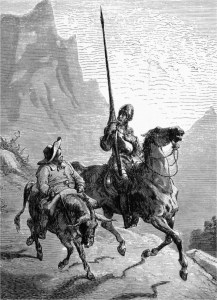
Consider Cervantes’ Don Quixote. Published in two volumes, in 1605 and 1615, volume I, The Ingenious Gentleman Don Quixote of La Mancha, and volume II, The Ingenious Knight,  written by Miguel de Cervantes Saavedra, is considered the most influential work of literature from the Spanish Golden Age. As a founding work of modern Western literature, and one of the earliest canonical novels, it regularly appears high on lists of the greatest works of fiction ever published.

Yet, it is a fantasy, written about a man who believes he is a superhero.

Don Quixote had a major influence on the literary community, as shown by direct references in Alexandre Dumas’ The Three Musketeers (1844) and Mark Twain’s Adventures of Huckleberry Finn (1884).

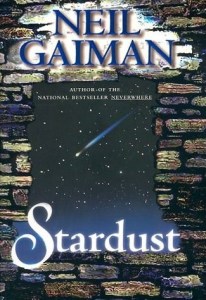
Among modern work, in my opinion, Neil Gaiman’s Stardust qualifies as a novel that is a “literary fantasy.” This is because it is a fairy tale about a young man’s internal journey to manhood, steeped in allegory, and told with beautiful, poetic prose in an unhurried fashion.

Within the burgeoning population of authors who are just learning the craft, opinions regarding style and voice run high and loud. Among readers, those who love  and seek out literary fiction are deemed “snooty” while those who love the sheer entertainment offered by genre fiction are deemed “unschooled.” Readers are just people after all–there are haters on both sides of the literary aisle.

Let’s talk about Stardust. According to those critique groups armed with a little dangerous knowledge, in the very first sentence of chapter one, Gaiman commits the most heinous crime an author can commit: he tells the story with leisurely, poetic prose.

Quote: There once was a young man who wished to gain his heart’s desire. 

Those narcissistic gurus armed with tattered copies of Strunk and White, and limited talent of their own really lose their minds over what he does after that first sentence:

  1. He sets the scene: In a style reminiscent of traditional fairy-tales, he explains how our hero, Tristam, lives in the village of Wall. It’s a tiny town about a night’s drive from London. A giant wall stands next to the town, giving the place its name.
  2. He goes on to explain that there’s only one spot to pass through this huge grey rock wall, and it’s always guarded by two villagers at a time, and they are vigilant at their task.
  3. Gaiman comments that this guarding of the gap is peculiar because all one can see through the break in the wall is meadows and trees. It looks as if nothing frightening or strange could be happening there, and yet no one is allowed to go through the break in the wall.
  4. Only then does he bring us to the point: Once every nine years, always on May Day, a unique, traveling fair comes to the meadow. That is the only day the guards ever take a break from their posts on the gap in the wall.

I can hear the group’s de facto emperor pontificating now. What was Gaiman thinking, starting a fantasy novel with a telling, passive sentence followed by an info dump? Why, everyone knows real authors only use active prose and never, ever, offer information up front.
To that breathless expert, I say “not true, my less-than-widely-read friend.” Lean prose can be leisurely and poetic and still pack a punch. That is what true writing is all about, conveying a story in a style that is crafted and has a voice that is uniquely that of the author.

That is why I consider Stardust literary fantasy.

In Stardust, each character is given a certain amount of importance, and even minor players are clearly drawn. The circumstances and events gradually pick up speed, and in the end, the reader is left pondering what might have happened after the final words on the last page.

If you saw the movie that is loosely based on the book but haven’t read the novel,  you might be surprised at how different the book is from the movie. There are no cross-dressing sky pirates in the book, although Robert De Niro was awesome in that role in the movie. The movie bears little resemblance to the book, and, like The Hobbit movie, should be looked at as a different entity entirely.

In the opening lines of Gaiman’s Stardust, nothing unimportant is mentioned although the prose meanders in a literary way. Yes, he takes the long way, but the journey is the best part of this fairy tale. He never devolves into florid, overblown purple prose, yet it has a poetic feel.

In my opinion, the arrogant perception of “fantasy” as having no literary merit is complete hogwash when you look at the books that make up the western cannon of great literature. ALL of them are fantasies of one sort or another, beginning with Don Quixote and going forward, and all of them were created for the enjoyment of the masses.

True authors are driven to learn the craft of writing, and it is a quest that can take a lifetime. It is a journey that involves more than just reading “How to Write This or That Aspect of a Novel” manuals. Those are important, but they only offer up a part of the picture.

You must read widely, and outside your favorite genre. Read old books and new–but read. When you come across authors whose work deeply moves you, study how they crafted the sentences that moved you. You may find yourself learning from the masters.


Credits and Attributions:

Don Quijote de La Mancha and Sancho Panza, 1863, Gustave Doré [Public domain], via Wikimedia Commons.

First UK edition cover of Neil Gaiman‘s novel Stardust, Illustrator: Charles Vess, Publisher Avon Books, Publication date: 1 February 1999, via Wikimedia Commons, Fair Use.

6 Comments

Filed under writing

The Stranded Novel #amwriting

Good first lines are critical. They have a singular duty, to involve the reader and kidnap them for the length of the book. For that reason, first lines and the opening chapters frequently become all that is ever written of a would-be author’s novel. Yet the authors of those few chapters have the entire book locked in their head.

Participating in NaNoWriMo teaches authors to write the entire book before they begin editing.

In your first draft, DON’T OBSESS over the small things and the finer details as these will derail your work. You will never get past the first chapter if all you can focus on is writing a brilliant opener. Write the entire story as quickly as you can, let it sit for a month or two while you do something completely different, THEN come back to it and focus on shaping the prose. Once you have the entire structure of the novel laid down on paper, you won’t be left wondering where to go next, writing and rewriting the same first chapter.

So, let’s assume the rough draft has been completed, and you are pleased with the way it ends. But you are looking at your early chapters, and they feel lackluster. Now is the time to shape the words, to write them so they are the words you would want to read if you were looking for a book to purchase.  The second draft is when you should obsess about your first lines.

One of the best first lines ever: George Eliot’s Middlemarch starts, “Miss Brooke had that kind of beauty which seems to be thrown into relief by poor dress.” That line makes one want to know Miss Brooke and the reader wonders who the observer is who chronicles this. It is a novel, but if it had been a short story, it would still have hooked the reader.

Good first lines make the reader beg to know what will happen next.  How about this first line from Ulysses, by the king of great one-liners, James Joyce: “Stately, plump Buck Mulligan came from the stairhead, bearing a bowl of lather on which a mirror and a razor lay crossed.”

Or, take the first line of Jane Austen’s Pride and Prejudice“It is a truth universally acknowledged, that a single man in possession of a good fortune, must be in want of a wife.” 

Should your first lines be required to introduce your main character? I think not.

Dickens introduced an era in the opening lines of A Tale of Two Cities: “It was the best of times, it was the worst of times, it was the age of wisdom, it was the age of foolishness, it was the epoch of belief, it was the epoch of incredulity, it was the season of Light, etc…” 

In his Wheel of Time series, Robert Jordan frequently opened with a glimpse into the side of evil, illuminating the foes whom Rand Al Thor must somehow prevail against, and that always hooked me.

All of the above books were begun as great ideas and the manuscripts were finished, which is why they were published. Admittedly, Robert Jordan did pass away before the final books were completed, but he wrote 12 of the 15 books and left a complete story arc with enough notes that Brandon Sanderson could finish the job. Jordan left behind a complete story, not just a first chapter.

If you are serious about writing, it’s necessary to read, to see how other authors have completed their work. Of course, you must read works published in your chosen genre, but to become an educated reader/author, you should look outside your favorite genre. You don’t have to spend your precious book purchasing funds on books you believe you won’t enjoy. Do a little advance research via the internet and then borrow the books from the library.

Most importantly–published authors, whether Indie or traditionally published, have finished their work. Maybe they didn’t do as great a job as some people think they could have done, but they did finish the job.

Grand ideas about what you intend to write mean nothing if you don’t finish the job. If you want to lay claim to being an author, write the ENTIRE novel! Get that story arc down on paper before you begin rewriting the first chapter! If all you have ever written is the first chapter, over and over, and over… perhaps you need to set that idea aside and begin one that interests you enough to inspire you to write a complete novel.

6 Comments

Filed under writing

Details and Exposition #amwriting

For me, as a reader, the skill with which the delivery of background information was handled in a given work is what makes a great story. Yet as a writer, I must continually battle the foes of Bloated Dialogue and Too Much Information. Fortunately, I have a large contingent of writing friends who keep me on my toes in that regard and editors who show no mercy.

In my previous post, we spent a great deal of time on world building. We created a mountain of information, the details we, as the authors, needed so we would know what we are writing about.

Now I’m telling you to keep the details to yourself We’re weeding through that field of dreams and constructing the skeleton of the world for the reader to flesh out in their imagination.

The trick to walking the fine line between too much and not enough is to consider what the characters must know to advance the story. In some ways, writing in the first person makes controlling the dispensing of important details easier for me. When writing in this voice, the story unfolds for both the character and the reader as they go. For this reason, many of my short stories are written in the first person.

Background information should be delivered as the characters require it, no matter what voice we write in. Don’t give your characters long paragraphs with lines and lines and lines of uninterrupted dialogue. Those become info dumps laced with useless fluff, sometimes seen as a wall of words by the reader. This is referred to, in the industry, as bloated exposition.

When the dialogue is trying to tell the reader too much, characters end up saying a lot of unnatural and awkward things.

 “Remember the first day at the academy? We showed up wearing identical uniforms. I was so humiliated. I hated you for that. I didn’t speak to you at all until Commander Janson forced us to be partners in the biology lab, but I managed to get us through that with all A’s. But look at you now, you lucky dog. Here you are, my second in command.”

“I know, sir. I despised you too, especially when you made me do all the dirty work, cutting up that alien amphibian. And you took all the credit for it. But now here we are, the best of friends and in command of the finest ship in the United Earth Space Fleet, the USS George Lucas. I really, really love being your flunky. It is just the most awesome gig ever.”

Probably not gonna happen. When two characters go back and forth explaining precisely what they are feeling or thinking, it doesn’t seem remotely real. The only time exposition in dialogue works is when both the reader and the character being spoken to don’t know the information being dispensed, but need it to move on to the next event.

In the second draft, we seek out and remove

  • Repetitions
  • Nonessential dialogue that does not advance the story
  • Nonessential historical information

We check to make sure the story

  • is cohesive,
  • only has events that flow logically,
  • has dialogue that contains information the reader must know.

If I were to tell you my story and place myself in my setting, I would say

It’s three in the morning. A woman sits at a broken desk, surrounded by dusty boxes. Bowed shelves filled with books loom above her, worn volumes, some more abused than others. The flickering glow of the computer screen illuminates the woman, the boxes, and books.  A train rumbling in the distance and the clicking noise of her keyboard are the only sounds to be heard in the night-silent house.

I’m not going to go into details you don’t need because you don’t care what is in the boxes, who our mortgage lender is, or that the furnace filter was just changed. The boxes, the books, and the keyboard are important—I write in our storeroom, also known as the Room of Shame. Right away, you know I’m not much of a housekeeper, I write at odd hours of the night, and you may suspect that trains symbolize an important thread in my life.

In real life, you might want to talk at length about the small details, but most of the important information is dealt with right away, and the rest is just socializing. When I think of the novels I enjoy the most, the important information in their conversations is dealt with up front, and the minor details emerge later as they become important.

Including nonessential socializing “just to show who the characters are” is where many first-time writers lose the reader. Your characters must socialize, but their conversations must revolve around the matter at hand.

Consider a private phone conversation you receive while you’re at work. Perhaps a friend just had a car accident. Your friend has a story to tell, and you have questions, but you don’t have time to get into the details. “Are you hurt? Can you drive the car? Do you need anything?” While the boss is glaring at the back of your head, you won’t ask if the other driver had insurance or if your friend will sue.

If writing a concise, cohesive narrative that readers will enjoy is not enough of a reason to keep your background information to just what is needed, I have another thought for you to consider.

In the real world, Indies and self-publishers pay the costs to publish their works up front. The length of the book determines these costs. In the eBook format, costs are minimal, and length doesn’t matter, but a paper book by a new author priced at more than $12.99 may not sell well.

Remember, with a longer book, external circumstances can also increase your out-of-pocket costs. Until you’re established, you must purchase your own stock to sell on consignment in local book stores. You’ll also need to buy books for your table at trade shows, conventions, and book-signings. Traditionally published authors also pay these costs, although they may not have to pay upfront as these costs will be taken out of their royalties.

Whether you are traditionally published or Indie, you’ll want to keep your cost as low as possible and still turn out a good book.

To do that, choose your words so they express what you want to say. Use them creatively to show the story, and employ every trick you can think of to keep the word count down to your target length without gutting the narrative.

4 Comments

Filed under writing

Crafting Worlds #amwriting

I write in many different worlds with widely varying levels of technology and forms of government. I’m an avid reader, and always have been. Some of the worst books I have read were bad because the setting made no sense or was unclear. This has been as true of stories set in modern New York City as well as fantasies set in wholly imagined worlds.

The author is responsible for making the setting clear and real in the mind of the reader. To do that, the author must pay attention to building that world, even if that world is a well-known city. I can’t write about Seattle if I have no idea what it is like to live there. I can’t stress this enough: do the research.

Because I had noticed these shortcomings in some less than stellar traditionally published works, I made a list of questions to consider when I begin constructing a new society. The Tower of Bones series began as the core story for an anime-based RPG that was cancelled before it was built. For the game’s original concept, I made a checklist of questions about the world and used the answers to write the story of the community the game’s protagonist would live in, a word-picture of about 2000 words.  This is the method I still use today.

Answering the questions posed by the following list of ideas always leads to my considering a kajillion other rather large concepts that combine to make up a civilization.

Level of Technology: What tools and amenities do this society have available to them? What about transport?

  • Hunter/Gatherers?
  • Agrarian/farming
  • Greco-Roman metallurgy and technology?
  • Medieval metallurgy and technology?
  • Pre-industrial revolution or late Victorian?
  • modern day?

How do we get around and how do we transport goods?

  • On foot?
  • By horse & wagon?
  • By train?
  • By space shuttle?

Social Organization: Society is always composed of many layers and classes. How is your society divided? Who has the wealth? Are there

  • Nobility?
  • A servant class?
  • A merchant class?
  • A large middle class?
  • Who makes up the poorest class?
  • Who has the power, men, women—or is it a society based on mutual respect?

Every society that has merchants also has some form of accounting. The need to account for stores of food and goods may actually have given rise to the earliest forms of written languages. It has been postulated that simple accounting systems came before words.

Quote from Wikipedia:

The earliest known writing for record keeping evolved from a system of counting using small clay tokens. The earliest tokens now known are those from two sites in the Zagros region of Iran: Tepe Asiab and Ganj-i-Dareh Tepe.[6]

To create a record that represented “two sheep”, they selected two round clay tokens each having a + sign baked into it. Each token represented one sheep. Representing a hundred sheep with a hundred tokens would be impractical, so they invented different clay tokens to represent different numbers of each specific commodity, and by 4000 BC strung the tokens like beads on a string.[7] There was a token for one sheep, a different token for ten sheep, a different token for ten goats, etc. Thirty-two sheep would be represented by three ten-sheep tokens followed on the string by two one-sheep tokens.

Ask yourself:

  • How is monetary wealth calculated?
  • Do they use coins? What is their monetary system?

If you are inventing the monetary system, keep it simple. Otherwise, go with a traditional form of money if your society is low-tech. (For my low-tech worlds I generally use gold coins, divided into tens: 10 coppers=a silver / 10 silvers=a gold.) Conversely, use good old-fashioned electronic currency if your world is high-tech.

Language and the written word: Do they have a written language? This is important if you are setting your people in a medieval world or in a low-tech society because it determines how knowledge is passed on. Low-tech generally equals an oral tradition with only the elite able to read and write.

  • How are people educated?
  • Who is allowed to learn to read and write?
  • How are bards, storytellers and other disseminators of knowledge looked upon?

Government: There will be a government somewhere, even if it is just the local warlord. Someone is always in charge because it’s easier for the rest of us that way:

  • Is it a monarchy, theocracy, or a democratic form of government?
  • How does the government fund itself?
  • How are taxes levied?
  • Is it a feudal society?
  • Is it a clan-based society?
  • Warlord, President, or King/Queen?
  • How does the government use and share the available wealth?
  • How is the government viewed by the citizens?

Foreign Relations: Does your country coexist well with its neighbors?

  • If not, why? What causes the tension?

Waging War: This is another area where we have to ask what their level of technology is. It is critical for you as the author to understand what sort of weapons your characters will bring to the front, and what the enemy will be packingDo the research and choose weaponry that fits your established level of technology.

  • What kind of weaponry will they use?
  • How are they trained?
  • Who goes to battle? Men, women, or both?
  • How does social status affect your ability to gain rank in the military?

Ethics and Values: What constitutes morality?

  • Is marriage required?
  • How are women treated? How are men treated?
  • How are same-sex relationships viewed?
  • How are unmarried sexual relationships seen in the eyes of society?
  • How important is human life? How is murder punished?
  • How are treachery, hypocrisy, envy, and avarice looked upon?
  • What about drunkenness?
  • How important is the truth?
  • What constitutes immorality?
  • How important is it to be honest and trustworthy?

Crime and the Legal System: What constitutes criminal behavior and how are criminals treated?

Religion and the Gods: How important is religion in this tale? If it is central, ask yourself: Is there one god/goddess or many? If the worship of a deity is a key part of your tale, you must design the entire theology. You must know the rituals and know how their deity holds their hearts. You must know how that deity considers his/her worshipers.

  • What sort of political power does the priestly class wield?
  • What is the internal hierarchy of the priesthood?
  • Who has the power?
  • Is this religion a benevolent entity or all-powerful, demanding, harsh?
  • How does the priesthood interact with the community?
  • Who can join the priesthood?
  • Do people want to join the priesthood or do they fear it?
  • How is the priesthood trained?

You are welcome to use this roster as the jumping-off point to form your own inventory of ideas for world building.

When you have cemented the society in your mind, the world your characters inhabit will feel real and solid, and your protagonists will fit into it organically. Their society will be visually real to the reader, even if the world it evokes in their minds isn’t exactly your vision of it. You will have done your job, by giving them a solid framework to imagine the story around.


Credits and Attributions:

Wikipedia contributors, “History of ancient numeral systems,” Wikipedia, The Free Encyclopedia, https://en.wikipedia.org/w/index.php?title=History_of_ancient_numeral_systems&oldid=799316402 (accessed October 8, 2017).

13 Comments

Filed under writing

Crafting Interior Monologues #amwriting

In writers’ forums, you will find a great deal of discussion regarding interior monologues, or how writers express their characters’ thoughts. It’s true that beginning authors can rely too heavily on them as an easy way to dump blocks of information into a narrative, instead of deploying it. A few people will even tell you they despise interior monologues, and while I disagree with them, I do see their point.

For the genres of Sci-fi, Fantasy, and in most YA novels, it is an accepted practice to italicize a protagonist’s thoughts, and readers expect to see them presented in italics. However, we need to be aware of how daunting it is for a reader to be faced with a wall of italics.

A rather vocal contingent at any gathering of authors will say thoughts should not be italicized, that it creates a greater narrative distance, setting readers outside of the character and the events of the scene.

As an avid reader, I disagree with that statement if it is applied broadly, and will argue the point, although more than a sentence or two does exactly that. This is a personal style choice that you, as an author, must make for yourself, based on the genre you are writing in and the preferences of the intended audience for your work.

If we choose to omit dialogue tags for these internal conversations and don’t set them off with italics, it becomes confusing. The finished book ends up looking like a bunch of closed quotes were left out, and gives the impression of an unedited manuscript, even if the publisher has subtly changed the font just for thoughts.

So what, in my opinion, is the best way to indicate that a sentence or two of interior monologue in the middle of a scene is the viewpoint character’s thoughts (and not the narrator narrating)?

I found a wonderful, highly detailed article on crafting Interior Monologues, written by Harvey Chapman, for the website, Novel Writing Help. The following quote pertains to my post today:

Here are the possibilities open to you…

  1. Writing the thought in first person, present tense (which is the way we actually think them) vs. writing it in third person, past tense (so that they blend in with the rest of the text).
  2. Using italics vs. using normal text.
  3. Using a “he thought” tag vs. not using one.
  4. Wrapping the thought in quotation marks (either single or double) vs. not using quotation marks.

We can dispense with the final option straight away: Never use quotation marks around a character’s thoughts. Why?

Because the reader will assume the words are being said out loud, and will then have to make an awkward mental shift when they see a “he thought” interior monologue tag, rather than a “he said” dialogue tag, at the end.

We can also dispense with using italicized text when the thought is translated into third person past tense.

The only point of italics is to make a different voice and tense stand out from the regular voice and tense being used. When both the thought and the text surrounding it are in the same voice and tense there is no need for italics.

The following excerpt from Benny’s Gambit, a short fiction work-in-progress, illustrates how I write interior monologues. They must be natural, and organic to the flow of the narrative. Thoughts must fit as smoothly into the narrative as conversations. My recommendation is to only voice the most important thoughts via an internal monologue, and in this way, you will retain the reader’s interest. The rest can be presented in images that build the world around the characters:

Benny watched Charlotte as she left the office. Everyone knew she came from a wealthy family. The gold watch, the sleek sports car she drove could have been owned by any well-employed girl, but something about her screamed confidence and money.

You could verbalize all that information in Benny’s interior monologue, but why? This way, the reader is shown all they need to know about Charlotte, without resorting to an info dump, and we aren’t faced with a wall of italics.

Some things work well when expressed as an interior monologue, especially if you want the reader in your protagonist’s head, as in the next paragraph of Benny’s story:

Benny looked down at his mop. I’m such an idiot. He dipped the mop in the bucket and wrung it out, unobtrusively watching the elevator doors as they glided closed.

The first sentence is in the third person, past tense, as is the third sentence. The thought is italicized because it is in the first person present tense, showing his real-time experience. In those two paragraphs, the reader has also gained a whole lot of information.  They think they know who Benny is, and they have a clue about his aspirations. What they don’t know yet, but will discover as the plot unfolds, is that Benny is actually a detective working undercover, and Charlotte is the secretary of his quarry. I could easily have have written it all in third person past tense but I chose not to, for a specific reason: I want you in Benny’s head.

Interior monologues are crucial to the flow of novels in which the author wants the reader planted firmly in the protagonist’s mind. However, these are tools we must use sparingly. The majority of thoughts should be shown through actions or external observations.

Those external observations are a subtle part of worldbuilding when you are writing a narrative that is an intimate portrait of your protagonist.

So, to wind this up, I feel that:

    1. Interior monologues are an organic part of some kinds of narratives, but not necessarily all narratives.
    2. When they are done well and sparingly, interior monologues can create an intimate connection with the protagonist.
    3. If an interior monologue is used in most speculative fiction, it should be short and set off by italics, and only rarely with the speech tag ‘thought.’
  • Italics should never be used for long passages.

Credits and Attributions:

Novel Writing Help, The Complete Guide to Interior Monologue, by Harvey Chapman, © Novel Writing Help, 2008-2017 https://www.novel-writing-help.com/interior-monologue.html#more-78, Accessed Oct 1, 2017

7 Comments

Filed under writing

Drabbles: experimenting with POV and prose #amwriting

I love writing ‘drabbles,’ extremely short fiction because they offer the opportunity to write in a wide variety of genres and styles. Drabbles present the chance to experiment with point of view and prose. Often, these 100 – 200-word experiments become 1,000-word flash fictions, which are sometimes saleable.

In my files (to be worked on at a later date) is the rough draft of a short story that began as a brief exercise in writing from the point of view of the flâneur–the person of leisure, the idler, the urban explorer, the connoisseur of the street. They are the interested observer, a person who seeks much, knows a little, and is a (frequently unreliable) witness to the events of a story.

Click here for Scott Driscoll‘s great blogpost on the flâneur. In short, he tells us that: “With a flâneur narrating, you can remove the noticing consciousness from your point of view character to accomplish other purposes.”  

The flâneur is a character frequently found in literature from the 19th century. The story is filtered through his eyes and perceptions–it distances the reader from the immediacy of the scene, so be forewarned: genre-nazis and armchair editors who want the material delivered in 60 second sound bites of action won’t love it.

My flâneur is Martin Daniels, a wealthy, retired jeweler. He spends his time roaming his city’s streets, sitting in sidewalk cafés observing his fellow citizens, and making social and aesthetic observations. He regularly finds himself crossing paths with one man, in particular, Jenner: a self-made man who came up through the mines.

Jenner is battering against the prevailing social barriers which stand in the way of his achieving a political office that he covets, using whatever means at his disposal. He is uncouth, a barely civilized rough-neck with a bad reputation, but something about him draws Martin’s attention, and so he finds himself both observing Jenner and listening to the whispered gossip that surrounds the man.

One day, as Jenner is passing Martin’s table, his hat blows off, and Martin catches it, returning it to him. Jenner then introduces himself and admits that he has been watching Martin for some time. He has a task for Martin, one that intrigues him enough to bring him out of retirement. Thus begins an odd relationship.

When this twist happened, my flâneur ceased to be merely an observer and became my protagonist, yet he is reporting the events from the distance of his memory, so he is still the observer.

Literary fantasy, one of my favorite genres to read, is a great venue for the flâneur. It examines the meaning of life or looks at real issues, and I tend to write from that aspect. In my favorite works, the fantastic, otherworld setting is the frame that holds the picture. It offers a means to pose a series of questions that explore the darker places in the human condition.

Sometimes the quest the hero faces is, in fact, an allegory for something else, and the flâneur shows you this without beating you over the head with it. I read good literary fantasy—it tends to be written by men and women who write well and literately. Not only are the words and sentences pregnant with meaning and layers of allegory, but they are also often poetic and beautifully constructed.

I like to experiment with prose as well as style and genre, and writing drabbles offers that opportunity.

The character of the interested observer is not limited to a person walking the streets and making political or social commentaries on what is seen. Nor is the gender of the observer limited to that of a man. Any person can be the observer and serve in this role. The flâneur is great fodder for a drabble, so give it a try.

The modern flâneur is found in the office, the coffee shop, shopping at the mall or grocery store, waiting in line at the movies, even looking through the curtains of their front windows. These are venues they habitually visit and don’t go out of their way for, and are where they are likely to regularly see the person who piques their curiosity.

Writers are, by nature, observers of the human condition. When two friends sit in a Starbucks and play ‘the coffee shop game,’ the game where they see patrons and invent stories about who they are and what they do, they become the flâneur for a brief moment. Write those paragraphs and see what emerges.

Writing drabbles offers me the chance to write two or three paragraphs in a literary style, experiment with both point of view and prose, and allows me to play with words. I can imitate the style of my favorite authors and see what it is about their work that attracts me.

Any time you have a great little idea, pause for the moment and write a drabble about it. Save it in a file labelled ‘Drabbles.’ You never know when you may have the seeds of a great story in those two brief paragraphs.


Quotes and Attributions

Flaneur, try it and set yourself free by Scott Driscoll, © Oct 24, 2013,  https://scottdriscollblogs.wordpress.com/2013/10/24/flaneur-try-it-and-set-yourself-free/

12 Comments

Filed under writing

Creating Compelling Objectives #amwriting

At the outset of any good story, we meet our protagonist and see him/her in their normal surroundings. An event occurs, the inciting incident.

The inciting incident:

  • Happens to your protagonist
  • Disrupts your protagonist’s life
  • Is personal to your protagonist
  • Gives the protagonist an objective/quest

The hero is thrown out of his comfort zone and into the situation, which is the core idea of your plot. This is the circumstance in which your protagonist finds himself at the beginning of the story. The circumstance forces an objective upon the main character.

In the opening pages of The Hobbit, by J.R.R. Tolkien, a respectable hobbit, Bilbo Baggins, is living a comfortable life in a prosperous, sheltered village, and has no desire to change that in any way. However, a casual, polite greeting made to a passing wizard sets a string of events into motion that will eventually change the course of history for the world of Middle Earth.

The wizard, Gandalf, tricks Bilbo into hosting a party for Thorin Oakenshield and his band of dwarves, who sing of reclaiming the Lonely Mountain and its vast treasure from the dragon, Smaug. When the music ends, Gandalf unveils a map showing a secret door into the Mountain and proposes that the dumbfounded Bilbo serve as the expedition’s “burglar.”

The dwarves ridicule the idea, but Bilbo becomes a little indignant and agrees to do it despite his misgivings. The next morning he has second thoughts, but at the last moment Bilbo literally runs out the door with nothing but the clothes on his back.

  • You must have a strong, unavoidable event that is your inciting incident. Ask yourself:
  • What is the hero’s personal strength and health at the beginning?
  • How will his physical and emotional condition be changed, both  for better or worse? Will these changes be triggered by the hero himself or by the antagonist?
  • What could possibly entice the hero out of his comfort zone?

Now we come to the next part of the core of your plot: Objective

A protagonist has no business showing up on the page unless he/she has a compelling objective. If he doesn’t want something badly enough to do just about anything to achieve it over the next couple hundred pages, then he doesn’t deserve to have a story told about him.

Bilbo does have an objective. Once he gets past his feeling of having made a terrible mistake, he desires nothing more than to help his friends achieve their goal: that of regaining their lost kingdom.

Gandalf exerts a parental influence over Bilbo at the outset, guiding him and pushing him out of his comfortable existence.  But it is Bilbo who has common sense and compassion, who gradually takes over leadership of the party, guiding and rescuing them from their own greedy mistakes. This is a fact the dwarves can’t bear to acknowledge, and a fact he doesn’t realize himself.

Those turning points where with each adventure Bilbo gains confidence and a tool or weapon he will later need are what make up the best parts of the adventure. That is what you must inject into your story, be it a contemporary drama, an urban fantasy, a bedroom farce, or science fiction.

  • At the beginning of the story, what could the hero possibly want to cause him to risk everything to acquire it?
  • How badly does he want it and why?
  • What moral (or immoral) choice is he going to have to make in his attempt to gain that objective?

Perhaps your tale is set on a space station. What does your protagonist need that is in short supply? What does he have to do to get it?

Perhaps you are writing an urban fantasy. Perhaps your main character is a vampire. Vampires requires sustenance–what will she do to get it? Or conversely, if a human, what will she do to avoid becoming vampire-food?

Protagonists begin their tale in their current surroundings. They are thrown out of their comfortable existence by circumstances and forced to identify objectives they must achieve or acquire to resolve their situation.

Thus, whichever you conceive first, characters or objective, you need to know why your character is willing to leave his circumstances and embark on his adventure. That objective must be compelling enough for him to risk everything he values to achieve it.

But what if a side character has such a compelling story that the book becomes his story and is no longer about our hobbit? If you notice that is the case, rewrite your book so that the character with the most compelling story is the protagonist from page one.

The potential for gain must outweigh the potential for loss. The stakes must be high: perhaps they are headed into a life and death situation, or a couple finds their marriage on the rocks. Perhaps a young woman stands to lose her wealth and security. These are good core circumstances for plots, but for me, the greatest risk a hero faces is in moral coin. This is because personal values are fundamental to who we are as individuals, and when those intrinsic values are threatened, the risk is emotionally charged.

Emotionally charged stories are powerful.  Objectives create risk. Without great risk and potential for gain, there is no story.

3 Comments

Filed under writing

Crafting the final act #amwriting

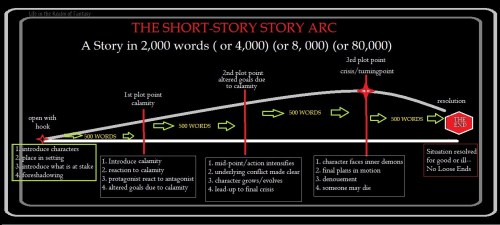
In this series on the construction of the novel, we have discussed creating a strong opening act, and a powerful, electrifying middle. So, let’s talk about the all-important fourth quarter of the story arc—the final act.

At this point, the enemy’s plans are in place. Our protagonists have met the enemy and survived the encounter, but now they know they may not prevail.

If your work is not speculative fiction or fantasy, perhaps they’ve suffered a terrible personal setback.

Regardless of the genre, at the outset of the fourth quarter, the protagonists are at their lowest point both physically and emotionally. From the midpoint crisis forward through the third quarter, major events have funneled the players down the path to the final conflict. Now, they are scrambling, working against time and perhaps, with fewer resources than the antagonist.

In these chapters leading up to the conclusion, the protagonists have been pressed to the breaking point. Now they are at the end of their journey. They must rediscover their courage, find a reason to continue the fight, resolve the loose ends, and appear at the final showdown ready to do battle.

If you were not careful in the setting up the events that form the middle of the narrative, the story could fall apart here. Listen to your beta readers’ comments: even in your third draft, you may have to insert new scenes into the existing narrative to drive the action to the final conflict.

  1. At the outset of the 4th quarter, all subplots are resolved, and the final focus is on the enemy’s move.
  2. The enemy’s plans and their true nature must be shown.
  3. Someone who was previously safe may be in peril. Perhaps their fate hangs on a thread, and the outcome is unclear.
  4. The protagonists must face the fact that their efforts have forced the enemy’s hand in a way they never expected.
  5. Your protagonist may achieve their goal, but they will pay a heavy price for it, and return home changed for good or for ill.

If your editor asks you to write new scenes to get a flat story arc back on track, and you agree it’s needed, your task is to blend the new material into the existing story.

  • You must go back and insert foreshadowing in earlier passages, and some otherwise great passages that now go nowhere will be cut.

This is most important: any event that does not drive the plot to the end is a distraction. All side quests are being wrapped up at this point so don’t introduce any new plot threads. Emotions are key–of course for the characters, but also for the reader.

  • The higher the emotional stakes when the protagonist meets the antagonist for the final showdown, the more emotionally satisfying the final resolution will be for the reader.

The resolution should be final, with no loose threads. Cliffhanger endings aggravate readers who don’t want to wait a year for the rest of the story, so even if your book is the middle volume of a series, give the reader some reward for their faithfulness, and resolve most of the subplots.

2 Comments

Filed under writing