
 An em dash (—) is a versatile punctuation mark. It is the width of an ‘m’, hence the name. An em dash serves as a comma, does the same task as parentheses, and also does the work of the colon. Used in these situations, the em dash creates a slightly less formal effect and is a useful tool in the author’s arsenal.
To insert an em dash in a Word document: type two hyphens next to each other without any space between the words or hyphens:
- A—B (LetterHyphenHyphenLetter) Once you hit the space key after the second word, the two hyphens will form an em dash.
They can be more emphatic than a comma, and will really set apart any clause bracketed by them. In dialogue, we don’t use semicolons to join short related independent clauses. Instead, we use em dashes. Used sparingly, and not in every paragraph, they can smooth a choppy conversation and make it more normal sounding.
Unfortunately, I have a tendency to use them far too frequently, and in my hands, they lose their effectiveness. When combing a final ms for bloopers, I find them sprinkled through my work, maniacally creating run-on sentences where brevity would be a better choice.
The en dash (–) is the width of an ‘n’, hence the name. It denotes a span or range of numbers, dates, or time. Depending on the context, the en dash signifies “to” or “through.” When keying, type a space between the en dash and the adjacent material and then hit the spacebar.
To insert an en dash in a Word document: type a single hyphen between two words, with a space on either side of it:
- 1994 – 1996 (1994SpaceHyphenSpace1996) Once you hit the space key after the second word, the hyphen will form an en dash.
Hyphens join certain compound words. Never use a hyphen in the place of an em dash or en dash.
Do not use a hyphen unless it serves a purpose. If a compound adjective is easily understood without a hyphen or its meaning is established, a hyphen is not necessary.
- An English-speaking country
- A time-saving device
- A thirty-floor building
Some compounds are created on the spot to fulfill a specific need (on-the-spot creations). Permanent compounds began as improvised compounds but became so widely accepted they are now included in the dictionary as permanent compounds.
Examples of temporary compounds that have made the transition to permanent compounds are:
- know-it-all
- heart-stopping
- free-for-all
- down-at-the-heel
Context determines whether or not to hyphenate. Ask yourself, “How will the words be interpreted by the reader if I don’t hyphenate?”
Wikipedia offers the following examples:
Man-eating shark (as opposed to man eating shark, which could be interpreted as a man eating the meat of a shark)
Wild-goose chase (as opposed to wild goose chase, which could be interpreted as a goose chase that is wild)
Long-term contract (as opposed to long term contract, which could be interpreted as a long contract about a term)
Zero-liability protection (as opposed to zero liability protection, which could be interpreted as there being no liability protection).
Overuse of em dashes and hyphens is a characteristic of lazy writing habits. We are in a hurry to get the story down, and we use the em dash to connect clauses that would be better if left to stand alone, and we hyphenate compound words that don’t require a hyphen.
I see these habits in my work and am forcing myself to be more creative. The em dash has a proper place in my work, but it can work its way into every paragraph. It is like an exclamation point. If I want my em dash to really emphasize a point, I have to only use it when nothing else will have the desired effect.
Only by seeing our work through a critical eye can we grow as authors. By writing every day and striving for growth, the quality of our work improves. Our beta readers will notice this growth and thank us for it.




 Every author, indie or traditionally published, comes to a point in their career where they must craft a query letter. For many, avoiding having to do that is one of the reasons they went indie in the first place.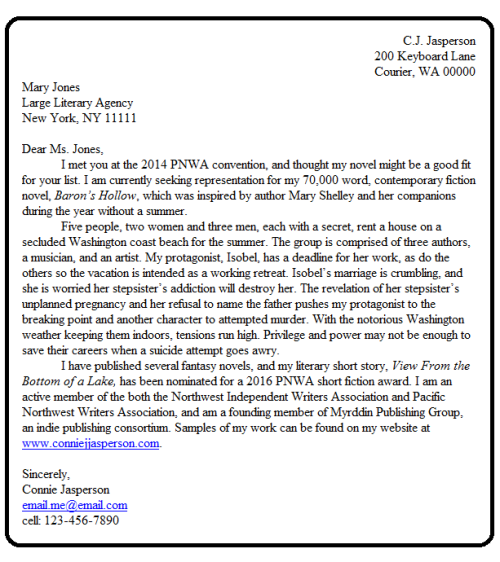
 I haven’t been able to read as much lately as I normally do and I miss it. However, time spent editing for clients and then trying to write has seriously cut into my ability to read. When I am editing for a client, I can’t disengage my mind from that mindset, which means I have a terrible time reading for pleasure. In fact, I haven’t written a book review in months. Lately, I am lucky to read two or three pages before falling out of the book. Thus I have been reading poetry and resorting to audio books.
 Sometimes the errors and flaws in the work sold by the traditional publishing houses are hilarious, as we saw in the first Kindle edition of George R.R.Martin’s
  As an editor, I do my best. But, nothing is ever sure, and I won’t see the manuscript after I send my client the final suggested corrections. Mistakes can be made right up to the last minute while the client is making those adjustments, so someone else will have to proof-read her work.

 When you write a novel or an essay, whether it’s fiction or non-fiction, the setting is how you create the sense of place, and must be a creation of many layers:




 Life in the Realm of Fantasy