I started writing my very first novel in 1993. It opened with an info dump that went on and on, and on.
 I didn’t understand the importance of starting with a strong opening paragraph that leads to an active first page. I didn’t know how to sustain the pacing, the rhythm of conflict-resolution-conflict that forms the arc of the plot.
It took a good writing group, numerous books on craft, and many seminars to get the education I didn’t have. Most importantly, I worked with an excellent editor (and still do) and over the years that experience has gradually shaped what I thought were final drafts into manuscripts I’m not ashamed to submit to her for the final edit.
The novels I love most all begin with a clear dramatic hook. This literary device should appear at the ends of scenes and chapters. The hook is sometimes a big problem that entangles the main character and promises a real struggle from the opening pages to the ending’s resolution.
Other times it is a small but intriguing mystery that leads us into a larger story.
 No matter how the story opens, it begins with the opening act. The characters are introduced, and the scene is set. The plot will be hinted at and established in the first pages because that is where we:
- Introduce the protagonist(s). Who and what are they?
- Introduce the setting. Where are they?
- Introduce the conflict. What does the protagonist want? What hinders them?
This is the first hook, the place where the author establishes the tone of what is to follow. Getting the pacing right in those opening pages and maintaining it to the last page in the novel is, in my experience, the most challenging part of making revisions.
Sometimes I open the story by dropping the characters into the middle of a mess. I still need a pivotal event at the 1/4 mark that upends what they know and sets them on a new trajectory. The destination ahead is now unknown, and this event launches the story.
The inciting incident does not necessarily have to be an event or tragedy. I have read and enjoyed many books where I became immediately engaged in the characters themselves, or the author’s writing style.
However, no matter how wonderful the characters are or how clever the prose, a story must change the characters emotionally. They must either grow in maturity or change for the worse.
I admit, I prefer character-driven stories. I love books where action and intrigue exist only to drive character development.
What about subplots/side quests?
If the subplot is the opening hook, why isn’t it the main quest? Does completing this quest drop us into the Big Problem? If so, great.
 If not, we need to rethink the plot. We do need roadblocks to success, and those often lead us away from the main path. As long as we can still see the ultimate goal, they will keep us entertained.
Side quests are a good way to develop characters and provide needed information or necessary tools. When the shift into the subplot is done right, it will keep the story moving forward. However, the transition must feel natural and organic to the main quest. Clumsy transitions make a story arc feel haphazard.
Also, while they are fun in an RPG video game, side quests that exist only to liven up a random, pointless plot arc don’t help.
In my favorite books, side quests worked because they were introduced after the book’s tone and central crisis were established, and they were crucial to completing the central quest.
A good, well-known example of a crucial side quest appears in J.R.R. Tolkien’s The Hobbit. Bilbo must get lost in the Misty Mountains and stumble across the One Ring. Possessing this magical artifact is essential to completing the main quest.
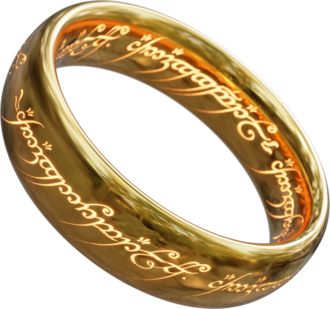 The possession and destruction of the Ring drives his nephew Frodo’s story, which is covered in three epic novels: The Lord of the Rings trilogy.
So, yes. Subplots that advance the main plot arc can provide small hooks that keep us reading and develop the story’s emotional side.
But let’s go back to the opening hook.
An example of an opening paragraph that conveys visual information is this:
A noise at the mess tent’s door alerted Callie Hanson to her boss’s presence. She looked up from her dinner of soup and bread. Donnal entered, sitting opposite her. “I hate to interrupt your meal, but one of the searchers fell and is badly hurt. You’re needed in surgery now.”
In that short story, the opening paragraph consists of 50 words. It introduces the protagonist, tells you where she is, and hints at the larger problem. It also introduces the inciting incident.
But what does a final paragraph do?
Here’s another example I have used before. The scene prior to this paragraph details a tense discussion and follows after a (now former) landlord’s stormy departure.
I stuffed my now empty wallet back into my pocket. Then I slung my laptop bag over my shoulder, picked up my suitcase, and looked around. No wife to kiss goodbye, no real home to leave behind, nothing of value to pack. Only the need to say goodbye to Portland and my failures. The quiet snick of the door closing behind me sounded like deliverance. I’d hit bottom, so things could only get better. Right?
The character in the above transition scene performs an action and moves on to the next event. It reveals his mood and some of his history in free indirect speech and propels him into the next chapter.
He does something: He performs an action, and that action gives us a great deal of information. It tells us that he is preparing to leave on an extended journey.
He shows us something: He shows us a barren existence and offers us his self-evaluation as a failure.
He tells us something: He shows us his state of mind. The door has closed on an episode in his life, and he has no intention of going back.
 This paragraph ends the chapter. When the next chapter opens, he steps into an opening paragraph that leads into the next action sequence. We find out who and what new misery is waiting for him on the other side of that door.
When you begin revising, look at the opening paragraph of each chapter. Ask yourself how you could rewrite it to convey information and lead the reader into the action. Then look at the final paragraph and ask yourself the same question.
Finding the right words to hook a reader, land them, and keep them hooked is a lot of work, but it will be worth it.