
One of our favorite places to walk before my husband’s Parkinson’s limited his mobility was McLane Creek Nature Trail. The central feature of the reserve is the large beaver pond. While the trails that wind around the pond and through the woods are easy to walk for most, they aren’t really suited for people who must rely on a walker or wheelchair.
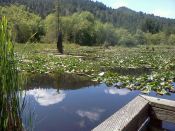 However, there is an accessible viewpoint just at the entrance, and we can go there and just absorb the peace. Several years ago, I shot this photo from that platform.
I grew up in a home that faced the shore of a lake, with a range of forested hills just beyond. Nature was my friend, my sanctuary. That’s why I feel such kinship for McLane Pond and bodies of water in general. They are creatures of many moods.
When you watch the water, you can see the effects of the world around it reflected on its surface. When a storm blows in, things change. The surface moves, and ripples and small waves stir things up down below. The waters turn dark, reflecting the turbulent sky.
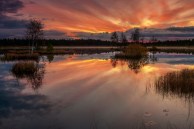
Sunrise at Lake Laanemaa at Orkjärve Nature Reserve, Estonia
And on a windless day, the pool will be calm and quiet. The sky and any overhanging trees will be reflected on its surface.
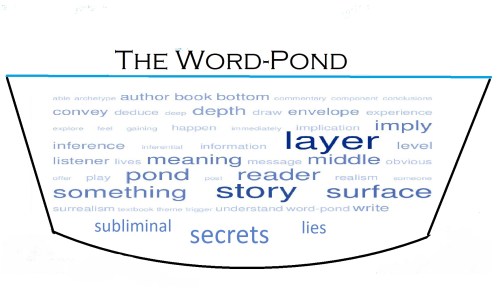
Just like the surface of a pond, the surface of a story is the literal layer. It is the what-you-see-is-what-you-get layer. It conceals what lurks in the depths but offers clues as to what lies below.
This layer is comprised of four aspects.
- Genre
- Setting
- Action and interaction
- All visual/physical experiences of the characters as they go about their lives.
Genre is an all-encompassing aspect of a story. It determines the shelf in the bookstore, such as General Fiction, fantasy, romance, etc. Those labels tell the reader what sort of story to expect.
Setting – I see the surface of a story as if it were the background in a painting. At first glance, we see something recognizable. The setting is the backdrop against which the story is shown. The setting is comprised of things such as:
- Objects the characters see in their immediate environment.
- Ambient sounds.
- Odors and scents.
- Objects the characters interact with, such as clothing, weapons, transportation, etc.
- Era (the story’s place in time).
 Action and interaction – we know how the surface of a pond is affected by the breeze that stirs it. In the case of our novel, the breeze that stirs things up is made of motion and emotion. These two elements shape and affect the structural events that form the plot arc.
- In the opening, the characters are going about their daily lives. Nothing too exciting, not worth writing about … however, two or three pages in, something happens.
- The inciting incident occurs, and daily life is thrown into disarray.
- To make things worse, the winds of change blow, driving rising waves of action and events in an uncomfortable direction.
- New characters are introduced, people who have parts to play for good or ill.
- Action and interaction occur between the protagonist and antagonist as they battle for position.
- Everyone and everything converge at the final showdown, and changed by our experiences, we return to the serene pond that was our life before.
So, the surface of the story, the world in which it exists, is shown at first by the visual/physical experiences of the characters as they go about their lives in the opening paragraphs. These can appear to be the story, but once a reader wades into the first few pages, they should discover unsuspected depths.
We shape this layer through worldbuilding. We can add sci-fi or fantasy elements, or we can stick to as natural an environment as possible.
 So, how can we use the surface elements to convey a message or to poke fun at a social norm? In other words, how can we get our books banned in some parts of this fractured world?
In Alice’s Adventures in Wonderland, Lewis Carroll played with the setting by incorporating an unusual juxtaposition of objects and animals. His characters behave and interact with their environment as if the bizarre elements are everyday happenings. The setting has a slightly hallucinogenic feel, making the reader wonder if the characters are dreaming.
Yet, in the Alice stories, the placement of the unusual objects is deliberate, meant to convey a message or to poke fun at a social norm. We just don’t realize it because we’re having so much fun.
Most sci-fi and fantasy novels are set in recognizable worlds that are very similar to where we live. The settings are familiar, so close to what we know that we could be in that world. That is where good worldbuilding creates a literal layer that is immediately accepted by the reader.
Setting, action, and interaction—these components are the surface, and they support the deeper aspects of the story.
The depths of the story are shown in how our characters interact and react to stresses within the overall framework of the environment and plot.
- Depth is found in the lessons the characters learn as they live through the events.
- Depth manifests in the changes of viewpoint and evolving differences in how our characters see themselves and the world.
 Creating depth in our story requires thought and rewriting. The first draft of our novel gives us the surface, the world that is the backdrop.
In the first draft, all we are concerned with is getting the structure of the story down and the characters in place with their personalities. Our subconscious mind will insert clues, little breadcrumbs hinting at what lies in the depths below the surface of our story. We might think they are clearly shown, but a beta reader might tell you they need a little more clarification.
The first draft is only the framework of the story, even if you have written “the end.” The true depths of the narrative and the emotions experienced by our characters are yet to be discovered.
The mysterious things that lurk in the depths of the story will begin to reveal themselves in the second draft.
Once you have written “the end” on the first draft, set the narrative aside for a few weeks and then go back to it. That is when the real writing begins.
Credits and Attributions:
IMAGE: Photograph, McLain Pond in July, © 2018 – 2024 by Connie J. Jasperson, from the author’s private photos.
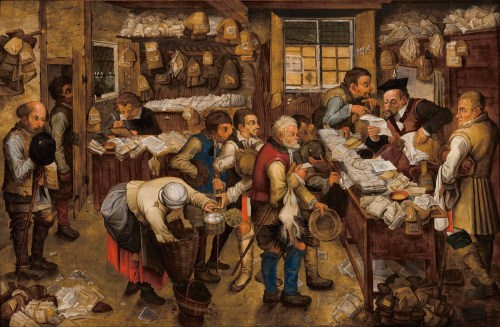
IMAGE Wikimedia Commons contributors, “File:Pieter BRUEGHEL Ii – The tax-collector’s office – Google Art Project.jpg,” Wikimedia Commons, the free media repository, https://commons.wikimedia.org/w/index.php?title=File:Pieter_BRUEGHEL_Ii_-_The_tax-collector%27s_office_-_Google_Art_Project.jpg&oldid=708678946 (accessed December 9, 2022).
IMAGE: Sunrise at Lake Laanemaa at Orkjärve Nature Reserve, Estonia. Wikimedia Commons contributors, “File:Laanemaa järv Orkjärve looduskaitsealal.jpg,” Wikimedia Commons, https://commons.wikimedia.org/w/index.php?title=File:Laanemaa_j%C3%A4rv_Orkj%C3%A4rve_looduskaitsealal.jpg&oldid=801967887 (accessed September 17, 2023).
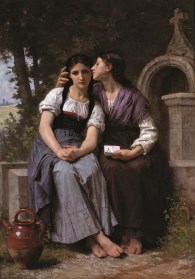
IMAGE: Wikimedia Commons contributors, “File:Elizabeth Jane Gardner – La Confidence (1880).jpg,” Wikimedia Commons, the free media repository, https://commons.wikimedia.org/w/index.php?title=File:Elizabeth_Jane_Gardner_-_La_Confidence_(1880).jpg&oldid=540767709 (accessed April 22, 2021).
 Beta Reading is the first look at a manuscript by someone other than the author. The first reading by an unbiased eye is meant to give the author a view of their story’s overall strengths and weaknesses so that the revision process will go smoothly. This phase should be done before you submit the manuscript to an editor. It’s best when the reader is a person who reads for pleasure and can gently express what they think about a story or novel. Also, look for a person who enjoys the genre of that particular story. If you are asked to be a beta reader, you should ask several questions of this first draft.
 Editing is a process unto itself and is the final stage of making revisions. The editor goes over the manuscript line-by-line, pointing out areas that need attention: awkward phrasings, grammatical errors, missing quotation marks—many things that make the manuscript unreadable. Sometimes, major structural issues will need to be addressed. Straightening out all the kinks may take more than one trip through a manuscript.
 A good proofreader understands that the author has already been through the editing gauntlet with that book and is satisfied with it in its current form. A proofreader will not try to hijack the process and derail an author’s launch date by nitpicking their genre, style, and phrasing.
  The problem that frequently rears its head among the Indie community occurs when an author who writes in one genre agrees to proofread the finished product of an author who writes in a different genre. People who write sci-fi or mystery often don’t understand or enjoy paranormal romances, epic fantasy, or YA fantasy.
 Repeated words and cut-and-paste errors. These are sneaky and dreadfully difficult to spot. Spell-checker won’t always find them. To you, the author, they make sense because you see what you intended to see. For the reader, they appear as unusually garbled sentences.
 At some point, your manuscript is finished. Your beta readers pointed out areas that needed work. The line editor has beaten you senseless with the
  Also, the two combine to help in deciding how long it will take to complete a task.
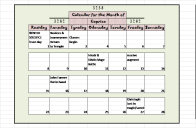 While I had finished the RPG game’s plot and the synopsis, I didn’t have some details of the universe and the world figured out. So, in a burst of creative predictability, I went astrological in naming the months. I thought it would give the player a feeling of familiarity.
 Time has a tendency to be elastic when we are writing the first draft of a story where many events must occur. Sometimes, many things are accomplished in too short a period for a reader to suspend their disbelief.
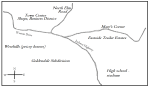 What if your fantasy world uses leagues as a measure of distance? A league is 3.452 miles or 5.556 kilometers. Generally speaking, a horse can walk 32 miles or 51.5 K in a day.
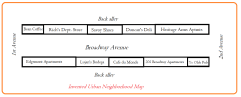 Many readers have a route they walk or run daily to maintain their health. These readers will know how long it takes to walk ten blocks. They will also know how far a healthy person can walk in one hour on a good road.
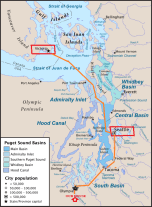 The part of the world where I live has large tracts of forests, many wide rivers, and is mountainous, with numerous volcanos. Our roads are often winding and sometimes travel in switchbacks up and over many of these obstacles. It takes time to go places even though the original road-builders plotted the roads through the most accessible paths.
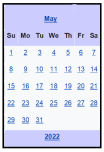
 Travel and events take time. A calendar, either fantasy or the standard Gregorian calendar we use today, and a simple hand-drawn map will help you maintain the logic of your plot.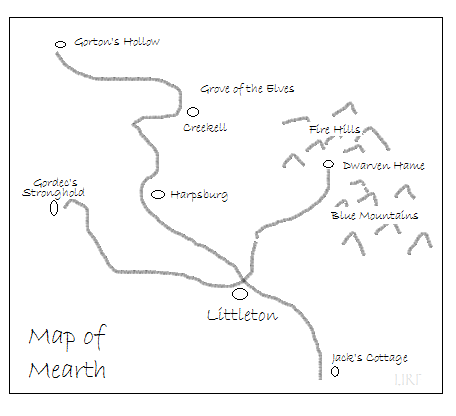
 Sometimes, a first novel is well-received, with engaging characters and a plot arc that moves along to a satisfying conclusion. People want more, and so the series begins.
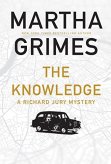 The episodic series is like a television series. Each novel has a new adventure for a previously established set of characters. In some ways, these are easiest to write, especially when each book features established characters in an established world. (Sorry about the repetition there.) Many cozy mysteries and fantasy series are episodic. They are an infinite series of standalone stories.
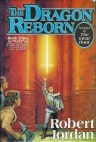 The story usually has a strong theme that unites the series. It might be a theme such as the hero’s journey or young people coming of age. Or it might follow the life of one main character and their sidekicks as they struggle to complete an arduous quest.
  Prequels are one of my favorite kinds of novels. I am always curious as to how the whole thing started.
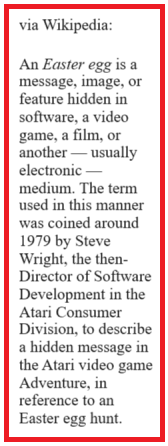 Once you have figured out the entire arc of the series, make an outline of book one. This allows your creative mind to insert foreshadowing. This will happen via the clues and literary easter eggs that surface as the series goes on.
 Next week, we will look at creating a calendar for stories set in a speculative fiction world. We will look at some of my failures and see why simpler is usually better.
 Technically, I am a full-time writer. For about ten years after I retired from corporate America, I had regular office hours for writing. Nothing lasts forever, and now I am drawing on the habits I developed during my years as a hobbyist. I write when I can and devote the rest of my time to caring for my family.
 So, let’s talk a little more about what we write. Most of us don’t intentionally write to preach to people, but the philosophies we hold dear do come out.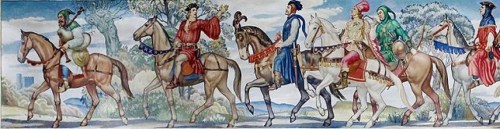
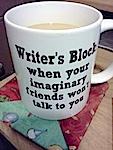 We each grow and develop in a way that is unique to us. Sometimes, we are hardened by our life experiences, and our protagonists have that jaded sensibility. Other times, we accept our own human frailties, and our protagonists are more forgiving.
 The battles we fight on the home front don’t have to be serious all the time. Sometimes, they can be hilarious. When your spouse has Parkinson’s, life is like a
  Suddenly, some joker turns the blender on, and everything goes to hell. They turn it off, and you think, “Okay, disaster averted. It’s gonna be okay.”
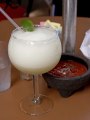 Life is like a blended margarita. It’s all in how you look at it, so stay cool and enjoy the party for as long as it lasts.
 The more frequently you write, the more confident you become. Spending a small amount of time writing every day is crucial. It develops discipline, and personal discipline is essential if you want to finish a writing project.
 Maybe you plan to write a novel “someday” but aren’t there yet. Writing random short scenes and vignettes helps develop that story without committing too much time and energy to the project. This is also a good way to create well-rounded characters.
 However,
  The Lascaux Review is one of the best contests around. It is exceptionally open to writers who are just beginning their journey. Their fee is reasonable, $15.00 in every category, and submissions are accepted through Submittable.
 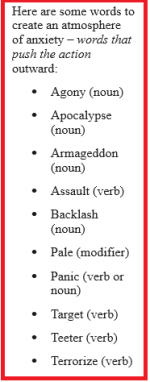 A way to get a grip on these concepts is what I think of as literary mind-wandering. For me, these ramblings hold the seeds of short stories.
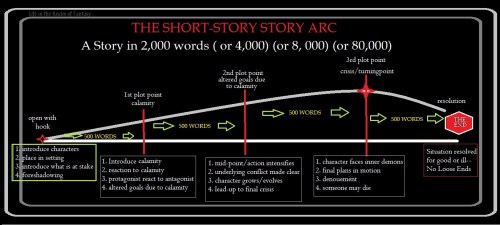
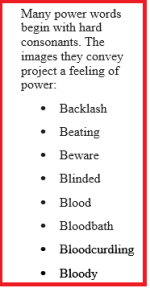 I break down the word count to know how many words to devote to each act in the story arc. I allow around 25 words to open the story and set the scene. Then, I give myself about 50 – 60 for the heart of the story. That leaves me 10 – 25 words to conclude it.
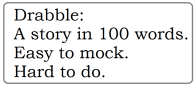 Extremely short fiction is the distilled essence of a novel. It contains everything the reader needs to know and makes them wonder what happened next.
 I have been busy on the domestic side of things and enjoying life as a Townie. Lovely Instacart delivers my groceries from any store I choose. If we have to be out after dark and it’s raining, I can’t see well, so Uber does the driving. We are living a life of luxury and grateful for it. I have a “passel” of grandbabies and great-grandbabies, so when I have nothing to write, I have needlework projects to keep me busy.
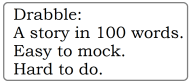 Writing drabbles means your narrative will be limited to one or two characters. There is no room for anything that does not advance the plot or affect the story’s outcome. Also, while a 100-word story takes less time than a 3,000-word story, all writing is a time commitment. I will spend an hour or more getting a drabble to fit within the 100-word constraint.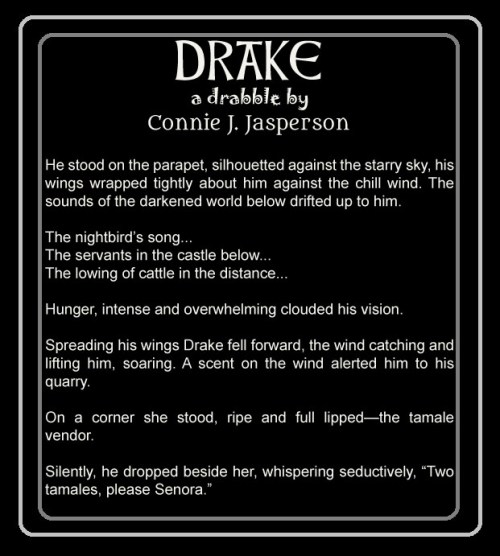
 This is the heading at the top of each page of a word-processed or faxed document. It contains page numbers, the title, and the author’s name. You won’t need one for most contests. However, if you plan to submit work to a magazine or anthology, you will want your header to follow their guidelines.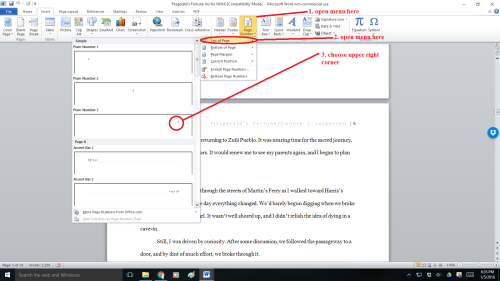
 So, what do they do if they don’t go over your work line-by-line? Magazine editors look for and bring new and marketable stories to the reading public.
 This is because they shouldn’t have to. Before submitting your work to an agent or submissions editor, you must have the technical skills down.
 When you have a story that you believe in, you must find the venue that publishes your sort of work. Read the magazines you hope to submit work to. That way, you will know what publishers are buying in your genre.
 Those who can’t afford to buy magazines can go to websites like
 For the most part, the requirements are basically the same from contest to contest, with minor differences. Most contests charge a submission fee but have a cash prize if your work is chosen. It doesn’t matter how brilliant your story is; if you don’t follow their guidelines for submission, you will have wasted your money. Non-conforming work will not be read, so follow their guidelines!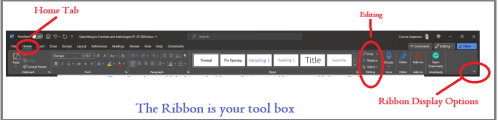
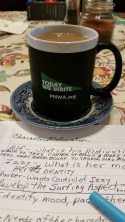 You don’t want fancy. Stick with the industry standard fonts: Times New Roman (or rarely Courier) in 12 pt. These are called ‘Serif’ fonts and have little extensions that make letters easier to read when strung together to form words.
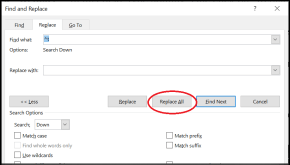 To remove tabs from a manuscript in MS Word or most other word-processing programs, open the “Find” box (right side of the ribbon on the home tab). In the “Find” field, type in ^t. (
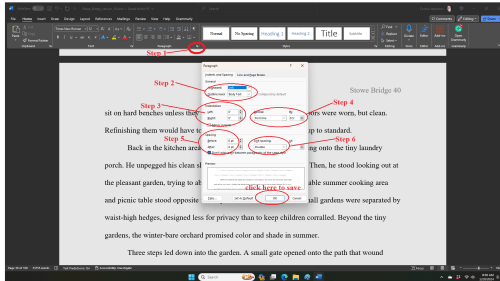 FIRST: SELECT ALL. This will highlight your entire manuscript.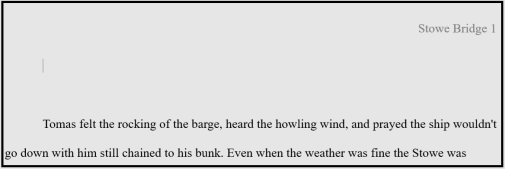
 You can get your foot in the traditional publishing house door this way. Also, if you are happy as an indie author, having work that places as a finalist in a contest (or is accepted into a paying anthology) will increase your visibility and gain readers for your other work.
 Many contests and publications use the
  First, let’s be clear–editors don’t enjoy sending out rejections. They want to find the best work by new authors because they love to read. If you have a story that was a contest winner, you may be able to sell it to the right publication.
 Each editor for an Anthology or magazine will have a slightly different idea of what they will accept than a literary contest. Literary contests focus heavily on knowledge of craft as well as the ability to tell a story.
 Some contests charge a fee for submissions. I’ve said this before, but it bears mentioning again. You have wasted time and money if you don’t follow the prospective contest or publisher’s submission guidelines, which are clearly listed on the contest page on their website.
 It’s hard to hear a critical view of something you have struggled with and labored over. We believe it to be perfect, but we don’t have an objective view of it. This is when you must step back and rethink certain aspects of a piece before you submit it. The external eye of your writing group can help you see the places that don’t work.


 Life in the Realm of Fantasy