
We have entered the darkest time of the year, and while the sun occasionally bursts through the dark and gloomy overcast skies, the monsoon months have arrived. The eternal rain has set in, which I don’t mind as much as some folks do. Rain in the winter means plenty of water during summer, which can be very dry here in the Puget Sound basin.
 But we’d prefer the snow to stay in the mountains where it belongs. Something about the slightest dusting sends the Pacific Northwest into a panic.
I write every day, no matter the season. However, December is a busy, scattered time for me, with a lot of random cooking and partying. As far as writing goes, it’s a month of inspiration racing up the steps, ringing the doorbell, and then running away.
Thus, I make notes of those random thoughts. At some point, I’ll be able to focus well enough to wrestle the Kraken that is my current manuscript, into shape. I’m still plotting the second half of this novel. Last week I managed to cut out two novellas and a short story’s worth of words out of the NaNoWriMo mess though, so that was fun. (Not.)
In the meantime, I’ve been enjoying a little downtime, reading and playing games. So, what have I been reading? Magazine articles mostly.
I’m an indie and am responsible for the success or failure of my books when it comes to marketing, which is not my strong point. But as always, the overall trends of the publishing industry interest me. What follows are the teasers and links to the more thought-provoking things I read this week.
Here is an article that is not recent, but is pertinent to our era of publishing, of writing blogs and publishing as an indie. Read the story here: Skills and Strategies | Understanding Plagiarism in a Digital Age – The New York Times (nytimes.com)
 BBC: From memoir and self-care books to comic novels, writing about our flaws and imperfections has never been so popular. But can failing ever be a success? Lindsay Baker explores this question. Read the story here: Is failure the new success? (bbc.com)
BBC: Audiobooks are having a moment. As they soar in popularity, they are becoming increasingly creative – is the book you listen to now an artform in its own right? Clare Thorp discusses this phenomenon. Read the story here: The rise of the books you don’t read (bbc.com)
So, what else is going on in the publishing industry? Let’s have a look at the articles that caught my eye this last week:
NEW YORK, NY (AP) — Book publishing in 2023 was a story of cooling sales and rising conflict, marked by legal action, protests, censorship and the impact of forces well beyond the industry. Read the story here: 2023 in books: Protests, bannings and rise of AI helped shape the story of publishing – ABC News (go.com)
AP NEWs: The nation’s largest publisher and several bestselling authors, including novelists John Green and Jodi Picoult, are part of a lawsuit filed Thursday challenging Iowa’s new law that bans public school libraries and classrooms from having practically any book that depicts sexual activity. Read the story here: Publishing industry heavy-hitters sue Iowa over state’s new school book-banning law | AP News
NBC NEWS: Yahoo News reports that there has been a years-long surge in LGBTQ fiction sales. Read the story here: A ‘renaissance of gay literature’ marks a turning point for publishing (yahoo.com)
Publishers Weekly: This year’s Guadalajara International Book Fair (FIL), which ran November 25–December 3, drew 857,000 attendees, up from 807,000 in 2022 and 828,000 in 2019. While the fair always attracts several hundred U.S. librarians, who attend to buy Spanish-language titles, more U.S. publishers went to the fair this year than in past years—a sign that business between the U.S. and Mexican markets is growing. Read the story here: Guadalajara Book Fair Attracts More Americans (publishersweekly.com)
 Also from Publishers Weekly: A confident mood prevailed among independent booksellers over this November holiday sales weekend. (…) Sales data from Circana BookScan showed that, in a year in which overall unit sales of print books are down 3.3%, sales were up 1.4% for the Thanksgiving week ending November 25, over the comparable week in 2022. Read the story here: The Holiday Season Looks Promising for Indie Bookstores (publishersweekly.com)
So, there you have it, the articles that caught my eye this week when I was sitting at my computer and pretending to work. Now, I suppose I should go and release the Kraken—or at least get to work on that outline.
Credits and Attributions:
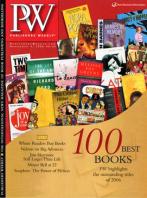
Cover of November 6, 2006 issue Publishers Weekly, © 2006 Publishers Weekly (Fair Use). Wikipedia contributors, “Publishers Weekly,” Wikipedia, The Free Encyclopedia, https://en.wikipedia.org/w/index.php?title=Publishers_Weekly&oldid=1180527918 (accessed December 10, 2023).
 That question is a good place to start, but it is only the surface layer of the pond.
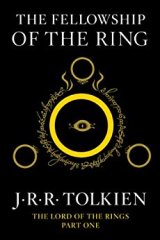 It is a conversation scene, driven by the fact that each person in the meeting has knowledge the others need. Conversations are good when they deploy necessary information. Remember, plot points are driven by the characters who have critical knowledge.
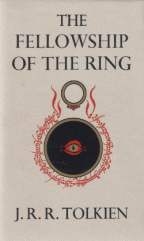 Information/Revelation: The Council of Elrond conveys information to both the protagonists and readers. It is a conversation scene, driven by the fact that each person in the meeting has knowledge the others need. Plot points are propelled by the characters who have critical knowledge. Again, limited information creates tension.
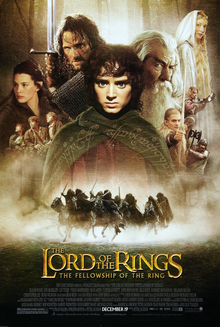 The movie portrays this scene differently, with Pip and Merry hiding in the shadows. Also, in the book, the decision about who will accompany Frodo, other than Sam, is not made for several days, while the movie shortens it to one day.
 We who write fantasy invent people and give them lives in invented worlds. Their stories involve them doing invented things. Unfortunately, there are times when we realize we have written ourselves into a corner, and there is no graceful way out.
 In 2019, I had accomplished many important things with the 3 months of work I had cut from that novel. The world was solidly built, so the first part of the rewrite went quickly. The characters were firmly in my head, so their interactions made sense in the new context.
 So, in 2019, I realized the novel I was writing is actually two books worth of story. The first half is the protagonist’s personal quest and is finished. The second half resolves the unfinished thread of what happened to the antagonist. Both halves of the story have finite endings, so the best choice is to break it into two novels.
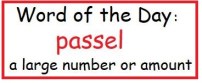 And a “passel” of short stories and novellas.
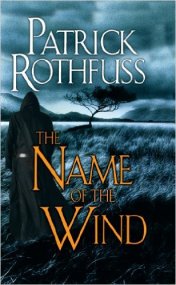 I think of
  When I can’t write anymore, I eat chocolate and read trashy romance novels about vampires.
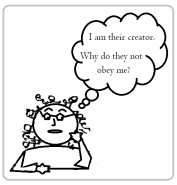 I need to spend several days visualizing the goal, picturing each event, and mind-wandering on paper until I have concrete scenes. I need to write a few paragraphs that will become the final chapters.
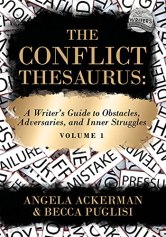 My heroes and villains all see themselves as the stars and winners in this fantasy rumble. They intend to prevail at any cost. What is the final hurdle, and what will they lose in the process? Is the price physical suffering or emotional? Or both?
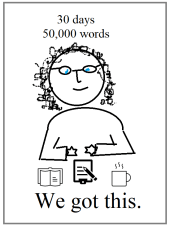 My mental rambling is accomplishing something. My characters are all getting their acts together. They are finding ways to resolve the conflict and are ready to commence the fourth act, where they will embark on the final battle.
 I still had no idea there was a wider community of writers in my area, and even if I had, I wouldn’t have felt worthy of gate-crashing one of their meetings.
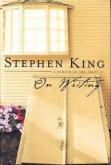 The next book I bought was in 2002:
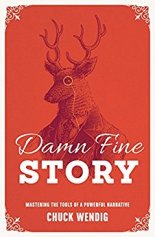
  Finishing off the resources from the official NaNoWriMo store is Grant Falkner’s handbook,
  Damn Fine Story
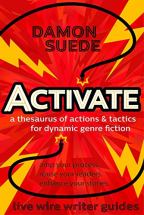 Many local libraries offer a service where one can submit a question and have it answered by email. If that isn’t an option and we’re feeling ambitious, you can check out eBooks on any subject.
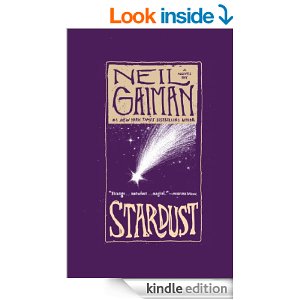 Here is a link to the great Neil Gaiman’s absolutely wonderful, infinitely comforting, yet utterly challenging advice for writers:
  In 2010, I gained a wonderful local group through attending write-ins for NaNoWriMo. Nowadays, we meet weekly via Zoom, as some members are now living far away from Olympia. My fellow writers are a never-ending source of support and information about both the craft and the industry. We write in various genres and gladly help each other bring new books into the world. But more than that, we are good, close friends.
 Narrative essays are drawn directly from real life, but they are fictionalized accounts. They detail an incident or event and talk about how the experience affected the author on a personal level.
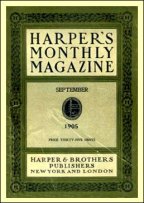
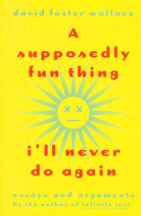 Wallace went to the fair thinking it would be a boring event featuring farm animals, which might be beneath him. But it was his first official assignment for Harpers, and he didn’t want to screw it up. What he found there, the people he met, their various crafts, and how they loved their lives profoundly affected him, altering his view of himself and his values.
 Literary magazines want well-written essays on a wide range of topics and life experiences presented with a fresh point of view. Some publications will pay well for first rights.
 Don’t be afraid to write with a wide vocabulary, as people who read these publications have a broad command of language.
 If the editor wants changes, they will make clear what they want you to do. Editors know what their intended audience wants. Trust that the editor knows their business.
 Knowing my intended word count helps me create a story, from drabbles to novels. For me, it works in stories with a traditional arc as well as those with a circular arc.
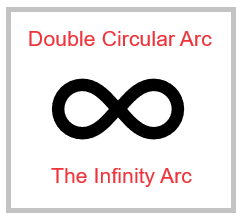
 In a circular narrative, the story begins at point A, takes the protagonist through life-changing events, and brings them home, ending where it started. The starting and ending points are the same, and the characters return home, but they are fundamentally changed by the story’s events.
 At this point, our first protagonist knows that he must resolve the problem and protect his people, which he does. There is more to his side of the story, of course. But this is a story with two sides. Aeddan’s point of view is not the entire story.
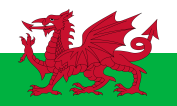 Word choices are essential in showing a world and creating a believable atmosphere when limited to only a small word count. I had challenged myself to write a story that told both sides of a frightening encounter in 1000 words, give or take a few. I wanted to expand on the theme of dragons and use it to show two aspects of a place whose national symbol is the Red Dragon (Welsh: Y Ddraig Goch).
 We all know the best stories have an arc of rising action flowing smoothly from scene to scene. Those changes are called transitions and are little connecting scenes. Conversations and indirect speech (thoughts, ruminations, contemplations) often make good transitions when a hard break, such as a new chapter, doesn’t feel right.
 We know dialogue must have a purpose and move toward a conclusion of some sort. This means conversations or ruminations should provide a sense of moving the story forward. These are moments of regrouping and processing what has just occurred. Dialogue and introspection are also where the protagonist and the reader learn more about the mysterious backstory.
 So now that we know what must be conveyed and why, we find ourselves walking through the Minefield of Too Much Exposition.
 When I began writing seriously, I was in the habit of using italicized thoughts and characters talking to themselves to express what was happening inside them.
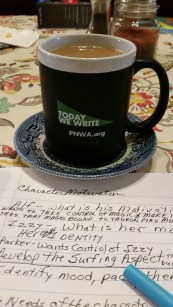 If you aren’t careful, you can slip into “head-hopping,” which is incredibly confusing for the reader. First, you’re in one person’s thoughts, and then another—like watching a tennis match.
 Crockpot soups are high on the menu here at Casa del Jasperson. I do most of the work for dinner in the morning and get it out of the way along with the other housework, and then I can write and whine about writing.
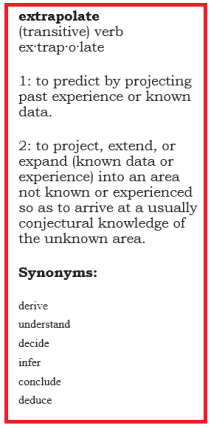 The work inspired by a visual prompt often has nothing to do with the image. But it has everything to do with the nature of storytelling. The ability to explain the world through stories and allegory emerges strongly in artists of all mediums—painters, sculptors, writers, musicians, and dancers.
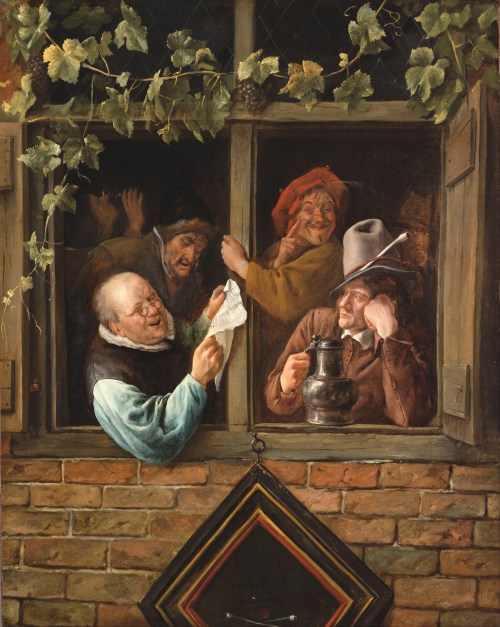 These jolly rogues have such vivid personalities that the viewer immediately feels a kinship. Who were they? Did they keep their day jobs? Or were they charming moochers living off the kindness of friends?
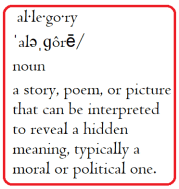 And what other symbolism was incorporated in this painting that art patrons in the 17th century would know but we who view it through 21st-century eyes wouldn’t? Eelko Kappe’s article on this painting,
  The well of inspiration has gone dry.
 Arcs of action drive plots. Every reader knows this, and every writer tries to incorporate that knowledge into their work. Unfortunately, when I’m tired, random, disconnected events that have no value will seem like good ideas.
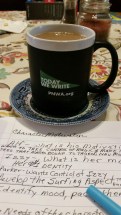 As you clarify why the protagonist must struggle to achieve their goal, the words will come.


 Life in the Realm of Fantasy