
Mind-wandering … daydreaming … sitting around, and doing nothing, thereby annoying family members with agendas of their own. It’s an activity that is looked down upon because it represents idleness in a society that demands productivity. We have a culture that celebrates doing, achieving, producing, and succeeding.
 When observed by others, a person who is daydreaming appears lazy. Mind-wandering has no obvious purpose, but it is critical for creativity. Every groundbreaking discovery in science, every great invention we enjoy today—all were inspired by ideas that came to a person while thinking about something else or when they were mind-wandering.
Taking the time to sit and think about nothing in particular has everything to do with the nature and genesis of storytelling.
The ability to explain the world through stories and allegory emerges strongly in some people. Many are naturally able to form and express a story, even when discretion would be better. I can create a string of BS like no one else at the drop of a hat:
My oldest daughter, looking at our dinner, a casserole of beans with cornbread baked on top like a cobbler: “What the heck is that?”
Me, ever the smartass: “It’s stewed Yeti in gravy with a sweet cornbread topping. Try it. I think you’ll like it.”
Daughter: “Why can’t we have normal food, like normal people?” Takes a bite. “Mom. This tastes like the beans we had last night, except you added cornbread. You said the beans were jackalope nuggets.”
Me: “Did I say that? Sorry. I meant Yeti. I get the two confused.”
Daughter: “I’ll just have salad.”
Me: “Great choice. I made the ranch dressing with …”
Daughter: “Oh, God. Here it comes.”
Me: “… lion’s milk, since we’re out of buttermilk.”
Other people need the subliminal prompting of an image to spark their creativity. If you’ve visited here at Life in the Realm of Fantasy on a Friday, you know how much I love looking at and talking about art.
I’m not educated as an art historian, and I hope I don’t come off as pretending to be one. But I love the paintings of great artists because they tell a story. I like to research great art and the artists who created it. I love to share the images I come across and hopefully give others like me access to see the art that humanity is capable of, good and bad.
 Perception is in the eye of the beholder. Observation and thought are seeds that inspire extrapolation, leading the viewer to come away with new ideas. When I see the story captured in a single scene by an artist, my mind always surmises more than the painting shows. I see the picture as depicting the middle of the story and imagine what came before and what happened next. Unintentionally, I put a personal spin on my interpretation, and ideas are born. I don’t mean to, but everyone does.
Wikipedia tells us this about that: In mathematics, extrapolation is a type of estimation, beyond the original observation range, of the value of a variable on the basis of its relationship with another variable. It is similar to interpolation, which produces estimates between known observations, but extrapolation is subject to greater uncertainty and a higher risk of producing meaningless results. [1]
In real life, extrapolation is the act of an idea emerging from an idea, creating a chain of ideas that coalesce and form an assumption. That assumption generates more ideas, and the “thought party” roars on. This is how great novels begin.
Anthony Jack, a cognitive scientist at Case Western Reserve University in Ohio, says, “How we daydream and think depends on the brain’s structure. …(That) structure is constantly changing in small ways—as we learn new things the connections between nerve cells change.” (Read “Beyond the Brain” in National Geographic magazine.) [2]
We have long known that creative people are often guilty of mind-wandering. Researchers have shown that daydreaming makes you more creative. The mental conversation occurs when the daydreaming mind cycles through different parts of the brain and taps into the subconscious mind, bringing up information we had but were unaware of. The daydreaming mind connects bits of information we’ve never considered in that particular way.
According to a study published in the Proceedings of the National Academy of Sciences, a wandering mind can impart a distinct cognitive advantage. [3]
 This means that daydreaming is actually good for you. It boosts the brain, making our thought process more effective. Letting the mind wander allows a kind of ‘default neural network’ to engage when our brain is at wakeful rest, as in meditation, rather than actively focusing on the outside world. When we daydream, our brains can process tasks more effectively.
This is good to know because, as an author, I spend an astounding amount of time daydreaming, and I would hate to be simply wasting time!
Meditating on a tone, a pattern, or an image is a time-honored means of expanding one’s mind. Meditating or daydreaming turns off parts of your brain. Our brain has an analytic part that makes reasoned decisions and an empathetic part that allows us to relate to others.
Researchers have found when a person daydreams, their mind naturally cycles through different modes of thinking, analytic and empathetic. During this time, your brain’s rational and sympathetic parts tend to turn each other off, which is why this habit is crucial to creativity.
Creative people are often guilty of mind-wandering, but researchers have shown that daydreaming makes you more creative.
 You could be watching the birds, as my husband and I often do. Or maybe you’re perusing the display in a local art gallery or listening to music. I love all genres of music, but for writing I often find inspiration in powerhouse classical pieces such as Orff’s cantata, Carmina Burana, or Nobuo Uematsu‘s soundtracks to the Final Fantasy game franchise.
Whatever you choose to meditate on doesn’t matter. The act of mind-wandering generates ideas.
Let your mind wander. That feeling of stress will lessen, and soon, you may have an idea for a novel, a painting, or music.
Credits and Attributions:
Cornbread, Zankopedia, CC BY-SA 3.0 Wikimedia Commons contributors, “File:Skillet cornbread (cropped).jpg,” Wikimedia Commons, https://commons.wikimedia.org/w/index.php?title=File:Skillet_cornbread_(cropped).jpg&oldid=449104554 (accessed June 24, 2023).
[1] Wikipedia contributors, “Extrapolation,” Wikipedia, The Free Encyclopedia, https://en.wikipedia.org/w/index.php?title=Extrapolation&oldid=1144519982 (accessed June 24, 2023).
[2] Beyond the Brain by James Shreeve, Cognitive Function Article, Neuroscience Information, Mapping Brain Facts — National Geographic Copyright © 1996-2015 National Geographic SocietyCopyright © 2015-2023 National Geographic Partners, LLC. All rights reserved (accessed June 24, 2023)
[3] Where do our minds wander? Brain waves can point the way (medicalxpress.com) by Yasmin Anwar, University of California – Berkeley (accessed June 24, 2023)
 Today, however, I plan a long walk along the beach.
 I have no trouble selling my friends’ books – I’ve read them all and love them, and love selling them. Maybe I can sell their books because I’m not emotionally invested in their creation, but I am invested as a reader.
 Next week on this blog we will talk about the creative process and the importance of mind-wandering. We’ll also talk about why it is important to beta read for your fellow writers, and how to be a good reader, one who gives positive feedback and offers constructive suggestions.
 I have “pantsed it” occasionally, which can be liberating but for me, there always comes a point where I realize my manuscript has gone way off track and is no longer fun to write. Then I must return to the point where the story stopped working and make an outline.
 The first tool is a sense of balance. Every published novel has entire sections that were cut or rewritten at least once before it got to the editing stage.
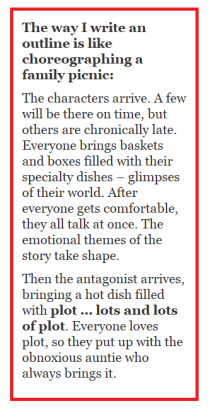
 At first, the page is only a list of headings that detail the events I must write for each chapter. I know what end I have to arrive at. But the chapter headings are pulled out of the ether, accompanied by the howling of demons as I force my plot to take shape:
 Don’t be afraid to rewrite what isn’t working. Save everything you cut because I guarantee you will want to reuse some of that prose later at a place where it makes more sense.
 Some novels are character-driven, others are event-driven, but all follow an arc. I’m a poet, and while I read in every genre, I seek out literary fantasy, novels with a character-driven plot. These are works by authors like
 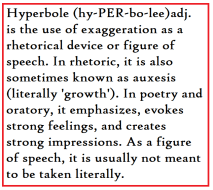 And the prose … words with impact, words combined with other words, set down in such a way that I feel silly even thinking I can write such works. Thankfully, my editor weeds out pretentious hyperbole and slaps me back to reality.
 This part of the novel is often difficult for me to get right. The protagonist must be put through a personal crisis. Their inner world must be shaken to the foundations.
 This emotional low point is necessary for our characters’ personal arcs. It is the place where they are forced to face their weaknesses and rebuild themselves. They must discover they are stronger than they ever knew.
 And what of my female protagonist? Where does her story begin?
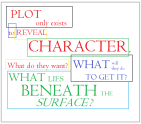 I must introduce a story-worthy problem in those pages, a test propelling the protagonist to the middle of the book. The opening paragraphs are vital. They are the hook, the introduction to my voice, and must offer a reason for the reader to continue past the first page.
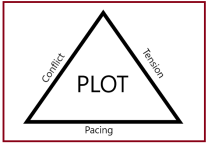 My favorite books open with a minor conflict, evolving to a series of more significant problems, working up to the first pinch point, where the characters are set on the path to their destiny.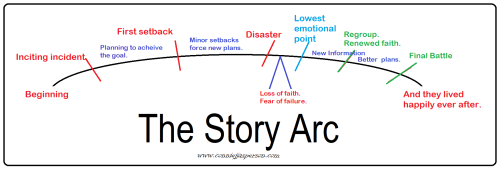
 The inciting incident is followed by a series of plot points, places where complications are introduced into the narrative.
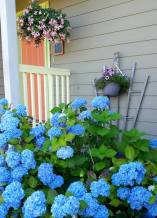 The opening setting for this story is a small town in an exceedingly rural part of Thurston County. One must travel at least ten miles in any direction to find another city. After sundown, you must drive on narrow, winding, pitch-black country roads. I, the protagonist in my story, suffer from severe night blindness, which meant we had to return home before sundown, putting a real crimp in our social life.
 Major surgeries happened for the other two, and I was many miles away to the south, getting our house on the market. But our sons and daughters are entering middle age, and our older grandchildren are adults. Despite our worries, our granddaughters proved they were mature and more than capable of handling their lives.
 The protagonists are settling into the new neighborhood. One of the niftiest things about their community is the Starbucks—and yes, I did say Starbucks. The owners of the
  I find that writing is easy here. Creativity comes in bursts, and I feel good about my writing. We have pared our possessions down to the point that they don’t possess us—something you don’t realize is a problem until you are faced with serious downsizing.
 In writing, this happens when the narrative keeps expanding, and expanding, and expanding … and what was canon in chapter 4 is contradicted in chapter 44. The story grows as we write it.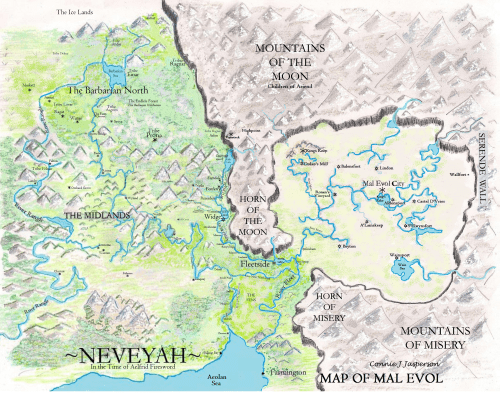
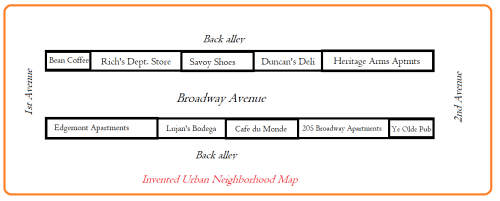 If you are writing a tale set in a fantasy or sci-fi setting, you are creating that world.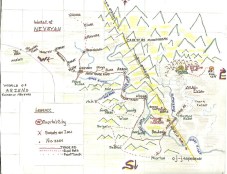
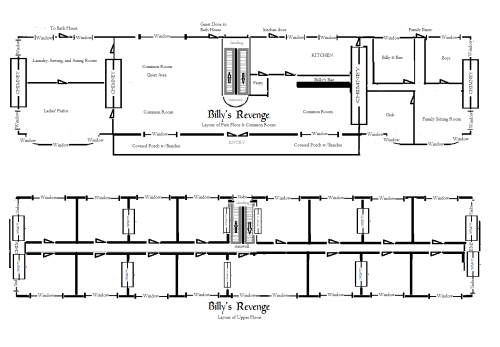 Your map doesn’t have to be fancy. Use a pencil to easily update your map if something changes during revisions. You want to know:
 No matter the level of our education or the dialect we speak, we use these rules and don’t realize we are doing so.
 Muddled phrasings often slip by when I revise my work because my mind sees the words as if they were in the correct order. This is the writer’s curse—the internal editor knows what should be there, and the eye skips over what we actually wrote.
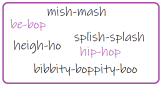 I adore mishmash words. They’re poetic and musical and roll off the tongue with a satisfying rhythm. Sadly, while I regularly bore my grandchildren with them, I hardly ever get to write them. Mishmash. Hip-hop.
 “Ing” words are a terrible temptation to those of us raised on Tolkien. He was writing a century ago, but that style of lush prose has fallen out of fashion. We open the gate to all sorts of verbal mayhem when we lead off with an “ing” word at the front of a sentence.
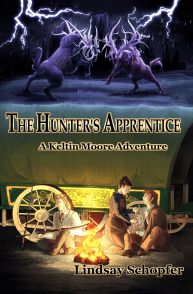 It’s been over ten years since I first started writing my series about the adventures of a professional monster hunter. With the release of
 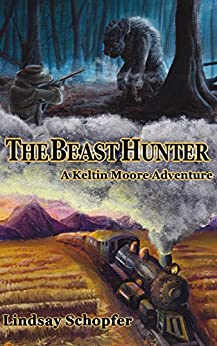 One of my most treasured experiences in writing The Adventures of Keltin Moore has been meeting the fantastic subject experts in the course of my research. I already mentioned panning for gold, but there have been so many more generous, enthusiastic people I’ve spoken to on subjects ranging from big game hunters to horse-pulled wagons. In particular, I feel blessed to have known Gordon and Nancy Frye. The Fryes are a fantastic wealth of historical information, particularly regarding the development and implementation of firearms over the centuries. If you ever read something in my stories and thought that something involving guns was particularly cool, you can probably thank the Fryes for contributing to it!
 Lindsay Schopfer is the award-winning author of The Adventures of Keltin Moore, a series of steampunk-flavored fantasy novels about a professional monster hunter. He also wrote the sci-fi survivalist novel Lost Under Two Moons and the fantasy short story collection Magic, Mystery and Mirth. Lindsay’s workshops and seminars on the craft of writing have been featured in a variety of Cons and writing conferences across the Pacific Northwest and beyond.
 The movers came on Friday to take what furniture we could gracefully fit into the new apartment. They loaded the van far more quickly than I thought they would. The main hiccup in that day came in the form of the elevator in our building. We are in building C but must go in through the main lobby in building B, take the elevator to our floor, and cross to our building via the sky bridge. It’s a long trek.
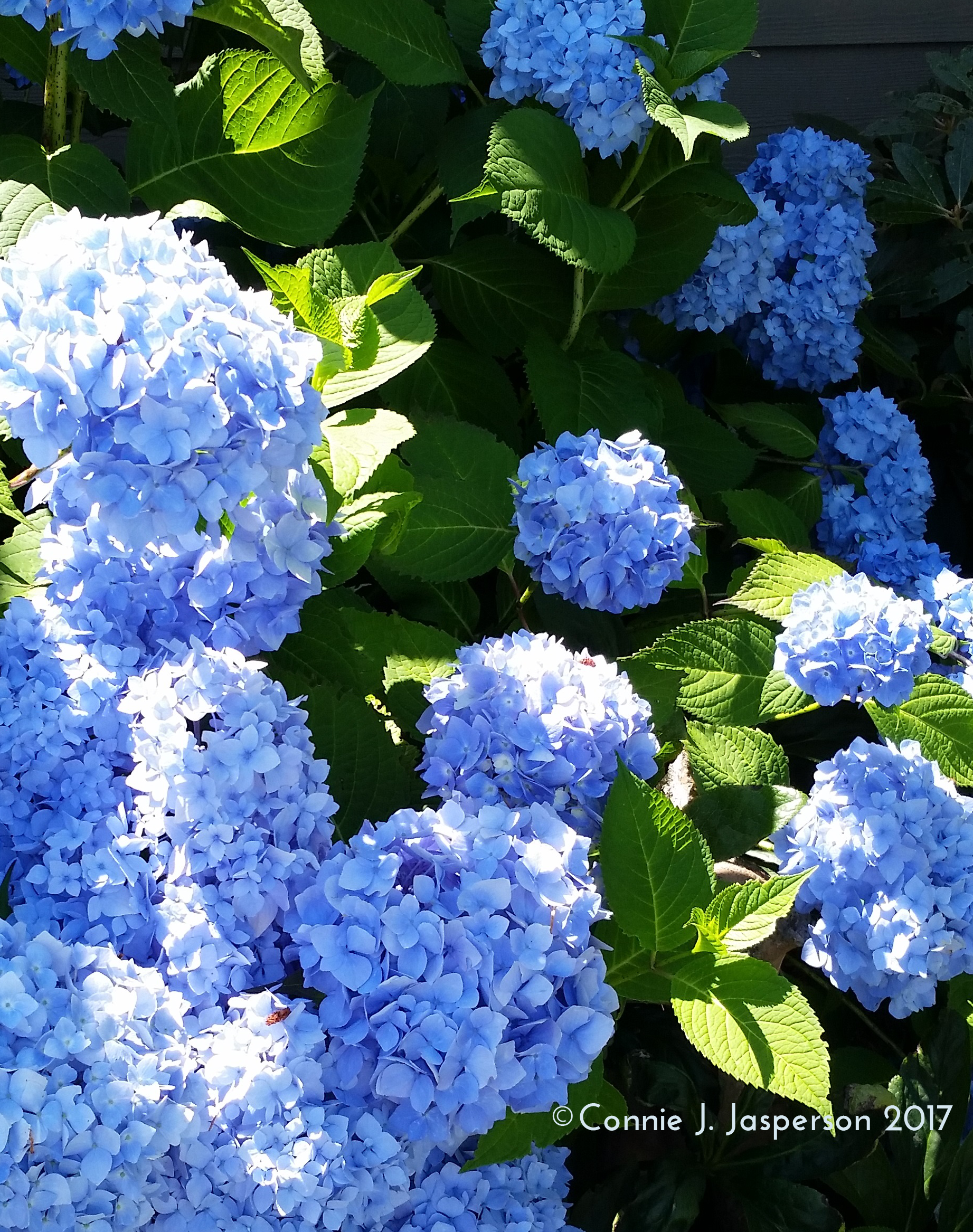 Over the next week, we have to donate as much as possible to be reused, and the rest will be hauled away by the junk removal company. They will not only take the junk but also clean the garage floor. (!!!)
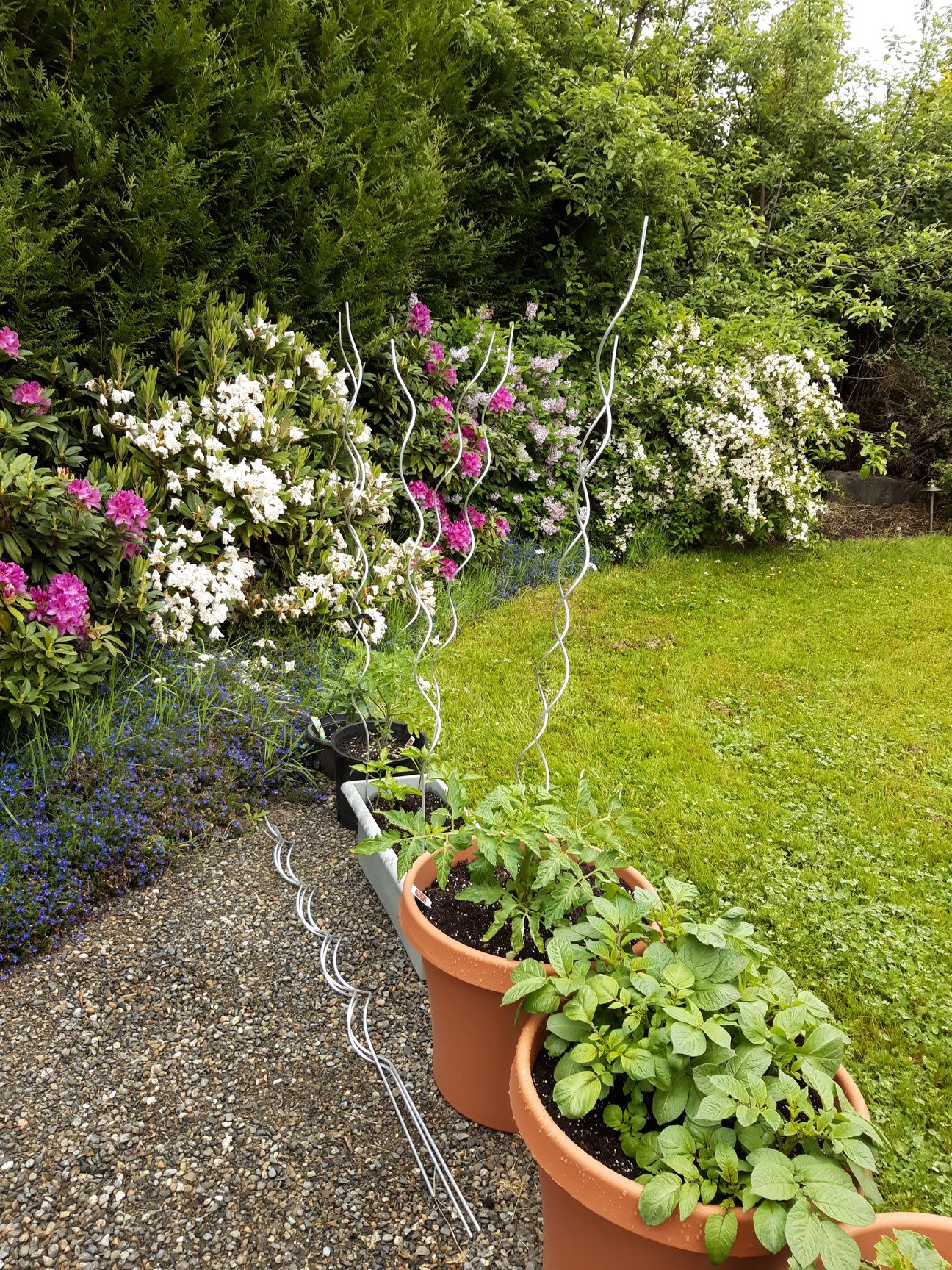 On the good side, it is easy to write here. I have been writing bits and bobs here and there on old unfinished manuscripts between bursts of unpacking, writing whenever I sit down to rest my back. It keeps me from fidgeting.


 Life in the Realm of Fantasy
.jpg&oldid=449104554)