
This last weekend, we went to a family party, a fun, noisy gathering typical of how we roll. Three of our children were there with their children and all the in-laws and outlaws. The food was fabulous, of course.
 The best thing about this weekend was seeing the grandchildren behaving like their parents did at their ages. We loved hearing their parents shouting the same gentle admonishments we offered when they were children: “Hey you! Stay in the yard!” and the ever popular “Get your hand away from that cake!” followed by, “Oh God! Here, let me wipe your face.”
I had the distinctly uncomfortable experience of driving in an unfamiliar area and trying to obey the law while following the verbal directions of the GPS—an epic fail. Fortunately, my husband is the soul of patience. Greg says soothing things like, “Don’t worry. They’ll calm down,” and “I think that was where we were supposed to turn.”
And the GPS lady, tranquil and unflustered no matter what the half-crazed woman at the wheel does, says, “Route recalculating ….”
 So now we’re home and nobody died. Once again, I am preparing a short story for submission to an anthology. I think it fits the theme, but whether or not the editor will agree is another question. I know it is correctly formatted because I read and followed the submission guidelines.
Each publisher, magazine, or contest website will have a ” Submission Guidelines ” page or section.” That page contains the rules specific to that particular publication or contest:
- length of submissions in word count, (Do not exceed or fudge this.)
- how they want you to format your work for their best use,
- where to submit the work,
- what date submissions close,
- if it is a contest, fees will be listed there.
I try to have a backlog of short fiction on hand for submission. It saves time if I have submission-ready work, as it will require minimal adjustment to fit various requirements.
 Most publishers use what is considered the industry standard, Shunn Manuscript Format. William Shunn didn’t invent it but made this knowledge available to all would-be authors via the Internet.
Use a 12-point font, which prints out at a pitch of ten characters per inch. This is critical knowledge because the font that the publisher’s guidelines require is the only one that will make it past the first editor’s inbox.
The preferred font will be clearly stated in their submission guidelines.
IF YOU INTEND TO FORMAT YOUR MS FOR HARD-COPY SUBMISSION TO AN OLD-SCHOOL PUBLISHER:
- Set the margins for your document at 3cm (1 inch) on all four sides.
- Align to the left side only; the right side should remain jagged. (THIS IS CRITICAL)
- Use a twelve-point font in black type only. Courier, Times New Roman, or Arial fonts may be specified, so check the magazine or anthology submission guidelines.
- Lines should be double-spaced with no extra spaces between paragraphs. (THIS IS CRITICAL)
- Single space between sentences after periods. (This is also critical)
- Indent new paragraphs and each new section of dialogue.
- Indicate scene breaks by inserting a blank line and centering the hash sign (#) in the center of that line.
- Center a hash sign # one double-spaced blank line down at the end of the manuscript. Or, simply write The End. This assures the editor that no pages are accidentally missing.
- Use underline for italicized words if you are using Courier font. If you are using Times New Roman, you can use proper italics. (Again, check the submission guidelines)
The header goes in the upper-right corner of every page of your manuscript except the first.
Your first page should include:
- The name of the work.
- The approximate word count, some will want it only to the nearest hundred.
- In the upper left, your contact details are formatted in the same font and size as the manuscript font.
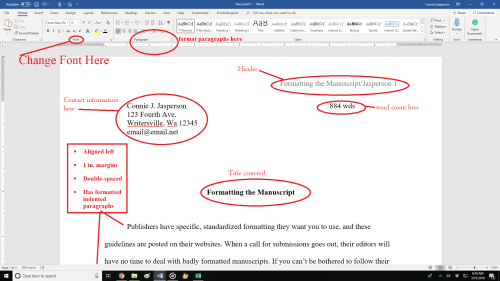 MANY contests and e-magazines want your manuscript formatted similarly but may require a different font. Some want the header on all pages, and others want your full author name in the header.
I use MS Word, but other word-processing programs are similar. To format your header in MS WORD:
- Go to the Insert Tab and click on: page numbers > top of page.
- From the drop-down menu, select > plain number three (the upper right-hand corner).
- Type your name and the title just before the number.
- Click on the body of your document, and the header/page number is set. It will appear to gray out.
To Format your manuscript so the page numbers start on page two: click on this link to go to the MS Word Learning and Help Center if you are using MS Word. The process is a little more involved, and I didn’t want to fill this post up with that, so use the resource your word-processing software manufacturer offers. That’s the way I learned to use this program.
 Be aware that ALL contests and magazines will want original work that has never been published.
Most anthologies will also want original, never-before-published work. The exception to this is if the collection is a promotional anthology showcasing stories the publisher printed the previous year. Often these collections are the editors’ favorites.
Most contracts will state that you can reuse or republish the work 3 months or 90 days after the date of their publication. Don’t accept any contract that doesn’t allow you to regain the rights to your own work at some point.
When you do republish the work, you must include a caveat on the copyright page stating that it was originally published in their anthology or magazine and what issue/year it appeared.
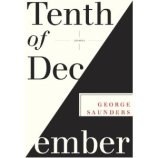 At some point this year, I plan to publish a compilation of short stories. I love reading anthologies and short story compilations. Some of the best work I’ve read has been in short story form.
I hope you have been writing short stories or flash fiction. They are fun to write and are easier to sell than novels. It’s a happy day when my work resonates with the right editor, and I get that email of acceptance.
 Weather is not just a component of world-building. Sometimes, the weather is the villain in real life. In June and early July of 2021, we here in the Pacific Northwest had strange weather climate-wise.
 Traditionally in the past, summers in the Puget Sound area of Washington state didn’t really begin until July 5th. We celebrated the 4th of July with low clouds and drizzle, and “blue tarp camping” was a staple of family vacations. June never became unbearably warm.
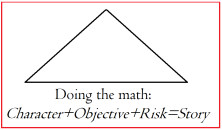 Tragedies on this scale destroy communities but can also unite the survivors. Maui has a long road ahead. Recovery will not be easy as they are an island, and everything must be shipped to them across the ocean. However, people all over the world are stepping up, and the rebuilding is beginning.
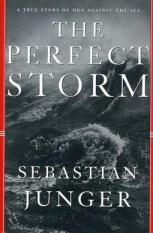 The Perfect Storm is a
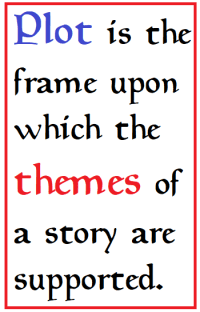
  Symbolism is one aspect of a story that helps create mood and atmosphere. It supports and strengthens the theme and is subtle, subliminal. When a little thought is applied to how it is used, symbolism conveys meaning to the reader without beating them over the head.
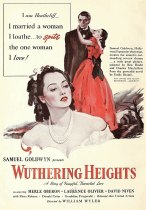 The way
 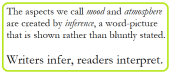 How a setting is shown contributes to atmosphere. But the setting is only a place—it is not atmosphere. Atmosphere is created as much by odors, scents, ambient sounds, and visuals as by the characters’ moods and emotions.
  But we all know infodumps are an insidious poison, so how do we apply this backstory without losing the reader?
 Character A is a shaman, a fire-mage smith and warrior, and is slated to be the next War Leader of the tribes. His shamanic purpose is to unite the people, both the tribes and those citadels who have turned tribeless. He is the chosen champion of the Goddess his sect of mages serves, and his success or failure will determine her fate.
 This void is vital because characters must overcome fear to face it. As a reader, one characteristic I’ve noticed in my favorite characters is they each have a hint of self-deception. All the characters – the antagonists and the protagonists – deceive themselves in some way about their own motives.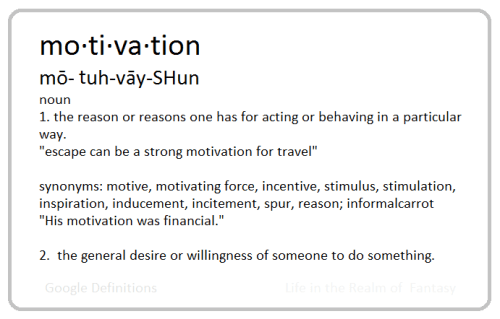
 In his book,
  The story follows a group of
 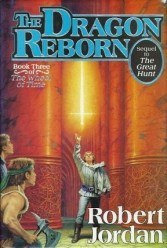 However, when the antagonist is a person, I ask myself, why this person opposes the protagonist? What drives them to create the roadblocks they do? Why do they feel justified in doing so?
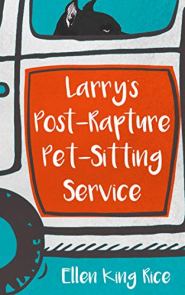 We must remember that the characters in our stories don’t go through their events and trials alone. We drag the reader along for the ride the moment we begin writing the story. They need to know why they’re in that handbasket and where the enemy thinks they’re going, or the narrative will make no sense.
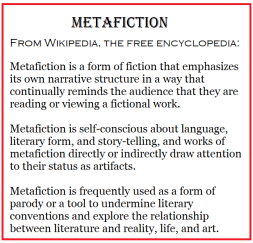 Indies occasionally have to write a synopsis if they submit their longer work to contests, agents, or publishers. When a literary contest or publisher asks for a synopsis, they don’t want a book blurb, which is a “this is why you should buy my book” teaser.
 Don’t label your synopsis file with a generic name like “synopsis.docx.” Be specific and include the book title in the label: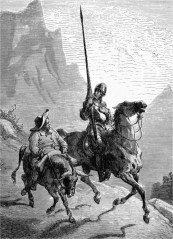
 I recommend you go to the Jericho Writers site and follow their guidelines if asked for a synopsis. The article there is one of the most comprehensive and useful ones I’ve read anywhere. Again, that article can be found at
  I quickly regretted that decision.
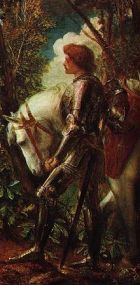 Arthur and his court originated as ordinary 5th or 6th-century warlords. But the tales featuring them were written centuries later. Their 11th-century chroniclers presented them in contemporary armor as worn by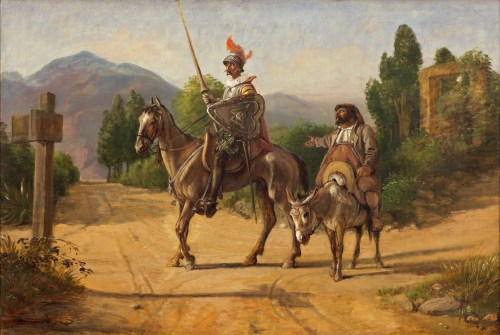
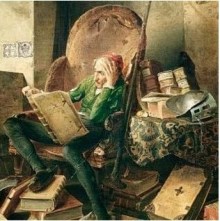
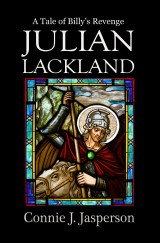 I am an abject fangirl for Don Quixote, so different versions of both Galahad and Quixote appear regularly in my work.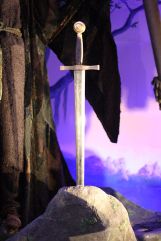
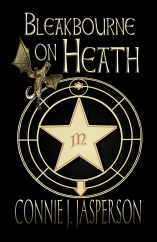 And sometimes a theme refuses to let go of me. I took Arthurian myth and the chivalric code and turned them inside out with the characters of Lancelyn and Galahad in
  Some authors despise that process so much that they go indie, thinking they won’t have to leap that hurdle. But there is no escaping it.
 Writing these kinds of personal introductions is a pain—but only because we don’t know what is expected or what we should include.
 Please do NOT give it the hard sell. The
  Large Publishing Houses: Large traditional publishers want agented submissions only. On the rare occasions they open the doors to unagented authors, their editors expect a 1-page, 300-word description of your novel. This is the query letter, as described above. Your manuscript is not attached to this—if they like what they see in the query, they will look at the synopsis and possibly ask for the first chapter.
 Sometimes my queries get good results, and sometimes not. I’ve said this before, but query letters are like ice cream. Everyone likes certain flavors and must be pushed to try new ones.
 For most of my writing life, I was like a toddler given a package of
 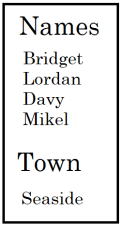 Build a glossary of words and spellings unique to your story, and be sure to list names. I use an Excel spreadsheet, but you can use anything you like to help you stay consistent in your spelling.
 The master file might be titled: Lenns_Story
 I gained a fantastic local group through attending write-ins for NaNoWriMo, the Tuesday Morning Rebel Writers. Since the pandemic, and with several of our members now on the opposite side of Washington State, we meet weekly via Zoom. We are a group of authors writing in a wide variety of genres.
 Learn about structure and pacing from successful authors. Spend the money to go to conventions and attend seminars. You will learn so much about the craft of writing, the genre you write in, and the publishing industry as a whole—things you can only learn from other authors. I gained an extended professional network by joining
  The year that followed was filled with mistakes and struggles. Legitimate publishers NEVER contact you. You must submit your work to them, and they prefer to work with agented authors.
 Short stories and micro fiction are a training ground, a way to hone your skills. They’re also the best way to get your name out there. I suggest you build a backlog of work from 100 to 5,000 words in length. Keep them ready to submit to magazines, anthologies, and contests.
 When I plan a character, I make a simple word picture of them. The word picture is made of a verb and a noun, the two words that best describe each person.
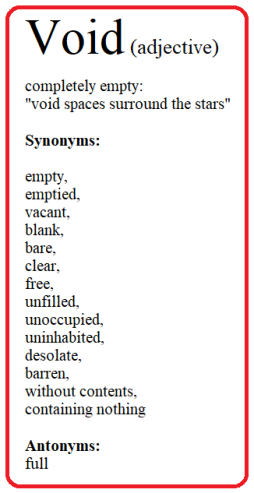 When I write my characters, I know how they believe they will react in a given situation. Why? Because I have drawn their portraits using words:
 Sometimes the path to publication is fraught with misery; next week, we will discuss that. Other times, the book writes itself and flies out the door. Who knows how my next novel will go?
 A character’s preconceptions color their experience of events. We readers see the story through their eyes, which shades how we perceive the incidents.


 Life in the Realm of Fantasy