
Today’s post focuses on word choice. I’ve just finished reading a mystery novel, and while I enjoyed the plot and the characters, the editor in my soul says I can’t recommend it. Therefore, I will not name the book or the author.
 This novel was meticulously self-edited. I could see it was run through the author’s writer’s group many times, and the major flaws were ironed out. There were few typos, and the formatting was done well.
Self-editing is a struggle. The eye is biased when it comes to the structural flaws of our own work. This is why the smart author runs things past their writing group. The problem I see most often is that writing group members are not usually editors. They are acquainted with the basics of grammar but aren’t familiar with some advanced functions. They may have been taught grammar in school but have forgotten some as they had no use for it until they began writing.
And some never understood it because of the way it was presented in the first place. When something is boring, we don’t pay attention.
 Let’s be real—style and grammar guides are tedious and hard to understand. We may own them but we hate to crack them open. Trust me, researching grammar gets easier and more interesting as you advance in writing craft.
Unfortunately, the novel I wanted to enjoy was ruined by the opening line of the first paragraph on page one. That flaw interested me, so the editor in my head continued reading, analyzing why such a promising book failed.
Positives: The characters were engaging, and the plot was an original, well-conceived premise. The mystery was intriguing, and the setting was shown well.
Negatives: The author’s penchant for beginning sentences with gerunds – “ing” words – and peppering them throughout the narrative soured me on what could have been a strong novel. The opening paragraph ran similarly to this 29-word sample, with gerunds at the front of three sentences in a row:
Moving along quickly, we hurried through the store. Huddling behind the shelves, we waited until Mason had passed. Moving quickly again, we made it safely out the door.
The rest of the book was written in that style.
If I had been in her writing group, I would have suggested (gently) that she either move the gerunds to the final clause of each sentence or eliminate them. I know it’s frustrating to hear an editor suggest you completely reword prose you have already shaped and reshaped. But trust me, a reader will appreciate it.
We hurried through the store, huddling behind the shelves until Mason had passed, then slipped out the door.
Ten words were removed from the first example, but the scene’s intention isn’t altered.
This is where the choice and placement of words come into play. Active prose is constructed of nouns followed by verbs or verbs followed by nouns.
- Moving the verbs to the front of the sentence makes it stronger.
- Nouns are inherently inert but feel active when followed by verbs.
Words ending in “ing” fall into the family of gerunds. They are often used as verbs that have been turned into nouns, such as running and dancing. They are usually intransitive verbs (but sometimes they are transitive) and are necessary for good writing. But used improperly and too freely, gerunds are action’s kryptonite. (Edited 11-23-2022 for clarity.)
We followed the river, running alongside it until we could go no farther.
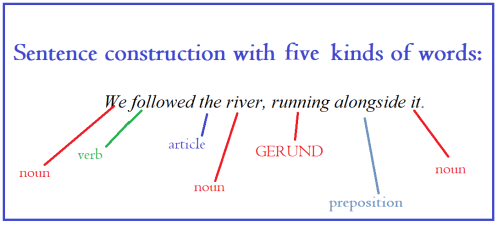
Writers who use gerunds too freely mean well. After all, a gerund began life as a verb but underwent an identity change, becoming a noun by adding the “ing” suffix.
Authors who lead sentences off with them are trying to get their prose moving.
So now we know a new truth: when we lead off our sentences with “ing” words, we are opening with a verb that wants to be a noun and behaves like one. This word choice separates the reader from the action, so while a gerund is a verb form, it is a word with a supporting role.
The abundance of gerunds we put into the first draft are an aspect of passive phrasing, the mental shorthand we use to first tell the story.
In most first drafts, the passive phrasing is a code. The author’s “subconscious writer” embeds signals in the first draft. It tells the author that the characters are transitioning from one scene to the next. They, or their circumstances, are undergoing a change. This change is something the reader must know.
 In this regard, gerunds and other passive code words are the author’s first draft-multi-tool. They are a compact tool that combines several individual functions in a single unit. One word, one packet of letters that serves many purposes and conveys multiple mental images to the author.
At some point, we will finish the first draft, giving our novel a finite ending. When we begin revising that first draft, gerunds and passive phrasing, these code words and clues we left ourselves, will tell us what we must expand on. They show us the scene, and we rewrite it so the reader can see it too.
 Sometimes, the story demands a death, and 99% of the time, it can’t be the protagonist. But death must mean something, wring emotion from us as we write it. Since the character we have invested most of our time into is the protagonist, we must allow a beloved side character to die.
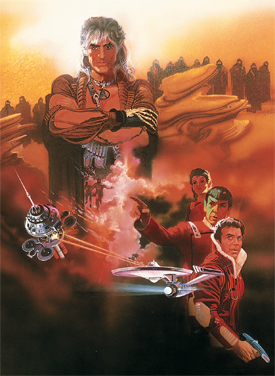 Mortally wounded, the antagonist, Khan, activates a “rebirth” weapon called Genesis, which will reorganize all matter in the nebula, including Enterprise. Though Kirk’s crew detects the activation and attempts to move out of range, they will not be able to escape the nebula in time without the ship’s inoperable warp drive. Spock goes to restore warp power in the engine room, which is flooded with radiation. When McCoy tries to prevent Spock’s entry, Spock incapacitates him with a
 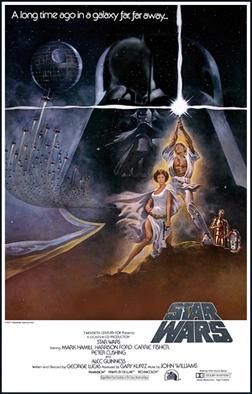 You, as the author, must understand what drives and motivates even the walk-on, disposable characters. Are they “a red shirt,” that iconic Star Trek symbol of the throw-away character? Or are they a “Spock,” the beloved friend who offers themselves up to save others?
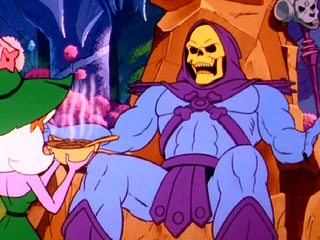 Skeletor is a cartoon villain with one of the least believable storylines in the history of cartoons. He has great passion and drive as a villain, but it’s all noise and show. His ostensible quest is to conquer Castle Grayskull and acquire its ancient secrets. Possession of these would make him unstoppable, allowing him to rule the world of Eternia.
 When we write a story, we want the protagonist’s struggle to mean something to the reader. We put them through hell and make their lives miserable. But we must remember that the characters in our stories aren’t going through these horrible trials alone. The moment we begin writing the story, we are dragging the reader along for the ride.
 Then there is the marketing of the finished product, but that is NOT my area strength, so I won’t offer any advice on that score.
 However, we must have a fundamental understanding of basic mechanical skills. These rules are the law of the road, and readers expect to see them. Knowledge of standard grammar and punctuation rules prevents confusion. Readers who become confused will set the book aside and give it a one-star review.
 Ernest Hemingway
 Each author is different, and the length of time they take on a book varies. Some authors are slow—their books are in development for years before they get to the finish line. Others are fast—their novels complete and ready to be published in a relatively short time. Regardless of your timeline, this is where project management skills really come into play.
 But as I said earlier, I have no skills in the area of marketing and no advice worth offering.
 Lesser dramas might only touch us on a peripheral level, yet they can affect our sense of security and challenge our values.
 The camera zooms out and now we see the idyllic serenity of a clear sunny morning on Spirit Lake and Harry doing his morning chores.
 We writers must make our words count. We must show our characters in their comfort zone in the moments leading up to the disaster. Not too much of a lead in, but just enough to show what will soon be lost.
 Let’s start with craft. If you are at the beginning stage of your writing life, it’s hard to know where to find help in shaping your work into a coherent story. For many years, I didn’t even know books on the craft of writing existed.
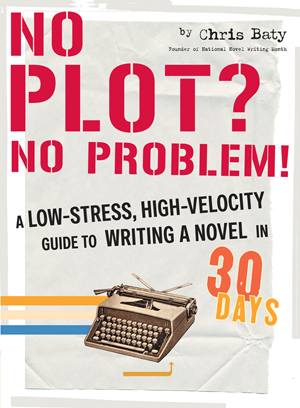 Finishing off the resources from the official NaNoWriMo store is the handbook,
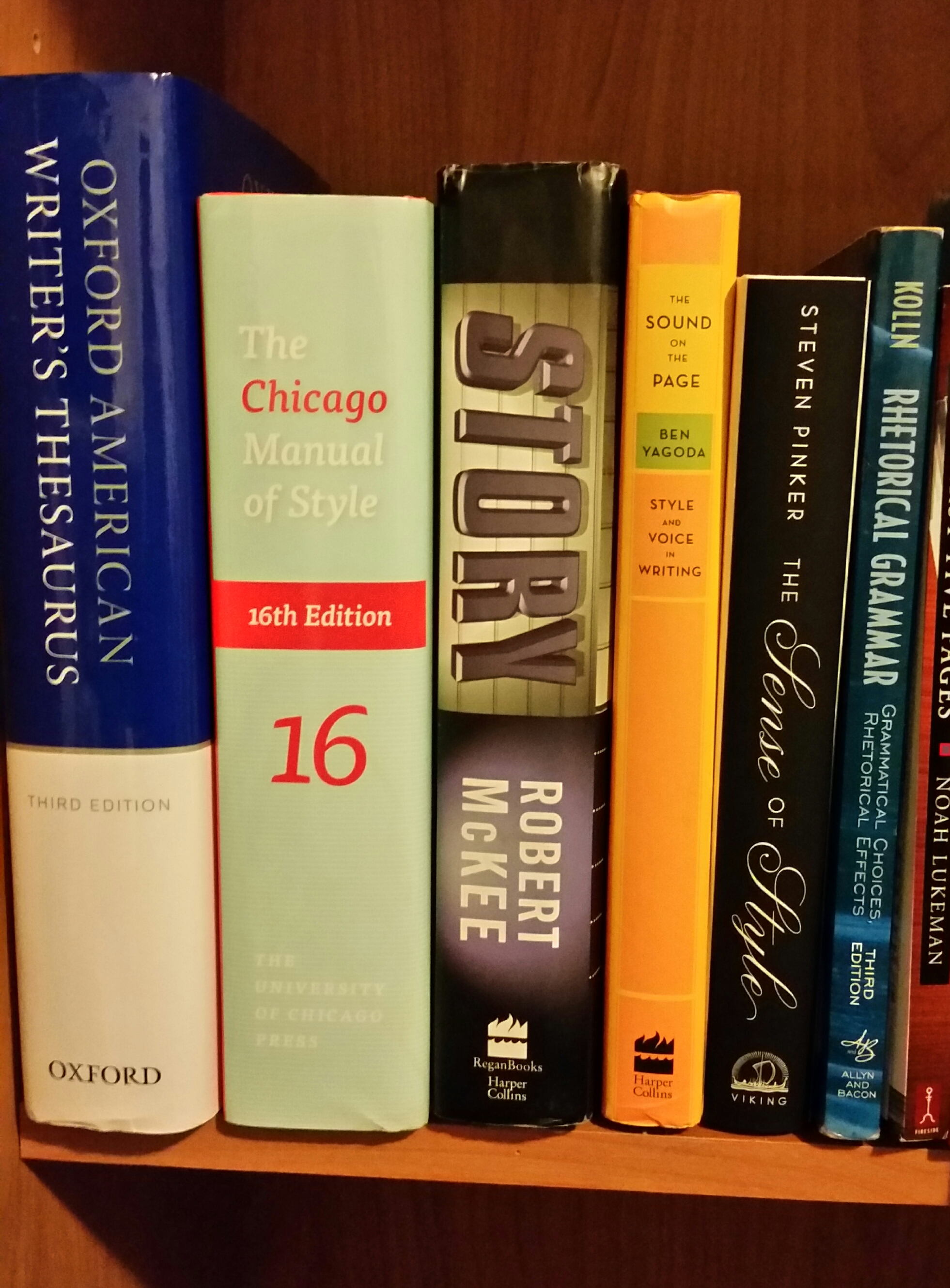
 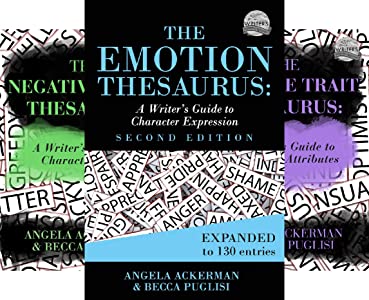 The following is the list of books that are the pillars of my reference library:
 We usually start our online hunt for information by “googling” a question, no matter what browser you use. Be wary and read several articles to get a broader view of what you are looking for. I also check dates to ensure the information is current and bookmark it if it is relevant to my story. Note: Your browsing history may look a little … unusual … after a while.
 www.Thesaurus.Com
 So, let’s talk about writers’ groups. A good group is the best way to learn about this craft. Your area may have established writers’ groups, and some may be able to accept new members. The best way to find out is to google writer’s groups in your town and make inquiries.
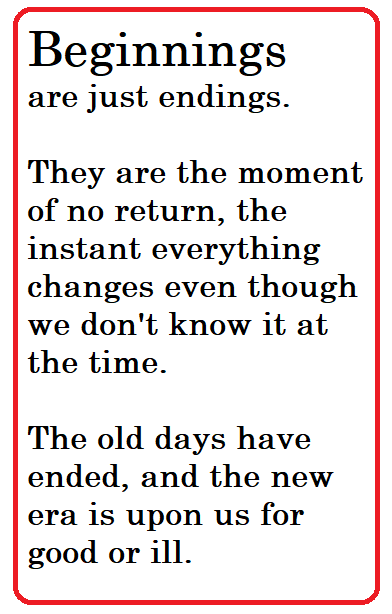 Today, we will pinpoint the moment in our protagonist(s) life where the story starts. We’re locating the point where this particular memoir, poem, novel, or short story begins.
 Setting: Venice in the year 1430.The weather is unseasonably cold. A bard is concealed amongst the filth and shadows in a dark, narrow alley. Sebastian hides from the soldiers of a prince he has unwisely humiliated in a comic song.
 But the opening moment, the scene showing a lowly bard hiding behind a rubbish heap, is the moment in Sebastian’s life where the story the reader wants to hear starts. That scene is where this story begins regardless of how interesting Sebastian’s story, Venice’s story, or the Warlock Prince’s story was before that day. It is the beginning because this is the point where all the essential characters are in one place and are introduced: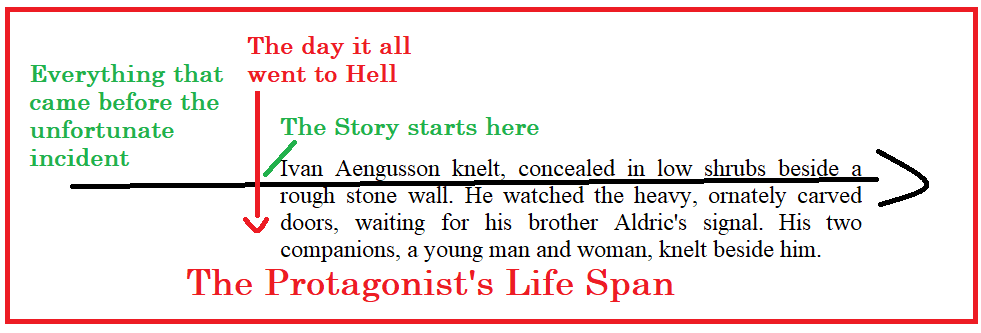
 Post two
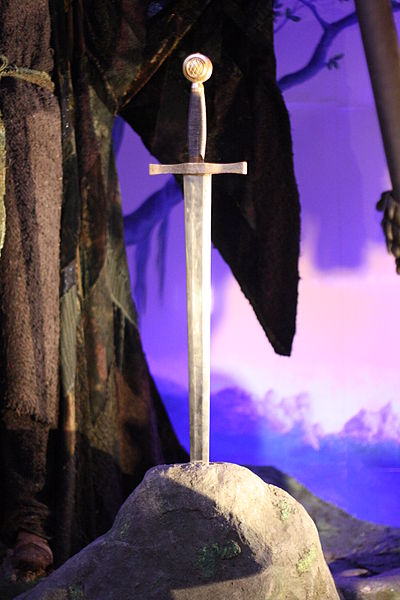
 Marco arrives at the inn. The innkeeper mentions Klaus was there, but now he’s gone. Marco sees his barge is still there, and the deckhands don’t know where he is. He goes to the gatehouse where Dinah is supposed to be on duty and immediately knows something is wrong. He fears Klaus has gotten to her, and instinct tells him to go to the Temple.
 Now we’re going to design the conflict by creating a skeleton, a series of guideposts to write to. I write fantasy, but every story is the same, no matter the set dressing: Protagonist A needs something desperately, and Antagonist B stands in their way.
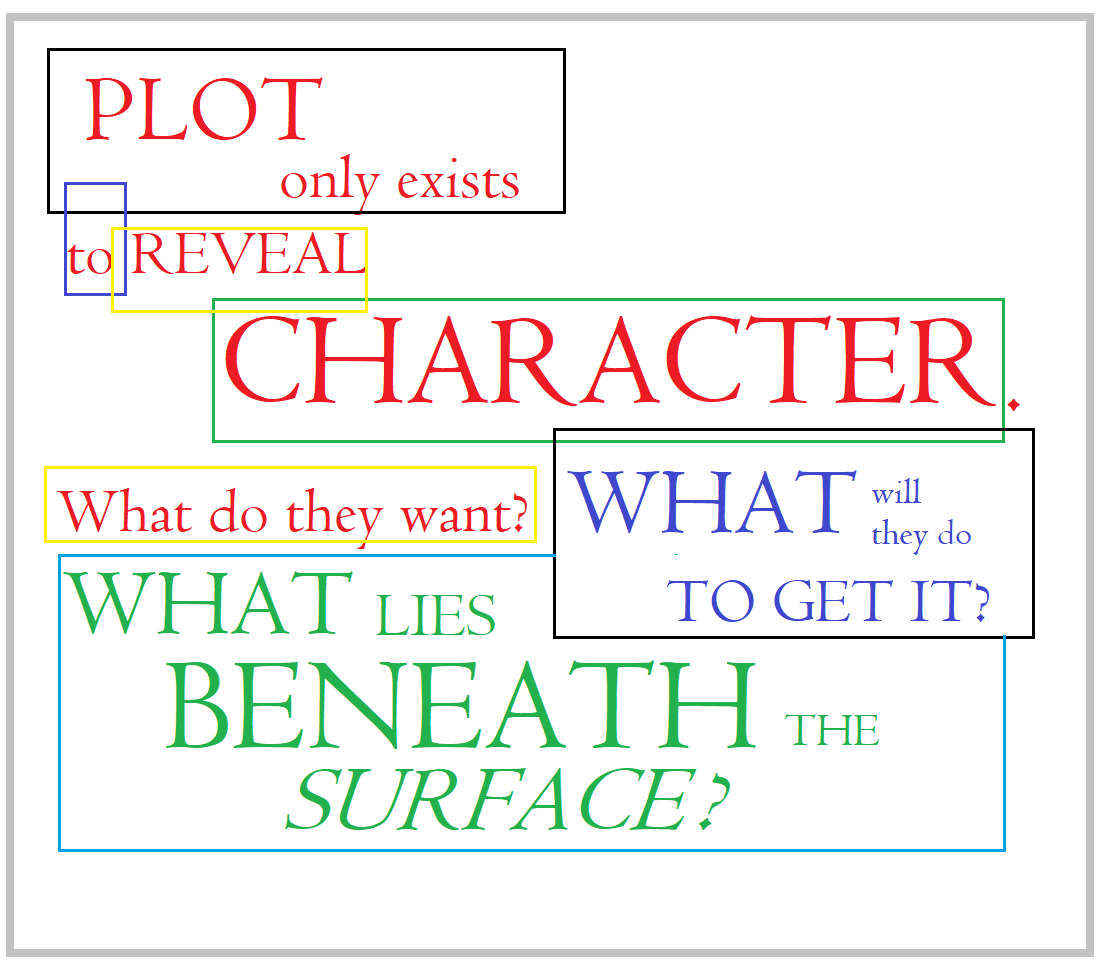 Where does our soldier’s story begin? We open the story by introducing our characters, showing them in their everyday world, and then we kick into gear with the occurrence of the “inciting incident,” which is the first plot point. That might be their arrival at their first camp in the Ardennes region.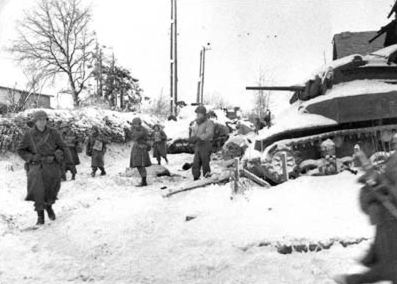
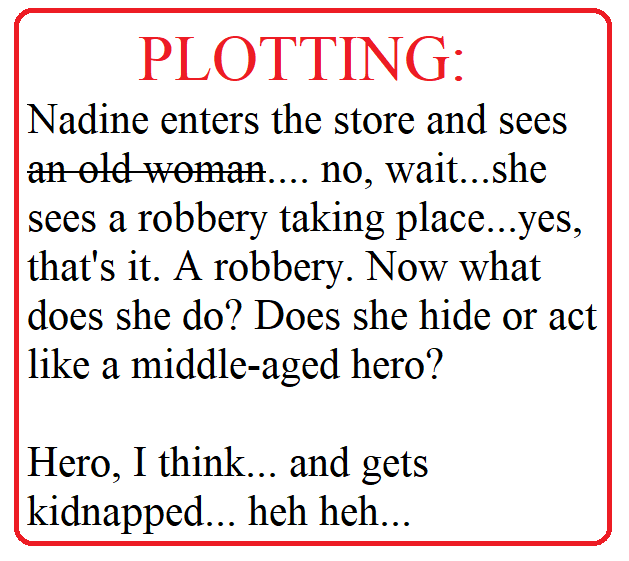 One thing that I do is make notes that help limit my tendency toward heavy-handed foreshadowing. I try to keep it brief, but what will be enough of a hint, and where should it go?


 Life in the Realm of Fantasy