
Born in 1775, Jane Austen is remembered today for her six novels, the most famous of which is Pride and Prejudice. Austen touched on familiar themes throughout her work, including romance, youth, wealth, and poverty.
 Even today, her humor shines with sharp-edged wit delivered without condescension. Her most memorable protagonists rise above the trivialities of life that absorb the sillier characters.
Via Wikipedia:
With the publication of Sense and Sensibility (1811), Pride and Prejudice (1813), Mansfield Park (1814), and Emma (1816), in her lifetime she achieved modest success and, as the books were published anonymously, little fame. She wrote two other novels, Northanger Abbey and Persuasion, both published posthumously in 1818, and began another, eventually titled Sanditon, but died before its completion. She also left behind three volumes of juvenile writings in manuscript, the short epistolary novel Lady Susan, and another unfinished novel, The Watsons. [1]
Austen’s work delved deep into the issues women faced, which were not discussed in polite company, and she did it while navigating the shark-infested waters of her society. Her central themes were:
Financial insecurity: The need for a gentlewoman to marry well for financial security rather than love.
Patriarchy: The sure assumption that men know best and the societal value of a man’s opinion as opposed to a woman’s opinion.
Women as property: The value of youth; a young woman is more desirable than an older woman, no matter how intelligent and thoughtful.
Hubris: Pride – and the humbling of pride.
The six published novels deal with social class, gender and society’s expectations, and morality.
What is right, moral, and proper? This theme of honorable morality winds through all her work.
And the other major theme, one opposing honorable morality, is pride. Pride loves power. It is listed as one of the world’s seven deadly sins because pride can become so powerful that it creates its own morality, crushing humility.
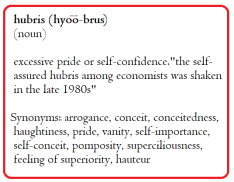 Pride is a powerful theme because it is the downfall of many characters in all literature, not just Jane Austen’s work.
These two themes, pride and morality, power Austen’s satire, give weight to her humor and support the triumphs and tragedies of her characters. Austen saw pride as a form of hubris.
Jane Austen’s novels have inspired many debates. Some claim they are politically conservative, and others argue they are progressive. Those who see conservatism in her novels claim her heroines support the existing social structure by doing their duty and sacrificing their personal desires.
Those who see progressive tendencies in her work argue that she is skeptical of the patriarchal right to rule, evidenced by her ironic tone.
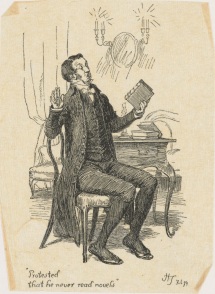
Illustration by Hugh Thomson representing Mr. Collins, protesting that he never reads novels
Austen understood the political issues surrounding the gentry. As a member of that society, she was able to pose questions relating to money and property, framing them in such a way they were entertaining while being thought-provoking. Her satire exposed the patriarchy, the arbitrary inequality of inheritance laws, and the perilous economic position of women. In an era when few career choices were available for women, the social system enforced a lifetime of servitude, either as a wife, possibly a teacher/governess, or as a servant.
Throughout Austen’s work, there is a tension between the prerogatives of society and the desires of the individual. Austen is often considered one of the originators of the modern, interiorized novel character.
How did she achieve this?
Again, Wikipedia tells us:
Austen is most renowned for her development of free indirect speech, a technique pioneered by 18th-century novelists Henry Fielding and Frances Burney. In free indirect speech, the thoughts and speech of the characters mix with the voice of the narrator. Austen uses it to provide summaries of conversations or to compress, dramatically or ironically, a character’s speech and thoughts. In Sense and Sensibility, Austen experiments extensively for the first time with this technique. For example,
Mrs. John Dashwood did not at all approve of what her husband intended to do for his sisters. To take three thousand pounds from the fortune of their dear little boy, would be impoverishing him to the most dreadful degree. She begged him to think again on the subject. How could he answer it to himself to rob his child, and his only child too, of so large a sum?
[…] However, Page writes that “for Jane Austen … the supreme virtue of free indirect speech … [is] that it offers the possibility of achieving something of the vividness of speech without the appearance for a moment of a total silencing of the authorial voice.” [2]
 Clearly, Mrs. Dashwood feels that ensuring her sisters-in-law are not impoverished would make her only son less rich. Less appealing to other affluent families.
So, Jane Austen used her characters’ thoughts and their spoken conversations to subtly weave her themes of pride, the human tendency for greed, and social inequity throughout the narratives of her novels.
I’ve said this before, but it bears repeating: when your writing mind has temporarily lost its momentum, and you are stretching the boundaries of common sense, it’s time to stop and consider the central themes.
I find it helps to remind myself that theme is one of the elements that drives a plot.
Credits and Attributions:
[1] Wikipedia contributors, “Jane Austen,” Wikipedia, The Free Encyclopedia, https://en.wikipedia.org/w/index.php?title=Jane_Austen&oldid=1073632619 (accessed March 15, 2022).
[2] Wikipedia contributors, “Styles and themes of Jane Austen,” Wikipedia, The Free Encyclopedia, https://en.wikipedia.org/w/index.php?title=Styles_and_themes_of_Jane_Austen&oldid=1063968945 (accessed March 15, 2022).
Media: Wikimedia Commons contributors, “File:Houghton Typ 805.94.8320 – Pride and Prejudice, 1894, Hugh Thomson – Protested.jpg,” Wikimedia Commons, the free media repository, https://commons.wikimedia.org/w/index.php?title=File:Houghton_Typ_805.94.8320_-_Pride_and_Prejudice,_1894,_Hugh_Thomson_-_Protested.jpg&oldid=351956491 (accessed March 15, 2022).
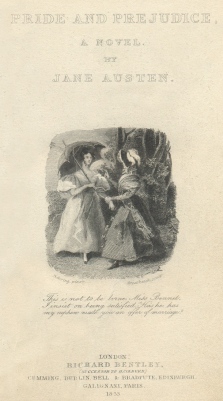
Media: Wikimedia Commons contributors, “File:Pickering – Greatbatch – Jane Austen – Pride and Prejudice – This is not to be borne, Miss Bennet.jpg,” Wikimedia Commons, the free media repository, https://commons.wikimedia.org/w/index.php?title=File:Pickering_-_Greatbatch_-_Jane_Austen_-_Pride_and_Prejudice_-_This_is_not_to_be_borne,_Miss_Bennet.jpg&oldid=351959807 (accessed March 15, 2022).
 Many of James’s books feature one common theme—lust.
 Henry James is famous for his novels and short stories laying bare the deepest motives and manipulations of the society he knew. However, he wrote one of the most famous novellas ever published,
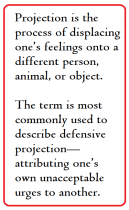 Projection
 Why is this so? Let’s look at an example.
 So how is social class different from economic class? In some parts of the world, they are the same. In others, social class is inherited, and economic class is acquired.
 For instance, I grew up in a financially stable lower-middle-class family. But I never buy pre-distressed furniture, no matter how much the designers on TV love it. This is because, by the time my youngest child left home, all my hand-me-down furniture was distressed. I like my furniture to reflect my life—un-distressed.
 February here in my little town was dryer than usual, far less rainy than in other parts of the Northwest. We have seen the sun much more than usual over the last two weeks, which doesn’t bode well for the summer. I can’t help but think of the horrible heat we had last June. We don’t like it when it gets up to 110 degrees Fahrenheit (43.3 Celsius). It’s literally hell when you realize most people here don’t have air conditioning in their homes. Up through the 1980s, we never needed it, as summers rarely topped 80 degrees (26.6).
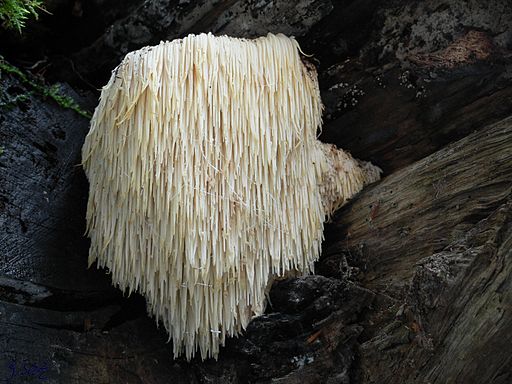 Edible mushrooms of all sorts abounded. One I hadn’t seen before, the lion’s mane mushroom, was the central feature in the displays of the two local craft fungi growers. It was interesting to look at, but … no.
 On the writing front, last week was quite productive. I received the final chapters back for my blended novel from my editor and am now going over the manuscript one last time. This is a merging of the stories of two characters and the events of one overarching plot arc. It’s the parallel stories of two battle mages, a father and son, told from their unique generational viewpoints.
 This merger of two novels into one involved cutting a number of chapters out of each and layering the stories so that the timeline moves forward at the right pace and doesn’t repeat what we already know.
 Also, I submitted my 2020 NaNoWriMo novel to
  Today we are discussing a particular kind of editor: the submissions editor. When I first began this journey, I didn’t understand how specifically you have to tailor your submissions for literary magazines, contests, and anthologies. Each publication has a specific market of readers, and their editors look for new works their target market will buy.
 The quality of your work isn’t the problem, and you have selected a publication that features work in your chosen genre. But your subgenre may not match what the readers of that publication want to see. After all, both spaghetti Bolognese and bruschetta are created out of ingredients made from wheat and tomatoes, but the finished meals are vastly different.
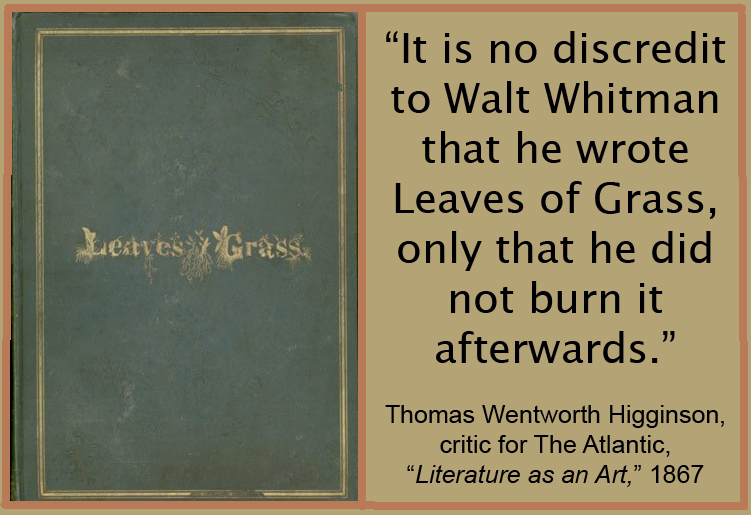 Some hobbyists expect special consideration and are offended when they don’t get it. Egos are rampant in this business, but in reality, no one gets to be treated like a princess.
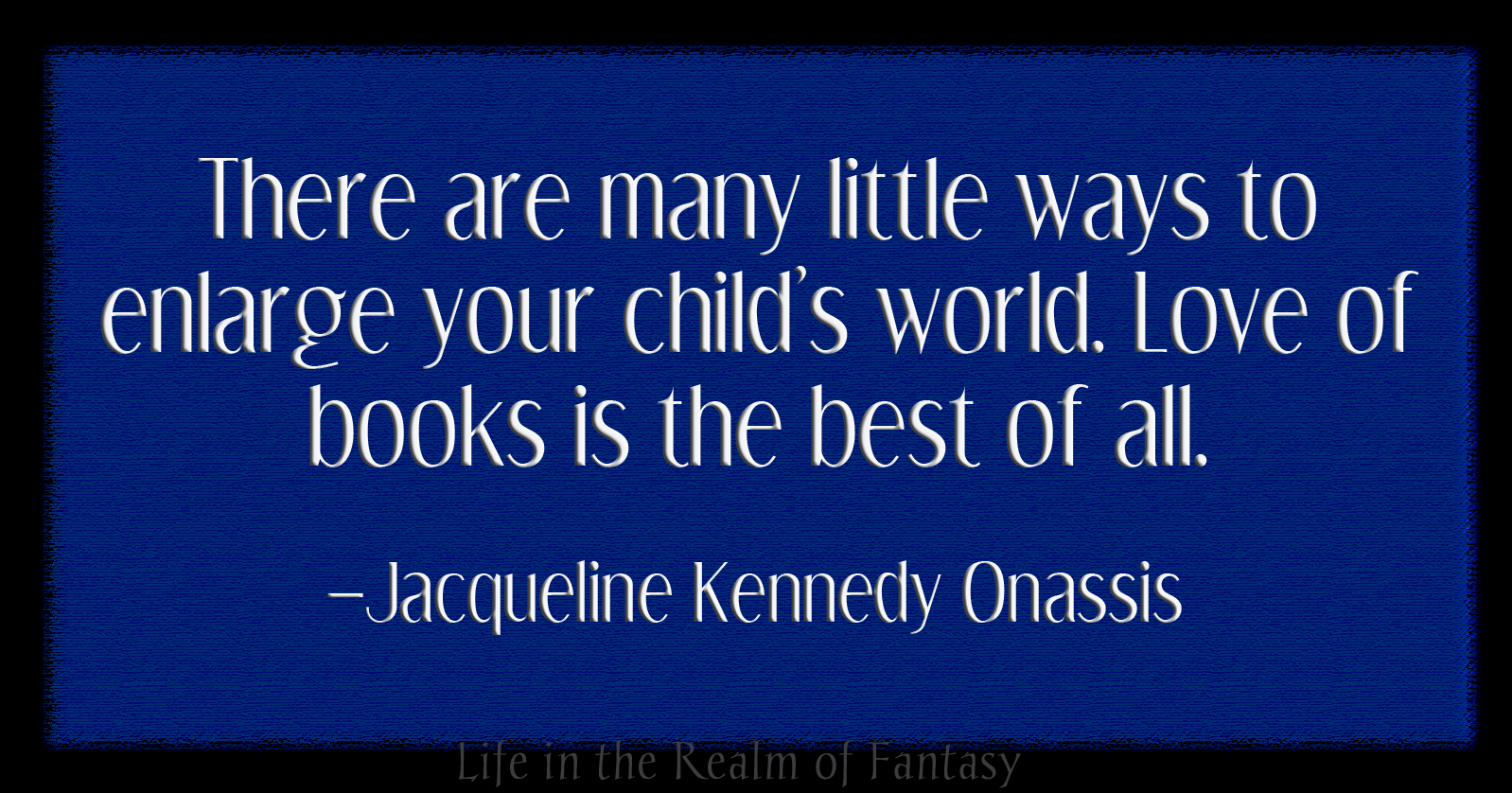 er sending your work.
 Please, if you consider yourself a professional, format your submissions properly. You want to stand out but getting fancy with your final manuscript is not the way to do that—you will be rejected out of hand if you don’t make this effort.
 For new and beginning authors, it may take an editor more than one trip through a manuscript to straighten out all the kinks. This may be a three-step process involving you making the first round of revisions and/or explanations, sending them back to the editor, who will make final round of suggestions. At that point, the editor is done. You have the choice to either accept or reject those suggestions in your final manuscript.
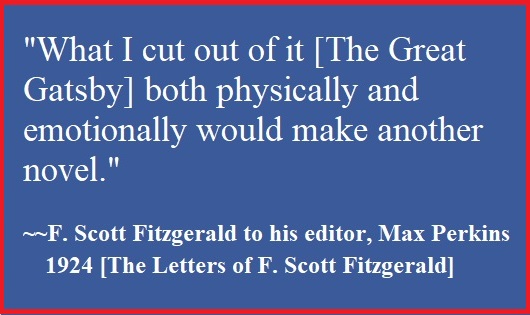 For creative writing, editing is a stage of the writing process. A writer and editor work together to improve a draft by correcting punctuation and making words and sentences clearer, more precise. Weak sentences are made stronger, info dumps are weeded out, and important ideas are clarified. At the same time, strict attention is paid to the overall story arc.
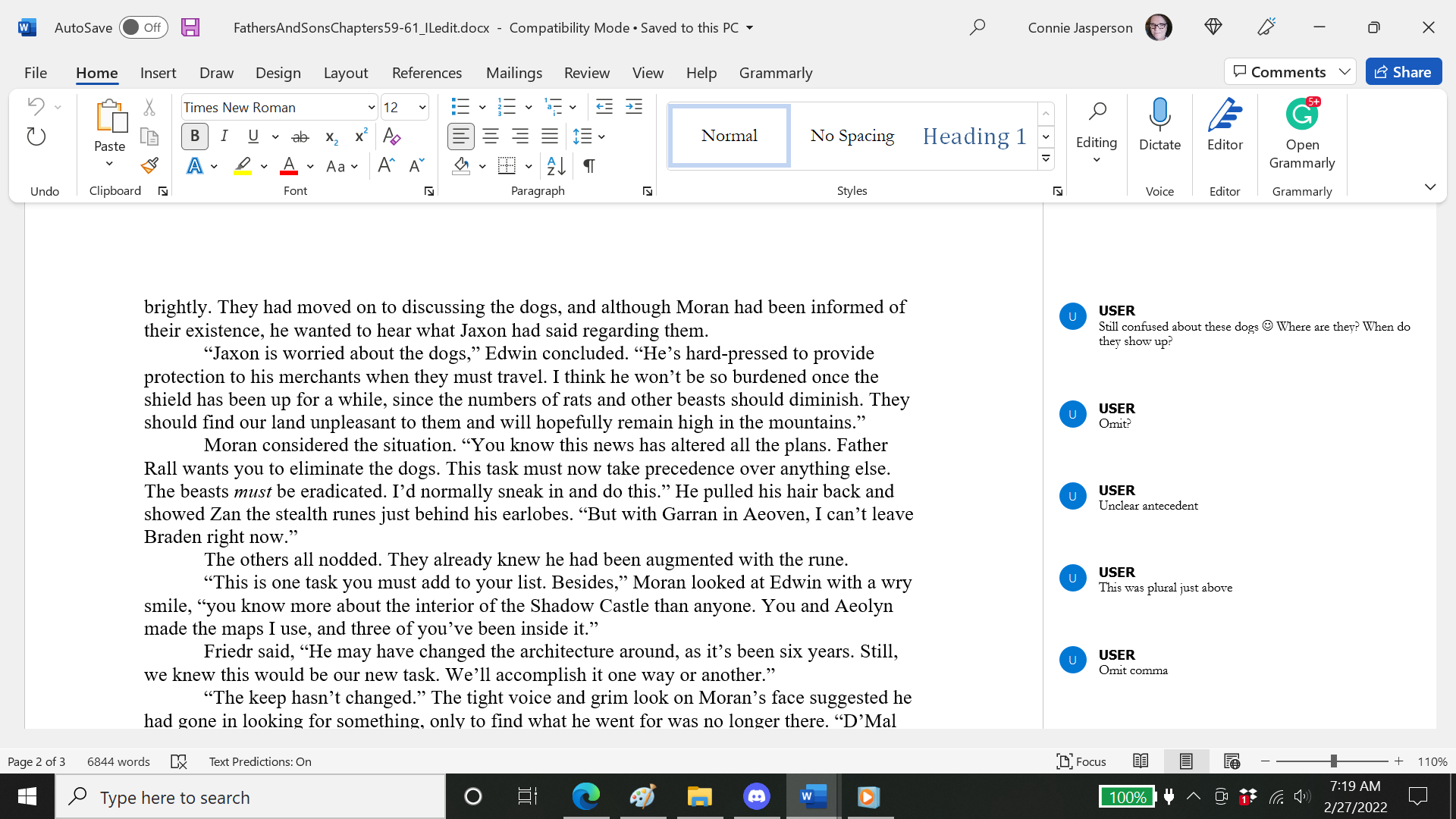 Editors who have been in the business for a long time find it much faster to use the markup function and insert inline changes. A new author or someone unfamiliar with how word-processing programs work might find it confusing and difficult to understand.
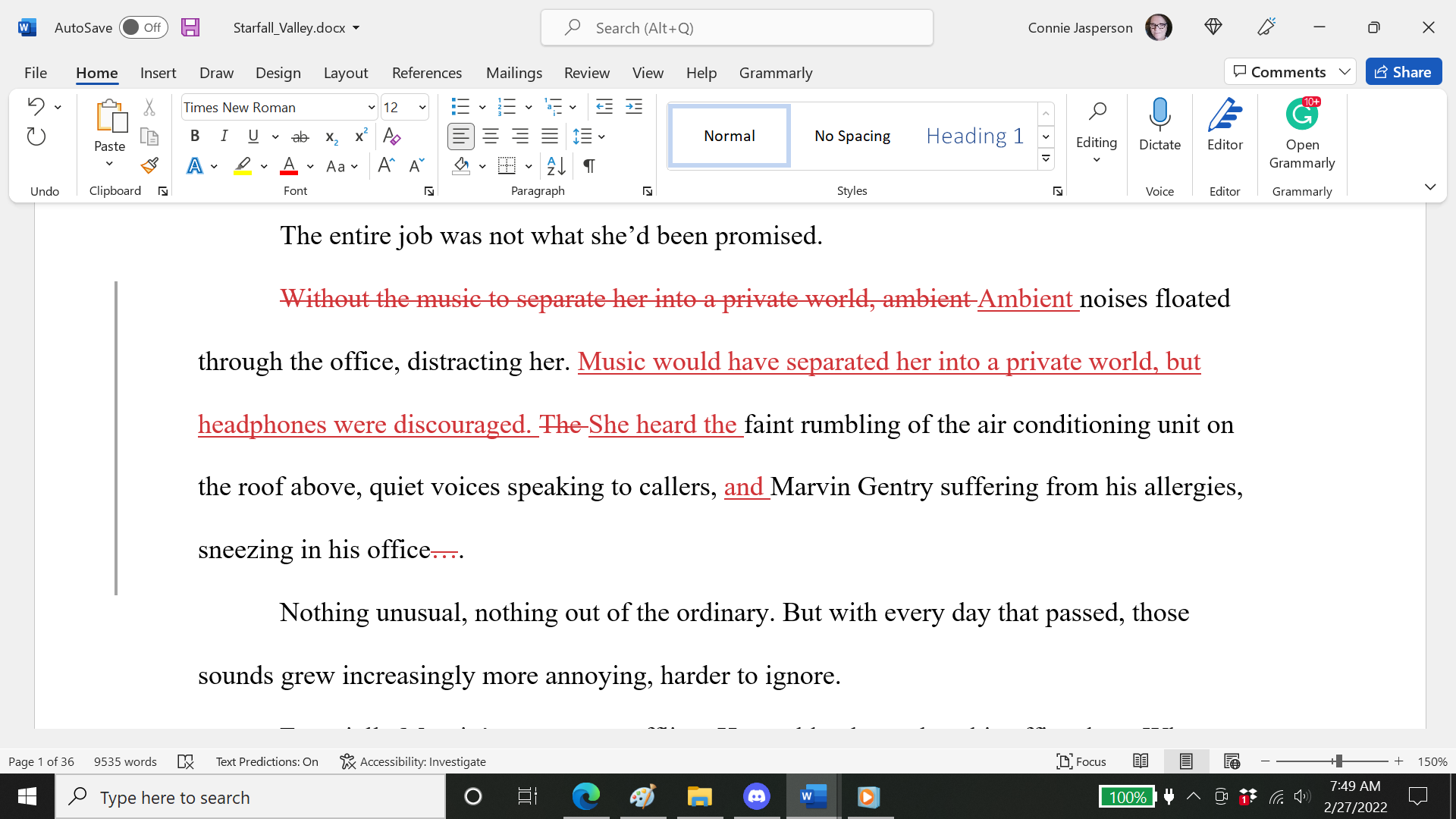 Inserting the changes and using Tracking cuts the time an editor spends on a manuscript. Writing comments takes time, and suggestions may not always be clear to the client.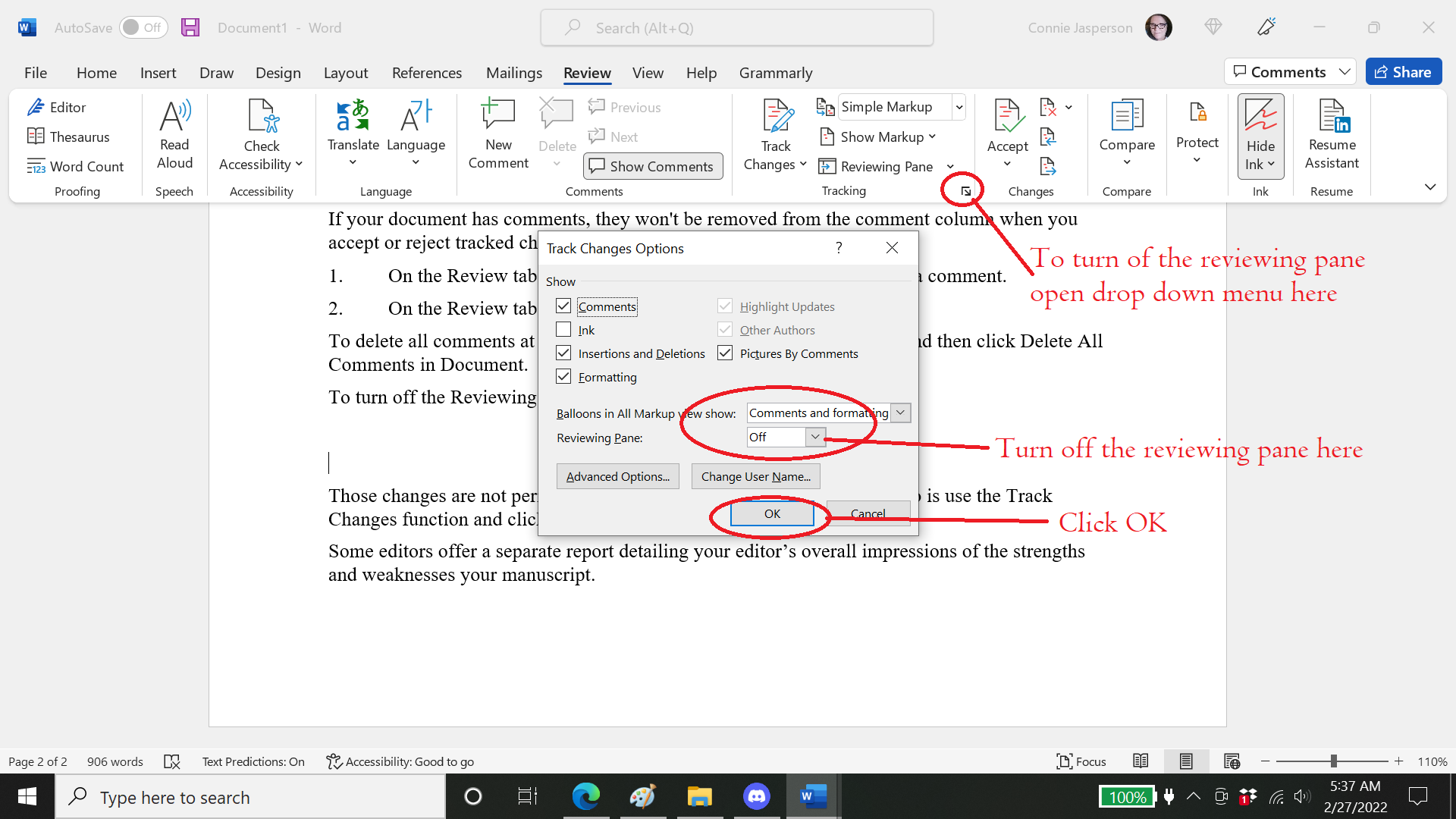
 However, many authors don’t have the money to hire an editor. If that is the case, you may have a friend in your writing group who has some experience editing, and they will often help you at no cost. Your writing group is a well of inspiration, support, and wisdom, and they are invested in your book. They want you to succeed and most will gladly trade services.
 When I am finished with the revisions, I will format my manuscript as both ebooks and paper books. At that point, I will be looking for proofreaders.
 If you didn’t see it when I mentioned it above, I will repeat it: proofreading is not editing. We discussed self-editing in my previous post,
 Repeated words and cut-and-paste errors. These happen when making revisions, even by the most meticulous of authors. The editor won’t see any mistakes you introduce after they have completed their work on the manuscript.
 Unfortunately, my last book went live when I thought I was ordering a pre-publication proof.
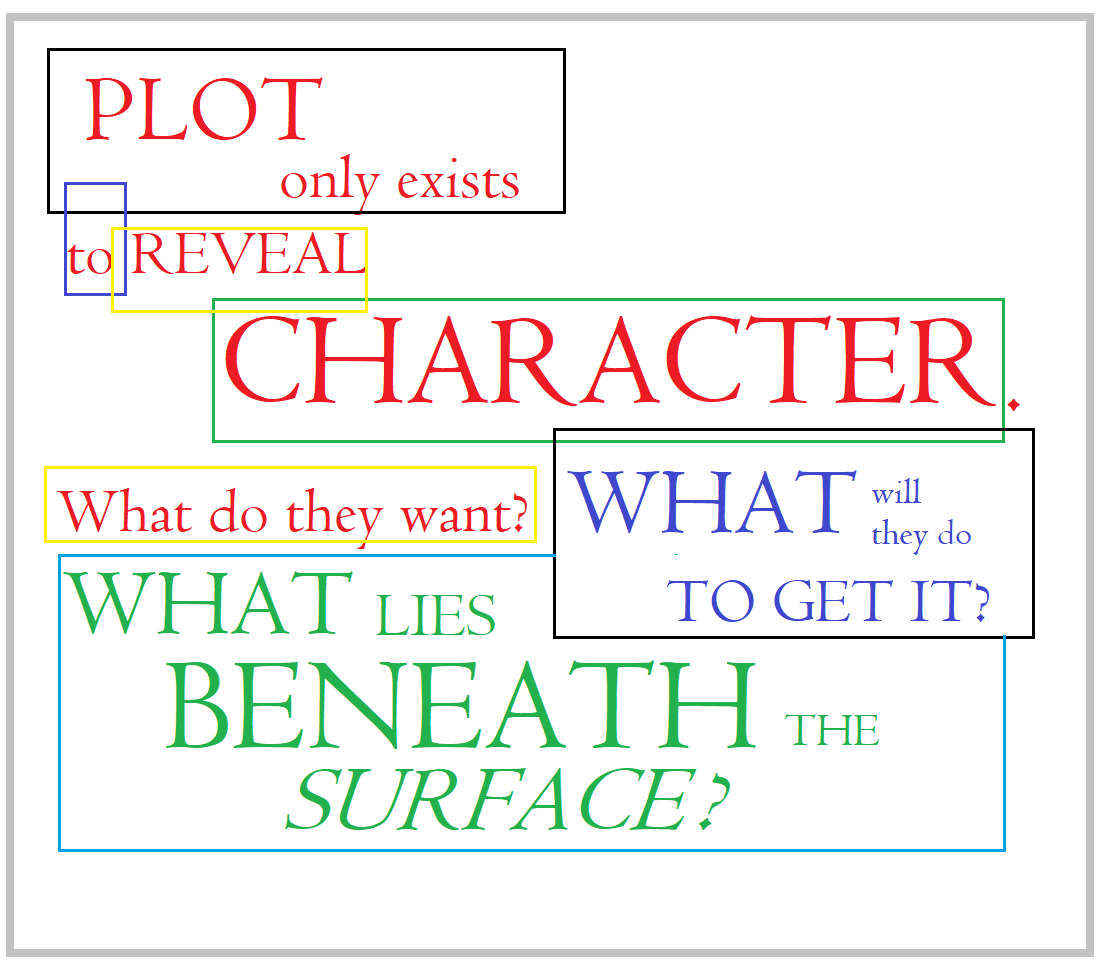 So, realizing I knew nothing was the first positive thing I did for myself. I made it my business to learn all I could, even though I will never achieve perfection.
 I use this function rather than reading it aloud myself, as I tend to see and read aloud what I think should be there rather than what is.
 This is a long process that involves a lot of stopping and starting, taking me a week to get through an entire 90,000-word manuscript. I will have trimmed about 3,000 words by the end of phase one. I will have caught many typos and miskeyed words and rewritten many clumsy sentences.
 This is the phase where I look for info dumps, passive phrasing, and timid words. These telling passages are codes for the author, laid down in the first draft. They are signs that a section needs rewriting to make it visual rather than telling. Clunky phrasing and info dumps are signals telling me what I intend that scene to be. I must cut some of the info and allow the reader to use their imagination.
 Editing programs operate on algorithms and don’t understand context. I am wary of relying on Grammarly or ProWriting Aid for anything other than alerting you to possible problems. If you blindly obey every suggestion made by editing programs, you will turn your manuscript into a mess.
 I wrote poetry and lyrics for a heavy metal band when I first started out. I was young, sincere, and convinced I had to impart a message with every word. I didn’t know until twenty years later when I came across my old notebook that my poems weren’t honest. Eighteen-year-old me was trying to make a point rather than offering ideas for further thought.
 Children are unimpressed by the fact their parents might write a story or play music or paint or do any of the creative arts.
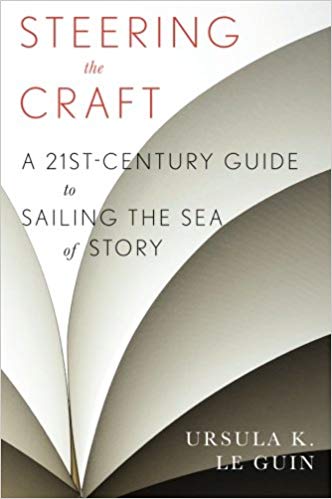 As Ursula K. LeGuin said in her excellent book,
 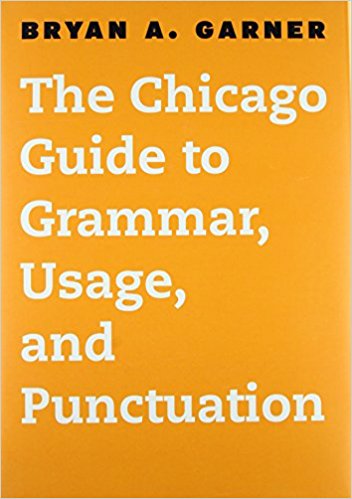 day, should we so desire. Reading is how we come to understand writing and the art of story. Mr. King also admonishes us to learn the fundamentals of punctuation and grammar.
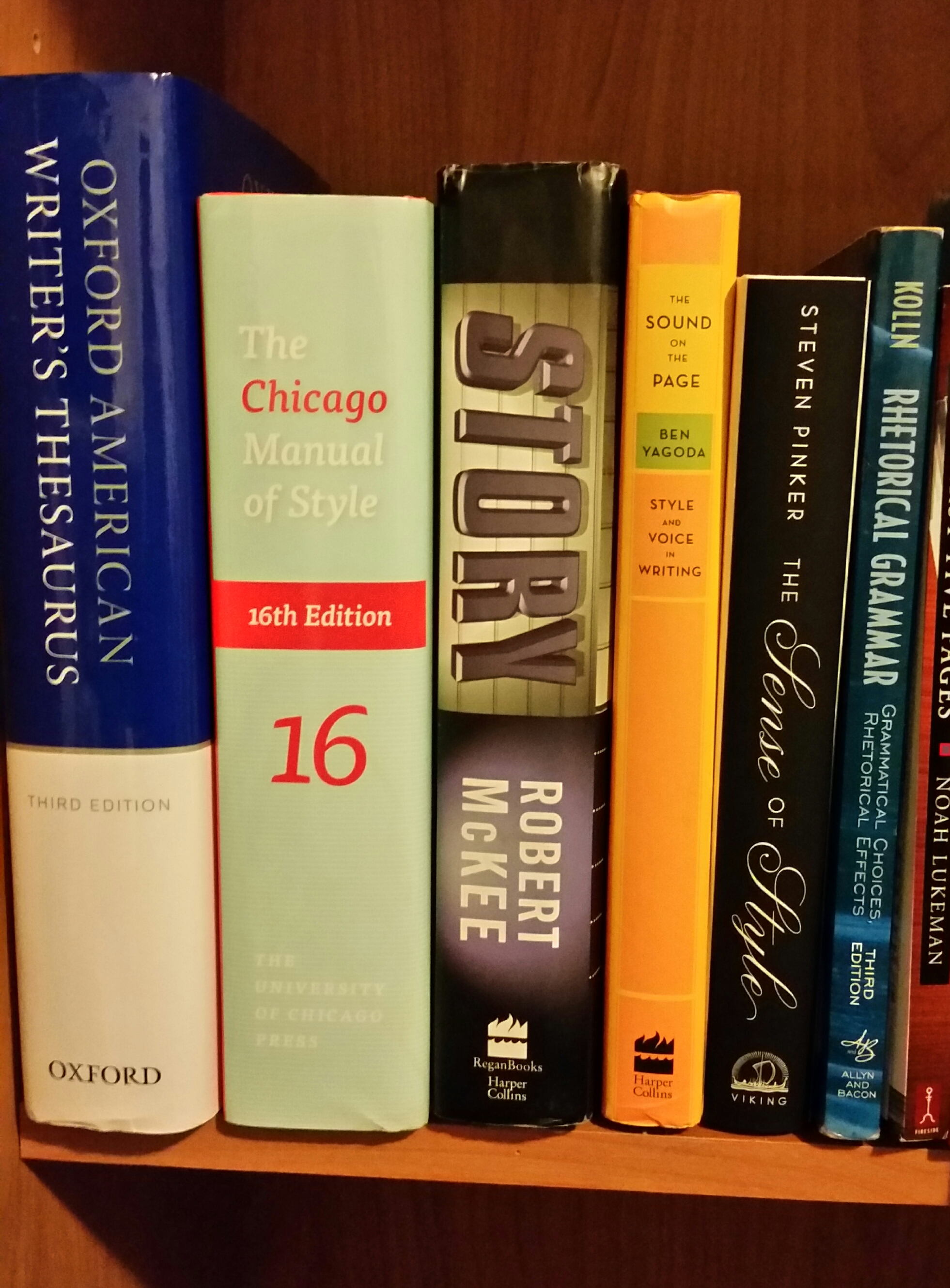
 Every editor will tell you no amount of money is worth the time and effort it would take to teach an author how to write coherent, readable prose. That is what seminars, books on craft, and books on style and grammar are for.
 I want to read an honest story about people who seem real, who have the kind of problems we can all relate to on a human level. I want to read a story that comes from an author’s deepest soul. The setting doesn’t matter—it can be set on Mars or in Africa. Characters matter, and their story matters.
 Actually, my large dirty minivan is not as comfortable to ride in as it used to be. Grandma’s imaginary red Ferrari would be a lot more fun, but alas—if wishes were Ferraris, my driveway would look a lot fancier.
 Have you ever wondered why we say fiddle-faddle and not faddle-fiddle? Why is it ping-pong and pitter-patter rather than pong-ping and patter-pitter? Why dribs and drabs rather than vice versa? Why can’t a kitchen be span and spic? Whence riff-raff, mishmash, flim-flam, chit-chat, tit for tat, knick-knack, zig-zag, sing-song, ding-dong, King Kong, criss-cross, shilly-shally, seesaw, hee-haw, flip-flop, hippity-hop, tick-tock, tic-tac-toe, eeny-meeny-miney-moe, bric-a-brac, clickey-clack, hickory-dickory-dock, kit and kaboodle, and bibbity-bobbity-boo? The answer is that the vowels for which the tongue is high and in the front always come before the vowels for which the tongue is low and in the back. (Pinker, The Language Instinct, 1994:167) [3]


 Life in the Realm of Fantasy