
Real-life has moments that are far stranger than anything I could dream up. I’m not alone in this—everyone has a story. That story will have moments that are difficult to hear and others that are amazing.
 Writing fiction allows me to put reality into more palatable chunks. It’s easier to cope with that way.
One of the ways I design my worlds is by drawing on the real world to help develop the unreal. Reshaping and reusing the scenery and terrain around you are habits of good world-building.
However, crafting characters is different. We shouldn’t use the real names and exact situations of people we are acquainted with for any reason. Don’t thinly disguise your hated boss or neighbor with a different name because they could recognize themselves and sue you.
This was made clear by the late Betty MacDonald’s situation. Her first published book was picked up by J.B. Lippincott. The Egg and I is a fictionalized account of Betty’s life as a chicken farmer. It was set in Chimacum, a small community in rural Washington State.
Many members of my family were from that area of Puget Sound and still lived there during the post-WWII years, the time frame in which Betty’s book was set.
A wide disparity in education and social services existed between urban and rural communities at that time. Only a basic education was available to most families of loggers, brush pickers, and small farmers in Washington.
Thanks to the US government’s efforts, the indigenous people were in dire straits. Traditionally, Puget Sound tribes were mainly hunter/gatherers and now suffered extreme deprivation. They had lost access to their traditional hunting and fishing territories. They were losing the culture that had been their foundation for untold thousands of years.
Betty MacDonald’s book was a success in that era and moral climate, selling well over a million copies and spinning off several movie adaptations.
The Egg and I fell into disfavor in the 1970s because cultural awareness had changed the way we view indigenous people. Critics now saw a lack of understanding and cliched treatment of our local Native people in the book.
This post isn’t intended to address or pass judgment on a 1940’s treatment of cultural issues. These are things we avoid in our modern connected society, but which people took for granted in 1946 when the book was written. Instead, we need to focus on the moral and financial repercussions of writing fictional characters too close to life.
Betty’s book motivated several lawsuits against her and her publisher for defamation of character.
From Wikipedia:
Post-publication lawsuits
Following the success of the book and film, lawsuits were filed by members of the Chimacum community. They claimed that characters in The Egg and I had been based on them, and that they had been identified in their community as the real-life versions of those characters, subjecting them to ridicule and humiliation. The family of Albert and Susanna Bishop claimed they had been negatively portrayed as the Kettles. Their oldest son Edward and his wife Ilah Bishop filed the first lawsuit, which was settled out of court for an undisclosed amount.
The second lawsuit was filed against MacDonald, publisher J. B. Lippincott Company, and The Bon Marché (a Seattle department store which had promoted and distributed the book) for total damages of $975,000, as sought by nine other members of the Bishop family ($100,000 each) and Raymond H. Johnson ($75,000), who claimed he had been portrayed as the Indian “Crowbar.” The case was heard before a jury in Judge William J. Willkins’ (who was also one of the presiding judges at the Nuremberg Trials) courtroom in King County Superior Court beginning February 6, 1951. MacDonald testified that the characters in her book were composite sketches of various people she had met. The defense produced evidence that the Bishop family had actually been trying to profit from the fame the book and movie had brought them, including testimony that son Walter Bishop had had his father Albert appear onstage at his Belfair, Washington, dance hall with chickens under his arm, introducing him as “Pa Kettle.” On February 10, 1951, the jury decided in favor of the defendants. [1]
 We all draw inspiration from real life, whether consciously or not. However, if we are writing fiction, we must never detail people we are acquainted with, even if we change their names.
If you become a success, some people may see that as their ticket to a little extra money at your expense. This, despite the disclaimer we put on the copyright page:
This is a work of fiction. Names, characters, places, and incidents are products of the author’s imagination or are used fictitiously and are not to be construed as real. Any resemblance to actual events, locales, organizations, or persons, living or deceased, is entirely coincidental.
However, we can and will draw impressions from the people around us.
A common “coffee shop” game is a good way to develop characters for your stories and won’t get you sued. Now that the pandemic is winding down, many coffee shops offer indoor seating once again. Pick a place that is new to you and have your pen and notepad or laptop at the ready. Watch your fellow patrons. Observe their behavior, their speech habits, and their unconscious mannerisms. You can build an entire fantasy life for them.
Each character sketch is the kernel that can be the start of a short story or even a novel–and all of it is fiction.
 The best thing is that you don’t actually know a thing about them other than they like a Double Tall Hazelnut Latte. Peoples’ conversations are unguarded in coffee shops, openly talking about what moves them or holds them back. They are lovers or haters, quiet or loud, and most importantly, anonymous.
The moods and mannerisms, idiosyncrasies, and habitual quirks that you see can give rise to a character you can use without risking your financial security and your reputation. People-watching is a necessary habit for the author to develop.
Credits and Attributions:
[1] Wikipedia contributors, “The Egg and I,” Wikipedia, The Free Encyclopedia, https://en.wikipedia.org/w/index.php?title=The_Egg_and_I&oldid=1050662692 (accessed February 8, 2022).
 Several years ago, I read a fantasy book where the author clearly spent many hours on the food of her fantasy world and the various animals. She gave each kind of fruit, bird, or herd beast a different, usually unpronounceable, name in the language of her fantasy culture.
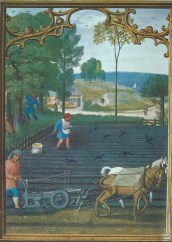 As many of you know, I have been vegan since 2012. However, during the 1980s, my second ex-husband and I raised sheep. Most of the meat we served in our home was raised on his family’s communal farm. Our chickens and rabbits roamed their yard and had good lives, and our family’s herd of twenty sheep was managed using simple, old-style farming methods.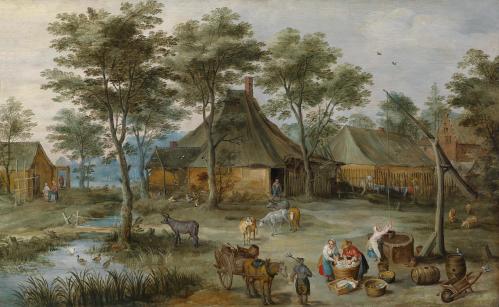
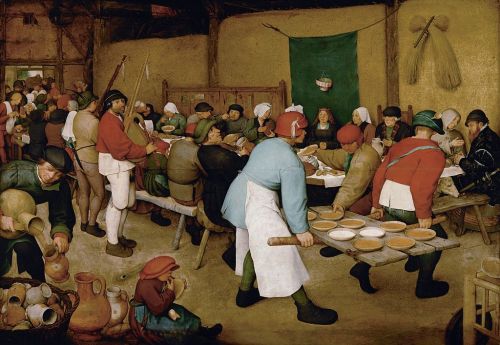
 Knowing what to feed your people keeps you from introducing jarring components into your narrative. In
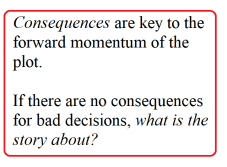
  Let’s look at both the meanings and synonyms for the word consequences.
 In the morning, after the unexpected (and unwanted) guests leave, he has two choices, to stay in the safety of Bag End, or hare off on a journey into the unknown. He chooses to run after the dwarves, and so begins the real story—how a respectable hobbit became a burglar and became a hero in the process.
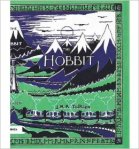 The blade does not acquire its name until later in the adventure, after Bilbo, lost in the forest of Mirkwood, uses it to kill a giant spider and rescue the Dwarves. This is when Bilbo’s decisions become more thoughtful, and his courageous side begins to emerge.
 This is an excellent time to look at the freedom we give our characters to act and react within the story. I have mentioned many times that I am a plotter. However, when I am in the process of writing the first draft of a novel, the characters sometimes take over. The plot veers far from what I had intended when I began writing it.
 This happens because my work is character-driven, and sometimes, they’re like demolition derby drivers.
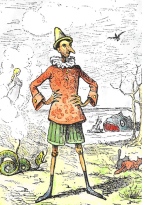 This is called giving your characters “agency.” Agency is an integral aspect of the craft of writing. It means that you allow your characters to make decisions that don’t necessarily follow the original plot outline. This gives them a chance to become real, the way
 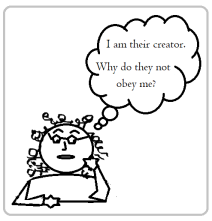 No matter how they respond, they will be placed in situations where they have no choice but to go forward. After all, I am their creator, the deity of their universe. I have an outline that predestines them to specific fates, and nothing they can do will stop that train.
 On November 1st, when we began setting the first words on the blank page, our minds formed images, scenes we attempted to describe. In his book, The Language Instinct,
  Once you find them, you need to go to the thesaurus to find alternatives that better express your intent.
 If you don’t have it already, a book you might want to invest in is
  Each chapter is comprised of one or more scenes. These scenes have an arc to them: action and reaction. These arcs of action and reaction begin at point A and end at point B. Each launching point will land on a slightly higher point of the story arc.
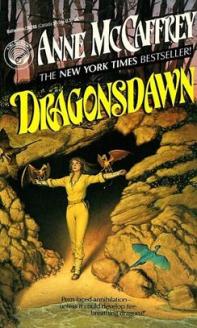 he scenes we are looking at today have two distinct environments to frame them: first the planet and then the abandoned colony ship, Yokohama. These scenes are filled with emotion, high stakes, and rising dread for the sure and inevitable tragedy that we hope will be averted. Not all the drama is in Sallah Telgar’s direct interaction with Avril Bitra. The environment heightens the drama, the sense of impending doom.
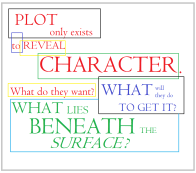 We see Avril taunting Sallah for her matronly body and move out again to see Avril tying a cord to Sallah’s crushed foot and forcing her to make the navigational calculations for Avril’s escape. We move close up and hear the interaction, Sallah pretending to do as Avril asks but really setting her enemy’s doom in action. The camera moves to the wide view again, and we hear the interaction with her frantic husband on the ground. We are caught up in her determination to seize this only chance, using her dying breaths to get the information about the thread spores to the scientists on the ground.
 But more importantly, even if you are traditionally published, you pay for the books you sell at shows.


 She also wrote the brilliant, hilarious standalone novel,
  About Ellen King Rice: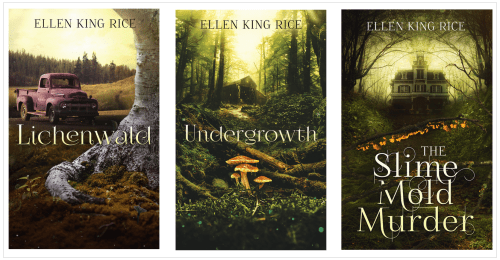
 In an instant, an entire manuscript is gone, wiping away hundreds of hours of work on their labor of love.
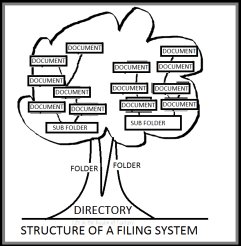
 A filing system is quite simple, rather like a tree from the ground up. For most documents, my system is a standard office-type system that consists of:
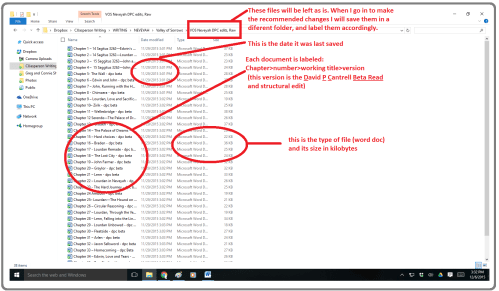 Name your files consistently and save each version in a separate folder within the master folder. Below is the master file for Valley of Sorrows.
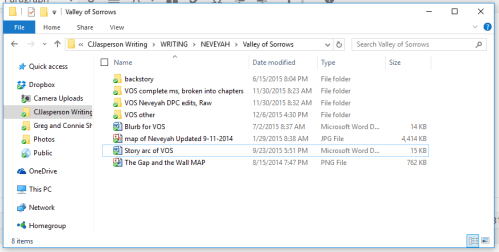 You may create many versions of your manuscript. YOU MUST manage your versions with meticulous care, or you will lose files, have to rewrite sections you just wrote, and which were brilliant, or any number of horrible, irritating situations.
 It’s a platform where you can advertise your books and discuss your interests, and most importantly, talk about what you are writing.
 Writing blogposts requires me to become a thinking author, as well as a pantser. I can write using the “stream-of-consciousness” method or from an outline of whatever interests me at the time. I do the research, and the post begins to write itself.
 I love to see what questions people might want to have answered. Sometimes topics crop up at my writing group that no one has an answer to, and then I get to do a little research—my favorite thing. Other times I find interesting questions in the writers’ forums that I frequent.
 If you feel that it’s too much work, consider how you update your other social media. Try posting a haiku, a tweet-length post, or an Instagram-style post once or twice a week. Any social media platform post can be converted to serve as a blog post.


 Life in the Realm of Fantasy
