Tag Archives: writing

Words as Swords

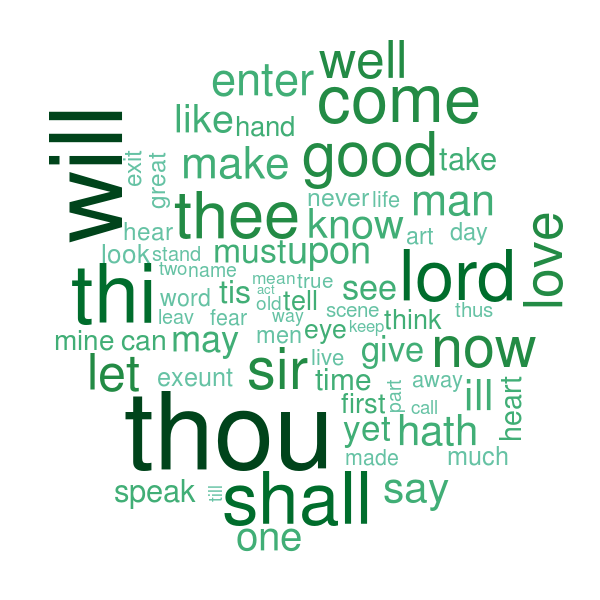
shakespeare-word-cloudGrammar is such a pain. We all speak naturally in a dialect that is indicative of where we live, and there are certain peculiarities that will emerge in our scribbles.

*doh*

I was raised by a set of parents who adored words.  Long words, short words, rhyming words– my siblings and I learned words at a young age and we know how to use them and in what context.

Of course, many of the words I was taught were unique to my family, apparently, but words were important and they were celebrated.

the_last_good_knight_cover-createspace.jpgPeriodically Dad would “lose his words” and what came out of his mouth at that point we were not to repeat….

I have this wealth of words in my head, and yet when I get to cruising on a tale, I inadvertently use the same words rather frequently, as if my head is stuck in a rut.

Words have power. Words can build nations and words can tear them down. “When, in the course of human events, it becomes necessary for one people to dissolve the political bands which have connected them with another, and to assume among the powers of the earth the separate and equal station to which the laws of nature and of nature’s God entitle them, a decent respect to the opinions of mankind requires that they should declare the causes which impel them to the separation.”

51VAA93NY4LWilliam Shakespeare adored words too, and is credited with inventing over 1700 of the words we use today. He did this by changing nouns into verbs, and connecting words together that had never been used before. Some of these words include ‘bedroom’ and ‘courtship.’

Words can win a persons love, and words can destroy a relationship forever. “Where love is great, the littlest doubts are fear….”

To have the chance to wallow in words all day long, and get paid for it is more than amazing, it is what I always dreamed of. I live for words, to write them, to read them — to play with them. I get to quote Shakespeare! “Cry ‘havoc,’ and let slip the dogs of war….”

Long words, short words, life is built around words.

“Without the which we are pictures, or mere beasts…..”

2 Comments

Filed under Battles, Books, Fantasy, Humor, knights, Literature, Uncategorized, writer, writing

Fantasy–It’s a Mystery

MSClipArt MP900390083.JPG RF PDMy favorite books to read are, of course, fantasy. But I love mysteries too, and guess what? The best fantasy books involve a deep mystery.

In the best fantasy tales, at the outset quests are undertaken to achieve a goal against terrible odds, and the basis of that goal could be an object with a mysterious history, or it could be to kill a despot with immense power, the source of which is–a mystery.

And then, once the heroes are made aware of the whereabouts of the object (or person) they seek, the mystery deepens. Obstructions appear in their path, things that both block and enlighten them as they overcome them. With each small victory they learn something new, some random thing that might ultimately be the final clue to removing the source of power from the evil dude’s grasp, thus ending his reign of terror.

480px-Schmalz_galahadDuring the process of this, the heroes grow as people. Where they were comfortable in their secure, middle-class existence, or naive but worldly street-urchins, the experience of solving the mystery and enduring the hardships to arrive at the final scene changes them, some for the better, and some–maybe not.

This also happens in a great murder mystery, or a gripping political thriller.  In writing classes and groups this is called the story arc, but in my opinion, it’s just the basis of good story.  For authors just starting out, StoryStarter.com has a great page.

Along the way, the questers may encounter things that don’t appear in the real world we currently live in, and for me that’s part of the fun.

I grew up in a very rural area, surrounded by deep woods. We left Seattle and moved there when I was nine. Beyond the perimeter of our property lay terrifying things–bears, wildcats–things a nine-year old city-girl has no idea of how to deal with.

Dragon_rearing_up_to_reach_medieval_knight_on_ledgeDaily, my sister and I walked up a 1/4 mile long dirt driveway through the forest to the school bus. A large hill was in the center, and for the first year I lived there, I hated the place more than anything. I hated the school, I hated the bus, I hated my parents for destroying my life.

Sometimes our father would have to drive us to school, if bears were in the horse pasture that bordered our property. We would drive past, and he would point out the wonders and explain that with a mother bear and her cub in the horse pasture, we had to be very careful that morning. “They’re rare, and we’re fortunate to be able to see them once in a while. It’s just the mother will see you as a danger to her cub, so no bus for you today.”

All I knew was the woods were full of danger, and my parents apparently didn’t care, because they made me walk through them daily. I did walk through them and gradually, as summer vacation loomed, I began to see the possibilities of living in a lake-house, where there was no restriction on how many days you swam.

That first summer I discovered waterskiing, and my whole point of view about living all year round in a vacation-house was changed. Over the first few months I learned to love the deep woods around us, and to know and recognize the birds and animals who grudgingly endured our noisy, selfish presence.

This personal journey from ignorance to understanding the characters go through while solving the underlying mystery is one of the most important elements of a story. It is hard to know how a character will react to a given situation, and that is the best part of writing them.

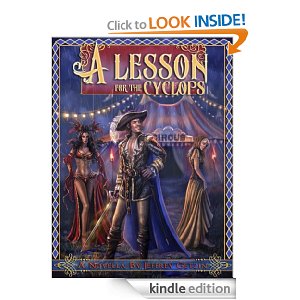
DR 3 Prism Ross M KitsonRoss Kitson’s epic Darkness Rising series is one of my favorites, because the circumstances force the characters to  evolve in unexpected ways. Jeffrey Getzin’s fabulous Prince of Bryonae and his novellas featuring D’Arbignal are also good examples of how circumstances shape characters.

I highly recommend both these indie authors, if you are looking for high quality indie fantasy.

A Lesson for the Cyclops Jeffrey Getzin

4 Comments

Filed under Adventure, Battles, Books, Dragons, Fantasy, Humor, Literature, Publishing, Uncategorized, writer, writing

Name that Kid

fist_names_generatorA Facebook friend of mine whose given name is ‘Tad’ remarked that he had never liked his name, that he had always felt more like a Christopher. I can totally relate!  I was stuck with a not-too-goofy first name, Connie, which I never really liked,  but my middle name…. To this day I can’t spell it with out concentrating really hard: Lieuettice.

In a way I understand my mother’s dilemma. Good names are hard to think up! My friend, Irene, is always hammering at me to give my characters names that don’t all start with the same letters…which I wish I had thought about earlier on in the Tower of Bones series (doh).

_72982736_vikings courtesy of BBCSo lately I’ve had to resort to my handy  list of Saxon Names. Or my list of Popular Viking Baby Names.   “Come here, BRÖKK, my fine, strapping hero…put on this armor and at least look like you want to go out and wrestle a dragon….you and DAGFINNR can pillage the village when you’re done.”

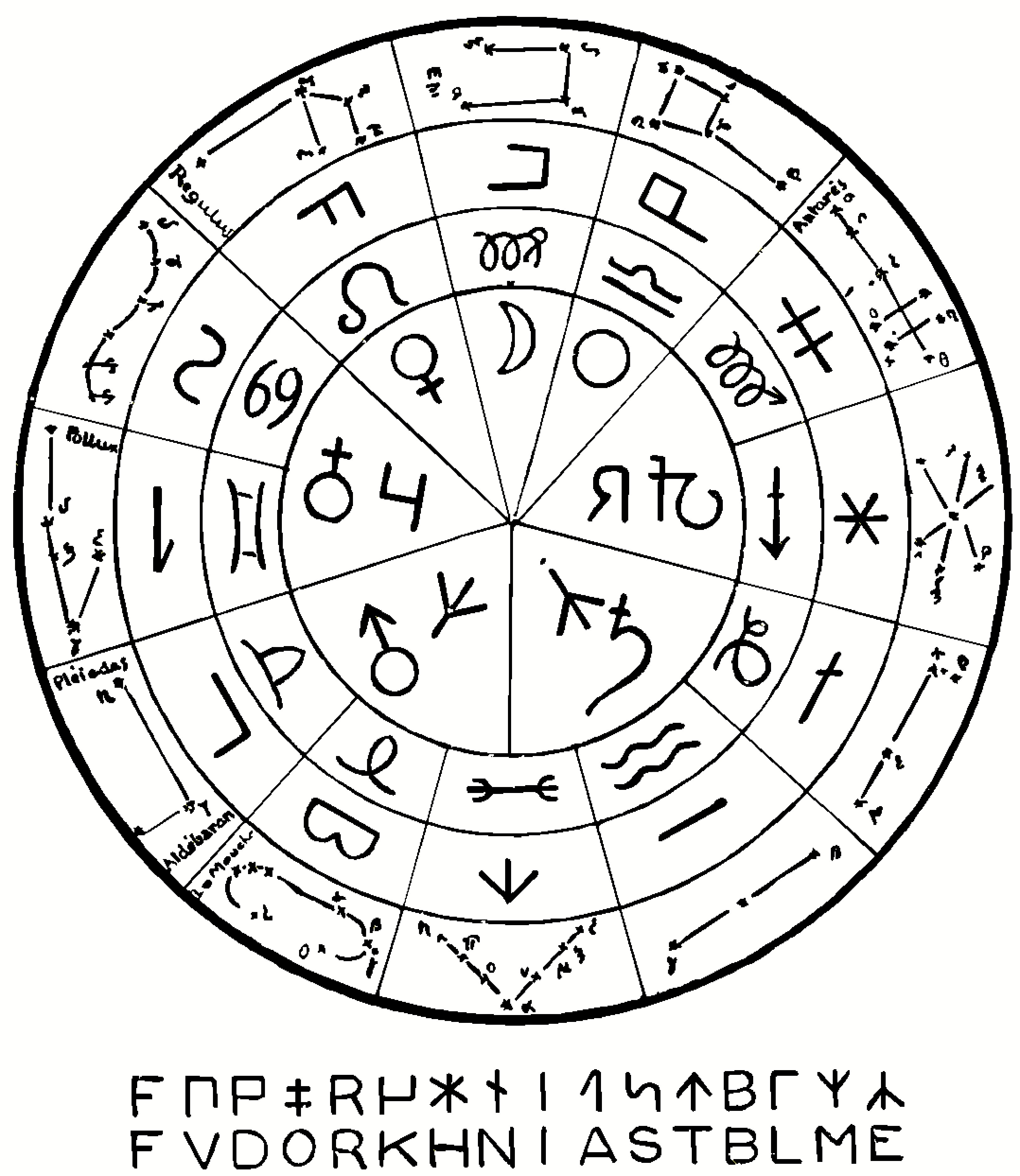
Runes001So, my dilemma in my current work in progress is that two of the female characters have names that begin with the same letter. When I began writing the series, I didn’t realize the second character would become so important in the story–and now, three books into the series, I CAN’T CHANGE HER NAME!  (bangs head on desk.)

But, instead of sitting here, wailing “Why, why why?” I suppose I should just get on with writing the story.

Note to self:  Always name your character names that begin with different letters–there are twenty-six letters in the English alphabet, for the love of Tolstoy…and if we get into the Elder Futhark we can use all those lovely runes….

names

7 Comments

Filed under Adventure, Battles, Books, Dragons, Fantasy, History, Humor, Literature, Uncategorized, writer, writing

Midnight Blues

science of relationships dot comTwo days ago I woke at 3:30 a.m. with the plot of a short-story in my head. People often ask me where I get the idea for some of the more obscure things I write, and I tell them I literally dream them up. They think I am kidding, but it’s true. Some of my best stories have arrived in the middle of the night–the real trick is to get up, go to the computer and write it down.

After all these years I have learned to do just that.

My husband is used to me getting out of bed and going to work at all hours of the night. How do you sleep when your head is a television? My imagination is killing me, and since I have my main bursts of energy during the strangest times of night, I get a lot done before noon. Anything after that could be a wash-out as I might be napping in an upright position,  a corpse at the keyboard.

dont-tell-people-your-dreams-show-themWhat I do is give the tale a working title, one that will be changed to a better title later.  I write down the basic plot as I remember it, and the characters.

If I had any names in the idea I woke up with, I write them down, otherwise I give them temporary names. I give the environment it’s name and write down the feelings I had of the dream environment.

Then I note every thing else I can remember about it–sounds, tastes, smells–anything that might make the story more real.

Fitzgerald's Fortune Cast of Characters and plot summary pg 1&2In the final outline, most of these things will be boiled down, changed to make a cohesive tale, as  my dreams tend to be quite random.

This is not to say that all my dreams are worth writing about–that is absolutely not the case, although they are often hilarious and sometimes confusing.

Some of my dreams are frightening, and make me go “hmmm….”

The point is, inspiration comes to us from the most random of places. Unfortunately, some of the best story ideas have come to me while driving, and that is a real stinker–there I am on the interstate, and the best plot idea I’ve ever had is fighting for my attention, demanding to be written down–which is definitely not an option at that point!

I am no longer allowed to drive with my laptop propped on the steering wheel, go figure. I have gotten off the highway and sat in a gas-station parking lot, jotting down the idea, on whatever is available. Once it is written down, I can go on my way, and concentrate on driving with no distractions.

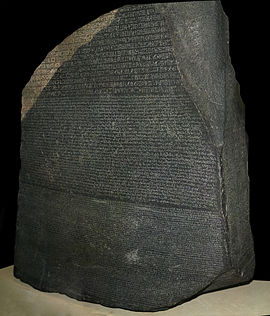
270px-Rosetta_StoneUnfortunately, I seldom use my handwriting skills any more–the ease of communicating via the keyboard has eroded that  all-important penmanship I once received high grades for.  Four months later, when cleaning out the car, I will perhaps find a napkin covered in indecipherable chicken-scratches.

If I don’t toss it with the rest of the litter, which is the smart option, I will take it to my office (the infamous Room of Shame) and go over it with a magnifying glass, like Jean-François Champollion trying to decipher the Rosetta Stone.

Nine time out of ten I give up, frustrated; one more glorious idea gone forever, shot to hell in the world of the ephemeral.

Why is there  never a translator of obscure texts around when you need one?

9 Comments

Filed under Adventure, Battles, Books, Fantasy, Literature, Uncategorized, Vegan, writer, writing

Ode to Writer’s Block

Ode to Writers Block 

What beauty is this, that lies sleeping near my heart?

‘Tis word—and word should tumble from my pen,

Not lie locked within the chamber dark and inky.

Where hides the key to free thee from thy prison?

Oh, lovely word, spring forth from the trap that is my mind,

Set thee down upon this paper, word.

Let me hold thee, and from thee let me form the dreams,

The hopes and fantasies that fill my eyes and blind me to all but thee,

Oh word! Fill my paper with thy bounteous delight,

As you fill my head with longing,  and my wastebasket with scrap.

©2014 Connie J. Jasperson, All Rights Reserved

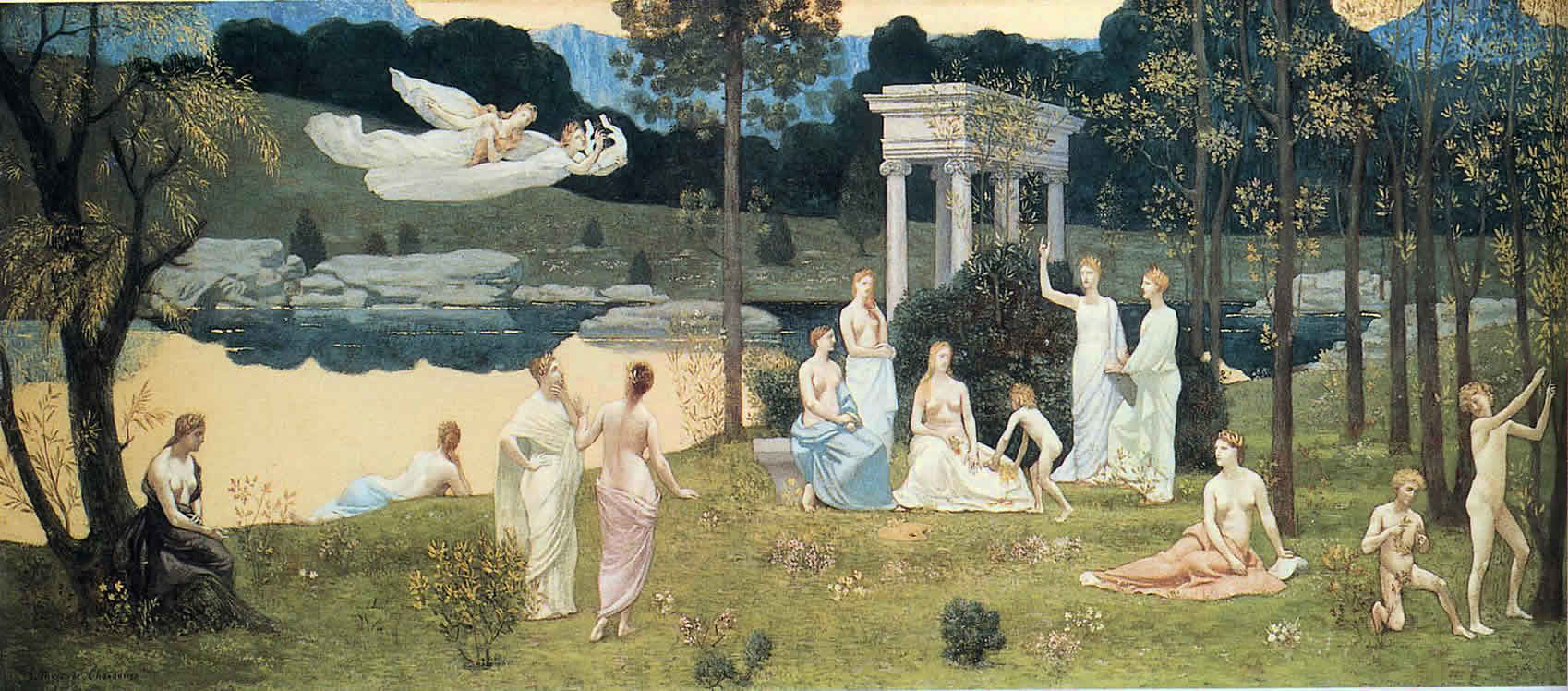
Arts and the Muses by Pierre Puvis de Chavannes, 1884-1889

Arts and the Muses by Pierre Puvis de Chavannes, 1884-1889

3 Comments

Filed under Adventure, Battles, Books, History, Humor, Uncategorized, writer

16 bit Inspiration

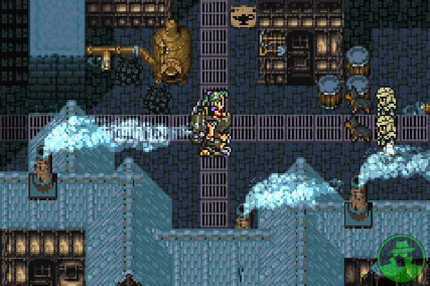
Final-Fantasy-VI-final-fantasy-vi-24610210-800-600Final Fantasy VI, originally released for the Super Nintendo Entertainment System in America as Final Fantasy III,  was one of my favorite games ever–I had it for both the SNES and the Playstation.

(From Wikipedia) “The action takes place on a large, unnamed world. During the course of the game, its geography and landscape change due to various developments in the game’s plot. During the first half of the game, the world is divided into three major continents and referred to as the World of Balance. The northern continent is punctuated by a series of mountain ranges and contains many of the locations accessible to the player. Most of the southern continent has been taken over by the Empire, while the eastern continent is home to a large patch of land called the Veldt where monsters from all over the world can be found. Halfway through the game, the world’s geographical layout is altered, resulting in its three large continents splitting into several islands of various size situated around a larger continent at their center. This altered layout of the game’s locations is referred to as the World of Ruin.

final-fantasy-vi-20060509061309295“In contrast to the medieval settings featured in previous Final Fantasy titles, Final Fantasy VI is set in a steampunk environment. The structure of society parallels that of the latter half of the 19th century, with opera and the fine arts serving as recurring motifs throughout the game, and a level of technology comparable to that of the Second Industrial Revolution. 

“Railroads and steamships are in use, and a coal mining operation is run in the northern town of Narshe. Additionally, several examples of modern engineering and weaponry (such as a chainsaw, drill and automatic crossbow) have been developed in the Kingdom of Figaro. However, communication systems have not reached significant levels of development, with letters sent by way of carrier pigeon serving as the most common means of long-distance communication.”

I loved that game!  I played it and beat it four times, and still to this day love it.  One of the things I loved the most about it is the sheer, unabashed love of FUN that the creators injected into it.

Final_Fantasy_VI_Opera_by_Saint_KaedeThere is a wonderful scene that takes place in an Opera House, complete with an entire opera, that is performed during a 12 minute race to save Terra from a demented octopus intent on killing her. The opera can be seen and heard here via YouTube, in its full glory.  In the original game, the music was performed on a midi and was really good, but the original composer has since released fully orchestrated versions of all the music he composed for the Final Fantasy empire at Square/Enix over the years, up to Final Fantasy IX.

distant worldsThe music of these games attracts me as much as the incredible story-lines and great artwork.  The primary composer of music for the main series was Nobuo Uematsu, who single-handedly composed the soundtracks for the first nine games. I just recently purchased Distant Worlds, his 2007 compilation of the work he did for the franchise, and it is part of what I listen to when writing.

There is something so evocative about his music, it helps me concentrate.

And so, today I leave you with another YouTube example of Uematsu’s work, Love Grows, from The epic Final Fantasy VIII, featuring the enigmatic Squall Leonhart as the reluctant hero.  Great stories, awesome side-quests–those early Final Fantasy games couldn’t be beaten for sheer entertainment value.

I am still playing Final Fantasy XII on the PS2, perhaps not obsessively, but still enjoying it. I have Final Fantasy XIII for my PS3 – but I have to admit that I am unable to get completely into it. The story-line seems awesome, and the graphics are gorgeous, but I can’t seem to get too far into it.

Perhaps I’ve grown up a bit, and have my own fantasies to write.

667px-PlayStation_3_Logo_neu.svg

Comments Off on 16 bit Inspiration

Filed under Adventure, Battles, Books, Dragon Age, Final Fantasy, Humor, Japan, writer, writing

Mortality and Wine

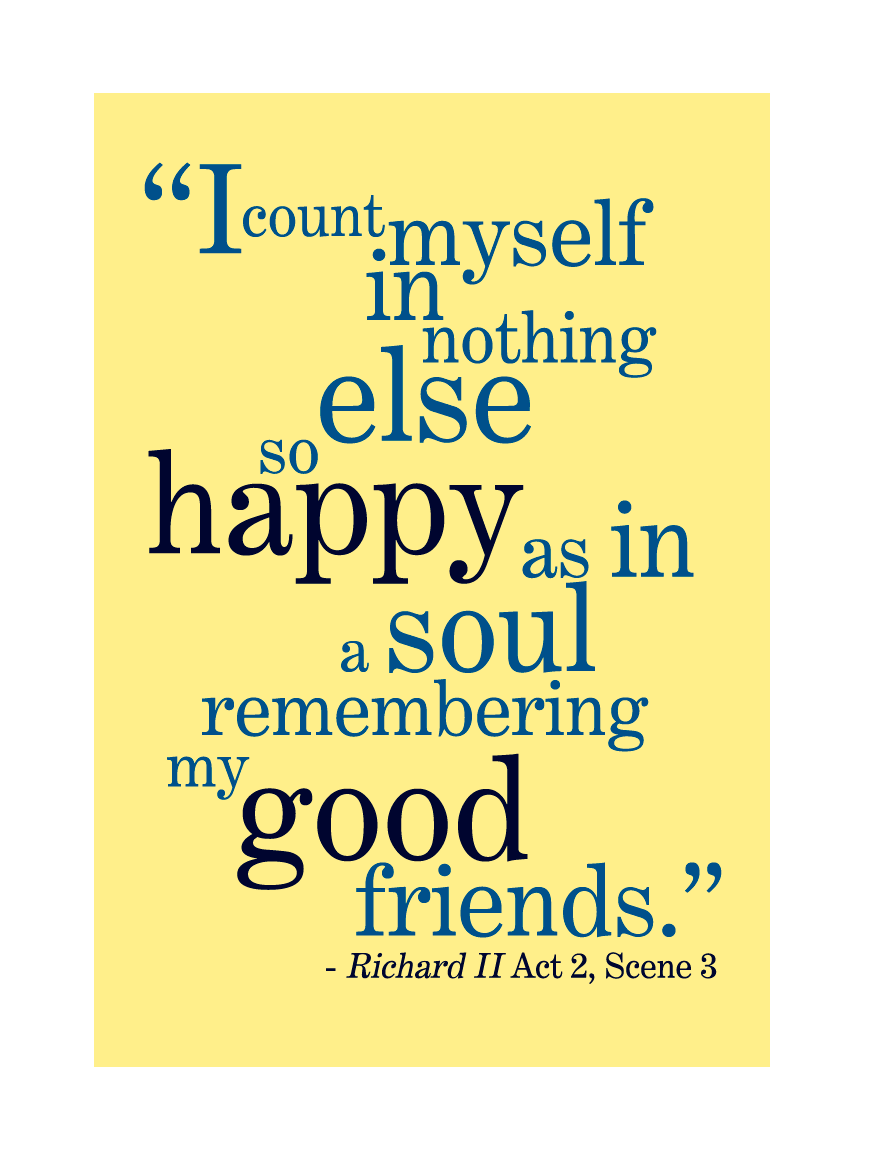
Shakespeare_ICountMyselfLeft Behind —

The twisty path that life takes us down sometimes brings us into the circle of a person we can call friend. We may meet at the home of a mutual friend, or we may meet in a writing group. Over time we get to know and like them. We look forward to seeing them; indeed, we expect to see them at certain parties, as if they were the underpinning of the entire event.

When they are suddenly taken from this life with no advance warning, you are stunned, feeling as if you were ambushed by their death.

Perhaps it was a close friend, or maybe it was a person you were only beginning to know well. Either way we are faced with a disconcerting feeling of being left behind—not that we wanted to die, but rather that we didn’t want a person we cared about to leave without us.

Days of Wine and Roses quote copyWhen a parent, a spouse, a sibling or a child dies, there are no words to describe the pain. The same goes for the death of that friend who is your other half, your ‘bestie’, your brother-in-arms.

The friend who would help you bury the body.

That loss is a tearing, shattering pain time may ease, but which always leaves a scar. Every person handles this experience in a different way. Some of us become better people through surviving a devastating personal loss, and some do not.

The death of a friend who is more than simply an acquaintance, yet not intimately tangled in your life is a different kind of loss.

 It’s one we will all experience, and perhaps it’s not as profound as the loss of your best friend, but it is no less shocking and disconcerting. That death is experienced differently than if he were a friend who is a close family member.

bestwinefriendsHe is someone we had known only a few years, a friend we were only beginning to really know. He is someone who is in many ways a mystery although we regularly met at parties and social events. He is someone with whom we have enjoyed long conversations over wine and cheese, shared risqué jokes, and laughed at the incongruities of life.

We had only started to walk the road of life together, only begun to know him as a traveling companion, and suddenly he is gone.

When a friend who is not yet close to you dies, a hole is left in your life, a hole filled with possibilities, packed with the prospect of what your friendship could have grown into, given more time and more parties.

friendship-picture-quotes_11694-0Although it’s comforting to know that he touched more lives than just ours, it’s hard to realize we’ll never talk about wine with him again, never see him standing in that spot he always claimed in Nancy’s kitchen, never see him and his little dogs again.

Never hear him tease, “Vegan chili is an oxymoron,” as he serves himself at the buffet.

It’s hard to imagine him going alone into that unknowable frontier we must all eventually pass into, hard to imagine him letting go of this life when he was so vivid and filled with energy and passion for his art the last time we saw him. I will never pour a glass of wine again without thinking of our good friend who loved the craft and the art of wine-making so much, and whose wines were the source of many happy moments for many more people than just me.

LesMis_Wine-Of-Friendship_smHis many friends are now feeling the same sense of loss and confusion I am feeling. My heart goes out to his close family and to our dear friends Michael and Nancy, intimate friends of his who are stunned and bereft; loved ones who still can’t believe he’s gone.

Patrick—our glass will always be half-full, because of the joy and companionship of good friends like you.

winequotepage Gallileo

6 Comments

Filed under Adventure, Battles, Fantasy, Literature, Uncategorized, writer, writing

Philosophy and Crafting a Tale

buddha-225x300The Buddha once said, “We are what we think. All that we are arises with our thoughts. With our thoughts, we make the world.”  I believe this to be true, and try to live my life accordingly. I am a basically happy person.

I think a certain amount of my personal philosophy finds its way into my writing. It’s only human nature to want to make the world to fit your idea of what is good and beautiful. In my worlds, good people always find themselves in bad situations, but through the drama, heartache and violence, what I hope to express is the beauty of life, the emotions that are experienced when joys are contrasted against sorrows.

If you have never felt hunger, you can never understand what it is to have plenty. In the same context, if you have never known sorrow, how can you know joy? The contrasts of life are the flavors, the textures that give it meaning.

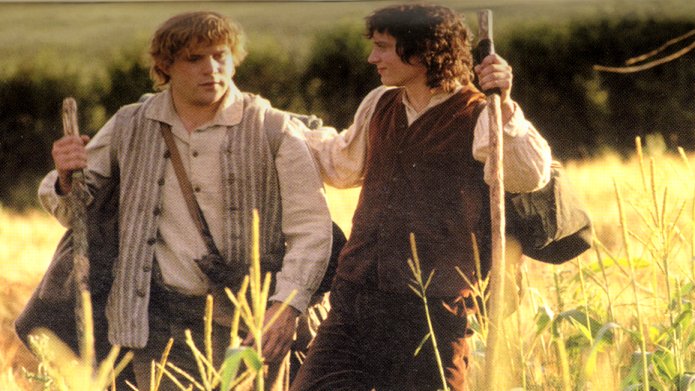
The LOTR advance posterBuddha also said, “There has to be evil so that good can prove its purity above it.”  This is a fundamental truth for all writers of traditional fantasy fiction when devising plots, one that J.R.R.Tolkien understood quite clearly. After all, what would have been the point of Frodo and Sam going to the depths of Mordor, suffering the hardships they endured if not to destroy the One Ring and negate the power of Sauron? And why would they do this, if Sauron was not the embodiment of evil?

sam-frodo-frontdoorIn the Lord of the Rings trilogy, we have one of the most enduring works of modern fiction. It is an epic quest where through it all, we have joy and contentment sharply contrasted with deprivation and loss, drawing us in and inspiring the deepest emotions. This use of contrast is why Tolkien’s work is the foundation upon which modern epic fantasy is built.

If I can create a tale in which the reader experiences the full gamut of human emotion, I will have done my job.  The longer I am at this craft, the more I see that the rest of my life will be a training ground, teaching me new things, and widening my writing horizons everyday. With each thing I have written over the years, my work has evolved. Because the universe follows certain fundamental laws and nothing is static, my work and that of all dedicated craftsman-authors will continue to evolve.

Comments Off on Philosophy and Crafting a Tale

Filed under Adventure, Battles, Books, Fantasy, Humor, Literature, writer, writing

William Morris, Tolkien, and Modern Elves

Pauline Baynes' map poster of Middle-earth published in 1970 by George Allen & Unwin and Ballantine Books.

Pauline Baynes’ map poster of Middle-earth published in 1970 by George Allen & Unwin and Ballantine Books.

Lately I have been ‘guru-ed’ to death on various different writers forums by a few indie authors, whose own work is a great deal less than stellar, harshly criticizing the quality of writing of everyone from J.R.R. Tolkien to Robert Jordan.

Some people–I wonder, do they even read the comments they write? I am going to tell you straight up: Tolkien did NOT use too many words in The Hobbit, and the movie was not better.  Tolkien was Professor of Anglo-Saxon Studies at Pembroke College, Oxford, he invented the elfin language and as such, we may be assured he had a moderately good grasp of the English language, and the literature of his time.

He wrote in a lyrical style, with descriptions and side quests, things that enthralled avid readers like me who understood how to set aside a day to just to enjoy a good read.

The movie, while it is awesome, exciting and great fun, bears some relation to the actual book but certainly does not chronicle it. In the book for starters, Legolas was not a character, he did not have a love interest, and neither did Kili.  If you read the credits at the end of the movie, you will see it clearly says “BASED ON” the book, The Hobbit by J.R.R. Tolkien.

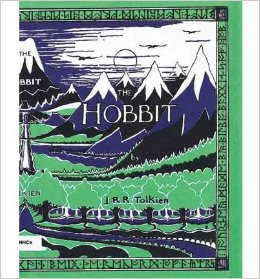
the hobbitThe problem with the book is not in Tolkien’s writing. It is in the eye of the beholder who never learned patience, or appreciation of a well-told story.

Fortunately, we now have an emerging generation of young women who consider “Pride and Prejudice” to be their favorite book of all time, and this gives me hope. Pride and Prejudice is about manners, yes–but it is also about that intrinsic thing all great novels consider, the search for self, and underneath the trappings of fantasy, the elves and goblins, so is the Hobbit.

That quest to discover who we are and what we are capable of is what drives Bilbo to keep  going, even in the face of terrible events. I have hope that if Jane Austen’s work is once again considered to be popular reading among young people, then the love of a beautifully crafted tale will never entirely disappear and the true appreciation of Tolkien’s great works will once again be celebrated.

What I frequently see in these forums see is an aggressive type of person who criticizes but lacks an understanding of what he/she is ranting about. They claim to be in writing groups, but if they are, I feel sorry for their fellow writers.  These people are the carrion-eaters, the ones who will pick an author’s work to the bone, and casually dismiss it, destroying a fellow authors sense of self-worth.

What a person who writes fantasy needs to know is what the masters of the genre wrote, and what made their work classics.  In other words,  stop looking AT the words as disparate parts that you could write better, and read them in context. You might be surprised at what you will find!

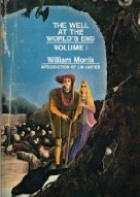
Well at World's End, William MorrisEven Tolkien had inspiration for his works, and he freely admitted he was a great devotee of the work of William Morris, an English textile designer, artist, writer, and socialist associated with the Pre-Raphaelite Brotherhood and English Arts and Crafts Movement. He loved Morris’s prose and poetry romances. Tolkien’s own work follows the general style and approach of Morris’s work. The Desolation of Smaug as portraying dragons as detrimental to landscape, has been noted as an explicit motif borrowed from Morris, just as countless fantasy authors borrow the modern concept of Orcs, Elves, and many other high fantasy motifs from Tolkien.

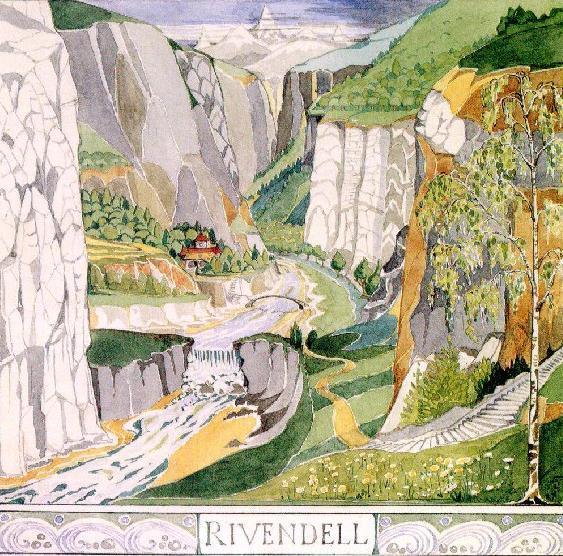
Rivendell_illustrationThe modern image and mythology of the elf as he is written into most of today’s fantasy has been directly modeled on the elves of Tolkien’s Rivendell, whether the author knows it or not. Even the elves we find in the onslaught of urban-fantasy-romances are created in Tolkien’s image.

So, now that I’ve had my rant about internet writer’s forums and the bad apples who occasionally haunt them, you’re probably wondering what  I find that is good out there? A great deal more good than bad, actually.  There are an incredible number of people who are willing to be helpful to aspiring authors, and who regularly share good information. The following is a list of good forums you might want to look into.

Writers Digest

Writers Cafe

Absolute Write

National Novel Writing Month (NaNoWriMo)

I’ve had a lot of fun on these forums and I learned a great deal. I never respond to Trolls, because acknowledging them encourages them to think they have power. How you handle them is up to you. Do your homework, research the great literature of your genre and write because you love it.

Ah! like gold fall the leaves in the wind, long years numberless as the wings of trees! The beginning of the Quenya poem Namárië written in tengwar and in Latin script, by J.R.R. Tolkien.

Ah! like gold fall the leaves in the wind, long years numberless as the wings of trees! The beginning of the Quenya poem Namárië written in tengwar and in Latin script, by J.R.R. Tolkien.

7 Comments

Filed under Adventure, Battles, Books, Dragons, Fantasy, Humor, Literature, mythology, Uncategorized, writer, writing

Joan Hazel, Burdens of a Saint

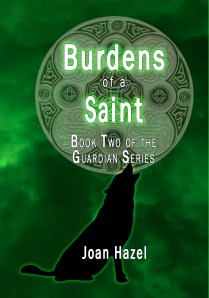
Cover BOAS3Today we’re talking with Joan Hazel, a lovely person and an author-friend whom I met through our former publisher. She is one of the founding members of our mutual publishing group, Myrddin Publishing. Over the last two years I’ve become quite good friends with her.

She is  a talented author, whose new novel, Burdens of a Saint, was released yesterday. I had been lucky enough to be a beta reader for her on the early manuscript and really loved the characters of Janet Beesinger, and Saint.

But first, the Blurb:

 Your life will change today…

When Janet Beesinger writes  the words in red on her calendar, she has no idea what they mean. But, as a psychic, she knows when the universe gifts you with personal information, you listen.  How was she to know the Universe meant an irritating and sexy shape-shifter who would challenge everything about her life?

Saint Wolfe can feel the gravity of his arrangement with the goddess Hel closing in around him, forcing him to confront his past and the betrayal of the woman he was to marry. Needing to make peace with his past, he returns to New Orleans in search of forgiveness, only to be confronted by his own immortality. His only hope for atonement lies in the hands of a woman claiming to be a psychic. Will she be able to help Saint find salvation before his debt to Hel comes due?

And now–the interview:

Me: Where did you get your original idea for a fantasy-romance involving a society of shape-shifters from?

Joan Hazel PicJoan: Would you believe they walked out of the bushes while I was mowing the yard and said “here we are, now tell our story”? It sounds strange, but that sort of what happened. I was doing yard work and thought what would happen if you found out you inherited a mansion and the surrounding lands, and while you were tending the yard four hot guys walked out of the woods and you found out it was your responsibility to take care of them? And, by the way, they are all shape shifters.

Me: I like that. I think we often find our inspiration in the most mundane places. When you are mowing the lawn, your mind is free to move about the airplane, so to speak.

What is your personal connection with Norse Mythology? 

Joan: I have always had an attraction to Norse Mythology and Vikings. It may come from my Germanic roots or it may come from a past life. LOL. Even when I sang opera I specialized in Wagner which is deeply steeped in Norse Mythology.

I just always felt the Norse gods were more connected to the common man more so than the Greek or Roman.

Me: I agree. I’ve always felt the Norse gods were too closely involved in human affairs for our own good, lol!  (Loki, please make mischief elsewhere, thank you….)

So I understand you use Dragon Naturally Speaking software. What is the evolution of your manuscript—how do you take it from the first draft to the completed stage? Is there some point where you switch to a standard word-processing program?

Joan: This is why it takes me so long! I do use Dragon, but only after I have written the manuscript in longhand. For me there is something magical about the brain-hand connection when it comes to weaving these stories.

After I have the written manuscript, I then input through Dragon into a Microsoft Document, then go into that and work formatting, etc.  The hardest part for me in using Dragon is the fact so many of my characters have unusual names. So far I have been unable to get the software to recognize names like Apple-y and Aegir.

Me: Wow–that seems time consuming. I don’t have that sort of patience.

Like me, you’re an indie author. What is the most difficult part of this process for you?

Joan: The most difficult part of the process for me is finding the time to write while juggling everything else. It seems that quite frequently I will be in “the zone” chugging away when the  my hubby yells at me from the other room or the dogs try and get my attention. Plus, my muses  have an irksome way of popping up at those times that I can do nothing about it, like when I am  driving or taking a shower. I have tried using a recorder, but listening to the sound of my own  voice irritates me.

Me: I know! I am always embarrassed by the sound of my own voice. And distractions are something we can all relate to.

What is your next project in this series and who will be the main character?

Joan: That is a great question. There are two books left in the series; one for Fergus Wolfe, who is the alpha of Delta Pack and the other, is for Ghost Thorolfur. The two are kind of battling it out to see who goes next. Originally, I had planned for Ghost to be next, but now I am not so sure.

Me: They are both intriguing characters, and I really can’t decide which one I am more curious about! You also write romance novels.  Do you have any other books in the works?

Joan: How much time do we have? There are probably 10 books jumping around in my head at the moment. There are two in particular that I have begun work on. One is a medieval fantasy set in an imaginary kingdom in Scotland. The other is a western set in post-Civil War Texas.

Me: You know me! I am all about the medieval fantasy!  What advice would you give an author who may be struggling with the decision of whether or not to go indie?

Joan: In my opinion going the indie publishing route is one of the best things a writer can do, especially if your storyline doesn’t quite fit into the mainstream (i.e. commando shape-shifters created for the goddess Freyja).

I like being an indie author and having the creative control over my babies. There are days you will want to bang your head against a wall and days you will want to jump for joy.

My word of caution, don’t go into it blindly. I learned a great deal about the business of being a writer, and believe me, it is a business. You can find a lot of information on the internet and there are small, indie publishing companies that will help you publish. Keep in mind, even if you signed with a large house, unless you are J.K. Rowling or Nora Roberts, marketing, branding, organizing book signings, or anything else for that matter is left completely to you.

Me: Joan, that is good advice. I would add that a quick glance through the list at Preditors & Editors will give a new author some idea of small publishers they may not want to go with.  

But thank you so much for stopping by, and for answering a few of my questions. I have really enjoyed it.

Joan: Connie, thanks for letting me stop by and share my thoughts. It has been fun.

———————————————————————————–

Just so you know, Joan is an awesome person! To find out more about Joan and her books check out her website, and these other fine social media:

Website: http://www.joanhazel.com

Blog: http://joan-hazel.blogspot.com/

Twitter: @guardianwriter

Facebook: https://www.facebook.com/pages/Joan-Hazel/362411800440684?ref=hl

Cover BOAS3

BURDENS OF A SAINT

available at Amazon.com

Available in print and for the Kindle

Joan Hazel has found success at virtually everything she has ever put her mind to doing.

A native of Corinth, Miss., she is an accomplished actress and vocalist who has performed with theater and opera companies across the eastern United States. She has also dabbled success-fully in theater as a director and vocal director for numerous award-winning productions.

She completed a double major in music and business from Delta State University and went on from there to earn a Master’s Degree from East Carolina University with another double major, in music performance and pedagogy.

She has spent time as a vocal and piano teacher at both Troy University and Enterprise State Community College. As a teacher she is much sought after for her skills and often works privately with students in her home. In 2010 she was a guest instructor at the International Music Theater Festival held in Venice, Fla.

In her spare time, she plays with a cast of characters who live in her head. She has written four novels that range from historical fiction to reality-based crime fiction to science fiction/fantasy.

Hazel is passionate about the protection of animals and supports a variety of animal conservation efforts.

She currently resides in DeLand, Fla., with her husband, Ricky, and their two dogs.

Comments Off on Joan Hazel, Burdens of a Saint

Filed under Books, Fantasy, Humor, Literature, mythology, Romance, Uncategorized, writer, writing