
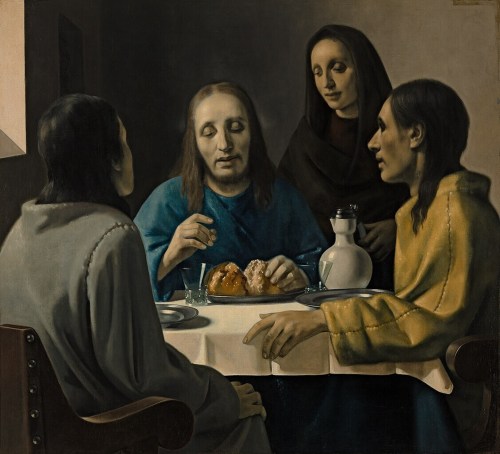
Han van Meegeren: The Men at Emmaus
Genre: religious art
Date: 1937
Medium: oil on canvas
Dimensions: Height: 118 cm (46.4 in) Width: 130.5 cm (51.3 in)
Collection: Museum Boijmans Van Beuningen
Normally, I begin the Fine Art Friday articles by discussing what I love about a particular painting. Today, I want to begin with the artist, Han van Meegeren (1889–1947), also known as Henricus Antonius van Meegeren. He was a 20th-century Dutch painter, drawer, aquarellist, and (most importantly) a forger. Van Meegeren’s story is complex and dramatic.
Wikipedia tells us:
In this Dutch name, the surname is van Meegeren, not Meegeren.
Henricus Antonius “Han” van Meegeren (Dutch pronunciation: [ɦɛnˈrikʏs ɑnˈtoːnijəs ˈɦɑɱ vɑˈmeːɣərə(n)]; 10 October 1889 – 30 December 1947) was a Dutch painter and portraitist, considered one of the most ingenious art forgers of the 20th century. Van Meegeren became a national hero after World War II when it was revealed that he had sold a forged painting to Reichsmarschall Hermann Göring during the Nazi occupation of the Netherlands.[3]
As a child, Van Meegeren developed an enthusiasm for the paintings of the Dutch Golden Age, and he set out to become an artist. Art critics, however, decried his work as tired and derivative, and Van Meegeren felt that they had destroyed his career. He decided to prove his talent by forging paintings by 17th-century artists including Frans Hals, Pieter de Hooch, Gerard ter Borch and Johannes Vermeer. The best art critics and experts of the time accepted the paintings as genuine and sometimes exquisite. His most successful forgery was Supper at Emmaus, created in 1937 while he was living in the south of France; the painting was hailed as a real Vermeer by leading experts of the day such as Dr. Abraham Bredius.
During World War II, Göring traded 137 paintings for one of Van Meegeren’s false Vermeers, and it became one of his most prized possessions. Following the war, Van Meegeren was arrested, as officials believed that he had sold Dutch cultural property to the Nazis. Facing a possible death penalty, Van Meegeren confessed to the less serious charge of forgery. He was convicted on falsification and fraud charges on 12 November 1947, after a brief but highly publicised trial, and was sentenced to one year in prison. He did not serve out his sentence, however; he died 30 December 1947 in the Valerius Clinic in Amsterdam, after two heart attacks. It is estimated that Van Meegeren duped buyers out of the equivalent of more than US$30 million in 1967’s money, including the government of the Netherlands. [1]
What I love about today’s painting: This image has the feel and flair of a masterpiece created during the height of the Dutch Golden Age. It is easy to see why the experts were duped. Despite van Meegeren’s duplicity, he was a master.
Van Meegeren educated himself before he began working on a painting. This diligence shows in the finished product. The picture’s subject is precisely the kind that renaissance artists of all levels of skill painted. The genre of religious paintings earned them the most coins.
We know that Vermeer was influenced by Caravaggio’s treatment of light in his paintings, so it seems logical that, as a young artist just learning the craft, he would attempt a fanfiction to learn and practice the master’s techniques.
The painting depicts the moment when the resurrected but incognito Jesus reveals himself to two of his disciples (presumed to be Luke and Cleopas) in the town of Emmaus. He will soon vanish from their sight, according to the Gospel of Luke 24: 30–31.
Both men are dressed as pilgrims, and the rough seams of their garments are a well-researched detail. Van Meegeren was meticulous in his research of an entire painting, from authentic pigments to handmade brushes, to historical consistency in depicting garments. The woman in the background is not mentioned in the Gospel, but in Caravaggio’s second composition of the Supper at Emmaus, she is assumed to be the innkeeper’s wife.
The muted colors, the way the hands and garments are portrayed, and the soft light entering from the window—van Meegeren knew his craft.
It’s too bad that he could only see his way to fame by cheating us. A true Vermeer is priceless as much because of the man who painted it as it is for its craftsmanship. Learning a piece is a forgery stabs the art lover in the heart.
Van Meegeren was exceptionally talented. It’s too bad that he stooped to forgery, believing it was the only way his skills could be recognized. The quest for validation took him down some dark paths.
Credits and Attributions:
Today’s image: The Men at Emmaus, by Han van Meegeren. Wikimedia Commons contributors, “File:EmmausgangersVanMeegeren1937.jpg,” Wikimedia Commons, the free media repository, https://commons.wikimedia.org/w/index.php?title=File:EmmausgangersVanMeegeren1937.jpg&oldid=605192378 (accessed December 29, 2021).
[1] Wikipedia contributors, “Han van Meegeren,” Wikipedia, The Free Encyclopedia, https://en.wikipedia.org/w/index.php?title=Han_van_Meegeren&oldid=1061907711 (accessed December 29, 2021).
 Daily writing becomes easier once you make it a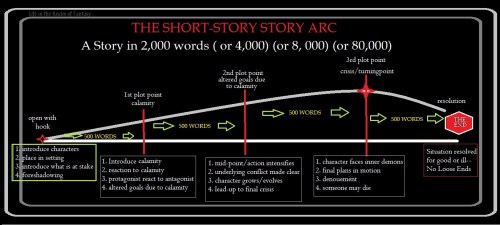
 A prompt is a word or visual image that kick starts the story in your head. If you need an idea, go to
 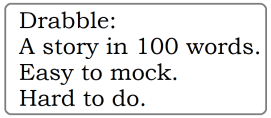 When you write to a strict word count limit, every word is precious and must be used to the greatest effect. By shaving away the unneeded info in the short story, the author has more room to expand on the story’s theme and how it supports the plot.
 To know that, you must know the genre of the work you are trying to sell. So, what exactly are genres? Publisher and author
  Mainstream (general) fiction—Mainstream fiction is a general term that publishers and booksellers use to describe works that may appeal to the broadest range of readers and have some likelihood of commercial success. Mainstream authors often blend genre fiction practices with techniques considered unique to literary fiction. It will be both plot- and character-driven and may have a style of narrative that is not as lean as modern genre fiction but is not too stylistic either. The novel’s prose will at times delve into a more literary vein than genre fiction. The story will be driven by the events and actions that force the characters to grow.
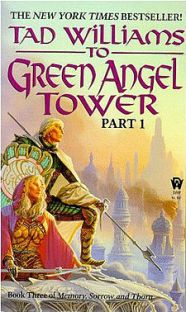 Fantasy is a fiction genre that commonly uses magic and other supernatural phenomena as a primary plot element, theme, or setting. Like sci-fi and literary fiction, fantasy has its share of snobs when it comes to defining the sub-genres. The tropes are:
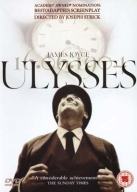 Literary fiction can be adventurous with the narrative. The style of the prose has prominence and may be experimental, requiring the reader to go over certain passages more than once. Stylistic writing, heavy use of allegory, the deep exploration of themes and ideas form the core of the piece.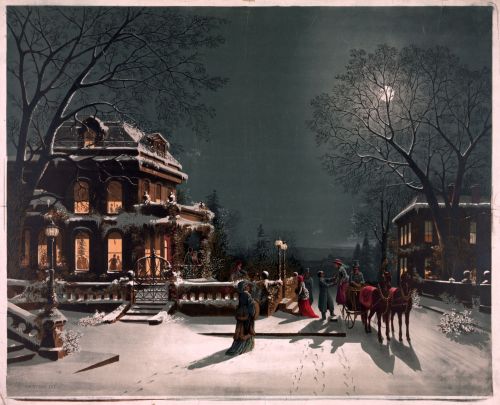
 One step on the slippery slope of passive prose is the overuse of
 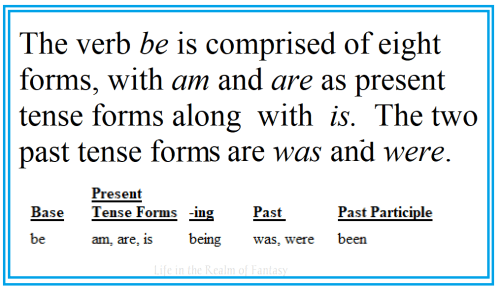 I think the habit of using one of the eight forms of the word be is more one of
  The whole thing looks quite complicated on the surface, but it doesn’t have to be. We must begin assembling our writers’ toolbox. One important tool is Bryan Garner’s
  I say cut back, not eliminate. Despite the misguided efforts of many gurus and Microsoft Word to erase all forms of ‘to be’ from the English language and replace it with ‘is,’ there are times when only a subjunctive will do the job.
 A critique group may tear your work apart, which stings a wounded ego. But we grow from this experience. We learn that opinions are subjective, and writers are thin-skinned creatures. We develop a thicker skin and muck on.
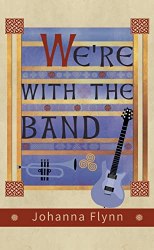 We’re With the Band, a novel by Johanna Flynn
 Johanna grew up in Spokane, Washington.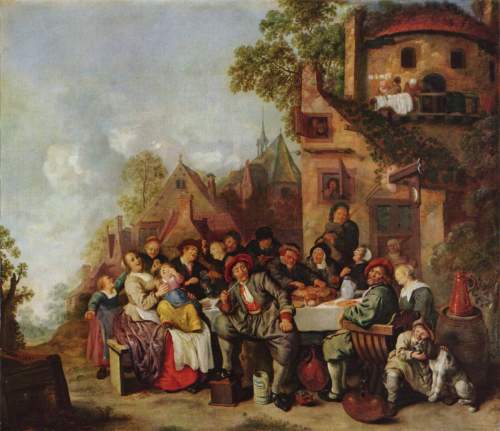
 By creating small arcs in the form of scenes, we offer the reader the chance to experience the rise and fall of tension, the life-breath of the novel.
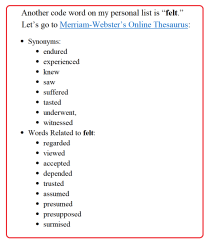 Code words are the author’s first draft
  Thought (Introspection):
 That is true of every aspect of a scene—it must reveal something we didn’t know and push the story forward toward something we can’t quite see.
 Novels consist of a string of moments united by a common theme. These scenes combine to form a story when you put them together in the right order and link them with a plot featuring a compelling protagonist who must overcome adversity.



 Life in the Realm of Fantasy


