Category Archives: Self Publishing

Dear Sir or Madam

GerundsThere are times when the vagaries of modern English (previous error in capitalization edited by Stephen Swartz) get in the way of reading what could be a great novel.  Some weeks I see six or seven books, both indie and traditionally published, before I find one book worth reviewing for my book review blog, Best in Fantasy.

As authors, we are all overcome with the urge to shout to the world, to immediately show the world our precious child, to rush to publish it now.  It is the rare author who can write prose that is fit to read in his first draft–if that author actually exists, I’ve never read his work.

For the indie, this is fatal.

This is why I highly recommend hiring a reputable editorial service to go over your manuscript, even if you plan to submit it to a publisher. After all, why not submit the best work you can, rather than risk being stuck in the slush pile?

An editor will have several reference manuals at his/her hand, and will help you realize your vision, whittling away at the block of granite you gave birth to and love so much, carving away the unnecessary and extraneous words and cliches  until the book emerges in all its glory.

honorificsWhen I am editing, I refer to The Chicago Manual of Style, the Oxford A-Z of Grammar & Punctuation, and of course, Strunk and White’s Elements of Style. As I have been through the process of being edited and hate that horrible feeling of being called to task on silly things, I often refer to these books when I am second guessing myself in my own work.

What are the silly things, you ask?  They are things we learned in grammar school but forgot as we grew older and didn’t use them.  Small things like when to capitalize an honorific title, and when not to–something that crops ups regularly in my work as I often write in a medieval setting.

I’ve found it helpful to use the control -f (find) function in WORD to locate every possible mangling I might have made of a particular word. Then I look at and replace each instance on an individual basis. (NEVER click replace all!)

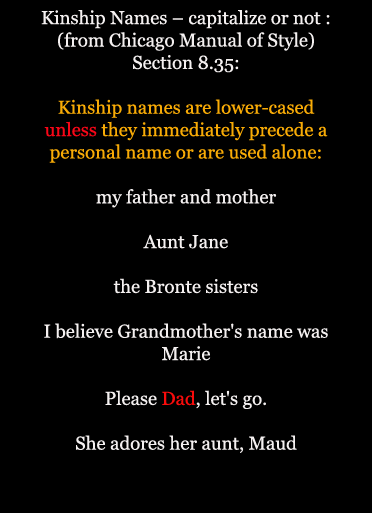
KinshipConsistency is important, so  we must know when to capitalize titles and honorifics–words like king, and majesty, or even lord. Also, when to capitalize familial titles such as father, mother, son and aunt.  If you are determined to do it wrong, at least have your roommate ensure that you have done it that way throughout the entire manuscript, rather than sometimes one way and sometimes another, which is the normal, natural way to write a first and even second draft.

Editors not only correct grammar, they check for consistency. They are worth their weight in gold. They’re more important than the fine artwork for the cover, more critical than the catchy blurb. We live in the wild west of the publishing business, and we find ourselves doing whatever we can on the cheap to get our book published. DON’T skimp in this area, if you value your reputation. Once you have published, it’s a pain in the backside to unpublish, have it edited, reformat it, and go through the launch all over again. Remember, we see what we meant to write, not what is actually there.

But you don’t have to listen to me–experience is the great humiliator.

2 Comments

Filed under blogging, Books, Fantasy, Humor, Literature, Publishing, Self Publishing, Uncategorized, writer, writing

la vie fantastique

Map-pugetsoundMy hubby and I went to Victoria, British Columbia (Canada) over this last weekend. It was a wonderful two days, spent in a town that exists partly to govern the Province of British Columbia, but mostly to help you lighten the burden in your pocket book, and make you beg to let them do it again.  We got up at 3:00 a.m. and left our house at 4:45.

(Gah!)

I am often up at that time of the day, but not intentionally, so it was no surprise to me that I could hardly pry my eyes open. Then we drove up to Seattle, collecting two of his sisters along the way.

It’s amazing how little traffic is on I5 at that time of the morning–perhaps I will do all my traveling at ungodly hours. And parking…OMG, it was heaven.

(Sorry, too much texting the GKs lately. Makes me want to lol out loud. Might write my next book in textspeak.)

Anyway, I had my pick of prime spots in the parking garage, and found one I was easily able to maneuver the old minivan into with no trouble. I hardly gave my poor brother-in-law, Dave, a heart-attack  at all on the way up to Seattle. He  is a sweetheart of a guy but the man is a nervous and verbal passenger.  The trip back–well lets just say he wanted me to take the Alaskan Way Viaduct, and I didn’t want to.

I’m sorry, Dave. I’m afraid I can’t do that. 

I don’t trust the viaduct. It’s as shaky and narrow as a one-legged ladder.  I’d much rather drive in aimless circles around downtown Seattle hunting for a southbound freeway on-ramp, counting the number of times we pass Nordstrom’s and he doesn’t see the fun in such an exercise. But that’s another post (the one on how our family puts the fun in dysfunctional.)

Catamaran_Victoria_Clipper_IVSo we got on the Victoria Clipper at 7:30 a.m., which is definitely the way to go if you are traveling from Seattle. Victoria Clipper catamarans typically complete a one-way trip in less than 3 hours, in our case, 2 hours and 45 minutes.   To drive there would take 6 hours from our house anyway and we would still have to take a ferry, so why not just leave the car in Seattle and go in style? And we were flying over the water, traveling at 30 knots, which is just a hair over 34.5 miles per hour in landlubber-speak. That’s cruising pretty fast on the inland Salish Sea.

Then we toured the Butchart Gardens. THAT place is most definitely a fairyland.  I can’t even find the words to explain how beautiful it is.  My cellphone photos suck, to use a technical term, so I am using images cadged from WIKIPEDIA to illustrate this:

1200px-Butchart_Sunken_Gardens


1200px-Butchart-gardens-002

Needless to say, after a long day of hiking the most gorgeous gardens, and then trundling all over the downtown, spending money like water in Victoria proper, I was SO ready for a lovely meal in what is really a lovely, vegan-friendly city. A long soak in the hotel hot tub, and followed by gin & tonic in the hotel lounge (light on the gin and lots of lime wedges, thank you) and this old lady was ready for bed.  I got on the internet just long enough to check my email.  I wasn’t completely out of writer-mode–I did note my ideas down in my little book while I was on the ferry.

So, while I didn’t get any writing done I had a wonderful time with my in-laws, and that’s paradise, to me.

Victoria_harbour_-_Victoria,_British_Columbia_-_2014

4 Comments

Filed under Adventure, Battles, blogging, Fairies, Fantasy, Humor, Literature, Publishing, Self Publishing, Vegan, WordPress, writer, writing

Lamed in the land of Language

IBM_SelectricMy first draft sits sullenly on my desk, glaring at me with repetitiousness and flatness of prose.  No matter how I grasp for words, a sword remains a sword, remains a sword…since to refer to it as a blade or weapon would require stretching the vocabulary…

…ellipses rise and fall with frequency across my page…boring, jarring frequency…

My characters are Angry!  Not mad, furious, enraged, excited, wrathful, indignant, exasperated, aroused, or inflamed–no–they are merely

‘angry.’

I frequently tell them how awesome they are, because my mind is inelastic, and awesome is all I know. Truthfully, they are amazing, incredible, unbelievable, improbable, fabulous, wonderful, fantastic, astonishing, astounding, AND extraordinary. But my lamed vocabulary shall forever deem them ‘awesome.’

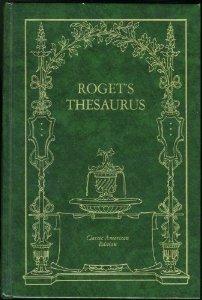
Roget's Thesaurus 1st editionMy thesaurus has been used and abused, and still my lazy (indolent, slothful, idle, inactive, sluggish) mind gropes for words.

Inspiration has played me false. Fake, fraudulent, counterfeit, spurious, untrue, and unfounded? No! ’tis erroneous, deceptive, groundless and fallacious, this twisty beast, Inspiration.

I go quietly into the depths of the Room of Shame, that hall of horror that is my office, where I shall once again attempt to wrangle words in the desert of desperation.

4 Comments

Filed under Adventure, blogging, Books, Fantasy, Humor, Literature, Self Publishing, Uncategorized, WordPress, writer, writing

Cats and the Physical Laws of the Known Universe

ceramic cat and cupI realized the other day that I am a cat-lady. Oh, I don’t own a cat, or even a dog for that matter, but I am still a cat-lady.  I love cats…ceramic cats. I have 3 of them.

They are the perfect companions. Their demeanor is a little aloof, but what do you expect from a cat?  They rarely meow, eat very little, require only an occasional dusting, and never try to hijack my laptop.

I’ve never yet had to clean up a hairball.

That said, there is something lacking in my relationship with these strangely well-behaved creatures.

Alas, I am a lazy woman. The amount of vacuuming a living cat introduces into my life breaks the laws of physics. Let’s do the math–I’m an author so we’ll do it with a story-problem:

Mr. & Mrs. Catpeople  are humans who currently have 0 cats. They are ordinary people, not too messy, and not too tidy. Normally, they only have to vacuum their bungalow once a week. One spring day Mrs. Catpeople  loses her suburban mind and decides to bring home a cat. If she only had to vacuum the house 1 time a week when two humans resided in her home, how many times will she vacuum with the addition of a cat?

Cat on MozartOkay… 2 people + 1 cat = 3 creatures.  so, if she cleans once a week when there are 2 creatures in the house, with the addition of a third creature, and assuming you can’t half-vacuum (although you can vacuum half-assed), it should mean she has to vacuum twice. But the fur on the sofa appears every day as if by magic, increasing exponentially with the arrival of guests, which requires her to vacuum morning and evening…. so that = 14 times a week that Mrs. Catpeople must haul out the Hoover.

See? I’ve done the math and it doesn’t add up. Of course, I failed traditional math classes regularly, but according to my calculations,  Mrs. C will be up to her eyeballs in cat fluff inside of two weeks, because no normal human being can keep up with that amount of flying  fur.

The only reasonable conclusion one can come to is that cats clearly do not obey the same rules of physics as humans do. After all, when it stands on your chest at 3:25 a.m., does your 7 lb cat not gain 25 lbs?

And when they see an invisible object of their desire at the top of the new drapes, are they not able to travel faster than the speed of light?

These are proof to me that cats are like subatomic particles.  They are here and not here, both before and after, and only exist when you are looking at them.

Cat with attitudeBut, while math, or indeed physics, was never my forte, extrapolating stories always was, so here is the true ending of our story-problem, the one math teachers never tell you:

One day while eating his organic Cheerios, Mr. Catpeople suddenly realizes the cat is speaking to him. At first it seems fun, but gradually he realizes the evil creature is shooting feline  thought-rays at him, trying to take control of his mind. Every where he turns, the cat is looking at him.   “Get an ax…Kill the dog….”

Mr. Catpeople sets his spoon down and his remaining Cheerios go soggy while he wrestles with this directive. It seems reasonable, but… “Um, we don’t have a dog.” 

“Did I say ‘dog?’ Sorry. I meant kill the annoying woman with the evil vacuum….”

So the true answer to the problem is ‘0’ because after the funeral Mr. Catpeople will be vacuuming.


2 Comments

Filed under Adventure, blogging, Humor, Literature, Self Publishing, Uncategorized, WordPress, writer, writing

Fantasy and the cold hard truth

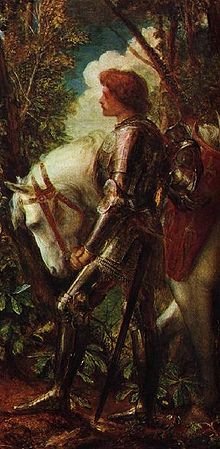
Saint_Alban_(cropped)In a good novel, there is a moment where the interactions between certain characters can become highly charged, fraught with anger and other intense emotions. That is the case with what I am writing now:  three of my characters spent a long time fighting alongside each other, brothers and sisters in arms, completely dependent on each other.

They have a long history. Several terrible incidents occurred during the war they once fought that they don’t understand, and which created a rift between them. Some of their close companions were killed under bad circumstances (are there ever any good ones?) and each of my characters suffers a little survivor’s guilt.

After the war, they went their separate ways and for the last 25 years, have rarely seen each other or spoken. They all bear a burden of responsibility for things they can’t change, and their lives are affected by this, although they don’t know why. For each of them, their anger and remorse are expressed in different ways.

Two of them can’t be in the same room for long without trying to kill each other.

One character in particular suffers disturbing recurring flashbacks, avoidance or numbing of memories of the event, and what we call ‘fight or flight syndrome,’ the uncontrollable urge to either fight or flee. These characters all three demonstrate varying degrees of avoidance,  withdrawal, aggressive defense, or in one case, complete frozen immobility. Certain memories trigger these behaviors, and now all three are being forced to face their demons.

My challenge is to bring these people back together with sensitivity and realism, in order to advance my story, and use only 1/3 of the allotted word-count for this book.

Does this sound like Post Traumatic Stress Disorder (PTSD)? You’re right. For more information on PTSD, see an article  on the website, Military Pathways, and this news article aired by CBS on their show, 60Minutes.

Because it’s a new term, I can’t refer to this ‘injury of the spirit’ as PTSD in my manuscript. But I can give it another name and air both the symptoms and the sometimes life-long problems untreated PTSD causes.

GeorgeSPatton - WikipediaMy father, and my uncles all suffered from this long after World War II ended. In many ways it has shaped our post WWII society. Our fathers were told to just shut up and  get on with their lives–something that is not always an easy thing. Alcoholism and domestic abuse lay just under the surface of many families in our community, hidden but there.

Prior to World War I, the U.S. Army considered the symptoms of battle fatigue to be cowardice or attempts to avoid combat duty. While the causes, symptoms, and effects of the condition were familiar to physicians, it was generally less understood in military circles. General George Patton garnered substantial controversy after he slapped two United States Army soldiers under his command during the Sicily Campaign of World War II.

It was common for soldiers who reported these symptoms to receive harsh treatment. At the time of the slapping incidents, the two soldiers Patton assaulted were suffering from “battle fatigue,” otherwise known as “shell shock” or “battle stress.” Today, this condition is characterized as a form of PTSD, which can result from prolonged severe exposure to death and destruction, among many other traumatic events.

220px-Sir_Galahad_(Watts)

Even though I write fantasy, the reactions of my characters to certain situations has to be realistic, and that is where a good grasp of what really happens to our vets comes in handy. Post Traumatic Stress Disorder (PTSD) is real and affects our returning veterans. More must be done to help ease our military wounded back into society, but generally speaking we pay more lip-service to that problem than we do tax dollars.

We write about incredible personal challenges, because they make great stories. But what about the people who live through those moments? How do they quietly go back to the farm once the war is over, and pretend it never happened? This is what I am writing about now, and it has been an emotional journey for me as as an author and a human being. Everyday, our paths are crossed by men and women living with PTSD caused by a variety of terrible circumstances,  They are just ordinary people trying to keep their lives together, not understanding why they sometimes do the things they do, and wondering why things just keep going to hell all around them.


2 Comments

Filed under Adventure, Battles, Blogger, blogging, Books, Fantasy, knights, Literature, Publishing, Self Publishing, WordPress, writer, writing

Edmonds Beach

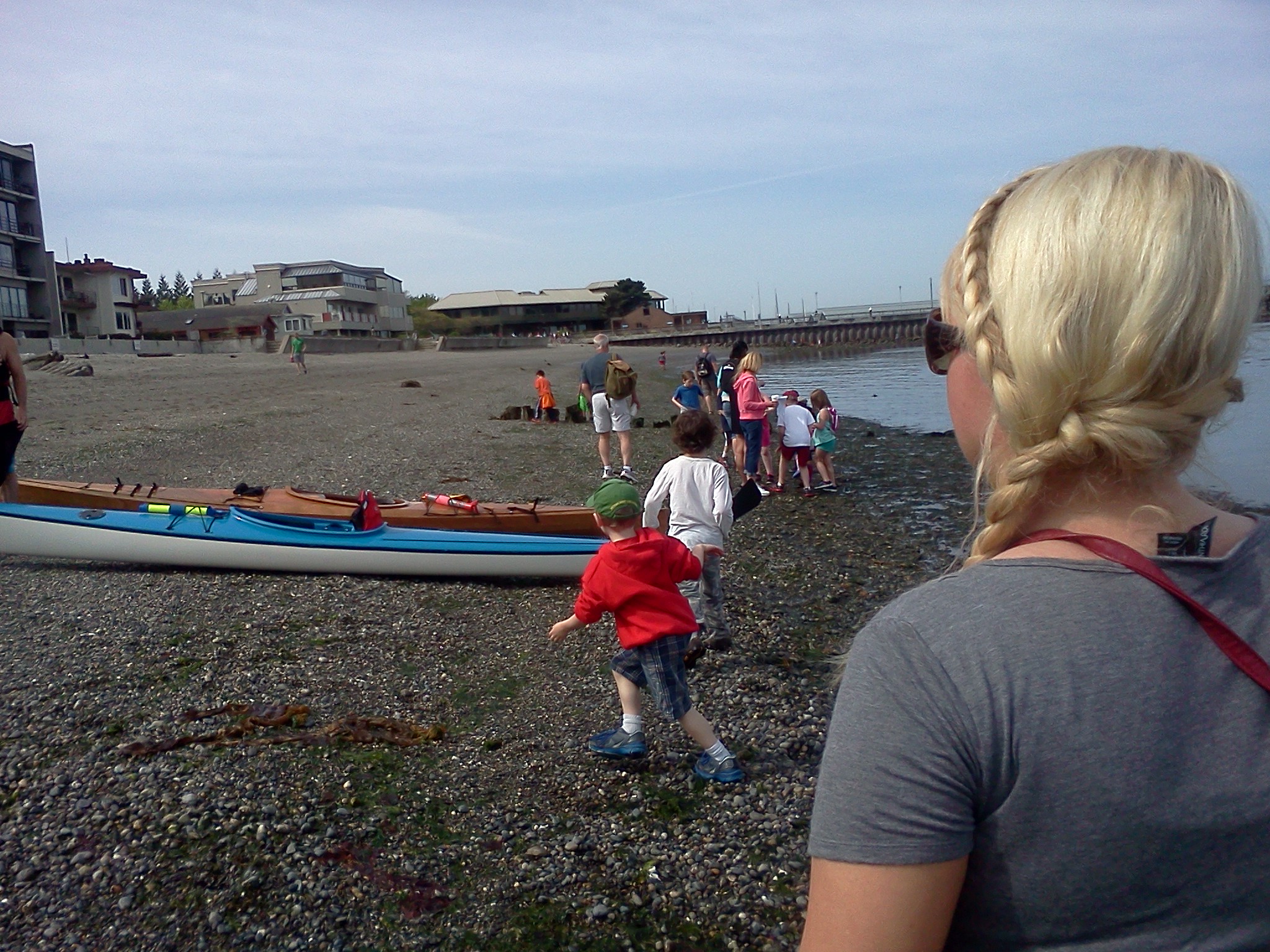
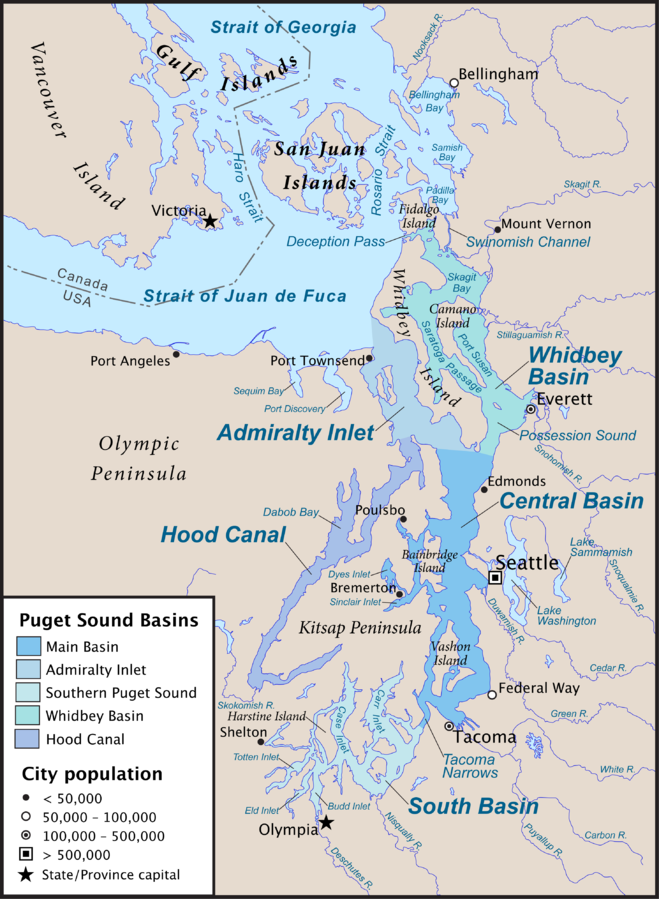
Edmunds Beach 2, Puget Sound, May 15, 2014Yesterday was the annual field trip with my grandson’s class.  This time I didn’t get to ride on the bus (thank all the stars in heaven) but we did meet the classes down at Edmonds Beach on Puget Sound, in Washington State.  Edmonds is located in the central Puget Sound Basin.


Map-pugetsound wikepediaPuget Sound is a unique, complex series of saltwater estuaries and deep channels at the southern end of the Salish Sea, protected from the North Pacific by the Olympic Penninsula, Vancouver Island, and the San Juan Islands. The ecology is a fragile system, relying on the cold but protected salt water. The United States Geological Survey (USGS) defines Puget Sound as a bay with numerous channels and branches; more specifically, it is a fjord system of flooded glacial valleys.


The creatures we saw were sea anemones, moon snails, hermit crabs, sea stars, and dungeness crabs.

MOON SNAILS? Anything called moon snails must be awesome! See the video here: Jonas talks about Moon Snails on YouTube


Edmunds Beach 3, Puget Sound, May 15, 2014

We loved watching the ferries arriving and departing at Edmond’s Dock.  Washington State Ferries is a passenger and automobile ferry service owned and operated by the Washington State Department of Transportation that serves communities on Puget Sound and in the San Juan Islands. It is the largest passenger and automobile ferry fleet in the United States and the third largest in the world by fleet size. The service is also the largest in the world based on the number of vehicles carried, having carried 11 million annually.


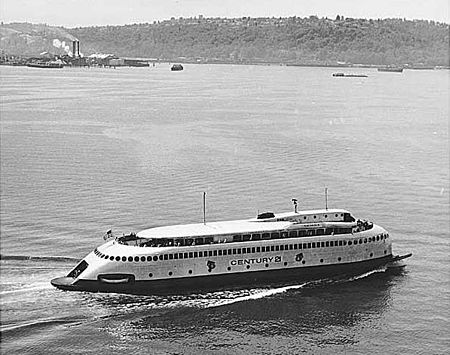
450px-KalakalaSeeing the Spokane departing for Kingston on and returning reminded me of being a kid, and sailing on the Kalakala, which was the most awesome ferry ever. It was as modern and streamlined as a space ship, and was a unique part of Puget Sound maritime history.

We walked up the beach and down the beach a kajillion times, and ate our picnic lunches. It was an awesome day.

All I know is, grandma is still tired and has sand in her shoes. She may need another nap.

1 Comment

Filed under Adventure, blogging, Fantasy, Humor, Literature, Publishing, Self Publishing, Uncategorized, writer, writing

The road to perdition

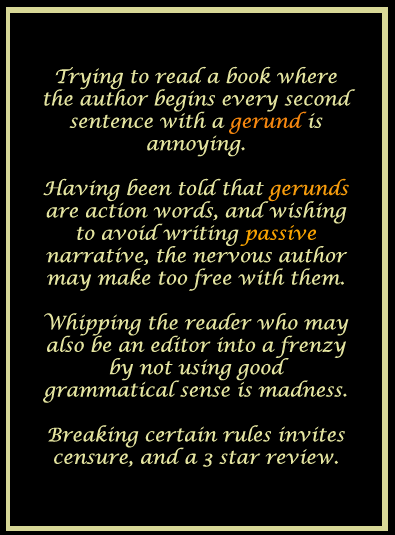
I just attempted to read a book.  I say ‘attempted.’ It may have been based on an intriguing idea, and there might have been wonderful characters, but I wouldn’t know, because after three pages of reading, I had to set that travesty aside. Every sentence began with a GERUND.

Gerunds, © Connie J. Jasperson 2014

Now I know how this happens.  New authors who spend a lot of time in writing forums and writing groups, and who have had their work trashed by the group guru as being passive might see using gerunds as a way to generate action in their narrative.

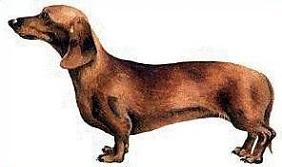
dachshund.04But Mama, what’s a gerund?  Is it like a dachshund?

No dear, gerunds are not like dachshunds, although both are insidious minions of evil that manage to work their way into … where was I? Oh yes, gerunds.

ger·und

ˈjerənd

noun
  1. a form that is derived from a verb but that functions as a noun, in English ending in -ing, e.g., asking in do you mind my asking you

SO a gerund is a verb is a noun that acts like a verb that acts like a noun.

Now that I have cleared that up, what is it really?  A gerund is not like a normal noun because a gerund can take a direct object (just like a verb can).

Basically, they are ING words—DOING words that when you combine them with possessive words such as his, my, him and their, can become nouns.

Writing – He is writing.  (it’s a verb)  I like his writing. (it’s a noun)

Running – The dogs were running. (verb)   The child’s running through the house aggravated me. (noun)

BUT wait—gerunds can also be participles?–oh, those cross-dressing fiends!

Participle phrases always function as adjectives, adding description to the sentence without resorting to that most heinous of writing-group crimes, the dreaded ‘ly’ words ( Satan, get thee away from me):

The child running across the lawn hopes you have brought him a present.

Running across the lawn modifies the noun child.

I could get really technical here and talk infinitives and prepositions–but we just want to get to the writing do-and-don’t part.  Do use them when they are necessary, and  don’t use too many. Remember it’s all about balance. Your narrative is like a ship and words are ballast–get too much on one side and suddenly your ship is at the bottom of Lake Erie.

Gerund phrases and present participle phrases are easy to confuse because they both begin with an ing word. The difference is that a gerund phrase will always function as a noun while a present participle phrase describes another word in the sentence.

SO how are ING words properly used when writing narrative? In my opinion, they should only rarely be used to begin phrases. Confusion abounds when we are too free with them, as they ruin the flow of the narrative for the casual reader.

When you are writing the first draft, none of this matters, because all that matters at that point is getting the story out of your head and onto the paper. HOWEVER, when you are working on the second draft of your manuscript, keep this in mind:

  • Adding excessive words to your narrative will result in a passive narrative. Using gerunds to begin your phrases will not turn a passive voice into an active voice. Instead, you must trim out the unnecessary words, because using active voice for the majority of your sentences makes your meaning clear for readers, and keeps them from becoming too complicated or wordy.

Relying on gerunds to create active phrases and avoid accusations of the dreaded passive writing is taking the road to perdition my friends, because just like any other grammatical crutch,  gerunds are the devil when used improperly.

>>>—<<<

 And on a different note–Last Monday I posted on My Writing Process — and today, Stephen Swartz and Shaun Allan have posted their blogs detailing their own writing processes:

Stephen Swartz can be found at Deconstruction of the Sekuatean Empire

Shaun Allan can be found at Flip and Catch

5 Comments

Filed under Adventure, blogging, Books, Dragons, Fantasy, knights, Literature, Publishing, Self Publishing, WordPress, writer, writing

Lindsay Schopfer, ‘The Beast Hunter’ launch

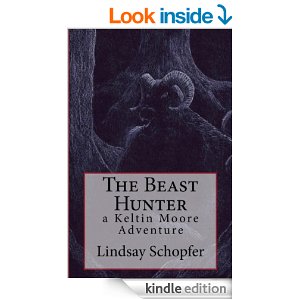
The Beast Hunter, Lindsay SchopferToday, Lindsay Schopfer, well-known Pacific Northwest author of science fiction and fantasy, instructor, and writing coach has consented to answer a few questions for us. His second book, The Beast Hunter is launching today, and I’ve been privileged to read an advance copy of it. If you are looking for an action-adventure in set in another world, brimming with political and personal intrigue, this is the book for you!

CJJ: Lindsay, you were one of my daughter Meg’s closest friends in high school. I’ve followed your career from the early days of your first play, “Techies,” knowing you had a wonderful future in writing ahead of you. Your own real life tale has been a wonderful journey, so tell us a little of early life and how you began writing:

LS: I started writing as a little kid, and I guess some people would have called me a prodigy. I wrote and produced my first full-length stage-play at 13, and went on to do five more, including two runs of “Techies.” After high school, I took a break from writing and spent two years as a service missionary on the Navajo Reservation in New Mexico. That experience, coupled with a health condition which could randomly cause me to be paralyzed for hours at a time, taught me important lessons of hardship, hope, and love.

I went to film school in Canada for a year, thinking that I would continue my passion for acting and directing, but I eventually realized that I just wouldn’t be able to tell the fanciful stories in my head unless I put them into novels. While I still daydream about film adaptations of my stories, I have to say that I’m very happy with my work and life right now.

CJJ: My favorite Lindsay Schopfer quote says it all, “I only write when I’m inspired, and I make sure I’m inspired every morning at 9 a.m.”  How do you channel the randomness of inspiration into an appointment?

LS: Actually, that quote originally comes from Peter De Vries, but it’s something that I try to live by as well. For me, turning on my inspiration means creating a mental place where I feel safe to be creative. I map out the times of day I have available when I seem to be the most productive and set them aside. I listen to music that fits my mood and the kind of writing I’ll be doing. I also try to remember that I can write whatever story I want to, so that I enjoy my work rather than feel confined by it. Ultimately, if I make writing my break from the world, then I don’t feel the need to take a break from my writing.
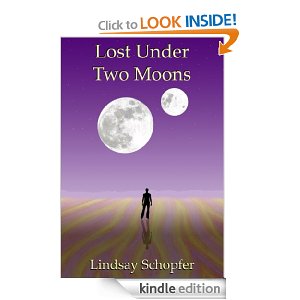
Lost Under Two moons, Lindsay SchopferCJJ: I read Lost Under Two Moons, and really enjoyed it. I find that your work is well-structured, with creative environments, good tension, and deep characters. Do you have a specific ‘Creative Process’ that you follow, such as outlining or do you ‘wing it’?

LS: My ideas for stories usually come in two parts, the beginning and the ending. Once I have those two points established in my mind, writing the novel is just a matter of connecting those two dots. I don’t do a lot of outlining because I find that I start to lose interest in a story if I feel ‘chained’ to a guideline I’ve set for myself. I do enjoy doing world-building early on, though I usually just sketch out enough details to get me started and only add to it if I get stuck. Of course, once the first draft is done, I always go back and fill out the rest of my backstory and world-building notes, but that’s usually a case of noting what I came up with as I was writing and trying to maintain continuity throughout the story.

CJJ: You are highly involved with the Pacific Northwest Writers Association, which I am also a member of. You gave a workshop on May 2nd, regarding turning off the inner critic. What advice would you give new authors, who may be struggling with this common problem?

LS: Like I said earlier, turning off the inner critic and getting inspired is a matter of creating a place where you feel safe to write. For some people, this means writing when you’re not fully awake. I do my best writing at three different times, when I first wake up, at around two in the afternoon (siesta time), and just before bed. Another way to turn off the inner critic that’s especially useful to new authors is to work on multiple projects at a time. Too many first-time authors have this mindset that they have to put all their good ideas into their first novel, or that the first book has to be perfect. By working on more than one project at a time, the writer is constantly reminded that she will have more chances than just this one book, which can be a common anxiety. Having a second project also means that you have a creativity lifeboat, and if you get writer’s block on one project you can “run away from it” and yet still be writing until you’re ready to go back.

CJJ: I absolutely agree, and I usually have three projects going at a time myself. So, I know why I chose the indie route for my work, but I’m curious as to why you’ve chosen this path.

LS: Actually, I never intended to be an indie author. When I finished Lost Under Two Moons, I pitched it to agents for a while before releasing it as an EBook and later in print. My decision to indie-publish that novel came mainly from a desire to start selling books and establishing a market for myself. I wanted credibility as a generative artist, and to be honest I felt like that happened once I finally had a book people could buy and read.

The Beast Hunter was also originally intended for a traditional publishing route. In 2012 I went to PNWA’s summer conference and asked agents what it would take to become a hot commodity to them. The answer I got was that I needed a built-in fan base, so I wrote The Beast Hunter online serial. Once I had the fan base, I went back in 2013 with my completed novel and loyal readers, and pitched it. I was shocked that the same agents who had encouraged me to do the serial now said I had ruined my chances for success with this book because I had already “saturated the market”, though I’d like to think that there are plenty of people who would like The Beast Hunter who haven’t read the serial! I decided to keep the serial going as a way to reward loyal fans, and indie-publishing the novel seemed like the best way to tie-in the serial with my novels.

I haven’t given up on traditional publishing. I have two additional book series that I’m working on that will be intended for a traditional book deal. I’m hoping that the exclusivity of these stories combined with the fan base from my indie publishing will finally allow me to be a hybrid author with both traditionally and independently published books.

CJJ: That is a great plan of action—one that addresses negotiating both sides of the publishing dilemma.  What advice would you offer an author trying to decide whether to go indie or take the traditional path?

LS: Don’t give up on traditional publishing. While the industry is still trying to figure out how to handle the electronic revolution, it is filled with very intelligent professionals that really know the business of selling books. On the other hand, I don’t think writers should give the industry any more power than it already has. An author desperate for representation and publication is an easily exploitable resource. I would advise authors to try for traditional publishing first, but don’t be overly eager. Remember that the greatest power you have is to say no, no to an agent that isn’t good for you, no to a publisher that won’t push your book, no to a book-deal that demands too many rights. Keep that in mind, and if you feel like your project isn’t right for traditional, go indie.

CJJ: Your new book, The Beast Hunter is launching today. This is a book with an interesting history! Tell us a little about it and how it came to be.

LS: The Beast Hunter actually started as a 1,000 word flash fiction story that I wrote more as an exercise for myself than anything else. I wanted to see if I could write an action sequence, something I hadn’t tried doing in my fantasy writing since becoming serious about pursuing a career as a novelist. At the time, I was playing a steampunk CRPG called Arcanum Of Steamworks & Magic Obscura, so I decided to try writing about a hunter using 19th century technology to bring down a monster.

I liked the result, and decided to expand on the character of Keltin Moore by continuing his adventures in a free, online serial.  A little more than a year later I’d finished the first season and The Beast Hunter had gained an international following. It’s kind of funny, because for a long time this story was my side-project, something that I wrote on to relax and just enjoy writing. To see it in print now is kind of like inviting all the world to play make-believe with me, and I’m excited to continue the adventure.

CJJ: Lindsay, thank you so much for being here today! I must say, I am looking forward to hearing your presentation at the PNWA convention on July 18, 2014 on UNLOCKING CHARACTER MOTIVATION.  I will be taking notes!

The Beast Hunter Books For Africa Fundraiser Event

To celebrate the launch of his latest book, Lindsay has decided to donate one dollar to Books For Africa for each verified copy of The Beast Hunter that is sold in the next two months!

Here’s how it works. Purchase The Beast Hunter in paperback or EBook form and then take a picture of yourself with your new book. Post that picture on this event page, and Lindsay will make a donation. Only one donation per copy of The Beast Hunter.

Books for Africa is an organization with just one goal: to end the book famine in Africa. BFA is the largest shipper of donated text and library books to the African Continent, and has a 4-star rating from Charity Navigator, America’s largest charity evaluator. A donation of 50 cents is enough to send a book to a child in Africa. For more about this amazing organization, check out http://www.booksforafrica.org.
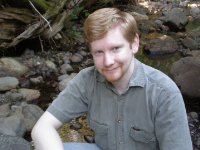
 

Lindsay SchopferAbout Lindsay Schopfer:

Lindsay Schopfer is the author of the rural steampunk adventure novel The Beast Hunter (2014) and the fantasy adventure novel Lost Under Two Moons (2012) . His short fiction has also appeared in The Daily Times, an international newspaper based in Pakistan. When he isn’t writing, Lindsay is a writing coach and instructor for Adventures In Writing, where he helps writers learn about and improve their craft.  He is also a mentor for Educurious, a Gates Foundation-funded program designed to connect high school students with professional writers.

Lindsay’s books are available at amazon.com and through his website, http://www.lindsayschopfer.com

You can also sign up for his wonderful workshops through his website at Adventures in Writinghttp://www.yourwritingadventure.com


Comments Off on Lindsay Schopfer, ‘The Beast Hunter’ launch

Filed under Adventure, blogging, Books, Fantasy, Literature, Publishing, Self Publishing, Uncategorized, writing

My Writing Process Blog Tour

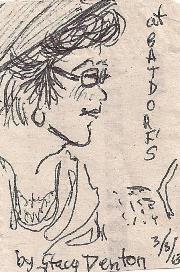
extra small caricature of connie  by street artist Stacey Denton

Today I am embarking on the  “My Writing Process” blog tour! In this blog relay, each author discusses his or her writing process and then passes the baton to three other authors. Last week, my good friend Lisa Koosis, passed the baton to me. Lisa is amazingly creative, as you will see when you click on the link to her blog, Writing on Thin Ice.  Please, do visit her blog, where you can read more about her exciting projects and her own writing process.

So, here goes…

1. What am I working on?

I am working on the third and final book in the TOWER OF BONES series, winding up Edwin’s story. This book has been very tough to write, because it keeps spawning new books! I can frequently be heard shouting, “NO! We must finish this book before we embark on a new one!”

I really do want Edwin Farmer’s story to be a 3-book trilogy.

*cough* Robert Jordan…Wheel of Time …fifteen books in the trilogy*cough*

There will be more books set in this world, I feel certain of it, but I intend to make each a stand alone book.  I love each of the characters so much in this tale, it’s hard to keep on task—but my self-imposed deadline is to have it ready for the editor by August. 

2. How does my work differ from others of its genre? Why do I write what I do?

First of all, I write from the point of view of a gamer—I am a freak for the great Final Fantasy PS2 and PS3 console games—Final Fantasy VII, VII, X/X2 and XII are among the great classics in gaming. I haven’t invested in a PS4, and I may not, as I haven’t had much time to play lately, and wasn’t impressed with 2010’s FFXIII.

I know what I love about those games, and want to inject that into my books. I want the action, the romance, and the drama of a full throttle action/adventure and I want it set in a sweeping landscape, with my characters beset by nearly insurmountable challenges. Magic must have limits and no character can have unlimited power. Those limitations are what drive the action, because the characters have to struggle to overcome them. The power of the story is in the struggle. The final redemption must be worth the struggle!

3. How does my writing process work? 

That’s where I went off the rails on this final installment in this particular series—I didn’t stick to my usual process, which was clearly outlined. But I had so many sudden brainstorms, I went way off track. Normally, when I first have the idea to write a book, I visualize it as the walkthrough for an RPG game.

I spend days writing down the ideas as they come to me, obsessively building the outline, the shell of the story. I make personnel files, descriptions of environments, designing the political and religious systems, creating the rules for magic, and drawing maps. Each world is unique, and I want to know what I am writing about.

I write the beginning and the end, and key action vignettes, fitting them into the framework of my outline.

Once I have that all done, I start at the beginning, and write, connecting the dots between the vignettes. When all the dots are connected, I have a book—albeit a raw rough draft of a book. I set it aside, as it is in desperate need of a complete rewrite, but I can’t do that until I can see it through unbiased eyes.

The second draft goes to Irene Roth Luvaul, who helps me shape it into a submission-ready manuscript. Then it will go to Carlie M.A. Cullen at Eagle Eye Editors. My work is linear, with a specific goal or “quest” and many obstacles in the way of achieving those goals. Some will live, and some will fall by the way—my task is to make it an emotionally gripping journey for the reader.


NEXT WEEK

Stay tuned for the next part of the relay as I pass the baton to three talented writers, who I have the good fortune of working with at Myrddin Publishing Group. Next Monday (May 12) they will answer the same set of questions, so please stop by their blogs to read more about their projects and their own writing processes.


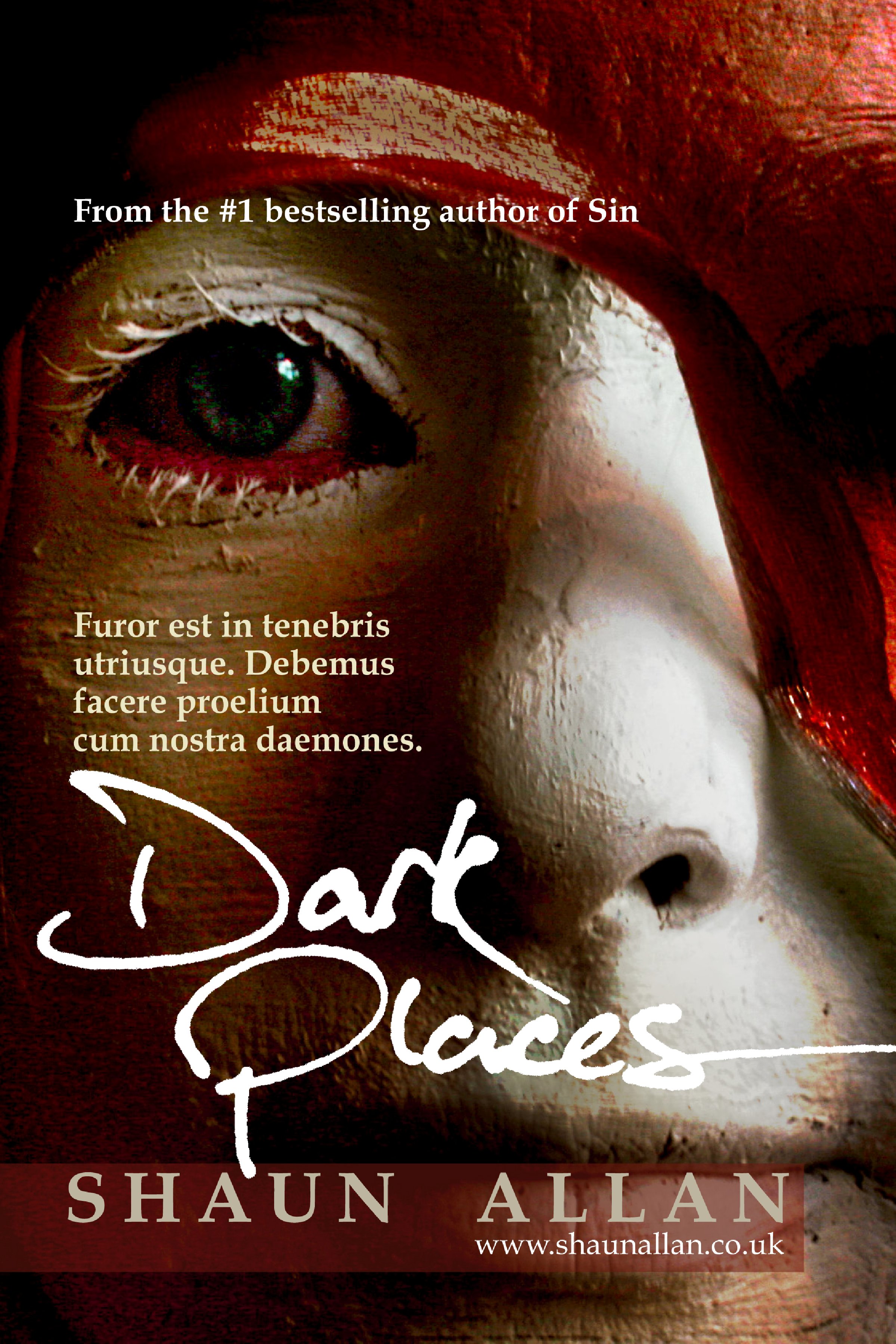
Dark Places Front Large (1)Shaun Allan, Author of Sin and Dark Places

http://flipandcatch.blogspot.com

A creator of many prize winning short stories and poems, Shaun Allan has written for more years than he would perhaps care to remember. Having once run an online poetry and prose magazine, he has appeared on Sky television to debate, against a major literary agent, the pros and cons of internet publishing as opposed to the more traditional method. Many of his personal experiences and memories are woven into the point of view and sense of humour of Sin, the main character in his best-selling novel of the same name, although he can’t, at this point, teleport.

A writer of multiple genres, including horror, humour and children’s fiction, Shaun goes where the Muse takes him – even if that is kicking and screaming.

Shaun lives with his one partner, two daughters, three cats and four fish!  Oh and a dog.


1 CP Night Watchman coverAllison Deluca, Author of The Crown Phoenix Series

http://AlisonDeluca.Blogspot.com

Alison DeLuca is the author of several steampunk and urban fantasy books.  She was born in Arizona and has also lived in Pennsylvania, Illinois, Mexico, Ireland, and Spain.

Currently she wrestles words and laundry in New Jersey.


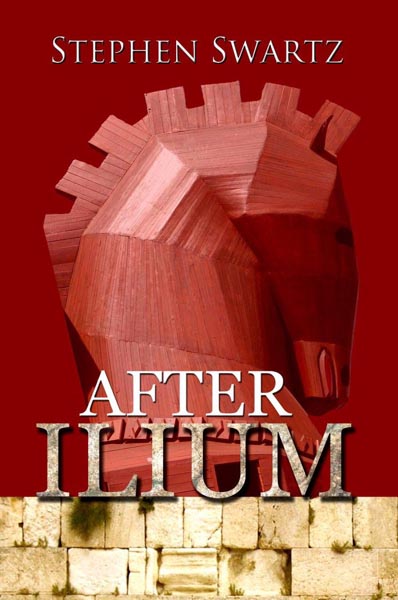
Swartz_After Ilium_FrontCvr_200dpi_3inStephen Swartz, Author of After Illium, The Dream Land Trilogy, and A Beautiful Chill

http://stephenswartz.blogspot.com

Stephen Swartz grew up in Kansas City where he was an avid reader of science-fiction and quickly began emulating his favorite authors. Since then, Stephen studied music in college and, like many writers, worked at a wide range of jobs: from French fry guy to soldier, to IRS clerk to TV station writer, before heading to Japan for several years of teaching English. Now Stephen is a Professor of English at a university in Oklahoma, where he teaches many kinds of writing. He still can be found obsessively writing his latest manuscript, usually late at night. He has only robot cats.


6 Comments

Filed under Adventure, blogging, Fantasy, Final Fantasy, Literature, Publishing, Self Publishing, Uncategorized, writing

Oh, the agony

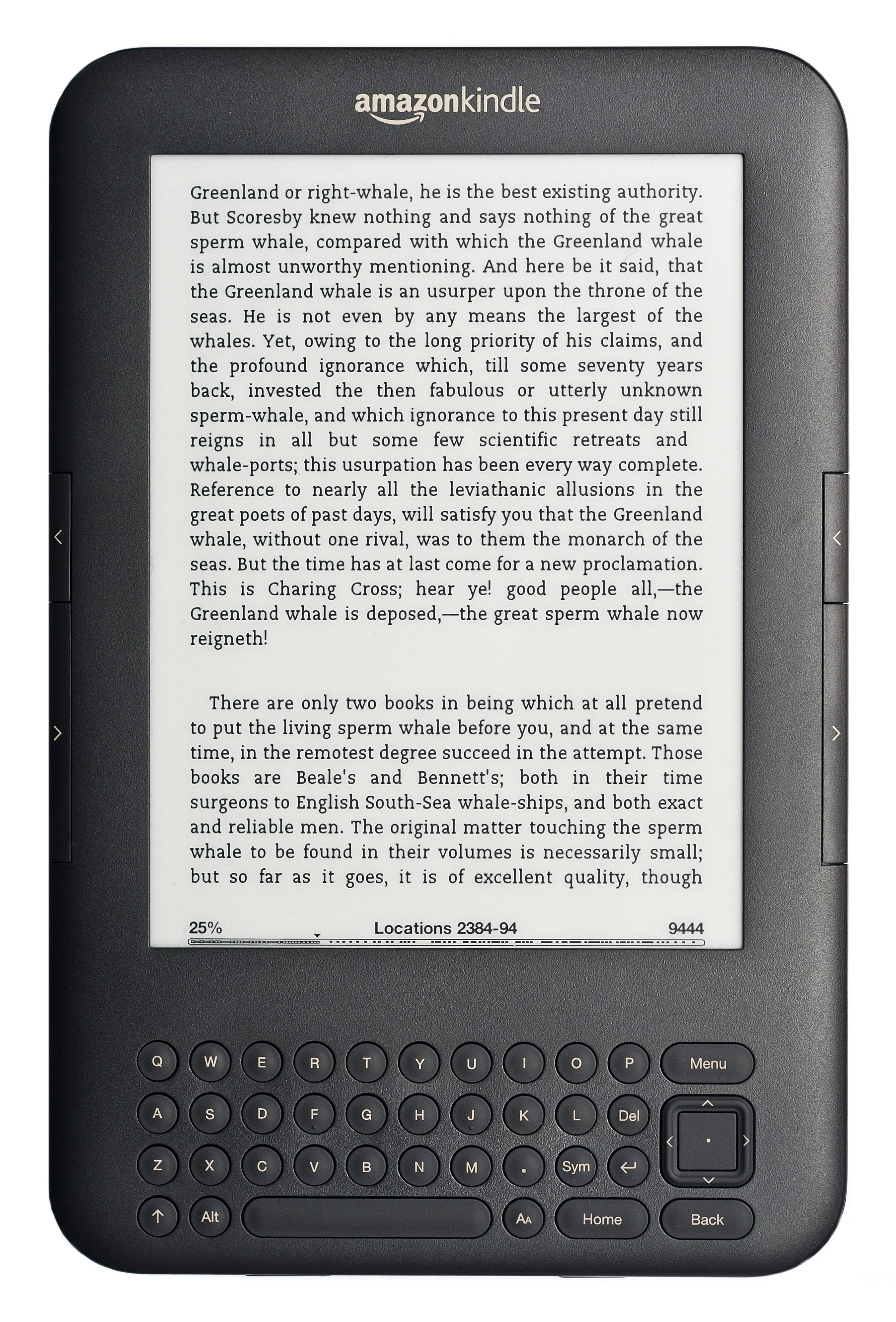
Amazon_Kindle_3I am an avid reader. I love the Kindle for the simple reason I have over 500 books and I don’t have to dust a one of them.

I have managed to get nearly every book I ever loved on my Kindle, and have become a great fan of hundreds of new authors, most of them indies.

Every now and then I read a book that is not in the genre of fantasy, sometimes taking a dip into general fiction.  I did that this week, reading a book I saw advertised on twitter.  I picked this one up because I like the title.

I don’t usually read general fiction because so many times I am left with a bad taste in my mouth. I’m OCD–if the book isn’t too horrible, I can’t put it down until I have read it to the end and confirmed that it was indeed a waste of paper and time. I hate that.

It never fails–I buy a book based on glowing reviews and after I’ve done my part and slogged through the depressing, overdone theatrics and get to the end I find that, just like an ex-lover,  it turned out to be a pretentious riff on a tired theme after all, with nothing positive to offer.

Dialogue Tags © cjjasp 2014No happy ending, and perhaps no ending at all.

Why do I ignore the warning signs?  The cringing when certain characters (once again) turn their head just so, the clenching of my teeth when the bored protagonist lights yet another cigarette. What is this fascination some authors have with portraying moneyed, bored people who cheat on each other and their taxes as if they were somehow glamorous? What makes me keep reading despite the fact that if I were to review this travesty I would give it a 3 star review and a good thrashing?

I was up to 2:a.m. reading that crap. Now I feel soiled, as if I’d suddenly developed a craving to party the night away at the local club and woke up with a horrendous hangover and a drummer named Scooter.

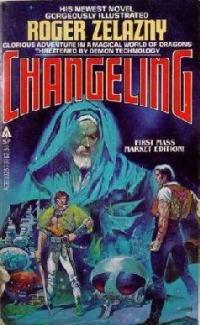
Changeling_zelaznyToday I am going back to Roger Zelazney. He’s a lover who has never let me down. I am going to revisit the scene of our most passionate affair, that amazing world of Rondoval, and Roger’s masterpiece,  Changeling.

Give me flawed characters larger than life, seething with jealous rage, untapped magic, and raw violence–and put them in an environment that makes them have to work to survive.

Oooh baby…. Now THAT is the antidote to bored ennui in my reading material!


5 Comments

Filed under Battles, Fantasy, Literature, Publishing, Self Publishing, Uncategorized, WordPress, writer, writing