Category Archives: writer

#amwriting: MS Office 365 Crash and Document Loss Workaround

windows-10-blue screen of deathThose of us who use Microsoft Office are familiar with both its versatility and its problems. In many ways, it is a great package of programs, but it has several major flaws.

The very annoying issue I never had with Office 2010, but now have with Office 365 (2016) is the program crashing right as I go to “save” a new document or spreadsheet. The program shuts down and the file vanishes, never to be found again, when the program reopens itself a minute later.

I will have the file library open, and the correct Master file open, and have correctly named the sub-file and then…just as I am about to click “save”…

Word (or Excel) shuts itself down. Any work that was done on that particular document or spreadsheet is GONE.

And no, kind sir, that document is not recoverable in my unsaved files as “Document 1.docx” nor is it listed anywhere as some gobbledygook file name with a .tmp extension. Even when you search the hard drive files by date, which should bring up anything you have done that day, the file is gone.

I’m actually quite Microsoft-savvy. When this first happened to me, I did the research and tried all the measures and remedies posted on the internet for recovering these lost files. Those remedies don’t work because the techs assume the machine’s default autosave function is working. The glitch is actually in that particular function, so it does not, and the file is not even stored in a temp file.

The program crashed, dumped the file into the ether and then said, “Oops! My bad.”

The tech support out there on the Microsoft boards seem as mystified as anyone else, and gives the same stock, canned answers. I feel bad for them–they want to help, but don’t know how.

Microsoft Office 365 Logo 1280px PNGI have an idea as to why these documents that were lost at the moment you tried to save them are unrecoverable.

The document is lost because the Windows autosave function does not always work properly, and it is the autosave glitch that causes the program to hang and then crash. Something about the  process of relabeling from the generic “Document 1” title that Word names all new documents, to whatever you need it to be,  seems to short circuit the program, causing it to shut down. 

And, the moment the unsaved document vanishes, it is as if it never existed. It was never autosaved to begin with, so there is no autosaved version to retrieve. I am sorry my friend, but that document is gone.

I have a simple workaround. It is old-school and dates back to the early days of Windows when everyone knew Word and Excel could crash at any moment. But unless you could afford Corel WordPerfect, which was horrifically expensive in those days, most businesses were stuck with Microsoft. We knew and used several workarounds which we have not had to do for many years. However, it’s time to pull them out and dust them off:

  • For every new document you create, I recommend that while the page or spreadsheet is still blank, before you do any work whatsoever on that document, you give the file a working name and save it to whatever folder you normally work out of. Do that immediately.

I work out of Dropbox, so my files look like this:

  1. Main Folder: Dropbox
  • Subfolder > cjjasperson
  • Subfolder> LIRFblogposts
    • >post_May_15_2016_microsoft_rant

However, it is when we get to the  subfolder folder and attempt to give our work a file name that Word/Excel crashes.

This is the problem scenario: I went to save the blank page on which I intended to write a post for this blog this morning and Word crashed. But, unlike several times previously, I had lost nothing as I hadn’t done any work at that point. The level of frustration is much lower when you’ve lost no work.

As long as I name my file first, before I do any work in the body of the document, I will never lose the beginnings of an entire project even if the program crashes, as it does periodically.

And once the file is renamed, autosave seems to work more efficiently.

This issue is not just with users of Dropbox.

I mentioned above that I have researched this extensively. The internet is rife with complaints that Office 365 crashes just as frequently when people are trying to save to the Documents file on their computer’s hard drive, and also occurs when saving to Microsoft’s own One Drive, and also Google Drive, and any other way people can save their files.

This means it is an issue inherent in the program itself, and not a compatibility issue. This is a problem with the software, and it needs to be addressed.

So, if you are using Office 365, name that file the minute you open a new document or spreadsheet. Once you have successfully saved your blank document/spreadsheet the first time, you will never completely lose it if Word or Excel crashes again while you are trying to save or are just working as sometimes happen.

However, if autosave hangs and fails, you will lose work you didn’t manually save prior to the crash.

But there is an old-school workaround to help with that too:

  • On the ribbon, open the File tab again and this time, scroll down to Options:
  • Click to open the Options menu and a large menu will open
  • In the left-hand menu underneath Word Options, scroll down and click on Save
  • This will open the menu to where you will reset your autosave options.
  • The default option for autosave is 10 minutes, and yours will likely say that.
  • I reset mine to 2 minutes.
  • When you are satisfied with your choices, click ‘OK.’

ms_word_rant_5-14-2015_LIRF

You can always change the working name of your document later, but once it has an official name and a place in your file directory, a temporary file will be saved should it crash again and all you will lose is what you did in the two minutes prior to the crash, assuming autosave worked at all.

Save manually and save regularly, because you never know when autosave will fail. Here we are, back to the mid 1990s, when the dreaded Blue Screen of Death owned you.

Some people use Open Office, or Google Documents quite successfully. They are free to the user and are ideal for some people. Google Docs even saves as you go, which is a really nice function. But while those two products are basically useful for simple projects, they are quite limited and don’t have the range of tools I need for my word-processing and spreadsheet programs.

I owned a Mac in the mid 1990s, and it was okay, and I’ve held jobs where my machine was a Mac, but I never really been a Mac devotee. I’m a PC person through and through. I need a program with all the features of Microsoft Office 365. All I ask is that it work reliably, the way Office 2010 did.

I confess, I’ve been checking into dumping this hinky, already-paid-for program and switching to Corel WordPerfect Office. I have used earlier versions in various work environments and absolutely loved the the program and what it offered. However, the reason I haven’t gone with it in my home office was cost–it was an extremely expensive program.

corel wordperfect office 8

Switching to Corel products is a real option for me now, as in recent years they have become competitively priced. Documents can be saved in .doc and .docx format which most publishers want, so the program will work just fine for my needs. It may be time to reconsider my loyalties.

Making the switch at the end of my subscription would require retraining myself, as there is a learning curve when you get a new program. Also, Office 365 is useful across all three of my electronic devices, which is the main reason I went with it.

But I can work out of Google docs when I am on the road, if I must.

This fall when my subscription is nearing the end, I will be weighing what my time spent learning how to use a new program is worth against how high my level of frustration with Microsoft’s lack of accountability is.

I will be watching the tech boards as always. The way Microsoft addresses this problem will determine if it is worth the time and effort for me to make that switch.
10 Comments

Filed under Technology and Software, writer, writing

#amwriting: Setting and keeping your preferred font in Microsoft Word

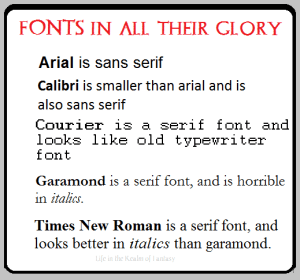
Fonts in all their gloryOkay. We all know that Microsoft Word is a hinky behemoth of a program, but it is what many of us are using. Publishers all want their manuscripts in a serif font, and will usually specify Times New Roman .12 or Courier .12 and want it double-spaced.

Microsoft Word comes with Calibri .11 as the default font, set at 1.5 spacing which is not wide enough for most editors and publisher’s purposes. Also, Calibri is a sans serif font and does not comply with the requirements of publishers and editors. Reading it large chunks is difficult as the spacing between the letters is identical and it is hard to distinguish some letters.

One major problem with Calibri font is a visible homoglyph, a pair of easily confused characters: the lowercase letter L and the uppercase letter i (l and I) are virtually indistinguishable.

Font differences in sentences

Publishers hate confusion.

If the manuscript is not formatted to their requirements as posted on their submissions page, your work will not be considered.

So to comply with their guidelines, we format the manuscript according to their needs. Most use what has become the industry standard fonts: Times New Roman or Courier in .12.

These are called ‘Serif’ fonts because they have little extensions that make them easier to read when in a wall of words.

209px-Serif_and_sans-serif_03.svg

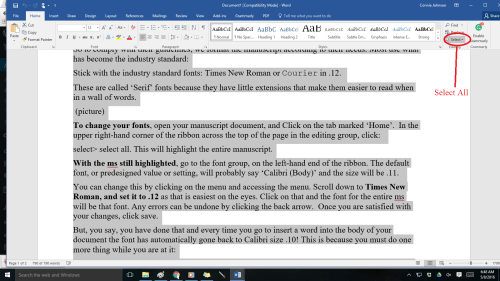
To change your fonts, open your manuscript document, and Click on the tab marked ‘Home’.  In the upper right-hand corner of the ribbon across the top of the page in the editing group, click:

select> select all. This will highlight the entire manuscript.

Select all printscreen

With the ms still highlighted, go to the font group, on the left-hand end of the ribbon. The default font, or pre-designed value or setting, will probably say ‘Calibri (Body)’ and the size will be .11.

You can change this on the home tab by clicking on the little grey square in the right-hand corner of the font menu and accessing the drop-down menu. Scroll down to Times New Roman, and set it to .12 as that is easiest on the eyes. Click on that and the font for the entire ms will be that font. Follow these steps to reset your default formatting, but only click “set as default” if this is what you really want. You can reset it to what you you want if you find you don’t like your new settings. Once you are satisfied with your changes, click save.

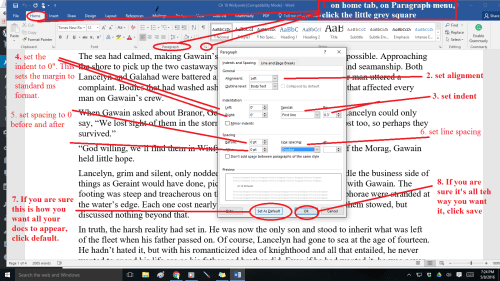
Format paragraphs printscreenBut, you say, you have done that and every time you go to insert a word into the body of your document the font for what you are inserting has automatically gone back to Calibri size .10! And every new document is still formatted with Calibri.

On the home tab, in the Styles pane (click on the lower right-hand arrow of the styles box), click the Manage Styles button. In Word 2016 that is on the bottom of the list, the far right-hand button (just before the word options).

Word 2016 font change steps

On the Set Defaults tab, specify the settings that you want. The changes will apply to the current document, but if you select “New documents based on this template” before clicking OK, the settings will be transferred to the attached template. All your documents after that should have your preferred font as the default font. In my case, it is Times New Roman .12, double spaced, with a .03 indent. You may want a different font, single spaced and a different indent.

Word 2016 font change steps 2

But say you need to format your manuscript differently, for a unique purpose.

To change your fonts, open your manuscript document, and Click on the tab marked ‘Home’.  In the upper right-hand corner of the ribbon across the top of the page in the editing group, click:

select> select all. This will highlight the entire manuscript.

With the ms still highlighted, go to the font group on the left-hand end of the ribbon. The default font, or predesigned value or setting, will show up, and you will change this by clicking on the menu and accessing the menu.

Scroll down to the new font, and set it to the desired size. Click on that and the font for the entire ms will be that font. Again, any errors can be undone by clicking the back arrow. Once you are satisfied with your changes, click save.

Standard manuscript format means margins of 1 inch all the way around, indented paragraphs, and double-spaced text. For more on this subject, see my post of Feb. 27, 2015, Formatting a submission-ready manuscript.

Do not justify the text. In justified text, the spaces between words, and, to a far lesser extent, between glyphs or letters (known as “tracking”), are stretched or sometimes compressed to make the text align with both the left and right margins. Justifying gives you straight margins on both sides, but this is not the time or place for this type of alignment.

For my purposes, I have found it is easiest on my eyes to use Times New Roman .12, aligned left, double-spaced, with a 0.3 indent for all my work, so that is what my default settings are. I always reformat my manuscript to comply with whatever the requirements are for every magazine or publisher I submit my work to.

2 Comments

Filed under Publishing, Self Publishing, writer, writing

#amreading: Working the Table: An Indie Author’s Guide to Conventions

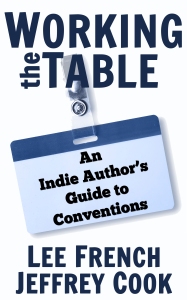
IndieGuideCoverOne aspect of an author’s career that we are often temperamentally unsuited for, is the book signing event. Many of us are, by nature, not outgoing or able to sell our own work. But the book signing event is crucial–it is is a way for you to meet with potential readers in person, and for them to develop a sense of connection to you and your work.

A book every indie author should have in their arsenal is Working the Table, by authors Lee French and Jeffrey Cook.  The advice within those pages will pay for the book many times over, because whether you are an indie or traditionally published, most likely you will have to sell your book, and a way to generate a little bit of a buzz is the good, old-fashioned book signing. You will also attract readers at conventions, if you are careful to select cons that play to your genre and your style.

I had the chance to speak to Lee and Jeffrey over the weekend about their book.

CJJ: Working the Table is a useful book in the indie author’s arsenal. What made you decide to embark on such an ambitious project?

Jeffrey: Honestly? Other authors were responsible. Take a look at the dedication page — the people named there were some of the primary culprits, but not the only ones. We’d do shows; people would see us putting up the table, arranging it, putting out set deals, and then handling customers, and tell us we needed to write a book.

For quite a while, we laughed at the suggestion. Then we got an ultimatum at Orycon last year — “You guys write it, or I will.”

We still laughed. Then, that same night, staying with Madison Keller in Portland, I couldn’t sleep. I stayed up until 3:30 AM jotting down notes and ideas. I didn’t know it, but Lee would be up not long after I finally went to bed.

We compared notes on the drive home and got started.

Lee: Even at that point, though, it wasn’t a done deal. The speed with which the book came together is what really made it happen. This project could easily have been one that festers and simmers and takes a while, especially with the demanding publishing schedule both Jeff and I maintain. But it took almost no time to write the first draft between us, and we did a few shows in the middle of the revision process where we turned to each other and said, “The thing that just happened needs to be in the book.” Two days later, it was in the book.

CJJ: Authors are by nature rather introverted. But you two both have a strong presence when you are behind the table at an event. How did you develop the persona you have for events?

Jeffrey: Frankly, I’m not an introvert. I’m not an extrovert either. I like my space and quiet time, but in this job, I have a reasonable amount of it. When convention or activity time rolls around, I’m pretty happy to talk to people.

As it notes in the book, that’s part of what I bring to the partnership. I like talking to people. I’ve traveled all over the US and Canada between moving and a lot of road trips when I was younger, and I’m fairly good at dealing with new people.

Part of the presence you mention also has to do with developing a coordinated plan based around our soft-sell approach. When people come up to the table, our primary aims are to make them feel comfortable there and to match them up with the book or books they want, instead of trying to push any particular thing.

Lee: While I’m on the introvert side of the scale, and I have some moderate social anxieties, I’ve found that being behind the table is a relatively comfortable place. There’s an expectation for behavior and interactions not present in other types of people encounters.

My job at the table is a known quantity, both to myself and to people who approach. When you walk up, I want to help you find a book, and you know that’s what I’m going to try to do. That makes the interaction much easier to pursue. No one walks up to an author table expecting to talk about anything other than books, writing, publishing, the surrounding environment, and whatever fandom is dearest to them. With those boundaries pre-established, and the subjects (mostly) ones I can speak on with a certain amount of expertise, the anxieties inherent in relating to strangers are significantly lessened.

CJJ: How do you select the convention with the right buyers for your work?

Jeffrey: Right now, we’re doing a lot of different conventions. Comic-cons, scifi/fantasy cons, street fairs, literary events, etc. Next year, we’re hoping to narrow down the field from about 32 planned events this year (for me, anyway, though most of those are working with Lee) down to about 18 of the best. Then maybe 12-15 in years beyond that.

We know that we both primarily write science fiction and fantasy, so we definitely favor events with a strong scifi/fantasy convention audience and tend to do the best at those. Thankfully, that’s a big market in the Pacific Northwest.

Lee: When I first started looking at picking conventions, my first question was, “Which conventions would I like to attend?” Like most writers, the things that interest me wind up in my writing, making my audience people who are, at least generally, like me. That means gaming conventions are high on my list, as are general fantasy and science fictions shows of all types. Then it comes to subgenre niche conventions, so long as one of us has something in that subgenre, we’ll try it. I actually do well at steampunk conventions despite not having steampunk books because I share a table with Jeff, who has some high quality steampunk. But I wouldn’t go to a steampunk convention by myself.

CJJ: What has been the largest hurdle for you in most dealers’ rooms?

Jeffrey: The unpredictability of some of these shows can be frustrating. We’re pretty good at selling books as long as there’s an audience. Sometimes there’s just not. The long, slow periods can be kind of difficult too, especially because you at least need someone at the table looking engaged and interested, no matter how long it’s been since someone came by.

Lee: Getting into them in the first place. Some conventions are very popular and getting in requires sacrificing your first born child under the full moon with a sprig of fresh mistletoe… Once you’re in, you’re usually in as long as you want to be, but jamming your foot in the door can be challenging. The best bet is usually to keep submitting and when you do get into something, be excellent to the volunteers and staff. Word about vendor behavior gets around.

CJJ: What advice do you have for the author just embarking on the roller-coaster ride that is the dealers’ room?

Jeffrey: Keep your expectations reasonable. When you’re just starting out, conventions aren’t going to be a big money-maker. You’re trying to get your book out there, but also start connecting with fans and potential fans. The investment of time and money can still be worth it in the long run, but you need to look at it as exactly that: an investment.

Lee: That’s also my number one piece of advice. The goal of working conventions is to break even, not to have fabulous financial windfalls. It’s not an end-all, be-all marketing tactic, it’s a piece of a larger picture. One of the most important things we do at conventions is hand out business cards and meet people. Selling books matters, because we have to make enough to afford to do this. Making connections matters more for the long term.

CJJ: If you had it all to do over again, what would you do differently?

Jeffrey: In broad general terms, I’d have liked to have been better about listening to my editor and her general advice. She had a lot better perspective on some things early in my writing career, and I’d be better off and further ahead today if I’d been a better listener.

In terms of shows and conventions specifically: I’d have loved to have spent some serious time learning how to use media better. Press releases, getting newspaper attention, etc.  It’s important and helpful – and something I’m still not great at.

Lee: For the bigger picture of publishing, I’ve made a number of horrifying mistakes in my career that I wish I could go back and do right the first time. It would take to long to discuss them all. For those considering jumping into this madness that is writing novels, I definitely recommend getting your feet wet with short story publication before throwing your first novel out there. Short story writing teaches the art of brevity, a skill many novelists struggle with.

CJJ: Finally, where can the reader find you two this summer?

Jeffrey: In May, I’ll be at Lilac City Comiccon in Spokane with Lee (May 14th), then Gearcon Day Out in Portland (May 21).

In June, I’ll be at Oddmall in Everett from the 3rd through the 5th, working with Freevalley Publishing, then Maple Valley Days, all of 7 blocks from my home, from the 10th through the 12th. Our books will be at the Brass Screw Confederacy (also the 10th through the 12th), and then we’ll be at the Fremont Solstice Festival from the 17th through the 19th.

In July, we’ll be at Westercon in Portland from the 1st to the 4th. Then we’ll be running our own book fair at Evergreen State University in Olympia on the 16th. Then I’ll be on my own one more time at the Fairhaven Steampunk Festival in Bellingham on the 23rd as a guest of Village Books.

Finally, in August, we embark on the epic road trip — which we’ve kind of planned the year around. We’re still waiting on hearing about a show in Minnesota, but we’re confirmed for Gencon in Indianapolis from the 4th to the 7th, then Malcon in Denver from the 12th to the 14th, and finally, the long haul of Worldcon in Kansas City from the 17th to the 21st.

Lee: I don’t have any additional appearances beyond those Jeff listed scheduled at this point. I’ll just note the name of the book fair on July 16—CapitalIndieBookCon—for anyone interested in a book fair in Olympia.

CJJ: I will be at the CapitolIndieBookCon also, putting your wisdom to work! Thank you, Jeffrey and Lee, for taking the time to talk with me about Working the Table.  In my opinion, any author who intends to get out and do book signing events or work the dealer’s rooms at conventions should consider purchasing this book. The advice contained within was hard earned and is priceless. I have my copy and it is already looking a little well-used!

>>><<<

Jeff1Jeffrey Cook lives in Maple Valley, Washington, with his wife and three large dogs. He was born in Boulder, Colorado, but has lived all over the United States. He’s the author of the Dawn of Steam trilogy of alternate-history/emergent Steampunk epistolary novels, the YA Sci-fi thriller Mina Cortez: From Bouquets to Bullets, and the YA Fantasy novel Foul is Fair. He’s a founding contributing author of Writerpunk Press and has also contributed to a number of role-playing game books for Deep7 Press out of Seattle. He is part of a speculative-fiction authors’ co-op, Clockwork Dragon (www.clockworkdragon.net). When not reading, researching, or writing, Jeffrey enjoys role-playing games and watching football.

You can find Jeffrey Cook’s books by visiting his author page at Amazon.com:

Jeffrey Cook on Amazon.com:

  • Dawn of Steam: First Light
  • Dawn of Steam: Gods of the Sun
  • Dawn of Steam: Rising Suns
  • Foul is Fair
  • Street Fair
  • A Fair Fight
  • Sound & Fury: Shakespeare Goes Punk
  • Once More Unto the Breach: Shakespeare Goes Punk 2
  • Merely This and Nothing More: Poe Goes Punk
  • Mina Cortez: From Bouquets to Bullets
  • Airs & Graces (Angel’s Grace 1)
  • There But for the Grace (Angel’s Grace 2)
  • Working the Table: An Indie Author’s Guide to Conventions

www.Authorjeffreycook.com

www.Clockworkdragon.net

Jeffrey Cook on Facebook

Dawn of Steam Trilogy on Facebook

Follow Jeff on twitter: @jeffreycook74

>>><<<

Lee1Lee French lives in Olympia, WA with two kids, two bicycles, and too much stuff. She is an avid gamer and member of the Myth-Weavers online RPG community, where she is known for her fondness for Angry Ninja Squirrels of Doom. In addition to spending too much time there, she also trains year-round for the one-week of glorious madness that is RAGBRAI, has a nice flower garden with one dragon and absolutely no lawn gnomes, and tries in vain every year to grow vegetables that don’t get devoured by neighborhood wildlife.
You can find Lee French’s books by visiting her author page at Amazon.com:

Lee French on Amazon:

  • Maze Beset #1: Dragons In Pieces
  • Maze Beset #2: Dragons In Chains
  • Maze Beset #3: Dragons In Flight
  • The Greatest Sin #1: The Fallen
  • The Greatest Sin #2: Harbinger
  • The Greatest Sin #3: Moon Shades
  • The Greatest Sin #4: Illusive Echoes (coming soon)
  • Spirit Knights #1: Girls Can’t Be Knights
  • Spirit Knights #2: Backyard Dragons
  • Spirit Knights #3: Ethereal Entanglements (coming soon)
  • Damsel In Distress
  • Shadow & Spice (short story)
  • Al-Kabar
  • Working the Table: An Indie Author’s Guide to Conventions
  • Into the Woods: a fantasy anthology
  • Merely This and Nothing More: Poe Goes Punk
  • Missing Pieces VII: short stories from GenCon’s Author’s Avenue (coming in August)
  • Unnatural Dragons: a science fiction anthology (coming soon)

www.authorleefrench.com

www.Clockworkdragon.net

Lee French on Facebook

Clockwork Dragon on Facebook

Follow Lee on Twitter: @AuthorLeeFrench / @DragonClockwork

14 Comments

Filed under Books, Publishing, Self Publishing, writer, writing

#amwriting: so you want to be a writer

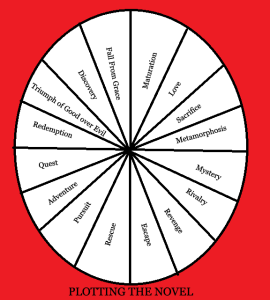
Dial-a-PlotSo, you want to be a writer. You have written several unpublished short works, and they were darned good, if you do say so yourself. Your novel is half finished, and your cousin, Phil, says he’s never read anything like it.

One of the many things I didn’t realize when I first began this crazy journey, is that your family and friends are not editors. Even if they are teachers, it’s likely they won’t notice anything but the most glaring errors in your work, and they will miss a great many of those.

Unless your cousin Phil is an author himself, he won’t mention places where you have repeated yourself ad nauseum, nor will he point out places that are phrased in a convoluted way.

Because these places are both annoying and confusing, Phil has most likely skipped over them, and didn’t mention it because he didn’t want to hurt your feelings. Large plot-holes, inadvertent use of clichés, and intriguing auto-correct mistakes get missed when your eager-to-help friends try to edit your work.

Your friends might know they don’t like what you wrote, but they don’t know why they don’t like it so they plow through it as fast as they can just to get the misery done with. They will spot a few problems, which helps, but isn’t going to make your manuscript readable.

Oh, your friends aren’t going to tell you they don’t like it, but they will think it: “This is awful. What’s up with the dog…is he an arsonist? No…it was apparently the Guinea pig but…no. God, this is the worst drivel I’ve ever read. How do I get out of this? Um…I’ll tell her it was great, I loved it.”

Consider joining an online beginners’ writing group. A lot of useful information can be found through these two free resources:

  • NaNoWriMo (National Novel Writing Month) nanowrimo.org They operate year round and have many resources available to help you get started.
  • Critters Workshop critters.org

Critter is an excellent place to get feedback on your work, in a way that doesn’t feel threatening. New authors should definitely consider joining the critters workshop.

a writer's stylePLEASE don’t publish your work without first having it edited professionally, or at the very least, read by an advanced writers group. You have no idea what your manuscript actually looks like. An advanced writing group will tell you the ugly truth, and they won’t be kind about it, but once they are done with you, you will reconsider your decision to not hire an editor.

If you plan to submit it to a large publisher, do hire an editor so that what you submit will be the best you can offer them.

If you are in the beginning stages of your writing career, invest in books on the craft of writing. Many books are available used through Amazon dot com, and many are available as affordable eBooks, also through Amazon. And you don’t need a Kindle, as you can download the free app for your PC, Mac, Android, or Apple device.

Books on the craft that are on my desk and in use today:

  • The Chicago Manual of Style
  • The Oxford American Writer’s Thesaurus
  • Rhetorical Grammar by Martha Kolln
  • Story: Substance, Structure, Style and the Principles of Screenwriting by Robert McKee
  • The Sense of Style by Stephen Pinker
  • The Sound on the Page by Ben Yagoda
  • Outlining Your Novel by K.M. Weiland

Books that help when I am stuck:

  • The Negative Trait Thesaurus by Angela Ackerman and Becca Puglisi
  • The First Five Pages by Noah Lukeman

Three websites a beginner should go to if they want instant answers in plain English:

Writing is not just a career for me—it is an obsession. Anything involving books is the proverbial shiny thing for me. All of my inspiration has come from the many excellent writers whose works moved me.

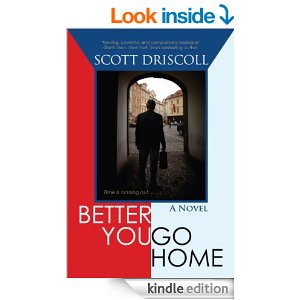
Better You Go Home, Scott DriscollI am also inspired by those authors whose workshops I have been fortunate enough to attend. Consider this high quality online option for learning the craft of writing:

Introduction to Fiction Writing at The Writer’s Workshop, instructor, Scott Driscoll.

This is admittedly not  free, but it is an exceptionally in-depth exploration of the craft. I have attended some seminars offered by Scott at several conferences and have never come away disappointed.

Remember, writing is a career path that requires dedication, and commitment to learning and growth. The money you spend going to workshops and conferences is an investment you make in your career. You not only learn about the craft of writing, but you will also learn the business aspect, and make no mistake: regardless of whether you are traditionally published or indie published, this is a business.

via buzzfeed

via buzzfeed

It’s not always easy, and sometimes it is hard to see progress. But with each completed project you gain strength and confidence. Your work evolves, growing in readability and your voice as an author becomes recognizably yours.

Writers finish their work. Many people will begin walking this path, believing they want to be writers. They like the idea of being a writer, and may claim to be a writer, but when you ask them about their work, they will tell you they don’t have time to write, and their work was only halfway begun when they had to stop.

The fact that you once sat in a Ferrari does not make you a Formula One driver.

I always urge writers to write every day, even if it is only for fifteen minutes. If you are not committed to writing regularly, your novel will never see the light of day.

Write regularly, and finish that book.

9 Comments

Filed under Literature, writer, writing

#amwriting: Valley of Sorrows

Map of Aeoven Centaur font full color harvest colorsOn May 1st the final book in the Tower of Bones series, Valley of Sorrows,  will launch. I can’t tell you how much this means to me, to have Edwin’s story complete.

This story winds up two threads, and takes place partly in the Braden Gap, and partly in Aeoven. That gave me the opportunity to draw some new maps, which really made me happy.

And, this book may wind up Edwin’s story, but there will be more tales set in Neveyah–I love that world and the people too much to just walk away from it.

Valley of Sorrows spawned a spin-off book:The Wayward Son. That book is on the editor’s desk and set to be published in August 2016. It is a companion book that takes place concurrently with Forbidden Road and details some, but not all, of the events that occurred in Aeoven during Edwin’s absence.

BradenThe way I ended up writing a companion book is that the original manuscript of Valley of Sorrows was really two separate stories. I didn’t want John’s thread to take away from Edwin, Freidr and Zan’s story, but his background is intriguing–so I took him back to the day he returns to Aeoven, the same day Forbidden Road opens.

While the two stories dovetail in some places, and characters make cameo appearances, this book is not so much a book about the action as it is about a man learning to live again, despite his battle related PTSD.

Two years ago, when I pulled Tower of Bones and Forbidden Road for re-editing I made a bold move–I changed the name of a once-minor character, from Marta to Halee.  I did this, because she suddenly had a major role to play in the both the Wayward Son and the last quarter of Valley of Sorrows. and her name was only one letter off from Marya’s name: Marta…Marya–and they were often in the same scene together. Both books have been selling fairly well and so far, if anyone has noticed, they have not complained.

I really like the way Edwin’s story has gone. In this book he is a good, decent man, who has been pushed to nearly the breaking point, but he is still doing what he has to. As I said, this story ends very differently from what I had originally planned, and I wrote the ending both ways. If you really are curious as to how it ends the book is available for preorders now at Amazon and will go live on May 1,2016:

>>><<<

LAUNCHING MAY 1, 2016:

The long-awaited conclusion to the Tower of Bones Series

VOS sword left graphics no tower front Cover copyBook III, Valley of Sorrows

A grieving man whose life has gone to hell in his absence,

A son whose action sealed his father’s fate,

A crippled warrior facing his future,

A broken soldier seeking redemption for an unspeakable crime…

Driven by prophecies and racing against time, four mages sacrifice everything in a final bid to save their world from the Children of the Bull God. Can Edwin Farmer  raise the new shield before Lourdan and the Legions of Tauron arrive to conquer Braden?

The Gods are at War, and Neveyah is the Battlefield.

Click here to pre-order Valley of Sorrows

><<<

Happy Earth Day!

I will be celebrating Earth Day in Olympia, Washington at the Procession of the Species and the Arts Walk. Local authors Shannon L Reagan, Jeffrey CookLindsay Schopfer, Lee French, and I will be down at The Pet Works at 4th and Adams for both days of Arts Walk, which runs 5 pm-8 (or maybe 10) on Friday, 4/22 and also from 12 pm-8 on Saturday, 4/23. We’ll be signing books and generally having a blast. A lot will be happening in the parking lot, and several other artists will be sharing the space with us.

3 Comments

Filed under Publishing, Self Publishing, writer, writing

#amwriting: Wattpad, serializing your novel, and Shaun Allan

Dark Places Front Large (1)One area of writing that I have lately discovered is the serialized novel.

In the 19th century, many of the most popular novels ever written began their lives as serials in magazines or newspapers. Such diverse authors as  Charles DickensGeorge Eliot, Thomas Hardy, Anthony Trollope, and William Makepeace Thackeray all published novels in serial form.

At times, these intrepid writers missed deadlines, and I can see why: life intrudes, and writing halts, for whatever reason. It’s been said that Thackeray was highly critical of authors who didn’t have the endings worked out before the opening chapters were published–which just about covered all of his contemporaries.

Today we’re talking with my good friend and fellow co-founder of Myrddin Publishing Group, UK author, Shaun Allan. He is the author of several award-winning children’s stories, copious amounts of poetry, and the adult horror novel, Sin, which has garnered a great deal of critical acclaim and is one of the most popular books on Wattpad.

According to Wikipedia, as of April 2014:

  • 85% of Wattpad’s traffic and usage comes from mobile devices,
  • the site has 35 million unique visitors per month,
  • there are over 100,000 story uploads per day,
  • there have been over two million writers.

Along with writing novels and poetry, Shaun was approached by the people at Wattpad, asking if he would be willing to write an original story based on the premise of the movie The Purge. Of course, he was, and out of that came the five-part serial, Mr. Composure.

Mr. Composure was wildly successful, and since then, Shaun has had great success with his most recent serial, And the Meek Shall Walk, a thirty-three-part story which he also published on Wattpad as he wrote it.  Already it has garnered close to 10,000 reads.

On Sunday, Shaun and I were able to chat a bit about the experience of serializing your work as you are writing it.

CJJ: From my perspective, serializing a novel has many pros and cons—in some ways it’s a double-edged blade. For me, I have to have an outline and a story arc to write to, so that I don’t get sidetracked. How do you approach this?

Suffer the childrenSA: Sometimes I wish I could, or think I should, create an outline.  I’m not sure if it’s because of my time issue.  I have so little, I want to get into the story and, if I’m outlining, I’m not writing.  On the other hand, I quite enjoy finding out the story as I go.  I like to be surprised when I meet new characters and wonder how I (or my characters) might get out of sticky situations.

As such, I’ve almost always written off the cuff.  I’ve followed the story where it would take me, following its meandering course to what is, hopefully, a brilliant ending.

With the writing I’ve done for Wattpad and their partners, such as Universal, that’s changed somewhat.  For Suffer the Little Children, written for the movie Sinister 2, I was asked to write an overview first to present to them.  Luckily I’d seen, and enjoyed, the first film, but I had to, in the space of a weekend, produce the path the story was going to take.  That wasn’t an easy task for someone unused to doing so.  I found, when I’d started, the idea came quite easily.

With the serialization of And the Meek Shall Walk, it was a little easier.  Knowing both the Disney version and the classic Hans Christian Anderson original meant the story arc, or the basis of one, was already written.  I felt I was writing just the current chapter rather than the story in its entirety.  I only needed to work on the existing part.  I did get to the point, however, where I thought it best to put down my own version of events.  I was about two-thirds of the way through the book at this point.  I knew, more or less, what was going to happen (teasing parts from both previous versions), but I was giving the story my own twist. The overview I wrote was very brief, but it gave me some focus.

CJJ: You have to be able to write quickly and concisely, and edit your work well, because what goes out will be an immediate reflection of your entire body of work. I always worry that if it’s crap, I will have turned off all my potential readers! Has that idea affected how you work in any way?

sin - Shaun AllanSA: Not at all.  Well, not really!  I write, essentially, for me.  My dream was to become a writer.  The fact people really seem to be enjoying what I produce is both wonderful and humbling.  I write to the best of my ability and feel I can do little more than that.  If I like my work, I’m happy with that.  If others do too, I’m ecstatic.  I usually find, too, if I reread my stories, I generally don’t change things.  That’s not to say I shouldn’t, but I try not to second guess myself.  The frame of mind and ‘alternative world’ I’m in when I write isn’t the one I’m in when editing so changes don’t… taste right.  Another pair of eyes could find things which should be changed, and I’m fine with that.  Maybe I’m blind to my errors lol!

CJJ: You have a high-profile job in the corporate world, and you are also the owner of a barber salon. On top of that, you are a dedicated, hands-on father of two daughters. Yet you turn out new installments on time, and also find the inspiration and time to write new, separate literary work. How do you make the time to be as prolific as you are? Do you have that Harry Potter Time Turner thingy?

SA: I wish I did have the Harry Potter Time Turner doodad.  I don’t.  I have a half hour lunch break.  I have an understanding wife.  And I have a burning need where ideas bug the hell out of me until I get them down.  I wake up thinking of what’s going to happen next.  I even deliberately think of the story arc at night.  It relaxes me, and I drift off to sleep.  I’ve yet to dream it through, though.  Smartphones help – I can scribble sentences or paragraphs down and save it to the Cloud ready for joining it up with the main story when I can.

Oh, the Tardis parked out back comes in useful now and again.

CJJ: Let’s talk about And the Meek Shall Walk. It is dark, as all your mainstream fiction is, definitely fantasy with a horror twist. I found it really scary.  Yet it was your daughter who gave you the idea?

SA: It certainly was!  I’m so proud!  I’d just finished Suffer the Little Children whilst on holiday in the Lake District.  Wattpad does a regular #JustWriteIt promotion inviting you to write 10,000 words in a month.  I fancied having a go (I sometimes have a break between stories but was buzzing in this case) but, after having just written about pagan deities and child possession, my mind was a little fried.  My daughter (12) threw the idea in the air:  The Little Mermaid where, instead of magically being given legs, she cuts her own tail off and sews a pair of human legs in their place.  That was the start.  How could I resist?

She’s also got me working on the Rapunzel story too, but I won’t give away what she came up with.  I’m currently, now that And the Meek Shall Walk is done, writing a new take on the Queen of Hearts from Alice in Wonderland.  This is a story close to my heart.  I dressed as the Mad Hatter for a themed birthday party for my daughters, and also have the Cheshire Cat tattooed on my shoulder!

As for the darkness, you can’t have the darkness without the light.

CJJ: Kurt Vonnegut famously said (and I find it true) that every character should want something. Who is your main character and what does she want? And who is the villain, and what do they want?

SA: My main character is Aren.  She is a mermaid and a princess.  Her father believes her to be meek, but she regularly flouts the rules governing their lives beneath the sea.  She has a secret cave where human body parts float, tied to vines.  The parts are from the people she has killed.

Aren believes humans were responsible for her mother’s death.  As such, she seeks revenge on those responsible and goes to excessive lengths to carry this out – including, as I have said, cutting off her own tail and having her forked tongue sealed together, rendering her mute.

I’d rather not say who the villain is as you don’t know immediately, and I don’t want to give it away.  You might, indeed, say it’s Aren herself!

CJJ: What setbacks have you overcome in this endeavor with Wattpad and what advice would you give authors new to publishing their work on Wattpad?

SA: Apart from my time limitations, I’ve generally found Wattpad to be an amazing experience.  I’m one of the Wattpad Stars, a program of their most popular writers.  This has led to exposure and opportunities I would otherwise, potentially, never have been offered.  One of the things I love about the site is it’s a real community.  I have had some of the most amazing comments you could imagine.  Mr. Composure was called the ‘best story ever’ and And the Meek Shall Walk has already been described as ‘one of the best stories on Wattpad.’

Sin was my first serialized novel on the site.  I’d originally posted the Prologue, and they asked if I’d be willing to put the whole story up.  I agreed, and it’s now had almost 765,000 reads!

On Wattpad, you can connect with so many other writers and readers.  Those readers can connect with you, vote and leave comments.  It’s wonderful.

CJJ: And finally, do you have any writing-craft advice for authors who want to serialize their work?

SA: Trust in yourself.  Trust in your story.  Whether you create overviews or write as you go, it’s your story.  As you post each chapter, engage with your readers.  Let them know you appreciate their feedback.  As much as you enjoy their contact with you, they enjoy yours with them.

Writing should be about enjoyment, after all.

>><<<

To Read: And the Meek Shall Walk on Wattpad click HERE

And the Meek Shall Walk coverPrincess Aren is determined to make the human who killed her mother and exiled her people to the bottom of the ocean pay. To do so, she must go to extremes of pain and heartache in her search for justice. Aren, however, is no sweet, happy mermaid. To kill is to ignite a fire of passion in her heart which only the savage letting of blood can satiate. She will go to any lengths to find the man responsible, including cutting off her own tail and sewing, in its place, a pair of human legs – legs she tore from one of the many humans she had murdered. With the unwilling help of the sea witch, Princess Aren must go ashore and hunt for her mother’s killer. But, in doing so, the worlds above and below the ocean will clash in ways neither thought possible!


Profile

A creator of many prize winning short stories and poems, Shaun Allan has written for more years than he would perhaps care to remember. Having once run an online poetry and prose magazine, he has appeared on Sky television to debate, against a major literary agent, the pros and cons of internet publishing as opposed to the more traditional method. Many of his personal experiences and memories are woven into the point of view and sense of humour of Sin, the main character in his best-selling novel of the same name, although he can’t, at this point, teleport.

A writer of multiple genres, including horror, humour and children’s fiction, Shaun goes where the Muse takes him – even if that is kicking and screaming. He has written for Universal, DC Vertigo Comics and Goosebumps and regularly holds writing workshops at local schools.

Shaun lives with his wife, two daughters and two cats. Oh and a manic dog. Though his life might, at times, seem crazy, he is not.

Honest.

Links:

5 Comments

Filed under Fantasy, Literature, Self Publishing, writer, writing

#amwriting: The Garden Path

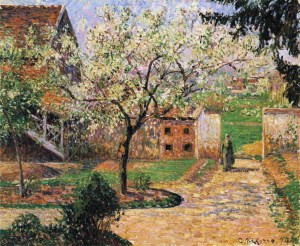
Plum Trees in Blossom, Pissaro 1894 via Wikimedia Commons

Plum Trees in Blossom, Pissaro 1894 via Wikimedia Commons

Today we are looking at the second of two creatively named structural errors that can introduce ambiguity to our work. On Monday we looked closely at “squinting modifiers” and today we are walking the “garden path sentence.”

Most of us are aware that many times a sentence is made stronger by the elimination of relative pronouns, such as that, which, and whom. Often, these words are understood and are therefore unneeded.

However, overzealous new authors recovering from a severe ego-bruising at the hands of a writing group sometimes get a little crazy and slash every instance of the “offending word” from their narrative. Such a knee-jerk reaction is ridiculous and can create the “garden-path sentence.”

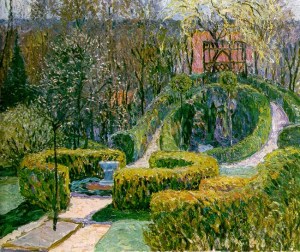
Spring Hedges in Bauerngarten, Heinrich Vogeler 1913 via Wikimedia Commons

Spring Hedges in Bauerngarten, Heinrich Vogeler 1913 via Wikimedia Commons

From Wikipedia, the fount of all knowledge:

“A garden path sentence, such as “The old man the boat,” is a grammatically correct sentence that starts in such a way that a reader’s most likely interpretation will be incorrect; the reader is lured into a parse that turns out to be a dead end or unintended.

“Garden path” refers to the saying “to be led down the garden path,” meaning to be deceived, tricked, or seduced.

After reading, the sentence seems ungrammatical and makes almost no sense, requiring rereading to fully understand its meaning after careful parsing.”

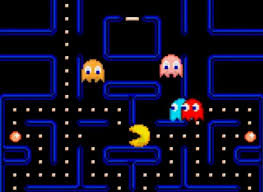
pac-man jpgIn this case, confusion arises because we read like Pac-Man eats: one word at a time, as fast as we can, following the line. We attempt to understand sentences as we are reading them. The “garden-path sentence” begins by taking you toward a particular destination, but midway through it takes a turn for the bizarre.

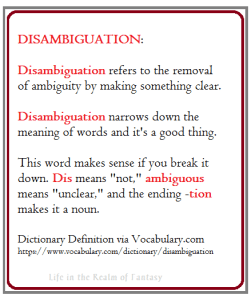
Disambiguation memeThere are two types of garden path sentences.  The first is “locally ambiguous,” meaning that it can be cleared up with minimal changes to the sentence. Many times the addition of a word or punctuation will resolve the issue:

  • “The raft floated down the river sank.”
  • “The raft that floated down the river sank.”
  •  “We told the man the dog bit a medic could help him.”
  • “We told the man whom the dog bit that a medic could help him.”

Wikipedia offers the sentence: “The old train the young fight.”

  • When you add a comma it reads: “The old train, the young fight.” The addition of the comma makes sense of the words.
  • One could also argue that the sentence means “The old train the young to fight.

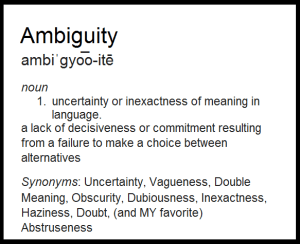
ambiguityThe other type of garden path sentence is “globally ambiguous” because when it is taken out of context the meaning is still unclear no matter how many times you reread it . It requires a complete rewording.

A sentence should always be understandable. Context is extremely important to the meaning of an ambiguously phrased sentence. What happens to a sentence when you take it out of context? It has to stand alone, and still make sense.

Again, Wikipedia offers an example of confusion: “The cat was found by the shed by the gardener.”  This sentence is open to several interpretations. Perhaps the cat was by the shed, or the shed was by the gardener, or both the cat and the gardener were next to the shed. When this sentence is isolated from its paragraph and taken out of context, the meaning is unclear.

Consider a more active phrasing and reword the sentence to say “The gardener found the cat near the shed.”

The way to resolve the garden-path sentence is to

  • Insert a relative pronoun (such as “that”) for clarity.
  • Insert proper punctuation for clarity.
  • Reword the sentence to make the meaning clear.
 The Garden of the Author, by José Benlliure Gil via Wikimedia Commons


The Garden of the Author, by José Benlliure Gil via Wikimedia Commons

Readers want to read without bumps and hiccups. Anytime they have to stop and reread something you risk losing them. Sentences that are ambiguous stop the eye.

We never want to introduce haziness into our work, and because we wrote it, we sometimes don’t see that it is confusing. If you have asked a beta reader to read a section of your work, and he flags a portion as being unclear, don’t just look at it and wonder why he can’t understand what seems so clear to you.

You must “parse” it. Tear that passage down to its component parts and find out what it is that the reader doesn’t understand. When you take the offending sentences out of their context, you can see if they will stand on their own. If they don’t, a simple rewording may be all that is needed.

6 Comments

Filed under Romance, writer, writing

#amwriting: squinting modifiers

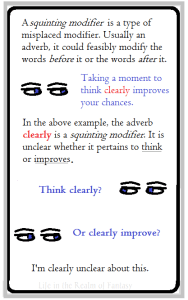
Squinting ModifiersThis week we are going to look at two structural errors that introduce ambiguity into our narrative.

First up is the hilariously named squinting modifier.  Who thinks up these things? The first time I came across that expression, I thought it was a joke. However, in the world of writing, a “squinting modifier” is simply a type of misplaced modifier. According to Neal at Literal Minded, the term can be traced back to George Campbell’s The Philosophy of Rhetoric, published in 1776.

It is a common error that can be difficult for the author to spot in their work because the author’s mind sees what was intended, not how it appears to an unbiased eye.

This structural error introduces ambiguity:  it seems to qualify the words both before and after it.

  • Students who skip classes rarely are reprimanded.

Does this mean students who rarely skip classes are reprimanded? Or, perhaps those students are rarely reprimanded.

Mignon Fogarty, the Grammar Girl, offers this example:

  • Children who laugh rarely are shy.

Is the author talking about children laughing rarely, or rarely being shy?

ambiguityMisplaced modifiers (frequently adverbs) make our work unclear, or “ambiguous.” The best way to avoid that ambiguity is to move the modifier so that your meaning is clear, or completely reword the sentence.

  • Children who laugh are rarely shy.
  • Students who skip class are rarely reprimanded.

When you introduce a large number of modifiers into your work you run the risk of

  • Introducing passivity to your narrative
  • Unintentionally introducing ambiguity

If you haven’t figured it out by now, there is an easy way to identify adverbs. Most, but not all, end in the letters “ly.” Knowing this makes it fairly easy to identify adverbs in sentences.

As I said, not all adverbs end in “ly.” Some frequency adverbs, do not follow this rule.

  • always
  • never
  • often
  • sometimes
  • seldom

Still, knowing that ‘ly’ at the end of a word indicates an adverb will help you avoid overusing them.

You may wonder why we want to limit the modifiers in our prose—and it’s a good question. How we use modifiers is part of the voice of our work.

If we are writing genre fiction (i.e. romance, mystery, sci-fi, fantasy) your prospective readers will not endure fluffed up prose written for the beauty of the words. They want lean prose, with an active voice, and to achieve that active phrasing, we cut back on the “ly” modifiers. Instead of telling you how the scene looks, an active voice shows you what the protagonist sees.

Telling: The night was hot and damp. Darren entered the alley, which was awfully dark and smelly. “Rafe?” he asked quietly.

“Over here,” said Rafe. He was all raggedy and dirty.

Showing: Darren entered the alley, his eyes adjusting to the darkness. The odors of overripe privies and decomposing garbage lingered in the humid air, along with the reek of despair. “Rafe?” he whispered.

A pile of rags stirred and a familiar voice said, “Over here.”

When we use active phrasing, we are better able to convey atmosphere.

Adverbs ending in “ly” are often called “adverbs of manner.” Despite the rants of some self-proclaimed gurus in certain writing forums, these words have a place in active prose, and anyone who says they don’t is not fully informed.

This is where it becomes a matter of style and the author’s voice. We choose our words deliberately to convey the story the way we see it, precisely placing modifiers to achieve a certain effect.

Perhaps you are trying to convey a character’s lack of conviction regarding his plan of action: Rafe is a down-on-his-luck confidence man, a reformed scam-artist drawn in to do a job only he has the skills for.

“I’m fairly sure this will be safe.” Rafe crossed his fingers for luck. “It’s not that much dynamite.”

Several authors I know well would never use the word “fairly” because its an indecisive word. That indecisiveness is what I want to convey. This is the difference in our “voices.”

The way I see it: Rafe could say “I’m almost sure” but to me, that phrasing feels clunky and obvious–it does show his doubt. But, in  my opinion, what it doesn’t convey is Rafe’s desire to sell his reluctant partner the plan he has little confidence in. He has to convince Darren to go along with it because they have no other option. Rafe is a conman, trying to reform. He has an important reason to not just lie about it, so he wants to be as truthful as he can be and still sell Darren on the plan.

Writing involves words of all kinds and using them properly.

Adverbs are a powerful seasoning to add to your prose–be sparing and make the best use of them. Those you do use should go unnoticed in the narrative.

Your readers will thank you.

List of common adverbs

5 Comments

Filed under Publishing, Self Publishing, writer, writing

#amwriting: tips for writing clear dialogue

gibberish quoteDialogue can be tricky. Often, in our rush to get the ideas on paper, we have left off quotes, misplaced punctuation, and written interrupted dialogue with inconsistency.

While a certain amount of literary license in dialogue can enrich our work, our dialogue may be too rich with run-on sentences, and not in a good way.

Also, while everyone has read books that inspire them to become writers, some authors never learned how to write the kind of dialogue they envision. They don’t understand the fundamentals and don’t realize how their lack of understanding ruins their work.

Always begin what is actually spoken (dialogue) with a capitalized word, no matter where in the sentence it begins.

  • Mary glanced over her shoulder and said, “I’m sorry. I can’t go with you.” 

However, interrupted dialogue, when it resumes, is not capped, although the rules of punctuation and quotation marks still apply.

  • “I’m sorry to tell you,” said Mary, “but I can’t go with you.”

Direct dialogue is someone speaking to you or someone else and requires quotation marks.

  • I’m sorry. I can’t go with you,” said Mary.

I’m a US author, so I used double quotes, also called closed quotes. The UK usage is different and often uses apostrophes, or what they call inverted commas. Either way, be consistent and make sure ALL punctuation goes inside the quote marks.

Yes, I did say All punctuation. How does one set off a quote from someone else within dialogue? Set it apart with single quotes (apostrophes, inverted commas) and keep it inside the closed quotes.

George said, “When I asked her, Mary replied ‘I can’t go.’ But I’m sure she was lying.”

George said, “When I asked, Mary replied ‘I can’t go.'” Note there are 3 apostrophes there: 1 apostrophe and 1 double (closed) quote mark. This is in keeping with the rule that all punctuation in dialogue goes inside the quotation marks.

Indirect dialogue is a recapping of dialogue that someone previously spoke.

  • When asked, George said Mary couldn’t go.

Note there are no quotes used in indirect dialogue. Also in this sentence, the word that is implied between said and Mary.

Dialogue tags, or attributions, can come before the dialogue, especially if you want the dialogue tag to be noticed. To make them less noticeable put them in the middle or at the end of sentences. In my own work, I want the dialogue and not the attribution to stand out. However, when more than two people are involved in a conversation, I move the dialogue tags further to the front so the reader isn’t left wondering who is speaking.

DialogueI’ve mentioned before that I prefer simple attributions such as said, replied, and answered because they are not as likely to stop the reader’s eye. People don’t snort, smirk, smile, or frown dialogue as it is physically impossible. They can say it with a smile, but the smile is a facial expression and does not speak.

Avoid verbal tics like “hmmm…” and “ahhh…” as they just take up space and add fluff to your narrative. When people in real life preface all of their sentences with drawn-out ahs and hmms it can be aggravating to listen to them. Consider how irritating it would be to read it.

Sometimes we have two ideas in a sentence that we think are one, and we connect them with commas.  But closer examination shows they are not.

  • “Hello, sir, we bathed your dog,” she said.

The above dialogue contains a run-on sentence, despite its shortness. We may actually speak it in this fashion, words run together, but for a reader, punctuation clarifies ideas.

The dialogue contains two separate ideas. “Hello, sir,” is an acknowledgment and a greeting. “We bathed your dog,” indicates an action was taken in regard to his dog. It should be:

  • “Hello, sir. We bathed your dog,” she said.
  • When we write our conversation using proper punctuation, it looks natural, and the reader will hear it the way it was intended.

When it’s done right, dialogue is, in my opinion, the best part of the story. It’s where we discover who the characters are, and how the larger events affect them. Conversations show the world as the protagonist sees it. We can take some style and voice liberties with dialogue, and indeed, we should, but adhering to industry standard rules of punctuation ensures your reader can remain immersed in the story, and forget they are reading.

And THAT is what we all hope for.

21 Comments

Filed under Literature, writer, writing

#CoverReveal: Working the Table, by Lee French and Jeffrey Cook

IndieGuideCoverAs you know, I am a strong proponent of the indie movement in publishing. Indies have a hard road when it comes to getting their work noticed.

A useful new book for indie authors is due out on March 19, 2016: Working the Table–An Indie Author’s Guide to Conventions. Well-travelled authors Lee French and Jeffrey Cook have put together this comprehensive how-to manual based on their own experiences.

The Blurb:

Because books won’t sell themselves.

In these times when it’s easy to self-publish but hard to get noticed, conventions offer a solid, feasible option for the independent author to start on a path to financial sustainability. But becoming a professional denizen of the dealer’s room has its challenges. In Working the Table, two veteran indie authors spill their secrets to help you not only survive, but thrive in the book-event environment.

I have shared a table with both Jeff and Lee, and they really do know what they are doing. They really love the convention atmosphere and they are building a solid fanbase with their personal appearances. I look forward to seeing what their secrets are.

Lee1Lee French lives in Olympia, WA, and is the author of several fantasy and science fiction books, most notably the Maze Beset Trilogy, The Greatest Sin series (co-authored with Erik Kort), and assorted tales in her fantasy setting, Ilauris. She’s an avid gamer and active member of the Myth-Weavers online RPG community, where she’s known for creative squirrel deployment. In addition to spending time there, she also trains year-round for the one-week of glorious madness that is RAGBRAI, has a nice flower garden with one dragon and absolutely no lawn gnomes, and tries in vain every year to grow vegetables that don’t get devoured by neighborhood wildlife.

She is an active member of the Northwest Independent Writer’s Association and serves as the Municipal Liaison for the Olympia region of NaNoWriMo. Her appearances to date include GenCon, WorldCon, Norwescon, and several other Pacific Northwest sci-fi and fantasy conventions. You can find Lee’s books here: Lee French’s author page on amazon.com.

Jeff1Jeffrey Cook lives in Maple Valley, Washington, with his wife and three large dogs. He was born in Boulder, Colorado, but has lived all over the United States. He’s the author of the Dawn of Steam trilogy of alternate-history/emergent Steampunk epistolary novels, the YA urban fantasy series The Fair Folk Chronicles, and the YA Sci-fi thriller Mina Cortez: From Bouquets to Bullets. He’s a founding contributing author of Writerpunk Press and has also contributed to a number of role-playing game books for Deep7 Press out of Seattle. When not reading, researching, or writing, Jeffrey enjoys role-playing games and watching football.
 –
You can find Jeff’s books here at: Jeffrey Cook’s author page on amazon.com.
 
Lee and Jeff will have a lot of good advice and information to offer in this book–they spent the entire summer on the road last year, and do at least 2 conventions a month during the off-season! I don’t have that kind of enthusiasm for living out of a suitcase, but they are making it work.

2 Comments

Filed under Self Publishing, writer