Category Archives: writing

#NovemberWriter: How the story ends, and how it begins #writing #PrepTober

Today, we’re continuing to prep our novel by thinking about the arc of a plot and the story our characters will live out on the page.

We’ll start by jumping to the end.

Olympia Rebel Writers Sticker 2024(I know it’s rude to read the end of a book before you even begin it, but I am the kind of writer who needs to know how it ends before I can write the beginning.)

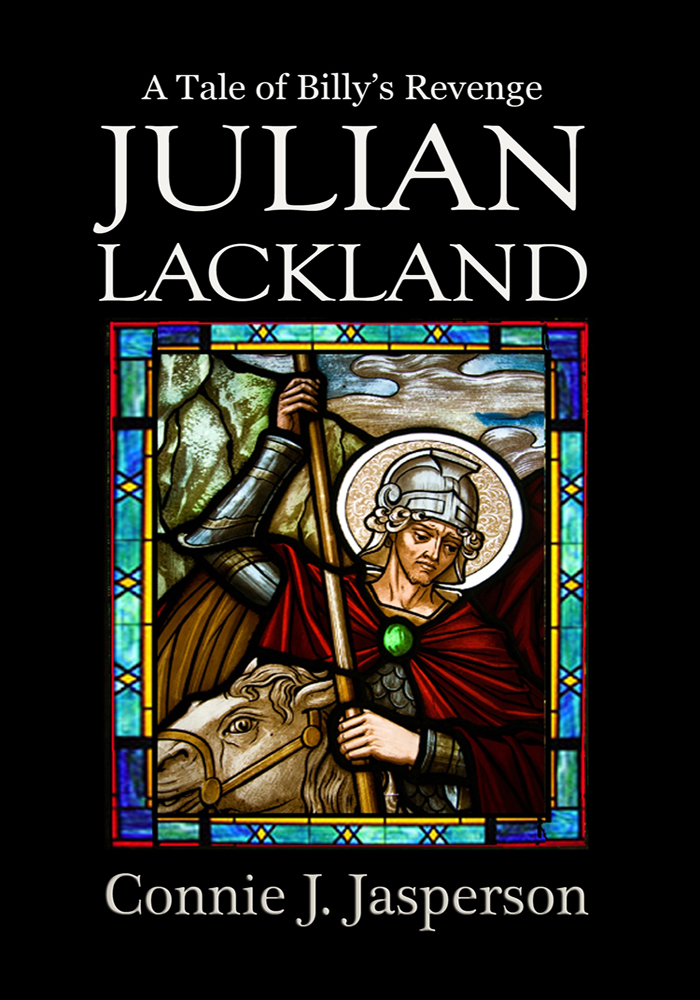
Julian Lackland was my first completed novel. The first draft of this novel was my 2010 NaNoWriMo project. The entire novel was inspired by a short story of about 2500 words that I had written about an elderly knight-at-large. Julian was a Don Quixote type of character and he had returned to the town where he had spent his happiest days in a mercenary crew.

Golden Beau, Julian’s life-partner has died. Julian enters the town and finds it completely changed. The town has grown so large that he becomes lost. Julian talks to his horse, telling him how wonderful the place they are going to is and all about the people he once knew and loved. When he does find the inn that he’s looking for, nothing is what he expects.

Julian_Lackland Cover 2019 for BowkersOn October 28, 2010, I was scrambling, trying to find something I could write, but my thoughts kept returning to the old man’s story. The innkeeper had referred to him as the Great Knight, stupidly brave but harmlessly insane. Had he always been that way? Who had he been when he was young and strong? Who did he love? How did Julian end up alone if the three of them, Julian, Beau, and Mags, were madly in love with each other?

What was their story? On November 1, I found myself keying the hokiest opening lines ever written, and from those lines emerged the story of an innkeeper, a bard, three mercenary knights, and the love triangle that covered fifty years of Julian’s life.

If I know how the story will end, I can build a plot to that point. This year, in November, I plan to finish a novel that has been on the back burner for five years.

I know how it will end because it is a historical sidenote in the Tower of Bones series. The story is canon because it has always been mentioned as a children’s story, the tale of an impossibly brave hero who does amazing and impossible things.

The novel separates Aelfrid-the-shaman from the myth of Aelfrid Firesword. It details both the founding of the Temple and the truth about Daryk, the rogue-mage who nearly destroyed it all.

I have written a synopsis of what I think will be the final chapters of Aelfrid’s story. It consists of two pages and is less than a thousand words.  Each paragraph details a chapter’s events, and I’ve included a few words detailing my ideas for the characters’ moods and the general emotional atmosphere.

The way the final battle ends is canon. I have some notes, but I will choreograph the actual battle when I get to it. It is pivotal, but I won’t drag it out. I’ll show the crucial encounters and tell the minor ones, as I dislike reading drawn-out fight scenes and usually skip over them, just reading the high points.

So now, let’s go back and look at the place where the story begins. We want to focus on the day that changed everything because that is the moment we open the story.

plotting as a family picnicI suggest writing a short synopsis of the story as you see it now. This will be as useful as an outline but isn’t as detailed. It will allow you to riff on each idea as it comes to you and is a great way to develop the storyline.

Open the document and look at page one. Let’s put the protagonists in their familiar environment in the opening paragraphs. This chapter is the hook, the “Oh, my God! This happened to these nice people! chapter.” This chapter is where the author can hook or lose the reader.

How? We see the protagonist content in their life, or mostly so. A nice cup of tea might start the day, but by evening, a chain of events has begun. A stone has begun rolling downhill, the first incident that will become an avalanche of problems our protagonist must solve.

But how do we lose the reader when this is the most coolest, bestest story ever written?

When we are new in this craft, we have a burning desire to front-load the history of our characters into the story so the reader will know who they are and what the story is about.

Don’t do it.

plottingLIRF07122020Fortunately for me, my writers’ group is made up of industry professionals, and one in particular, Lee French, has an unerring eye for where the story a reader wants to know begins.

I have to remind myself that the first draft is the thinking draft. In many ways, it’s a highly detailed outline, the document in which we build worlds, design characters, and forge relationships.

  • The first draft, the November Novel, is the manuscript in which the story grows as we add to it.

We need a finite starting point, an incident of interest. If you’re like me, you have ideas for the ending, so you have a goal to write to. At this point, the middle of the story is murky, but it will come to you as you write toward the conclusion.

The inciting incident is the beginning because this is the point where all the essential characters are in one place and are introduced:

  • The reader meets the antagonist and sees them in all their power.
  • The protagonistknows one thing—the antagonist must be stopped. But how?

The story kicks into gear at the first pinch point because the protagonist’s comfortable existence is at risk.

What else will emerge over the following 60,000 or more words (lots more in my case)?

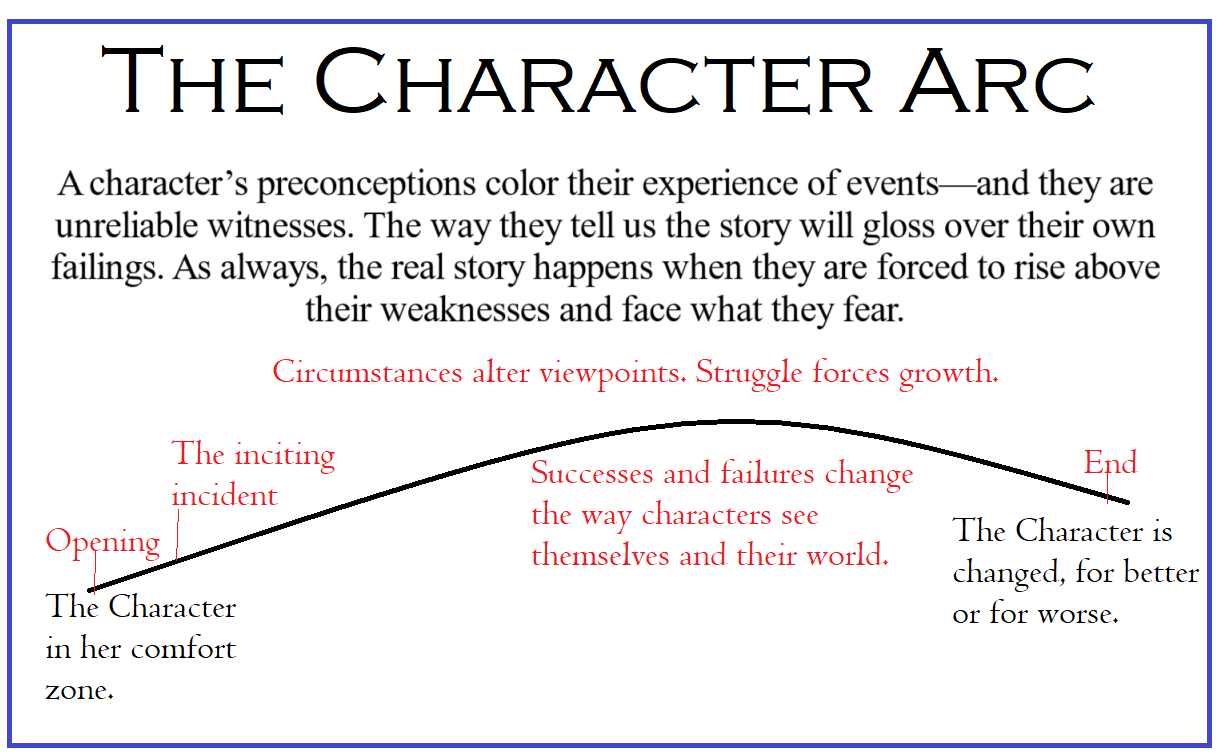
storyArcLIRF10032021The protagonist will find this information out as the story progresses and only when they need to know it. With that knowledge, they will realize they’re doomed no matter what, but they’re filled with the determination that if they go down, they will take the enemy down, too.

If you dump a bunch of history at the beginning, the reader has no reason to go any further. You have wasted words on something that doesn’t advance the plot and doesn’t intrigue the reader.

As you write, the people who will help our hapless protagonist will enter the story. They will arrive as they are needed. Each person will add information the reader wants, but only when the protagonist requires it. Some characters, people who can offer the most help, will be held back until the final half of the story.

We know how the story begins, and we know how it ends. The middle will write itself, and by the end of the novel, the reader will have acquired what they want to know.

With the last bits of information, the final pieces of the puzzle will fall into place. The promise of gaining all that knowledge is the carrot that keeps the reader involved in the book.

For the last #PrepTober installment, we will look at science and magic and why it’s important to start out knowing the rules for each.

panster-planner-planner-stpery-arc-10012021LIRF

Comments Off on #NovemberWriter: How the story ends, and how it begins #writing #PrepTober

Filed under writing

#NovemberWriter: Worldbuilding in advance #writing

We have two weeks to go to November 1st. If you are planning to participate in a writing quest with a specific goal, now is a good time to consider the world in which your prospective story might be set.

MyWritingLife2021BI like to sit somewhere quiet and let my mind wander, picturing the place where the opening scene takes place.

Is it indoors? Are we out in the wild? How can I write this? A few notes about my thoughts will help.

A good way to develop the skill of writing an environment is to visualize the world in your real life.  When you look out the window, what do you see? Close your eyes and picture the place where you are at this moment. With your eyes still closed, tell me what it’s like.

If you can describe the world around you with your eyes closed, you can create a world for your characters.

The plants and landscape of my fictional world are partly based on the scenery of Western Washington State because it’s wild and beautiful, and I’m familiar with it. The wild creatures are somewhat reality-based but are mostly imaginary.

Remember, we don’t have to immerse ourselves immediately. All we’re doing is laying the groundwork, ensuring plenty of ideas are handy when we start writing in earnest on November 1st.

Religion is a large part of my intended story, and some things are canon, as the first book in the series was published in 2012. The tagline for this series is “The Gods are at War, and Neveyah is the Battlefield.”  The war of the gods broke three worlds, drastically changing the landscape of Neveyah and offering endless opportunities for mayhem.

St_Helens_before_1980_eruption_horizon_fixedThe novel I intend to finish this year is set at the end of the first millennium, while last year’s effort was set in the second century after the cataclysm canonically known as the Sundering of the Worlds. This means the world is very different. The forests and wildlife have had a thousand years to rebound, and while some areas are still struggling to recover, most of the west is lush in comparison.

1200px-MSH82_st_helens_plume_from_harrys_ridge_05-19-82I live only sixty-five miles north of Mount St. Helens, so I have a good local example of how things look after a devastating event. I also can see how flora and fauna rebound in the years following it. Mount St. Helens – Wikipedia

Even if ecological disasters, technology, or religion aren’t the center of the plot, they can be a part of the background, lending color to the world. In Neveyah, my fictional world, the Temple of Aeos trains mages and healers who are then posted to local communities where they serve the people with their gifts.

Those communities are autonomous as the Temple doesn’t run them, but just as in real life, somebody is in charge of running things. In Neveyah, a council of elders governs most towns and cities, and the Temple is run the same way. We humans are tribal. We prefer an overarching power structure leading us because someone has to be the leader.

We call that power structure a government.

food and drinkWhen you create a fictional world, you create a culture. As a society, the habits we develop, the gods we worship, the things we create and find beautiful, and the foods we eat are products of our culture.

What does the outdoor world look and smell like? Mentioning sights, sounds, and scents can show the imaginary world in only a few words.

What about the weather? It can be shown in small, subtle ways, making our characters’ interactions and the events they go through feel real.

Once you have decided on your overall climate, consider your level of technology. Do some research now and bookmark the websites with the best information.

  • A note about fantasy and sci-fi food: climate and soil types limit the variety of food crops that can be grown. Wet and rainy areas will grow vastly different crops from those in arid climates, as will sandy soils and clays versus fertile loams. Look up what sort of food your people will have available to them if your story is set in an exotic environment.

I will be pantsing it (writing stream-of-consciousness) for the month of November, which means I will be writing new words every day, connecting the events I have plotted on my storyboard.  I never have time to think about logic once I begin the challenge, so the storyboard is crucial to me.

magicTo show a world plausibly and without contradictions, we must consider how things work, whether it takes place in a medieval world or on a space station. Don’t introduce skills and tech that can’t exist or don’t fit the era.

scienceFor instance, blacksmiths create and repair things made of metal. The equivalent of a medieval blacksmith on a space station will have high-tech tools and a different job title. Readers notice that sort of thing.

Society is always composed of many layers and classes. Rich merchant or poor laborer, priest or scientist—each occupation has a place in the hierarchy and has a chain of command. Take a moment to consider where your protagonist and their cohorts might fit in their society.

Maybe your novel’s setting is a low-tech civilization. If so, the weather will affect your characters differently than one set in a modern society. Also, the level of technology limits what tools and amenities are available to them.

What about transport? How do people and goods go from one place to another?

Many things about the world will emerge from your creative mind as you write those first pages and will continue to arise throughout the story’s arc.

Consider making a glossary as you go. If you are creating names for people or places, list them separately as they come to you. That way, their spelling won’t drift as the story progresses. It happened to me—the town of Mabry became Maury. I put it on the map as Maury, and it was only in the final proofing that I realized that the spelling of the town in chapter 11 was different from that of chapter 30.

protomapA hand-scribbled map and a calendar of events are absolutely indispensable if your characters do any traveling. The map will help you visualize the terrain, and the calendar will keep events in a plausible order.

Next week, we’ll take another look at plotting so that we have a starting point with a good hook and a bang-up ending to finish things off.

Calendar Capricas 3262 Neveyah


Credits and Attributions:

Wikimedia Commons contributors, “File:MSH82 st helens plume from harrys ridge 05-19-82.jpg,” Wikimedia Commons, https://commons.wikimedia.org/w/index.php?title=File:MSH82_st_helens_plume_from_harrys_ridge_05-19-82.jpg&oldid=912891712 (accessed October 13, 2024).

Wikimedia Commons contributors, “File:St Helens before 1980 eruption horizon fixed.jpg,” Wikimedia Commons, https://commons.wikimedia.org/w/index.php?title=File:St_Helens_before_1980_eruption_horizon_fixed.jpg&oldid=575896084 (accessed October 13, 2024).

2 Comments

Filed under writing

#NovemberWriter: Preparing to speed-date your muse #preptober #writing

November is National Novel Writing Month—and I am and always will be a November Writer. It’s the month I dedicate to writing new material. However, I no longer participate in the organization known as NaNoWriMo.

MyWritingLife2021I was a dedicated municipal liaison for the Olympia, Washington Region for twelve years and a regular financial donor, but I walked away after the organization’s implosion last November. I will get my 50,000 new words in November but will not sign up to participate through the NaNoWriMo website.

Instead, my region is preparing to go rogue with our own creative contest, milestones, and rewards. We stay connected through our Facebook page and our Discord Channel.

Last year’s tomfoolery within the national organization’s headquarters included accusations of ignoring child endangerment and grooming in a particular forum, rumors of mismanaged donations (never substantiated), and the overt power grab and subsequent “cleansing of MLs” by NaNo HQ’s new regime. Those shenanigans have poisoned the waters for me.

This Lit Hub article was the capper—I’m walking away from what was once the best part of my writing life. NaNoWriMo defends writing with AI and pisses off the whole internet. ‹ Literary Hub (lithub.com)

Whether you choose to go the NaNoWriMo route and participate through their website or go rogue like me, October is #Preptober, and the world is full of writing challenges to participate in.

Olympia Rebel Writers Sticker 2024Set your goal, keep a record of your daily word count or pages edited, or whatever, and let National Novel Writing Month be your month to achieve your goals. I have had buttons and stickers made as rewards for our region’s writers, and we will have write-ins as we have always done.

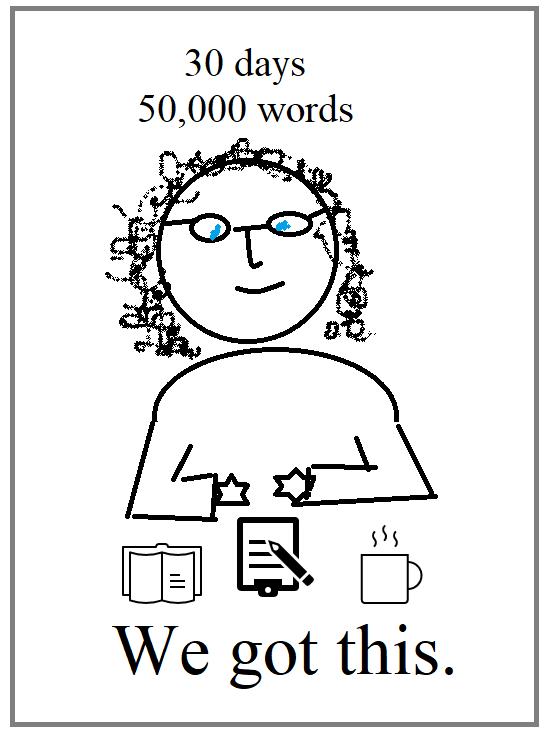
We are committed to supporting all writers, whether they are traditionalists participating through the national website or rogue writers, and the community we have built over the last twelve years remains strong. More than ever, we are committed to our original goals of writing a novel (or completing a project) in 30 days.

National Novel Writing Month is about accountability. We set goals and devote thirty days to working toward certain milestones. Each milestone we achieve gets us closer to a finished project. On November 30th, we can look back and take pride in what we have accomplished in only thirty days.

So, what is #Preptober all about? It’s getting ready to spend 30 days writing new words, self-editing last year’s novel, or any number of creative projects.

During the month of November, before my husband’s Parkinson’s became a problem, I might pound out 60,000 or so words, but my novels were only half finished at that point. Maybe a year or so later, I would have a coherent first draft that tops out at around 120,000 words. Three more years and six or eight drafts later, my novel was publishable at about 90,000 words.

For me, succeeding at getting the bare bones of a novel’s first draft written during the 30 days of November requires a pre-flight checklist. The checklist becomes my permanent stylesheet/outline for that novel.

I found Excel useful when I first began writing, and I use it to this day to keep my plots and background information organized. I also use Excel to keep track of my daily word count. This was my personal April challenge–unfortunately my husband was hospitalized before the end of the challenge, so my word count ends before April 30th:

Word count spreadsheet

Google Docs, pencil and paper—ANY document or spreadsheet program will work.

Once I’m done winging it through the story and am in revisions, some scenes will make more sense when placed in a different order than originally planned. At that point, an outline allows me to view the story’s arc from a distance. The outline is a visual aid that keeps my stream-of-consciousness writing flowing.

If I am editing a story for a client who has no outline, I make one as I go.

The outline is an editing tool, an overview that allows me to see where the plot arc might be flatlining. Perhaps an event should be cut entirely as it no longer works. (I always save my outtakes in a separate file for later use.)

Over the next few weeks, we’ll talk more about my process.

But first, WHAT is our project? Are we using November for writing or editing or writing music or painting landscapes?

This is how I start my pre-flight checklist for winging it through the merry month of November. Whether we are writing a novel or editing it, the basic premise of any story in any genre can be answered in eight questions. Considering these questions on a chapter-by-chapter level is a good editing tool—when you note your observations on the outline, you can see the rise and fall of the action, follow the character arcs, and ensure the pacing is on point.

  1. Who are the players?
  2. Who is the POV character?
  3. Where does the story open? This is worldbuilding, so make the setting feel real.
  4. What does the protagonist have to say about their story? What do they want, and what will they do to get it?
  5. Who is the antagonist? What do they want, and what will they do to achieve it?
  6. What is the major obstacle to our characters’ achieving their desires?
  7. What other roadblocks hinder them?
  8. How does the story end? Is there more than one way this could go?

Plot-exists-to-reveal-characterThe answer to question number one kickstarts the plot: who are the players? Once I know the answer to this question, I can write, and write, and write … although most of what I write at that point will be background info. The answers to the other questions will emerge as I write the background blather.

I write fantasy stories most often, and they always begin with the characters. Characters usually arrive in my imagination as new acquaintances inhabiting a specific environment. That world determines the genre.

Who are youThey share some of their story the way strangers on a long bus ride might. I see the surface image they present to the world, but they keep most of their secrets close and don’t reveal all the dirt. These mysteries will be pried from them over the course of writing the narrative’s first draft.

That little bit of mind-wandering gives me the jumping-off point, which is all I need to get my story off the ground.

Knowing who the protagonist is, having an idea of their story, and seeing them in their world is a good first step.

Write those thoughts down so you don’t lose them. Keep adding to that list as ideas about that world and those characters come to you.

But what if you plan to edit last year’s novel rather than write a new project? We will go into productive self-editing next week.

real-writers-writeAnd what if you are writing poems or short stories? Graphic novels? We will also go into preparing to “speed-date your muse” when embarking on those aspects of writing.

We will look at all areas of creativity this #Preptober, because November is a month for exploring creativity on every level, and many sites offering November writing quests are springing up. We will explore the ever-expanding list of NaNo alternatives, and we will be prepared to have fun.

6 Comments

Filed under writing

What is “beta reading,” and how do I find a suitable reader? #writing

The month of September is drawing to a close, and we are winding up our dive into the second draft of a manuscript. We hope we have a perfect manuscript with no structural issues.

MyWritingLife2021BBut we know the work is just beginning. Now we need an unbiased eye looking at the structure, a beta reader.

Beta Reading is the first look at a manuscript by someone other than the author. It is the first reading of an early draft by an unbiased eye. Editing and proofreading happen further down the process, but this reading is critical.

This phase should guide the author in making revisions that make the story stronger. It’s best when the reader is a person who reads for pleasure and can gently express what they think about a story or novel.

I do suggest you find a person who enjoys the genre of that particular story. If you are asked to be a beta reader, you should know it is not a final draft. You should ask several questions as you read:

  1. My Coffee Cup © cjjasp 2013Setting: Does the setting feel real?
  2. Characters: Is the point of view character (protagonist) clear? Did you understand what they were feeling? Were they likable? Did you identify with and care about them? Were there various character types, or did they all seem the same? Were their emotions and motivations clear and relatable?
  3. Dialogue: Did the dialogue and internal narratives advance the plot?
  4. Events: did the inciting incident and subsequent roadblocks to success feel believable?
  5. Pacing: How did the momentum feel?
  6. Does the ending surprise and satisfy you? What do you think might happen next?

If you are asked to be a beta reader, you might be distracted by grammar and mechanics, and you might forget that the manuscript you’ve been asked to read is unedited.

  • I suggest you keep editorial comments broad, as a line edit is not what the author is looking for at this stage.

However, if the author really has no understanding of grammar and mechanics, you might gently direct them to an online grammar guide, such as The Chicago Manual of Style Online.

I am fortunate to have excellent friends in my writing group who are willing to read for me. Their suggestions are thoughtful and spot-on.

Let’s say that you have just joined a professional writers’ group. After attending a few meetings, you ask a member for feedback about your book or short story.

blphoto-Orange-ScissorsBe prepared for it to come back with some detailed critical observations, which may seem harsh. Any criticism of our life’s work feels unfair to an author who is new at this. And to be truthful, some authors never learn how to put aside their egos.

Some authors read the first three comments, decide the reader missed the point, and choose to ignore all the suggestions.

This is because the reader pointed out info dumps and long paragraphs the author thought were essential to the why and wherefore of things.

Maas_Emotional_Craft_of_FictionWorse, perhaps they were familiar with a featured component of the story, such as medicine or police procedures. The reader might have suggested we need to do more research and then rewrite what we thought was the perfect novel.

Even if it is worded kindly, criticism can make you feel like you have failed.

When I received my first critique, I was stunned, embarrassed, and deeply confused. I had worked and worked on that manuscript and why didn’t they know that?

Being the only one in a group who didn’t understand something made me angry, but thank heavens, my manners kicked in. I bottled it up and behaved myself.

Not understanding how to correct our bad writing habits is the core reason why we feel so hurt.

That critique was painful, but when I look back on it, I can clearly see why the manuscript was not acceptable in the state it was in.

I had no idea what a finished manuscript should look like, nor did I understand how to get it to look that way. I didn’t know where to begin or who to turn to for answers.

  • I didn’t understand how to write to a particular theme.
  • Punctuation and usage were inconsistent and showed I lacked an understanding of basic grammar rules.
  • I resented being told I used clichés.
  • I resented being told my prose was passive. But I couldn’t understand what they meant when they said to write active prose.

There was only one way to resolve this problem. I had to educate myself.

emotion-thesaurus-et-alI went out and bought books on the craft of writing, and I am still buying books on the craft today. I will never stop learning and improving.

Don’t ask a fellow member of a professional writers’ forum to read your work unless you want honest advice. Even if they don’t “get” your work, they will spend their precious time reading it, taking time from their writing to help you out, and that is priceless.

Finally, if you have offered your work to someone who is hypercritical about the small stuff and ignores the structural things you asked them to look at, don’t feel guilty for not asking them to read for you again.

Let it rest for a day or two. Then, look at their comments with a fresh eye and try to see why they made them.

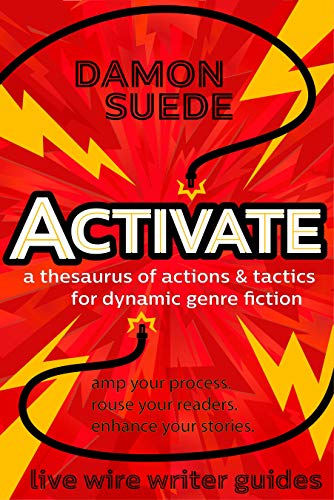
activateLearning the craft of writing is like learning any other trade, from cooking to carpentry. It takes work and effort to become a master.

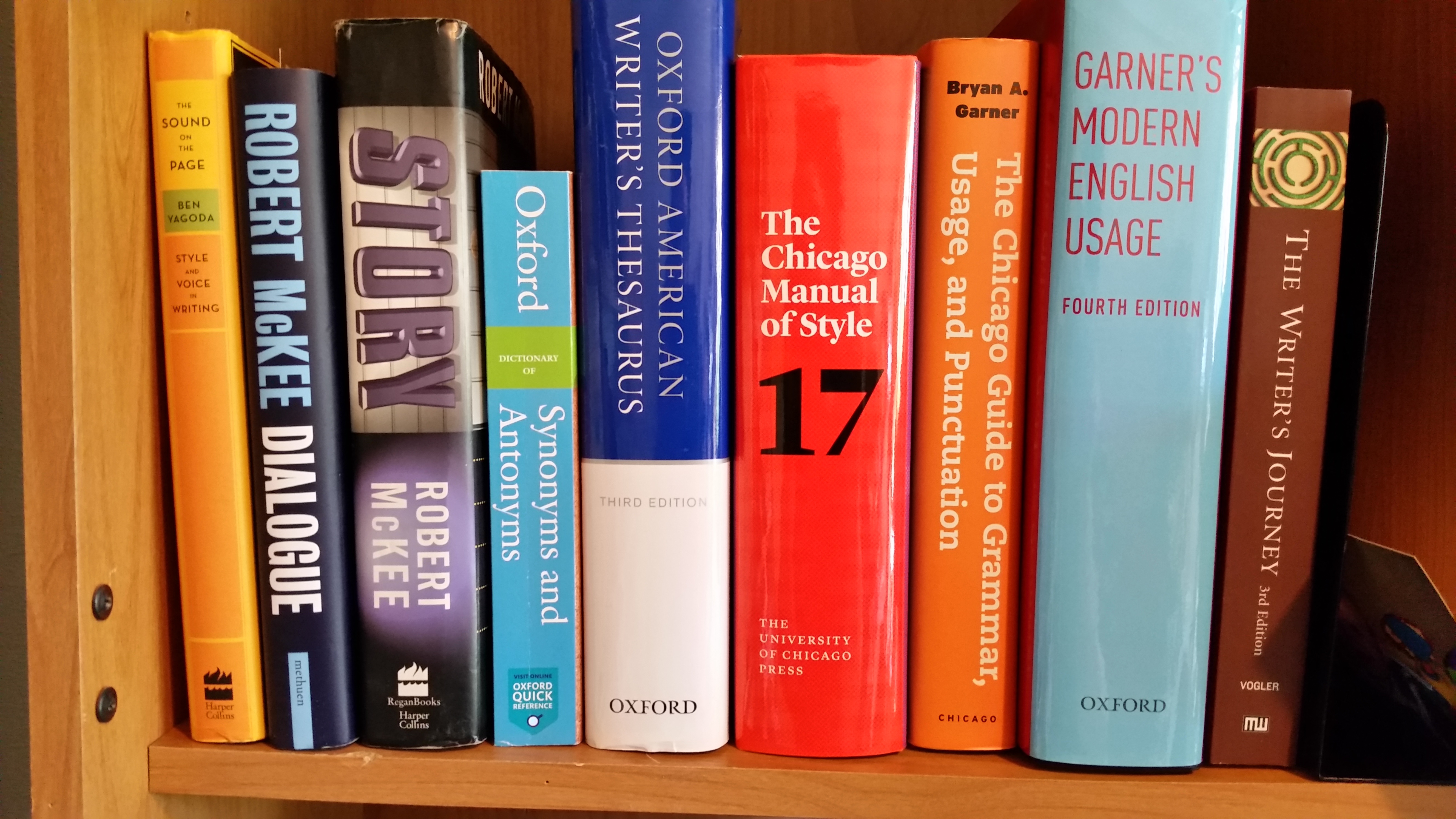
If you want to craft memorable work, you must own the proper tools for the job and learn how to use them. My “toolbox” contains:

  1. MS Word as my word-processing program. You may prefer a different program, but this is the one I use.
  2. Books on the craft. Self-education is critical. I refer back to The Chicago Manual of Style and numerous other books on the craft of writing whenever I am stuck. (See a short list of my favorites below.)
  3. I have trusted, knowledgeable beta-readers for my work and people who give me thoughtful feedback that I can use to make my final draft as good as I can get it.
  4. I work with a good, well-recommended freelance editor.
  5. Take free online writing classes.
  6. Attend conferences and seminars (not free, but worth the money).
  7. I meet with my weekly writing group.
  8. I read daily in ALL genres.

One day in 1990, I stumbled upon a book offered in the Science Fiction Book Club catalog: How to Write Science Fiction and Fantasy by Orson Scott Card. I’ve said this before, but the day that book arrived in my mailbox changed my life.

That was the day that I stopped feeling guilty for thinking I could be a writer.

The next book I bought was in 2002: On Writing, A Memoir of the Craft by Stephen King.

The following is the list of books that are the pillars of my reference library:

Negative feedback is a necessary part of growth. A good, honest critique can hurt if you are only expecting to hear about the brilliance of your work. This is where you have the chance to cross the invisible line between amateur and professional.

  • Editors_bookself_25May2018

3 Comments

Filed under writing

#FineArtFriday: revisiting Indian Summer by William Trost Richards 1875

Indian_Summer_MET_DT276257Title: Indian Summer by William Trost Richards

Genre: landscape art

Date: 1875

Medium: oil on canvas

Dimensions: 24 1/8 x 20 in. (61.3 x 50.8 cm)

Collection: Metropolitan Museum of Art

What I love about this painting:

Autumn is upon us once again. I was looking through the vault at Wikimedia Commons, and my eye kept being drawn to this painting by William Trost Richards. I featured this painting two years ago, and still love the feeling of “zen” that Trost Richards managed to instill into this scene.

He captured a singular moment of tranquility. A light breeze barely ruffles the surface of our pond. At the bottom right, two girls play beside a large boulder at the water’s edge.

Across the pond, in the center and nearly hidden in the shadows, a teamster and his oxen wade across the shallows.

Autumn’s haze lends a feeling of mystery to the scene, muting the reds, yellows, and oranges of leaves about to fall. This last burst of grandeur can’t hold back winter, though it tries. Soon, the forest will sleep, snow and ice will decorate barren limbs, and ice will stop the waters’ gentle motions.

But beneath the grasp of winter, new life will bide its time, and winter will fade into spring. The seasons will follow their course, but today is autumn’s day to shine, to go down in a blaze of golden glory.

A century ago, William Trost Richards painted a scene of peace and serenity, perfectly capturing it. He preserved the glory of the scenery, but more than that, he captured the mood and the atmosphere of a perfect autumn day. When we view this scene, we can sit back and admire the beauty of our world.

 >>><<<

About William Trost Richards via Wikipedia:

William Trost Richards (November 14, 1833 – November 8, 1905) was an American landscape artist. He was associated with both the Hudson River School and the American Pre-Raphaelite movement. [1]

In 1856, he married Anna Matlack Richards (1834–1900), a 19th-century American children’s author, poet and translator best known for her fantasy novel, A New Alice in the Old Wonderland. The couple had eight children, only five of whom lived past infancy. Anna educated the children at home to a pre-college level in the arts and sciences. [2]

One of the couple’s sons, Theodore William Richards, would later win the 1914 Nobel Prize in Chemistry. Anna Richards Brewster, their sixth child, went on to become an important painter in her own right, having received an early arts education from her father as well. [2]

Richards rejected the romanticized and stylized approach of other Hudson River painters and instead insisted on meticulous factual renderings. His views of the White Mountains are almost photographic in their realism. In later years, Richards painted almost exclusively marine watercolors. [1]


Credits and Attributions:

Indian Summer by William Trost Richards, Wikimedia Commons contributors, “File:Indian Summer MET DT276257.jpg,” Wikimedia Commons, the free media repository, https://commons.wikimedia.org/w/index.php?title=File:Indian_Summer_MET_DT276257.jpg&oldid=678817431 (accessed November 3, 2022). Public Domain.

[1] Wikipedia contributors, “William Trost Richards,” Wikipedia, The Free Encyclopedia, https://en.wikipedia.org/w/index.php?title=William_Trost_Richards&oldid=1089835304 (accessed November 3, 2022).

[2] Wikipedia contributors, “Anna Matlack Richards,” Wikipedia, The Free Encyclopedia, https://en.wikipedia.org/w/index.php?title=Anna_Matlack_Richards&oldid=1055684363 (accessed November 3, 2022).

4 Comments

Filed under #FineArtFriday, writing

The Second Draft: Logic, Objectives, and Circumstances #writing

We are still working on the second draft of our manuscript. We have searched for our code words and examined our character arcs for agency and consequences.

The Second Draft: Decoding My Mental Shorthand #writing

The Second Draft: agency and consequences #writing

MyWritingLife2021BToday, we’re looking at the arc of the plot.  This is a good opportunity to open a new document and answer a few questions about your story. The list of questions and their answers will inform you of the areas that need more work before you send the manuscript to a beta reader.

First, let’s take a second look at the overarching objective. This is the reason the story exists, and we made a stab at identifying it in the first draft. But now we want to make that problem clear.

  1. Is the quest worthy of a story? What does the hero need, and would they risk everything to acquire it?
  2. Have we shown how badly they want it and, most importantly, why they are so desperate for it?
  3. Why do they feel entitled to it?
  4. How far are they willing to go to acquire it?

Second, we examine the antagonist. Have we shown the opposition as clearly as we have the protagonist? The whole story hinges on whether or not our protagonist faces a real threat. A weak enemy is no threat at all, so

  1. VillainWho is the antagonist?
  2. Do they have a personality that shows them as rounded and multidimensional rather than as a two-dimensional cartoon villain?
  3. Do they change and evolve as a person throughout the story, for good or for evil? A character arc must encompass several stages of personal growth. What those stages are is up to you and depends on the story you are telling.
  4. What do they want?
  5. Why do they feel entitled to it?
  6. How far are they willing to go to get it?

Third, how convincing is the inciting incident? I learned this the hard way—long lead-ins don’t hook the reader. Long lead-ins offer too much opportunity for the inclusion of insidious info dumps.

  1. Whether we show it in the prologue or the opening chapter, the first event, the inciting incident, changes everything and launches the story. The universe that is our story begins expanding at that moment.
  2. The first incident has a domino effect. More events occur, pushing the protagonist out of his comfortable life and into danger. Fear of death, fear of loss, fear of financial disaster, fear of losing a loved one—terror is subjective and deeply personal.
  3. The threat and looming disaster must be made clear to the reader at the outset. Nebulous threats mean nothing in real life, although they cause a lot of subconscious stress.
  4. Those vague threats might be the harbinger of what is to come in a book, but they only work if the danger materializes quickly and the roadblocks to happiness soon become apparent.

Fourth, let’s look at logic and the pinch points. Pinch points (events that threaten the quest) are the cogs that keep the wheels of your story turning. How strong are the pinch points in this story?

  1. Was this failure the logical outcome of the characters’ decisions? Or does this event feel random, like spaghetti tossed at a wall to see what sticks?
  2. Does the first pinch point feel strong enough to hook a reader?

The internet says that pinch points frequently occur between moving objects or parts of a machine.

cogsConsider cogs: they are engineered to interlock with each other, and when they move close enough that one cog interlocks and turns another, they move other parts of the mechanism.

When a machine is powered by mechanical or electrical means, the places where the cogs meet other cogs or other parts of the machinery are the danger zones, the places where people can be injured or even killed.

So, our narrative is our machine, and the events (pinch points) are the cogs that move it along.

Logic is the oil that keeps our gears turning.

Fifth: midpoint: What are the circumstances in which we find each character at the midpoint?

From the midpoint to the final plot point, pacing is critical, and the reader must be able to see how the positive and negative consequences affect the emotions of ALL the characters. We must show their emotional and physical condition and the circumstances in which they now find themselves.

The antagonist will be pleased, perhaps elated.

The protagonist will be worried, perhaps depressed.

  1. Did we fully explore how the events emotionally destroy them?
  2. Did we shed enough light on how their personal weaknesses are responsible for the bad outcome?
  3. Did we show how this failure causes the protagonist to question everything they once believed in?
  4. Did we offer them hope? What did we offer them that gave them the courage to persevere and face the final battle?
  5. Finally, did we explore how this emotional death and rebirth event makes them stronger?

storyArcLIRF10032021Each hiccup on the road to glory must tear the heroes down. Events and failures must break them emotionally and physically so that in the book’s final quarter, they can be rebuilt, stronger, and ready to face the enemy on equal terms.

Why does the antagonist have the upper hand? What happens at the midpoint to change everything for the worse?

Sixth: we look closely at the last act, which is the final quarter of the story.

  1. At the ¾ point, your protagonist and antagonist should have gathered their resources and companions.
  2. Each should believe they are as ready to face each other as they can be under the circumstances.

The final pages of the story are the reader’s reward for sticking with it to that point.

  1. Did we hold the solution just out of reach for the first ¾ of the narrative? Did we lure the reader to stay with us by giving them the promise of a solution?
  2. Did we show clearly that every time our characters nearly resolved their situation, they didn’t, and things got worse?
  3. Did we bring the protagonist and antagonist together for a face-to-face meeting?
  4. Was that meeting an epic conflict that deserved to be included in that story?
  5. Did that meeting bring the story to a solid conclusion?
  6. How well did we choreograph that final meeting?

a storyboard is your friendConfrontations are chaotic. It’s our job to control that chaos and create a narrative with an ending that is as intense as our imaginations and logic can make it.

Once we have examined the plot arc and are satisfied with its outcome, we may think it’s ready for a beta reader.

But it might not be, as we still have a few steps to complete. The beta reader’s comments will inform how we approach our third draft, so we want the manuscript we give them to be as free of easily resolved bloopers and distractions as possible. That way they will be better able to see the strengths of the story as well as the weaknesses.

Next week, we’ll examine the next steps to making a manuscript ready for a trusted beta reader. I’ll also discuss how I find readers who can accept that my story still has flaws and who understand what I am asking them to look for.

Plot-exists-to-reveal-character

4 Comments

Filed under writing

The second draft: agency and consequences #writing

I plot my stories in advance, but once I begin writing, the characters sometimes take over. The plot veers far from what I had intended when I began writing it. Each time that happens, the code words we use to tell the story find their way into my manuscript, marking the places I need to revisit and rewrite to show the action. (See last week’s post, The Second Draft: Decoding My Mental Shorthand #writing | Life in the Realm of Fantasy (conniejjasperson.com).

WritingCraftSeriesAgencyLIRF01302022This happens because my characters have agency and sometimes run amok. Thus, in the second draft, I examine the freedom I give my characters to introduce their own actions and reactions within the story.

Usually, the ending remains the same as proposed, no matter what the characters do. However, the path to that place can diverge, making the middle quite different from what was initially intended.

This is called giving your characters “agency.” Agency is an integral aspect of the creative process. It allows the written characters to become real, the way Pinocchio wanted to be a real boy and not a puppet.

I want their uniqueness to remain central to the story, even when their motives and actions diverge from the original plot outline.

In literary terms, “agency” is the ability of a character to surprise the author and, ultimately, the reader. If you plan every action and response when you are writing them, the experience of writing might feel canned and boring.

Plotting, for me, means setting out an arc of events for a story that I hope to write. I do this in advance, creating it in the form of a list in a new Excel workbook that is the bible for that universe. My outline workbook will contain several spreadsheets. On one page, I create the characters and give them personality traits. On another, I list the order of events that I think will form the arc of the story. Another page will have a glossary of words and names that are unique to that story. There will be maps and calendars to help keep things logical.

tabs of a stylesheet

Some authors use whiteboards and sticky notes, and still others use Scrivener—a program my style of thinking doesn’t mesh with. Google Sheets works well, too, and it’s free. The way you plot your stories is up to you.

When my characters begin doing things that weren’t planned, the outline evolves. That way, I don’t lose control of the plot and go off on a side quest to nowhere. That is when I get to know my characters as people.

Author-thoughtsWhen the writing commences, the characters make choices and say things that surprise me. They can do this because I allow them agency.

Each character will be left with several consequential choices to make in every situation that arises along the timeline. I consider the personality and allow the characters’ reactions to fit who they are.

No matter how they respond, they will be placed in situations where they have no choice but to go forward. After all, I am their creator, the deity of their universe. I have an outline that predestines them to specific fates, and nothing they can do will stop that train.

The consequences my characters face for their choices affect the atmosphere and mood of the story as it emerges. Think about it—if there are no consequences for a character’s bad decisions, everyone goes home unscathed. What sort of story is that? Why bother writing at all?

Let’s look at both the meanings and synonyms for the word consequences.

ConsequencesLIRF09142024

So now, let’s consider agency and the importance of choice. How will the consequences of their decisions affect our characters’ lives? After all, a story isn’t interesting without a few self-inflicted complications.

A story most fantasy authors are familiar with is J.R.R. Tolkien’s The Hobbit. Let’s have a closer look at Bilbo’s choices and his path to becoming the eccentric, eleventy-one-year-old hobbit who vanishes (literally), leaving everything, including the One Ring, to Frodo.

In the morning, after the unexpected (and unwanted) guests leave, he has two choices. He can stay in the safety of Bag End or hare off on a journey into the unknown. He chooses to run after the dwarves, and so begins the story of how a respectable hobbit embarked on a new career as a burglar and became a hero in the process.

Bilbo comes to the huts of the raftelves by J.R.R. Tolkien

Bilbo comes to the huts of the raft elves by J.R.R. Tolkien

The consequences of Bilbo’s decision will shape his entire life afterward. Where he was once a staid country squire, the pillar of respectability who had inherited a comfortable income and existence, he is now expected to steal an important treasure from a dragon.

At the outset, that particular job doesn’t seem real, and he can’t imagine doing it. More immediate problems beset him. First of all, he has no clue about how a successful burglar works. He knows better than anyone that he is completely unfit for the task.

Second, he’s always been well-fed, highly respected, and not inclined to physical labor. Now, he is a novice on the expedition, so his opinions carry no weight. Not only that, meals are scant by his standards, and they must do way too much walking.

Bilbo’s long-suppressed desire for adventure emerges early when the company encounters a group of trolls. He is supposed to be a thief, so he is sent to investigate a strange fire in a forest. Reluctantly, he agrees. Upon reaching the blaze, he observes that it is a cookfire for a group of trolls.

Bilbo must make a choice. The smart thing would be to turn around at that point and warn the dwarves that they are in mortal danger. However, Bilbo’s bruised ego takes over, and he chooses to do something to prove his worth.

“He was very much alarmed as well as disgusted; he wished himself a hundred miles away—yet somehow he could not go straight back to Thorin and Company empty-handed.” [1]

Bilbo’s desire to impress the Dwarves causes him to make regrettable decisions. His choice leads to everyone nearly getting eaten, which is a negative consequence.

the hobbitFortunately, they are rescued by Gandalf. While he is hiding, Bilbo discovers several historically important weapons. One of them is Sting, a blade that fits Bilbo perfectly as a sword. This is a positive consequence, as the blade is crucial to Bilbo’s story and later to Frodo’s story.

It does not acquire its name until later in the adventure, after Bilbo, lost in the forest of Mirkwood, uses it to kill a giant spider and rescue the Dwarves. This is when Bilbo’s decisions become more thoughtful, and his courageous side begins to emerge.

Choices and consequences, both negative and positive, shape Bilbo’s character.

Sometimes, the decisions our characters make as we write surprise us. But if those choices make the story too easy, they should be discarded.

The best, most exciting moments I’ve had as an author are when my characters surprise me and take over the story. I can’t describe the feeling of exultation I experience when my characters choose to take the story in a different, much better direction than I had planned.

Ultimately, they end at the place I intended for them at the outset, but they always do it their own way and with their own style.

ConsequencesLIRF07122020


Credits and Attributions:

[1] Quote from The Hobbitor There and Back Again, by J.R.R. Tolkien, published 1937 by George Allen & Unwin, Ltd.

5 Comments

Filed under writing

The Second Draft: Decoding My Mental Shorthand #writing

Before we set the first words on a blank page, our minds have formed images of scenes we want to describe. Steven Pinker is a professor of psychology at Harvard University who specializes in visual cognition and developmental linguistics. He reminds us that we are not born with language, so we are NOT engineered to think in words alone. We also think in images.

depthPart1revisionsLIRF05252021It follows that certain words become a kind of mental shorthand, small packets of letters that contain a world of images and meaning for us. Code words are the author’s multi-tool—a compact tool that combines several individual functions in a single unit. One word, one packet of letters will serve many purposes and convey a myriad of mental images.

These words are sometimes used too often in the first draft as they are efficient. We write as fast as we can when we have the inspiration. Code words convey a wide range of information concisely, and because we use them, we can write the first draft of a story from beginning to end before we lose the fire for it.

In my current writing, I hope to portray my protagonists as I see them without bashing my readers with how I see their appearance. The big temptation is to go into detail about each person’s specific characteristics.

This is not necessary. We think in images, and so do our readers, who will fill in the details in a way that is pleasing to them. I want to convey their characteristics naturally and without beating the reader over the head.

A few years ago, I read a novel featuring a caterer who solves mysteries. She is continuously described as Junoesque, ample, vast, chubby, size eighteen, fat, large … and on and on. In every chapter, at least once and usually twice, we were given a visual description of her, along with indications of how she aroused the males around her.

Those constant descriptions were meant to emphasize the author’s perception of her protagonist as plump but irresistible to the males. However, as the book wore on, it became jarring and unnecessary. I skipped to the end and then set it aside, never to be read again.

powerwordsWordCloudLIRF06192021I want to avoid that sin in my work, but what are my code words? What words are being inadvertently overused as descriptors? A good way to discover this is to make a word cloud. The words that see the most screen time will be the largest. Free online word cloud generator and tag cloud creator – WordClouds.com.

A word frequency search is also a good tool. Word Frequency Counter – Counts frequency of words in text, free online tool (charactercounter.com)

In my current work, a prominent side character is an important mentor. He is tall with dark skin and dark eyes. His hair is a wiry halo shot with white and trimmed close to his head. This is a mixed-race society, a world where “race” means “species.” One is a human born in the world of Neveyah, a large minotaur from the Bull God’s world, or a small person with rat-like features from the Mountain God’s world. Those are the only racial differences people notice.

So, when showing my people, I use general descriptors, and thanks to my use of word frequency search, the code words are now used only a few times. My hope is that a reader will make appropriate visualizations as needed.

Every author thinks a little differently, so your code words will be different from mine. Another way to find your secret code words is to have the Read Aloud tool read each section. I find many inadvertent crutch words that way.

One of the code words I subconsciously overuse is “felt.” My thesaurus says I could exchange felt for:

  • ozford-american-writers-thesaurusendured
  • experienced
  • knew
  • saw
  • suffered
  • tasted
  • underwent,
  • witnessed

The thesaurus offers some other words related to felt:

  • regarded
  • viewed
  • accepted
  • depended
  • trusted
  • assumed
  • presumed
  • presupposed
  • surmised

It’s natural to overuse certain words without realizing it, but that is where revisions come in.

As you go along, you’ll discover that some words have very few synonyms that work.

Consider the word “smile.” It’s a common code word, a five-letter packet of visualization. Synonyms for “smile” are few and don’t show what I mean:

  • beam
  • grin
  • leer
  • smirk

Each occurrence of the word “smile” in my work must be considered individually. Sometimes, this requires a complete re-visualization of the scene. It hurts my heart to murder my darlings, but I look for a different way to convey my intention.

We don’t have to drag the reader through a long list of ever-moving facial expressions, such as lips turning up, down, drawing to one side, etc.

When done sparingly and combined with a conversation, this kind of visual display can work.

By sparingly, I mean no more than one facial change per interaction, please.

oxford_synonym_antonymSometimes, the only thing that works is the brief image of a smile. Nothing is more boring than reading a story where a person’s facial expressions take center stage. As a reader, I want to know what is happening inside our characters and can be put off by an exaggerated outward display.

Once you become aware of your first draft code words, go to the thesaurus, find all the synonyms you can, and list them in a document for easy access. If it is a word such as smile or shrug, you have your work cut out, but it will speed things up if you make a small list of visuals that you can use and change up as needed.

A list of mood indicators can keep you from losing your momentum and will readily give you the words you need to convey all the vivid imagery you see in your mind. I saved my list to my desktop, so I don’t have to waste time searching for it.

Here are some instances of body language an observer would see if a character was wary.

  • Crossed arms.
  • A stiff posture.
  • Narrowed eyes.

emotion-thesaurus-et-alIf you don’t have it already, a book you might want to invest in is The Emotion Thesaurus by Angela Ackerman and Becca Puglisi. Some of the visuals they list aren’t my cup of tea, but they understand how to use words that show what people are thinking.

This aspect of the revision process is sometimes the most difficult. It takes time to examine each instance of our code words. They don’t always need changing—sometimes, a smile is a smile, and that is okay.

6 Comments

Filed under writing

Today is Labor Day in the US #writerlife

The first Monday in September is Labor Day in the US, a holiday marking the end of summer. This is the day we honor those whose labor keeps this country running. Over the years, I have worked in a wide variety of menial jobs. All were low-paying and didn’t garner much respect from those in higher-status positions or from management. But I liked my work and never did less than my best.

MyWritingLife2021BChildcare was always an issue. Sometimes, during the Carter years, I qualified for government-subsidized childcare vouchers, which was the only reason I could work such low-paying entry-level jobs. Later, my uncle cared for my youngest daughter after school until she was about ten.  Because I had that childcare subsidy when my youngest was not yet of school age, I was able to support my family relatively well.

They should bring that childcare subsidy back. Once they reached ten years of age, my kids were latchkey kids, which wasn’t uncommon in those days.

In the 1970s-80s, I worked as a bookkeeper, an automobile detailer, a field hand for a (now defunct) multi-national Christmas tree company, a photo lab tech, a waitress in a bakery, and worked in a delicatessen.

During those years, my favorite job was as a field hand for the J. Hofert Company. They grew Christmas trees of all varieties, and I absolutely loved the work. It was outdoors, paid $3.25 an hour, and was seasonal, so I usually had a month off three times a year.  I was able to work all the overtime hours I wanted during certain seasons, as field hands were as hard to get then as they are now.

coins

Coins, Microsoft content creators

Sometimes, especially during the Reagan years and up to 1996, wages were low, and jobs were scarce.  I held two, and sometimes three, part-time jobs to keep the roof over my children’s heads and food on their table. Trickledown economics never quite trickled down to my town.

In the late 1980s and through the 1990s, I worked as a hotel maid, a photographer’s assistant and darkroom technician, and as a bookkeeper/office manager for a charter bus company.

Life became easier in the 1990s. As a bookkeeper/office manager, I earned $7.50 an hour (two dollars over minimum at the time) and worked less than 30 hours a week with no benefits whatsoever. I drove for an hour each way, morning and afternoon, for that job.

As a hotel housekeeper in a union shop, on the days I wasn’t a bookkeeper, I made $8.50 (three dollars over minimum) and worked about 20 hours a week, giving me enough from the two jobs to live on and provide well for my children. I was still legally married to my 3rd husband, but he was seldom in the picture. The marriage was a shield between me and my well-meaning matchmaker friends.

fireworks via wikipedaI was divorced from hubby number three in 1997, and oddly enough, things became much easier financially. I was able to get by with only one job, even while raising my last teenager. (See? Everyone has a soap opera life, even famously unknown authors.)

For all the years I was married to my 3rd husband, no matter what other job I had, I kept my weekend job at the hotel. I kept it because I always had that to fall back on. I had risen in seniority and could work full-time whenever the other jobs went away.

My hotel was affiliated with a good union. We who did the dirty work earned far more than maids, housemen, and laundresses at other hotels. We also had benefits such as paid sick leave, up to two weeks a year of paid vacations, good health insurance, and a 401k, to which our employer matched our contributions.

In any hotel, housekeepers are considered the lowest of the low by the other employees. No one is of less social value than the person who cleans up after other people. Without the union, we would have had nothing more than the bare minimum wage and a cartload of insincere condescension from management.

Not every union is good or reasonable. But while I don’t agree with everything every union does and stands for, I am grateful that a good, reasonable organization protected my family and me during those years of struggle.

After 2000, I worked as a temp employee at Verisign, a tax preparer for H&R Block, and did data entry for LPB Energy Management. By 2010, I was thoroughly sick of corporate America and had returned to bookkeeping, this time for a local landscape company.

That job was a joy.

In my younger days, I worked every weekend and every holiday, and yes, it was not easy, but it was what it was. My kids were good and supportive, and they knew I was doing my best for them.

Every worker deserves an employer who treats them with respect and offers a fair wage in return for their labor.

The world is a different place now in many ways. Even so, someone must do the dirty jobs, the work that no one else wants. I have nothing but respect for those who work long, hard hours in all areas of the service industry, struggling to support their families.

My experiences working in the lower echelons of the labor force inform my writing. Look around you and see the people who make your life easier by being there every day doing their jobs.

330px-Works_Progress_Administration_maid_poster_cropped

Stylized drawing of a maid on a Works Progress Administration poster via Wikipedia

Every waitress/waiter, housekeeper, laundry worker, caregiver, bartender, welder, mechanic—everyone in the service industry is a living, caring human being with hopes, ambitions, triumphs, and tragedies. Every one of them has a story and a reason to be where they are, doing the task they have been given.

Say a little thank you to all those who endure verbal abuse when a customer is stressed out and “doesn’t have time to wait” or is upset by things they have no control over and vent their anxiety at someone who can’t (or won’t) fight back.

Give a little thanks to those whose labor enables you to live a little easier.

4 Comments

Filed under writing

#FineArtFriday: Newhaven Harbour on the Firth of Forth by Samuel Bough

Samuel_Bough_-_Newhaven_harbour_on_the_Firth_of_ForthArtist: Samuel Bough  (1822–1878)

Title: Newhaven Harbour on the Firth of Forth

Date: Unknown date

Medium: pencil and watercolor, heightened with white

Dimensions: height: 25.4 cm (10 in); width: 35.6 cm (14 in)

Inscriptions: Signature bottom left: Sam Bough

What I love about this painting:

This is a faithful record of a sunny summer day at a busy harbor on Scotland’s Firth of Forth, painted before the port of Newhaven was industrialized. When this painting is viewed from a distance, there is a crispness to the scene, to the women and men purchasing fresh-caught fish, conveyed by the choice of colors, the use of pencils with the watercolors, and the impressionist’s technique.

I like this scene. It’s an active scene, bustling and full of mid-nineteenth-century life.

About the Artist, via Lyon and Turnbull:

Considered to be one of the most influential and prolific Scottish landscape painters of the 19th century, Sam Bough RSA was a self-taught artist who spent much of his career working in Scotland. Born in 1822 in Carlisle, Bough settled in Manchester where he worked as a scene painter in the Theatre Royal.

After moving to Glasgow he continued to paint in the evenings whilst working at the New Princes Theatre, eventually building enough success to move to painting full-time. Bough’s reputation as a topographical and landscape painter grew during the 1850s, and by the time he resettled in Edinburgh he had established himself as a successful landscape artist. Whilst living in the capital he created some of his most important paintings.

Bough was as successful a painter in both oils and watercolours, and was committed to depicting a wide variety of landscape views and effects, urban and rural, bright days and dark storms. However, there are specific locations and landscapes that Bough returns to regularly in his work; the hustle and bustle of harbours and coastal towns, with the distinctive Newhaven harbour a particular favourite, and the hunting forest of Cadzow, near Hamilton. Generally associated with views of Scotland, he did also create a series of Italian views. In general, his spontaneity, loose technique and interest in capturing fleeting atmospheric effects, particularly cloud formations and weather, establishes him as an important predecessor of the Scottish Impressionists, paving the way for the development towards a freer, plein air style. [1]


Credits and Attributions:

[1] Bio Quote: Sam Bough | Scottish 1822 – 1878 (lyonandturnbull.com) accessed August 28, 2024.

Comments Off on #FineArtFriday: Newhaven Harbour on the Firth of Forth by Samuel Bough

Filed under #FineArtFriday, writing