Category Archives: writing

#amwriting: prying the character out of the idea

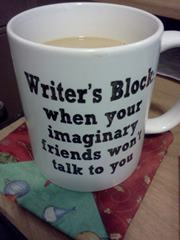
My Coffee Cup © cjjasp 2013I am searching for my character.

Technically, I know his name, and I know what he has to do. I also know why he has to do it. When and where this will all occur is also well-established.

But who is he as a person?

I have several backstories of him as a young boy, but they don’t shed any light on him as a man.

In the Tower of Bones series, he is legendary, a man with a flaming sword who was a superhero. Children’s books are full of the tales of Aelfrid Firesword, a man who lived over a thousand years before the time in which the Tower of Bones series is set.

Alf is a man whose parents survived the chaos of the War of the Gods, and from the ashes of that post-apocalyptic world, he carved the Temple of Aeos and the College of Warcraft and Magic. I know why he has to do that, and what he will sacrifice to accomplish it.

But this story is about him as a young man, and details the incidents that pushed him to the breaking point and forced him to leave his comfortable backwater existence and build a city in the wilderness.

I know who his antagonists are, and what makes them so dangerous.

I know what makes two of Alf’s sidekicks tick. The third sidekick, not so much, but she’s getting there.

I know who will die, why they will die, and why it is important that they die.

I also know who Alf will marry, although he doesn’t know that yet.

I know how this epic fantasy will end.

I know what everyone’s magic gifts are and how the use and abuse of magic threatens them.

So, the story arc is in place, and all I have to do is write to it.

Still, in the opening pages, I can’t quite get a grip on who this protagonist, this mythical man, Aelfrid Firesword. Before the inciting incident, before his comfortable life is forever changed, what does he feel passionate about? What does he want? What makes him get up every morning? Right now he’s just going to work at his forge, pounding on hot metal all day, and then getting drunk at the Dancing Goat. He’s got magic, and he forges weapons that are pretty extraordinary. When he has to, he can fight.

That’s not very heroic. There has to be more to this guy.

So, I need to write some backstory, some side quest that will pry him loose and shed some light on the man in the tin suit. This is back material that will most likely never make it into the novel per se, but it will help flesh him out, make him fully formed in my mind.

So, now that you know what I am doing, I will let you go, while I run off and try to find this guy.

He’s in this manuscript, somewhere.

6 Comments

Filed under writing

#amwriting: the importance of foreshadowing

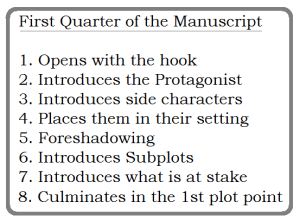
Elements of the Story 1st Quarter of the MSForeshadowing is part of the craft of writing, and is a useful tool a when an author is writing fiction. It is a critical trope when writing fantasy. In the first quarter of the story, you should have a few clues embedded in the narrative, something to subliminally alert the reader, little warnings signs of future events.

The key to good foreshadowing is to not spoil the surprise, yet allow the reader to say in retrospect, “I should have seen that coming.”

We insert small hints, little offhand references to future events, briefly, almost offhandedly mentioned, but almost immediately overlooked or ignored. Some readers will fail to notice the suggested possibility just as the unsuspecting characters do, and others will guess what is going on. In a well-written narrative, both kinds of readers will stick with it as they will want to see how it plays out.

We have many reasons to pursue good foreshadowing skills. They help us to avoid inadvertently employing the clumsy Deus Ex Machina (pronounced: Day-us ex Mah-kee-nah) (God from the Machine) to miraculously resolve an issue. A Deus Ex Machina occurs when, toward the end of the narrative, an author inserts a new event, character, ability, or otherwise resolves a seemingly insoluble problem in a sudden, unexpected way.

Then, there is the opposite ungainly literary device: the Diabolus Ex Machina (Demon from the machine). This is the bad guy’s counterpart to the Deus Ex Machina. In this instance, the author suddenly realizes the evil his character faces isn’t evil enough and wham! We see the sudden introduction of an unexpected new event, character, ability, or object designed to ensure things suddenly get much worse for the protagonists.

We have to avoid cases where a character suddenly gets a new skill or knowledge without explanation. In screenplays and TV shows, when a character suddenly gets a new skill without explanation, it’s usually explained away as a Chekhov’s Skill.

In a book, you need to mention prior examples of the characters using, or having received training in that skill. If you don’t briefly foreshadow it, the character doesn’t have it. If the reader realizes the character never possessed that skill before, it becomes unbelievable.

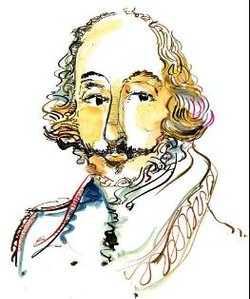
Wm Shakespeare author central portraitHow has literature and the expectations of the reader changed over the centuries? Nowadays, in genre fiction especially, a prologue may or may not be a place for foreshadowing, as modern readers don’t have the patience to wade through large chunks of exposition dumped in the first pages of a novel.

Consider William Shakespeare’s Romeo and Juliet, a play that is heavy with both exposition and foreshadowing. According to Philip Weller, Professor of English at Eastern Washington University, on his site, http://www.shakespeare-navigators.com:

“Technically, the Prologue (of Romeo and Juliet) is not foreshadowing. Foreshadowing hints at what will happen later, but in the Prologue, the Chorus doesn’t hint — he tells. The second quatrain of the Chorus’ sonnet sums up the plot of the play:


From forth the fatal loins of these two foes

A pair of star-cross’d lovers take their life;

Whose misadventured piteous overthrows

Do with their death bury their parents’ strife (Prologue 5-8)


“The next quatrain repeats the same message, and because this message is hammered home early, the later foreshadowings in the play are ominously recognizable.” (end quoted text.)

There is a difference between foreshadowing and telling. How does Shakespeare foreshadow the larger events? Larger events may be foreshadowed through the smaller events that precede them. Again, we will examine Romeo and Juliet. Early in the first act, when Benvolio is trying to talk Romeo out of his infatuation for Rosaline, he tells him,

“Take thou some new infection to thy eye,

And the rank poison of the old will die.”  

As we see later, Benvolio’s advice is correct because as soon as Romeo lays eyes on Juliet, his obsession with Rosaline disappears. More foreshadowing occurs later, in the third act, when Benvolio brings the news that Mercutio is dead. Romeo says,

“This day’s black fate on more days doth depend;  

This but begins the woe, others must end.”

Again, Philip Weller explains,

“It’s as if Romeo is envisioning the death of Mercutio as a dark thunderhead, racing across the sky above him and into the unknown future. Romeo knows he has reached a point of no return; he will fight Tybalt to avenge Mercutio, but he knows that won’t be the end of anything. Then, after he has fought and killed Tybalt, cries out, “O, I am fortune’s fool!” (3.1.136). Here “fool” means “plaything” or “dupe.” Romeo knows he is no longer in control of his fate. (end quoted text.)

William Shakespeare understood the difference between foreshadowing and telling the story, and he made use of both techniques to good advantage.

Modern authors writing genre fiction must be gentler with their foreshadowing than Shakespeare was required to be. Foreshadowing should be woven into the narrative in such a way that the story flows smoothly, allowing the reader to remain immersed, but tantalizing them with hints that will keep them reading.

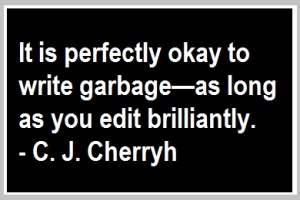
ok to write garbage quote c j cherryhSmoothness is the key word here. I’ve seen manuscripts that seem schizophrenic as if they were “Frankensteined” together. The author begins by telling one story, and somewhere around the middle, we find ourselves reading a completely different novel as if it were two manuscripts inexpertly sewn together and reworked into one. Foreshadowing, if there was any, seemed like a thread to nowhere.

Clumsy foreshadowing, or neglecting to foreshadow are things we do when laying down the first, rough draft, of our story. These flaws are a fundamental part of the creative process and are why we never publish a rough draft. Let it rest for several weeks and work on something else, then come back to it. In the second draft we check for, and iron out, these kinds of issues. During the second draft, if you have used subtle foreshadowing in advance of the events (usually in the first quarter of the story arc, before the first plot-point) the novel really begins to take shape.


Weller, Philip. Romeo and Juliet Navigator.

Shakespeare Navigators, n.d. Web. 20 Sept. 2016.
<http://shakespearenavigators.com/romeo/index.html>

>>><<<

Shakespeare, William. Romeo and Juliet. Ed. Philip Weller.

Hamlet Navigator. Shakespeare Navigators, n.d.
Web. 20 Sept. 2016. <http://shakespearenavigators.com/romeo/index.html>

3 Comments

Filed under writing

#amwriting:  therapy to get you writing through the block

We’ve all had moments where our creativity failed us. We had an idea, but couldn’t make it real—the words wouldn’t come, or when they did they felt stilted, awful. We felt incredibly alone and isolated in this because we are writers; the words are supposed to fall from our fingers like water down Niagara Falls.

I have learned to write my way through the block. Yes, the work I produce at that moment is awful, and no, I wouldn’t show it to the dog. But the act of writing every day keeps you fit and in the habit of writing. This job requires us to practice, as if it were dancing or ice-skating. And, just like any sport, doing well at it requires discipline. When we stop writing for any reason, we lose our momentum and our purpose.

We lose our passion.

When you have come to a place where you believe you can’t write, save the file, close it, and walk away from that manuscript. Delete nothing. You will come back to this later and will be able to use some or all of it, so file it properly.

Sometimes, the problem is that your mind has seen a shiny thing, a different project that wants to be written. If that is the case, my advice is this: work on the project that is on your mind. Let that creative energy flow, and you will eventually be able to become reconnected with the first project.

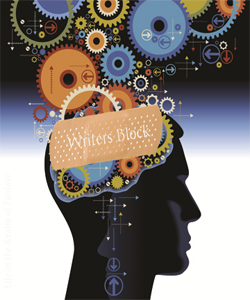
writers-block-smallBut what about those times when you need to write, you have to write, but the words won’t come? I think of it like having a sports injury: Dr. Jasperson has diagnosed you with a sprained-brain. (Did she really write that? Insert groans here.)

Seriously, I have some physical therapy for your bruised writing-muscles.

First, we have the fear factor to overcome. You need to be able to prove to yourself that you can write. This is a small exercise, very short, and I got the idea for this while in a seminar on the craft of writing essays offered by the bestselling author of Blackbird, Jennifer Lauck. As I was sitting in her class and embarking on the writing drills for structuring your essay, I had one of those bolt-of-lightning moments, a tangent to nowhere, as it didn’t pertain to essays, but it seemed important so I wrote it down.

What had happened was, Jennifer gave us prompts and asked us to write to them. I have never been good at writing to someone else’s prompts. My ideas don’t flow that way. To make it worse, we were going to have to share them with someone else in the class.

I never share work that hasn’t been revised. it might not seem as perfect to you as believe it is, but it has been revised and is the best I could offer. I felt panicky, terrified I wouldn’t be able to write, and would embarrass myself. My mind was blank.

But then, I saw what Jennifer’s prompt was, and it occurred to me that I could do that.

When I read the prompt and had that “I can do this” moment, I realized that most of the time, writer’s block is a result of not being able to visualize what you want to write about, and if you can’t visualize it, you can’t describe it. Once you have experienced that moment of complete inability, fear of not being able to write magnifies the problem until it paralyzes us.

So, I am offering you the same writing prompt Jennifer Lauck used as the first exercise in her class:

  1. Open a new document. At the top of this document type: Where I Am Today:

This is going to be a literal interpretation and description of your surroundings. Look around you, and see the place where you are. Briefly describe the environment you are sitting in, what you see, and then describe how you feel sitting in that place. Just give it two or three paragraphs.

For me, sitting here at this moment on a Sunday morning and writing this post, it runs like this:

I sit in the small, third bedroom of my home. It’s technically my office, but is, in reality, a cluttered storeroom, known here as the Room of Shame. A glass of water sits beside my elbow, as does my cell phone. My desk holds numerous books on the craft of writing and my computer.  

Two clear plastic bins containing books and paraphernalia organized to take to book signings are stacked beside the door. I prop my feet on a large bookshelf stuffed with books, so full the shelves have bowed. Stacks of cardboard boxes filled with things that were, at one time, deemed important to keep, surround me. Filing cabinets full of legal papers, tax forms, and research also take up space, all stuffed with the debris of our business life.

The desk is not my friend. The sliding keyboard shelf is broken on the left side, hanging at a slight angle. I work with a broken desk, despite the large box which contains my new desk, which leans against the closet behind me. That dusty box has been there for six months or more, unopened.

I could easily clean this space, and set up my desk. It would take no time at all, perhaps a day at most. It’s a mountain I put off climbing.

See? At the end of this exercise, you have written a drabble, a small short story. But, more importantly, you have written the setting for a scene. Those paragraphs are around 216 words and are nothing special. Nor were the words I wrote in the seminar, but I felt good about writing them because I had been given a task that had at first left me feeling helpless and unable to do it: writing to a prompt. However, in that class, because it was a simple, non-threatening thing, I was able to accomplish it, and I felt empowered.

So, now we are going to gently rebuild our damaged writing muscles.

  1. For your next exercise, go somewhere else and take your notebook. Write three more paragraphs detailing what you are looking at, and how you fit into it, and how it makes you feel.

You could do this at the mall, sitting in a coffee shop, or the parking lot at the supermarket.  Or you can do what I am doing: sit on your porch and write a few paragraphs about the space you are in, what you see, and what you sense.

My back porch is quiet, and the day is gray. Rain is falling softly. Just beyond the auto repair shop’s parking lot, and the coffee stand, glimpsed between the conical cypress trees, the sounds of the highway are muted. One of the neighbors has let their dog out without a leash, and the free-range cats are disturbed by it. The scent of sodden vegetation is fresh and speaks of autumn.

The third exercise is more abstract:

  1. Where do you want to be? Visualize it, and describe it the same way as you described the places you could see. For me, that runs like this:

I want to be on a foggy beach, walking along the high-tide mark. I want to hear the gulls and sh-shing of the waves. I want to feel at peace again.

gear-brain-clip-art-smallIf you do these three exercises at the same time every day, describing the environments and your perceptions in a different space each time, even when you have nothing to say that is worth reading, you are writing. With perseverance, you will be writing your other work again. The important thing is to write even if it is only a few paragraphs. This is the physical therapy I recommend for overcoming writer’s block.

Just like an athlete recovering from an injury, you must gradually rebuild your confidence, strengthen your writing muscles, and regain your writing work ethic.  You need to empower your creativity for it to flow.

As I said, this how my mind works. If you are suffering a dry spell, give these exercises try, as you have nothing to lose. I hope that when these exercises are no longer painful, you will be able to write again.

3 Comments

Filed under writing

#amwriting: Interview with author Stephen Swartz

Today is the final installment in my series of interviews with working authors who are also teaching writing craft. This has been a wonderful series, as each approaches the craft from a different angle, and my final guest has a great deal to offer.

stephen-swartzA little background on today’s guest, author Stephen Swartz. He is a Professor of English at a major Midwestern university, and is a world traveler, often spending his summers teaching in Beijing, China at the University of International Business and Economics. Also, he is the author of numerous short stories and novels, and is a fellow founding author of Myrddin Publishing. He has also published poetry and written for scholarly journals on the subject of composition and identity, linguistics, and psychology.

CJJ: What do you enjoy the most about teaching?  Conversely, what would you change about your job if you were able?

SS: I’m rather parental when it comes to teaching. I like seeing my students become excited about writing and push themselves to explore their potential. I enjoy seeing their writing improve paper by paper, not only technically but also in showing their deeper thought processes. As it is, there are constraints on what I think would be best when it comes to writing instruction. Partly, it is a matter of budgeting, enrollment, and accreditation requirements. It is also a matter of what students are interested in career-wise; many do not think they will need to write in their careers. So I have limitations I must work within. And, of course, each semester brings a new mix of students so I must constantly adapt the lessons to accommodate them; it really is like reinventing the wheel. Writing fiction keeps me balanced.

CJJ: As you know, many authors are writing for children, preteens (middle-grade), and YA. In a comment on this blog recently, you said, “Meanwhile, the style (I think) should match the nature of the story and especially the mindset and education level of the narrator.” Can you expand on that idea a little?

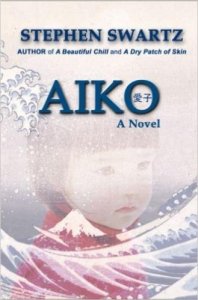
SS: What I think I meant was in reference to the sophistication of the language the narrator of a story uses. That’s the author’s responsibility. If the narrator of a story is well-educated (for example, see my vampire novel A Dry Patch of Skin), he would speak in a well-educated manner, with sophisticated style and a large vocabulary. A less educated character (or a child) would speak differently, using simpler vocabulary and often incorrect sentence constructions. A foreign character speaking English would have similar language limitations; the dialog should show those limitations. However, we cannot let the language be too authentic if doing so would cause the reader difficulty. I once wrote a character who was supposed to speak with a Scottish accent; the result was rather bad. Having just enough (a particular repeating word or phrase) to hint at the accent would have been enough. I’ve been fortunate to have both studied linguistics and foreign languages as well as listened to speakers of varying ages and accents. I lived in Japan for five years and teaching English there taught me how non-native speakers “butcher” the language. I think I captured that effect well in my novel Aiko, set in Japan. Besides formal training, I also think I have a good ear for speech and so I do my best to replicate the character’s way of speaking based on the real speaking I’ve heard.

aikoCJJ: You have published eight books, in a variety of genres, and are now finishing up an epic fantasy novel (of EPIC proportions!). Yet, none of your characters have a sameness to them. How do you visualize your characters when you begin to place them in their story?

SS: Excellent question. My answer must, however, be simple. I’m schizophrenic. My mental defect allows me to grab pieces of other people’s lives, behavior, speech, and motivations which I then craft into plausible, even realistic, fictionalized personas. I recognize I have a few stock-in-trade character I use over and over with names changed and perhaps a quirk switched for a different quirk. I suppose I take one of my stock characters and customize him/her for the role I need him/her to play.

The hardest character to write is the protagonist because that character usually starts as a version of myself. The challenge is to let the hero act as the hero would naturally act (following his/her motivations and typical behavior) and not as I, the real me, would likely act. When I wrote out the story of a friend of mine who grew up in Greenland, I was writing a female protagonist—and using the first-person point of view. That novel was based on her life so I could imitate her way of speaking from interviews with her. The challenge for me in writing that novel was to make her language style change from her childhood to her teenage years to her adulthood.

For my current work-in-progress, the epic fantasy, I returned to a basic male protagonist, a hunky dragonslayer, and cobbled together a bit of a movie star, a little of me, and a pieces of other people I know to create the singular hero.

CJJ: In your upcoming novel, EPIC FANTASY *WITH DRAGONS, you portray a variety of races in a fantasy environment, each with unique cultures. What tips can you give in regard to keeping fantasy cultures diverse, and yet not devolving into too much backstory?

 SS: Not truly different races, not in the sense that Tolkien has them with dwarves and hobbits. I tried to keep the ethnicity in my story more subtle. Given the setting (no spoilers here), there is a wide variety of “types” among the cast members, not just to make a politically correct checklist but because they mix well in interesting ways. One famous author (I think it was Dostoevsky but it may be a more modern writer) liked to think up unique people and ponder how they might interact if put in a room together. I did the same with my epic fantasy only on the larger stage of the story world.

Regarding the world-building, I cheated a bit in this novel by setting it in a familiar setting (again, no spoilers here). Readers may recognize it eventually but it is not explicitly “given away” in the text. Even so, as I traced the path my hero would take on his quest, I marked certain locations on the map as being “different” societies with unusual customs—not different races or ethnicities. Like all good epic fantasy tales based on a quest, there is a series of episodes—self-contained mini-story arcs, strung together, one adventure after another—so the structure is easy to arrange. Following the geographical layout of the setting, what “can happen” to our hero necessarily changes from location to location.

A better example of world-building may be my science-fiction trilogy The Dream Land, which involves a pair of nerdy teens who discover a doorway to another world—which I created as a fully realized planet with continents, oceans, history and culture, and several different races, as well as unique flora and fauna. The world-building was half the fun of writing those novels; pushing my hero and heroine into this new world and watching them figure things out was the other fun part.

I think the key to “keeping fantasy cultures diverse, and yet not devolving into too much backstory” is to remember that, to the characters in the story, it is all known and common (usually) so they should speak and act toward everything there as though it was all common to them. You have to find creative ways of introducing ideas and details without them coming out as a “Let’s go meet Bill, your cousin, who, as you know, is also my long-lost brother” kind of writing. In my current epic fantasy novel, I can get away with some of that “messaging” because my hero is on a quest and does not know about the places he visits, so having a local character explain things is quite natural. People like to talk, so I let these “local yokels” ramble on and the history and customs of the place come out in a more natural way.

CJJ: In all of your novels, there is a certain amount of world building, even the novels set in contemporary environments. What advice can you give regarding making the settings feel real to the reader while keeping the backstory minimal?

SS: Research, if it is a real place. Read other books about the location, fiction or non-fiction. As I wrote A Girl Called Wolf, which is set in Greenland, I also read a very evocative book on the travels of early explorers written by a woman undertaking her own contemporary travels there. Her writing and descriptions painted such vivid pictures for me that I could describe the locations both accurately and passionately.

The most realistic setting I’ve ever used was my own city in the set in the same year I was writing it. I’m referring to my vampire novel, set in Oklahoma City with places named, set in 2014, when I was actually writing it so what happened in real time happened in the book. That was a fun exercise. But then our hero goes to Europe so I went back to researching.

For make-believe worlds, I think it’s simply a matter of transposing what we know of real locations to an imaginary location. For example, in The Dream Land Trilogy, I would think of an Earth animal and reinvent it as something more exotic: the common mount, a horse, became a 3-toed donkey with a dewlap, stripes on half its body, long rabbit ears, and a rat tail. Similarly, I’m more science-focused so even in a fantasy story I remain concerned with such things as the distance of the planet from its sun and the ratio of land to ocean, and so on. Even in my epic fantasy, a genre where magic is required, I have magic operating on scientific principles but it is explained in highly metaphorical language—but it still looks like magic!

CJJ: Thank you for indulging my curiosity, Stephen. I love talking craft with you around the virtual water cooler at Myrddin, and enjoy your blog, The DeConstruction of the of the Sekuatean Empire.

>>><<<

You can find Stephen Swartz at any of these places:

Stephen Swartz Amazon Author Page

Website: The DeConstruction of the Sekuatean Empire

Stephen Swartz  Myrddin Publishing page

Twitter: @StephenSwartz1

Stephen Swartz’s FB Author Page

2 Comments

Filed under writing

#amwriting: Interview with Scott Driscoll

As part of my lead up to #NaNoWriMo2016 and November’s month of literary madness, I am continuing my series of guest interviews. Today, we are speaking with the always intriguing Scott Driscoll.

Scott is an award-winning writing instructor at UW Continuing and Professional Education, is a well-known journalist and editor, and is the author of Better You Go Home, a literary novel which takes the reader to Prague shortly after the Velvet Revolution. (My review can be read here.)

I have attended several seminars offered by Scott through PNWA, and have always come away feeling inspired.

CJJ: What books influenced you most as young reader?

SD: Like most children, I liked any story that fueled my imagination, such as Aesop’s Fables, Grimm Fairy Tales, and the like. Somewhere in middle school I discovered a preference for realism and actually read, and was fascinated by, Moby Dick. I distinctly remember going to class and sniffing the palms of my hands, convinced I’d somehow got ambergris, which never really washes off, on my hands. Steinbeck’s Of Mice and Men also impressed me greatly at that age. I found American social realism (aka naturalism), such as anything by Drieser, dreary beyond belief.

CJJ: How did these books influence your early writing?

SD: The dreary books I was forced to read in adolescence and as a young teen led me to conclude that you had to be pedantic and stuffy to be a writer and that turned me off to writing fiction altogether. The exceptions would be Huck Finn and Tom Sawyer and E. A. Poe stories. Those were exciting. What I didn’t realize until later is that I was looking for a voice that spoke to me. I really didn’t hear that voice until I encountered French existential novelists like Camus and Jean Genet (especially in The Thief’s Journal, a fictionalized memoir). Compared with potted stories like de Maupassant’s, these took me into what felt like a word wilderness, where you could easily get off trail and run into danger and I loved that feeling. I also discovered and loved Dostoevsky and Kafka. There was a darkness and urgency and psychological depth in that writing that I could not find in American authors, until, in college, I discovered the novels of Norman Mailer and Edward Abbey and now I had a voice that was raw and stories that were more about the psychological life of the characters and less about managing a plot. Not that I had anything against plot. It was the raw power of the words I needed to fall in love with first.

CJJ: You have said elsewhere that “Writing for me is about applying form to the mysteries we suffer.” Can you expand a little on this idea?

SD: I borrowed that phrase from Wright Morris. On my blog site I wrote about the first time, as an adult, I tried to write fiction. I was 21 years old, taking a break from college, living in Darwin, Australia and working warehouse and restaurant jobs to save money so I could travel on. With time on my hands, and a depressing lack of anything better to do, I essentially locked myself in my boarding house room, sat under the paddle fan, and spent several hours writing nothing. What I lacked, I realized, was not the ability to write, but knowledge of form. Without an understanding of story structure, I would churn out a stream of words that was nothing more than a verbal outpouring of my inner angst, the kind of sophomoric, I realized that day, drivel that excites only high school English teachers, who are grateful for any grammatical verbal pyrotechnics. Without an understanding of form, I could not begin to solve the mysteries I knew were locked up inside me.

CJJ: You have also said “Any story that involves a quest – and that is most stories – starts with a disturbing event known to writers and film-makers as the “inciting incident.” What is the most important thing for an author to consider when creating this event?

SD: It took me a long time to accept that any story with any kind of plot must start with a disturbance. But once you accept that, what does it really mean? A disturbance, as in, someone gets mugged, a bank gets robbed, aliens land, a shark throws a vacation resort town into chaos? If it’s just event for event’s sake, anything is possible and nothing is particularly meaningful. Rather, an inciting incident must disturb a balance that pertains in the hero’s world, and must do so by working against a deeply held value, so that the hero, we can be sure, will not shrug it off as simply bad news but rather will be forced to react in a way that will further endanger the balance in that familiar world.
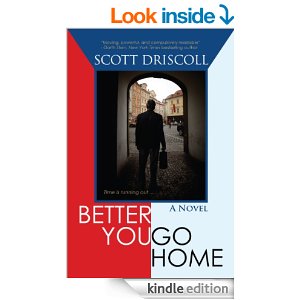
Better You Go Home Scott DriscollCJJ: When did you first have the idea to write “Better You Go Home,” and how long did it take to complete it?

SD: In 1994, three and a half years after the Velvet Revolution, I went to the Czech Republic to track down family that my Czech relatives in Iowa had stopped communicating with. I found the village, the farmhouse, met some people, but had been too cheap to hire a translator and didn’t get beyond discovering that there was some unspeakable mystery, some “inciting incident,” that had created a rift in the family. In 1999, armed with better information sent to me by a cousin who’d followed my lead to that village, and armed this time with a translator, my father and I went back to this village and heard stories, and reviewed records, and I learned enough that I felt I could write a novel with this family mystery at its heart. At the time I had quit writing fiction (needing to make money) and started instead writing for magazines, and between that and teaching and being divorced and raising a child, I really didn’t have time to write a novel (but stayed up late virtually every night reading everything I could get my hands on related to the topic). A couple years later, needing to get back to fiction, I started in pretending I was writing chapters, but really just produced fluff based on my research. From the time I began writing chapters that could stick, and publication, ten years went by.  I had told my wife—we married just before the time I got serious with this novel—I’d have it done in two years. Our son likes to remind me that he was ten when it was published. I remind him that I was busy. But, really, honestly, it took so long because my early understanding of the story lacked the form that would allow me to finally tell the story. Much of my groping in the early years could have been circumvented had I discovered that form early in the process.

CJJ: Once a new work is in progress, what are the main hurdles you have to overcome in laying down the first draft?

SD: That depends. If it’s a short story, I will usually allow myself to have a crude idea based on a situation that sets forth from a known inciting incident with a disturbed character but without a known outcome, just set forth and go, knowing the real story will emerge in the re-writes anyway. With a novel, it’s worth doing more planning.  Once you have your premise, the first hurdle you have to overcome is finding a basic story structure that will naturally lead to a surprising but inevitable outcome. Then you work on your characters, that is, you start with characters in mind, but now you have to imagine how the events required by the story structure you have imagined will be causally connected to the characters’ needs and wants and fears and expressed and hidden desires. Without causal connections you just have meaningless events. Once causal connections are asserted, you encounter another hurdle. The characters begin to morph according the logical requirements of the causal connections you have asserted. Without a strong sense of the story structure, things can quickly morph into an ugly, hydra-headed monster, ie, chapters screaming to be thrown away.

CJJ: What are you working on now?

SD:  Two things. First, a collection of connected stories that show a young couple starting off careers and family and that show how that trajectory unfolds over the years. For my raw material, I am using stories published years ago, but that I felt never broke through to their bigger potential. Will I achieve that now? Let’s just say, I know a whole lot more about writing now than I did then. I only hope that I can recapture the immediacy that can easily get lost behind a command of technique. My second project, still in the planning stages, is a sci-fi time travel novel. This will be my first attempt at a popular fiction genre. I was put up to it by an editor friend. My wife was intrigued by the idea of me writing a novel that had the potential to make some money. Having handed over an 18,000 word treatise, that covers my idea for the story nearly chapter by chapter, I am now excited to get to work.

CJJ: What books can you recommend for new writers who are just beginning to learn the craft?

SD: The best book on craft, generally, is Writing Fiction by Janet Burroway, now in its ninth edition. That said, Story by Robert McKee, though written for screenplay writers, contains the best craft talks, with illustrations from films, on plot and character and scene that I have ever come across. I would definitely start with those two, then add Scene & Structure by Jack Bickham, as an enhancement to what McKee has to say. Then, they should all get their hands on What If, the third edition, edited by Anne Bernays and Pamela Painter. (Do not let Amazon trick you into buying the inadequate first edition.) This book is full of mini-lessons and exercises for writers who know about craft but need practice.

CJJ: Where can people find your classes and seminars this fall?

SD: In fall 2016, starting the first week of October, I am teaching one section of Literary Fiction I, the introductory course, and one section of Advanced Fiction Writing, a course intended for writers of both literary and popular fiction who’ve had experience with taking writing classes or who have extensive writing experience. Both classes are offered through the University of Washington in the Professional and Continuing Education department. If interested, folks should go to www.keeplearning.uw.edu and look for these courses, or, if they have questions, seek more details at www.pce.uw.edu. They can also email me at sdriscol@uw.edu. I also teach a summer workshop class and that is posted on my blog site. http://www.scottdriscollblogs.wordpress.com.

  • In the meantime, I am a guest editor reviewing manuscripts at the fall 2016 Write On The Sound conference and will be at the Edmonds, WA site on Saturday Oct 1 and Sunday Oct 2. On Nov. 10, I will be a guest workshop leader at the November meeting of the Skagit Valley Writer’s League, held in Mt. Vernon, WA. Those interested can peruse their web site for more information. In May, 2017, I will be a workshop leader, lecturer etc. at the Write On The River conference held in Wenatchee, WA


Scott, thank you so much, for being a part of this little series on the craft of writing. As always, you are a joy to talk to!
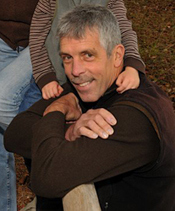

scott-driscoll1 Scott Driscoll can be found 


2 Comments

Filed under writing

#amwriting: Interview with Terry Persun, poet and author

Today we are continuing a series of interviews with published authors who are also instructors. They write in a variety of fields, and each approaches the craft from a slightly different point of view. Because they come from such varied backgrounds, I have gained a great deal of knowledge of writing craft from attending their seminars.

As it’s Friday and I often post poetry and flash fiction on Fridays, we are talking with Terry Persun, a poet and novelist who resides in the Northwest.

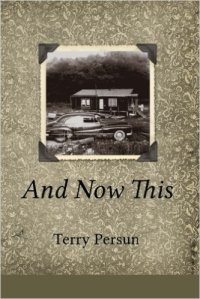
51eyfcn4pzl-_sx331_bo1204203200_CJJ: You write in three areas, poetry, nonfiction, and fiction. Your fiction work ranges through three sub-genres, Sci-fi/fantasy, mystery/thriller, and mainstream/historical. As are many poets, you’re well-known for questioning the political, spiritual, and cultural status quo.

How does your poetic bent shape your non-fiction and genre novel work?

TP: What an amazing question. I often think about how my poetry helps to shape my novels, but seldom my nonfiction. So let’s start with novels: much of the best poetry is about image, and the same goes for the novel. An image (showing not telling) can create an emotion that will stick with the reader. Poetry allows me to practice that. Even when you’re discussing cultural elements, an image is more important than abstract words like horrific or painful. A poet must know how to show those abstractions. Think about the last time you saw an image of a child in a war zone, it’s much more impactful than being told that there were several women and children killed in the attack. Even which image is important—movie directors know which angle to take. As for nonfiction: I think pacing and word choice stand out the most. In a poem, I can create a line break or a stanza break, similarly with nonfiction I might create a new paragraph or move the article from prose to bulleted copy. Again, an image might be best in nonfiction as well. For example, instead of saying, “Make sure your enclosure is leak proof.” I said, “Using the proper sealing approach will eliminate the concern of having grease oozing out of your enclosure.” Seeing the grease oozing out of something is much more impactual than telling someone to provide better sealing. There are probably many more things that poetry brings to my writing that I may not be completely aware of.

CJJ: You have published five poetry collections. I own one of them, And Now This. These poems resonated with me, as my father was also a WWII vet. These poems deal with the effects of your father’s wartime experiences on your family during the 1960s. Battle related PTSD is also a theme in my forthcoming novel. Reading your poetry made me feel less alone in that experience, and helped me develop my protagonist in the initial stages.

You seem to have an instinctive gift for meter in your free verse. One of my favorite opening passages of all time is from one of the poems in this collection, from the opening poem,

First Memory

I’m standing in the corner,

Crying.

My hands are not my own,

They’re trembling.

This passage drops the reader straight into your young reality, unapologetically showing the life you had then.  Because they are free verse, the lines don’t rhyme, yet they are poetic and speak to me on a level that the prose in a novel rarely does. I also love the opening passage from another poem in this collection, In the Story of My Father.

What advice would give budding poets in regard to meter and phrasing their free verse?

TP: Language has its own music. Even prose has music to it. It’s my assertion that the best prose can often be broken into poems. In classes I sometimes will take a Hemingway paragraph and create a poem from it. Having said that, the number of beats, the number of syllables, where you place commas or choose to create a complex sentence, all have an effect on the final work. What I advise new poets is to first of all read a lot of poetry—especially the kind you’re trying to write. Notice how much of a breath you need to take, where natural and unnatural breaks might occur (use both), and where can you end a line that leads a reader in a false direction. Poetry infused prose can only make it better.

Doublesight--Terry PersunCJJ: One of my favorite fantasy novels is Doublesight, in which you created a world populated by shapeshifters. Zimp is a wonderful character, and I like how you portrayed her growing into her responsibilities.

You have opened your Doublesight world to fans to create fanfiction in, via Kindle Worlds.

How has the work offered by others in your world affected your view of Zimp’s world, and has it changed your direction in anyway?

TP: That’s a tough question to answer, because anything written in that world changes the way I see it. Once it’s opened to other interpretations, each character becomes deeper and more mysterious. I start to see the character differently and wonder more about him or her. It also lets me see how others view the story, the time period, the characters. I become more interested in the world as others work in it. My hope is that it’s fun and expansive for the authors as well, offering them another viewpoint to explore, another idea to examine. Plus, every Doublesight story uploaded into Kindle Worlds helps to market all the other books in the world. This cross-marketing will eventually help each author gain a new audience for their own books.

CJJ: Your video course is quite extensive, and I’d like you tell the readers what the course entails, and how they can take it.

TP: I believe you’re talking about the “Make Money Writing” course. You can access it through my website or through Youtube. I have taught that class quite a bit and is often standing room only. I’ve been freelancing for 20 years and working with freelancers on the magazine side for another 20 prior to that. I know how magazine editors think, what they need, and how to reach them. I also know how to help a writer find their way into freelancing. In the course, I run through how to decide what to write, the parts of the magazine, the editorial calendar, how to touch base with editors, and the main types of articles they need for their publications. I’ve consulted with several major magazine groups about their editorial packages, as well as how to move copy through their company so that they don’t waist time and end up with the best possible pieces to publish.

CJJ: I’ve attended several of your seminars at the annual PNWA conference and enjoyed them immensely. You’re based in the Pacific Northwest and have taught many classes all over the region. Will you be offering any seminars over the next year?

TP: I will be at the PNWA Cottage in September teaching a course on working with Amazon’s 12+ platforms for writers (go to PNWA.org for the list of classes), then at Rivers of Ink in October where I’ll be one of their Keynote speakers and also teach a class called Use Your Writing as Marketing. In November, I’ll be in Kauai for their annual Writers’ Conference where I’m teaching Self and Independent Publishing, and will be working one-on-one with attendees interested in a variety of methods of publication. I was involved in three other groups/conferences earlier this year. I am always willing to come up with a program if there is enough interest. Just let me know.


Terry, thank you so much for your insights and advice, both here and at the annual PNWA conference.

I highly recommend Terry’s works. His poetry is deep and thought provoking, and his novels are fun and fantastic.  His books can be found on Amazon at:

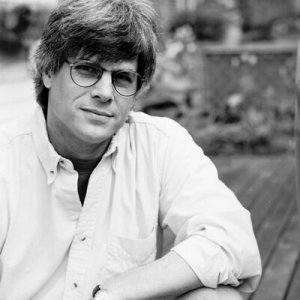
tpersun_the_mug_shot_pic_b-w_400x400Terry Persun on Amazon Author Central

For any of you who are interested in attending his seminars, or looking into his video course, you can find him at any of these places.

Facebook page:

https://www.facebook.com/TerryPersun

Website:

http://www.terrypersun.com

Twitter: @TPersun

Pinterest:

https://www.pinterest.com/terrypersun/ 

Goodreads:

https://www.goodreads.com/author/show/1219743.Terry_Persun

LinkedIn:

https://www.linkedin.com/profile/view?id=AAIAAAAwxc8B6UnSc6LNvK9rhZHPutf5VEgswes&trk=nav_responsive_tab_profile_pic


On  Monday, Scott Driscoll has agreed to join us here.

Comments Off on #amwriting: Interview with Terry Persun, poet and author

Filed under #FlashFictionFriday, Fantasy, Poetry, writing

#amwriting: Interview with Lindsay Schopfer, author of The Beast Hunter

Today is the kick-off post for a series of four interviews, featuring writers who are not only working in the craft, they are teaching it. As part of my lead up to NaNoWRiMo, the next four posts will feature a different guest instructor who has kindly agreed to talk about the craft of writing.

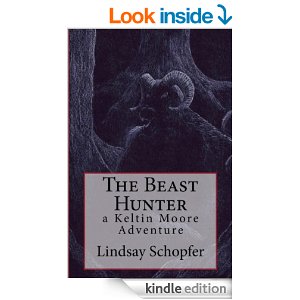
The Beast Hunter, Lindsay SchopferI’m welcoming Northwest author, Lindsay Schopfer to the blog today.  As a long-time fan of his books, and especially The Beast Hunter,  I was curious about how he approaches his work.

CJJ: Are you an outliner or do you write as you think it?

LS: I like to think of myself as an organic writer, as I let the story grow naturally as I write. That’s the way that my mentor, Steve Charak, taught me. His mantra was “just get it down” and it’s served me well. Of course, it often means that I end up having to do extra revisions to make everything tie together in the end, but to be honest I actually prefer editing to first-draft writing, so it really works out for me.

CJJ: How many drafts did The Beast Hunter go through before you had it ready to publish?

LS: The Beast Hunter was something of a special case since it began life as an online serial. Each episode went through three or four drafts before being posted, and then the entire piece had to be reworked at least three times before I was satisfied with the novelization.

CJJ: A critical aspect of every story is the story arc. How has your experience in writing for the stage and developing screenplays shaped your approach to writing fiction for readers as opposed to viewers?

LS: You can get away with a lot of things in a script that you can’t do in a novel or short story. For example, all the setting description in a script is purely functional, it isn’t meant for the audience and will never be seen by anyone but the actors and crew. Also, interior description is almost totally missing in a script, unless you’re writing something with a lot of monologues and soliloquies. Because of this, I’ve noticed that I tend to write stories that focus more heavily on action and dialogue rather than elaborate set pieces or internal struggles.

CJJ: You have designed several role-play games. When you visualize an event and set it in a scene, do you see it through the character’s eyes, or through yours as GM/narrator?

LS: I’m still pretty new to the creative side of gaming. My primary experience in designing role-playing games has been developing a set of rules for a game that takes place in the world of The Beast Hunter. Currently, these games are hosted by myself and are exclusively for active members of my street team. When it comes to the storyline, I usually don’t have any specific scenes in mind for each gaming session. I’ll come up with a few instigating events, and then let the players chose where to take the story from there. It’s a lot of fun to share in the creative process in such a spontaneous way, and everyone seems to have a great time. Interestingly, I’ve noticed that some players will actually put themselves into more difficult situations rather than do the simpler thing, and I sometimes wonder if it’s their inner storyteller that wants to introduce conflict to the story, rather than simply “winning the game”.

CJJ: You are a musician. Does poetry come into your work? How does music shape your writing?

LS: You’re making me sound like quite the Renaissance Man! To tell the truth, I don’t think my music affects my writing very much. I recently started playing lead guitar in a band, but we’re just playing for ourselves right now. While I’ve dabbled with lyrics in the past, I prefer letting my guitar do most of the talking. I will say that I have some selective tastes when it comes to the music that I listen to when I write, but I haven’t seen much crossover between my musical and creative writing endeavors.

CJJ: You have a series of classes coming up in the South Puget Sound area.  Can you tell us a little about them?

LS: I’ve been wanting to do more with indie bookstores in my hometown for a while now. Through a happy coincidence I happened to connect with the owner of Browsers Books in downtown Olympia, and we’re currently looking into doing some kind of regular writing class in the store’s upper room. On September 15 we’ll be hosting a free workshop called “Making the Most of Your Writing Time to gauge local interest. My hope is to eventually have a regular class featuring a combination of my most popular workshops, peer critiques, and free-writing time.

CJJ: How can people connect with you as a writing coach and also with your online writing course?

LS: While I’d love to do an in-person writing class, I realize that most people who are interested won’t be able to come to it. As a result, I’m developing an online variant that works via Google Hangouts and Google Docs. I’m still working out the details on this, so if you have any ideas of what you’d like to see in an online writing course, feel free to let me know.

>>><<<

Lindsay, thank you so much for your candid answers. I hope My local area authors will seek out your classes, as I have found you to be an instructor with a sense of humor.

Lindsay SchopferLindsay Schopfer can be found:

Lindsay Schopfer’s Author Central page at Amazon

Lindsay’s Website

Lindsay Schopfer on Facebook

Lindsay’s Blog

Follow Lindsay on Twitter: @LindsaySchopfer


Next up we will have an interview with Northwest poet and author, Terry Persun, who has agreed to talk poetry and prose!

2 Comments

Filed under writing

#amgrateful: Celebrate those who labor in the service industry

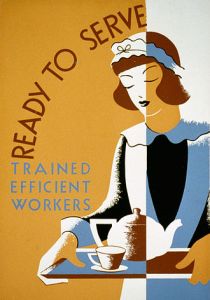
Stylized drawing of a maid on a Works Progress Administration poster via Wikipedia

Stylized drawing of a maid on a Works Progress Administration poster via Wikipedia

Today is Labor Day in the US. This is the day we honor those whose labor keeps this country running. Over the course of my life, I have worked in a wide variety of jobs.

Child care was always an issue. Sometimes I had subsidized child care, which was the only reason I could work. Later, my kids were latch-key kids, the older ones taking care of the younger. My uncle also cared for my youngest daughter until she was about 10.  Because I had that child care subsidy when my youngest was not yet of school age, I was able to live without government food stamps, and was able to support my family relatively well.

1970s-80s –

  • automobile detailer
  • a field hand for a (now defunct) multi-national Christmas tree company
  • photo lab tech
  • waitress in a bakery and a deli worker

During the late 70s and early 80s I worked for the J. Hofert Company (Christmas trees) and absolutely loved the work. It was outdoors,  and only paid $3.25 an hour, and it was seasonal, but I was able to work a lot of overtime during certain seasons, as field hands were as hard to get then as they are now.

1980s-90s –

  • a hotel maid
  • a photographer’s assistant and darkroom technician
  • a bookkeeper, and an office manager

Sometimes, especially during the Reagan years and up to 1996, wages were low and jobs were scarce.  I held two, and sometimes three, part-time jobs just to keep the roof over my children’s heads and food on their table. Trickle down economics never quite trickled down to my town. I was divorced in 1997, and oddly enough, things became much easier, and I was able to get by with only one job, even while raising my last teenager.

2000-13 –

  • a bookkeeper, tax preparer, data entry.

In 2014 I began writing full time, and have no regrets.

None of the jobs I held were glamorous, but I worked with great people, many of whom are still my close friends. My favorite job was as a hotel maid at a large hotel in Olympia–the work was hard, but I enjoyed it for 12 years. For most of the 1980-90s, it was my weekend job that I kept along with my bookkeeping job because the hotel was a union shop.

I worked every weekend and every holiday and yes it was not easy, but it was what it was. My kids were good and supportive and knew I was doing my best.

In 1993 things were easier. As a bookkeeper/office manager, I had earned $7.50 an hour (two dollars over minimum at the time) and worked less than 30 hours a week with no benefits whatsoever. I drove for an hour each way, morning and afternoon, for that job. As a hotel housekeeper in a union shop, I made $8.50 (three dollars over minimum) and worked about 20 hours a week, giving me enough from the two jobs to live on and provide for my children. I was still legally married to my third husband, but he was seldom in the picture. The marriage was a shield that protected me from having to date the men my friends kept trying to set me up with. (See? Everyone has a story out of a soap opera, right?)

For all the years I was married to my 3rd husband (13 long years) no matter what other job I had, I kept my weekend job at the hotel. I kept it because I always had that to fall back on, and I could work full time whenever the other jobs went away.

At the time I worked there, my hotel was affiliated with S.E.I.U. Because of the union, we who did the dirty work earned a little more than maids, housemen, and laundresses at other hotels. We also had a few benefits, such as paid sick leave, up to two weeks a year paid vacations, good health insurance, and a 401k, to which our employer matched our contributions.

We were maids, the lowest of the low. No one is lower or of less social value than the person who cleans up after other people. We would have had nothing more than minimum wage without the union.

Not every union is good, and not every union is reasonable. But while I don’t agree with everything every union does and stands for, I do feel gratitude that my family and I were protected by a good, reasonable organization during those years that were such a struggle for me. Every worker deserves that his/her employer treats them with respect and a fair wage in return for their labor.

I write books now, and the world is a different place in many ways. Even so, someone must do the dirty jobs, the work that no one else wants. I have nothing but respect for those who work long hard hours in all areas of the service industry, struggling to support their families.

Look around you, and see the people who make your life easier, by being there every day doing their job.

Every one of them is a person just like you, a living, caring human being with hopes, ambitions, triumphs and tragedies. Every one of them has a story and a reason to be where they are, doing the task they have been given.

Say a little thank you to all those who take your unintentional abuse when you are stressed out and “don’t have time to wait,” or are upset by things you have no control over and need to vent at someone who can’t or won’t fight back.

Give a little thanks to those who do the dirty work and enable you to live a little easier.


Parts of this post were previously published in Sept of 2015.

2 Comments

Filed under writing

#flashfictionfriday: Ode (to Writer’s Block)

Quill_pen smallOnce again, I am embarking on a new project, and struggling with getting the idea down on paper. Therefore, it’s time for me to face the demon that haunts all writers–that moment when you have the brilliant idea, and know what you have to say, but can’t find the words. I will defeat this demon by embracing it into submission, as I do all who oppose me. (Did I just say that? Oh, well. It’s out there now.) I will write, no matter how hokey and lame my prose is, because revisions are my friends, and I am not afraid to write garbage. I just need to get these ideas down and on paper before I forget them.

Several years ago, while suffering in similar circumstances over Valley of Sorrows, I wrote this woefully over-the-top, somewhat lame, free-verse ode to that sad condition, and I published it here on this blog then.

Ode  

What beauty is this, that lies sleeping near my heart?

‘Tis word—and word should tumble from my pen,

Not lie locked within the chamber dark and inky.

Where hides the key to free thee from thy prison?

Oh, lovely word, spring forth from the trap that is my mind,

Set thee down upon this paper, word.

Let me hold thee, and from thee let me form the dreams,

The hopes and fantasies that fill my eyes and blind me to all but thee,

Oh word! Fill my paper with thy bounteous delight,

As you fill my head with longing, and my wastebasket with scrap.


Ode © Connie J. Jasperson 2016

7 Comments

Filed under #FlashFictionFriday, Literature, writing