Category Archives: writing

Guest Post: Five or six things I’ve learned by Stephen Swartz #amwriting

My dear friend, author Stephen Swartz, has kindly agreed to share some of his wisdom with us. Stephen is a fellow co-founder of Myrddin Publishing Group and is the author of eighteen novels. He writes in whatever genre suits his mood, and his work is always original and bold. So, without further yak-yak on my part, here is Stephen.

>>><<<

I’ve been asked to write about five or six things I’ve learned about being a so-called Indie author. Probably it will be closer to five than six, but no more than seven, unless I get inspired. Inspiration is the hardest part, however. That’s one thing.

guest_post_LIRF09052023How to get inspiration? That translates to getting a story idea. I used to think up nifty situations and wondered how an average person would deal with it. That’s the good ol’ what-if set-up you find mostly used in sci-fi stories. The problem with focusing on the cool idea is that usually the characters who have to deal with it become rather cardboard. That’s fine when you’re a young writer or producing a first draft. Slap it down and keep going. You can come back later to beef up the character, add description details, and so on. Whatever the idea is, get it out of your head at any cost.

I think a lot of new writers get hung up trying to write perfectly from the start. That will eat you alive, so stop doing that. Write whatever, as dumb or meaningless as it may come out of you. It won’t be the final version. You can fix it up later. I was already doing that when I came upon a quote (attributed to poet William Stafford), that goes a little bit like this: “When the writing gets hard, I lower my standards.” So I have a file of unfinished stories I dabble with whenever I need to work the gears a bit before I get to my serious writing – or when I hit a wall and need to pause before continuing the serious writing.

fluSeasonBookOfMomWhat is serious writing? Even if it’s comedy, it’s the writing you take seriously. What you want readers to admire, no matter the genre. That is all well and good, but you will find that what you think is good isn’t always what readers think is good. Got nothing to do with what you’re writing or how well you write it, it’s just the way it is. So don’t take yourself too seriously; you can take your writing seriously, of course. The idea is that the writing will get better for readers each time you go through a manuscript and revise and edit it. How many times you go through it is your decision. It helps to get someone else’s eyes on it at some point, especially if you are new at writing. You can look at a map but until you get to your destination you can’t be sure that map is accurate and you’re going the right way. Sounds like another thing I learned.

Characters are the bane of my existence, so I put them through Hell and only some come back. Can’t be afraid to bust some noses. We aren’t all Mary Sue and her pretty dolls to whom nothing even remotely bad ever happens. Real people are flawed, make mistakes, say stupid things, miss a lot, sin like there’s no tomorrow, take wrong turns, and get lost. They fret and regret and get down on themselves. You have to show all of that through description (body language, including nods and sighs) and dialog that matches the character. If writing in such a way that you can pop into the character’s head, you can slip in some thoughts and feelings and backstory to add richness to the character’s presence in the story. Every scene is an opportunity to broaden a character into a full-fledged person you’d want to sit down and have a cup of coffee with…right up until you kill ’em off. That’s the one big thing I learned in my long-ago MFA program in Creative Writing: interesting characters will draw your readers in better than a cool idea or weird setting.
fluSeason2I started reading a long time ago. Started writing soon after, making up my own stories which I thought were better than the ones I read. I borrowed here and there – and in later writing had to tone it down so as not to sound like the sources I borrowed from (sci-fi authors, mostly). You develop your own style eventually if you write enough. So write a lot; you don’t have to show it to anyone. I like to try writing in different styles, too. I like trying to have characters speak in different ways, some slang, vernacular, accents, different levels of education, just for my own amusement – which is cruel, I’ll admit. But trying different things is good for a writer. Read different styles, too, and try to imitate them. Read the juicy parts aloud, let them get stuck in your head. Consider what is special about the style the author uses. Compare and contrast with other authors you read, and with your own writing. Most of all, read a lot in different genre and different writing styles. How much you absorb from that differs for everyone, but try it.

You may hear about story arcs and how to outline a story (or novel) and think you have to do that, too. You don’t. Well, awrighty, if you read a lot then you don’t. You’ll pick up a sense of pacing from reading a lot, and you’ll know when to let things happen. It’s not a perfect system but, if you got it in you (i.e., a plot ‘clock’ ticking away, urging you to pull that trigger already) it’ll work. I seldom outline more than scribbling a few notes about what happens next. I do get to the middle and have to pause and look ahead to see how to get to the end, but that’s the fun part of writing. I know how the final scene will be usually by the time I’ve written a fifth of the way into the novel (about 20,000 words). I think I’ve changed what happens at the end only twice in 18 novels.

If it helps, think of a movie, the kind we find these days: the action hook, the backstory & character development, then we get on with the story, reach the mid-point, more action, crisis after crisis…. Well, you get to know what to expect every few moments. That’s not interesting. So shake it up. Sure, keep enough that it looks like it’s supposed to for the audience’s sake, but do some things differently for variety. Same with a book: keep enough of the genre features so that readers know what genre it is (maybe!) but change or add some things that keep the reader guessing. I like to mash-up my novels: two or more genre together. First of all, it’s simply more interesting for me to write. Second, I like for readers to get something unexpected (or so I’ve been told I tend to believe!). Like a crime thriller (my novel EXCHANGE) with that age-gap romance in the later chapters that turns creepy by the end. Didn’t see that coming, did you?

fluSeason3Finally you have a complete story (or novel) from beginning to end and the plot is satisfying, characters compelling, dialog crisp, and so on. What next? Read and revise at least three times, but put it away at least a few days between each reading (a month is optimal; go get some coffee). Yes, I know you’re eager to get into it again but make yourself wait. Go to your slush file and work on that erotica. Now back to your masterpiece. Try to read it as a reader who’s never seen it before: what would the average reader think and feel in this scene or on that page? You’re no longer thinking of how to write the story so now you focus on how someone you don’t know might understand it. (Sure, go ahead and correct those pesky mistypes as you find them. No rule saying you have to do that in a separate pass.) I like to look at scenes in isolation: every scene should do something, even if it is “only” showing a character’s personality. I read dialog aloud (or, recently, have my computer read it to me); I catch a lot of mistakes and sloppy or weak sentences that way. Run spellchecker until it’s about to fall off the rails but understand it is not actually reading and still will miss errors. You must read your manuscript with your own eyes and ears more than twice. Look for pet-peeve errors (e.g., I type ‘form’ a lot when I mean ‘from’; obviously the spellchecker will not catch it because ‘form’ is correctly spelled, just the wrong word). I run a search for them. Most importantly, never ever hit “replace all”!

I’ve lost count on the number of advice things. Maybe this is enough to get you started. Some is common sense, of course, some you’ve likely heard before. Much is just my personal routine which may or may not work for other writers. I know myself, my foibles and tendencies, so I can more or less keep them in check or know what to look for when editing. Know thy self is another advice thing.

Lastly, I think the two biggest flaws in the writing of “new authors” I have read are: 1) a dull story, and 2) a flat cast. In the MFA program I suffered through (that’s a separate blog post) the professor once told me, when a story I’d written wasn’t working: “Get a better idea.” Yes, there are some ideas that just don’t make good stories – or, in the alternative, you or I just can’t pull it off satisfactorily. Even with a good idea, a cast of characters that are like cardboard won’t keep a reader reading. Yes, it’s true, no matter how long I insisted. A good idea is only as good as the crafting of the story, that is, the writing itself. More than writing correctly, it should have a flavor, a style, a particular way of letting the words flow – and that is up to the author, perhaps with some help from the narrator.

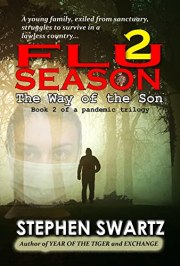
In my most recent novels, FLU SEASON*, a trilogy focused on the hardships of a family trying to survive a 9-year pandemic and the lawlessness that follows, an autistic teen son narrates the first two books while his daughter narrates the third book. Each has a unique way of speaking which I let out freely, including poor grammar and Southern vernacular. It builds the personality of the character and adds flavor to the setting. They absolutely cannot, should not, speak with perfect grammar. As I work on a sequel to the trilogy, I have a character who has more education so he speaks with more correctness than those before him.

Now I’ve gone past my nap time. Add up the advice and it probably comes down to do your own thing, keep doing it, share as much as you are comfortable doing, and read a lot for ideas.


*FLU SEASON, a pandemic trilogy:

Book 1: The pandemic of 2020-22 has ended, but what if its worst days extended into 6 years? Follow autistic teen Sandy and his single Mom (& her tuba) as they flee a city in collapse for the hope of sanctuary with relatives, a plan which doesn’t succeed. (Nov. 2022)

Book 2: Sanctuary from a pandemic is only good if you can stay there. When Sandy and his young family are exiled from the island, he struggles to find a way to save them while they face the worsening situation. Without Mom to guide him, Sandy must take on all the responsibilities for survival in the lawless outerlands. (May 2023)

Book 3: There is no safe space – except maybe hiding away in the forest of a national park. But when others have the same idea, Sandy’s family faces a variety of opportunities and challenges. As the post-pandemic world recovers, it is his daughter who must carry the family forward, no matter the difficulties she and her sisters must face. (Sept. 2023)

You can read more about this trilogy here:
http://stephenswartz.blogspot.com/2023/08/flu-season-3-dawn-of-daughters.html

and here (with more about writing process):

http://stephenswartz.blogspot.com/2023/05/the-flu-season-trilogy-doing-what-i-do.html

About the Author
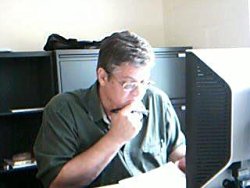
stephen-swartzStephen Swartz is the author of literary fiction, science fiction, fantasy, romance, and contemporary horror novels. While growing up in Kansas City, he dreamed of traveling the world. His novels feature exotic locations, foreign characters, and smatterings of other languages–strangers in strange lands. You get the idea: life imitating art.

After studying music and even composing a symphony, Stephen planned to be a music teacher before turning to fiction writing, and taught writing at a university in Oklahoma. Stephen Swartz has published poetry, stories, essays, and articles for scholarly journals in the U.S. and Japan
3 Comments

Filed under writing

#BookReview: Scrapings and Leavings by Dennis Mansker

I love short story collections. In high school, I could hardly wait for my father to finish his copy of the annual anthology of award-winning short stories. Some of the best work I have ever read has been in the form of short stories. George Saunders’s brilliant Tenth of December comes to mind.

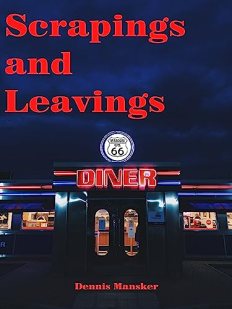
But I don’t only read fantasy or science fiction. I read in all genres, and one recent compilation of short stories that I feel good about recommending is Scrapings and Leavings by Dennis Mansker. This collection includes stories and plays written over the course of many years. Each story or play offers the reader food for thought.

I liked that he included background as to why he chose the title and also why he wrote each story or play.

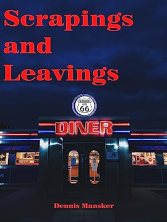
scrapings and leavings by dennis manskerMansker takes us into some of the darker days of the 1960s and 70s, sometimes introducing us to people we may not want to know and situations we don’t want to be in. Some protagonists are endearing, and some not so much—but all are intriguing, and all kept me reading.
The story that really stood out to me was My Summer of Crime. It details the youthful misadventures of Farnsworth, who later becomes the protagonist of his novel, A Bad Attitude, which is set during the Vietnam War.

You can find this book of short stories and Dennis Mansker’s other work at  Amazon.com: Dennis Mansker: books, biography, latest update.


About the Author

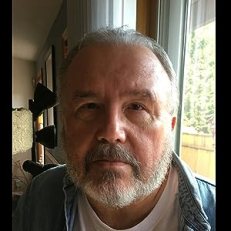
Dennis Mansker considers himself at 78 one of the latest of late bloomers. He published his first book, A Bad Attitude: A Novel from the Vietnam War, in 2002 at the age of 57. His second book, Scrapings and Leavings, will be published in 2023, and he is hard at work on his third book, Destiny in Dallas, which is on track to be published early in 2024.

Dennis Mansker author photoHe was born in Longview WA, spent five years on a dairy farm near Bristow OK, and is a 1973 graduate of Western Washington University in Bellingham WA.
He was drafted into the army in 1967, and spent nearly a year in Vietnam as company clerk of two US Army Transportation Corps trucking companies, an experience which formed the basis for the plot of his first book.

He retired after 31 years of state service with the Employment Security Department. He is responsible for producing four children, nine grandchildren and seven great-grandchildren (so far).

He lives in Olympia WA with his long-suffering wife Susan and two cats, who generously allow their humans to think that they are in charge.

Comments Off on #BookReview: Scrapings and Leavings by Dennis Mansker

Filed under writing

When life interferes with writing #amwriting

I have been prepping for NaNoWriMo 2023, trying to complete the outline so I can hit the ground running on November 1st. As always, I’m mentally committed to writing at least 1,667 (or more) new words every day during that writing rumble.

MyWritingLife2021By just doing that, I will have 50,000 (or more) words by midnight on November 30th.
Every year, I wonder how I’ll meet this goal. I don’t have a one-size-fits-all answer for that, as authors must be able to pay their bills, or no books will ever be written.

Sometimes, I feel guilty for taking the time to indulge in such a profoundly personal pleasure. It does take time. I tend to resent anything stopping me from having at least one hour of dedicated writing time each day.

But life tosses up roadblocks. We’re retired, and even so, keeping to a regular routine for writing is difficult. One would think we could do whatever we want and to heck with the world’s demands.

But life is not that way. Even people who are retired have obligations that take them away from home. Extra work and other activities that come along with living our lives take up space in our heads as well as the calendar. Finding the energy to be creative is a challenge.

When I was younger, I was a single parent. I had two jobs and children and sang in the choir at our church. I had many demands upon my time, but somehow, I always managed a little time for writing. Admittedly, it wasn’t much.

In those days, I wrote while my children were doing their homework. Sometimes I wrote for half an hour or so at night after they were asleep, pouring my angst into lyrics for songs. This is why my poetry has a more traditional rhyming rhythm. I’m a songwriter at heart, and there is always a melody in my head.

Everyone has a different creative process. What works in December might not work in April. When the tried-and-true fails, give yourself permission to change and find a way that works.

how-to-play-gin-rummy-1Be willing to be flexible. Do you work best in short bursts? Or, maybe you’re at your best when you have a long session of privacy and quiet time. Something in the middle, a melding of the two, works best for me.
But what if the way that worked last month no longer works? Varying my projects and writing in bursts broken up by daily activities works best for my schedule nowadays.

We must be open to finding the way that makes us feel productive, whether it works for someone else or not. We feel good when we’re productive.

I have my best ideas when I’m about to leave the house—no joke. If that is you too, do as I do and write those thoughts down. I keep a notebook around just for those moments.

You will be productive once you find your best style.

But first—you must give yourself permission to write.

I have plenty of downtime between my daily tasks. That is when I work on whatever revisions are needed. You would be amazed at what you can get done in ten-minute bursts.

We who wish to write must set aside time to do it. This allows us to be creative and still support our families, who all have activities and interests of their own.

As I have said many times before, being a writer is to be supremely selfish about every aspect of life, including family time.

ICountMyself-FriendsA good way to ensure you have that time is to encourage your family members to indulge in their own interests and artistic endeavors. That way, everyone can be creative in their own way during that hour, and they will understand why you value your writing time so much.
A balanced life is a happy one. Don’t become so obsessed with writing about fictional lives that you aren’t present in your own.

  • Some people manage to fit short bursts of writing into their daily schedule, writing at work during breaks or at lunch.
  • Others must schedule a dedicated block of time for writing, either rising two hours before they depart for work or skipping some TV in the evening.
  • Write in small increments—ten minutes here, half an hour there. These short bursts add up.

Perhaps your mind has gone blank. An idea is locked in your head, but you don’t have the words to free it. Step back and view your story from a distance:

  • Write several paragraphs detailing what must happen in your story, such as: Next morning, Stan arrives with the recruits. His drama ensues. Ends well, with Neela asking him to walk to the market with her.

Taking a break and doing something completely different is a good thing. When you return to writing, you may have nothing to add to the old project, but something new may be forming.

Write it.

I always have many manuscripts in the works because I come to a point where I begin flailing. I move between each project as I have inspiration for them. Right now, I have a short story, a novella, a novel in the final stage of editing, a novel at the halfway point, and this blog to keep me interested and writing something every day.

I am a slow keyboard jockey, and I can do about 1,100 wonky, misspelled words an hour during NaNoWriMo. Remember, misspelled or not, in NaNoWriMo every word counts and moves you closer to having a completed first draft. The important thing is to get the whole story down from the beginning to the end. Once that is done, you can fiddle with phrasing to your heart’s content.

My Coffee Cup © cjjasp 2013Writers and other artists do have to make some sacrifices for their craft. It’s just how things are. But don’t sacrifice your family for it.
If the urge to write is there, get up an hour early to have that quiet time. Or give up something ephemeral and unimportant, like one hour of TV.

I always encourage writers who are falling behind and unsure they can “do” NaNoWriMo to live their lives and write in short bursts during the moments between other things. We should write what we’re inspired to, and find the blessings in each day. If we do that, the words will come.

Happy writing!

13 Comments

Filed under writing

Guest post: Five Things I Learned While Writing Scrapings and Leavings by Dennis Mansker

Today I’m featuring a post by fellow author, Dennis Mansker. Dennis is one of the more interesting characters I’ve met in the local writing community. I have found his work to be intriguing and daring.

MyWritingLife2021BHis chosen genre is mainstream fiction, and the characters he presents are interesting and full of human frailties. So, without any more talk on my part, here is Dennis Mansker.

>>><<<

  1. The story sometimes writes itself; most of the time it doesn’t. But I am continually amazed at how … mystical … the writing process is. I can sit down with a loose idea for a story – I usually have a beginning and an end in mind, but the middle is a vague and nebulous fog. Two or three hours later I regain consciousness and have a finished story. How it got that way remains one of the great mysteries. Always be prepared for surprises. For example, “The Lolita of Rogue River” started out as a completely different story, but my characters kind of bullied me out of the way and took over. I’m glad that happened; the original story, when I finally wrested control back, turned out to be so lengthy and involved, with so many moving parts, that it is now going to be my next book, Destiny in Dallas.
  2. Character is everything. You can have a perfectly serviceable plot, but if your characters are wooden, are cardboard cutouts, are simulacra of real human beings, you really don’t have a story. That said, you may notice my intentional violation of this precept in a story or two in the book.
  3. scrapings and leavings by dennis manskerDid I mention be prepared for surprises? I can’t stress this too much. When I started what I call my New Wave of stories, in 2022, it wasn’t with the idea of collecting them in a book, but by the time I had written several of them and was reminded once again that the market for short stories was, to say the least, depressed, it dawned on me that if I collected what I considered the best of my previous stories along with the new ones, I had a book!
  4. Editing can be a bitch! No one wants to dismember his own children, but sometimes that’s what it feels like. Still, one needs to be ruthless, and sometimes no matter how much I may LOVE a story, it just doesn’t work. This is where friends come in. I put the manuscript out to three of my friends whose judgment I value, and took mostof their suggestions, even though it was painful. Some people like reading over their reviews on Amazon, some people don’t. Go ahead if you have a thick skin. I’ve gotten a few one-star reviews on Amazon for my first book, A Bad Attitude: A Novel from the Vietnam War, but these are far outweighed by the many four and five star reviews.
  5. You are never too old! I am at 78 among the very latest of late bloomers. Never give up! You are uniquely you. Make your voice heard!

>>><<<

Thank you for this fun and informative post, Dennis! Scrapings and Leavings will go live on September 1st but it is now available for preorder at Scrapings and Leavings – Kindle edition by Mansker, Dennis. Literature & Fiction Kindle eBooks @ Amazon.com.


Dennis Mansker author photoAbout the author: Dennis Mansker considers himself at 78 one of the latest of late bloomers. He published his first book, A Bad Attitude: A Novel from the Vietnam War, in 2002 at the age of 57. His second book, Scrapings and Leavings, will be published in 2023, and he is hard at work on his third book, Destiny in Dallas, which is on track to be published early in 2024.
He was born in Longview WA, spent five years on a dairy farm near Bristow OK, and is a 1973 graduate of Western Washington University in Bellingham WA.

He was drafted into the army in 1967, and spent nearly a year in Vietnam as company clerk of two US Army Transportation Corps trucking companies, an experience which formed the basis for the plot of his first book.

He retired after 31 years of state service with the Washington State Employment Security Department. He is responsible for producing four children, nine grandchildren and seven great-grandchildren (so far).

He lives in Olympia WA with his long-suffering wife Susan and two cats, who generously allow their humans to think that they are in charge.

Dennis Mansker at Amazon: Amazon.com: Dennis Mansker: books, biography, latest update

Comments Off on Guest post: Five Things I Learned While Writing Scrapings and Leavings by Dennis Mansker

Filed under Author Interviews, writing

Introspection, a critical aspect of pacing and character development #amwriting

Scenes involving violence can be tricky because we feel pressured to make the events the story, leading to undeveloped, two-dimensional characters.

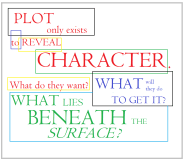
depth-of-characterWe forget to consider how the action affects both the protagonist and the reader. The reader needs a small break between incidents to process what just happened, and the characters need a chance to regroup and make plans.
Pacing consists of action followed by aftermath, followed by action, followed by aftermath—and so on. This is often compared to how a skater crosses the ice: push, glide, push, glide.

When we insert a few quieter moments after the action, we create the places where conversations happen. When the characters pause to absorb what just happened and to consider the next step, background information emerges in an organic, natural way.

We want to keep the rhythm of the piece moving, but if we don’t allow the reader to process things, we risk losing them before they finish reading. The story becomes a wall of words and confusion, and they put the book down.

The story is the reader’s journey, and it is our job to make it a personal one.

We’re all familiar with the term ‘flatlined’ as a medical expression indicating the patient has died. Stories are composed of words strung together so the reader becomes emotionally involved in the arc of action. The reader stays involved when the plot arc moves forward at a good pace, but when it flatlines, the reader loses interest.

Plot-exists-to-reveal-characterStories are a balancing act detailing the lives of engaging characters having intriguing and believable adventures. The reader lives and processes the action as it happens, suspending their disbelief.
When the story arc is imbalanced, it can flatline in two ways:

  • The action becomes random, an onslaught of meaningless events that make no sense.
  • The pauses become halts, long passages of random interior monologues that have little to do with the action.

We want to meet and know the characters on both sides of the action, protagonist and antagonist, and we do this through their introspections.

The trick is balancing the introspection and chaos, ensuring your contemplation doesn’t turn into info dumps where your character ponders everything that happens to him at length.

Some stories are meant to be more reflective than active, and some of my favorite literary classics are all about the character’s thoughts as they go through the events. Yet, even though the stories might be about what goes on in the characters’ heads more than the adventure, these narratives are not repetitive. The action, mental though it is, moves forward rather than backward.

modesitt quote the times we live LIRF11012022But if you are writing genre fiction, the market you are writing for expects more action than introspection. These stories are also character-driven, but the adventure, how the protagonist meets and overcomes the battles and roadblocks, is what interests the reader.
So, a sci-fi action adventure would have more extended action scenes separated by short scenes of introspection and conversation.

One way to avoid a flatlined story arc is through character interaction. Your characters briefly discuss what is on their minds and bravely muck on to the next roadblock. Conversations serve two important (in my opinion) functions:

  • It tells us what they think. New information vital to the story emerges.
  • The reader sees who the characters are and how they think.

ICountMyself-FriendsConversations illuminate a group’s relationship with each other and sheds light on our characters’ fears. It shows that they are self-aware and should present information not previously discussed.
Interior monologues, or introspection, don’t have to be italicized if you make it clear that Character A is having a mental dialogue with themselves.

  • Interior monologues (thoughts) serve to illuminate a character’s motives at a particular moment in time.

However, interior monologues should not make our characters appear all-knowing. They must show that our people are somewhat clueless about their flaws, strengths, or even their deepest fears and goals.

Your point-of-view character will be in the most danger of this. Avoid situations where the dialogue is too exact in predictions and character self-analysis. Too much foreshadowing ruins the mystery of the piece. The same follows for inner monologues, perhaps even more so.

As the character is forced to grow throughout the course of the story, these faults emerge gradually. The protagonist is pushed down the path to wisdom. Self-awareness should flower because of the “personal resurrection” that occurs near the end of the hero’s journey.

Author-thoughtsGreat characters begin in an unfinished state, a pencil sketch, as it were. They emerge from the events of their journey in full color, fully realized in the multi-dimensional form in which you initially visualized them.
For the protagonist, surviving the journey to self-knowledge is as important as living through the physical journey.

The antagonist must also be self-aware. While their outcome may not be positive, their reasoning and ethical values should emerge as the story progresses.

But maybe you are writing an over-the-top story with a good vs. evil narrative. The supervillain’s backstory may not need more than a mention.

We need to know enough so the supervillain isn’t there simply for the sake of drama. We want them to present a real, tangible threat, and readers must see them as intelligent enough to be dangerous.

Character interactions should show that all the characters have depth. They have layers, and conversations and interior dialogues should reveal aspects the reader doesn’t know up front as the story progresses.

Repetition is easy to write into the first draft of the narrative because we’re telling ourselves the story as we write. But during revisions, we must focus on the rhythm of the story (pacing), as well as making the story arc logical.

It’s a balancing act, one that often takes many drafts for me to get right.

8 Comments

Filed under writing

Route recalculating and formatting a short story #amwriting

This last weekend, we went to a family party, a fun, noisy gathering typical of how we roll. Three of our children were there with their children and all the in-laws and outlaws. The food was fabulous, of course.

MyWritingLife2021The best thing about this weekend was seeing the grandchildren behaving like their parents did at their ages. We loved hearing their parents shouting the same gentle admonishments we offered when they were children: “Hey you! Stay in the yard!” and the ever popular “Get your hand away from that cake!” followed by, “Oh God! Here, let me wipe your face.”
I had the distinctly uncomfortable experience of driving in an unfamiliar area and trying to obey the law while following the verbal directions of the GPS—an epic fail. Fortunately, my husband is the soul of patience. Greg says soothing things like, “Don’t worry. They’ll calm down,” and “I think that was where we were supposed to turn.”

And the GPS lady, tranquil and unflustered no matter what the half-crazed woman at the wheel does, says, “Route recalculating ….”

route recalculatingSo now we’re home and nobody died. Once again, I am preparing a short story for submission to an anthology. I think it fits the theme, but whether or not the editor will agree is another question. I know it is correctly formatted because I read and followed the submission guidelines.

Each publisher, magazine, or contest website will have a ” Submission Guidelines ” page or section.” That page contains the rules specific to that particular publication or contest:

  • length of submissions in word count, (Do not exceed or fudge this.)
  • how they want you to format your work for their best use,
  • where to submit the work,
  • what date submissions close,
  • if it is a contest, fees will be listed there.

I try to have a backlog of short fiction on hand for submission. It saves time if I have submission-ready work, as it will require minimal adjustment to fit various requirements.

money_computer_via_microsoftMost publishers use what is considered the industry standard, Shunn Manuscript Format. William Shunn didn’t invent it but made this knowledge available to all would-be authors via the Internet.
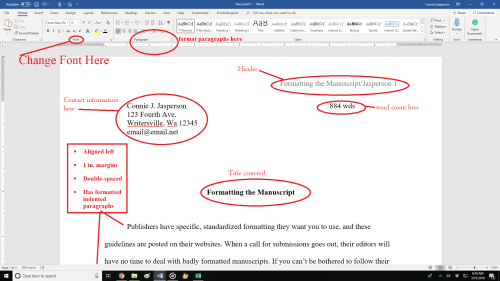
Use a 12-point font, which prints out at a pitch of ten characters per inch. This is critical knowledge because the font that the publisher’s guidelines require is the only one that will make it past the first editor’s inbox.

The preferred font will be clearly stated in their submission guidelines.

IF YOU INTEND TO FORMAT YOUR MS FOR HARD-COPY SUBMISSION TO AN OLD-SCHOOL PUBLISHER:

  • Set the margins for your document at 3cm (1 inch) on all four sides.
  • Align to the left side only; the right side should remain jagged. (THIS IS CRITICAL)
  • Use a twelve-point font in black type only. Courier, Times New Roman, or Arial fonts may be specified, so check the magazine or anthology submission guidelines.
  • Lines should be double-spaced with no extra spaces between paragraphs. (THIS IS CRITICAL)
  • Single space between sentences after periods. (This is also critical)
  • Indent new paragraphs and each new section of dialogue.
  • Indicate scene breaks by inserting a blank line and centering the hash sign (#) in the center of that line.
  • Center a hash sign # one double-spaced blank line down at the end of the manuscript. Or, simply write The End. This assures the editor that no pages are accidentally missing.
  • Use underline for italicized words if you are using Courier font. If you are using Times New Roman, you can use proper italics. (Again, check the submission guidelines)

The header goes in the upper-right corner of every page of your manuscript except the first.

Your first page should include:

  • The name of the work.
  • The approximate word count, some will want it only to the nearest hundred.
  • In the upper left, your contact details are formatted in the same font and size as the manuscript font.

Formatted_fonts_03312019MANY contests and e-magazines want your manuscript formatted similarly but may require a different font. Some want the header on all pages, and others want your full author name in the header.
I use MS Word, but other word-processing programs are similar. To format your header in MS WORD:

  1. Go to the Insert Tab and click on: page numbers > top of page.
  2. From the drop-down menu, select > plain number three (the upper right-hand corner).
  3. Type your name and the title just before the number.
  4. Click on the body of your document, and the header/page number is set. It will appear to gray out.

To Format your manuscript so the page numbers start on page two: click on this link to go to the MS Word Learning and Help Center if you are using MS Word. The process is a little more involved, and I didn’t want to fill this post up with that, so use the resource your word-processing software manufacturer offers. That’s the way I learned to use this program.

Harpers_Magazine_1905Be aware that ALL contests and magazines will want original work that has never been published.
Most anthologies will also want original, never-before-published work. The exception to this is if the collection is a promotional anthology showcasing stories the publisher printed the previous year. Often these collections are the editors’ favorites.

Most contracts will state that you can reuse or republish the work 3 months or 90 days after the date of their publication. Don’t accept any contract that doesn’t allow you to regain the rights to your own work at some point.

When you do republish the work, you must include a caveat on the copyright page stating that it was originally published in their anthology or magazine and what issue/year it appeared.

Tenth_of_DecemberAt some point this year, I plan to publish a compilation of short stories. I love reading anthologies and short story compilations. Some of the best work I’ve read has been in short story form.
I hope you have been writing short stories or flash fiction. They are fun to write and are easier to sell than novels. It’s a happy day when my work resonates with the right editor, and I get that email of acceptance.

14 Comments

Filed under writing

#FineArtFriday: Summer, Lake Ontario by Jasper Francis Cropsey 1857 (revisited)

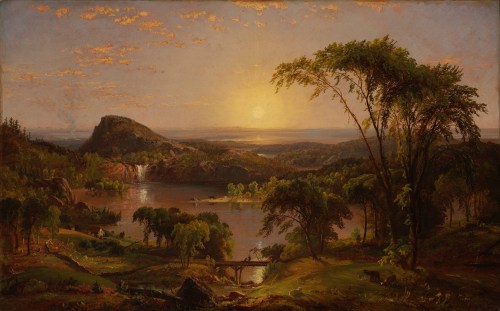
Cropsey,_Jasper_Francis_-_Summer,_Lake_Ontario_-_Google_Art_ProjectTitle: Summer, Lake Ontario by Jasper Francis Cropsey (1823–1900)
Genre: landscape art

Date: 1857

Medium: oil on canvas

Collection: Indianapolis Museum of Art

What I love about this painting:

Cropsey paints a summer evening in New York State, along the shore of one of Lake Ontario’s bays. Near the bottom center, a pair of fishers are placed on the wooden bridge over a creek. This image has a fantasy quality, as if it depicts a dream or a fond memory.

Our point of view is from a hill, looking down to the creek, the bridge, and the bay shore, and then across low hills to the great lake beyond. Cropsey gives equal importance to the earth below and sky above.

Cropsey’s signature deep colors are featured in this panoramic view of a summer evening. Warm reds, browns, yellows, and dark greens are lightened by wispy mists rising in the early evening air, lit by the setting sun.

About the Artist, via Wikipedia:

Jasper Francis Cropsey (February 18, 1823 – June 22, 1900) was an important American landscape artist of the Hudson River School.

Cropsey was born on his father Jacob Rezeau Cropsey’s farm in Rossville on Staten Island, New York, the oldest of eight children. As a young boy, Cropsey had recurring periods of poor health. While absent from school, Cropsey taught himself to draw. His early drawings included architectural sketches and landscapes drawn on notepads and in the margins of his schoolbooks.

Trained as an architect, he set up his own office in 1843. Cropsey studied watercolor and life drawing at the National Academy of Design under the instruction of Edward Maury and first exhibited there in 1844. A year later he was elected an associate member and turned exclusively to landscape painting; shortly after he was featured in an exhibition entitled “Italian Compositions.”

Cropsey traveled in Europe from 1847–1849, visiting England, France, Switzerland, and Italy. He was elected a full member of the Academy in 1851. Cropsey was a personal friend of Henry Tappan, the president of the University of Michigan from 1852 to 1863. At Tappan’s invitation, he traveled to Ann Arbor in 1855 and produced two paintings, one of the Detroit Observatory, and a landscape of the campus. He went abroad again in 1856, and resided seven years in London, sending his pictures to the Royal Academy and to the International exhibition of 1862.

Returning home, he opened a studio in New York and specialized in autumnal landscape paintings of the northeastern United States, often idealized and with vivid colors. Cropsey co-founded, with ten fellow artists, the American Society of Painters in Watercolors in 1866. He also made the architectural designs for the stations of the elevated railways in New York. [1]


Credits and Attributions:

Image: Summer, Lake Ontario by Jasper Francis Cropsey 1857. Wikimedia Commons contributors, “File:Cropsey, Jasper Francis – Summer, Lake Ontario – Google Art Project.jpg,” Wikimedia Commons, the free media repository, https://commons.wikimedia.org/w/index.php?title=File:Cropsey,_Jasper_Francis_-_Summer,_Lake_Ontario_-_Google_Art_Project.jpg&oldid=618625179 (accessed June 30, 2022).

[1] Wikipedia contributors, “Jasper Francis Cropsey,” Wikipedia, The Free Encyclopedia, https://en.wikipedia.org/w/index.php?title=Jasper_Francis_Cropsey&oldid=1093620569 (accessed June 30, 2022).

2 Comments

Filed under #FineArtFriday, writing

When weather is the villain #amwriting

Hello from beautiful Olympia, Washington. We usually have the same climate as you in Wales or England. We prefer cool summers, with overcast mornings and sunny afternoons that never exceed 74 degrees Fahrenheit or 23 degrees Celsius. For most of my life, that is how summers here were. But as of the new millennium, we no longer count on typical summers.

WritingCraftWorldbuildingWeather is not just a component of world-building. Sometimes, the weather is the villain in real life. In June and early July of 2021, we here in the Pacific Northwest had strange weather climate-wise.
On June 27th, within days, we went from temperatures well below average (low to mid-60s and pouring rain) to suffering from temperatures well above 100 degrees. It reached 108 at my house, 111 at my sister’s house 10 miles away. We use Fahrenheit in the US, but for you in the UK and Europe, we topped out at around 44 degrees Celsius.

This is where weather became the villain. People were hospitalized, and some died. Many apartments on the upper stories had windows that only opened four inches (to prevent people and children from falling out) and most had no A/C. No one knew how to keep cool and prevent heat stroke.

By mid-July, we returned to temperatures slightly above average, mid to upper 80’s and sometimes 90’s. That is how it has remained here since. 2022 wasn’t too bad, and 2023 has been warm but mostly bearable. May was abnormally hot, then it cooled down, and we had a typical overcast June. It’s mid-August now, and yesterday it hit 97, which is dangerous for people with no fans or A/C. Today it is expected to top out at 94.

Air conditioning has become commonly built into homes here since the heat dome of 2021. Most people have acquired window A/C units if their central heating system has no cooling option.

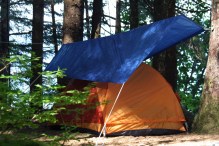
Don't_Forget_a_Tarp!_(1a132339-9f55-439b-ac0f-244e244cb12f)Traditionally in the past, summers in the Puget Sound area of Washington state didn’t really begin until July 5th. We celebrated the 4th of July with low clouds and drizzle, and “blue tarp camping” was a staple of family vacations. June never became unbearably warm.
When the sun did arrive, temperatures, for most of the time we have kept records, ran into the high 70s or, rarely, low to mid-80s. We are said to have a generally mild climate, and while that is changing, we hope it will remain mostly temperate.

So, let’s look at the weather as the villain. Tornados, hurricanes, bizarre heatwaves—these weather events can be the threat our heroes must overcome.

Once you have decided on your overall climate, do some research on how the weather affects agriculture and animal husbandry. In 2021, we here in the northwest lost many crops as they had cooked in the fields during the heat wave. This caused shortages at a time when the pandemic had already bollixed the supply chain.

In any era, the weather affects the speed with which your characters can travel great distances and how they dress. Bad weather always has a detrimental effect on transportation of people and goods, a serious point to consider.

We don’t get many hurricanes here, but they are common elsewhere.

Hurricane Maria was a deadly Category 5 hurricane that devastated the northeastern Caribbean in September 2017, particularly DominicaSaint Croix, and Puerto Rico. It is regarded as the worst natural disaster in recorded history to affect those islands.

The total death toll is 3,059: an estimated 2,975 in Puerto Rico, 65 in Dominica, 5 in the Dominican Republic, 4 in Guadeloupe, 4 in the contiguous United States, 3 in the United States Virgin Islands, and 3 in Haiti. Maria was the deadliest hurricane in Dominica since the 1834 Padre Ruíz hurricane and the deadliest in Puerto Rico since the 1899 San Ciriaco hurricane. This makes it the deadliest named Atlantic hurricane of the 21st century to date. [1]

Many true stories of survival against the odds and heroism emerge from natural disasters. The kindness of strangers is a worthy plot point, as is the terrible way people behave when resources are cut off, and people lack water and access to food. Hunger, lack of water resources, and unsafe sanitary conditions are powerful drivers of civil unrest.

Wildfires are among the most common forms of natural disaster in some regions of our blue planet, including SiberiaCalifornia, and Australia.

And now, a place where we never thought it would happen is burning—Hawaii.

Via Wikipedia:

In early August 2023, a series of wildfires broke out in the US state of Hawaii, predominantly on the island of Maui. The wind-driven fires prompted evacuations, caused widespread damage, and killed at least 99 people in the town of Lahaina; at least 1,000 people remain missing and the death toll from the fires could double or triple in the upcoming days. The proliferation of the wildfires was attributed to dry, gusty conditions created by a strong high-pressure area north of Hawaii and Hurricane Dora to the south.

As of August 14, 2023, there were 99 confirmed deaths, and at least 1,000 other individuals were unaccounted for due to the Lahaina fire on Maui. Only a small number of victims have been identified. The death toll in West Maui made it the deadliest wildfire and natural disaster ever recorded in Hawai’i since statehood even though it could still double or triple in the upcoming days: the governor of the archipelago warned that he expected to find “10 to 20” bodies a day, while the search was expected to last another ten days or so. [2]

StoryMemeLIRF10052021Tragedies on this scale destroy communities but can also unite the survivors. Maui has a long road ahead. Recovery will not be easy as they are an island, and everything must be shipped to them across the ocean. However, people all over the world are stepping up, and the rebuilding is beginning.
How the people who have survived this horrible event go forward will be a testament to their resilience.

Tornadoes, hurricanes, earthquakes, wildfires, severe droughts, prolonged monsoons—weather offers many opportunities for stories of survival against the odds. Thus, large weather events make worthy threats for your characters to overcome.

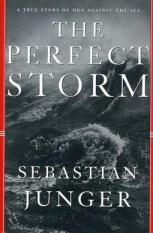
One of the best movies I’ve ever seen is The Perfect Storm, an adaptation of Sebastian Junger’s creative non-fiction novel of the same name. From Wikipedia:

ThePerfectStormThe Perfect Storm is a creative nonfiction book written by Sebastian Junger and published by W. W. Norton & Company in 1997. The paperback edition (ISBN 0-06-097747-7) followed in 1999 from HarperCollins‘ Perennial imprint. The book is about the 1991 Perfect Storm that hit North America between October 28 and November 4, 1991, and features the crew of the fishing boat Andrea Gail, from GloucesterMassachusetts, who were lost at sea during severe conditions while longline fishing for swordfish 575 miles (925 km) out. Also in the book is the story about the rescue of the three-person crew of the sailboat Satori in the Atlantic Ocean during the storm by the U.S. Coast Guard Cutter Tamaroa (WMEC-166). [3]

And so, if you are looking for a plot for your NaNoWriMo novel, consider the weather. It’s not just a part of world-building. It can be the perfect adversary.


Credits and Attributions:

Image: Don’t Forget a Tarp, National Park Service, Wikimedia Commons contributors, “File:Don’t Forget a Tarp! (1a132339-9f55-439b-ac0f-244e244cb12f).jpg,” Wikimedia Commons, https://commons.wikimedia.org/w/index.php?title=File:Don%27t_Forget_a_Tarp!_(1a132339-9f55-439b-ac0f-244e244cb12f).jpg&oldid=784682623 (accessed August 15, 2023).

[1] Wikipedia contributors, “Hurricane Maria,” Wikipedia, The Free Encyclopedia, https://en.wikipedia.org/w/index.php?title=Hurricane_Maria&oldid=1170469768 (accessed August 15, 2023).

[2] Wikipedia contributors, “2023 Hawaii wildfires,” Wikipedia, The Free Encyclopedia, https://en.wikipedia.org/w/index.php?title=2023_Hawaii_wildfires&oldid=1170557024 (accessed August 15, 2023).

[3] Wikipedia contributors, “The Perfect Storm (book),” Wikipedia, The Free Encyclopedia, https://en.wikipedia.org/w/index.php?title=The_Perfect_Storm_(book)&oldid=1162518110 (accessed August 16, 2023).

5 Comments

Filed under writing

The Writer’s Toolbox – Allegory and Symbolism #amwriting

Allegory and symbolism – tools in a writer’s toolbox that are similar but different. The difference between them is how they are presented.

  • Allegory is a narrative, a moral lesson in the form of a story, heavy with symbolism.
  • Symbolism is a literary device that uses one thing throughout the narrative (perhaps red) to represent something else (danger).

allegory2Symbolism is one aspect of a story that helps create mood and atmosphere. It supports and strengthens the theme and is subtle, subliminal. When a little thought is applied to how it is used, symbolism conveys meaning to the reader without beating them over the head.
So, what is an allegory?

The storytelling in The Matrix series of movies is a brilliant example of an allegory. The Matrix was written by The Wachowskis. The narrative is an allegory for Plato’s Allegory of the Cave, a depiction of reality and illusion. The movies in the series employ heavy symbolism in both the setting and conversations to drive home the multilayered themes of humankind, machine, fate, and free will.

Wikipedia says: In the allegory “The Cave,” Plato describes a group of people who have lived chained to the wall of a cave all their lives, facing a blank wall. The people watch shadows projected on the wall from objects passing in front of a fire behind them and give names to these shadows. The shadows are the prisoners’ reality, but are not accurate representations of the real world. The shadows represent the fragment of reality that we can normally perceive through our senses, while the objects under the sun represent the true forms of objects that we can only perceive through reason. [1]

Plato used heavy symbolism in his allegorical work. In The Matrix, reality and illusion are portrayed with layers of symbolism:

  • The names of the characters
  • The words used in conversations
  • The androgynous clothes they wear

Everything on the set or mentioned in conversations underscores those themes, including the lighting. Inside The Matrix, the world is bathed in a green light, as if through a green-tinted lens. In the real world, the lighting is harsher, unfiltered.

Everything that appears or is said onscreen in the movie is symbolic and supports one of the underlying concepts. When Morpheus later asks Neo to choose between a red pill and a blue pill, he essentially offers the choice between fate and free will.

Symbolism on its own is a powerful tool. We can show more with fewer words. But while a tale may be heavily layered with symbolism, it might not be an allegory.

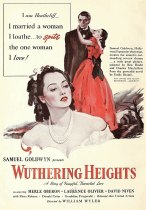
Take the classic Gothic novel Wuthering Heights.

It’s not an allegory because it doesn’t explore a moral or symbolic meaning beyond its obvious story. Brontë’s symbolism in her world-building supports and underscores the themes of love, revenge, and social class.

622px-Merle_Oberon_and_Laurence_Olivier_in_'Wuthering_Heights',_1939The way Emily Brontë employed atmosphere in Wuthering Heights is stellar. I would love to achieve that level of world-building.

We can find allegories in nearly any written narrative because humans love making connections and often imagine them where there are none. While Wuthering Heights is not considered an allegory in the literary sense, it is heavily symbolic.

Spark Notes says:

The constant emphasis on landscape within the text of Wuthering Heights endows the setting with symbolic importance. This landscape is comprised primarily of moors: wide, wild expanses, high but somewhat soggy, and thus infertile. Moorland cannot be cultivated, and its uniformity makes navigation difficult. It features particularly waterlogged patches in which people could potentially drown. (This possibility is mentioned several times in Wuthering Heights.) Thus, the moors serve very well as symbols of the wild threat posed by nature. As the setting for the beginnings of Catherine and Heathcliff’s bond (the two play on the moors during childhood), the moorland transfers its symbolic associations onto the love affair.

The two large estates within the book create a pocket world of sorts, where little, if anything, lies beyond their existence. Thus, windows both literal and figurative serve to showcase what exists on the other side while still keeping the characters trapped. [2]  Wuthering Heights: Symbols | SparkNotes

Like symbolism and allegory, mood and atmosphere are separate but entwined forces. They form subliminal impressions in the reader’s awareness, sub currents that affect our mood and emotions.

Emotion is the experience of contrasts, the experience of transitioning from the negative to the positive and back again. Symbolism and allegory exist in both the surface and the subtext of a story.

Mood, atmosphere, and emotion are part of the inferential layer of a story. The reader must infer (deduce, understand, fathom, grasp, recognize) the emotional experience, and it must feel personal to them.

mood-emotions-2-LIRF09152020How a setting is shown contributes to atmosphere. But the setting is only a place—it is not atmosphere. Atmosphere is created as much by odors, scents, ambient sounds, and visuals as by the characters’ moods and emotions. Emily Brontë‘s moors and windows are subliminal background elements. They convey information to the reader on a subconscious level, supporting the moods of the characters and their actions and conversations.
I create an outline as I go because using symbolism is critical if I want to convey mood and atmosphere without resorting to an info dump.

Just to be clear, a plan is not always required because sometimes the flash of inspiration we begin with is strong enough, and the theme develops as you write.

For me, a strong theme will whisper suggestions and symbols to me as I create the world and the visual environment. I note them in the outline, so I don’t lose track of them.

In my case, I need a plan most of the time, even though it evolves as the story does.

The casual reader doesn’t notice symbolism on a conscious level. They may not see the symbolic nature of your narrative. However, dedicated readers will, and that is what will keep them reading. Dedicated readers love work that holds up on closer examination, enjoying work with layers of depth, work they can read again and again and always find something new in it.

Yet, for the casual reader, the story and the characters who live out those events are what matters. The allegories and symbolisms created in the narrative sink into the reader’s subconscious, stirring thoughts and raising ideas they might not otherwise have considered.


Credits and Attributions:

[1] Wikipedia contributors, “Allegory of the cave,” Wikipedia, The Free Encyclopedia, https://en.wikipedia.org/w/index.php?title=Allegory_of_the_cave&oldid=1165911183 (accessed 12 August 2023).

[2] Wuthering Heights: Symbols | SparkNotes Copyright © 2023 SparkNotes LLC (accessed 12 August 2023). Fair Use.

3 Comments

Filed under writing

Dark energy part two—a deeper dive into motivation #amwriting

In the previous post, we discussed how backstory illuminates and makes our characters’ motives logical and reasonable.

WritingCraft_Dark_EnergyBut we all know infodumps are an insidious poison, so how do we apply this backstory without losing the reader?

I spend a lot of time thinking about plot and character, imagining the story, and writing. I have a vision of the story but getting it down isn’t easy. Ideas slip away unless I get them on paper first.

This is the method I use. I create a separate document that is for my use only, and I label it appropriately:

BookTitle_Plot_Core_Conflict.docx

I boil the conflict down to a few paragraphs and refer back to it whenever I find myself rambling.

Most of us know what motivates our protagonist. But our antagonist is frequently a mystery, and the place where the two characters’ desires converge is a mystery. We know the what, but the why eludes us. This can make them less important than the protagonist. Yes, the protagonist is the character we want the reader to sympathize with. But we also want the reader to see the reasoning behind the enemy’s actions, or they won’t be able to suspend their disbelief.

What follows is an example of the short document that is my reminder. These paragraphs summarize the story and detail what motivates the characters. It keeps me focused when I have lost my way:

The root of the matter: The Dark God has assaulted and imprisoned his brother in an effort to steal his wife, and the universe intervened. Now, the gods can only act against each other through the clergy of their world. However, they can corrupt another deity’s clergy through a tainted physical object.

The story: The protagonist and antagonist begin as members of a sect of hunter-mages sworn to serve the Goddess that rules their world. Most of the time, they are mages working as smiths and masons and working as ordinary community members in other crafts. Sometimes they are called to hunt rogue mages and empathically gifted healers who follow the Dark God.

dream catcherCharacter A is a shaman, a fire-mage smith and warrior, and is slated to be the next War Leader of the tribes. His shamanic purpose is to unite the people, both the tribes and those citadels who have turned tribeless. He is the chosen champion of the Goddess his sect of mages serves, and his success or failure will determine her fate.
Character A must survive the high shamanic trial to become War Leader. Then he must defeat the Dark God’s champion if he is to have the chance to fulfill his shamanic purpose. Unfortunately, his closest childhood companion is now the champion of the dark side.

Once a devoted follower of the Goddess, Character B triggered a mage trap and was forcibly converted by the Dark God. Character B has always been a traditionalist, a firm believer that the way of the tribes is the only way to keep the people strong. The Dark God twists his loyalty to the tribes and his tribal heritage into a weapon he can use to conquer the Goddess and annex her world. The deities are immortal and can’t be killed, so his quest for total domination threatens the universe’s balance. Each world must have its creator deity, and there can only be one deity for each world.

Before his conversion, Character B was the most dedicated of the sect of rogue mage hunters. After triggering the mage trap, he sees them as the enemy, a cult that stifles and weakens the tribes. He is determined to lead the tribes to conquer the tribeless citadels and regain the power the tribes once wielded.

The Dark God is adept at twisting people’s deeply held beliefs to serve his purpose. He is the ultimate antagonist, acting through the tainted artifact that was able to corrupt Character B. Therefore, Character A’s ultimate goal must be to destroy the mage trap in Character B’s possession. In doing so, he removes Character B’s source of dark power and can fight him on equal ground.

Character A represents teamwork succeeding over great odds. Character B represents the quest for supremacy at all costs.

  • Both must see themselves as the hero.
  • Both must risk everything to succeed.
  • Both must believe they will ultimately win.

When I create the personnel file for my characters, I assign them verbs, nouns, and adjectives, traits they embody. Verbs are action words that reflect how they react on a gut level. Nouns describe their personalities.

They must also have a void – an emotional emptiness, a wound of some sort. Character B knows he has lost something important, something that was central to him. But he refuses to believe he is under a spell of compelling, a pawn in the Gods’ Great Game. He must believe he has agency—this is his void.

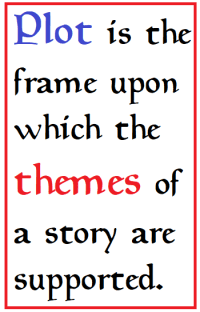
plot is the frame upon which the themes of a story are supportedThis void is vital because characters must overcome fear to face it. As a reader, one characteristic I’ve noticed in my favorite characters is they each have a hint of self-deception. All the characters – the antagonists and the protagonists – deceive themselves in some way about their own motives.
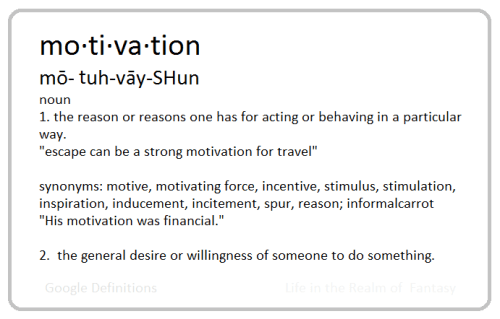
My task is to ensure that the stories of Characters A and B intersect seamlessly. Motivations must be clearly defined.

I ask myself what their moral boundaries are. This is where I explore the lengths they will go to achieve their goal. I like to know their limits because even cartoon supervillains draw the line at doing something.

Even if it is only refusing to eat Brussels sprouts.

Like me.

The way my creative mind works, plots evolve out of the characters as I begin picturing them. When I sit down to create a story arc, my characters offer me hints as to how their story will develop.

This evolution can change the course of what I thought the original plot was and sometimes does so radically.

But at some point, the plot must solidify.

The story must finally have an arc that explores the protagonist’s struggle against a fully developed, believable adversary.

My method works for me. It might work for you and takes very little time, only a few paragraphs describing the core of the conflict.

Motivation meme

2 Comments

Filed under writing