
Syntax is defined as the arrangement of words and phrases to create well-formed sentences in a language. English has certain standard rules of speech that are learned so early on in life that they are instinctual.
 No matter the level of our education or the dialect we speak, we use these rules and don’t realize we are doing so.
Several years ago, I found three delightful quotes on these rules from linguist Steven Pinker, editor Stan Carey, and Tim Dowling, a journalist for The Guardian.
The Jolly Green Giant rule:
The rule is that multiple adjectives are always ranked accordingly: opinion, size, age, shape, colour, origin, material, purpose. Unlike many laws of grammar or syntax, this one is virtually inviolable, even in informal speech. You simply can’t say My Greek Fat Big Wedding, or leather walking brown boots. And yet until last week, I had no idea such a rule existed. Tim Dowling, for The Guardian, 13 September 2016. [1]
My editor often finds and points out words whose order must be rearranged to sound natural. Some sentences seem clumsy when she reads them because when I first wrote that section, I was going too fast and put my words in the wrong order.
I didn’t notice it during the revision process. Some hokey phrasing goes unnoticed by me through upwards of six revisions.
Why do we overlook typos and errors in our work? StudySkills.com tells us:
… the more familiar our brains are with the content in print, the less we are able to focus on details. It’s how our brains are designed to work. We often cannot see our own writing mistakes. (Susan Kruger Winter, CEO & Founder of SOAR Learning, Inc. Why We Can’t See Our Own (Writing) Mistakes, 22 July 2018) [2]
It happens because, in the first draft, I am madly getting the words out of my head. My ability to use a pen or run the keyboard can’t keep up with the stream of words falling from my mind.
- (Wrong) My red large Cadillac is fun to drive.
- (Right) My large red Cadillacis fun to drive.
Actually, my small blue KIA Soul is fun to drive. (Grandma’s imaginary red Ferrari would be a lot more fun, but no one would be safe on the road.)
 Muddled phrasings often slip by when I revise my work because my mind sees the words as if they were in the correct order. This is the writer’s curse—the internal editor knows what should be there, and the eye skips over what we actually wrote.
This ability to see our work as if it were finished is a necessary aspect of creativity. We have an image of what it should look like and know what needs to be done to shape it that way. However, after so many hours of laboring on a manuscript, our brains can trick us into seeing what we intended to write, overlooking the flaws.
When I first began writing, I had a naïve belief in the perfection of my work. I was soon shown differently, and (once I grew a thicker skin) I found a good editor.
In every language, native speakers automatically order their words in specific ways. In English, we order them this way:
- opinion,
- size,
- age,
- shape,
- color,
- origin,
- material,
- purpose
Stephen’s dark blue wool jacket was left behind.
Another rule I love is the Mishmash rule:
“Reduplication” is when a word or part of a word is repeated, sometimes modified, and added to make a longer term, such as aye-aye, mishmash, and hotchpotch. This process can mark plurality or intensify meaning, and it can be used for effect or to generate new words. The added part may be invented or it may be an existing word whose form and sense are a suitable fit. (Stan Carey, A hotchpotch of reduplication, MacMillan Dictionary Blog 2012.) [3]
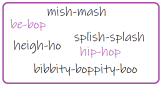 I adore mishmash words. They’re poetic and musical and roll off the tongue with a satisfying rhythm. Sadly, while I regularly bore my grandchildren with them, I hardly ever get to write them. Mishmash. Hip-hop.
The Hip-Hop rule:
Have you ever wondered why we say fiddle-faddle and not faddle-fiddle? Why is it ping-pong and pitter-patter rather than pong-ping and patter-pitter? Why dribs and drabs rather than vice versa? Why can’t a kitchen be span and spic? Whence riff-raff, mishmash, flim-flam, chit-chat, tit for tat, knick-knack, zig-zag, sing-song, ding-dong, King Kong, criss-cross, shilly-shally, seesaw, hee-haw, flip-flop, hippity-hop, tick-tock, tic-tac-toe, eeny-meeny-miney-moe, bric-a-brac, clickey-clack, hickory-dickory-dock, kit and kaboodle, and bibbity-bobbity-boo? The answer is that the vowels for which the tongue is high and in the front always come before the vowels for which the tongue is low and in the back. (Pinker, The Language Instinct, 1994:167) [4]
Verbs are power words. The order in which we place them affects how readers see our work. Sometimes we frontload our sentences like this: In any situation, Charlotte runs toward danger.
Moving the action to the beginning of the sentence makes it stronger. Nouns followed by verbs make active prose: Charlotte runs toward danger, never away.
First drafts are the place where we might write something like: Running toward danger, Charlotte was happy. This kind of awkwardness says what we mean but does it poorly. It might slip through many revisions because the internal editor rearranges them correctly, and we don’t see it as written.
 “Ing” words are a terrible temptation to those of us raised on Tolkien. He was writing a century ago, but that style of lush prose has fallen out of fashion. We open the gate to all sorts of verbal mayhem when we lead off with an “ing” word at the front of a sentence.
So, you now have a mishmash of words and a bunch of rules that native speakers of English use without consciously thinking about it. Wonky word order is one more thing to watch for when revising our manuscript.
But it’s easier to notice strange syntax when we are reading another author’s work.
CREDITS AND ATTRIBUTIONS:
[1] Tim Dowling, Order force: the old grammar rule we all obey without realizing, © The Guardian 2016, https://www.theguardian.com/commentisfree/2016/sep/13/sentence-order-adjectives-rule-elements-of-eloquence-dictionary (accessed 13 January 2023).
[2] Susan Kruger Winter, CEO & Founder of SOAR Learning, Inc. Why We Can’t See Our Own (Writing) Mistakes, 22 July 2018 (accessed 13 January 2023).
[3] Stan Carey, A hotchpotch of reduplication, MacMillan Dictionary Blog 2012 © Macmillan Publishers Limited 2009-2023. http://www.macmillandictionaryblog.com/a-hotchpotch-of-reduplication (accessed 13 January 2023).
[4] Steven Pinker, The Language Instinct, Pinker, Steven. 1994. The Language Instinct. New York: HarperPerennial.
 Authors make readers when they do in-person book signings. We have the chance to connect with potential readers on a personal level, and they might buy a paper book. If we are personable and friendly, they might tell their friends how much they liked meeting us. Those friends will buy eBooks. (We hope!)


 She also wrote the brilliant, hilarious standalone novel,
 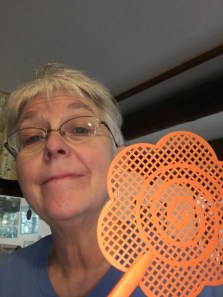 About Ellen King Rice: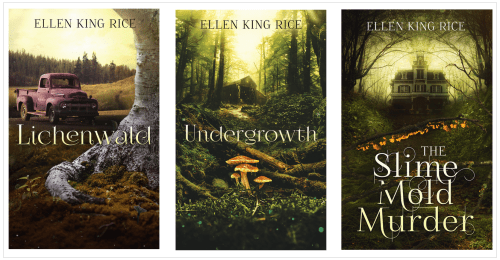
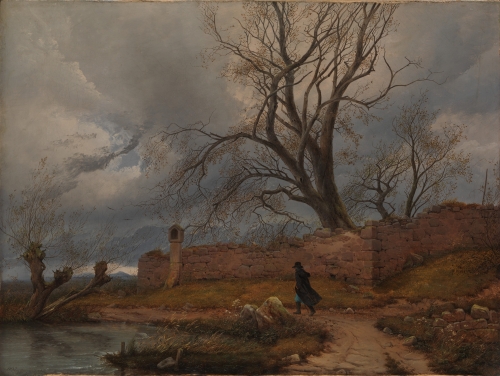 Artist: Carl Julius von Leypold (1806–1874)
 We are looking for markets that will pay you for your work. They are difficult to get into, but once you are in, you will be offered more opportunities.
 Fantasy & Science Fiction
 Third, they want work that looks professional, as if the author read their submission guidelines for formatting the manuscript and followed them. Publishers have specific, standardized formatting they want you to use, and these guidelines are posted on their websites.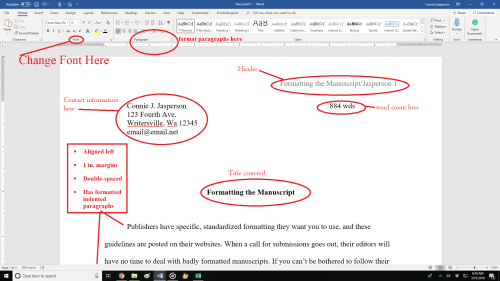
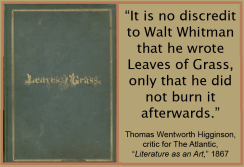 Don’t be discouraged by rejection. Rejection happens far more frequently than acceptance, even to famous authors. Don’t let fear of rejection keep you from writing pieces you’re emotionally invested in.
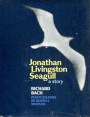 Remember, 18 publishers thought a story about a seagull was ridiculous before Richard Bach’s novella,
  A new year has begun, and open calls for spring and summer contests and anthologies will start appearing in various forums that I frequent. Finding places to submit your work can be challenging, but here are links to two groups on Facebook where publishers post open calls for short stories.
 My problem is this: all my stories want to grow longer than 1,000 words. It requires weeks of effort to get my work to fit within that parameter. So, I often write practice stories, limiting myself to telling the whole story in 1000 words or less. These practice shorts serve several purposes: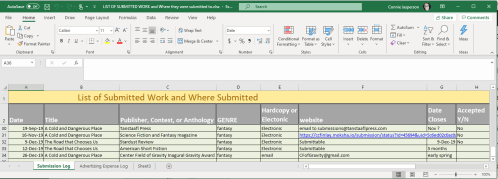
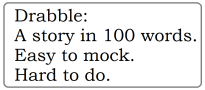 As a poet, I find it far easier to tell a story in 100 words than in 1,000. That 100-word story is called a
  That way, you won’t be left wondering how to attend a conference and still cover your household bills.
 The publishing world is a rough playground. Editors for traditional publishing companies and small presses have a landslide of work to pick from and are chronically short-staffed. They can’t accept unprofessional work regardless of how good the story is.
 Before you hire an editor, check their qualifications and references.
 If you’re a member of a writers’ group, you have a resource of people who will beta read for you at no cost. As a critique group member, you will read for them too.
 Clearly and consistently label each chapter. Ensure the chapter numbers are in the proper sequence, and don’t skip a number. I would label my individual chapter files this way:
 If you are writing in the US, you might consider investing in
 I have talked about this novella many times, as I think it is one of the most enduring stories in Western literature. The opening act of this tale is a masterclass in how to structure a story.
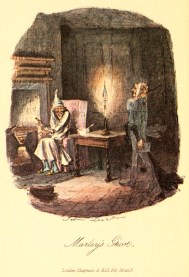 “Marley was dead, to begin with. There is no doubt whatever about that. The register of his burial was signed by the clergyman, the clerk, the undertaker, and the chief mourner. Scrooge signed it. And Scrooge’s name was good upon ‘Change for anything he chose to put his hand to. Old Marley was as dead as a doornail.”
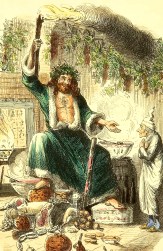 As I mentioned before, this book is only a novella. It was comprised of 66 handwritten pages. Some people think they aren’t “a real author” if they don’t write a 900-page doorstop, but Dickens says differently.
 For me, revisions begin with the second draft and sometimes involve radical changes to the storyline or character arcs. I may take a manuscript through many drafts before finally getting the story right.
 NEVER DELETE months of work. Don’t trash what could be the seeds of another novel. Save it in an outtakes file and use it later. I give the subfile a name like HA_outtakes_20Dec2022. That file name tells me the cut chapters were last changed on December 20, 2022.
 Then, I give the second draft a new file name: Heavens_Altar_version_2, which becomes the version I work on out of the main file folder.
 Either way, the characters will be profoundly changed from who they thought they were on page one, becoming who they are when the final sentence is written. The character arc is formed by their experiences.
 True inspiration is not an everlasting firehose of ideas. Sometimes there are dry spells. If you take another look at the work you have cut and saved in an outtakes file, you might see it with fresh eyes. You might see the seeds of a different story, and the fire for writing will be reignited.


 Life in the Realm of Fantasy