
Whether we show it in the prologue or the opening chapter, the first event, the inciting incident, is the one that changes everything and launches the story. The universe that is our story begins expanding at that moment.
 The first incident has a domino effect. More events occur, pushing the protagonist out of his comfortable life and into danger. Fear of death, fear of loss, fear of financial disaster, fear of losing a loved one—terror is subjective and deeply personal.
I love stories about good people solving terrible problems, but I want them to mean something.
While I have experienced violent situations, I’ve also faced many things that shook my world but didn’t threaten my physical safety.
Arguments and confrontations are chaotic, leaving us wondering what just happened. We want to convey that sense of chaos in writing, but we must consider the reader. Readers want to see the scene and understand what they just read. We must design every action scene to ensure they fit naturally into a narrative from the first incident onwards.
The threat and looming disaster must be made clear to the reader at the outset. Nebulous threats mean nothing in real life, although they cause a lot of stress in our daily lives.
Those vague threats might be the harbinger of what is to come in a book, but they only work if the danger materializes quickly and the roadblocks to happiness soon become apparent.
Resolving disaster is the story. Hold the solution just out of reach for the following ¾ of the narrative. Every time we nearly have it fixed, we don’t, and things get worse.
The arc of the story begins with the first event, the inciting incident. The story’s arc occurs because the characters keep reaching for a resolution but can’t quite grasp it. Every attempt is blocked somehow.
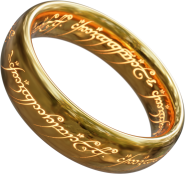
The One Ring, Peter J. Yost, CC BY-SA 4.0
The characters reap the rewards of minor successes but not the golden ring. Those small rewards keep hope alive and keep the reader involved.
If the first problem was taken care of too quickly, why? What sort of trap was laid, and why did the characters take the bait?
If we do this right, we will move our readers emotionally and they will remain invested in our book.
I mentioned that confrontations are chaotic. It’s our job to control that chaos and make a narrative out of it. Nothing upsets a reader more than a book where the author contradicts something that was said or that happened before.
I choreograph action sequences, which can take a little time. Each character’s reactions must be portrayed in such a way the reader doesn’t say, “He wouldn’t do that.”
In real life, people don’t all react the same way. So, our characters can’t all be superheroes in a fight scene. It’s easy to lose the characters’ individuality in the jumble of actions that a confrontation is.
If your violence is war, go to history and see how battles were waged historically. Any war will do, but let’s say you are writing an account of a soldier’s experiences in modern warfare. Go to the Battle of the Bulge, also known as the Ardennes Counteroffensive.
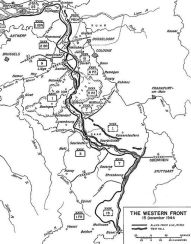
US Army Center for Military History, Public domain, via Wikimedia Commons
I’ve used this battle as an example before because it was a pivotal point in World War II, and the placement of all the forces on both sides is well documented.
Also, one of my uncles fought and was wounded in that battle. Uncle Don came home with a metal plate in his head. American forces endured most of the attack, suffering their highest casualties of any operation during the war.
But you can look at any historical battle. Just remember that even though your book may explore a real soldier’s experiences, you are still writing a fantasy. The past is just hearsay, stories written by the victors. The future is a rumor that may not happen. The only moment that happens for sure is this moment, that moment you experience now.
Our characters exist in their own now, and the inciting incident kicks off their story. Perhaps the soldier’s inciting incident occurs when they join the army. From that point on, the actions and reactions of our soldiers must be logical even amidst the chaos of battle, or the reader will skip over that scene and possibly put the book down.
We make our characters knowable and likable (or not, as the case may be) through physical actions and conversational interactions. In the early part of the story, each scene should illuminate the characters’ motives. The reader must gain information at the same time as the protagonist does.
 However, the reader has an edge—they will be offered clues from the antagonists’ side, which the characters don’t know. The antagonist’s actions will affect the plot in the future. Even if the antagonist isn’t an overt enemy at the outset, the readers’ knowledge creates a sense of unease, a subliminal worry that things will go wrong.
Through the first half of the book, subtle foreshadowing is essential. This knowledge raises the stakes, increasing the tension.
Next week, we will look at ways to choreograph confrontations and violent encounters.
 But not every author has that option.
 In most standard book contracts, royalty terms for authors are terrible, and this is especially true for eBook sales. Most eBooks are sold through online retailers like Amazon. If you’re a traditionally published author and your publisher priced your eBook at $9.99, this is how the Amazon numbers break out. No matter what you think of Amazon, it is still the Big Fish in the Publishing and Bookselling Pond:
 However, to be considered for a traditional contract, you should hire an editor, beta reader, and proofreader to ensure the manuscript you submit to an agent or editor demonstrates your ability to turn out a good, professional product.
 Regardless of your publishing path, you must budget for certain things. You can’t expect your royalties to pay for them early in your career – and many award-winning authors must still work at their day jobs to pay their bills.
 Conferences are an extension of the self-education process. I have discovered so much about the craft of writing, the genres I write in, and the publishing industry as a whole—things I could only learn from other authors. I gained an extended professional network by joining
 Sometimes I am invited to participate in panels or offer a workshop, and I can share my experiences with others. Either way, I learn things. In September, I will be on a panel with
 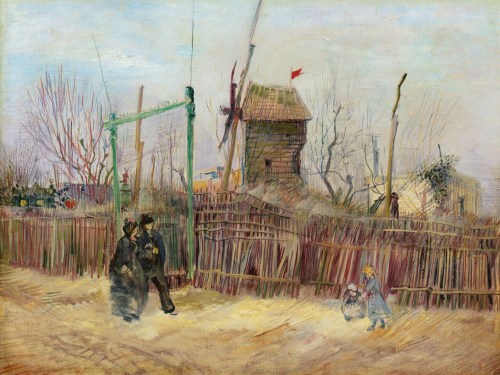 Artist: Vincent van Gogh (1853–1890)
 The plan or design is submitted to the client, who likes it. A mockup of the first iteration is submitted to the client, who still likes it, but … their needs have changed a little, and a new adjustment must be incorporated.
 Books are one area where project creep is not only appreciated but encouraged. Stories are particularly prone to this continual expansion of the original ideas. Short stories grow into novellas and then into novels, becoming a series of books.
 The first aspect of this is to Identify your Project Goals – create a rudimentary outline with names, who they are in relation to the protagonist, and decide who is telling the story. Remember, your story is your invention. Some inventions are in development for years before they get to market. Others are complete and ready to market in a relatively short time. Regardless of your production timeline, this is where project management skills really come into play.
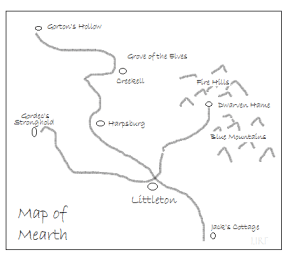 Your map doesn’t have to be fancy – all you need are some lines and scribbles telling you all the essential things, like which direction is north and what certain towns are named. Use a pencil, to easily update your map if something changes during revisions.
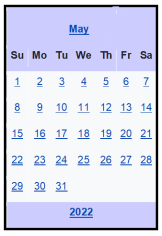 Time can get a little mushy when we are winging it through a manuscript. A calendar gives us a realistic view of how long it takes to travel from point A to point B, or how much time it will take to complete a task.
 Time interests me because I mostly write fantasy, although I write contemporary short fiction and poetry. Fantasy, and all speculative fiction, relies heavily on worldbuilding, and managing time is a facet of that skill.
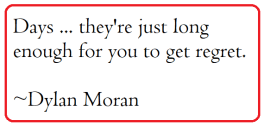
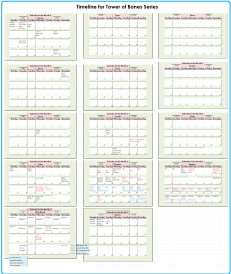 HERE is where I confess my great regret: in 2008, a lunar calendar seemed like a good thing while creating my first world.
 In an even worse bout of predictability, I went with the names we currently use when I named the days, only I twisted them a bit and gave them the actual Norse god’s name. (The gods and goddesses of Neveyah are not Norse.)
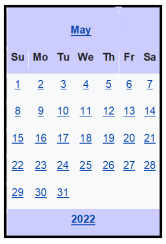 I LEARNED from my mistakes – the timeline for the Billy’s Revenge 3-book series, Huw the Bard, Billy Ninefingers, and Julian Lackland, uses the familiar calendar we use today.
 Thus, it makes sense to consider whether your story is complex enough to hold up well across a series.
 If you are done with your first draft and are just now realizing your novel could be the beginning of a saga, you should consider making notes as to what the future holds for your crew beyond the end. Otherwise, you may find yourself writing a continuation of book one, but with no goal, no purpose.
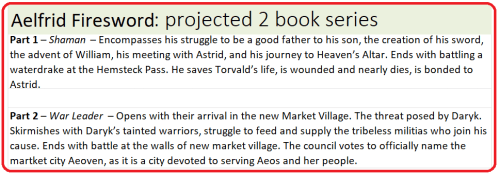 So, for a saga you might want to draw up an overall story arc for the entire series. For a standalone book featuring a recurring character, you likely won’t need to have an all-encompassing projected arc.
 Think about it – the universe contains all we can measure and know, all of space and time and their contents, including planets, stars, galaxies, and all forms of matter and energy. It likes balls and spirals and has a structure that repeats itself. This is reflected in the shape and behavior of the smallest particles to the largest quasars.
 First off, no matter our conscious thoughts regarding the universe and God, writers don’t exist in reality. We exist in what we think reality is, and collectively, we create it as we go along, for good or ill.
 But if you make a map of what you can see, your own
  As I wrote, the outline for that first book took its shape. The written universe is in constant flux, and the storyboard records the changes and keeps the fabric of time from warping.
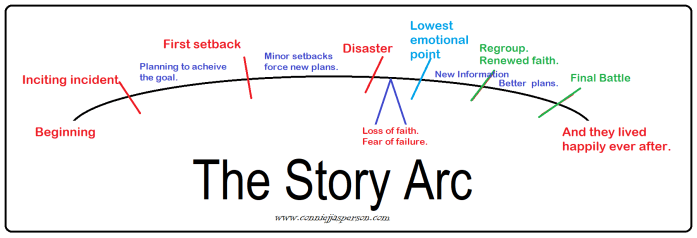 Once I have decided the proposed length, I know where the turning points are and what should happen at each. The outline ensures an arc to both the overall story and the characters’ personal growth.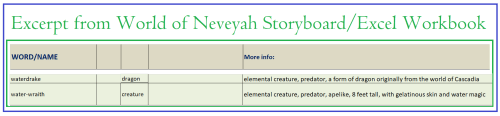
 In other words, something we can’t see or measure is out there, shaping our known universe. For lack of a better term, scientists refer to it as “dark matter” and “dark energy.”
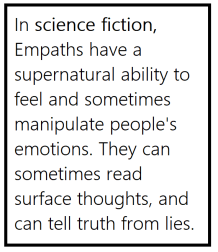 Unless your story is set in a school (such as the
 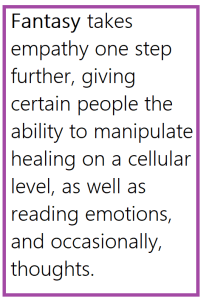 In real life, if a person had the kind of power that our fictional empaths wield, we would hope they were noble, compassionate, and above all, respectful of other people’s wish for privacy. One would want them to be circumspect and never rummage in people’s minds uninvited.
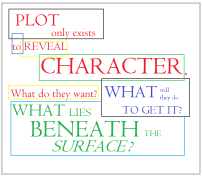 What does healing cost the healer? Does it exhaust them? Does some of the healing magic come from the patient? Do they need to sleep afterward?
 Magic should exist as an underlying, invisible layer of your written universe, the way gravity exists in reality. We know gravity works and accept it as a part of daily life.
 First, the ability to use magic is either learned through spells, an inherent gift, or both. Your world should establish which kind of path you are taking at the outset.
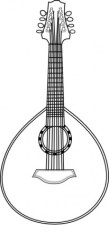 Consider musicians. A person who wins international piano competitions most likely won’t be a virtuoso at brass instruments.
 Like science and magic, superpowers are believable when they are limited in what they can do.


 Life in the Realm of Fantasy