
Negative feedback is a necessary part of growth. When we submit our work to a critique group, we will get feedback, some of which will be perceived as unfavorable. The writing life is a rough playground. Some of us handle rejection or a thorough critique with grace and dignity, and others make an uncomfortable situation worse.
 We are emotional creatures. When we are just starting on this path, getting an unbiased critique for something you think is the best thing you ever wrote can feel unfair.
But it isn’t. No one writes perfect work all the time, but we have our moments of brilliance. It’s just they are moments, and some areas of a good work-in-progress will need revising and line editing to make it shine. A writers’ group can help you find the weaknesses in the overall story arc.
I have received my share of criticisms and rejections. At first, it hurt, but after a while of growing, I began to see what my fellow writers were trying to show me. I also began to understand why my work didn’t win prizes or get accepted into publications.
When I look back on my earlier work it is clear that I had no idea what a finished manuscript should look like. Nor did I understand how to get it to look that way. I didn’t understand how to write to a specified theme.
I didn’t understand how vital a strong, unifying theme is when an editor assembles the works of many authors into one book or magazine. That lack of knowledge on my part was why my work was rejected.
In those days, I always received a standard rejection that boiled down to “Sorry, but no.”
In my experience, boiler-plate rejections are bad only because they don’t tell us why the piece wasn’t acceptable. You never know whether the piece was merely not what the editor was looking for that day or if it is something they wouldn’t take for any reason.
When my work doesn’t make the cut, it’s because I have misread what the editors wanted, not quite nailing the theme as firmly as other writers did. Or, maybe what I thought was a great plot was cliched and boring, or perhaps it was too farfetched.
The key to peace of mind is to understand that most of what you write will NOT resonate with everyone you submit it to. Even if your writing group loved it.
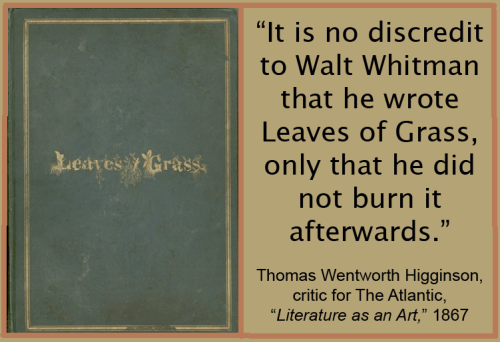
If you put two people in a room and hand them the most thrilling novel you’ve ever read, you’ll get two different opinions.
Good rejections offer a little encouragement. “Try us again.” That means exactly what it says, so the next time you have something you think will fit with that anthology or magazine’s editor, send them a submission.
For me, the best kind of rejections are those that follow a story being optioned for an anthology, and then for one reason or another, the editor releases it back to you. Yes, it is disappointing when a story that was optioned doesn’t get printed after all, because money is nice. But they are good, because the editor liked it enough to option it, and if you handle that disappointment with grace, they will probably print the next story you send them.
I know it doesn’t make sense, but the more an editor writes in a letter about why they have rejected a piece, the more likely the author will be hurt and angry. This is because it’s a rejection and may contain details about why it wasn’t acceptable for that publication.
I once got a rejection from an anthology in the form of a terse note with one handwritten sentence, signed by the editor. “This subject has been done before.”
I was surprised by the curtness of the note, but after a moment, I realized that was just this particular editor’s way. He’s a busy man but took the time to send me a note instead of a form letter.
The single blunt sentence was a bit off-putting, but I learned a lot from that particular rejection. I have to try harder to imagine original situations instead of trying to write what I think will sell. I have to write from the heart and not worry about whether or not I’m writing a commercially viable story.
 I could have embarrassed myself and responded childishly, but that would have been foolish and self-defeating. When I really thought about it, I realized that particular plot twist had been done many times before. I thanked him for his time because I had learned something valuable from that experience.
I still love the concept of that story and the characters, but it’s an unmarketable story the way it was written. I have that tale in a file, and someday I will rewrite it, but with a more imaginative quest for the plot.
We must have a care about the way we behave. We are judged by how we act and react in every professional interaction. If you respond to a peer’s criticism without cooling down and thinking it through, you risk irreparable damage to your career.
You really don’t want your name to be a prominent entry on that editor’s “no way in hell” list.
An editor’s personal response that is a rejection means they have read your work and gone to some trouble for you.
DO NOT respond to the letter with a flame-mail, and DO NOT bad-mouth that editor or publication in your favorite writers’ forums. Editors are also authors, and they have friends who are authors. They may be involved with the same forums and all the many social platforms you are, so have a care what you say online.
They’re just like the rest of us—and they’ve experienced their share of rejection. If you respond publicly and unprofessionally, innocent bystanders will remember you and won’t want to work with you either.
But what if you received a request for revisions? Don’t be insulted! Celebrate and get cracking. Make those revisions. Do what that editor has asked and make no complaint.
When an editor wants changes, they like the work but can see how it could be made stellar. Be a professional and work with them. You might learn something.
Finally, never be less than gracious to the editor when you communicate with them.
 Treat all your professional contacts with courtesy, no matter how angry you are. Allow yourself some time to cool off. Don’t have a tantrum and immediately respond with an angst-riddled rant.
Sometimes we forget that how we interact online with others is public information and is visible to the world. When an interested reader Googles our author name, our online interactions and petty tantrums on Goodreads, Twitter, and every other public forum will be available for eternity.
Be respectful, even if the magazine or anthology you were rejected from is a minor player in the publishing world. Don’t say, “Well, that editor’s a nobody.”
Every famous editor/author begins as a nobody. All editors receive work that must be rejected.
How you respond to criticisms and rejections is where you have the chance to cross the invisible line between amateur and professional. Always take the high ground. If an editor has sent you a detailed rejection, it’s appropriate to respond with a simple “thank you for your time.”
 Leah and Tom have no spare bedrooms until the remodel is done. So, we stayed at the Snohomish Inn, two blocks away. It’s an older place but clean.
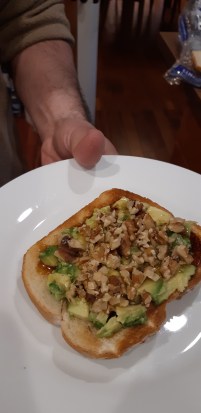 Sunday morning began with the best avocado toast I’ve ever had. Everyone who knows me has heard how much I love that particular dish. Tom’s version is incredibly simple: a good bread, toasted and topped with mashed avocado, chopped walnuts sprinkled over the top, and a teensy drizzle of honey. It sounds odd, but wow. That was a divine, filling breakfast. The picture I took doesn’t do it justice.
 And as a final twist to the craziness–we were finally getting ready for sleep in our hotel room, both of us tired but feeling good about our day. All our toiletries were in a small, dark zipper-bag.
 When you are pantsing it (writing-by-the-seat-of-your-pants), themes are like your drunk uncle. They hang out at the local pub until closing time and then weave their way home through dark alleys. Sometimes, as you are leaving for work in the morning, you find them under the neighbor’s shrubs. Other times they make it home.
 I often sit on my back porch and just let my thoughts roam, thinking about nothing in particular. Usually, I will end up considering the character’s quest or dilemma. I ask myself what the root cause of the issue is—if it is a crime, why is crime rampant? Is it a societal problem, such as poverty or war? If the core dilemma is unrequited love, what are the roadblocks to a resolution?
 These layers offer us an incredible amount of subliminal information about that surreal world and what is going on in reality, what the Matrix truly is.
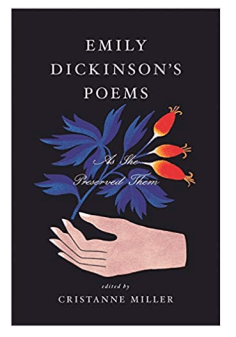
 Poets understand how central a theme is to the story. A poet takes the theme and builds the words around it. Emily Dickinson’s poems featured the themes of spirituality, love of nature, and death, which is why she appealed so strongly to me during my angsty young-adult life.
 But that would be wrong. Poets write words that range far more widely than their physical surroundings. Some poets are constrained by unrewarding jobs, others may be “on the spectrum,” as they now say, and still others are constrained by physical limitations.
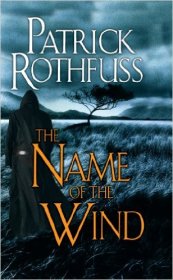 Fantasy author
  Even today, her humor shines with sharp-edged wit delivered without condescension. Her most memorable protagonists rise above the trivialities of life that absorb the sillier characters.
 Pride is a powerful theme because it is the downfall of many characters in all literature, not just Jane Austen’s work.
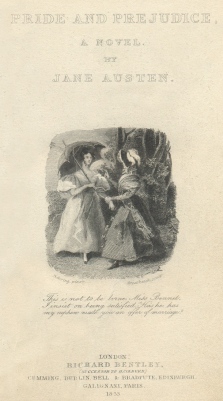 Clearly, Mrs. Dashwood feels that ensuring her sisters-in-law are not impoverished would make her only son less rich. Less appealing to other affluent families.
 Many of James’s books feature one common theme—lust.
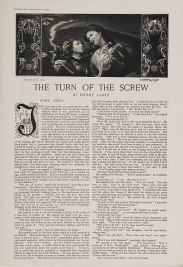 Henry James is famous for his novels and short stories laying bare the deepest motives and manipulations of the society he knew. However, he wrote one of the most famous novellas ever published,
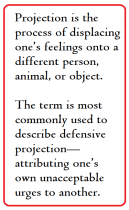 Projection
 Why is this so? Let’s look at an example.
 So how is social class different from economic class? In some parts of the world, they are the same. In others, social class is inherited, and economic class is acquired.
 For instance, I grew up in a financially stable lower-middle-class family. But I never buy pre-distressed furniture, no matter how much the designers on TV love it. This is because, by the time my youngest child left home, all my hand-me-down furniture was distressed. I like my furniture to reflect my life—un-distressed.
 February here in my little town was dryer than usual, far less rainy than in other parts of the Northwest. We have seen the sun much more than usual over the last two weeks, which doesn’t bode well for the summer. I can’t help but think of the horrible heat we had last June. We don’t like it when it gets up to 110 degrees Fahrenheit (43.3 Celsius). It’s literally hell when you realize most people here don’t have air conditioning in their homes. Up through the 1980s, we never needed it, as summers rarely topped 80 degrees (26.6).
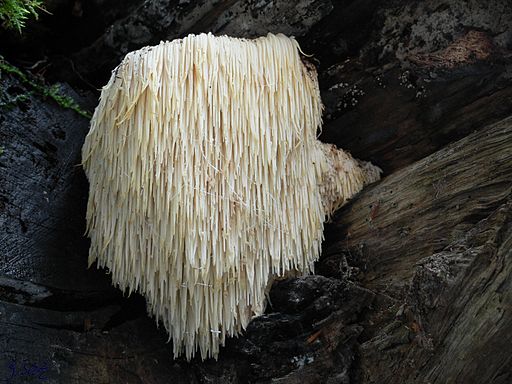 Edible mushrooms of all sorts abounded. One I hadn’t seen before, the lion’s mane mushroom, was the central feature in the displays of the two local craft fungi growers. It was interesting to look at, but … no.
 On the writing front, last week was quite productive. I received the final chapters back for my blended novel from my editor and am now going over the manuscript one last time. This is a merging of the stories of two characters and the events of one overarching plot arc. It’s the parallel stories of two battle mages, a father and son, told from their unique generational viewpoints.
 This merger of two novels into one involved cutting a number of chapters out of each and layering the stories so that the timeline moves forward at the right pace and doesn’t repeat what we already know.
 Also, I submitted my 2020 NaNoWriMo novel to
 Today we are discussing a particular kind of editor: the submissions editor. When I first began this journey, I didn’t understand how specifically you have to tailor your submissions for literary magazines, contests, and anthologies. Each publication has a specific market of readers, and their editors look for new works their target market will buy.
 The quality of your work isn’t the problem, and you have selected a publication that features work in your chosen genre. But your subgenre may not match what the readers of that publication want to see. After all, both spaghetti Bolognese and bruschetta are created out of ingredients made from wheat and tomatoes, but the finished meals are vastly different.
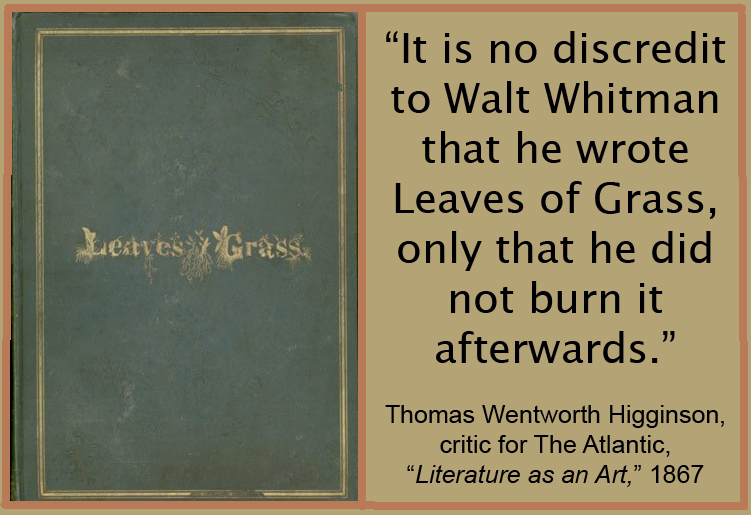 Some hobbyists expect special consideration and are offended when they don’t get it. Egos are rampant in this business, but in reality, no one gets to be treated like a princess.
 er sending your work.
 Please, if you consider yourself a professional, format your submissions properly. You want to stand out but getting fancy with your final manuscript is not the way to do that—you will be rejected out of hand if you don’t make this effort.


 Life in the Realm of Fantasy