Category Archives: writing

#Writing the Disaster 

Severe weather, fires, famines, and floods are terrible to live through, and many harrowing stories emerge from these experiences. Stories of apocalyptic catastrophes resonate because disaster drives humanity to strive for greater things. Those who survive and rise above it become heroes.

One disaster we may all face at some point is famine driven by climate change. Hunger exists in this world, and famine is an enemy that takes no prisoners.

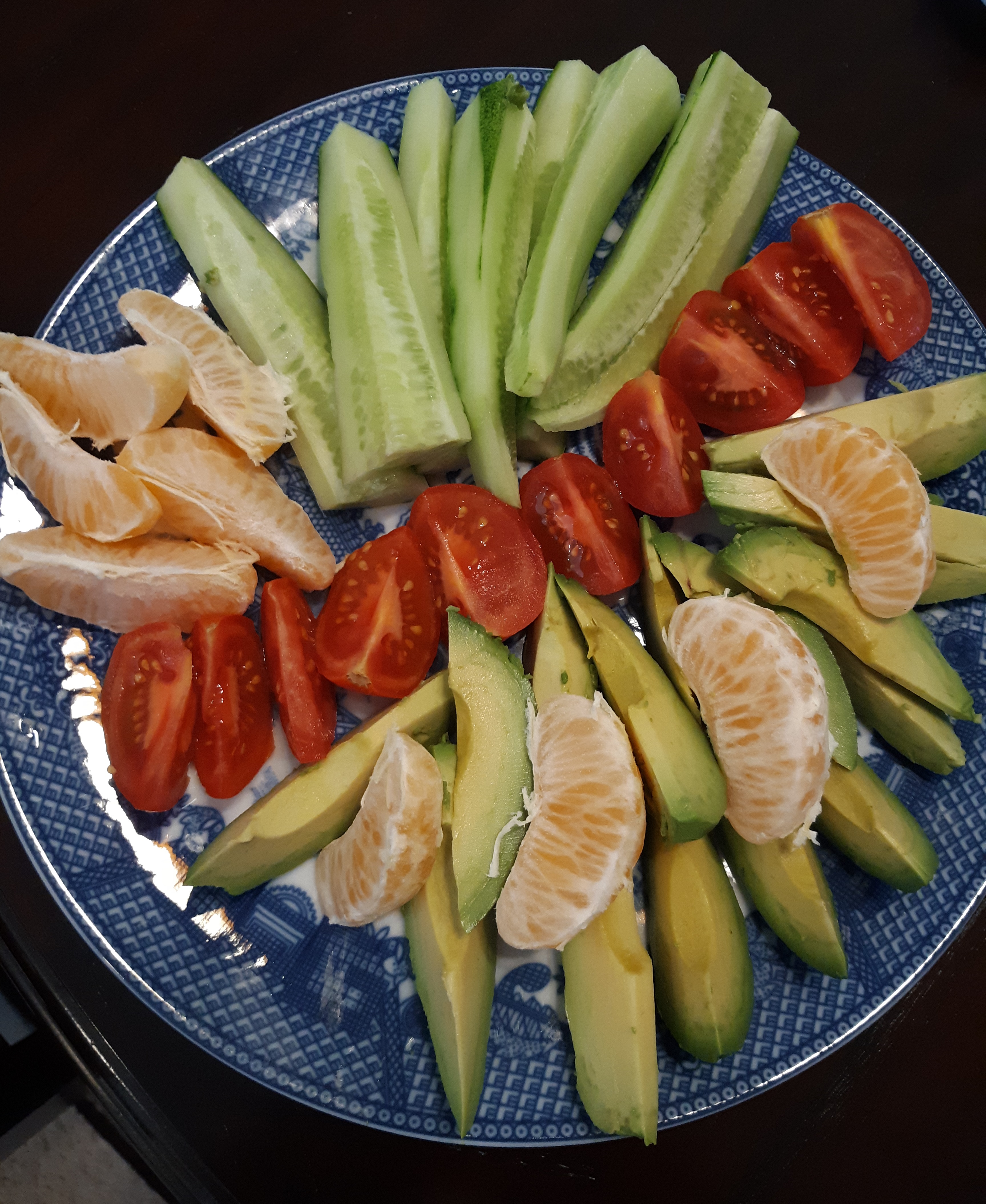
Food deprivation can have a lasting impact on a person. People can survive on very little, and unfortunately, many do. To go without adequate food for any length of time changes you, makes you determined to never go hungry again. You stockpile preserved foods in times of plenty as a shield against the next famine.

Unfortunately, for some, hunger will lead them to make choices that challenge the accepted morality of those who have no concept of what hunger truly is.

If you are looking for the seeds of a good story, consider the small tragedies people face each day, deeply personal catastrophes. These disasters happen on what seems an unimportant level to people who have resources.

I have used this example before, but it’s a real-life situation, one that may be familiar to you and your community. A young widow is working two part-time jobs and raising her two small children. How would you write her story? Perhaps she lives in an area with no public transportation. She struggles to pay for fuel, but what if her car breaks down? How will she get to work?

All her money goes to fuel, childcare, rent, and utilities. What little she has left after those bills are paid goes to food. She has no resources and no means to pay for car repairs. Without her car, she will lose both jobs. That is a profoundly personal disaster, one from which she and her children might not recover.

But maybe that plot isn’t big enough to inspire you to write a book about it. Perhaps you want to write about a disaster that inspires heroics in the face of widespread devastation. The world itself can provide us with plenty of drama. Wildfires, floods, tornadoes, hurricanes, earthquakes, tsunamis – these catastrophes regularly destroy thousands of communities.

courtesy Office360 graphics

Once we have introduced our characters and set the scene, it’s time to bring on the natural disaster. When you begin writing the story, it will be chaotic. Just get the bones of the events down as well as you can and move on. You must get the entire story down while it is fresh.

In the first draft, write each scene as fast as you can, and don’t worry about fine-tuning it because you will come back to it later. The second draft is where you will iron out the rough spots and make things logical.

In the second draft, we take apart the scenes where we have told the story and reword them. We show the events as if we were painting with words. We use power words to inject real, believable emotion into the experience.

The window shatters, and a two-by-four impales itself in the wall beside David amid a shower of glass shards. I stare, dumbstruck, as the wind tears the door from my hand and slams it against the wall.

Verbs in that scene are: stare, impales, shatter, tears, and slams. Show the bones of the event by using verbs with powerful visuals, and the reader’s mind will fill in the rest.

I suggest you open a new document and describe the disaster in great detail. Then save it as background material for that story and walk away from it. Let it rest, and move on to something else. When you return to it, read it aloud and see what you can cut and condense and still have the bones of the action. As always, verbs and power words are action’s best friend.

Droughts often cause famines and worse. To go without water is to die. Thirst is a more immediate pain than hunger. The human animal can survive for up to three weeks without food but only three to four days without water. Rarely, one might survive up to a week.

Even brackish water must taste sweet when one suffers from a lack of potable water. And when one is starving, foods they would consider repugnant under other circumstances will fill their belly.

Look at the continual strife in some third-world countries. You will see how long-term droughts have precipitated widespread famine, leading to civil unrest. Gang wars are fought over the right to own a water source, and these conflicts can erupt into revolution.

We often forget this when we have plenty to eat and never have to worry about whether we will have water in our faucet as long as we can pay the bills. However, if we learned anything from the empty grocery store shelves in 2020 and the subsequent supply chain crisis, it is that our well-fed lives are standing on a one-legged stool.

Once the events of the disaster are on paper the way we want them, we have the opportunity to ratchet up the reader’s emotions by the way we portray the aftermath. Who finds strength through the calamity, and who is broken by it? What roadblocks do they face, and how do they recover?

We must complete the story and provide the reader with some closure by ending with our characters in a place of comparative happiness and security.

Drama, heartache, disaster, and violence are the backdrop against which humanity’s story plays out. The most powerful books in the Western Canon of Great Literature explore both the good and evil of the human experience.

We connect with these stories across the centuries because the fundamental concerns of human life aren’t unique to one society, one technological era, or one point in time. We all want enough food, enough water, and reliable shelter.

When we contrast ease with hardship, we add emotional texture to our narrative. I love a good story featuring courage in the face of personal disasters. Readers like me will think about the story and those characters long after it has ended.

5 Comments

Filed under writing

Beta Reading or Editing? What is the difference? #writing

Last week, we talked about self-editing a manuscript. I shared the process I use to get my work ready for my editor. Even though I go to all that trouble, Irene still finds many places that need attention.

But why isn’t simply following the suggestions raised by beta readers enough? Why go to the trouble of the process as I described it last week AND still have it professionally edited?

First, we need to talk about apples and oranges. Both are fruit and yet they are very different from each other. Beta reading and editing are apples and oranges.

Beta reading is the first look at a manuscript by someone other than the author. I always look for a person who reads for pleasure and can express their thoughts about a story or novel. That person must read and enjoy the genre of that particular story. If they dislike sci-fi, they won’t have good insights to offer about your space opera.

I am fortunate to have excellent friends willing to do this for me. Last week, I received a short story back from two kind friends. Both had good insights as to why I have been unable to sell that story. Stephen and Ceri both provided me with thoughtful and spot-on suggestions.

The first reading by an unbiased eye gives me a view of my story’s overall strengths and weaknesses. The suggestions offered by my circle of friends enable me to make good revisions. My editor can focus on doing her job without being distracted by glaring issues that should have been caught early on.

If you agree to read a raw manuscript for another author, remember that it has NOT been edited.

  • You are reading a first draft. Beta reading is not editing, so don’t overanalyze it. A thousand nit-picky comments at this early stage are not helpful because they clutter things up, obscuring the larger issues.

This manuscript is the child of the author’s soul. Phrase your comments positively, and never be abrupt or accusatory. As a beta reader, you are reading an unfinished project. You are trying to help an author take their manuscript in the direction that they have envisioned.

Why should a beta reader not simply shoot from the hip? I’ve heard some authors say “so-and-so needs to clean things up. He needs to develop a thicker skin,” etc. etc.

That is true, but an author’s ability to make good use of criticism develops gradually as they go out into the professional world.

Kindly worded criticism will help the author and won’t destroy their enjoyment of writing. But harsh criticism shows a lack of understanding on the part of the beta reader. It can generate resentment and a refusal to listen. The traumatized author might never advance beyond the beginning stage.

So, what significant issues must be addressed in the first stage of the revision process? If you are asked to beta read for a fellow author, ask yourself these questions about the overall manuscript:

How does it open? Did the opening hook you? As you read, is there an arc to each scene that keeps you turning the page? Note the page numbers of the places that are confusing.

Setting: Does the setting feel real? Did the author create a sense of time, mood, and atmosphere? Is world-building an organic part of the story?

Characters: Did you understand who the point-of-view character was? Did you know what they were feeling? Were they likable? Did you identify with and care about them? Were there various character types, or did they all seem the same? Were their emotions and motivations clear and relatable?

Dialogue: Did the dialogue and internal narratives advance the plot, or were they opportunities for info dumps? Did the dialogues illuminate the conflict? Did they heighten the tension and add to the suspense? Were the conversations and thoughts distinct to each character, or did they all sound alike?

Plot: Do the characters face a struggle worth writing about? Does the action feel necessary to advance the story? Do the events feel logical, and were you able to suspend your disbelief?

Pacing: How did the momentum feel? Where did the plot bog down and get boring? Did the pacing keep you engaged?

Does the ending surprise and satisfy you? What do you think might happen next?

What about grammar and mechanics? At this point, you can make broad comments regarding grammar and industry practices.  If the author’s work shows they don’t understand basic punctuation standards, suggest they look online for some free and easy articles on grammar. I highly recommend the Purdue OWL® – Purdue OWL® – Purdue University.

Or, if you feel up to it, offer to help them learn a few basics.

Most people have no idea just how difficult sharing your just-completed first draft with anyone is. For that reason, being the first reader of another author’s work is a privilege I don’t take lightly.

Now, we know that the beta reader makes general suggestions to help the author achieve their goals in the second draft.

So, what is editing?

Editing is a process that occurs in the final stage of revision.

The author has completed the manuscript, and it is as clean as they can get it. An editor hasn’t seen the manuscript before. They go over it line by line, pointing out areas that need attention.

  • awkward phrasings,
  • grammatical errors
  • missing quotation marks. etc.

Many things may still need correcting. Sometimes, major structural issues will need to be addressed to improve the pacing. Straightening out all the kinks may take more than one trip through a manuscript.

The various branches of literature have requirements that are unique to them, so there are different kinds of editing.

For academic writing, editing involves carefully reviewing each sentence. Every grammatical error must be resolved, making words and sentences more straightforward, precise, and effective. Weak phrasings are strengthened, nonessential information is weeded out, and important points are clarified.

For novel writing, editing is a stage in which a writer and editor work together to improve a draft by ensuring style and grammatical usage are consistent. The editor does not try to change an author’s voice but does point out errors. If an author’s style breaks convention, the editor ensures that convention is broken consistently from page one to the end of the manuscript. At the same time, strict attention is paid to the overall story arc.

Editors know they are not the author. They will make suggestions, but ultimately, all changes must be approved and implemented by the author.

When you have made the revisions your first reader suggested and feel your book is ready, hire a local, well-recommended editor. You need someone you can work with, a person who wants to help you make your manuscript ready for publication.

You might wonder why you need an editor when you’ve already spent months fine-tuning it. The fact is, no matter how many times we go over our work, our eyes will skip over some things. We are too familiar with our work and see it as it should be, not as it is.

When a reader purchases your book, they won’t be familiar with it. Many readers are savvy and notice what we have overlooked.

On Friday of last week, I received my most recent work-in-progress back from Irene. She combed through all 100,000 words and left me with a treasure trove of suggestions.

Yes, I am an editor, but I can’t identify what is wrong with my own work. My eye wants to skip the less obvious flaws. However, another person will notice and point out what is wrong.

So, between my above-mentioned short story and my forthcoming novel, I have some work ahead of me. But thanks to Stephen, Ceri, and Irene, I now know what needs to be done.

Best of all, it’s the kind of work I love.

Whether we write novels or short stories, we need to have an unbiased eye review it before submitting it to an agent or publication. It’s due diligence, part of the professional process.


5 Comments

Filed under writing

Self-editing – a 3-step process #writing

Many people in my online community have asked for tips on self-editing. I don’t recommend it, as most people don’t have the tenacity to do a proper job of it. However, it can be done, so we’re revisiting a post from April of 2024 on effective self-editing. I hope this answers some questions!


As an editor, I saw every kind of mistake you can imagine, and before that, as a writer, I made them all. This is why I rely on an editor for my work. Irene sees the flaws that my eye skips over.

WritingCraft_self-editingWhen prepping a novel to send to Irene, I use a three-part method. This requires specific tools that come with Microsoft Word, my word-processing program. I believe these tools are available for Google Docs and every other word-processing program. Unfortunately, I am only familiar with Microsoft’s products as they are what the companies that I worked for used.

What follows are three steps that should eliminate most problems in a manuscript.

Part one: Beta Reading is the first look at a manuscript by someone other than the author. I suggest you don’t omit this step unless you can find no one who understands what you need. A good beta reader is a person who reads for pleasure and can gently express what they think about a story or novel. Also, look for a person who enjoys the genre of that particular story. Your beta reader should ask several questions of this first draft (feel free to give them the following list).

beta read meme 2Part two: Once I have ironed out the rough spots noticed by my beta readers, this second stage is put into action. Yes, on the surface the manuscript looks finished, but it has only just begun the journey.

In Microsoft Word, on the Review Tab, I access the Read Aloud function and begin reading along with the mechanical voice. Yes, the narrator app is annoying and mispronounces words like “read,” which sound different and have different meanings depending on the context. However, this first tool alerts me to areas that were overlooked in the first stage of revisions.

ReviewTabLIRF07032021The most frustrating part is the continual stopping, making corrections, and starting.

I use this function rather than reading it aloud from the monitor, as the computer screen tricks the eye. I tend to see and read aloud what I think should be there rather than what is.

  • I habitually key the word though when I mean through or lighting when I mean lightning. Each is a different word but is only one letter apart. Most (but not all) miss keyed words will leap out when you hear them read aloud.
  • Most (but not all) run-on sentences stand out when you hear them read aloud.
  • Most (but not all) inadvertent repetitions also stand out.
  • Most of the time, hokey phrasing doesn’t sound as good as you thought it was.
  • Most of the time, you hear where you have dropped words because you were keying so fast you skipped over including an article, like “the” or “a” before a noun.

This is a long process that involves a lot of stopping and starting. It takes me well over a week to get through an entire 90,000-word manuscript. I will have trimmed about 3,000 words by the end of this phase. I will have caught many typos and miss keyed words and rewritten many clumsy passages.

But I am not done.

Part three: the manual edit. This is where I make a physical copy and do the work the old-fashioned way.

Everything looks different when printed out, and you will see many things you don’t notice on the computer screen or hear when it is read aloud by the narrator app.

  • Houghton_Typ_805.94.8320_-_Pride_and_Prejudice,_1894,_Hugh_Thomson_-_Protested

    Illustration by Hugh Thomson representing Mr. Collins protesting that he never reads novels.

    Open your manuscript. Make sure the pages are numbered in the upper right-hand corner.

  • Print out the first chapter and either staple it together or use a binder clip. If you drop it, the pages will all be together in the proper order.
  • Turn to the last page. Cover the page with another sheet of paper, leaving only the final paragraph visible.
  • Starting with the final paragraph on the last page, begin reading, working your way forward.
  • With a yellow highlighter, mark each place that needs revising.
  • With a red pen/pencil, make notes in the margins to guide the revisions. (Red is highly visible, so you won’t miss it when you are putting your corrections into the digital manuscript.
  • Put the corrected chapter on a recipe stand next to your computer. Open your manuscript and save it as a new file. (ManuscriptTitle_final_Apr2024.docx.) Begin making the revisions as noted on your hard copy.
  • Do the same for each chapter until you have finished revising the entire manuscript.

I look for info dumps, passive phrasing, and timid words. They are signs that a section needs rewriting to make it visual rather than telling. Clunky phrasing and info dumps are signals telling me what I intend that scene to be but haven’t shown. Showing takes fewer words. Many times, I must cut some of the info and allow the reader to use their imagination.

I will have trimmed another 3,000 to 4,000 more words from my manuscript by the end of this process.

By the time we begin writing, most of us have forgotten whatever grammar we once knew. Editing software is a good tool for this. But editing software operates on algorithms and doesn’t understand context.

to err is human to edit divineI am wary of relying on Grammarly or ProWriting Aid for anything other than alerting you to possible problems. Look at each thing they point out and decide whether to accept their recommendation or not. 

You’ll get into trouble if you assume the AI editing programs are always correct. As I said above, they don’t understand context. Good writing involves technical knowledge of grammar, but voice isn’t about algorithms.

Novels are comprised of many essential components. If one element fails, the story won’t work the way I envision it. I always remember that it’s been months since a beta reader saw the mess I am working on and much has changed. I take a hard look at these aspects:

  • Characterization – are the characters individuals?
  • Dialogue – do people sound natural? Do they sound alike, or are they each unique?
  • Mechanics (grammar/punctuation flaws will be more noticeable when printed out)
  • Pacing—how does it transition from action scene to action scene?
  • Plot – does the story revolve around a genuine problem?
  • Prose – how do my sentences flow? Do they say what I mean?
  • Themes – What underlying thread ties the whole story together? Have I used the theme to its best potential?

Being a linear thinker, this process of making revisions works for me. It can take more than a month, but when I’ve finished, I’ll have a manuscript that won’t be full of avoidable distractions. It will be something I can send to my editor. And because I have done my best work, Irene will be able to focus on finding as much of what I have missed as is humanly possible.

Editors_bookself_25May2018If you read as much as I do (and this includes books published by large Traditional publishers), you know that a few mistakes and typos can and will get through despite their careful editing. So, don’t agonize over what you might have missed. If you’re an indie, you can upload a corrected file.

We are all only human, after all.

2 Comments

Filed under writing

#FineArtFriday: Albert Bierstadt, The Rocky Mountains, Landers Peak 1860, revisited

When I sit down to write, my work is usually fiction. Even so, I want my work to have authenticity, although I might never have experienced what I am writing about. Whether a piece is set in an alternate world, or in this one, or if it is in the past, present, or future, a source of visual information you can use to fire your imagination exists on the internet–Wikimedia Commons.
For example, today’s image is a landscape painting by Albert Bierstadt, an American painter best known for his lavish, sweeping landscapes of the American West.  This painting shows what tribal life after a successful hunt might be like, and if you are writing about any group of people who hunt or gather food, this particular painting contain a wealth of historically accurate visual information. He painted what he saw. In all of Bierstadt’s work, you will find a world that existed 150 years ago, complete with children playing and dogs barking.

Wikipedia has this to say about the painter:
Born in Germany, Bierstadt was brought to the United States at the age of one by his parents. He later returned to study painting for several years in Düsseldorf. He became part of the Hudson River School in New York, an informal group of like-minded painters who started painting along the Hudson River. Their style was based on carefully detailed paintings with romantic, almost glowing lighting, sometimes called luminism. An important interpreter of the western landscape, Bierstadt, along with Thomas Moran, is also grouped with the Rocky Mountain School.

The life of the American West of the 19th century can be directly translated into a science fiction novel, or a fantasy novel–because the elements of hunting and gathering remain the same no matter what world you set it in. A great many people were involved in taking down a few animals–two antelope, one mountain sheep, and one bear. Hunts of this nature, even with modern weapons, are difficult and fraught with danger. For this reason, the take from this hunt will supply the entire camp of perhaps 100 people for one or two weeks., so foraging for roots, berries, and greens was an important task, as was fishing.

In this painting, you see how the tribe’s homes were constructed, and how the camp was laid out–the butchering party is well away from the rest of the camp, which is on the banks of a river. Everything that was important to the lives of these people is laid out in detail, exactly how it was the day the artist set up his easel in the wilderness and began painting.

Go to history for your world building, and go to art for your history. Don’t be afraid to ‘waste time’ looking at paintings and examining them for minute details, because your imagination will run with it, and your work will have a sense of realism.


Wikipedia contributors, “Albert Bierstadt,” Wikipedia, The Free Encyclopedia, https://en.wikipedia.org/w/index.php?title=Albert_Bierstadt&oldid=793302910 (accessed August 11, 2017).
The Rocky Mountains, Landers Peak; Albert Bierstadt 1863 [Public domain], via Wikimedia Commons, https://commons.wikimedia.org/wiki/File%3AAlbert_Bierstadt_-_The_Rocky_Mountains%2C_Lander’s_Peak.jpg, accessed August-11-2017.
3 Comments

Filed under #FineArtFriday, writing

Self-editing part one – 7 easy-to-remember rules of punctuation #writing

Many authors are just starting out in the craft and have never written anything longer than a memo or a social-media post before the novel they just finished. Once their manuscript is revised to their satisfaction, they might try to self-edit it rather than hire a freelance editor.

This can work if they took writing courses or had an education that included creative writing.

But I don’t recommend it. We see what we believe is there, not what is there.

A majority of new writers haven’t written since they left school. They don’t remember how to write a readable sentence or what a paragraph should (or should not) contain.

I certainly didn’t retain those skills. However, while I couldn’t afford to go back to college, I did go out of my way to educate myself.

First, we must think of punctuation as the traffic signal that keeps the words flowing and the intersections manageable.

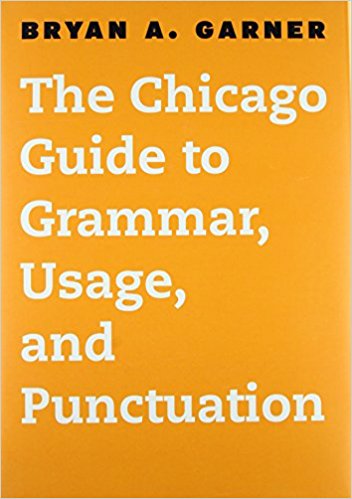
Trying to learn from a grammar manual is daunting, to say the least. I learned by looking things up in the Chicago Manual of Style (CMoS), which is the rule book for American English, and from working with my editor. Most editors in the large traditional publishing houses refer to the CMoS when they have questions.

I use Bryan A. Garner’s “the Chicago Guide to Grammar, Usage, and Punctuation.”

Maybe (like me) you came up in the world of business before the computer revolution. If so, you may be familiar with several other grammar style guides. Each is tailored to a particular kind of writing:

  • The AP manual is for journalism.
  • The Gregg manual for business writing.
  • The CMoS is specifically for creative writing, such as fiction, memoirs, and personal essays, but also includes business and journalism rules.

You don’t need to know everything in the CMoS. If you know the fundamentals and are consistent with how you use them, your writing will pass most tests.

Punctuation appears complicated when one is new to it. This confusion occurs because some advanced usages are open to interpretation. The way you habitually use them is your voice.

One thing remains clear: the foundational laws of comma use are not open to interpretation.

If you consistently follow seven simple rules, your work will look professional.

Rule one: commas and the fundamental rules for their use exist for a reason. If we want the reading public to understand our work, we need to follow them. Let’s get the “don’ts” out of the way:

  • DO NOT insert commas “where you take a breath” because that many commas are unnecessary, and the habit creates run-on sentences.
  • DO NOT insert commas where you think a sentence should pause because every reader sees the pauses differently.

Rule two: Commas can join two independent but related clauses with the aid of a conjunction. (I repeat: independent but related with the help of a conjunction.)

The independent clause is a complete standalone sentence.

  • Boris worships the ground I walk on. His adoration tires me. (Two sentences.)
  • Boris worships the ground I walk on, but his adoration tires me. (One sentence.)

Dependent clauses are unfinished and can’t stand on their own. Join them in the sentence with a conjunction and omit the comma this way:

  • Boris worships the ground I walk on and brings me margaritas by the pool. (And is a conjunction, a joining word.)

You do not join unrelated independent clauses (clauses that can stand alone as separate sentences) with commas as that creates a rift in the space/time continuum: the Comma Splice.

  • Boris kissed the hem of my garment, Woofer, my dog, likes to ride shotgun.

What we have there is a wandering, run-on sentence created by the casual use of the comma splice. The dog has little to do with Boris other than the fact they both worship me. They should not be in the same paragraph, much less the same sentence. Here is the same thought, written correctly:

Boris kissed the hem of my garment.

Woofer, my dog, likes to ride shotgun.

  • The dog riding shotgun is an independent clause and does not relate at all to Boris and his adoration of me. It is a different idea and should be in a separate paragraph. If you want Boris and the dog in the same sentence, you must rewrite it:

Boris and Woofer worship me and fight for the right to ride shotgun.

Rule three: a semicolon in an untrained hand is a dangerous thing. Some people (including Microsoft Word) think a semicolon signifies an extra-long pause but not a hard ending. The Chicago Manual of Style says that belief is wrong. Don’t blindly accept what Spellcheck or the AI editor app tells you!

So, when do we use them? We only use them when two clauses are short, complete sentences that relate to each other. Here are two brief sentences that would be too choppy if left separate.

  • The door swung open at a touch. Light spilled into the room. (2 related short standalone sentences.)
  • The door swung open at a touch; light spilled into the room. (2 related short sentences joined by a semicolon.)
  • The door swung open at a touch, and light spilled into the room. (1 compound sentence made from 2 related standalone clauses joined by a comma and a conjunction.) (A connector word.)

All three of the above sentences are technically correct. The usage you habitually choose is your voice.

I don’t hate semicolons, although some editors do. However, I generally look for alternatives to them.

Rule four: Colons. These tidbits of punctuation commonly head lists found in technical writing. Colons are rarely needed in narrative prose. In technical writing, you might say something like:

For the next step, you will need:

  1. four nails,
  2. two feet of rope,
  3. one banana, whole and unpeeled.

I have no idea what they are building, but I can’t wait to see it.

Rule five:  Oxford commas, also known as serial commas. This is the one war authors will never win or find common ground, a true civil war.

When listing a string of things in a narrative, we separate them with commas to prevent confusion. I like people to understand what I mean, so I always use the Oxford Comma/Serial Comma.

If there are only two things in a list, they do not need to be separated by a comma. If there are more than two items, separate them with a comma.

We sell dogs, cats, rabbits, and birds.

Why do we need clarity? You might know what you mean, but not everyone thinks the same way.

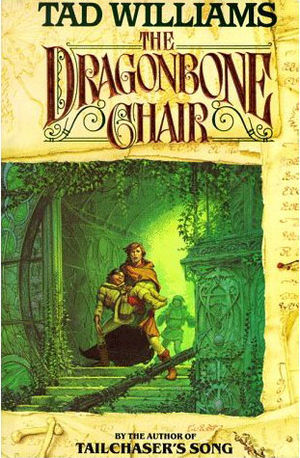
  • I accept this award and thank my late parents, Tad Williams and Poseidon.

That sentence might make sense to some readers, but not all. The intention of it is to thank my late parents, my favorite author, and the god of the sea. If I don’t thank Poseidon, my next fishing trip could end badly.

  • I accept this award and thank my late parents, Tad Williams, and Poseidon.

Regardless of which stance you take on the Oxford/serial comma, choose your poison and be consistent.

Rule six: We use commas after introductory clauses.

After dark, Boris changes into his bat form and goes hunting for enchiladas.

Rule seven: When writing dialogue, all punctuation goes inside the quotation marks.

  1. A comma follows the spoken words, separating the dialogue from the speech tag.
  2. The clause containing the dialogue is enclosed, punctuation and all, within quotes.
  3. The speech tag is the second half of the sentence, and a period ends the entire sentence.

The editor said, “I agree with those statements.”

  1. When dialogue is split by the speech tag, do not capitalize the first word in the second half.

“I agree with those statements,” said the editor, “but I wish you’d stop repeating yourself.”

If you follow these seven simple rules, your work will be readable. If your story is as original as you think it is, it will be acceptable to acquisitions editors.

Next week, we will continue our look at effective self-editing.

5 Comments

Filed under writing

Phrasing, pacing, and voice #writing

Today, we are revisiting the way our habitual word choices affect the pacing of our narrative.

We are encouraged to write active prose as opposed to passive, but what does that mean? First, the term “active prose” does not refer to the events that keep the plot arc moving.

Active prose refers to our word choices and how we construct our sentences.

A passive sentence is not “wrong.” No matter how active the phrasing, a poorly written sentence is not “better.”

Passive phrasing slows the reader’s perception of the story, which may be what you want.

  • “Deep in the forest, there was a cabin.” Passive, descriptive, longer.
  • “A cabin stood deep in the forest.” Active, verb forward, shorter.

The two examples say the same thing, but the words that surround and modify “cabin” change the mood of the sentence and set the tone for what follows. Neither sentence is right or wrong. It’s up to the writer to choose which style they go with.

Most modern readers don’t have the patience for long strings of descriptive, wordy sentences. However, they do like a chance to breathe and absorb what just happened.

Our task is to mingle active and passive phrasing to keep things balanced. That skill is a fundamental aspect of pacing.

Good pacing is about balanced prose as much as it is about staging the events. It is dynamic, engaging, and immersive.

How do we write balanced prose? It begins with the words we choose to show our story and the order in which we place them in the sentence.

The ways we combine active and passive phrasing are part of our signature, our voice. By mixing active phrasing with a little passive, we choose areas of emphasis and places in the narrative where we want to direct the reader’s attention.

Some types of narratives should feel highly charged and action-packed. Most of your sentences should be constructed with the verbs forward if you write in genres such as sci-fi, political thrillers, and crime thrillers.

  • Stephenie gripped the handhold, bracing herself.

The above sentence is Noun + verb + article + noun + transitive verb + noun.

Verbs are action words, but all verbs are not equal in strength.

Verbs that begin with hard consonants are power verbs. They push the action outward from a character. Other verbs pull the action inward. The two forces, push and pull, create a sense of opposition and friction. Dynamism in word choices injects a passage with vitality, vigor, and energy.

  • When we employ verbs that push the action outward from a character, we make them appear authoritative, competent, energetic, and decisive.
  • Conversely, verbs that pull the action in toward the character make them appear receptive, attentive, private, and flexible.

A poor choice of words makes a sentence weak. Passive construction can still be strong despite being poetic.

Has someone said your work is too wordy? An excess of modifiers could be the offenders.

  1. Look for the many forms of the phrasal verb to be. These words easily connect to other words and lead to long, convoluted passages.
  2. Look for connecting modifiers (still, however, again, etc.).

Concise writing can be difficult for those of us who love words in all their glory. Nevertheless, I work at it.

My goal during revisions is to make use of contrasts to show the story with the least number of words.

  • dwell on / ignore
  • embrace / reject
  • consent / refuse
  • agony / ecstasy

Many power words begin with hard consonants. The following is a short list of nouns and adjectives that start with the letter B. The images they convey when used to describe action project a feeling of power:

  • Backlash (noun)
  • Beating (noun or verb)
  • Beware (verb)
  • Blinded (adjective)
  • Blood (noun)
  • Bloodbath (noun)
  • Bloodcurdling (adjective)
  • Bloody (adjective)
  • Blunder (noun or verb)

courtesy Office360 graphics

As you can see, some nouns are also verbs, such as beating or blunder. When you incorporate any of the above “B” words into your prose, you are posting a road sign for the reader, a notice that danger lies ahead.

If I want to create an atmosphere of anxiety, I would use words that push the action outward:

  • Agony (noun)
  • Apocalypse (noun)
  • Armageddon (noun)
  • Assault (verb)
  • Backlash (noun)
  • Pale (modifier)
  • Panic (verb or noun)
  • Target (verb)
  • Teeter (verb)
  • Terrorize (verb)

If I want to show the interior workings of a character without resorting to a dump of italicized whining, I could write their internal observations using words that draw us in:

  • Delirious (modifier)
  • Depraved (modifier)
  • Desire (verb)
  • Dirty (modifier)
  • Divine (modifier)
  • Ecstatic (modifier)

So why are verbs so crucial in shaping the tone and atmosphere of a narrative? When things get tricky and the characters are working their way through a problem, verbs like stumble or blunder offer a sense of chaos and don’t require a lot of modifiers to show the atmosphere.

We are drawn to the work of our favorite authors because we like their voice and writing style. The unique, recognizable way they choose words and assemble them into sentences appeals to us, although we don’t consciously think of it that way.

In the second draft, I finetune the plot arc and character arcs, and most importantly, I adjust phrasing.

The tricky part is catching all the weak word choices. Those of you who write a clean first draft are rare and wonderful treasures. I wish I had that talent.

When I find a stretch of blah-blah-blah, I reimagine the scene. I go to the thesaurus to see how to strengthen the narrative while still keeping to my original intention.

There are times when nothing will improve an awkward scene, and it must be scrapped. Be brave and be bold, and cut away the dead wood.

Things to remember:

  • Where we choose to place the verbs changes their impact but not their meaning.
  • The words we surround verbs with change the mood but not their intention.
  • Modifiers are words that alter their sentences’ meanings. They add details and clarify facts, distinguishing between people, events, or objects.
  • Infinitives are mushy words, words with no definite beginning or end.

Modifiers and infinitives are necessary for good writing. However, like salt or any other seasoning, they have the power to strengthen or weaken our prose.

So now you know what I have been doing here at Casa del Jasperson. Cleaning up my excessively wordy work-in-progress is time-consuming. However, I enjoy this aspect of the craft as much as writing the first draft.

Comments Off on Phrasing, pacing, and voice #writing

Filed under writing

#FineArtFriday: A second look at “The Plaza After the Rain” by Paul Cornoyer

Paul_Cornoyer_-_The_Plaza_After_RainArtist: Paul Cornoyer  (1864–1923)

Title: The Plaza After Rain

Date: Before 1910

Medium: oil on canvas

Dimensions: 59 1/4 x 59 1/4 in. (150.5 x 150.5 cm)

Collection: Saint Louis Art Museum, Saint Louis, Missouri, United States

What I love about this painting:

This painting appeared here in January of 2024. Paul Cornoyer was a master at painting the way wet pavement looks, the reflections and the sheen. Rain is a near-constant companion during a Pacific Northwest winter and while it is now May, today is no exception.

Paul Cornoyer’s The Plaza After Rain depicts New York City, which is on the other side of the continent from me, and it takes place in a different era. But he shows the way rain is in early spring no matter where in the northern US you reside.

The sky is dark, but the trees are just beginning to leaf out. The rain is passing, and the streets are wet, but a hint of blue is showing through the dark sky. When you see this painting, you see the story of a cold spring day. Yet, one has the feeling that sunshine could happen any minute.

Impressionism is flash fiction on a canvas. All the important things are there, everything the eye needs to have a perfect vision of the mood, the setting, and characters at that moment in time. The important things at that moment are depicted within the piece, but with economy.

The St. Louis Art Museum says this about The Plaza After the Rain:

A drizzling rain creates watery reflections on the streets and sidewalks along the Grand Army Plaza in Manhattan. The rain hampers our view down the vista, though the moody tones of pinks, grays, and blues make up for this loss. The light in the distance offers a hazy glimpse of the southeast corner of Central Park, with its beloved bronze statue of Civil War general William Tecumseh Sherman. [2]

About the Author, via Wikipedia:

Paul Cornoyer (1864–1923) was an American painter, currently best known for his popularly reproduced painting in an Impressionisttonalist, and sometimes pointillist style.

Born in St. Louis, Missouri, Cornoyer began painting in Barbizon style and first exhibited in 1887. In 1889, He moved to Paris, where he studied at the Académie Julian alongside Jules Lefebvre and Jean-Joseph Benjamin-Constant. After returning from his studies in Paris in 1894, Cornoyer was heavily influenced by the American tonalists. At the urging of William Merritt Chase, he moved to New York City in 1899. In 1908, the Albright–Knox Art Gallery (formerly the Albright Gallery) hosted a show of his work. In 1909, he was elected into the National Academy of Design as an Associate Academician. He taught at Mechanics Institute of New York and in 1917, he moved to Massachusetts, where he continued to teach and paint.

Cornoyer received a retrospective exhibition entitled Paul Cornoyer: American Impressionist at the Lakeview Center for the Arts and Sciences in Peoria, Illinois in 1973. The exhibit drew heavily from the collection of Dr. and Mrs. Lawrence Ashby, who loaned multiple paintings to the exhibit, as well as over 20 works on paper. [1]


Credits and Attributions:

IMAGE: The Plaza After the Rain by Paul Cornoyer PD|100, Wikimedia Commons contributors, “File:Paul Cornoyer – The Plaza After Rain.jpg,” Wikimedia Commons, https://commons.wikimedia.org/w/index.php?title=File:Paul_Cornoyer_-_The_Plaza_After_Rain.jpg&oldid=345336218 (accessed January 18, 2024).

[1] Wikipedia contributors, “Paul Cornoyer,” Wikipedia, The Free Encyclopedia, https://en.wikipedia.org/w/index.php?title=Paul_Cornoyer&oldid=1118249028 (accessed January 18, 2024).

[2] St. Louis Art Museum contributors, the Plaza After the Rain by Paul Cornoyer, The Plaza after the Rain – Saint Louis Art Museum (slam.org) (accessed January 18, 2024).

2 Comments

Filed under #FineArtFriday, writing

Foreshadowing and pacing #writing

I’m sitting here on a cloudy Sunday morning in May, sipping tea and wondering what to write for this post. Things have been crazy on the home front for a couple of months. Well, for the last year, really. Now my husband is settled in a good place where he can be properly cared for around the clock. I am adjusting to having more time on my hands than I’m used to.

He’s in a lovely, caring home now. I go there to visit him every morning after I tend our small veggie plot in the community garden. And yes, although I do have the time now, I struggle to find the ambition to reorganize my jumble of an office.

However, while housekeeping still bores me, and I no longer have a valid excuse for not doing it, I always feel like writing.

Which seems more important than filing the pile of medical and legal documents that depress me.

I just don’t always know what to write.

And, sometimes, it’s hard to know where a story should actually begin. Is it the eve of a party? Is it the day of a friend’s funeral? Where does the story begin?

Wherever the story starts, I want the reader to keep turning the pages, and a little foreshadowing can encourage them to do that.

Hints that all is not what it seems are an important aspect of the narrative. They pique the reader’s interest and make them want to know what is really going on and how the book will end.

But what is foreshadowing? It is the subtle warning that danger lurks ahead, a few clues embedded in the first quarter of the story to subliminally alert the reader that things may not go well for the protagonist. We include small warning signs of future events, bait, if you will, to lure the reader and keep them reading

In the opening paragraphs, I will focus on the protagonists and hint at their problems. Novels are built the same way as a Gothic cathedral. Each scene is a small arc of action and reaction. These arcs support other arcs in layers, creating an intricate structure that rises high and withstands all that nature can throw at it.

In the first draft, we all commit sins of craftsmanship. These are secret codes, road signs for us to examine in the second draft:

  1. Clumsy foreshadowing, baldly stating what is going to happen later. We rewrite those scenes to make the clues less obvious.
  2. Or we might commit the opposite sin, neglecting to foreshadow so that events seem to arrive out of nowhere.

Recognizing those signals can be a challenge, but hopefully, our beta readers will notice and comment. My writing group is central to my work process.

We all know the opening paragraphs are vital. They are the hook and must offer a reason for the reader to continue past the first page. These paragraphs usually sell the book.

Getting the pacing right in those opening paragraphs and maintaining it to the last page is, in my opinion, the most challenging part of writing.

How much exposition is needed? What can be cut without making the story choppy and confusing? What must stay? When a possibility is briefly, almost offhandedly mentioned, but almost immediately overlooked or ignored by the protagonists, that is a form of foreshadowing.

Is that hint enough for the reader to understand what is going on? It’s easy to accidentally frontload the opening pages with a wall of backstory. I learned the hard way that long lead-ins ruin the chances of your book making readers happy.

I try to open the story with my characters in place and get the introductions out of the way. Within the first few pages, a question of some sort must be raised, or I must get the inciting incident underway. This is crucial for the pacing as it sets the characters and the reader on the trail of the answer, throwing them into the action.

Usually, there is no reason for the characters to hear the twelve-paragraph saga of the Caverns of Despair before they enter them. The readers also don’t need to know that history. The name is descriptive and is an indicator of what lies ahead. Names of places can be a form of foreshadowing that don’t slow the pacing.

Often, side characters will drop clues regarding things the protagonist doesn’t know, knowledge that affects the plot. Subplots that advance the main story’s plot arc are excellent ways of introducing the emotional part of the story, but beware.

Side quests are often fun in a video game but can ruin the pacing of a novel. They can be distracting and make for a haphazard story arc if they don’t relate to the central quest. I think side quests work best if they are presented once the book’s overall atmosphere is established and the core crisis is underway, and only if they are necessary for the completion of the principal quest.

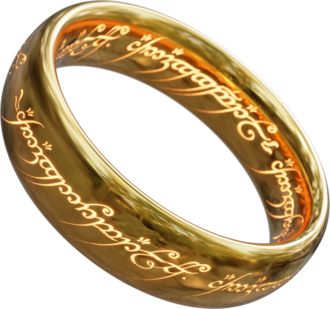
Like Bilbo finding the One Ring.

Sometimes, we open the story by dropping our characters into the middle of an event. Even if we do that, we still need a pivotal event at the 1/4 mark that completely rocks their world. The event that changes everything is the jumping-off point for the story.

As a reader, I notice when a character suddenly displays a new skill or knowledge, something they never showed before. When this happens, it’s usually explained away as a Chekhov’s Skill. I usually stop reading at that point and forget about finishing the book.

Without briefly foreshadowing that superior ability, the reader will assume the character doesn’t have it, and the narrative becomes unbelievable. A casual mention early on of the characters using or training to use that skill would make it believable.

The most crucial aspect of foreshadowing is the surprise a reader feels when the clues come together to form a complete picture of the imminent disaster. This is the moment when the reader says, “I should have seen that coming.”

We have many reasons to pursue good foreshadowing skills. In my opinion, the most important is that it helps avoid using the clumsy Deus Ex Machina (pronounced: Day-us ex Mah-kee-nah) (God from the Machine) as a way to miraculously resolve an issue.

That literary faux pas occurs when, toward the end of the narrative, an author inserts a new event, character, ability, or otherwise resolves a seemingly insoluble problem in an unexpected and miraculous way.

Pacing is a combination of action and reaction. Transitions bookend each scene. They are a door into the scene and the way out. The way out is always the way into the next scene. How we use those transitions determines the importance of the passage. The bookends determine the narrative’s pacing.

Transition scenes get us smoothly from one event or conversation to the next. They push the plot forward and control pacing.

  • Action, reaction, information, reaction, action, reaction, rinse, and repeat until the story reaches its conclusion.

So, now that I have rambled on about writing, I will get busy and clear up my office. I always feel better once a disagreeable task is properly finished.

And then, maybe I will make some headway on my work in progress. Working in a lovely, organized space—what a concept!


Credits and Attributions:

IMAGE: The Crystal Ball by John William Waterhouse, 1902. Wikimedia Commons contributors, “File:John William Waterhouse – The Crystal Ball.JPG,” Wikimedia Commons, https://commons.wikimedia.org/w/index.php?title=File:John_William_Waterhouse_-_The_Crystal_Ball.JPG&oldid=1009616986  (accessed May 11, 2025).

IMAGE: The One Ring, Wikimedia Commons contributors, “File:One Ring Blender Render.png,” Wikimedia Commons, https://commons.wikimedia.org/w/index.php?title=File:One_Ring_Blender_Render.png&oldid=914989927 (accessed May 11, 2025).

2 Comments

Filed under writing

Worldbuilding – Calendars and Maps #writing

I discovered early on that keeping a calendar and a map gives me a realistic view of my plot arc. A calendar of events helps me remember in what season an incident occurred when something arises later in the first draft that pertains to it. Foliage changes with the seasons, and weather is a part of worldbuilding. Spring foliage is very different from autumn in the part of the world I am from.

And there are other reasons for keeping a calendar as well as sketching a simple map that no one but yourself will see.

A calendar of events helps you with pacing and consistency. In conjunction with a map, a calendar keeps the roadblocks moving along the story arc. It ensures you allow enough time to reasonably accomplish large tasks, enabling a reader to suspend their disbelief.

When it comes to calendars, I suggest you stick with what is familiar, and here is why. In 2008, a lunar calendar seemed like a good thing when creating my first world. The storyline and world of Mountains of the Moon was originally for an anime-style RPG that was never built due to several reasons, a tech crash being only one. When the project was scrapped, I still had the rights to my storyline, maps, and calendars.

My calendar for that world was (and still is) a hot mess.

In the game as we envisioned it, the calendar wouldn’t have been a problem as the days of the week were only mentioned in terms of when a shop was open. But that storyline eventually became my Tower of Bones series, which is set in the world of Neveyah. The calendar I devised so long ago for the game is an annoyance to me now.

  • Thirteen months, twenty-eight days each, named after astrological signs. Capricas, Aquis, Piscus, etc. (Not that many people know what time of year Taurus or Capricorn are unless it’s their birth sign.)
  • The names I assigned to the dates and months are problematic: Lunaday, Tyrsday, Odensday, Torsday, Frosday, Sunnaday, and Restday.

Not confusing at all. Nope.

In 2008, I had no idea just how awful my choice of names for the days and months would end up being. The calendar could have been scrapped and switched to our real-world calendar when I decided to turn it into a novel, but that didn’t occur to me.

And now, seventeen years later, I’m stuck with it. It’s why all my other books are plotted using the modern Gregorian calendar.

So take my advice and keep it simple.

But lets go back to the maps. 

Maybe you think you aren’t artistic enough for mapmaking.

Original Map of Neveyah from 2008 © 2008 cjjasperson

You don’t have to be an artist to draw a rudimentary map of an imaginary place. The rudimentary elements of the first map of my World of Neveyah series were scribbled on graph paper during a phone conversation. It evolved from there to the map you see at the left.

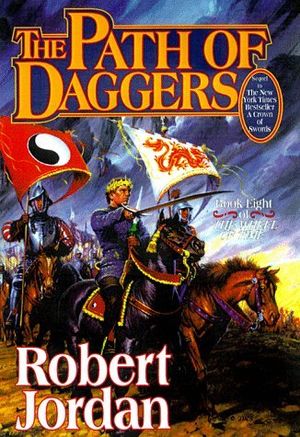
Later, it evolved into an art piece for the books because I love pretty maps, such as those in the Wheel of Time books by Robert Jordan and Brandon Sanderson.

I use pencil and graph paper at this stage because the story chooses the geography. As the rough draft evolves, sometimes towns must be renamed. They may have to be moved to more logical places. Whole mountain ranges may have to be moved or reshaped so that forests and savannas will appear where they are supposed to be in the story.

Maybe you think you don’t need a map. If your characters are going from hither to yon, and you are writing about their travels, you probably should at least make good notes. But truthfully, it’s not a lot of work to scribble a few lines and note towns and landmarks. If you are designing a fantasy world, you only need a pencil-drawn map. Even if the story is set in a town, it helps to know where our characters are going in relation to their home base.

These maps and notes and calendars are for your use only, a way to avoid introducing confusion into the story. So, your map doesn’t have to be fancy. Lay it out like a standard map with north at the top, east to the right, south to the bottom, and west to the left. Those are called cardinal points, each at 90-degree intervals in the clockwise direction, which is standard in modern maps.

Many towns are situated on rivers. Water rarely flows uphill. While it may do so if pushed by the force of wave action or siphoning, water is a slave to gravity and chooses to flow downhill. When making your map, locate rivers between mountains and hills. Rivers flow to a valley and either continue on to the ocean or pool in low spots and form lakes and ponds.

You might want to note where rivers and forests are situated relative to towns, or in the case of towns, what streets and cross streets our Heroes must travel. We need to take into account the fact that detours add to the distance and increase the time it takes to travel using the common mode of transportation.Rivers, mountains, lakes, and ponds make travel difficult, forcing a road or trail to go around them. This creates opportunities for plot twists in a fantasy story. Thieves, highwaymen—a lot of good plot fodder can be had with the right geography.

If your work is sci-fi, consider making a map of the space station/ship if that is where the story takes place. Billy Ninefingers is set in a wayside inn. I made a drawing of the floor plan for my purposes, noting who resided in each room, on the Rowdies’ floor because the inn is the world in which Billy’s story takes place.

If your characters travel, I suggest you keep the actual distances a bit general in the narrative because some readers will nitpick the details, no matter how accurate you are. Readers may not see it the way you do because their perception of a league might be three miles, while yours might be one and a half.

Both are correct. League (unit) – Wikipedia

Fantasy readers like maps. If you are writing fantasy but feel your hand-drawn map isn’t good enough to include in the finished product, consider hiring an artist to make a nice map from your notes.

No matter what genre we write in, we want the narrative to feel real for the reader. We do this through worldbuilding. Maps and calendars, no matter how rudimentary, are foundation tools of worldbuilding in my writing process.

I hope this little two-part series on worldbuilding has helped you visualize your work more easily.


Previous in this series:

Worldbuilding – the stylesheet/storyboard #writing | Life in the Realm of Fantasy

4 Comments

Filed under writing

#FineArtFriday: Gathering Wood for Winter by George Henry Durrie 1855

Title: Gathering Wood for Winter

Artist: George Henry Durrie (1820–1863)

Date: 1855

Medium: oil on canvas

Dimensions: height: 26 in (66 cm); width: 36 in (91.4 cm)

Collection: Private collection

Why I love this painting:

Durrie shows us a day in late autumn. His characteristic use of reds and browns juxtaposed against lighter shades of white portrays the stark beauty of late autumn in New England.

The first snow has fallen, and the season is turning to winter. It’s more important than ever to gather as much wood as possible. Fortunately for our wood gatherers, a giant has fallen victim to a storm, snapping off halfway up.

This is not necessarily the end of the tree. Leaves still cling to the branches below the wound and will continue to provide shade and habitat for as long as it can. Someday, it may be cut down, as the fact it broke in half shows that it is nearing the end of its life and may present a hazard to those who walk beneath it.

Regardless of the tree’s future, the farmer and his son are taking advantage of the bounty so close to their home. They will stack it in the woodshed and allow it to dry out or “season” before they must burn it, hopefully not before the end of spring.

The more wood they gather now, the warmer they will be when winter’s grip tightens.

About the author, via Wikipedia:

George Henry Durrie (June 6, 1820 – October 15, 1863) was an American landscape artist noted especially for his rural winter snow scenes, which became very popular after they were reproduced as lithographic prints by Currier and Ives.

For many years, Durrie made a living primarily as a portrait painter, executing hundreds of commissions. After marriage, he made frequent trips, traveling to New York, Massachusetts, New Jersey,  and Virginia, fulfilling commissions and looking for new ones. His diary reveals that he was an enthusiastic railroad traveler, in the early days of the railroads. Durrie also painted what he called “fancy pieces”, whimsical studies of still lives or stage actors, as well as painting scenes on window-shades and fireplace covers. But portrait painting commissions became scarcer when photography came on the scene, offering a cheaper alternative to painted portraits, and, as his account-book shows, Durrie rarely painted a portrait after 1851.

Durrie’s interest shifted to landscape painting, and while on the road, or at home, made frequent sketches of landscape elements that caught his eye. Around 1844 Durrie began painting water and snow scenes, and took a second place medal at the 1845 New Haven State Fair for two winter landscapes. Although he had some training in portrait work, Durrie was self-taught as a landscape artist. He was undoubtedly influenced both by the American Hudson River School, and also by European artists, by studying exhibitions of their work at the New Haven Statehouse, the Trumbull Gallery, and at the Wadsworth Atheneum in Hartford, as well as in New York City. Durrie himself exhibited regularly, both locally, and in New York City at the National Academy of Design and the American Artists’ Union, and his reputation grew. Durrie was especially known for his snow pieces, and would often make copies or near-copies of his most popular pieces, with modifications to order.  The landscapes painted by Durrie offered a more intimate view than the panoramic landscapes painted by the Hudson River School, which was the leading school of American landscape painting. Colin Simkin notes that Durrie’s paintings took in a wide angle, but still “close enough to be within hailing distance” of the people who are always included in his scenes.

Currier and Ives

Durrie’s early landscapes were often of local landmarks, such as East Rock and West Rock, and other local scenes, which were popular with his New Haven clients, and he painted numerous variations of popular subjects. As his portrait commissions declined, Durie concentrated on landscapes. He wanted a wider audience, and he seemed to have a good sense of what would sell. Durrie realized that his paintings would have a wider appeal if he made them as generic New England scenes rather than as identifiable local scenes, retaining, as Sackett said, “a sense of place without specifying where that place was.” The New York City lithographic firm of Currier & Ives knew their audience; the American public wanted nostalgic scenes of rural life, images of the good old days, and Durrie’s New England scenes fit the bill perfectly. Lithographic prints were a very democratic form of art, cheap enough that the humblest home could afford some art to hang on the wall. Durrie had been marketing his paintings in New York City, and Currier and Ives, who had popularized such prints, purchased some of Durrie’s paintings in the late 1850s or early 1860s, and eventually published ten of Durrie’s pictures beginning in 1861. Four prints were published between 1861 and the artist’s death in New Haven in 1863; six additional prints were issued posthumously.

The popularity of Durrie’s snow scenes received an additional boost in the 1930s, when the Traveler’s Insurance Company began issuing calendars featuring Currier and Ives prints. Starting in 1946, the January calendar always featured a Durrie snow scene. Historian Bernard Mergen notes that “84 of the 125 paintings attributed to him are snowscapes, more than enough to make him the most prolific snow scene painter of his time.”

In Durrie’s time, winter landscapes were not popular with most curators and critics, but nevertheless, by the time of his death, Durrie had acquired a national reputation as a snowscape painter. Durrie died in 1863, at age 43, probably from typhoid fever, not long after Currier and Ives began reproducing his paintings as prints.

Durrie was dismissed by critics as a popular artist, an illustrator rather than a fine artist. Although Durrie’s Currier and Ives prints were popular, his name was still relatively unknown. But a revival of interest in Durrie began in the 1920s with the publication in 1929 of Currier and Ives, Printmakers to the American People, by collector Harry T. Peters, Sr., who called Durrie’s prints “among the most valued In the entire gallery [of Currier and Ives prints]”, and says that Durrie was known as the “snowman” of the group. [1]


Credits and Attributions:

IMAGE: Gathering Wood for Winter by George Henry Durrie 1855. Wikimedia Commons contributors, “File:George Henry Durrie – Gathering Wood for Winter.JPG,” Wikimedia Commons, https://commons.wikimedia.org/w/index.php?title=File:George_Henry_Durrie_-_Gathering_Wood_for_Winter.JPG&oldid=853995324 (accessed May 1, 2025).

[1]Wikipedia contributors, “George Henry Durrie,” Wikipedia, The Free Encyclopedia, https://en.wikipedia.org/w/index.php?title=George_Henry_Durrie&oldid=1282714933 (accessed May 1, 2025).

Comments Off on #FineArtFriday: Gathering Wood for Winter by George Henry Durrie 1855

Filed under #FineArtFriday, writing