
You have finished your first draft, successfully taken your characters from the opening pages through several disasters, and given them a smashing conclusion. You wrote “the end,” so now you’re finished! Time to upload it to Amazon and wait for the accolades to roll in.
 STOP! If you value your reputation, you won’t rush to publish that mess just yet.
In my previous post, I outlined the stages of book construction using a traditional phased method of project management.
- The Concept. Make a note of that brilliant idea. Write it down, so you don’t forget it.
- The Planning Phase is where I create an outline. Some people don’t need this step, but I do.
- The Construction Phase—write the first draft from beginning to the end.
- Monitoring and Controlling—For writers, this is actually a continuation of step three, a part of the construction phase. This is where you build quality into your product. If you are an outliner, this phase might go smoothly.
- Create a style sheet as you go. See my post on style sheets here: Self-editing: Ensuring Consistency.
- Find beta readers among your writing group and heed their concerns in the rewrites.
- Take the manuscript through as many drafts as you must to have the novel you envisioned.
- Employ a good line editor to ensure consistency in the quality of your product.
- Find reliable proofreaders. (Your writing group is an invaluable resource.)
- Completion or Closing.
As you can see, when you write “the end” at the bottom of the last page, you have only completed the development and initial construction phase of this project.
 Now you must set it aside, as you must gain a little distance from it to see it with a clear eye. This is where I seek an outside opinion on the strengths and weaknesses of my proto-novel. I am fortunate to have a local writing group of highly talented published authors. I also trade services with several editors. When the first draft of my manuscript is finished, I send it to a reader. While they are reading it, I work on something completely different.
You must ask your reader to look for and point out weaknesses. You need to know where you’ve over-explained, what needs to be expanded upon, and if the story has a satisfying conclusion. At this point, your manuscript needs line editing, but the first reader must understand that you aren’t at that stage yet. Beta readers must be able to look beyond those flaws and see the story as a whole.
Authors are thin-skinned. We are full of expectations that all readers will enjoy it and tell us how stellar it is. You must be prepared for your manuscript to come back with some critical observations. I have felt the sting and burn of honest criticism and was utterly crushed.
I had to put on my big-girl undies and grow up.
The real work begins when we get the first reader’s assessment back, and it isn’t what we thought we would hear.
If you had a conscientious reader, they noticed those massive info dumps. You know the ones, the long paragraphs of backstory we write to explain things.
Hopefully, your reader is familiar with your genre and knows about features such as horses, medicine, or police procedures. If so, they may tell you that more research is required.
Sometimes, the feedback we get means that we now have to completely rethink what we thought was the perfect novel.
 At this point, an amateur decides the beta reader missed the point and chooses to ignore their comments. Our unrealistic belief that our work is perfect as it falls from our minds is a failing that we must overcome if we want to engage readers.
When you have received your manuscript back with the reader’s comments, it’s time to begin the second draft. This is the area of construction where we straighten out confusing passages and make positive changes by adding or cutting scenes. We begin to add depth to our novel.
In my current manuscript, several areas were identified that needed attention.
First, my reader liked the overall story and found the characters engaging. However, she felt I hadn’t explored their relationships well enough to show their growing attraction. The eventual pairing seems to come out of nowhere. That relationship lacked depth.
Also, she pointed out where I had missed an excellent opportunity to inject real tension into the midpoint crisis. She also felt a lack of tension in the final pages.
In other words, the story lacks depth and tension at this point in its development. The work isn’t done; it’s only just begun.
This is where the intelligent author puts her reader’s observations to work. I took Alison’s comments to heart and considered the midpoint crisis. A solution presented itself, turning the story on its head. By doing that, an opportunity to make the final confrontation more perilous presented itself.
I added two chapters and trimmed back three. I slightly changed how the characters interact initially, making their mutual attraction a sub-thread that gradually grows from the moment when Character Two enters the story.
This novel tells the origin of an artifact that will be a strong thread in this series, but it is more focused on the internal battles we fight as part of the human condition. Each of us experiences emotional highs and lows in our daily lives. I must bring forward a specific layer of depth, the deep-rooted, personal reason for the emotions I want to portray.
Reactions must have a cause, something to react to. Depth can be instilled by adding a few well-chosen words, a sentence or two to show a flash of memory, a sensory prompt that a reader can empathize with.
 In my current work, the thoughts and motives of the characters are critical to the midpoint event and subsequent crisis of faith. Yes, who these people are, and their place in the story at the point where we meet them is crucial to the plot.
But the plot is only the surface. Below the surface, lending substance to the narrative, lies the layer of inference and implication. This layer conveys a sense of solidness, of complexity.
This layer must be handled deftly because you want the reader to feel like they have earned the information they are gaining. Yet, you must leave enough clues lying around that they can understand what you are implying. Readers can only extrapolate knowledge from information the author has offered them.
Depth is a vast word, considering that it consists of only five letters. Depth is complexity, intensity, and profoundness. These qualities are shown when each character’s sub-story is built upon who these characters think they are.
On Monday, we will take a closer look at some ways to build depth into the interactions of our characters.
 Then there is the marketing of the finished product, but that is NOT my area strength, so I won’t offer any advice on that score.
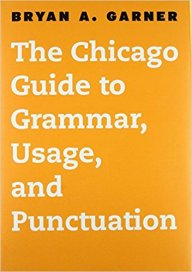 If you are writing in US English, I can highly recommend getting a copy of
  Creating a
  Write the basic story. Take your characters all the way from the beginning through the middle and see that they make it to the end. If you have completed the story and have it written from beginning to end, you can concentrate on the next level of the construction phase: adding depth.
 My husband is recovering from a total hip replacement, so traveling out of town for an extended stay involves a lot of logistics. Also, I am vegan, which has an impact on things. I can eat in restaurants, but once I am away from my part of the world, the menu is often limited to a garden salad.
 Protein is essential, and I have many delicious options to make that don’t involve processed foods. My favorite “impress-the-son-in-law” cookbook is this gem by
  The most surprising thing about being vegan is how little it costs to eat well once you have your pantry basics. Going sans meat is the lazy person’s dream diet. It’s amazing how quickly you can get a meal on the table, and whether you are making beans or soup, the crockpot is your best friend. I often make my own bread from several different recipes, a tasty treat that takes less than five minutes to put together using my bread machine.
 Sturm und Drang, as a literary form, evolved during the time of the American Revolutionary War. This was an era of global unrest and great hardship, especially in Europe. The main feature of Sturm und Drang is the expression of high emotions, strong reactions to events, and rebellion against rationalism. It is characterized by intense individualism and complex reactions.
 So, this brings me to the subgenre of cyberpunk. One of the earliest science fiction short stories to feature a dystopian society was
  Many authors whose works appeared in the early days of cyberpunk were indies hoping to go mainstream. Their short stories appeared in popular sci-fi magazines because visionary editors risked their jobs and reputations by accepting and publishing work that their readers could have rejected.
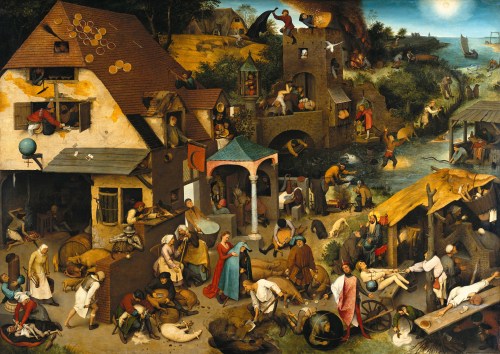 One of the best allegorical paintings of all time is
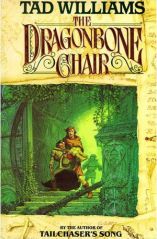 Tad Williams’s
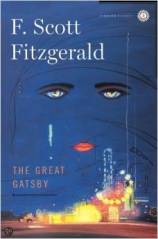 No matter where we live, San Francisco, Seattle, or Middle Earth, these fundamental human experiences are personal to every reader. We have each experienced pain and loss, joy and love.
 Plot, in my opinion, is driven by the highs and lows. You don’t need to pay for books you won’t like. Go to the library or to the secondhand bookstore and see what they have from the NYT bestseller list that you would be willing to examine.
 The human body moves in many ways when fighting, some of which are effective, and others not so much. In the 1990s, I studied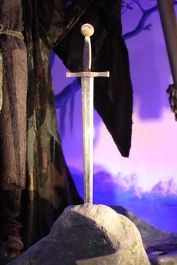
 Scenes that involve violence are difficult to write well unless you know how the action will affect your protagonist. Also, you must remember to give the protagonist and the reader a small break between incidents for regrouping.
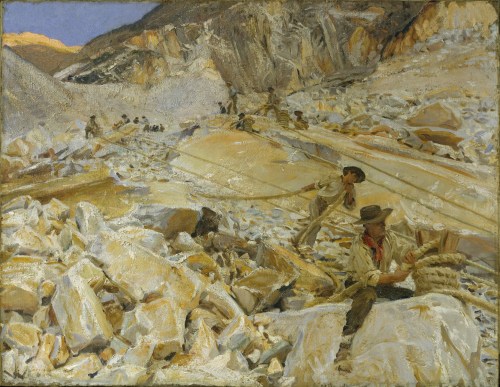 Today we are revisiting a painting I first posted in January of this year, Bringing down marble from the quarries to Carrara, by John Singer Sargent (1856–1925). This is a painting that conveys the lives and efforts of quarrymen in the way all of Sargent’s paintings of the working class do. You see the heat they work in, and feel their effort as they go about their tasks in the same way as their fathers did before them, and their grandfathers.
 Most writers are hobbyists. This is because if one intends to be a full-time writer, one must have an income.
 Events occur, disturbing my writing schedule, but I usually forgive the perpetrators and allow them to live. At that point, I revert to writing whenever I have a free moment.
 As I have said many times before, being a writer is to be supremely selfish about every aspect of life, including family time.
 Writing emotions with depth is a balancing act. This is where I write from real life. I think about the physical cues I see when my friends and family feel emotion. When someone is happy, what do you see? Bright eyes, laughter, and smiles.
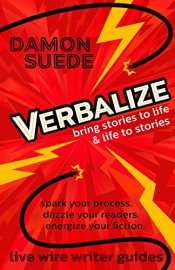 Also, I’m a book junkie—I can’t pass up buying any book on the craft of writing. I bought two books on writing craft by
  Each of us experiences emotional highs and lows in our daily lives. We have deep-rooted, personal reasons for our emotions, for whether we are attracted to or repulsed by another person. Sometimes those interactions can be highly charged.


 Life in the Realm of Fantasy

.jpg&oldid=354733943)