Category Archives: writing

Update on Work in Progress #amwriting

My works in progress are coming along as I hoped they would. The outline and character studies are finished for my November novel, so I should have no trouble getting that off the ground on November 1st.

I am doing a major structural rewrite on Heaven’s Altar, a new novel set in Neveyah, and that is going well.
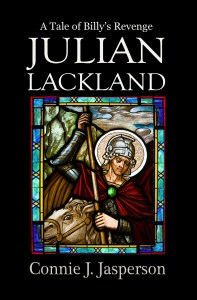
Julian Lackland is in the formatting stage at last. His story completes the 3-book Billy’s Revenge collection of stand-alone medieval fantasy novels.

I am looking forward to the great month of November, as I can hardly wait to get started on my project.

The short story mill in my head still seems to produce something every month or so. I like to think of them as “palate cleansers” since they are completely different from the main area of focus and sort of clear the cobwebs from my head.

I have a list of resources for beginners to bookmark that will make writing their NaNoWriMo novels easier. In my mind, any resource that is free is good.

  • Fantasy/Real Name Generator (some are unpronounceable, but all are fun)
  • Thesaurus.Com (quickly find words that mean the same as “sword” etc., so you don’t have too many “crutch” words.
  • Oxford Dictionary (Spell it right and use in the proper context!)
  • Wikipedia (research is a time sink to beat all time sinks, but if you’re in a hurry for quick info, you might find it here.)

Three websites a beginner should go to if they want instant answers about grammar in plain English:

Instant gratification is good when you are in the zone and short on time.

The rules I follow to both get my wordcount and enjoy NaNoWriMo:

    1. Write at least 1,670 words every day (three more than is required) This takes me about 2 hours – I’m not fast at this.
    2. Write every day, no matter if you have an idea worth writing about or not. If you are stuck, write about how your day went and how you are feeling about things that are happening in your life, or write that grocery list. Just write, and think about where you want to take your real story. Write about what you would like to see happen in that story.
    3. Check in at www.nanowrimo.org to see what’s happening in your region. Someone there will be able to answer any questions you may have, and the local threads will keep you in contact with other writers.
    4. Attend a write-in if your region is having any, or join a virtual write-in at NaNoWriMo on Facebook. This will keep you enthused about your project.
    5. Delete nothing. Passages you want to delete later can be highlighted, and the font turned to red or blue, so you can easily separate them out later.
    6. Remember, not every story is a novel. If your story comes to an end, draw a line at the bottom of the page and start a new story, in the same manuscript. You can always separate the stories later, and that way you won’t lose your word count.
    7. Validate your word count at www.nanowrimo.org every day. Your word processing program will sometimes count the words differently than the official validator. Validating daily will let you know if you are officially on track.

Why should you write in November?

Write because you have an idea that could make a good story. Write the book you want to read but no one else is writing.

Write fan-fiction.

Above all, have fun writing.

If you can’t write 1,667 words a day, write as much as you can and don’t feel guilty. The novel is the important thing and if you can’t get 50,000 words in 30 days, all is not lost. There are 320 more days in the year to come, so keep the habit of writing daily.

Stay in love with your characters and have fun writing your story.

In the end, the story is what counts.
2 Comments

Filed under writing

Time Management #NaNoWriMo2019 #amwriting

If you are planning to write a 50,000 word novel in the month of November, you will need to develop some time management skills.

Writing daily is easier once it becomes a behavioral habit. Making the best use of your time requires a little self-discipline.

Most of us have jobs and a family, so our time for personal projects can be limited.

First, you must give yourself permission to write.

Your perception that it is selfish will be your biggest hurdle. Trust me, it is not asking too much of your family for you to have some time every day that is sacred and dedicated to writing.

When I first began writing, I was in high school. I wrote some short stories, but mostly I wrote poetry and lyrics for songs. Later I married the bass player in a heavy metal band and began writing songs with him.

During the 1980s and 1990s, as the single mother of three children, I held down three part-time jobs. I couldn’t afford cable, so with only four channels via the antenna, TV was pretty minimal at our house. Card games, dominoes, books, and the library were our usual evening entertainment.

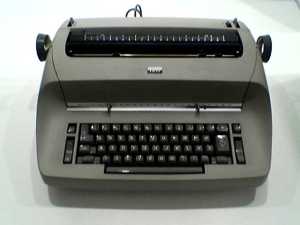
It was during this time that I began to write fiction seriously. We read books so quickly that the library couldn’t stock new ones in our areas of interest fast enough for us. So, when my children were doing their homework, I sat in front of my second-hand IBM Selectric typewriter and pecked out fairy tales to read to them.

In the summer, I did that while they watched videos or played Super Mario et al., on the old Super Nintendo.

That gave me at least one hour every night in which I could write, sometimes more. Yes, I did have to help with some of their homework but having me there, typing away next to the gerbil cage seemed to keep them on track, and I did get several pages written every night.

It was all crap, but I made it sound better when I read it aloud to them.

Although I didn’t know it at the time, I was developing discipline and a work ethic in myself as well as in my children.

Two of my daughters write fiction as well as holding down jobs and raising families. All five of our kids are hardworking adults who are raising families and who also have an artistic life in music or writing or both.

Having an artistic life means you allow yourself time to create something that is meaningful to you.

The following is a list of ideas to help you carve the time to write  and still be a full participant in your family’s life.

  1. You must decide what is more important, your dream of writing or watching a television show that is someone else’s dream. Do you want to create, or do you want to be entertained?

Personally, I would say that if you didn’t like the way Game of Thrones turned out, too bad.

It was George R.R. Martins creation, and he did it his way. He has written more than thirteen novels, numerous short stories, novellas, and too many screenplays for me to count.

GRRM did all that by sitting down and writing every day. He is an award-winning author because he makes the time to write despite his heavy schedule as a speaker, screenwriter, and editor.

So, don’t waste your time complaining about how George did it and don’t bother searching for a replacement show. Write your own Game of Thrones and do the way you think it should have been done. Writing fan fiction is a great, time-honored way to start your writing career.

  1. You have the right to take an hour in the morning and the evening to use for your own creative outlet. Get up an hour early and write until the time you would normally get up. That will be the quietest time you will have all day. Give up that 9:00 p.m. TV show and write for one more hour. There are your 2 precious hours.

If you use those two separate hours for your stream-of-consciousness writing, you could easily get your 1,667 words written every day, possibly more. I am a slow keyboard jockey, and I can do about 1,100 wonky, misspelled words an hour during NaNoWriMo.

But they ALL count, misspelled or not.

  1. Write for five minutes here and ten minutes there all day long if that is all you can do. Every word counts toward your finished manuscript.
  2. I took my lunch to work and wrote during my lunch half-hour whenever possible.
  3. I also wrote on the bus when I didn’t own a car.

You don’t have to announce you are writing a book if you don’t wish to—I certainly didn’t feel comfortable doing so. If you want to spend your lunch time writing, politely let people know you’re handling personal business and won’t have time to chat.

Some offices will allow you to use your workstation computer for personal business, but most of my places of employment frowned on that. I brought a notebook and pen as I didn’t own a good laptop. By writing down all the thoughts and ideas I had during the day, I had a great start when I finally did get a chance to write. If your work allows, bring your laptop or your iPad/Android. So you don’t get into trouble with the boss, sit in the lunchroom (if you have one).

You can also set aside a block of time on the weekend to write, though that can be difficult, as setting aside an uninfringeable time on a weekend can become a hardship, especially if you have a young family. This is where getting up early for that one quiet hour can really keep your story flowing out of your head and into the keyboard/notebook.

Writers and other artists do have to make sacrifices for their craft.

It’s just how things are. But you don’t have to sacrifice family for it. Sacrifice one hour of sleeping in, and sacrifice something ephemeral and unimportant like one hour of TV.

By  writing in short bursts whenever you have the opportunity, you might get your first draft finished, and get that certificate that says you completed 50,000 words in 30 days.

But more importantly than any winners certificate, you will have created something special, something unique that is a piece of your soul, your intellectual child, as it were.

A novel is nothing but an idea and the discipline to sit down and write it from start to finish.

Inspiration and self-discipline—that ability to start and finish a project that began as an idea, a “what if,” is what creative writing is all about.

You can achieve your goal of 50,000 words in 30 days if you give yourself permission to create and make the time to do so.

Comments Off on Time Management #NaNoWriMo2019 #amwriting

Filed under writing

Prepping your Characters #NaNoWriMo2019 #amwriting

November and NaNoWriMo approaches. On November 1st thousands of authors will begin the 30 day challenge. Many will fall out of the game in first few days, but an amazing number of authors will finish their novels in those 30 days.

I see on the boards at www.nanowrimo.org  that a large number of people are drawing up personnel files for their characters. They are finding pictures of actors that might look most like their characters and writing short bios. I have done this in the past, and it worked well, as far as getting the obvious things down.

But I discovered that personnel files only show us the surface of these characters. Thanks to my obsession with learning new things and going to seminars, I do things a bit differently nowadays.

A seminar by Damon Suede triggered a cascade of ideas in my mind, the things I habitually did but didn’t realize I was doing it. These aspects of characterization were in my head but never written down, and as a consequence, things sometimes got muddied up in the writing.

We form our characters out of Action and Reaction. This happens in several ways. I will use the 3 main characters in my forthcoming novel, Julian Lackland, as my examples, as they are most firmly in my mind right now.

First, we  make a simple word picture of each character. The word picture is made of a verb (action) and a noun (person, place, or thing), the two words that best describe each person.

We want to know the good things about these characters, so we assign nouns that tell us how they see themselves at the outset of the story. We also look at sub-nouns and synonyms:

Julian’s Noun is: Chivalry (Gallantry, Bravery, Daring, Courtliness, Valor, Love)

Beau’s Noun is: Bravery (Courage, Loyalty, Daring, Gallantry, Passion)

Lady Mags’s Noun is: Audacity (Daring, Courage)

The way we see ourselves is the face we present to the world. These self-conceptions color how they react but aren’t engraved in stone. By the end of the story, the way they see themselves will change because circumstances will both break and remake them.

Next, we assign a verb that describes their gut reactions, which will guide the way they react to every situation that arises. They might think one thing about themselves, but this verb is the truth and while it may evolve, it does not completely change. Again, we also look at sub-verbs and synonyms:

Julian has 2 Verbs. They are: Defend, Fight, (Preserve, Uphold, Protect)

Beau’s 2 Verbs are: Protect, Fight (Defend, Shield, Combat, Dare)

Lady Mags’s 2 Verbs are : Fight, Defy (Compete, Combat, Resist)

When I write one of these three characters, I know how they believe they will react in a given situation. Why? Because I have drawn the portrait of their soul in words:

Julian must Fight for and Defend Chivalry. Julian’s commitment to defending innocents against inhumanity ultimately breaks his mind.

Beau must Fight for and Protect Bravery. Beau’s commitment to protecting Julian and concealing his madness consumes his life.

Lady Mags must Fight for and Defy Audacity. Mags is audacious–she is determined to remain a mercenary knight, no matter what the cost. She’s at war with herself in regard to her desire for a life with Julian and Beau. That war ruins her chance at happiness.

Do you see what happened? Placing the verb before the noun describes their core conflict. It lays bare their flaws and opens the way to building new strengths.

Who they are before we meet them is important, so go ahead and make that personnel file. But their story will be built upon who they think they are and what their gut reactions are.

Our characters’ preconceptions color their experience of events, which color the readers’ view. They are unreliable witnesses. It shades their reactions when they fail to live up to their own standards. These are the watershed moments when they must honestly examine their motives.

It adds to a scene where they triumph despite their flaws, succeeding against the odds.

What two words describe the primary weaknesses of your characters, the thing that could be their ultimate ruin?

Julian Lackland: Obsession and Honor

Beau Baker: Steadfast Loyalty

Lady Mags De Leon: Stubbornness and Fear

So, when you sit down to make a personnel file for your characters, you need more than a picture of your favorite actor and bio. You also need to decide the verb (action word) and the noun (object of the action) that best represents your characters.

For me, knowing these two words about my characters make writing the story easier. Their actions and reactions unfold as if the story writes itself.

I am in the process of assigning verbs and nouns to the characters in my own projected NaNoWriMo novel. Some of my characters are difficult to get a grip on, so this exercise will help me on November 1st when I begin to write their story.

1 Comment

Filed under NaNoWriMo, writing

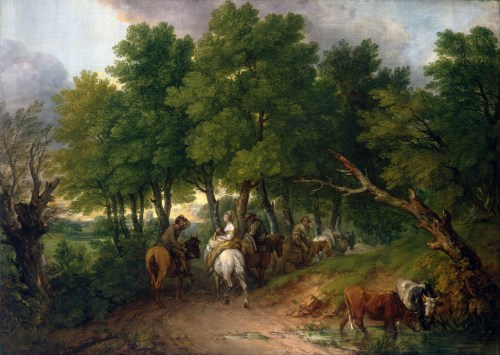
#FineArtFriday: Road from Market by Thomas Gainsborough ca. 1768


Title: Road from Market by Thomas Gainsborough  (1727–1788)

Date: between 1767 and 1768

Medium: oil on canvas

Dimensions: Height: 1,213 mm (47.75 ″); Width: 1,702 mm (67 ″

What I love about this painting:

Thomas Gainsborough is one of Great Britain’s most famous portrait artists. His best-known painting is the “Blue Boy.”  But while portraits may have paid his bills (handsomely), Thomas Gainsborough loved painting landscapes and did so whenever he was able.

This painting shows us a road, and while it looks to our modern eyes to be nothing more than a dirt track fading into the forest, it was typical of the main roads one had to travel in both Great Britain and America. They were dirt tracks, barely passable at certain times. Traveling these roads while riding in a carriage was both dangerous and arduous.

Four people are depicted in this painting, three men and a woman. All but one of the farmers is seated sideways on the horses. This tells us that side-saddle was a common way for all people to ride at the time of the American Revolution, not just women.

Gainsborough did manage to romanticize the bucolic countryside in this pleasant, homey painting.

His horses are heroic, the peasants look well-fed, and even the cattle look prosperous. The fields just beyond the trees are lush and green.

Thomas Gainsborough is credited, along with Richard Wilson, as one of the originators of the 18th-century British landscape school. Gainsborough was a founding member of the Royal Academy of Arts.


Credits and Attributions:

Wikimedia Commons contributors, “File:Thomas Gainsborough – Road from Market – Google Art Project.jpg,” Wikimedia Commons, the free media repository, https://commons.wikimedia.org/w/index.php?title=File:Thomas_Gainsborough_-_Road_from_Market_-_Google_Art_Project.jpg&oldid=354218025 (accessed October 11, 2019).

Comments Off on #FineArtFriday: Road from Market by Thomas Gainsborough ca. 1768

Filed under writing

The outline for pantsers #NaNoWriMo2019 amwriting

NaNoWriMo is prime “pantsing it” time. For those who don’t know that term, “pantsing” is writer-speak for “flying by the seat of your pants.” I always begin with an outline, but my story always goes in directions I never planned for.

Sill, the outline helps me stay on track.

I outline in advance because (when writing in any genre) if you are pantsing your way through a story that encompasses 75,000 to 100,000 words, it is easy to get involved in large info dumps and bunny trails to nowhere. A loose outline will tell you what must happen next to arrive at the end of the book with a logical story set in a solidly designed world.

Making an outline helps you keep your story arc moving forward.

Everything you write from the point of the inciting incident to the last page will detail that epic quest for the unobtainable something.

By the end of the book, the internal growth of the characters may have caused them to change their personal goals, but something big and important must be achieved in the final chapters.

As I said above, I’ve never yet written a story that stuck strictly to the original outline.

Characters develop lives and personalities of their own, and stuff happens that wasn’t planned for.

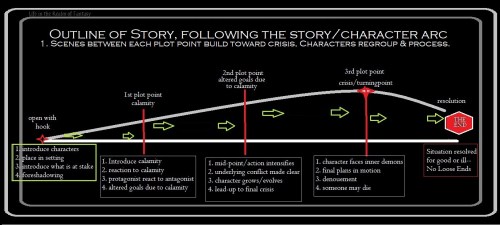
Screen writers have it right, so the layout of my outline is divided into acts and beats, with a brief description. So, how do we approach this little task? First, NaNoWriMo says 50,000 words is a novel. How long do you think yours might be? Divide it into manageable chunks.

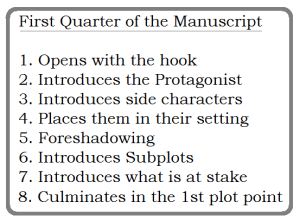
Act One – not more than 25% of total words: Where does the inciting incident occur?

  • Opening scene–characters in “normal” environment–/ Hook
  1. Introduce the characters. In your outline, ask, “What does each desire?” List each character and make a note of what they want at the beginning, what stands in their way at the middle, and what they get at the end.
  2. Foreshadow the incident that takes them out of their normal environment.
  • Inciting Incidentthe event that changes everything.
  1. characters are thrown out of “normal” and into new circumstances.
  • Things start to get crazy.
  1. Characters react to the inciting incident.
  2. Characters try to get control of the situation and fail.
  3. Characters regroup. They must continue, but what are they willing to risk?

Act Two takes up 50% of the novel—it is the second quarter and third quarter combined.

  • Pinch Point #1—a dangerous situation orchestrated by the antagonist.
  1. The antagonist applies pressure to your character. This demonstrates the threat presented by the antagonist and forces your character into action.
  • Midpoint
  1. Regroup, process what just happened, plan to achieve the goal. What is happening at the midpoint? Are the events of the middle section fraught with uncertainty but still moving the protagonist toward their goal? If not, cut them and insert events that propel the story forward.
  2. Move toward the next encounter.
  • Pinch Point #2—Calamity. When and where does this occur?
  1. The protagonist is thwarted and may not win the goal after all.
  2. How are their attempts to achieve the goal frustrated?
  3. Someone dear may die.
  • Crisis of faith
  1. The costs of the battle are weighed against what is gained.
  2. Faith is restored, plans are laid for next encounter

Act Three, the final 25% of the novel:

  • Climax
  1. The protagonist faces the antagonist, and the battle is on.
  • Final resolution
  1. The protagonist wins, but at what cost?
  2. Do they achieve the original goal in the end, or do their desires evolve away from that goal as the story progresses?
  3. All threads are wound up, and the book has a finite ending (NOT a cliff hanger if you are an unknown author, even if a book two is planned).

Sit down with a notebook (or if you’re like me, and Excel spreadsheet) and make a list of what events must happen in each “act.” In my outline, each chapter has a brief description of what I think will occur in each scene, such as:

Chapters 15 – 22

15 Aeddie sick – Mendric can’t heal his heart-take him to Hemsteck
16 Three days into the journey Elgar and Raj battle Thunder lizard
17 Star stone falls outside Waterston
18 Aeddie sick, nearly dies, Mendric nearly burns out gift keeping him alive
19 South of Kyran, water wraith
20 North of Kyran, a mob attack
21 Nola – inn
22 Maldon, highwaymen, and William

>>><<<

If I take the time to note all of my changes to the story line, I have a guide showing me what those changes were. I can make sure the events are foreshadowed logically and don’t appear to be a clumsy Deus Ex Machina. (Pronounced: Day-us ex Mah-kee-nah.) (God from the Machine.)

That means a plot twist that is pulled seemingly out of nowhere and used to miraculously resolve an issue. Miraculous is the key word. If you rely on this, your plot will be unbelievable.

What is the underlying theme? How does this theme affect every aspect of the protagonists’ evolution in this story? (See my post: The interpretive layer of the word-pond: Theme.)

When you assemble your outline, ask yourself these questions:

  • What will be your inciting incident? How does it relate to the theme?
  • What is the goal/objective? How does it relate to the theme?
  • At the beginning of the story, what could the hero possibly want to cause him to risk everything to acquire it?
  • How badly does he want it, and why?
  • Who is the antagonist?
  • What moral (or immoral) choice is the protagonist going to have to make in his attempt to gain that objective?
  • What happens at the first pinch point?
  • In what condition do we find the group at the midpoint?
  • Why does the antagonist have the upper hand? What happens at the turning point to change everything for the worse?
  • At the ¾ point, your protagonist should have gathered his resources and companions and should be ready to face the antagonist. How will you choreograph that meeting?

I always feel it’s necessary to have an outline of the story arc even if my novel has multiple possibilities for endings. Winging it in short bursts can be exhilarating, but my years of experience with NaNoWriMo have taught me that winging it for extended lengths of time means I might run out of fresh ideas of what to do next.

If you begin with a simple outline, you won’t become desperate at the halfway point and resort to killing off characters just to stir things up. Many times, someone must die to advance the plot or fire up the protagonist, but readers get angry with authors who kill off too many characters they have grown to like.

Besides, you might need that character later. Bringing them back from the dead is a whole different Deus Ex Machina.

3 Comments

Filed under writing

Devising a Plot in 8 Questions #NaNoWriMo2019 #amwriting

Sometimes I have these random ideas and think, “Wow! What a great idea for a story – if I had the time to write it.” I keep a document pinned to my desktop, one that I write down topics and ideas for stories on.

Good news! November is National Novel Writing Month, and that’s the time to pick one of those ideas and build the first draft of a novel.

Let’s say one of the plot ideas is for a pair of characters who are thieves-for-hire, set in an alternate renaissance reality.

I will list eight questions: the basic premise of the story will be answered in these eight questions.

Each answer is simply one or two lines, guideposts for when I draft the outline (next post).

1. Who are the players? Pip and Scuttle. Two orphaned brothers who grew up on the streets of Venetta, a medieval city, but who have a strong moral code. Now adults, they have become what is known as “Discreet Thieves,” professional retrievers-for-hire who reunite their clients with their lost or stolen valuables.

2. Who is the POV character? Scuttle, the older brother.

3. Where does the story open? In a pawn shop.

4. What does the protagonist have to say about their story? Scuttle swears they aren’t thieves. They are believers in God and the laws of the Church. They only retrieve items belonging to noble clients with impeccable reputations and do it with no fuss or drama.

5. How did they arrive at the point of no return? A highly placed Cardinal has hired them to retrieve an item, neglecting to tell them:

  • It is equipped with a curse that affects all who would steal it from the rightful owner. (Haven’t figured out what the curse is yet.)
  • It didn’t belong to him in the first place.
  • He intends to use it to depose the true Pope, and become the ruler of both the Church and Venetta.

6. What do they want and what are they willing to do to get it? They will do anything to get the curse removed from themselves and prevent the evil Cardinal from using the object against the Good Pope.

7. What hinders them? The Cardinal has kidnapped Mari, Scuttle’s lady, and holds her in his dungeon, forcing Scuttle to do his bidding.

8. How does the story end? Not sure. Is there more than one way this could go? Yes, so I’ll list them as they occur to me.

Even if I choose not to outline, the answers to those questions make writing a novel go faster because I know what happened, what the goal is, and why the goal is difficult to achieve. I may not know how the story ends exactly, but I will by the time I get there.

At the beginning of the story, what does our protagonist want that causes them to risk everything to acquire it? How badly do they want it, and why? The answer to that question must be that they want whatever it is desperately. In this case, Scuttle wants his lady released from the Cardinal’s dungeon. He’s terrified that she’s being abused, and fears she’ll die before he can rescue her.

Question number six is an important question to consider. What moral (or immoral) choice is the protagonist going to have to make in their attempt to overcome the odds and achieve their objective? Will Scuttle be forced to become a spy for the cardinal? Will he be pushed to sell out Pip? I don’t know yet, exactly. This is a spot where I can write the outcome in several different ways.

Many final objectives don’t concern issues of morality. However, if you are writing genre fiction, all final objectives should have consequences and should involve a struggle.

The answer to question number seven is vitally important because the story hinges on how the protagonist overcomes adversity. What hinders them? Is there an antagonist? If so, who are they, and why are they the villain of the piece?

Answering question eight is crucial if I want to have a complete novel with a beginning, middle and end by the 30th of November. Endings are frequently difficult to write because I can see so many different outcomes. Because it is NaNoWriMo, and every new word I write counts toward my goal, I write as many endings as I need to.

This is where making use of scene breaks can be your friend. In the NANoWriMo manuscript, I simply head that section (in bolded font) with the words Possible Ending 1 or 2, or however many endings I have come up with.

In the next blog post, we will take these eight questions and draft a loose outline for our novel. I say loose because nothing I write ever follows the original outline.

Writing is like the art of the sculptor; we sculpt and reshape the story as we go.

The finished piece looks nothing like the block of stone we carved it from.


Credits and Attributions:

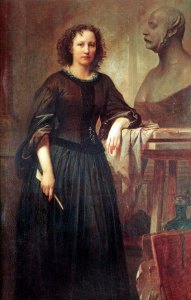
Portrait of German-American sculptor Elisabeth Ney with a bust of King George V of Hanover, 1860, by Friedrich Kaulbach. PD|100. Wikimedia Commons contributors, “File:Elisabeth Ney by Friedrich Kaulbach.jpg,” Wikimedia Commons, the free media repository, https://commons.wikimedia.org/w/index.php?title=File:Elisabeth_Ney_by_Friedrich_Kaulbach.jpg&oldid=286953027 (accessed November 27, 2018).


3 Comments

Filed under writing

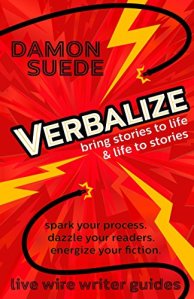
Verbalize by @DamonSuede and Damn Fine Story by @ChuckWendig #bookreview #amreading

Today we’re going to discuss two books on writing craft that, in my opinion, genre writers should read.

First up is VERBALIZE by Damon Suede.

But first, the Blurb:

Fascinating fiction starts with characters who make readers care. This Live Wire Writer Guide presents a simple, effective technique to sharpen your hook, charge your scenes, and amplify your voice whether you’re a beginner or an expert.

Most writing manuals skirt craft questions with gimmicks and quick fixes rather than plugging directly into your story’s power source. Energize your fiction and boost your career with

  • a new characterization method that jumpstarts drafting, crafting, revision, and pitching.
  • skill-builders to intensify language, stakes, and emotion for your readers.
  • battle-tested solutions for common traps, crutches, and habits.
  • a dynamic story-planning strategy effective for plotters and pantsers.
  • ample examples and exercises to help you upgrade fiction in any genre.

Blast past overused tics and types with storycraft that busts your ruts and awes your audience. Whether you like to wing it or bring it, Verbalize offers a fresh set of user-friendly, language-based tools to populate your pages and lay the foundations of unforgettable genre fiction.

My Review:

Damon Suede is a writing craft educator and a best-selling Romance author. One thing he understands is how to write active prose. VERBALIZE is jammed with hard-hitting, rapid-fire information, just like his seminars.

This is a book with a lot going on visually as well as informationally. I find it easiest to absorb this information in small doses, which allows me to think about what he is saying. I read a bit, think a bit, and write a lot.

If you learn nothing else, what Suede has to say about verbs, their importance in character development, and how best to place them in the sentence is worth the cost of the book. Which, by the way, is quite affordable.

>>><<<           >>><<<           >>><<<

Next up is Damn Fine Story by Chuck Wendig. Wendig understands the art of “Story.” If you are writing genre fiction, this is a book you should consider buying.

But first, The Blurb:

Hook Your Audience with Unforgettable Storytelling!

What do Luke Skywalker, John McClane, and a lonely dog on Ho’okipa Beach have in common?

Simply put, we care about them.

Great storytelling is making readers care about your characters, the choices they make, and what happens to them. It’s making your audience feel the tension and emotion of a situation right alongside your protagonist. And to tell a damn fine story, you need to understand why and how that caring happens.

Using a mix of personal stories, pop fiction examples, and traditional storytelling terms, New York Times best-selling author Chuck Wendig will help you internalize the feel of powerful storytelling. In Damn Fine Story, you’ll explore:

• Freytag’s Pyramid for visualizing story structure–and when to break away from traditional storytelling forms
• Character relationships and interactions as the basis of every strong plot—no matter the form or genre
• Rising and falling tension that pulls the audience through to the climax and conclusion of the story
• Developing themes as a way to craft characters with depth
Whether you’re writing a novel, screenplay, video game, comic, or even if you just like to tell stories to your friends and family over dinner, this funny and informative guide is chock-full of examples about the art and craft of storytelling–and how to write a damn fine story of your own.

My Review:

As a writing craft book junkie, I can’t walk past any book that purposes to discuss the dirty little habit of writing.

Chuck Wendig is well-known for his pithy way of expressing things, but despite the in-your-face rawness of his delivery, he does know how to tell a great story, and he does it with outrageous hilarity.

This book takes the writer beyond the essentials of writing craft (grammar, sentence structure, etc.) and into the deeper elements of storytelling, rhythm, cadence, and breaking the rules adored by the more fascist writing-group gurus. He does this to encourage you to develop your own storytelling style.

I highly recommend it. You’ll get your money back in the wildly sarcastic humor of the footnotes alone.

>>><<<           >>><<<           >>><<<

These two books are just the tip of the informational iceberg.

Many fine, informative books are out there for writers, and while I don’t have them all, I have a large library of them, all in physical book form.

My shelves contain books on craft by authors like Ursula K. LeGuin, Orson Scott Card, and Stephen King. I have thesaurus(s) on emotions and character traits by Angela Ackerman and Becca Puglisi.

Knowledge of grammar is the silver frame that shows a story in its best light.

I have numerous Chicago Style Manuals and Bryan Garner’s Usage Guides, and books on rhetorical grammar. Dictionaries, sure, and a thesaurus—but I rely on the Oxford Book of Synonyms and Antonyms to help me find my words. Believe me, that book is well used.

Christopher Vogler’s The Writer’s Journey, Mythic Structure for Writers is a foundation book in my library—I’ve worn out two copies and am on my third.

Books on writing craft feed my ongoing quest for self-education.

Serious writers have questions that won’t always be answered in writing groups or on blogs like mine, but books exist which do have the answers.

Some will be expensive, but many, such as the two featured books today, are affordable. Google your writing craft questions, and see what books come up that might answer them. You might strike gold, as I have often done.

Comments Off on Verbalize by @DamonSuede and Damn Fine Story by @ChuckWendig #bookreview #amreading

Filed under Book Reviews, writing

Prepping for November #amwriting #NaNoWriMo2019

November is National Novel Writing Month. Every year starting on November 1st, several hundred thousand people sit down and attempt to write a 50,000-word novel in 30 days.

Most will do this while holding down jobs and raising kids.

I began participating in NaNoWriMo in 2010. For the first four years, 2010 – 2014, I used the month of November to lay down the rough draft of an intended novel. However, in 2015, I already had two novels in the final stages and one simmering on the back burner.

What I lacked that year were short stories. I decided to write a short story collection because I knew I had to build my backlog of submittable work. As a result, and despite suffering a respiratory virus during the entire month of November, I wrote 42 short stories for a total of 105,000 words.

That’s not counting the blog posts I also wrote. NaNoWriMo 2015 was a prolific year despite the plague!

That was such a boost to my short story collection that I did the same in 2016 and 2017. I worked on a novel in 2018 and also wrote short stories, so that was a “blender” year.

My first year, 2010, was difficult in many ways. My story arc wandered all over the place, my main character sometimes disappeared for several chapters, and my hokey prose got away from me.

But that year was a great experience. I learned how to prep for the month of madness so that it can be a productive 30 days. I learned that October is an important month, even though you aren’t writing for official word count.

October, cold and dark, is your NaNo Prep Month.

I have a number of tricks I will share with you each Monday during the month of October, all aimed toward helping you succeed at your writing goal during National Novel Writing Month.

My goal is that on November 1st, you will be able to hit the ground running.

Once I have the foundations laid, I can write off the cuff. That is how three of my books came into existence.

For many participants, the challenge of sitting down and using the “seat of your pants” style of creative writing is what draws them to sign up.

Many authors are unwilling to commit to NaNoWriMo because it takes discipline to write 1667 words a day.

Also, they fear having to recoup any perceived losses should they find themselves in the middle of NaNoWriMo when they suddenly realize they’ve gone terribly astray. Or they fear writers’ block.

It happens.

Not to me usually, because I know the secret: If you can’t write on the subject you intended, write about what you are experiencing and what interests you at that moment.

I know; ranting on paper about your life is not writing that fabulous fantasy novel you began but don’t know how to finish.

But you are writing!

The answers will come, sometimes in the middle of a rant about your evil mother-in-law.

The key here is you will be writing, and that is what is important.

Rule 1 of NaNoWriMo: SIT DOWN AND WRITE.

Rule 2: WRITE AT LEAST 1667 WORDS EVERY DAY.

Rule 3: NEVER DELETE WHAT YOU HAVE WRITTEN, NO MATTER HOW GARBLED OR AWFUL OR OFF TOPIC.

There are 2 ways to create the official manuscript that you use to upload to the national site every day.

  1. Type it all in one document. When you don’t like something, just change the font color to red in that section and begin rewriting the scene the way it SHOULD have been written in the first place, using the usual black font. Every time you rewrite the scene with a slightly different outcome, it counts toward your word count. Your official wordcount manuscript will be a lo-o-o-ong, multicolored thing of beauty for a few weeks.
  2. OR, you can write each new section in a new file but paste all of them into the official manuscript at the end of your writing session. I make notes as I go for my later rewrite because if I don’t leave a message for myself, I will forget until my beta reader (who is a structural genius) points it out.

December is “Read-‘em-and-Weep” month. That is when we go over the ramblings of November and doubt our sanity.

In December, save what you want to discard in a ‘Background File’ in the same folder as the main manuscript. By doing that, you don’t lose prose you may need later.

During National Novel Writing Month, every word we write over and above 50,000 counts toward the region’s total word count. Once I hit that mark, I keep plowing ahead right to the bitter end.

Other people stop when they make the official winning word count. It’s a stressful month, so how you handle it is your choice.

If you want to sign up for this year’s month of madness and mayhem, get on the internet and go to:

www.nanowrimo.org

Sign up, pick a NaNo name – mine is Dragon_Fangirl, and you are in business. Look me up and make me one of your writing buddies. Spend the rest of October organizing what you think you will need to begin your story on November first. Then, on the first day of November you begin writing. If you apply yourself, and write (AT the minimum) 1667 words every day, on the 30th of November you should have a novel…or something.

In reality, if you set aside one or two hours a day, and pound out the words as fast as you can during that time, you will get your word count. Never delete, and do not self-edit as you go along. Just spew words, misspelled and awkward as they may be. They all count, readable or not, and it is the discipline of writing that we are working on here, not the nuts and bolts of the good manuscript.

Revising and correcting gross mistakes will come after November 30th. The second draft is when you have time to look at it with a critical eye. What you are doing now is getting the raw ideas down before you forget them.

Never discard your work no matter how much your first reader says it stinks. Even if what you wrote is the worst crap she ever read, some of it will be worth saving and reusing later. (And don’t ask “Sharp Tongue Sally” to read your work again because if she can’t find at least one good thing, she’s not a good beta reader.)

Spending a month immersed in stream-of-consciousness writing is not a waste of time. You will definitely have something to show for your efforts, and you will have developed the most important skill a writer must have: self-discipline.

8 Comments

Filed under NaNoWriMo, writing

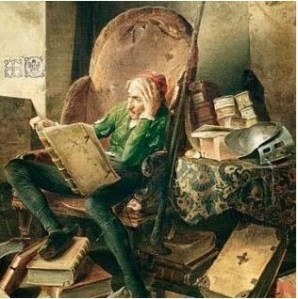
What I’ve learned from Miguel Cervantes #amreading

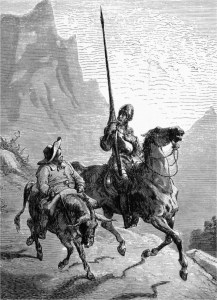
In the book we know familiarly as Don Quixote, Miguel de Cervantes wrote a brilliant, enduring story, one that has survived intact since it was first published in 1605.

Cervantes himself had a fantastic history, a story which could have been written as a novel.

Born in 1547 to an impoverished Spanish doctor, Miguel was better educated than many of his time, although exactly where he was educated is not known. He joined the army at twenty-one.

In 1575, pirates kidnapped Cervantes and his brother and sold them as slaves to the Moors. Originally from Morocco, the Moors were Muslims and were the longtime adversaries of Catholic Spain, which they had once conquered.

History says Cervantes was taken to Algiers. His three or four attempts to escape his slavery were unsuccessful, but finally, he was ransomed in 1580 and returned to Spain.

Upon gaining his freedom, he worked in many clerical capacities, notably as a purchasing agent for the Spanish navy (i.e., the Spanish King). His unfortunate trust in an Andalucían banker with whom he had deposited Crown funds led to his imprisonment for a few months in Seville, after said banker went bankrupt.

It was during his stay in prison that the story of Don Quixote was born. All his life, Cervantes had to work a day job to support himself, writing at night and whenever he had the chance. Prison offered him the chance to spend his entire day writing.

In Don Quixote, Cervantes took many risks with vocabulary. He had as immense an effect on the Spanish language as William Shakespeare did English.

Sayings you might hear every day that were coined by Cervantes:

  • By a small sample we may judge of the whole piece.
  • Can we ever have too much of a good thing?
  • No limits but the sky.
  • Why do you lead me a wild-goose chase?
  • Thank you for nothing.
  • Let every man mind his own business.
  • The pot calls the kettle black.

Only in the final ten years of his life did Cervantes achieve literary success, and even then, he struggled to support himself.

Cervantes divided Don Quixote into three sections, each with a different perspective:

In the first section of the First Part, which covered Don Quixote’s first expedition, he wrote a parody of contemporary romance tales. Cervantes tells this section in a straightforward style.

The second section (comprising the rest of the First Part) is written as if it were a historical account. Here, Cervantes tells us he’s merely translating the manuscript of Cide Hamete Benengeli. He often breaks the fourth wall, interrupting the narrative to mention Benengeli. He remarks on the “internal inconsistencies” in Benengeli’s manuscript. It is broken into chapters at intervals, and Cervantes records the events of each of Don Quixote’s days.

The third section (which covers the Second Part of the novel) is different. It was written as a traditional novel might be. Emotions, large themes, and strong character development are features of this section. Here, Cervantes has gotten a grip on the story arc and the characters.

It is in this third section that Cervantes himself enters the novel as a character. He casts himself as a synthesis of the fictional Benengeli and Cervantes the author.

This is a morality tale. The character Don Quixote strives to be an example, becoming a knight-errant as a way to force his contemporaries to face their failures. In his eyes, they have abandoned the traditions of morality and the chivalric code.

This conflict between tradition and modern values becomes a stalemate. No one understands Don Quixote, and he understands no one.

Only Sancho, his good-hearted, loyal friend can intercede between Don Quixote and the rest of the world. Yet, Sancho, a modern man of the peasant class (and with his own agenda) has a basic understanding of morality. He alone is able to interpret for Don Quixote, acting as a mediator. Sancho quite often agrees with the morals of his day but then surprises us by supporting Don Quixote’s outdated ethics and chivalry.

Toward the end is where it gets a bit out of hand. The characters are aware of the books that have been written about them. They try to alter the content of subsequent editions. This complicates things mightily. At times, we readers feel as disoriented as the mad knight, unable to tell which plotlines are internal to the story and which are factual.

I believe that disorientation was intentional on the author’s part.

I’ve learned several things from Cervantes’s wonderful story of the mad knight, Don Quixote, but I will explore only two.

First, its clear that minor flaws will be ignored by the reader if the story is compelling enough. It was so wildly popular in its day that it inspired publication of an unauthorized continuation, a true fan fiction written by an unknown writer who masqueraded under the name of Alonso Fernández de Avellaneda.

It’s unclear if Cervantes knew the true identity of the superfan. But he wasn’t amused; indeed, he went to great lengths to write “the true continuation of the story,” mocking and poking fun at the fanfiction in many places in his work.

Second, my belief that charismatic characters and epic conflicts of morality make a great story was reinforced.

Cervantes challenged the notion that social class and worth were entwined. He shows that Nobility of Birth does not necessarily confer wisdom or kindness. In the Duke and Duchess, he gives us thoughtless cruelty, casually delivered purely for its entertainment value. In the peasant, Sancho, he shows us a wise, kind, and thoughtful man. In the shepherds, he gives us philosophers.

I’m not suggesting you have to read modern translations of classic Spanish literature. I do suggest you read something new every day, though. Reading a variety of genres opens our eyes to new ideas and widens our minds.

Reading makes us better writers.

It was this laying bare of the disparity between social class and human worth that made Don Quixote such a revolutionary work in its time. This is also why it endures today as one of the foundations of the Western Literary Canon.

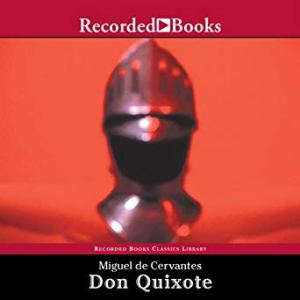
I highly recommend Edith Grossman’s modern translation, which was published in 2003. For those of you who feel you’re too impatient to read literary fiction, this wonderful version is available as an audio book.

7 Comments

Filed under writing

The well-rounded villain #amwriting

One character archetype that is critical to any story is the villain. Christopher Vogler, in his brilliant book, The Writer’s Journey, Mythic Structure for Writers, shows us how the villain of a piece represents the shadow. They are the character who shows us the energy of the dark side, and whose influence on the protagonist must be fully explored.

The shadow character serves several purposes.

  • He/she is usually the main antagonist and represents the darkness, which opposes the light.
  • The shadow provides the roadblocks, the reason the protagonist must struggle.

The shadow represents our own darker side. Great villains bring ethical and moral dilemmas to the story, offering us food for thought. The hero may recognize the darkness within herself and struggle to take the higher road.

The best stories are when the protagonist must face and overcome the shadow on a deeply personal level as well as succeeding at the quest. This places her in true danger.

The best shadow-characters are multidimensional. Great villains have many layers, and not all of them bad.

Characters portrayed as evil for the sake of drama can be cartoonish. Layers must support their actions, or the villain is not believable.

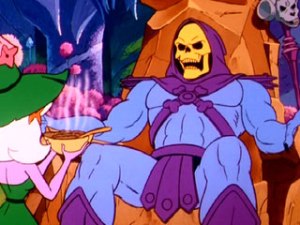
I think of these two-dimensional villains as little “Skeletors.” Skeletor is a cartoon villain with one of the least believable storylines.

Skeletor has great passion and drive, but it’s all noise and show. His ostensible quest is to conquer Castle Grayskull so he can obtain its ancient secrets. Possession of these would make him unstoppable, allowing him to conquer the world of Eternia.

But his character is hollow, and his storyline is simply one long declaration of his villainy. In reality, Skeletor’s sole purpose is to give He-Man a reason to draw his mighty sword and proclaim, “I have the power!”

It was a fun cartoon, but these characters were originally conceived as a means of selling toys.

From Wikipedia:

In the illustrated books released with the first series of toys, He-Man was a barbarian from an Eternian tribe. The planet’s inhabitants were dealing with the aftermath of the Great Wars, which devastated the civilizations which once ruled supreme. The wars left behind advanced machinery and weaponry, known only to select people. An early incarnation of the Sorceress of Castle Grayskull gave He-Man some of these weapons, and he set out to defend the secrets of Castle Grayskull from the evil Skeletor.

He-Man possessed one-half of the Power Sword; Skeletor had the second half, and used it as his main weapon. When joined, the two halves of the Power Sword will provide the key to Castle Grayskull (this is why the two figures’ swords could combine into one, when the action figures were initially released). In one early illustrated story, He-Man and Skeletor united their two Power Sword halves to form the true Power Sword, defeating a common enemy.

(…) By the time the animated series was developed, He-Man’s origins had been revised: his true identity was Prince Adam of Eternia, son of King Randor and Queen Marlena (an earthling), who ruled the Kingdom of Eternia on the planet of the same name. The Sorceress of Castle Grayskull endowed Prince Adam with the power to transform into He-Man, which Adam did by raising his Power Sword and proclaiming, “By the power of Grayskull…” Once the transformation was complete, he continued “…I have the power!”.

What is your goal? Are you selling toys? If so, a token villain serves the purpose. However, if  writing a memorable story, you need a character with history.

Great villains have deep stories. They may have begun life as unpleasant people and even may be sociopaths, but they become “evil” through a series of formative steps. No one wakes up some morning and says, I am evil. I will now go out, gather some minions, and do evil things.”

Look at one of the greatest villains of all time, a character who represents the worst humanity can offer: Hannibal Lector: (via Wikipedia)

In The Silence of the Lambs, Lecter’s keeper, Dr. Frederick Chilton, claims that Lecter is a “pure sociopath” (“pure psychopath” in the film adaptation). In the film adaptation of The Silence of the Lambs, protagonist Clarice Starling says of Lecter, “They don’t have a name for what he is.”

Lecter’s pathology is explored in greater detail in Hannibal and Hannibal Rising, which explains that he was traumatized as a child in Lithuania in 1944 when he witnessed the murder and cannibalism of his beloved sister, Mischa, by a group of deserting Lithuanian Hilfswillige, one of whom claimed that Lecter unwittingly ate his sister as well.

Villains must have a back story to explain their villainy or a quest that is as important to the story as the Hero’s quest.

In the Tower of Bones series, light and dark (good and evil) are represented through two different theologies. Both societies believe in the righteousness of their gods. Both have rituals they perform to appease their deities. The people of both worlds believe firmly that their way and their deity is the only true way.

When we write a story, we want the protagonist’s struggle to mean something to the reader. We put them through hell and make their lives a misery. The characters in our stories aren’t going through the horrible trials alone. The moment we begin the story, we are dragging the reader along for the ride.

We owe it to our readers to give them rounded, believable characters, hero or villain.

What turned the villain to the darkness? What events gave them the strength and courage to rise above the past, twisted though they are? What drives their agenda? What do they hope to achieve?

We who write novels can’t offer the reader hollow, cartoonish characters. If we don’t give the shadow hints of depth, we have failed.

We must make their ultimate victory evoke great relief in the reader, joy that all is made right.

The reader has survived, and the victory is as much theirs as it is the hero’s.


Credits and Attributions:

Wikipedia contributors, “He-Man,” Wikipedia, The Free Encyclopedia, https://en.wikipedia.org/w/index.php?title=He-Man&oldid=916702029 (accessed September 22, 2019).

Wikipedia contributors, “Hannibal Lecter,” Wikipedia, The Free Encyclopedia, https://en.wikipedia.org/w/index.php?title=Hannibal_Lecter&oldid=916951188 (accessed September 22, 2019).

Skeletor-spoo: Fair Use, for identification of and critical commentary on the television program and its contents. DVD screen capture from the She-Ra: Princess of Power episode “Gateway to Trouble,” where Skeletor is offered a bowl of Spoo. Wikipedia contributors, “He-Man,” Wikipedia, The Free Encyclopedia, https://en.wikipedia.org/w/index.php?title=He-Man&oldid=916702029 (accessed September 22, 2019).

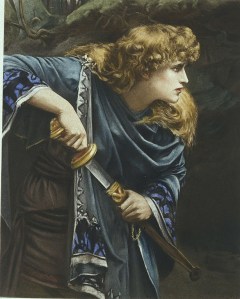
Imogen by Herbert Gustav Schmalz PD|100 via Wikimedia Commons

4 Comments

Filed under writing