#FineArtFriday: Winter in the Country – The Old Grist Mill by George Henry Durrie

Artist: George Henry Durrie (1820–1863)

Painting: Oil on canvas, 26 x 36 in

Date: 1862

What I love about this painting:

George Henry Durrie is one of my favorite American artists. In this painting, he shows us a winter’s day in New England in 1862. Snow covers the ground, but the sun is shining, lending a rosy glow to the day.

The stream bears a light skim of ice, but though the millwheel is covered in snow, the mill is not idle. This late (or early) in the year there is no wheat to grind, but the grain from the previous autumn’s harvest has been turned to flour and shoveled into bags and barrels and stored for sale as needed.

A horse-drawn sled crosses the log bridge, loaded with white cotton bags of flour. Perhaps the driver intends to take advantage of the good weather and deliver them to the local General Store or Mercantile.

Durrie’s horses and cattle are as true to life as his landscapes are. One can almost see the muscles moving beneath the glossy coat as our horse pull the sleigh.

If you are writing a story set in an era of lower technology, I strongly suggest you go to the art of Durrie and his contemporaries to find inspiration for worldbuilding.

About the artist, via Wikipedia:

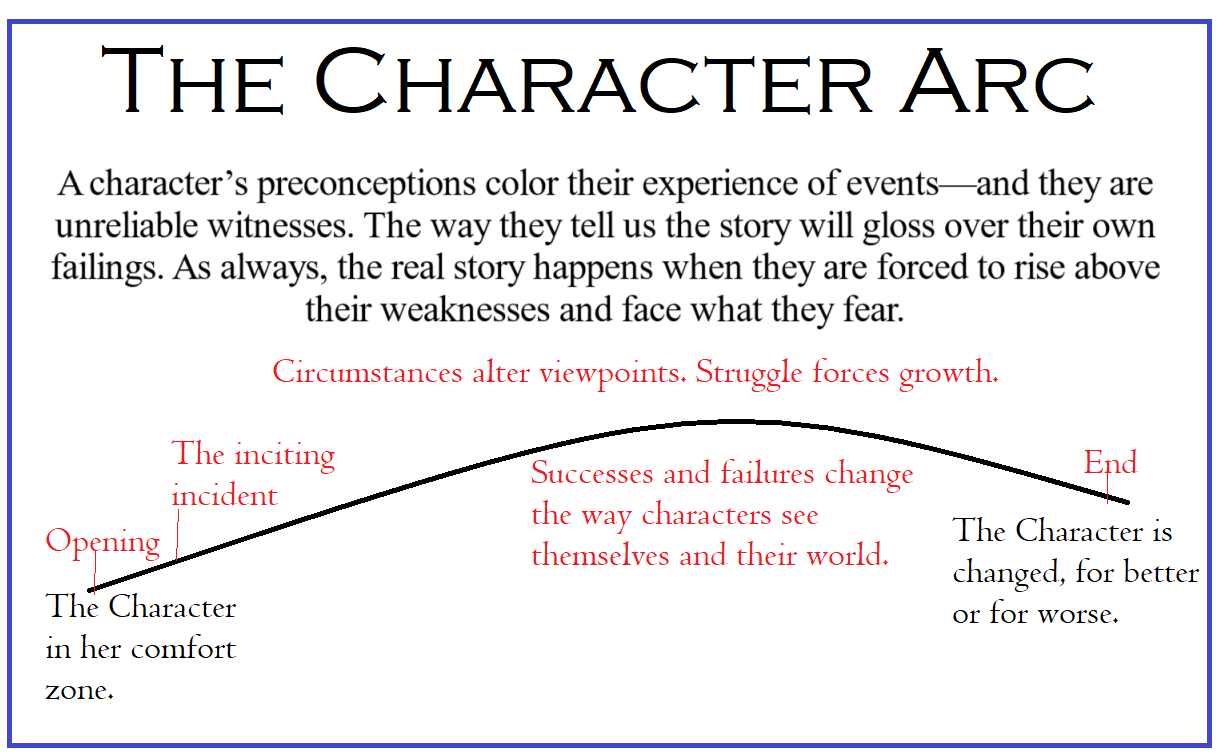
George Henry Durrie (June 6, 1820 – October 15, 1863) was an American landscape artist noted especially for his rural winter snow scenes, which became very popular after they were reproduced as lithographic prints by Currier and Ives.

In Durrie’s time, winter landscapes were not popular with most curators and critics, but nevertheless, by the time of his death, Durrie had acquired a national reputation as a snowscape painter. Durrie died in 1863, at age 43, probably from typhoid fever, not long after Currier and Ives began reproducing his paintings as prints.

Durrie’s paintings, depicting idyllic rural life, a world of stability and home comforts, held great appeal for the middle class and the working class, as an visual antidote for the growing industrialization of America, and the uncertainties of a boom-and-bust economy. The American ideal of a land of self-sufficient farmers, captured by Durrie’s paintings, was being replaced with factories belching smoke, along with a rise in urban populations, foreign immigration, and crime brought about by crowded conditions and poverty. The American descendants of the early English settlers felt that their values and way of life were threatened by these new developments and turned to nostalgic images such as Durrie’s for comfort. [1]


Credits and Attributions:

IMAGE: Wikimedia Commons contributors, “File:George Henry Durrie – Winter in the Country, The Old Grist Mill.JPG,” Wikimedia Commons, https://commons.wikimedia.org/w/index.php?title=File:George_Henry_Durrie_-_Winter_in_the_Country,_The_Old_Grist_Mill.JPG&oldid=995260526 (accessed February 10, 2025).

[1] Wikipedia contributors, “George Henry Durrie,” Wikipedia, The Free Encyclopedia, https://en.wikipedia.org/w/index.php?title=George_Henry_Durrie&oldid=1244671369 (accessed February 10, 2025).

5 Comments

Filed under #FineArtFriday, writing

Idea to story part 2: thinking out loud #writing

Over the years, I have learned many tricks to help people get their ideas out of their heads and onto paper.

Nearly everyone says they have an idea for a good story. What separates writers out from the crowd is this: as time passes and they think about it, they write those ideas down. Ninety five percent never get beyond this stage but for a few, thinking about it on paper ends and they dive straight into writing it.

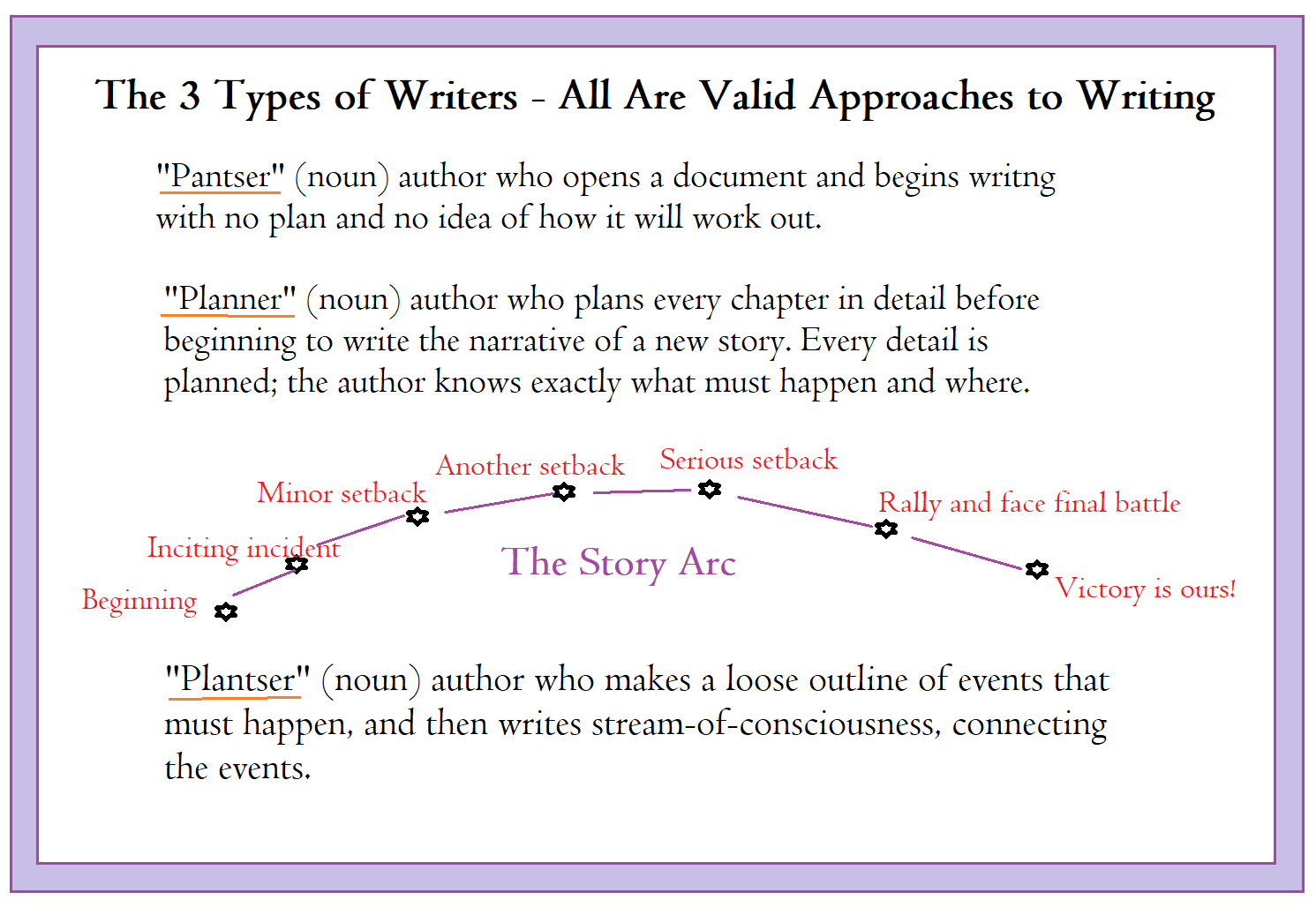
Most will begin without an outline. They are flying blind, or in author speak, “pantsing it.” I am a planner, but I’m also a pantser. I begin with a document that details what I think the story is, a loose outline. I sit somewhere noisy, like a coffee shop or my apartment balcony, and let my mind wander, taking notes as the story comes to me.

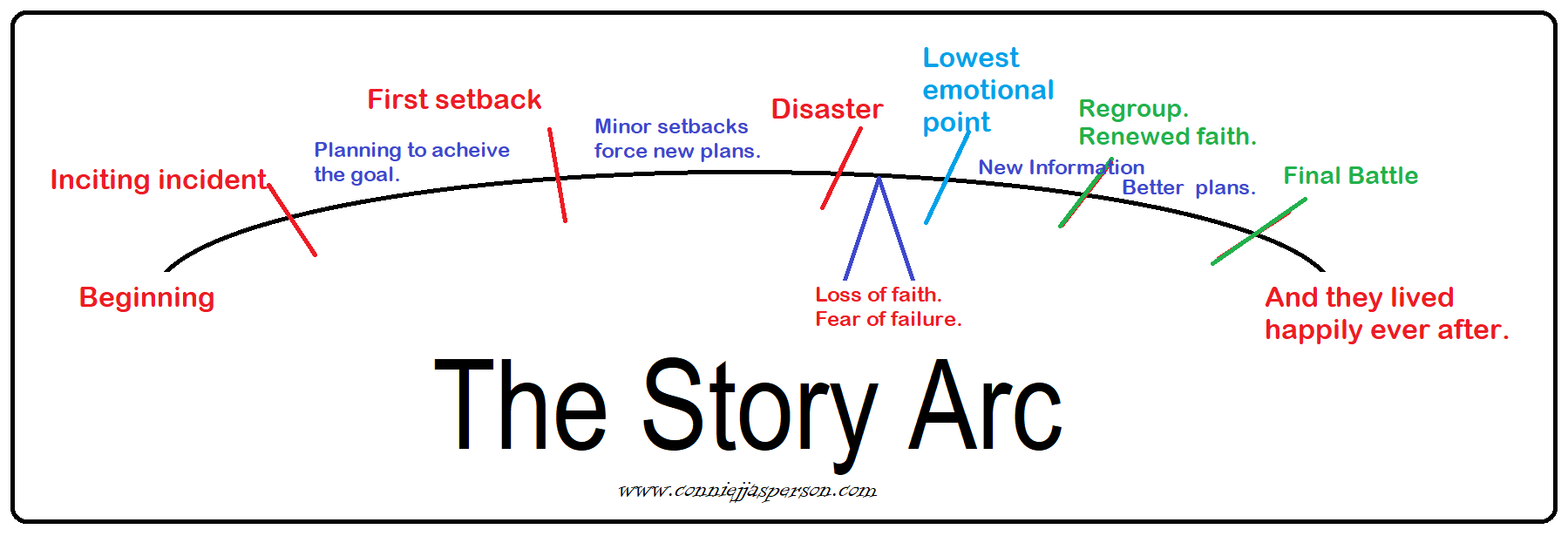
When I first began writing, I didn’t know how to construct a story. As time went on and I attended writing classes and seminars, I learned how arcs shape every story, plot arcs, and character arcs. My loose outlines became more detailed. Eventually I began making an Excel workbook as a permanent storyboard/stylesheet for each series.

ANY document or spreadsheet program will work. I think of outlining as pantsing it in advance—a visual aid for when the writing gets real. If I have an idea of how the story should go, I won’t run out of words before the first draft is done.

Once I have the bare bones of the story down on paper, I begin fleshing out each scene. The outline becomes my first draft, and I save it with a new name.

Once that first draft is finished and in revisions, some scenes will make more sense when placed in a different order than originally planned. So, I update the outline with each change. This allows me to view the arc of the story from a distance, so I can see where it might be flatlining.

Sometimes, an event no longer makes sense and no matter how much I love it, I have to cut it. (I always save my outtakes in a separate file for later use.)

In last week’s post, I went over the questions I ask of each writing project before the words hit the paper. Two important questions are what genre do I think I’m writing in, and what is the underlying theme?

I love reading character-driven fantasy so that is what I write. A world emerges from my imagination along with the characters, and I make notes as bits and pieces of that environment occur to me.

Humor is crucial when you write fantasy that has some dark moments. I have a deep streak of gallows humor that often emerges inappropriately to my family’s regret. Humor in the face of disaster will be a theme. This theme comes out in most of my work.

Next, I create a brief personnel description, less than 100 words for each prominent character. I note the verbs, adjectives, and nouns that describe the character, as those give me all the necessary information. This is just a paragraph, but it contains the essential information.

Sometimes it takes a while to know what a character’s void is (a deep emotional wound), but it will emerge by the time the first draft is done.

The protagonist in the following example doesn’t have a story as she is just an illustration of what I do. But it would be easy to write one for her if I had a few other people figured out.

How I get a story out of my head and onto paper:

What is the core conflict? Is it the Quest for the Magic MacGuffin? Is it a coup followed by a struggle for power? It’s a fantasy, so a wide range of options are open to us.

Who are the players?

Excalibur London_Film_Museum_ via Wikipedia

Valentine (Protagonist) Hates her name and goes by Val. (Arms master, 36. Black hair, brown eyes, suntanned.) VOID: Deep sense of failure. A convergence of bad choices led to a stint in a dungeon. VERBS: Act, fight, build, protect. ADJECTIVES: wary, sarcastic, hopeful, dedicated, considerate. NOUNS: sorrow, guilt, purpose, compassion, wit.

Does Val have close friends? If not, will she gather companions? This question is important. If she doesn’t have friends at first, I will leave space on that page to add them when they emerge from my imagination. As I contemplate Val’s story, perhaps a love interest will show up later, or maybe not.

What happens to take Val out of her comfort zone? Sometimes I don’t have the answer to this for quite a while. Other times, it’s the spark that starts the story.

The entire arc of the story rests on how I answer the following question. What is Val’s goal, her deepest desire? Currently, it looks like she’s hoping to regain her self-respect. That will become a secondary quest when a more immediate problem presents itself.

What stands in her way? Who or what is the Enemy?

Let’s name the enemy Kai Voss. What is his deepest desire? How does Kai Voss control the situation at the outset? Once I know who the protagonist is and what they want, I give them the same personnel file I give all the other characters—I identify a void, verbs, adjectives, and nouns for him.

Once I have Kai Voss described in a paragraph, I can determine the quest. Kai Voss is the key to what Val must achieve. A believable villain is why Val’s story will be fun to write.

Later, after I have the characters figured out, I will work on the plot outline and try to shape the story’s arc. This is where roadblocks and obstacles do the heavy lifting, and my outline will contain ideas I can riff on. Val will have to work hard to achieve her goal, but so will Kai Voss.

Information and the lack of it drive the plot. Val can’t have all the information. Kai Voss must have more answers than Val and be ruthless in using that knowledge to achieve his goal. My outline will tell me when it’s time to dole out information. What complications arise from Val’s lack of information?

With each chapter, Val and her companions acquire the necessary information, but each answer leads to more questions. Conflicts occur when Kai Voss sets traps, and by surviving those encounters, Val gains more information about Kai Voss’s capabilities. She must persevere and use that knowledge to win the final battle.

Having my characters in place and an outline helps keep me on track when I am pantsing it through the first draft of a manuscript. New flashes of brilliance will occur as I am writing and will make the struggle real. But two fundamental things will remain constant:

Val’s determination to block Kai Voss and wreck the enemy’s plans is the plot.

Val’s growth as a character as she works her way through the plot is the story.

Next week in part three of this series, we will take a closer look at Val and Kai Voss and see how their strengths and weaknesses drive and help create the overall arc of the plot.


Credits and Attributions:

Excalibur, London Film Museum via Wikipedia

5 Comments

Filed under writing

#FineArtFriday: A closer look at ‘After the Rain, Gloucester’ by Paul Cornoyer

After_the_Rain_Gloucester_by_Paul_CornoyerTitle: After the Rain Gloucester

Artist: Paul Cornoyer (1864–1923)

Medium: Oil painting

Style: Pointilist/Tonalist/Impressionist

What I love about this painting and why it deserves a closer look:

Paul Cornoyer was a master of depicting weather. In this painting, a hard rain has just passed, and the late afternoon sun attempts to emerge behind us. It casts a rosy glow over the wet pavement and rising mist, a rare moment of beauty that is the only apology bad weather ever makes.

This painting is considered representative of the Ashcan School of art, an American art movement depicting urban scenes.

I especially appreciate the way Cornoyer depicts the far reaches of the city of Gloucester Massachusetts in the distance, using a pointillist technique. The church tower looms, a ghostly presence dominating the skyline.  Near the church, smoke from a distant factory hangs low, an ominous presence that lingers and then drifts away.

It’s as if the artist has just stepped outside and shows us the cold dampness of a rainy day to us. The sheen of water on the street and the way it reflects the surroundings is masterfully done, one of the finest examples of water in art.

Cornoyer is one of my favorite artists. While he isn’t as well-known as some others of that era, he was nonetheless a master and is deserving of an important place in American art history. His work is as meticulous and moving as that of John Singer Sargent or Childe Hassam.

About the artist:

Via Wikipedia: Paul Cornoyer (1864–1923) was an American painter, currently best known for his popularly reproduced painting in an Impressionisttonalist, and sometimes pointillist style.

Born in St. Louis, Missouri, Cornoyer began painting in Barbizon style and first exhibited in 1887. In 1889, He moved to Paris, where he studied at the Académie Julian alongside Jules Lefebvre and Jean-Joseph Benjamin-Constant.

After returning from his studies in Paris in 1894, Cornoyer was heavily influenced by the American tonalists. At the urging of William Merritt Chase, he moved to New York City in 1899. In 1908, the Albright–Knox Art Gallery (formerly the Albright Gallery) hosted a show of his work. In 1909, he was elected into the National Academy of Design as an Associate Academician. He taught at Mechanics Institute of New York and in 1917, he moved to Massachusetts, where he continued to teach and paint. [1]

Quote from Cornoyer’s bio on Questroyal Fine Art: In New York, Cornoyer worked in a predominantly tonalist style, creating city and street scenes that received praise from critics and won awards. He favored rainy and snowy views of Washington Square Park, Madison Square Park, and Fifth Avenue, rendered in subtle grayed tones. Contemporaries observed that rather than conveying urban chaos, Cornoyer preferred images of calm amidst the bustle of the city. The poetic nature of his work and his sensitivity to atmosphere and color were duly noted. [2]


Credits and Attributions

IMAGE: After the Rain Gloucester, Paul Cornoyer [Public domain], via Wikimedia Commons. Wikimedia Commons contributors, “File:After the Rain Gloucester by Paul Cornoyer.jpg,” Wikimedia Commons, https://commons.wikimedia.org/w/index.php?title=File:After_the_Rain_Gloucester_by_Paul_Cornoyer.jpg&oldid=786054148 (accessed February 6, 2025).

[1] Wikipedia contributors, “Paul Cornoyer,” Wikipedia, The Free Encyclopedia, https://en.wikipedia.org/w/index.php?title=Paul_Cornoyer&oldid=1118249028 (accessed February 6, 2025).

[2] Paul Cornoyer | Questroyal (questroyalfineart.com) (accessed Feb. 6, 2025).

5 Comments

Filed under writing

Idea to story, part 1: novel, poetry, memoir, or short story? #writing

Stories are universes that begin with the spark of an idea and burst into existence.  When an author has this fledgling thought, it grows, expands, and won’t stop nagging at her. New authors often don’t know how to make that idea into the kind of story they have always wanted to write.

The basic premise of any story in any genre can be answered in eight questions. I have listed them before, but here they are again:

  1. Who are the players?
  2. Who is the POV character?
  3. Where does the story open?
  4. What does the protagonist have to say about their story?
  5. How did they arrive at the point of no return?
  6. What do they want, and what will they do to get it?
  7. What hinders them?
  8. How does the story end? Is there more than one way this could go?

Question number two is where, once the first rush of creativity passes, many would-be writers give up. They experience a momentary lull in creativity and don’t have the tools to visualize what to write next.

When we have a lull in creativity, we wonder how to free the words and get the story back on track.

It helps to consider what kind of story those ideas want to be.

Sometimes stories want to be novels.

Has the story decided what genre it is? Mine always come into existence with a setting, and that determines the genre. If your story wants to be a novel, ask yourself what the central theme is.

  • Theme is a core thread, such as love lost and regained, or coming of age, etc.

If you have a theme to write to, the plot will emerge more easily.

Will you “pants it” through the plot or create a plot outline? Outlines are just me thinking out loud on paper.

There are times when my stories want to be poems, because poetry is emotional and emotion powers my words. My poetry details the fantasy that is the memory of my childhood home.

It describes the way I felt about lake where I grew up, the forest surrounding our property and the swamp that bordered our driveway. A river emerged from the south end of my lake, and I write about the memories of fishing with my father.  To the west of the lake, the high hills rise above, dominating the western sky from every view in the county. When I see those hills, I know I am home.

When poetic words have a grip on your imagination, write them down. If you want to learn more about the different genres of poems and how to write them, here is a short list:

Free verse  is a modern construct that may not rhyme but the cadence and pacing of the syllables have rhythm.

Traditionally structured poetry includes OdesHaikusElegiesSonnetsDramatic Poetry, or Narrative Poetry.

In my misspent youth, I was a musician and wrote lyrics for a heavy metal band, so I tend to write lyric poetry. I have a friend who writes sci-fi poetry.

Much of my work is in the form of short stories. In the beginning of your writing life, you work might be short forms too. Will you “pants it” or write little outlines? I work both ways when it comes to short stories.

I’ve written more than a hundred short stories in the past few years, enough that I can put together several collections. I am working on editing one as we speak.

If I have learned anything over the last decade or so, it’s that a collection of stories can’t be a bunch of random tales shoved into a book. To make a coherent collection of stories in one volume, I must consider several things.

What genre? Or will it be a mix of genres? This is a risky choice but could succeed if a specific theme binds the stories together.

Another thing to consider is whether or not I have enough stories featuring a recurring character or location to bind the collection together. I do for one series but will have to rely on a theme for the other collection.

You’ve noticed that I’m repeating myself—but trust me, a fiction project is easier to create if you know what genre you are writing for and can see the central theme that will bind it together.

Sometimes new authors say their project is a memoir. If a new writer tells me this, I always wonder if they have read any. If they haven’t read any memoirs, there may be a problem. Reading the memoirs written by successful authors is the best way to learn how the plots of outstanding memoirs are constructed.

Memoirists should ask two questions of their work. Will you detail actual memories or write a fictionalized account? Do you dare to name names or not?

  • Naming names could be opening a can of worms, so think long and hard before you do that.

Some new authors have no intention of publishing a memoir. They just want to write a family history, a fun project. Here are some considerations if you fall into that category.

Are you just curious, or are you searching for an identity, trying to discover who you are and where your family comes from? Research from a site such as ancestry.com or gleaned from family bibles, letters, and other collected papers will greatly help you.

Will you include photographs or interviews with older family members who may remember something about your family’s history?

This is a project I’ve thought about embarking on, but I know I would never finish it. I don’t need another unfinished project laying around.

When we have the spark of a story, an idea that won’t let us go, we can spend years trying to get that vision out of our heads and ready for publication. It takes an incredible amount of work and a continuing habit of self-education to grow as a writer.

Getting your book to the publishing stage can be expensive. When we think we have our novel, memoir, or short story collection finished, we must consider hiring a freelance editor—even if we plan to find an agent and go the traditional route. We never submit anything that isn’t our best work.

But if you are in the “just starting out” phase, please know that you are not alone. When you hold the finished product in your hand, you will know the struggle was worth it.

1 Comment

Filed under writing

#FineArtFriday: a closer look at ‘Spanish Blacksmiths’ by Ernst Josephson 1882

Spanish Blacksmiths, by Ernst Josephson

  • Date: 1882
  • Medium: oil on canvas
  • Dimensions: width: 107 x height: 128.5 cm

What I love about this image:

This powerful painting is one of my all-time favorites–I have featured it here before. Josephson captures the boundless self-confidence and personalities of these young men. He has managed to portray their cock-of-the-walk swagger, and he has shown us the truth of their craft: that sparks fly and ruin their clothes; that the work is hard and their muscles strong. These men are full of life.

I can imagine them arriving at the tavern for supper, cleaned up and wearing their best shirts, eyeing the ladies and flirting with the serving girls.

The influence of Josephson’s having studied Rembrandt’s works closely can be seen here in the style with which he has painted their features. He has painted the men with truth—they are not classically handsome, but they are in the prime of life and have immense charisma. They wear their burned and ragged hats with pride. These men are good at what they do, and they know it. Their eyes dance and flirt outrageously with you across the years—they are full to bursting with machismo, daring you to just try to walk past and not notice them.

About the Artist, Via Wikipedia

(Ernst Josephson) was born to a middle-class family of merchants of Jewish ancestry. His uncle, Ludvig O. Josephson (1832-1899) was a dramatist and his uncle Jacob Axel Josephson (1818-1880) was a composer. When he was ten, his father Ferdinand Semy Ferdinand Josephson (1814-1861) left home and he was raised by his mother, Gustafva Jacobsson (1819-1881) and three older sisters.

At the age of sixteen, he decided to became an artist and, with his family’s support, enrolled at the Royal Swedish Academy of Fine Arts. His primary instructors there were Johan Christoffer Boklund and August Malmström. He was there until 1876, when he received a Royal Medal for painting.

After leaving the Academy, he and his friend and fellow artist Severin Nilsson (1846-1918) visited Italy, Germany and the Netherlands, where they copied the Old Masters. His breakthrough came in Paris, where he was able to study with Jean-Léon Gérôme at the École des Beaux-Arts. He soon began concentrating on portraits, including many of his friends and fellow Swedes in France. For a time, he shared a studio with Hugo Birger (1854–1887). His personal style developed further during a trip to Seville with his friend, Anders Zorn, from 1881 to 1882.

His private life did not go well, however. By his late twenties, he was afflicted with syphilis. His romantic life suffered as a consequence, as he was forced to break off a promising relationship with a young model named Ketty Rindskopf.

Josephson was deeply affected by his mother’s death in 1881, though had found respite when, in 1883, he had obtained the patronage of Pontus Furstenberg (1827–1902), a wealthy merchant and art collector. In 1885, he became a supporter of the “Opponenterna“, a group that was protesting the outmoded teaching methods at the Swedish Academy, but his interest in the group diminished when he failed to win election to their governing board.

By the summer of 1888, he was beginning to suffer delusions and hallucinations, brought on by the progression of his illness. Residing on the Île-de-Bréhat in Brittany, where he had spent the previous summer with painter and engraver Allan Österlind (1855–1938) and his family, he became involved in spiritism, possibly inspired by Österlind’s interest in occult phenomena. While in his visionary states, he wrote poems and created paintings that he signed with the names of dead artists. Some of his best known and most influential works were created during this period. [1]


Credits and Attributions:

Spanish Blacksmiths by Ernst Josephson 1882 PD|100, First published on Life in the Realm of Fantasy on August 16, 2019.

Wikimedia Commons contributors, “File:Ernst Josephson – Spanish Blacksmiths – Google Art Project.jpg,” Wikimedia Commons, the free media repository, https://commons.wikimedia.org/w/index.php?title=File:Ernst_Josephson_-_Spanish_Blacksmiths_-_Google_Art_Project.jpg&oldid=354761584 (accessed August 16, 2019).

[1] Wikipedia contributors, “Ernst Josephson,” Wikipedia, The Free Encyclopedia, https://en.wikipedia.org/w/index.php?title=Ernst_Josephson&oldid=1256604655 (accessed January 30, 2025).

2 Comments

Filed under #FineArtFriday

Action and consequences #writing

The word of the day is consequence.

It’s a large word with many meanings and usages, but the one we’re concerned with today is its synonym, repercussion. Frankly, a story of actions without consequences is not much of a story.

Every choice our characters make should have repercussions, changing their lives for good or bad.

Once again, we will go to J.R.R. Tolkien and look at Bilbo’s choices and his path to becoming the eccentric eleventy-one-year-old hobbit who vanishes, literally, leaving everything he owned to his cousin, Frodo.

At the outset, Gandalf does the unforgivable. He scratches symbols into Bilbo’s pristine front door. To ruin a beautiful door like that? The fiend!

Worse, those symbols invite himself and twelve rough-looking strangers to be overnight guests in Bilbo’s home—and Bilbo is unaware of all this until the first guests appear at his door, expecting to be fed.

I don’t know about you, but I would be hard-pressed to scrape together the food to feed thirteen guests without a little advance notice.

In the morning, after the unexpected (and unwanted) guests leave him to his empty larder, he has two choices, to stay in the safety of Bag End, or hare off on a journey into the unknown. Bilbo chooses to run after the dwarves, and this is where the real story begins.

The Hobbit or There and Back Again is the story of how an honest and respectable middle-aged hobbit became a burglar. In the process, he became a hero who was forever changed by his experiences.

The consequences of his decision will alter his view of life forever afterward. Where he was once a staid country squire, having inherited a comfortable income and existence, Bilbo is now expected to steal an important treasure from a dragon.

At the outset, the role of burglar doesn’t seem real. He is beset by problems, one of which is his general unfitness for the task. He’s always been well-fed, never had to exert himself much, and no one cares about his opinions. For someone who is used to being an important voice in the community, that disregard is painful.

Bilbo’s hidden sense of adventure emerges early when the company encounters a group of trolls. He is posing as a thief, so he is ordered to investigate a strange fire in the forest. Reluctantly, he agrees. Upon reaching the blaze, he observes that it is a cookfire for a group of trolls.

Bilbo has reached a fork in the path of life and must make a choice. He’s not stupid, and the smart thing would be to turn around at that point and warn the dwarves.

However, his ego feels the need to do something to prove his worth. “He was very much alarmed as well as disgusted; he wished himself a hundred miles away—yet somehow he could not go straight back to Thorin and Company empty-handed.” [1] Bilbo feels the need to impress the Dwarves, which drives him to make decisions he comes to regret.

In the process of nearly getting everyone eaten and having to be rescued by Gandalf, he discovers several historically important weapons. One of them is Sting, a blade that fits Bilbo perfectly as a sword. Gandalf and the dwarf Thorin also find their respective swords, Glamdring and Orcrist.

Bilbo’s blade does not acquire its name until later in the adventure, when Bilbo becomes lost in the forest of Mirkwood. He uses it to kill a giant spider, rescuing the Dwarves. These actions gain him some esteem from a few of the dwarves, the ones who aren’t as arrogant as Thorin.

Although Bilbo’s weapon is only a dagger for a human or dwarf, it is the perfect sword for a warrior the size of our hobbit. It turns out that, like the swords of Gandalf and Thorin, this dagger was forged by the elves of Gondolin in the First Age and possesses a magical property—it shines with a blue glow when orcs are close.

As the journey progresses, Bilbo develops a clearer perspective of his companions, caring about them despite their flaws. With each event, he becomes more introspective and aware, and his courageous side begins to emerge.

All along the way, every decision forces an action, which has consequences that force his character arc to grow. His experiences reshape him physically and emotionally. Bilbo no longer thinks like the naïve, slightly prejudiced member of the sedentary gentry that he was at the outset.

As the Dwarves continue to get into trouble, Bilbo makes plans for their rescue, and does so successfully, receiving only grudging gratitude from Thorin.

Bilbo is now a warrior, strong and capable of defending his friends from whatever they have dropped themselves into. However, if you asked him, he would say he was just an ordinary person.

Action and its consequences force our characters to grow emotionally. It changes their worldview. Sometimes the decisions our characters make as we are writing them surprise us. But if those decisions make the story too easy, they should be discarded.

We, as their creator, must take over, cut or rewrite those scenes, and force the story back on track.

After all, consequences make the story interesting.


Credits and Attributions:

[1] Quote from The Hobbit, or There and Back Again, by J.R.R. Tolkien, published 1937 by George Allen & Unwin, Ltd.

Comments Off on Action and consequences #writing

Filed under writing

#FineArtFriday: Winter Scene in New Haven, Connecticut, by George Henry Durrie

I frequently find myself perusing the vaults at Wikimedia Commons, looking for clues about how people lived in times past. Winter Scene in New Haven, Connecticut, by George Henry Durrie is an intriguing window into the winter of 1858, a surprisingly intimate view of life in America just before the Civil War. I first posted this image in December of 2017, and it remains one of my favorite paintings, for a number of reasons.

Durrie had a modest reputation during his lifetime, an indie struggling unsuccessfully to market his works. After his death, the American printmaking firm, Currier and Ives, ensured his works were kept in the public eye.

The grandeur of the sky is reminiscent of Constable’s work, and the painting, overall, is both bold and comforting. Under a large sky, we find a small farm. It’s a simple pastoral scene, a moment painted during a winter long passed into memory. It’s pleasant, almost boring scene in its common hominess. When you look at the larger picture, you may ask, “How is this intimate? The landscape and the sky provide the drama, while the people are completely overshadowed by the scenery.”

But there is another, deeper story, one that is overshadowed by the majestic landscape and threatening winter skies, and Durrie included these people for a reason.

In Connecticut in 1858 things were not as simple and bucolic as the wide view of this image portrays.

Quote from Matthew Warshauer in his article for Connecticut History:

The state descended into chaos at the start of the war, splitting into warring Republican and Democratic factions that sometimes faced off violently.  Before the Southern states even seceded, the two parties faced off in the 1860 gubernatorial election, a contest that would decide the level of the state’s involvement once the war began.

Artists, then and now, frequently deal in allegory and misdirection. Then, as now, they were pressured to portray an acceptable vision of life as it should be. They had to sell their work to live, so they did do that, but they still painted what they saw, inserting the truth into each painting. The story that Durrie hid within this painting can be found by examining the painting in detail. I have enlarged the important section for you.

A sled, drawn by a single horse and driven by a woman, has pulled up beside the gate. A man has emerged and is talking to her. In the doorway of the farmhouse, a woman and girl stand, watching the scene at the gate.

We can imagine that some drama exists in their relationships, beginning with the way the man is standing there, not inviting the woman in. She obviously doesn’t expect to be invited in by him but has come anyway.

The man speaks to the traveler, but his gaze is not focused on the woman who has traveled through the snow, bringing a large sack filled with… what? Presents? Food-gifts? Instead, he looks away, focusing on the fencepost. Is the visitor an unwelcome mother-in-law, or is she, perhaps, a travelling merchant and he is negotiating with her?

Did she purchase something? Perhaps they’re merely chatting and he just happens to be looking away.

The sky can be a clue to the deeper story, too. Dark clouds take up fully half of the scene, dwarfing the homestead. Storms threaten the peace and prosperity of this farm, and barren trees flourish. It’s 1858 and the country is divided politically and ideologically, and the threat of a civil war looms.

The final subliminal clue is in the title: Winter Scene in New Haven, Connecticut. The artist names the picture after the larger community, a town that doesn’t appear at all in the painting, instead of offering the farm’s name. Thus, the scene. the approaching storm threatening the peaceful farm, is an allegory depicting the mood of the larger community.

Does this small detail hidden in the larger picture depict a travelling merchant, a customer, or a disliked mother-in-law bringing gifts despite her son-in-law’s aversion? Or is there something deeper here? Nothing breaks up families or divides communities as surely as strongly held opposing opinions, and we were deeply divided in those turbulent times.

The story is there, and the world in which it is set is all prepared for you. George Henry Durrie painted it, and if you are looking for a deep story that echoes our modern political state of affairs, here it is.

Or, it could simply be a passing stranger, asking for directions on a winter’s day.

When you examine the art of the past closely and look for allegories, you may find a large story hidden within the the image.  It’s up to you to interpret it and then write it.


Credits and Attributions:

Wikimedia Commons contributors, “File:George Henry Durrie – Winter Scene in New Haven, Connecticut – Google Art Project.jpg,” Wikimedia Commons, https://commons.wikimedia.org/w/index.php?title=File:George_Henry_Durrie_-_Winter_Scene_in_New_Haven,_Connecticut_-_Google_Art_Project.jpg&oldid=761233247 (accessed January 23, 2025).

The Complicated Realities of Connecticut and the Civil War, by Matthew Warshauer, Ph.D., Professor of History at Central Connecticut State University. Copyright © Connecticut Humanities. Licensed under a Creative Commons Attribution Non-Commercial Share Alike 3.0 License (accessed January 23, 2025).

3 Comments

Filed under #FineArtFriday, writing

Making Effective Revisions part 2: crutch words, style, and voice #writing

Our stories are an unconscious reflection of what we wish our favorite authors would write. But what is it that attracts us to their writing?

We love their style, their voice.

Some authors are forceful in their style and throw you into the action. They have an in-your-face, hard-hitting approach that comes on strong and doesn’t let up until the end.

Others are more leisurely, casually inserting small hooks that keep you reading.

What are voice and style?

  1. The habitual choice of words shapes the tone of our writing.
  2. The chronic use and misuse of grammar and punctuation shapes the pacing of our sentences.
  3. Our deeply held beliefs and attitudes emerge and shape character arcs and plot arcs.

We develop our own voice and style when we write every day or at least as often as possible. We subconsciously incorporate our speech patterns, values, and fears into our work, and those elements of our personality form the voice that is ours and no one else’s.

The words we habitually choose are a part of our fingerprint. First drafts are rife with crutch words. This is because, in the rush of laying down the story, we tend to fall back on certain words and ignore their synonyms. A good online thesaurus is a necessary resource.

I prefer to keep my research in hardcopy form, rather than digital. I have mentioned this before, but The Oxford Dictionary of Synonyms and Antonyms is a handy tool when I am stuck for alternate ways to say something.

And it makes the perfect place to rest my teacup.

We all have words that we choose above others because they say precisely what we mean. I think of my fallback words as a code. At this point in my career, I know what those words are and when I am making revisions, I make a global search for them and insert alternatives that show my idea more vividly.

Looking at each example of a code word and their synonyms gives me a different understanding of what I am trying to say. It gives me the opportunity to change them to a more powerful form, which conveys a stronger image and improves the narrative. (I hope.)

Saying more with fewer words forces us to think on an abstract level. In poetry we have to choose our words based on the emotions they evoke, and the way they portray the environment around us. This is why I gravitate to narratives written by authors who are also poets—the creative use of words elevates what could be mundane to a higher level of expression, and when it’s done well, the reader doesn’t consciously notice the prose, but they are moved by it.

What are some words that convey powerful imagery, some that heighten tension when included in the prose?

  • Lunatic
  • Lurking
  • Massacre
  • Meltdown
  • Menacing
  • Mired
  • Mistake
  • Murder
  • Nightmare
  • Painful
  • Pale
  • Panic
  • Peril
  • Slaughter
  • Slave
  • Strangle
  • Stupid
  • Suicide
  • Tailspin
  • Tank
  • Targeted
  • Teetering

And those are just the beginning.

Our word choices are a good indication of how advanced we are in the craft of writing. For instance, in online writing forums, we are told to limit the number of modifiers (adjectives and adverbs) we might habitually use.

We are like everyone else. Our work is as dear to us as a child, and we can be just as touchy as a proud parent when it is criticized. We should respect the opinions of others, but we have the choice to ignore those suggestions if they don’t work for us.

Our voice comes across when we write from the heart. We gain knowledge and skill when we study self-help books, but we must write what we are passionate about. So, the rule should be to use modifiers, descriptors, or quantifiers when they’re needed.

How we use them is part of our style. Modifiers change, clarify, qualify, or sometimes limit a particular word in a sentence to add emphasis, explanation, or detail. We also use them as conjunctions to connect thoughts: “otherwise,” “then,” and “besides.”

Descriptors are adverbs and adjectives that often end in “ly.” They are helper nouns or verbs, words that help describe other words. Some descriptors are necessary but they are easy to overuse.

Do a global search for the letters “ly.” A list will pop up in the left margin and the manuscript will become a mass of yellow highlighted words.

I admit it takes time and patience to look at each instance to see how they fit into that context. If, after looking at the thesaurus, I discover that the problem descriptor is the only word that works, I will have to make a choice: rewrite the passage, delete it, or leave it.

Quantifiers are abstract nouns or noun phrases that can weaken prose. They convey a vague impression or a nebulous quantity, such as: very, a great deal ofa good deal ofa lot, many, much, and rather. Quantifiers have a bad reputation because they can quickly become habitual, such as the word very.

We don’t want our narrative to feel vague, nebulous, or abstract.

  • In some instances, we might want to move the reader’s view of a scene or situation out, a “zoom out” so to speak. The brief use of passive phrasing will do that. I saw the gazelles leaping and running ahead of the grassfire, hoping to outrun it. They failed.

I saw is a telling phrase, slightly removing the speaker from the trauma.

Limiting descriptors and quantifiers to conversations makes a stronger narrative. We use these phrases and words in real life, so our characters’ conversations will sound natural. The fact we use them in our conversation is why they fall into our first drafts.

Our narrative voice comes across in our choice of hard or soft words and where we habitually position verbs in a sentence. It is a recognizable fingerprint.

Many times, I read something, and despite how well it is constructed and written, it doesn’t ring my bells. This is because I’m not attracted to the author’s style or voice.

That doesn’t mean the work is awful. It only means I wasn’t the reader it was written for.

3 Comments

Filed under writing

#FineArtFriday: Three Fisher Girls, Tynemouth by Winslow Homer

Artist: Winslow Homer  (1836–1910)

Title: Three Fisher Girls, Tynemouth

Date: 1881

Medium: watercolor over graphite pencil on wove paper

Dimensions: height: 19.8 cm (7.8 in); width: 48.9 cm (19.2 in)

Collection: National Gallery of Art

The above image is one of my favorite watercolors by Winslow Homer. In Three Fisher Girls, Tynemouth,  Winslow Homer captures the personalities and the youth of the girls who comb the cold beach for shellfish. The viewer wonders, are they good friends, or perhaps sisters? Rain has darkened the day and scarves protect their ears from the wind, yet they’ve rolled their sleeves up and fish in their ordinary work dresses. These hardy young women feed their family, and perhaps they gather enough extra to sell.

About this Image, Via Wikipedia:

Homer spent two years (1881–1882) in the English coastal village of Cullercoats, Tyne and Wear. Many of the paintings at Cullercoats took as their subjects working men and women and their daily heroism, imbued with a solidity and sobriety which was new to Homer’s art, presaging the direction of his future work. He wrote, “The women are the working bees. Stout hardy creatures.” His works from this period are almost exclusively watercolors. His palette became constrained and sober; his paintings larger, more ambitious, and more deliberately conceived and executed. His subjects more universal and less nationalistic, more heroic by virtue of his unsentimental rendering. Although he moved away from the spontaneity and bright innocence of the American paintings of the 1860s and 1870s, Homer found a new style and vision which carried his talent into new realms.

About the Artist, via Wikipedia

Winslow Homer never taught in a school or privately, as did Thomas Eakins, but his works strongly influenced succeeding generations of American painters for their direct and energetic interpretation of man’s stoic relationship to an often neutral and sometimes harsh wilderness. Robert Henri called Homer’s work an “integrity of nature”.American illustrator and teacher Howard Pyle revered Homer and encouraged his students to study him. His student and fellow illustrator, N. C. Wyeth (and through him Andrew Wyeth and Jamie Wyeth), shared the influence and appreciation, even following Homer to Maine for inspiration.  The elder Wyeth’s respect for his antecedent was “intense and absolute” and can be observed in his early work Mowing (1907). Perhaps Homer’s austere individualism is best captured in his admonition to artists: “Look at nature, work independently, and solve your own problems.” [1]


Credits and Attributions:

Image: Three Fisher Girls, Tynemouth, by Winslow Homer 1881 [Public domain] watercolor over graphite on wove paper, via Wikimedia Commons (accessed January 16, 2025).

[1] Wikipedia contributors, “Winslow Homer,” Wikipedia, The Free Encyclopedia, https://en.wikipedia.org/w/index.php?title=Winslow_Homer&oldid=1253319847 (accessed January 17, 2025).

9 Comments

Filed under #FineArtFriday

Making Effective Revisions: Power Words part one #writing

The events we imagine as we begin to write a story have the power to move us because we see each scene fully formed in our minds. We are under the illusion that what we have written conveys to a reader the same power that moved us. Once we’ve written “the end” it requires no further effort, right?

I don’t know about your work, but usually, at that stage my manuscript reads like it was written by one-hundred monkeys at a writers’ workshop.  

The trick is to understand that, while the first draft has passages that shine, most of what we have written is still in the proto-stage. It contains the seeds of what we believe we have written.

Like Michaelangelo sculpting David, we must work to shave away the detritus and reveal the truth of the narrative.

One way we do this is by injecting subtly descriptive prose into our narrative. Properly deployed, power words can serve as modifiers and descriptors, yet don’t tell the reader what to feel.

Think of these commonly reviled words like falling leaves in autumn. A sentence made of a noun and a verb weighs nothing, feels like nothing: She runs.

Put those leaves in a pile, add a day or two of October rain, and they have weight. She runs through the leaves.

Our words gain weight when we incorporate descriptors into the narrative. If we are careful, our modifiers and descriptors add to the prose, coming together to convey a sense of depth.

And yes, modifiers and descriptors are also known as adjectives and adverbs.

Modifiers are like any other medicine: a small dose can cure illnesses. A large dose will kill the patient. The best use of them is to find words that convey the most information with the most force.

Let’s consider a story where we want to convey a sense of danger, without saying “it was dangerous.” What we must do is find words that shade the atmosphere toward fear.

Power words can be found beginning with every letter of the alphabet, but words that begin with consonants convey strength. What are some “B” words that convey a hint of danger, but aren’t “telling” words?

  • Backlash
  • Blinded
  • Blood
  • Blunder

When you incorporate any of the above “B” words into your prose, you are posting a road sign for the reader, a notice that “ahead lies danger.” Mingle them with other power words, and you have an air of danger.

As authors, it is our job to convey a picture of events.

But words sometimes fail us. I look at each instance of a modifier and see how it fits into that context. If a word or phrase weakens the narrative, I rewrite the sentence. I either change it to a more straightforward form or remove it. For example, bare is an adjective, as is its sibling, barely. Both can be used to form a strong image depending on context.

Revising your manuscript seems like an overwhelming task, but it isn’t. The best resource you can have in your personal library is a dictionary of synonyms and antonyms. Your word processing program may offer you some synonyms when you right-click on a word to open the thesaurus.

For most genre work, I suggest you don’t use “highfalutin” words or use acronyms and technical jargon.

But don’t dumb it down. Readers like it when you assume they are intelligent and aren’t afraid to use a variety of words. Yes, sometimes one must use technical terms, but I appreciate authors who assume the reader is new to the terminology and offer us a meaning.

The book of synonyms and antonyms is full of words we’re familiar with and which we often forget are available for our use when we want to convey an overall mood.

Let’s look at the emotion of discontent and how we can shape the overall mood of a scene and reinforce a character’s growing dissatisfaction without saying “they were discontented.”. The following words can serve as descriptors. If you are sparing about adding suffixes [ly or ing], they’re not fluffy. But you must work harder to compose showing sentences when you avoid mushy suffixes.

  • Aggression [noun] aggressive [adjective]
  • Awkward [adjective]
  • Disgust [verb or noun, depending on context]
  • Denigrate [verb}
  • Disparage [verb]

How we incorporate words into our prose is up to each of us. We all sound different when we speak aloud even when we speak the same language and the same dialect. The same is true for our writing voice.

We can tell the story using any mode or narrative tense we choose but the opening lines on page one must hook the reader, must hint at what they are in for if they stick with the story.

I meant to run away today.

If that were the opening line of a short story or novel, I would continue reading. Two words, run away, hit hard in this context, feel a little surprising as an opener. The protagonist is the narrator and is speaking directly to us, which is a bold choice. Right away, you hope you are in for something out of the ordinary.

That single sentence comprised of five words indicates intention, implies a situation that is unbearable, and offers us a hint of the personality of the narrator.

Some lines from a different type of story, one told from a third person point of view:

The battered chair creaked as Angus sat back. “So, what’s your plan then? Are we going to walk up to his front door and say, ‘Hello. We’re here to kill you’?”

This is a conversation, but it shows intention, environment, and personality in thirty-one words. Battered is a power word and so is creaked.

And here is one final scene, one told from a close third person point of view and uses a form of free indirect speech. This is a style of third-person narration which uses some of the characteristics of third-person along with the essence of first-person direct speech; it is also referred to as free indirect discourse, or free indirect style. The paragraph ends a scene, showing yet another way to incorporate world building along with subtle power words into the prose:

Sara saw the vine-covered ruins of Marlow as an allegory of herself. The core of her, the essence of her that was Josh had been burned away. She’d been destroyed but was coming back to life in ways she’d never foreseen.

The power words are ruinsburned awaydestroyed.

When we are consumed with just getting the story down, we often lean too heavily on one word that says what we mean. This is hard for us to spot in our own work, but a friend of mine uses word clouds to show her crutch words.

When we turn a document into a word cloud, the words we use most frequently show up as the largest. Word clouds are a great way to discover where we need to consult the thesaurus and expand our word choices. Free Word Cloud Generator.

6 Comments

Filed under writing