
NaNoWriMo is in full swing. Many people are discovering that writing is much more work than they realize. Some have fallen by the way already, and others will falter along for a few more days. Then they too will disappear, and their work will lie forgotten until the urge to write resurfaces, like the sneaky shark that creativity is.
However, a few people new to the craft are developing a p assion for the dirty habit of writing every day. They are joining the ranks of the old pros, the people who “do NaNo” every year whether they expect to be published or not.
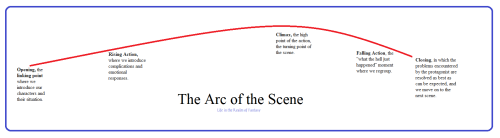
But all writers begin as readers. As we read, we see an arc to the overall novel consisting of:
- Exposition, where we introduce our characters and their situation.
- Rising action, where we introduce complications for the protagonist
- Climax, the high point of the action, the turning point of the narrative
- Falling action, the regrouping, and unfolding of events that will lead to the conclusion
- The resolution, in which the protagonist’s problems are resolved, providing the reader with closure.
Scenes are mini stories that support the overall arc. They come together to create the all-encompassing drama that is the novel. The way the narrative unfolds keeps our readers interested until the end of the book. Each scene has a job and must lead to the next. If we do it right, the novel will succeed.
The main difference in the arc of the scene vs. the overall arc of the novel is this: the end of the scene is the platform from which your next scene launches. This means each scene begins at a slightly higher point on the novel’s plot arc than the previous scene, driving the narrative.
 In my mind, novels are like Gothic Cathedrals–arcs of stone supporting other arches until you have a structure that can withstand the centuries. Each scene is a tiny arc that supports and strengthens the construct that is our plot.
These small arcs of action, reaction, and calm push the plot and ensure it doesn’t stall. This tension increases the overall conflict that drives the story.
My writing style in the first stages may be different than yours. I lay down the skeleton of the tale, fleshing out what I can as I go. But there are large gaps in this iteration of the narrative.
So, once the first draft is finished, I flesh out the story with visuals and action. These are things I can’t focus on in the first draft, but I do insert notes to myself, such as:
- Fend off attack here. Bandits wound Lenn. I don’t know how.
Or my notes might say something like:
- Contrast tranquil scenery with turbulent emotions here.
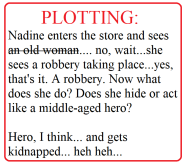 For me, the first draft is always rough, more like a series of events and conversations than a novel. In the second draft, I stitch it all together and fill in the plot holes.
In the first draft, most scenes I write are conversations interspersed with actions. Conversations between our characters should have an arc that supports the cathedral of the novel. They begin, rise to a peak, and ebb.
They inform us of something we must know to understand the forthcoming action. Conversations propel the story forward to the next scene.
A good conversation is about a thing or idea and builds toward some other thing or idea. Dialogue must have a premise and move toward a conclusion of some sort. Otherwise, it’s is a waste of words.
A scene that is all action is confusing if it has no context, no frame. A properly placed conversation can give the reader perspective when there is no silent witness (an omniscient presence). This view is needed to understand the reason for events.
A certain amount of context can arrive through internal monologue. But we don’t want the reader to face a wall of italics. I have two problems with long mental conversations:
- Italics are daunting in large chunks.
- Internal dialogue is frequently a thinly veiled cover for an info dump.
 Plot points are driven by the characters who have critical knowledge. The fact that some characters are working with limited information creates tension.
This inequality of knowledge is called asymmetric information. We see this all the time in the corporate world.
- One party in a business transaction has more or superior information compared to another.
- This individual’s drive and pursuit of pure self-interest can prevent others from entering and competing in an industry or market.
- This person has the critical knowledge the competitors don’t have.
- That inequality of information effectively eliminates his competition.
In other words, he has a monopoly and rises to the top.
In literary terms, a monopoly of information creates a crisis. In the novel, a conversation scene should be driven by the fact that one person has knowledge the others need. An idle conversation will bore your reader to tears, so only discuss things that advance the plot.
The reader must get answers at the same time as the other characters, gradually over the length of a novel.
I struggle with this too. Dispersing small but necessary bits of info at just the right moment is tricky. Hopefully, by the end of my second draft, all these bumps will have been smoothed out.
Now that we are a week into NaNoWriMo, I have written 20,000 words into my outline, which is gradually becoming a novel. Already many things have changed from the original plan.
Whether it will be an engaging story for a reader (or not) is something I can’t predict, but I’m enjoying writing it.
And that is what writing should be about—writing the story you want to read.
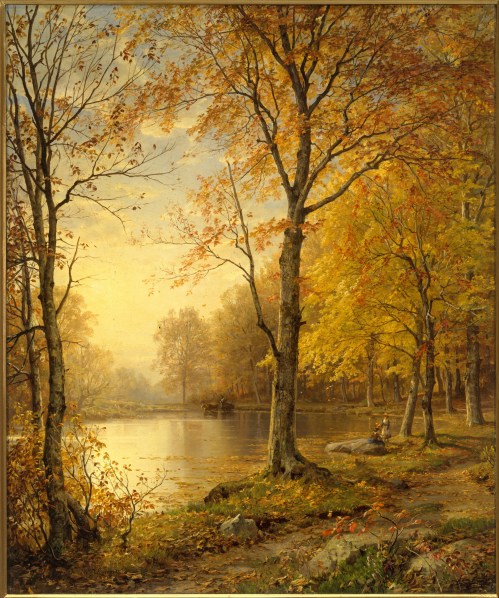 Title: Indian Summer by William Trost Richards
 Lesser dramas might only touch us on a peripheral level, yet they can affect our sense of security and challenge our values.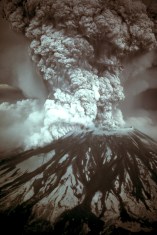
 The camera zooms out and now we see the idyllic serenity of a clear sunny morning on Spirit Lake and Harry doing his morning chores.
 We writers must make our words count. We must show our characters in their comfort zone in the moments leading up to the disaster. Not too much of a lead in, but just enough to show what will soon be lost.
 Many authors are prepping for NaNoWriMo 2022. They are mentally committing to writing 1,667 new words every day beginning on November 1st or a total of 50,000 words by midnight on November 30th.
 Until this past June, I wrote best when I had a long stretch of time to just sit down and immerse myself. Then my husband was diagnosed with Parkinson’s, a degenerative neurological disease, and our life underwent a fundamental change. I am now the only driver in the family, and we live in an area without public transportation.
 A good way to ensure you have that time is to encourage your family members to indulge in their own interests and artistic endeavors. That way, everyone has the chance to be creative in their own way during that hour, and they will understand why you value your writing time so much.
 Perhaps your mind has gone blank. An idea is locked in your head, but you don’t have the words to free it. You can still advance your rough draft and meet your word count goal. Step back and view your story from a distance:
 Let’s start with craft. If you are at the beginning stage of your writing life, it’s hard to know where to find help in shaping your work into a coherent story. For many years, I didn’t even know books on the craft of writing existed.
 Finishing off the resources from the official NaNoWriMo store is the handbook,
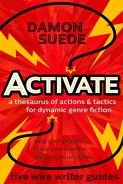
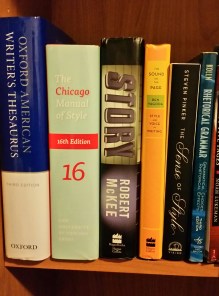
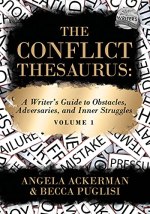
  The following is the list of books that are the pillars of my reference library:
 We usually start our online hunt for information by “googling” a question, no matter what browser you use. Be wary and read several articles to get a broader view of what you are looking for. I also check dates to ensure the information is current and bookmark it if it is relevant to my story. Note: Your browsing history may look a little … unusual … after a while.
 www.Thesaurus.Com
 So, let’s talk about writers’ groups. A good group is the best way to learn about this craft. Your area may have established writers’ groups, and some may be able to accept new members. The best way to find out is to google writer’s groups in your town and make inquiries.
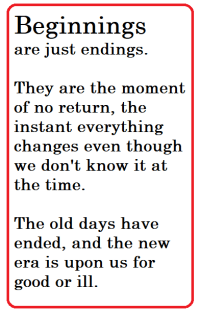 Today, we will pinpoint the moment in our protagonist(s) life where the story starts. We’re locating the point where this particular memoir, poem, novel, or short story begins.
 Setting: Venice in the year 1430.The weather is unseasonably cold. A bard is concealed amongst the filth and shadows in a dark, narrow alley. Sebastian hides from the soldiers of a prince he has unwisely humiliated in a comic song.
 But the opening moment, the scene showing a lowly bard hiding behind a rubbish heap, is the moment in Sebastian’s life where the story the reader wants to hear starts. That scene is where this story begins regardless of how interesting Sebastian’s story, Venice’s story, or the Warlock Prince’s story was before that day. It is the beginning because this is the point where all the essential characters are in one place and are introduced: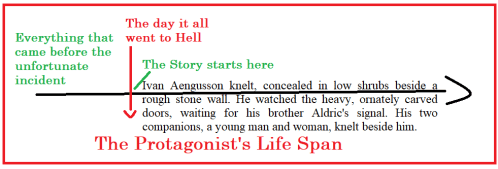
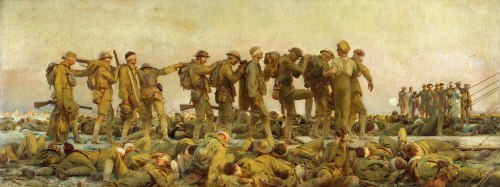 Artist: John Singer Sargent (1856–1925)
 Post two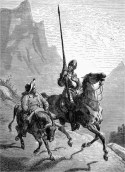
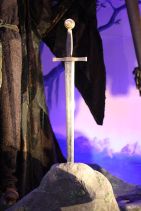
 Marco arrives at the inn. The innkeeper mentions Klaus was there, but now he’s gone. Marco sees his barge is still there, and the deckhands don’t know where he is. He goes to the gatehouse where Dinah is supposed to be on duty and immediately knows something is wrong. He fears Klaus has gotten to her, and instinct tells him to go to the Temple.
 In real life, people live happily, but no one really lives deliriously happy ever after. But that’s another story and a different genre.
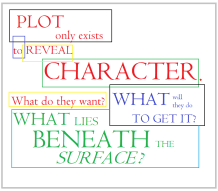
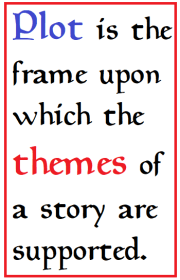 Now we’re going to design the conflict by creating a skeleton, a series of guideposts to write to. I write fantasy, but every story is the same, no matter the set dressing: Protagonist A needs something desperately, and Antagonist B stands in their way.
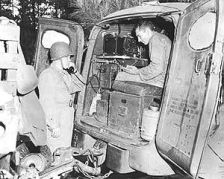
 Where does our soldier’s story begin? We open the story by introducing our characters, showing them in their everyday world, and then we kick into gear with the occurrence of the “inciting incident,” which is the first plot point. That might be their arrival at their first camp in the Ardennes region.
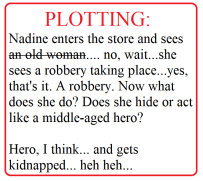 One thing that I do is make notes that help limit my tendency toward heavy-handed foreshadowing. I try to keep it brief, but what will be enough of a hint, and where should it go?


 Life in the Realm of Fantasy