#FineArtFriday: The Dutch Proverbs by Pieter Bruegel the Elder, revisited

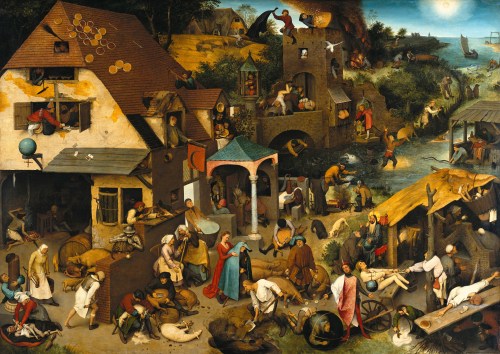
Pieter_Brueghel_the_Elder_-_The_Dutch_Proverbs_-_Google_Art_ProjectToday I’m revisiting one of the best allegorical paintings of all time, The Netherlandish Proverbs (also known as The Dutch Proverbs) by Pieter Brueghel the Elder, which was painted in 1559. A master at humor, allegory, and pointing out the follies of humanity, Brueghel the Elder is one of my favorite artists.

Artist: Pieter Bruegel the Elder
Year: 1559
Medium: Oil-on-panel
Dimensions: 117 cm × 163 cm (46 in × 64 in)
Location: Gemäldegalerie, Berlin

Quote from Wikipedia:

Critics have praised the composition for its ordered portrayal and integrated scene. There are approximately 112 identifiable proverbs and idioms in the scene, although Bruegel may have included others which cannot be determined because of the language change. Some of those incorporated in the painting are still in popular use, for instance “Swimming against the tide”, “Banging one’s head against a brick wall” and “Armed to the teeth”. Many more have faded from use, which makes analysis of the painting harder. “Having one’s roof tiled with tarts”, for example, which meant to have an abundance of everything and was an image Bruegel would later feature in his painting of the idyllic Land of Cockaigne (1567).

The Blue Cloak, the piece’s original title, features in the centre of the piece and is being placed on a man by his wife, indicating that she is cuckolding him. Other proverbs indicate human foolishness. A man fills in a pond after his calf has died. Just above the central figure of the blue-cloaked man another man carries daylight in a basket. Some of the figures seem to represent more than one figure of speech (whether this was Bruegel’s intention or not is unknown), such as the man shearing a sheep in the centre bottom left of the picture. He is sitting next to a man shearing a pig, so represents the expression “One shears sheep and one shears pigs”, meaning that one has the advantage over the other, but may also represent the advice “Shear them but don’t skin them”, meaning make the most of available assets.

You can find all of the wonderful proverbs on the painting’s page on Wikipedia, along with the thumbnail that depicts the proverb.

My favorite proverbs in this wonderful allegory?

Horse droppings are not figs. It meant we should not be fooled by appearances.

He who eats fire, craps sparks. It meant we shouldn’t be surprised at the outcome if we attempt a dangerous venture.

Now THAT is wisdom!


Credits and Attributions:

The Netherlandish Proverbs (Also known as The Dutch Proverbs) by Pieter Brueghel the Elder 1559 [Public domain], via Wikimedia Commons.

Wikipedia contributors, “Netherlandish Proverbs,” Wikipedia, The Free Encyclopedia, https://en.wikipedia.org/w/index.php?title=Netherlandish_Proverbs&oldid=829168138  (accessed November 24, 2022).

4 Comments

Filed under #FineArtFriday, writing

How Gerunds can be Action’s Kryptonite #amwriting

Today’s post focuses on word choice. I’ve just finished reading a mystery novel, and while I enjoyed the plot and the characters, the editor in my soul says I can’t recommend it. Therefore, I will not name the book or the author.

transitive verbThis novel was meticulously self-edited. I could see it was run through the author’s writer’s group many times, and the major flaws were ironed out. There were few typos, and the formatting was done well.

Self-editing is a struggle. The eye is biased when it comes to the structural flaws of our own work. This is why the smart author runs things past their writing group. The problem I see most often is that writing group members are not usually editors. They are acquainted with the basics of grammar but aren’t familiar with some advanced functions. They may have been taught grammar in school but have forgotten some as they had no use for it until they began writing.

And some never understood it because of the way it was presented in the first place. When something is boring, we don’t pay attention.

chicago guide to grammarLet’s be real—style and grammar guides are tedious and hard to understand. We may own them but we hate to crack them open. Trust me, researching grammar gets easier and more interesting as you advance in writing craft.

Unfortunately, the novel I wanted to enjoy was ruined by the opening line of the first paragraph on page one. That flaw interested me, so the editor in my head continued reading, analyzing why such a promising book failed.

Positives: The characters were engaging, and the plot was an original, well-conceived premise. The mystery was intriguing, and the setting was shown well.

Negatives: The author’s penchant for beginning sentences with gerunds – “ing” words – and peppering them throughout the narrative soured me on what could have been a strong novel. The opening paragraph ran similarly to this 29-word sample, with gerunds at the front of three sentences in a row:

Moving along quickly, we hurried through the store. Huddling behind the shelves, we waited until Mason had passed. Moving quickly again, we made it safely out the door.

The rest of the book was written in that style.

If I had been in her writing group, I would have suggested (gently) that she either move the gerunds to the final clause of each sentence or eliminate them. I know it’s frustrating to hear an editor suggest you completely reword prose you have already shaped and reshaped. But trust me, a reader will appreciate it.

We hurried through the store, huddling behind the shelves until Mason had passed, then slipped out the door.

Ten words were removed from the first example, but the scene’s intention isn’t altered.

This is where the choice and placement of words come into play. Active prose is constructed of nouns followed by verbs or verbs followed by nouns.

  1. Moving the verbs to the front of the sentence makes it stronger.
  2. Nouns are inherently inert but feel active when followed by verbs.

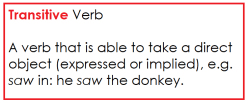
Words ending in “ing” fall into the family of gerunds. They are often used as verbs that have been turned into nouns, such as running and dancing. They are usually intransitive verbs (but sometimes they are transitive) and are necessary for good writing. But used improperly and too freely, gerunds are action’s kryptonite. (Edited 11-23-2022 for clarity.)

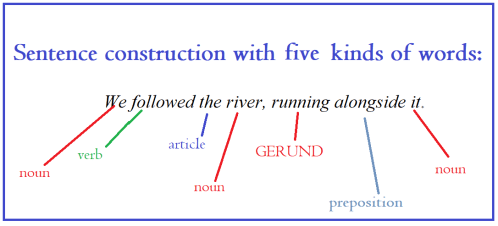
We followed the river, running alongside it until we could go no farther.

5 kinds of words

Writers who use gerunds too freely mean well. After all, a gerund began life as a verb but underwent an identity change, becoming a noun by adding the “ing” suffix.

Authors who lead sentences off with them are trying to get their prose moving.

So now we know a new truth: when we lead off our sentences with “ing” words, we are opening with a verb that wants to be a noun and behaves like one. This word choice separates the reader from the action, so while a gerund is a verb form, it is a word with a supporting role.

The abundance of gerunds we put into the first draft are an aspect of passive phrasing, the mental shorthand we use to first tell the story.

In most first drafts, the passive phrasing is a code. The author’s “subconscious writer” embeds signals in the first draft. It tells the author that the characters are transitioning from one scene to the next. They, or their circumstances, are undergoing a change. This change is something the reader must know.

toolsIn this regard, gerunds and other passive code words are the author’s first draft-multi-tool. They are a compact tool that combines several individual functions in a single unit. One word, one packet of letters that serves many purposes and conveys multiple mental images to the author.

At some point, we will finish the first draft, giving our novel a finite ending. When we begin revising that first draft, gerunds and passive phrasing, these code words and clues we left ourselves, will tell us what we must expand on. They show us the scene, and we rewrite it so the reader can see it too.

15 Comments

Filed under writing

no internet, no happy, #amwriting

The internet has been out here at Casa del Jasperson since Friday.

I have been surfing the internet on my phone, which has been interesting. My word count is still on track, but I have gone wide of what was originally plotted.

This little update is coming to you from my cellphone – a first for me. So, no images or graphics today.

We should have the internet fixed this afternoon. In the meantime, write what you feel passion for and be happy.

I hope to have a post on Wednesday.

Peace, and happy writing.

Connie

12 Comments

Filed under writing

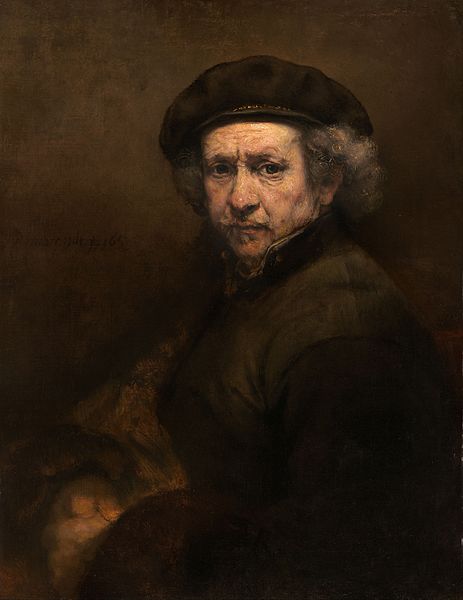
#FineArtFriday: Rembrandt through his own eyes, 1659 (revisited)

Rembrandt Harmenszoon van Rijn, commonly known simply as Rembrandt, is considered the finest artist of the 17th century. Some art historians consider him the finest artist in the history of art, and the most important artist in Dutch art history.

Speaking strictly as a Rembrandt fangirl and abject admirer, I consider his self-portraits to be more honest than those of any other artist.

Quote from Wikipedia: His self-portraits form a unique and intimate biography, in which the artist surveyed himself without vanity and with the utmost sincerity.

This honesty comes across in all his works featuring himself as the subject, even those where he portrays himself as a shepherd or the prodigal son. Each portrait shows an aspect of his personality, his sense of humor, his affection for Saskia who was the love of his life, and his wry acceptance of his own human frailties.

Rembrandt knew he was talented, but didn’t see himself as a creative genius. He was just a man with a passion for art, who lived beyond his means and died a pauper, as did Mozart, and as do most artists and authors.

I feel I know this man, more so than I do the person he was in his earlier self-portraits. He’s matured, lost some of the brashness of his youth. When I observe the man in this self-portrait, painted ten years before his death, I see a good-humored man just trying to live a frequently difficult life as well as he can. His face is lined and blemished, not as handsome as he once was. But his eyes seem both kind and familiar, filled with the understanding that comes from living with all one’s heart and experiencing both great joy and deep sorrow.

The art of Rembrandt van Rijn shows us his world as he saw it. Others may disagree with me, but I feel his greatest gift was the ability to convey personality with each portrait. This gift allowed him to portray every person he painted as they really were, blemished and yet beautiful. This is a gift he taught his students, and they were able to copy his style quite effectively, making discerning his true work difficult even for the experts.


Credits and Attributions:

Wikipedia contributors, “Rembrandt,” Wikipedia, The Free Encyclopedia, https://en.wikipedia.org/w/index.php?title=Rembrandt&oldid=844357531(accessed June 8, 2018).

Wikimedia Commons contributors, “File:Rembrandt van Rijn – Self-Portrait – Google Art Project.jpg,” Wikimedia Commons, the free media repository, https://commons.wikimedia.org/w/index.php?title=File:Rembrandt_van_Rijn_-_Self-Portrait_-_Google_Art_Project.jpg&oldid=292800848 (accessed June 8, 2018).

Comments Off on #FineArtFriday: Rembrandt through his own eyes, 1659 (revisited)

Filed under #FineArtFriday

Side Characters – Someone Must Die #amwriting

We who write live inside our imaginations. The story unfolds before us when we are laying down the first draft, and the characters reveal themselves as we write. The side characters make themselves known to us, and gradually, we come to understand who they are and why they are willing to endure the hardships and support our protagonists in their efforts.
WritingCraft_Dark_EnergySometimes, the story demands a death, and 99% of the time, it can’t be the protagonist. But death must mean something, wring emotion from us as we write it. Since the character we have invested most of our time into is the protagonist, we must allow a beloved side character to die.

Killing a side character should not be a means of livening up a stale plot. It must be an organic part of the storyline, move the other characters, force them to continue despite the struggle.

But who is Character B as a person? When the first draft is done, side characters can seem two-dimensional. The second draft is where we inject emotion into the narrative. We must make Character B’s sacrifice feel like the tragedy it is.

We form our characters out of Action and Reaction. This chemistry happens on multiple levels.

First, it occurs within the story as the characters interact with each other. At the same time, the chemistry happens within the reader who is immersed and living the story. The reader begins to consider the characters as friends.

That emotional attachment is why every sacrifice our characters make must have meaning. It must advance the plot, or your reader will hate you.

As I write my first draft, I uncover hints of an individual’s speech habits, history, and personal style. I begin to see a person with values and discover their boundaries. I begin to know what they will (or will not) do.

At the outset, my characters have secrets they believe no one knows, secrets they will take with them to the grave. As I write, these secrets unfold before me, and I feel such love for them, for all their flaws and insecurities.

Before I became a writer, I was a reader. I am still a reader and go through one or two books a week. I seek out stories in all genres featuring characters I can empathize with. I want to meet characters who behave and respond to the inciting incident naturally, in a way that makes me say, “Yes, this is exactly how they would react.” As each subsequent event unfolds, they continue to behave as individuals. No one acts out of character.

If Character B must die, I want to feel as if I have lost a dear friend. Character B’s motivations must be clearly defined.

  • You must know how Character B thinks and reacts as an individual.
  • What need drives them?
  • What lengths will they go to in the effort to achieve their goal?
  • Conversely, what will they NOT do? What are their moral boundaries, and what is out of character for them?

Next, ask what would inspire this person to sacrifice themselves for others?

We have designed the plot, so we know the magnitude of the obstacles our characters face. The choices they make in those situations can change the story. Character B’s decisions are as crucial to the plot as are those of the protagonist.

In literary terms, agency is the power of an individual character to act independently, to choose their own path.

When we allow the protagonist/antagonist agency, they will make choices that surprise us. When we are writing the first draft, our characters will make decisions that might take the narrative in a new direction. I love it when that happens.

Character B dies. Why? What purpose does that death serve?

The character of Spock in the Star Trek franchise is a classic example of a person who would and did sacrifice themselves. In The Wrath of Khan (via Wikipedia):
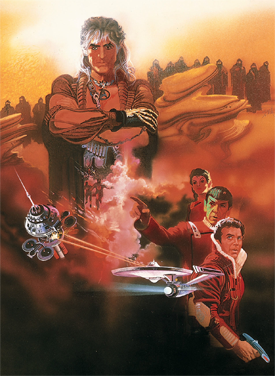
Star_Trek_II_The_Wrath_of_KhanMortally wounded, the antagonist, Khan, activates a “rebirth” weapon called Genesis, which will reorganize all matter in the nebula, including Enterprise. Though Kirk’s crew detects the activation and attempts to move out of range, they will not be able to escape the nebula in time without the ship’s inoperable warp drive. Spock goes to restore warp power in the engine room, which is flooded with radiation. When McCoy tries to prevent Spock’s entry, Spock incapacitates him with a Vulcan nerve pinch and performs a mind meld, telling him to “remember.” Spock repairs the warp drive, and Enterprise escapes the explosion, which forms a new planet. Before dying of radiation poisoning, Spock urges Kirk not to grieve, as his decision to sacrifice himself to save the ship’s crew was a logical one. An epilogue shows Spock’s space burial and reveals that his coffin is on the surface of the Genesis planet, foreshadowing the events of Star Trek III: The Search for Spock. [1]

Spock explains his decision by saying, “Logic clearly dictates that the needs of the many outweigh the needs of the few.”

Captain Kirk answers, “Or the one.”

It becomes easy to give our characters an active role in choosing their fate when they have unique personalities.

When I first began writing, allowing my characters to grow their own way was difficult. I had this notion that the original plot was engraved in stone. Eventually, I learned to relax and let them do as they would.

And yet, they harbor secrets to the end, things that surprise and shock me.
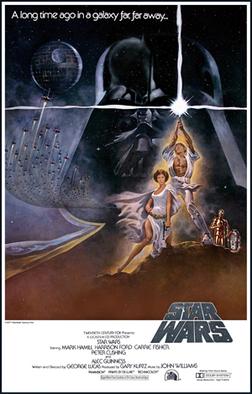
StarWarsMoviePoster1977You, as the author, must understand what drives and motivates even the walk-on, disposable characters. Are they “a red shirt,” that iconic Star Trek symbol of the throw-away character? Or are they a “Spock,” the beloved friend who offers themselves up to save others?

Why should we care if they die? Your job is to make us care.

When a character has history, has agency, and chooses to sacrifice themselves as Obi-Wan did for Luke or Spock for the Enterprise crew, you see their decision is not out of character.

The death of a character must raise the emotional stakes for both the protagonist and the reader. A complex, memorable novel rewards the reader for their investment of time by making the story feel personal.


Credits and Attributions:

[1] Wikipedia contributors, “Star Trek II: The Wrath of Khan,” Wikipedia, The Free Encyclopedia, https://en.wikipedia.org/w/index.php?title=Star_Trek_II:_The_Wrath_of_Khan&oldid=1015970109 (accessed April 18, 2021).

Images: Star Trek II: The Wrath of Khan (Paramount Pictures: 1982); art by illustrator Bob Peak. © 1982 Paramount Pictures; Fair use under United States copyright law.

Star Wars: Episode IV – A New Hope (Lucasfilm Ltd. Distributed by 20th Century Fox: 1977), art by illustrator Tom Jung. © 1977 Lucasfilm Ltd; Fair use under United States copyright law.

16 Comments

Filed under writing

Drawing on the Momentum of the Dark Side #amwriting

We’re halfway through November, and some writers participating in NaNoWriMo already know how their novels will end. But just because we might have an ending, the story isn’t finished. Work must be done to fill in the gaps and add depth.

WritingCraft_Dark_EnergyOne character archetype that is critical to any story is the villain. Yet the negative energy of a story is often less developed, two-dimensional.

In his book, The Writer’s Journey, Mythic Structure for Writers, Christopher Vogler discusses how the villain of a piece represents the shadow. The villain provides the momentum of the dark side, and their influence on the protagonist must be fully explored.

The shadow character serves several purposes.

  • He/she/it is usually the main antagonist and represents darkness (evil) against which light (good) is shown more clearly.
  • The shadow, whether a person, place, or thing, provides the roadblocks, the reason the protagonist must struggle.

I believe the villains we write into our stories represent humanity’s darker side, whether they are a person, a dangerous animal, or a natural disaster. They bring ethical and moral dilemmas to the story, offering food for thought.

Through that struggle, heroes must recognize and confront the darkness within themselves. They must choose their own path—will they fight to uphold the light? Or will they take the easier way, following the shadow?

When the protagonist must face and overcome the shadow on a profoundly personal level, they are placed in true danger. If they stray from the light, they may have unknowingly offered up their souls.

The best shadow characters are multidimensional. They are charismatic because we can relate to their struggle.

Characters portrayed as evil for the sake of drama can be cartoonish. Layers must support their actions, or the villain is not believable.

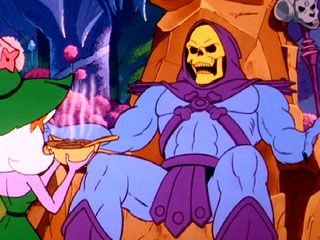
I think of these two-dimensional villains as little “Skeletors.”

Skeletor-spooSkeletor is a cartoon villain with one of the least believable storylines in the history of cartoons. He has great passion and drive as a villain, but it’s all noise and show. His ostensible quest is to conquer Castle Grayskull and acquire its ancient secrets. Possession of these would make him unstoppable, allowing him to rule the world of Eternia.
But his character is hollow, and his storyline is simply one long declaration of his villainy. In reality, Skeletor’s sole purpose is to give He-Man a reason to draw his mighty sword and proclaim, “I have the power!”

It was a fun cartoon, but these characters were initially conceived as a means of selling toys.

What is your goal? Maybe a token villain serves the purpose. However, if you hope to write a memorable story, you need Evil With History.

Truly fearsome villains have deep stories. Sure, they may have begun life as unpleasant people and may even be sociopaths. But no one wakes up one morning and says, “I am evil. I will now go out, gather some minions, and do evil things. Muah-hah-hah!”

Look at one of the most talked-about villains of all time, a character who represents the worst humanity can offer: Hannibal Lector:

In The Silence of the Lambs, Lecter’s keeper, Dr. Frederick Chilton, claims that Lecter is a “pure sociopath” (“pure psychopath” in the film adaptation). In the film adaptation of The Silence of the Lambs, protagonist Clarice Starling says of Lecter, “They don’t have a name for what he is.”

Lecter’s history is explored in greater detail in Hannibal and Hannibal Rising. These books explain how, as a child in Lithuania in 1944, he witnessed the murder and cannibalism of his beloved sister, Mischa, by a group of deserting Lithuanian Hilfswillige. One of the killers claimed that Lecter unwittingly ate his sister as well.

Believable villains must have a back story that explains and supports their logical reasons for what we think of as villainy. If it’s a quest, the bad guy/girl must have a plausible explanation for going to the lengths they do to acquire the Golden McGuffin.

In my work, light and dark (good and evil) are represented through two different theologies. Both societies believe in the righteousness of their gods. Both have rituals they perform to appease their deities. The people of both worlds firmly believe that their way and their deity is the only true way.

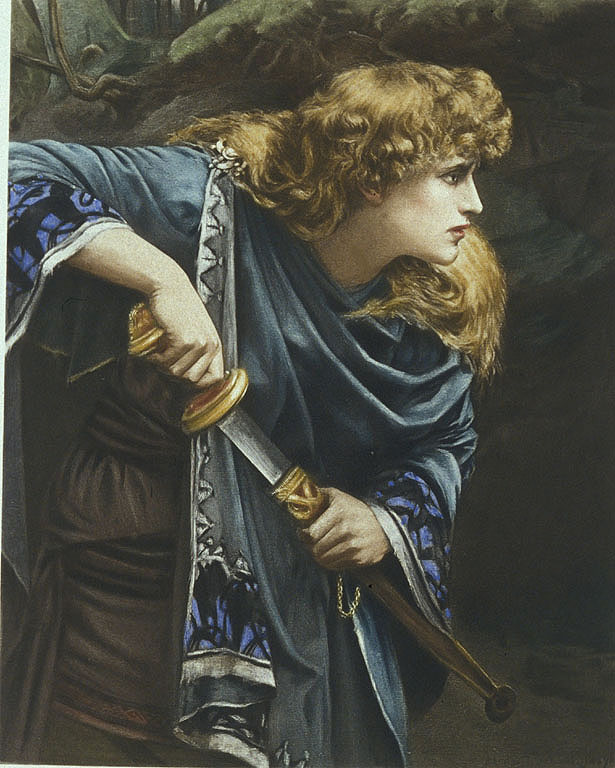
Imogen_-_Herbert_Gustave_SchmalzWhen we write a story, we want the protagonist’s struggle to mean something to the reader. We put them through hell and make their lives miserable. But we must remember that the characters in our stories aren’t going through these horrible trials alone. The moment we begin writing the story, we are dragging the reader along for the ride.

We who write novels can’t offer the reader hollow, cartoonish characters. We have failed if we don’t give the shadow hints of depth, of history. We owe it to our readers to provide rounded, believable characters, whether they are heroes or villains.

Ask what made the villain turn to the darkness? What events gave them the strength and courage to rise above the past, twisted though they are? What drives their agenda? What do they hope to achieve?

We must make the hero’s ultimate victory evoke great relief in the reader and fill them with the sure knowledge that all is made right.

The reader has survived, and the victory belongs to them as much as it does the hero.


CREDITS AND ATTRIBUTIONS:

Image: Skeletor-spoo: Fair Use, for identification of and critical commentary on the television program and its contents. DVD screen capture from the She-Ra: Princess of Power episode “Gateway to Trouble,” where Skeletor is offered a bowl of Spoo. Wikipedia contributors, “He-Man,” Wikipedia, The Free Encyclopedia, https://en.wikipedia.org/w/index.php?title=He-Man&oldid=916702029 (accessed November 12, 2022).

Image: Imogen by Herbert Gustav Schmalz PD|100 via Wikimedia Commons

9 Comments

Filed under writing

#FineArtFriday: Peace at Sunset (Evening in the White Mountains) by Thomas Cole, ca 1827

Peace_at_Sunset_(Evening_in_the_White_Mountains)_Thomas_ColeArtist: Thomas Cole (1801–1848)

Title: Peace at Sunset (Evening in the White Mountains)

Date: circa 1827

Medium: oil on canvas

Dimensions: height: 68.9 cm (27.1 in); width: 81.9 cm (32.2 in)

Collection: Fine Arts Museums of San Francisco

What I love about this painting:

This is one of Cole’s early works. He was able to show us the kind of autumn day we love, with rain trying to sweep in, but held back by the sunshine. It’s good day, despite the chill breeze attempting to scour the leaves from the trees. Clouds brush the hilltops, but the reds and golds seem to glow in the sunlight.

About the Artist, via Wikipedia:

Thomas Cole (February 1, 1801 – February 11, 1848) was an English-American painter known for his landscape and history paintings. He is regarded as the founder of the Hudson River School, an American art movement that flourished in the mid-19th century. Cole’s work is known for its romantic portrayal of the American wilderness.

After 1827 Cole maintained a studio at the farm called Cedar Grove, in the town of Catskill, New York. He painted a significant portion of his work in this studio. In 1836, he married Maria Bartow of Catskill, a niece of the owners, and became a year-round resident. Thomas and Maria had five children. Cole’s daughter Emily was a botanical artist who worked in watercolor and painted porcelain. Cole’s sister, Sarah Cole, was also a landscape painter.

Additionally, Cole held many friendships with important figures in the art world including Daniel Wadsworth, with whom he shared a close friendship. Proof of this friendship can be seen in the letters that were unearthed in the 1980s by the Trinity College Watkinson Library. Cole emotionally wrote Wadsworth in July 1832: “Years have passed away since I saw you & time & the world have undoubtedly wrought many changes in both of us; but the recollection of your friendship… [has] never faded in my mind & I look at those pleasures as ‘flowers that never will in other garden grow-‘”

Thomas Cole died at Catskill on February 11, 1848, of pleurisy. The fourth highest peak in the Catskills is named Thomas Cole Mountain in his honor. Cedar Grove, also known as the Thomas Cole House, was declared a National Historic Site in 1999 and is now open to the public.


Credits and Attributions:

Peace at Sunset (Evening in the White Mountains) by Thomas Cole PD|100 via Wikimedia Commons.

Wikipedia contributors, “Thomas Cole,” Wikipedia, The Free Encyclopedia, https://en.wikipedia.org/w/index.php?title=Thomas_Cole&oldid=1120453843 (accessed November 10, 2022).

Comments Off on #FineArtFriday: Peace at Sunset (Evening in the White Mountains) by Thomas Cole, ca 1827

Filed under #FineArtFriday

Idea to book – Project Management #amwriting

Authors who want to take their books from idea to paperback must become project managers. Like any other endeavor, writing and successfully taking your novel to publication has many steps, from “what if” to proto product, and from there to completion. It doesn’t matter if you are going indie or sticking to the traditional route.

project managementThen there is the marketing of the finished product, but that is NOT my area strength, so I won’t offer any advice on that score.

Even on the surface, writing fiction is complex.

We all know a high-quality product when we see one. The manufacturer didn’t make it out of cheap components. They put their best effort and the finest materials they could acquire into creating it. Because the manufacturer cared about their product, we are proud to own it.

For authors, the essential component we must not go cheaply on is grammar. We don’t have to be perfect—after all, the way we habitually structure our prose (our voice) adds to the feeling of depth.

to err is human to edit divineHowever, we must have a fundamental understanding of basic mechanical skills. These rules are the law of the road, and readers expect to see them. Knowledge of standard grammar and punctuation rules prevents confusion. Readers who become confused will set the book aside and give it a one-star review.
If you have limited knowledge of grammar, your first obligation is to resolve that. The internet has many easy-to-follow self-education websites to help you gain a good understanding of basic grammar in whatever your chosen language is. One site that I like is https://grammarist.com/.

If you are writing in US English, I recommend getting a copy of the Chicago Guide to Punctuation and Grammar. If you write in UK English, purchase the Oxford A – Z of Grammar and Punctuation.

Authors who are just starting out often write erratic prose. They will be inconsistent with capitalizations, insert random commas where they think it should pause, and use exclamation points instead of allowing the narrative to show excitement. They don’t know how to punctuate dialogue, which leads to confusion and garbled prose.

We must know the rules of grammar to break them with style and consistency. How you break the rules is your unique voice.

Readers expect words to flow in a certain way. If you choose to break a grammatical rule, you must be consistent.

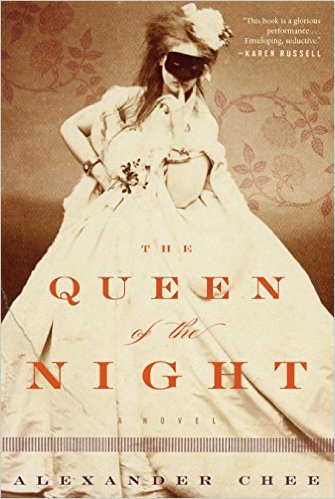
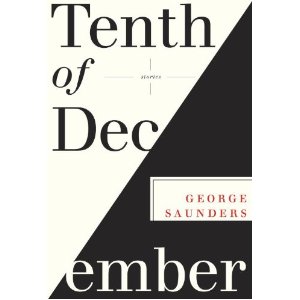
Tenth_of_DecemberErnest Hemingway, Alexander Chee, and George Saunders all have unique voices in their writing. They all break the rules in one way or another, but they are deliberate and consistent. Each of these writers has written highly acclaimed work.  You never mistake their work for anyone else’s.

Alexander Chee employs run-on sentences and dispenses with quotation marks (which I find excruciating to read).

George Saunders writes as if he is speaking to you and is sometimes choppy in his delivery. But his work is wonderful to read.

We who write need a broad vocabulary, but we also need to be careful not to get too fancy. To be successful, we need an understanding of the tropes readers expect to find in our chosen genre. We must employ those tropes to satisfy the general expectations of our readers. How we do that is our twist, the flavor that is our unique “secret sauce.”

We don’t consciously think about this, but organizational skills are critical because we want the story to flow easily from scene to scene. This is why successful authors are project managers, even if they don’t realize it.

Identify your Project Goals. Your story is your invention. Your effort, your ideas, and the skills you have developed will determine the quality of the finished novel.

Queen of the Night alexander cheeEach author is different, and the length of time they take on a book varies. Some authors are slow—their books are in development for years before they get to the finish line. Others are fast—their novels complete and ready to be published in a relatively short time. Regardless of your timeline, this is where project management skills really come into play.

I use a phased (or staged) approach to project management. This method breaks down and manages the work through a series of distinct steps to be completed.

Concept: You have a brilliant idea. Make a note of it so you don’t forget it.

The Planning Phase: creating the outline. Some people don’t need this step, but I do.

The Construction Phase—writing the first draft from beginning to end. Take it though as many revisions as you need in order to get it the way you envision it.

Monitoring and Controlling—This is where you build quality into your product.

  • Creating a style sheet as you go. See my post on style sheets here: Self-editing: Ensuring Consistency.
  • Finding beta readers and heeding their concerns in the rewrites.
  • Taking the manuscript through as many drafts as you must to have the novel you envisioned.
  • Employing a good line editor to ensure consistency in the quality of your product.
  • Finding reliable proofreaders. (Your writing group is an invaluable resource.)

Completion—things we don’t have to worry about just yet while we are in the construction phase. But they will come up later.

  • Employing a cover designer if you are going indie.
  • Finding an agent if you are taking the traditional route.
  • Employing a professional formatter for the print version if you are going indie.
  • Courting a publisher if you are taking the traditional route.

After that comes marketing, something you must do whether you are going indie or traditional. Both paths will require serious effort on your part. 

ozford-american-writers-thesaurusBut as I said earlier, I have no skills in the area of marketing and no advice worth offering.
What I do know is this: write the basic story. Take your characters all the way from the beginning through the middle and see that they make it to the end.

Once you have completed the story and have it written from beginning to end, you can concentrate on the next level of the construction phase: revisions. This is where we flesh out scenes and add depth to the bones of our story.

Over the next few posts, I will work on some of the sublayers of depth in our next series on the craft of writing. First up, we will think about why a story isn’t finished just because it has an ending.

7 Comments

Filed under writing

How a monopoly of information drives the arc of the scene #amwriting

NaNoWriMo is in full swing. Many people are discovering that writing is much more work than they realize. Some have fallen by the way already, and others will falter along for a few more days. Then they too will disappear, and their work will lie forgotten until the urge to write resurfaces, like the sneaky shark that creativity is.

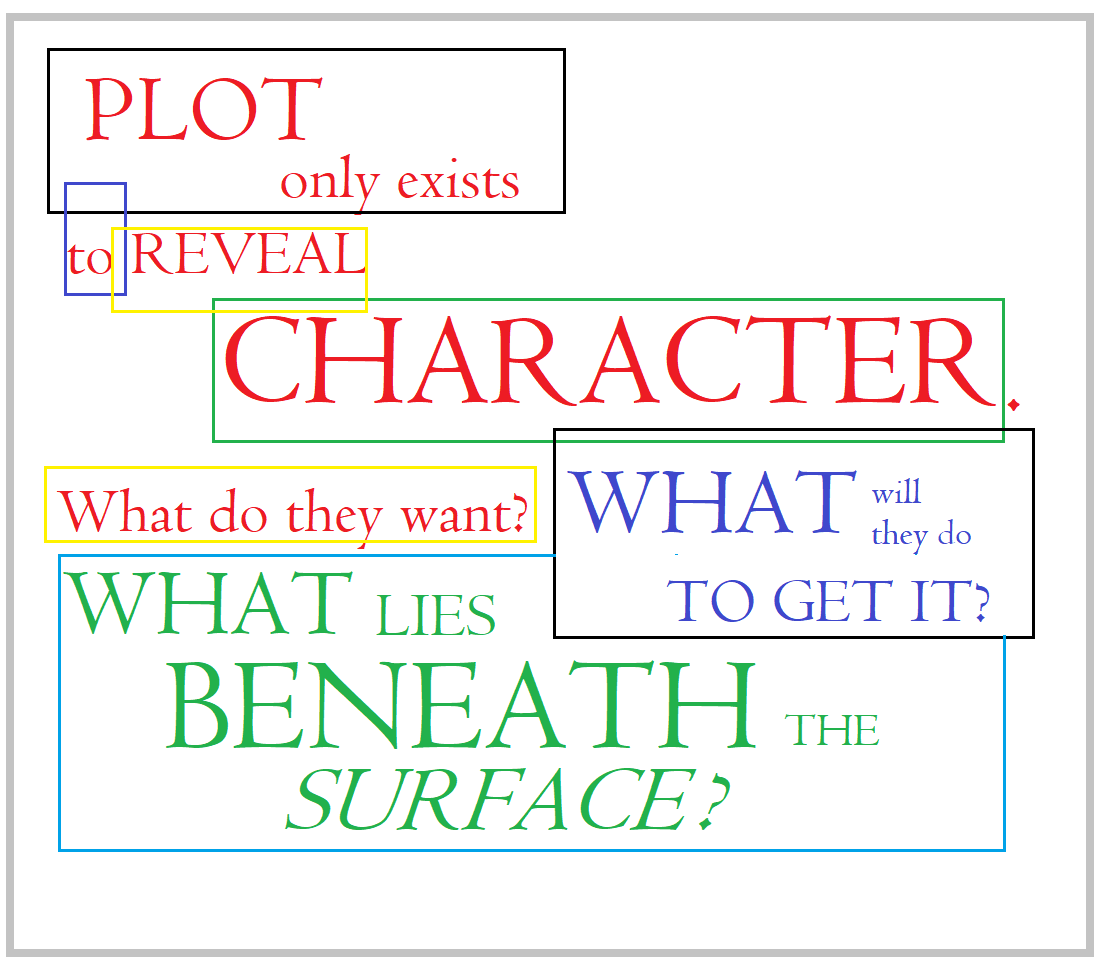
However, a few people new to the craft are developing a pPlot-exists-to-reveal-characterassion for the dirty habit of writing every day. They are joining the ranks of the old pros, the people who “do NaNo” every year whether they expect to be published or not.

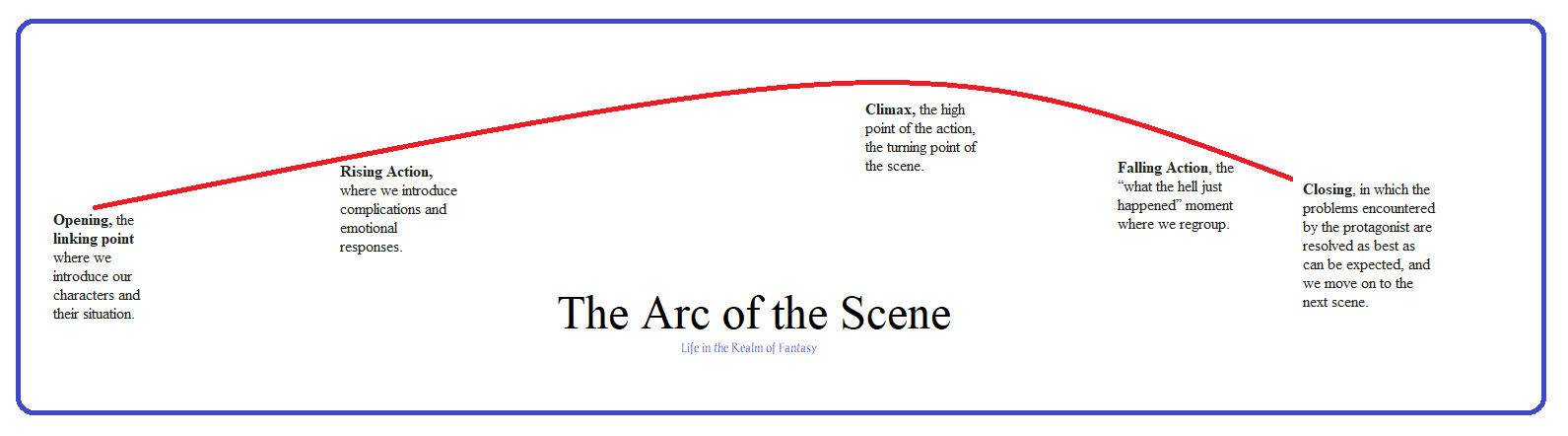
But all writers begin as readers. As we read, we see an arc to the overall novel consisting of:

  1. Exposition, where we introduce our characters and their situation.
  2. Rising action, where we introduce complications for the protagonist
  3. Climax, the high point of the action, the turning point of the narrative
  4. Falling action, the regrouping, and unfolding of events that will lead to the conclusion
  5. The resolution, in which the protagonist’s problems are resolved, providing the reader with closure.

Scenes are mini stories that support the overall arc. They come together to create the all-encompassing drama that is the novel. The way the narrative unfolds keeps our readers interested until the end of the book. Each scene has a job and must lead to the next. If we do it right, the novel will succeed.

The main difference in the arc of the scene vs. the overall arc of the novel is this: the end of the scene is the platform from which your next scene launches. This means each scene begins at a slightly higher point on the novel’s plot arc than the previous scene, driving the narrative.

876MilanoDuomoIn my mind, novels are like Gothic Cathedrals–arcs of stone supporting other arches until you have a structure that can withstand the centuries. Each scene is a tiny arc that supports and strengthens the construct that is our plot.
These small arcs of action, reaction, and calm push the plot and ensure it doesn’t stall. This tension increases the overall conflict that drives the story.

My writing style in the first stages may be different than yours. I lay down the skeleton of the tale, fleshing out what I can as I go. But there are large gaps in this iteration of the narrative.

So, once the first draft is finished, I flesh out the story with visuals and action. These are things I can’t focus on in the first draft, but I do insert notes to myself, such as:

  • Fend off attack here. Bandits wound Lenn. I don’t know how.

Or my notes might say something like:

  • Contrast tranquil scenery with turbulent emotions here.

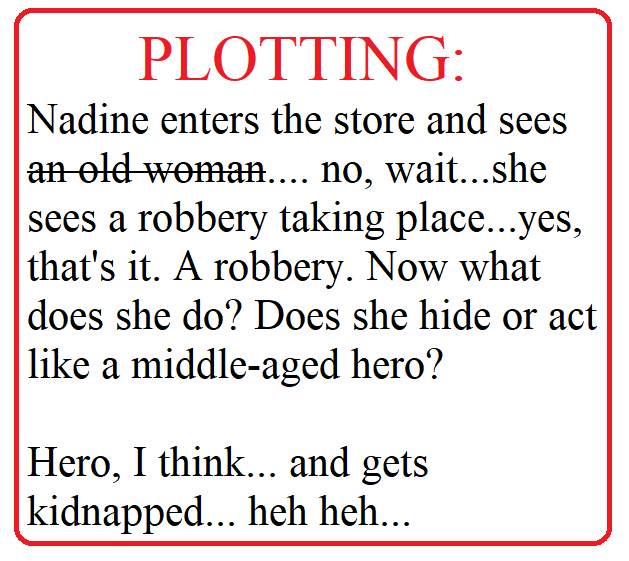
plottingLIRF07122020For me, the first draft is always rough, more like a series of events and conversations than a novel. In the second draft, I stitch it all together and fill in the plot holes.

In the first draft, most scenes I write are conversations interspersed with actions. Conversations between our characters should have an arc that supports the cathedral of the novel. They begin, rise to a peak, and ebb.

They inform us of something we must know to understand the forthcoming action. Conversations propel the story forward to the next scene.

A good conversation is about a thing or idea and builds toward some other thing or idea. Dialogue must have a premise and move toward a conclusion of some sort. Otherwise, it’s is a waste of words.

A scene that is all action is confusing if it has no context, no frame. A properly placed conversation can give the reader perspective when there is no silent witness (an omniscient presence). This view is needed to understand the reason for events.

A certain amount of context can arrive through internal monologue. But we don’t want the reader to face a wall of italics. I have two problems with long mental conversations:

  1. Italics are daunting in large chunks.
  2. Internal dialogue is frequently a thinly veiled cover for an info dump.

plot is the frame upon which the themes of a story are supportedPlot points are driven by the characters who have critical knowledge. The fact that some characters are working with limited information creates tension.
This inequality of knowledge is called asymmetric information. We see this all the time in the corporate world.

  • One party in a business transaction has more or superior information compared to another.
  • This individual’s drive and pursuit of pure self-interest can prevent others from entering and competing in an industry or market.
  • This person has the critical knowledge the competitors don’t have.
  • That inequality of information effectively eliminates his competition.

In other words, he has a monopoly and rises to the top.

In literary terms, a monopoly of information creates a crisis. In the novel, a conversation scene should be driven by the fact that one person has knowledge the others need. An idle conversation will bore your reader to tears, so only discuss things that advance the plot.

The reader must get answers at the same time as the other characters, gradually over the length of a novel.

I struggle with this too. Dispersing small but necessary bits of info at just the right moment is tricky. Hopefully, by the end of my second draft, all these bumps will have been smoothed out.

Now that we are a week into NaNoWriMo, I have written 20,000 words into my outline, which is gradually becoming a novel. Already many things have changed from the original plan.

Whether it will be an engaging story for a reader (or not) is something I can’t predict, but I’m enjoying writing it.

The Arc of the Scene

And that is what writing should be about—writing the story you want to read.

18 Comments

Filed under writing

#FineArtFriday: Indian Summer by William Trost Richards 1875

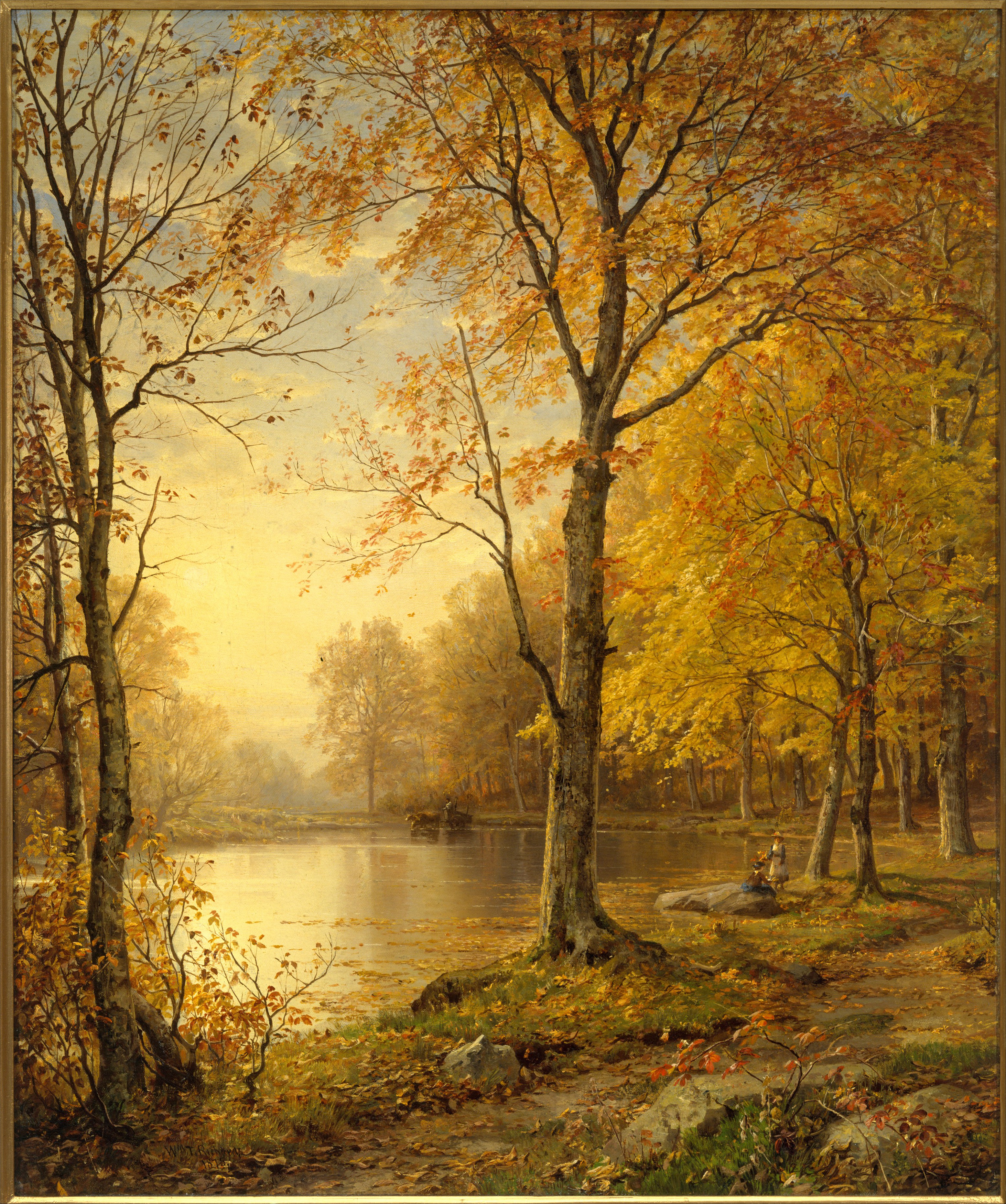
Indian_Summer_MET_DT276257Title: Indian Summer by William Trost Richards

Genre: landscape art

Date: 1875

Medium: oil on canvas

Dimensions: 24 1/8 x 20 in. (61.3 x 50.8 cm)

Collection: Metropolitan Museum of Art

What I love about this painting:

Richards has captured a singular moment of tranquility for us all to enjoy in these troubled times. A light breeze barely ruffles the surface of our pond. At the bottom right, two girls play beside a large boulder at the waters’ edge.

Across the pond, in the center and nearly hidden in the shadows, a teamster and his oxen wade across the shallows.

Autumn’s haze lends a feeling of mystery to the scene, muting the reds, yellows, and oranges of leaves about to fall. This last burst of grandeur can’t hold back winter, though it tries. Soon the forest will sleep, soon snow and ice will decorate barren limbs and ice will stop the waters’ gentle motions.

But beneath the grasp of winter, new life will bide its time, and winter will fade into spring. The seasons will follow their course, but today is autumn’s day to shine, to go down in a blaze of golden glory.

Richards paints a day of peace and serenity, a small pocket of time where one can just sit back and admire the beauty of our world.

 >>><<<

About William Trost Richards:

William Trost Richards (November 14, 1833 – November 8, 1905) was an American landscape artist. He was associated with both the Hudson River School and the American Pre-Raphaelite movement. [1]

1856 he married Anna Matlack Richards (1834–1900), a 19th-century American children’s author, poet and translator best known for her fantasy novel, A New Alice in the Old Wonderland. The couple had eight children, only five of whom lived past infancy. Anna educated the children at home to a pre-college level in the arts and sciences. [2]

One of the couple’s sons, Theodore William Richards, would later win the 1914 Nobel Prize in Chemistry. Anna Richards Brewster, their sixth child, went on to become an important painter in her own right, having received an early arts education from her father as well. [2]

Richards rejected the romanticized and stylized approach of other Hudson River painters and instead insisted on meticulous factual renderings. His views of the White Mountains are almost photographic in their realism. In later years, Richards painted almost exclusively marine watercolors. [1]


Credits and Attributions:

Indian Summer by William Trost Richards, Wikimedia Commons contributors, “File:Indian Summer MET DT276257.jpg,” Wikimedia Commons, the free media repository, https://commons.wikimedia.org/w/index.php?title=File:Indian_Summer_MET_DT276257.jpg&oldid=678817431 (accessed November 3, 2022). Public Domain.

[1] Wikipedia contributors, “William Trost Richards,” Wikipedia, The Free Encyclopedia, https://en.wikipedia.org/w/index.php?title=William_Trost_Richards&oldid=1089835304 (accessed November 3, 2022).

[2] Wikipedia contributors, “Anna Matlack Richards,” Wikipedia, The Free Encyclopedia, https://en.wikipedia.org/w/index.php?title=Anna_Matlack_Richards&oldid=1055684363 (accessed November 3, 2022).

1 Comment

Filed under #FineArtFriday, writing