Today we’re continuing to prep for NaNoWriMo by thinking about the plot and the story our characters inhabit. In post one, we thought about what kind of project we intend to write—novels, short stories, poems, memoirs, personal essays, etc.
Post two of this series introduced the protagonist(s), giving us an idea of who they are and what they do. Post three explored the setting, so we know where they are and their circumstances. Post four detailed creating the skeleton of a plot. Post five jumped to the end, giving us a finite event to write to.
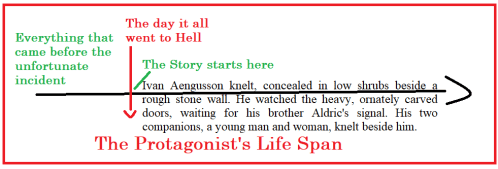
 Today, we will pinpoint the moment in our protagonist(s) life where the story starts. We’re locating the point where this particular memoir, poem, novel, or short story begins.
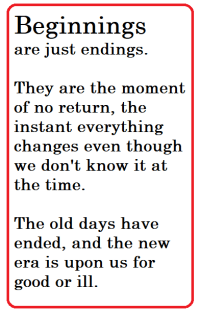
The day that changed everything should open the story.
We see the protagonists in their familiar environment. By evening, a chain of events has begun. A tiny, insignificant stone rolls downhill, the first incident that will soon precipitate an avalanche of problems our protagonist must solve.
When we are new in this craft, we have a burning desire to front-load the history of our characters into the story, so the reader will know who they are and what the story is about.
I am the queen of front-loading. Fortunately, my writer’s group is made up of industry professionals and one in particular, Lee French, has an unerring eye for where the story a reader wants to know begins.
I have to remind myself that the first draft is the thinking draft. It’s where we build worlds and flesh out characters and relationships. It’s also where the story grows as we add to it.
We need a finite starting point, a place of interest. Have faith—the backstory will emerge as the story progresses. If we have our world solidly in our heads as we write, the reader will visualize a version of it that works for them, without our info dumping the history.
Let’s plot the beginning of a medieval fantasy:
Act 1: the beginning:
 Setting: Venice in the year 1430.The weather is unseasonably cold. A bard is concealed amongst the filth and shadows in a dark, narrow alley. Sebastian hides from the soldiers of a prince he has unwisely humiliated in a comic song.
Opening plot point–the hook: the soldiers surround and capture Sebastian, and he is hauled before the angry prince. The trial is brief and painful. Beaten and bloody, Sebastian is thrown into prison and sentenced to be beheaded at dawn.
That moment of despair is the end of chapter one.
You have done some prep work for character creation, so Sebastian is your friend. You know his backstory, who he is attracted to (men, women, none, or both), how handsome he is, and his personal history.
You know who he will meet in prison, someone who will help him escape. Depending on Sebastian’s romantic preference, Chance (an assassin’s professional name) will be male or female and dislikes the bard on sight. Still, Chance needs Sebastian’s help to escape as he/she/they will also die at dawn.
You have decided that the prince is a dark-path warlock. His brother is a highly placed cardinal who intends to become pope, protects him.
You have designed Sebastian and Chance’s escape, which is the first pinch point— the place where what they learn from each other fuels a quest: that of killing the Warlock Prince. Each has different reasons for this, but the enemy of my enemy is my friend, and all that.
But now they are on the run and have no idea how to accomplish that task. Circumstances force them to work together despite their clash of personalities.
And we all know how friction heats things up. Romance or no romance, this tension is crucial.
We (the author) know the Warlock Prince must die if they are to save Venice, but who will be willing to help them, and what roadblocks stand in their way? These people will emerge as you write the first draft.
You’ve written down some ideas for the ending, so you have a goal to write to. At this point, the middle of the story is murky, but it will come to you as you write toward the ending. Every event and roadblock that happens to Sebastian between his arrest and the final moments of his victory will emerge from your imagination as you write your way through this first draft.
 But the opening moment, the scene showing a lowly bard hiding behind a rubbish heap, is the moment in Sebastian’s life where the story the reader wants to hear starts. That scene is where this story begins regardless of how interesting Sebastian’s story, Venice’s story, or the Warlock Prince’s story was before that day. It is the beginning because this is the point where all the essential characters are in one place and are introduced:
- The reader meets the villain and sees him in all his power
- Sebastian knows one thing—the Warlock Prince must be stopped. He can sink no lower—he has hit bottom, and from there he can only go up.
- Chance is in the same low emotional place, but he/she/they have an escape plan.
The story kicks into gear at this pinch point because the assassin is at risk on two fronts, which means Sebastian is too. Chance’s original task of killing the prince has failed, so now they must avoid both the prince’s soldiers and the mysterious employer‘s goons. For Chance, it’s a matter of pride that the original commission must be fulfilled despite the fact there will be no payment. Sebastian agrees to help ensure it happens because he has a conscience and wants to protect the people of Venice from the prince and his brother.
Attraction often grows in the most unlikely of places. Will it blossom into romance? It’s Venice, a city filled with romance and intrigue. But you’re the author, so only you know how their relationship grows as you write their adventure.
What else will emerge over the following 40,000 or more words (lots more in my case)?
- Who is the assassin’s mysterious employer and what is their agenda?
- Who is Chance really, what is their true name, and how did he/she/they become an assassin?
Sebastian will find this information out as the story progresses and only when he needs to know it. With that knowledge, he will realize his fate is sealed—he’s doomed no matter what. But it fires him with the determination that if he goes down, he will take the Warlock Prince and his corrupt brother with him.
If you dump the history at the beginning, the reader has no reason to go any further. You have wasted words on something that doesn’t advance the plot, doesn’t intrigue the reader.
The people who will help our hapless protagonist will enter the story as he needs them. Each person will add information the reader wants, but only when Sebastian requires it. Some characters, people who can offer the most help will be held back until the final half of the story.
By the end of the novel, the reader will have acquired the important history of Sebastian, Chance, the mysterious employer, and the Warlock Prince. With the last bits of information, the final pieces of the puzzle will fall into place.
Gaining all that knowledge is the carrot that keeps the reader involved in the book.
Next up, in post 7, we will talk about resources for beleaguered writers. Memoirs, poems, essays, novels–every author needs handy resources to bookmark.
The final post in this 8-part series will be on how to carve out time for writing whether you are participating in NaNoWriMo or just writing for fun.
Posts in this series:
#NaNoWriMo prep part 1: Deciding on the Project #amwriting
#NaNoWriMo prep part 2: Character Creation #amwriting
#NaNoWriMo prep part 3: Designing Worlds #amwriting
#NaNoWriMo prep part 4: Plot Arc #amwriting
#NaNoWriMo prep part 5: How the Story Ends #amwriting

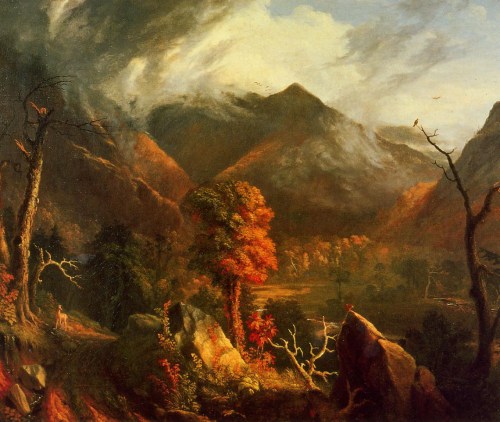 Artist: Thomas Cole (1801–1848)
 Then there is the marketing of the finished product, but that is NOT my area strength, so I won’t offer any advice on that score.
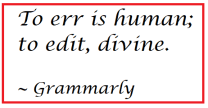 However, we must have a fundamental understanding of basic mechanical skills. These rules are the law of the road, and readers expect to see them. Knowledge of standard grammar and punctuation rules prevents confusion. Readers who become confused will set the book aside and give it a one-star review.
 Ernest Hemingway
 Each author is different, and the length of time they take on a book varies. Some authors are slow—their books are in development for years before they get to the finish line. Others are fast—their novels complete and ready to be published in a relatively short time. Regardless of your timeline, this is where project management skills really come into play.
 But as I said earlier, I have no skills in the area of marketing and no advice worth offering.
 assion for the dirty habit of writing every day. They are joining the ranks of the old pros, the people who “do NaNo” every year whether they expect to be published or not.
 In my mind, novels are like Gothic Cathedrals–arcs of stone supporting other arches until you have a structure that can withstand the centuries. Each scene is a tiny arc that supports and strengthens the construct that is our plot.
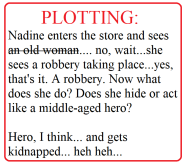 For me, the first draft is always rough, more like a series of events and conversations than a novel. In the second draft, I stitch it all together and fill in the plot holes.
 Plot points are driven by the characters who have critical knowledge. The fact that some characters are working with limited information creates tension.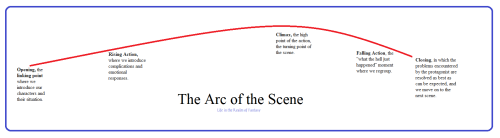
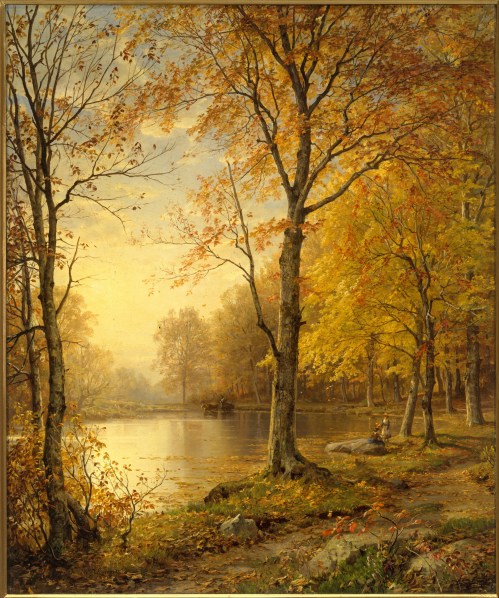 Title: Indian Summer by William Trost Richards
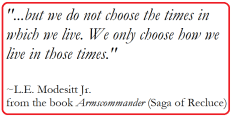 Lesser dramas might only touch us on a peripheral level, yet they can affect our sense of security and challenge our values.
 The camera zooms out and now we see the idyllic serenity of a clear sunny morning on Spirit Lake and Harry doing his morning chores.
 We writers must make our words count. We must show our characters in their comfort zone in the moments leading up to the disaster. Not too much of a lead in, but just enough to show what will soon be lost.
 Many authors are prepping for NaNoWriMo 2022. They are mentally committing to writing 1,667 new words every day beginning on November 1st or a total of 50,000 words by midnight on November 30th.
 Until this past June, I wrote best when I had a long stretch of time to just sit down and immerse myself. Then my husband was diagnosed with Parkinson’s, a degenerative neurological disease, and our life underwent a fundamental change. I am now the only driver in the family, and we live in an area without public transportation.
 A good way to ensure you have that time is to encourage your family members to indulge in their own interests and artistic endeavors. That way, everyone has the chance to be creative in their own way during that hour, and they will understand why you value your writing time so much.
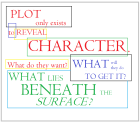
 Perhaps your mind has gone blank. An idea is locked in your head, but you don’t have the words to free it. You can still advance your rough draft and meet your word count goal. Step back and view your story from a distance:
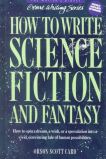 Let’s start with craft. If you are at the beginning stage of your writing life, it’s hard to know where to find help in shaping your work into a coherent story. For many years, I didn’t even know books on the craft of writing existed.
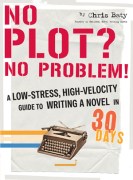 Finishing off the resources from the official NaNoWriMo store is the handbook,
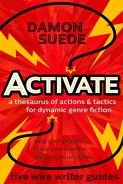
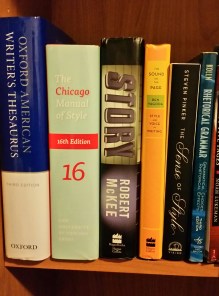
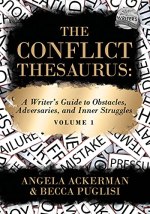
 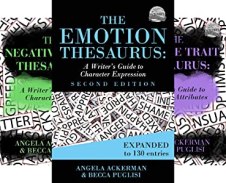 The following is the list of books that are the pillars of my reference library:
 We usually start our online hunt for information by “googling” a question, no matter what browser you use. Be wary and read several articles to get a broader view of what you are looking for. I also check dates to ensure the information is current and bookmark it if it is relevant to my story. Note: Your browsing history may look a little … unusual … after a while.
 www.Thesaurus.Com
 So, let’s talk about writers’ groups. A good group is the best way to learn about this craft. Your area may have established writers’ groups, and some may be able to accept new members. The best way to find out is to google writer’s groups in your town and make inquiries.
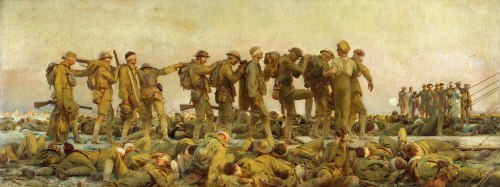 Artist: John Singer Sargent (1856–1925)


