
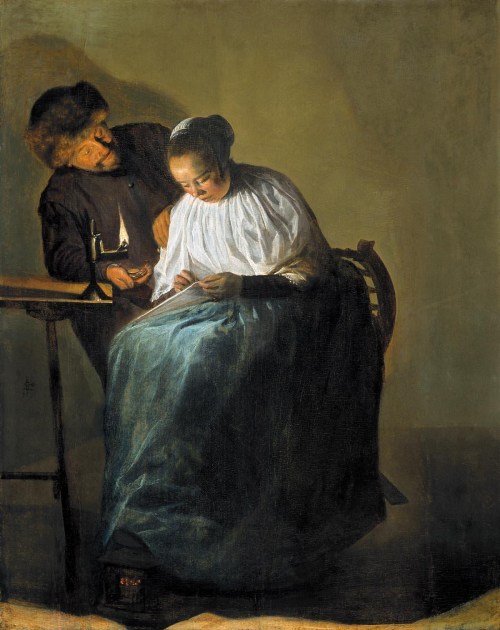
 What I love about this painting is how honest Judith Leyster is when detailing the realities of life in her time and in her city. Here, a young woman is pressured to enter into a relationship with a man she has no interest in. He clearly feels he has the right to compel her to sell her virtue, and she clearly ignores him. It is as if she refuses to notice him.
Male artists of the time, Leyster’s husband, Jan Meinse Molenaer included, rarely painted genre pictures of young women other than in taverns or other low-life situations. Commissioned portraits of noble and merchant class women they painted in great abundance, but simple, modest women of good virtue?
Rarely. They had to sell paintings to feed their families, and then as today, virtue did not sell all that well.
Leyster, on the other hand, had the talent and (because she was a woman) the freedom to paint whatever she wanted. After all, as long as she managed the house, made sure food was served, and raised the children, she could paint whatever moved her.
The artistic talent of women has been so disregarded historically that, despite her signature, her paintings and her talent were attributed (after her death) to her husband and to Franz Hals.
About the Painting (Via Wikipedia):
“The Proposition” is a genre painting of 1631 by Judith Leyster, now in the Mauritshuis in The Hague, who title it “Man offering money to a young woman.” It depicts a woman, sewing by candlelight, as a man leans over her, touching her right shoulder with his left hand. He is offering her coins in his right hand, but she is apparently ignoring the offer and concentrating intently upon her sewing.
The man wears dark clothing, and the dark tones, as well as his shadow cast behind him and across his face from the angle of the candlelight, give him a looming appearance. In contrast, the woman is lit fully in the face by the candlelight and wears a white blouse.
It is an early work by Leyster, who was only 22 years old in 1631.
Also, From Wikipedia:
(The painting’s) most distinctive feature is how different it is to other contemporary Dutch and Flemish “sexual proposition” paintings, many falling into the Merry company genre. The convention for the genre, a common one at the time, was for the characters to be bawdy, and clearly both interested in sex, for money. The dress would be provocative, the facial expressions suggestive, and sometimes there would be a third figure of an older woman acting as a procuress. Indeed, in The Procuress by Dirck van Baburen, an example of the genre, that is exactly the case.
In contrast, in The Proposition the woman is depicted not as a whore but as an ordinary housewife, engaged in a simple everyday domestic chore. She isn’t dressed provocatively. She does not display her bosom (but rather her blouse covers her all of the way to her neck). No ankles are visible. She displays no interest in sex or even in the man at all.
Contemporary Dutch literature stated the sort of activity in which she is engaged to be the proper behaviour for virtuous women in idle moments. Kirstin Olsen observed that male art critics “so completely missed the point” that the woman is, in contrast to other works, not welcoming the man’s proposition that they mistakenly named the painting The Tempting Offer.
The foot warmer, whose glowing coals are visible beneath the hem of the woman’s skirt, was a pictorial code of the time, and represented the woman’s marital status. A foot warmer wholly under the skirt indicated a married woman who was unavailable, as it does in The Proposition. A foot warmer projecting halfway out from under the skirt with the woman’s foot visible on it indicated one who might be receptive to a male suitor. And, a foot warmer that is not under the woman at all, and empty of coals, indicated a single woman. This code can also be seen in Vermeer’s The Milkmaid and Dou’s The Young Mother.
About the Artist:
Judith Jans Leyster (also Leijster) (c. July 28, 1609[1]– February 10, 1660) was a Dutch Golden Age painter. She painted genre works, portraits, and still lifes. Her entire oeuvre was attributed to Frans Hals or to her husband, Jan Miense Molenaer, until 1893 when Hofstede de Groot first attributed seven paintings to her, six of which are signed with her distinctive monogram ‘JL*’. Misattribution of her works to Molenaer may have been because after her death many of her paintings were inventoried as “the wife of Molenaer”, not as Judith Leyster.
She signed her works with a monogram of her initials “JL” with a star attached: JL* This was a play on words; “Leister” meant “Lead star” in Dutch and was for Dutch mariners of the time the common name for the North Star. The Leistar was the name of her father’s brewery in Haarlem.
(Only occasionally did she sign her works with her full name.)
She specialized in portrait-like genre scenes of, typically, one to three figures, who generally exude good cheer, and are shown against a plain background. Many are children; others men with drink. Leyster was particularly innovative in her domestic genre scenes. These are quiet scenes of women at home, often with candle- or lamplight, particularly from a woman’s point of view
Sources and Attributions:
Wikipedia contributors, “The Proposition (painting),” Wikipedia, The Free Encyclopedia, https://en.wikipedia.org/w/index.php?title=The_Proposition_(painting)&oldid=851982429 (accessed February 1, 2019).
Wikipedia contributors, “Judith Leyster,” Wikipedia, The Free Encyclopedia, https://en.wikipedia.org/w/index.php?title=Judith_Leyster&oldid=820769951(accessed February 1, 2019).
 Even today, her humor shines with sharp-edged wit delivered without condescension. Her most memorable protagonists rise above the trivialities of life that absorb the sillier characters.
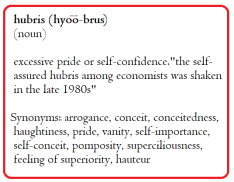 Pride is a powerful theme because it is the downfall of many characters in all literature, not just Jane Austen’s work.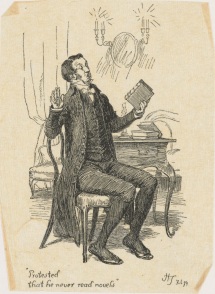
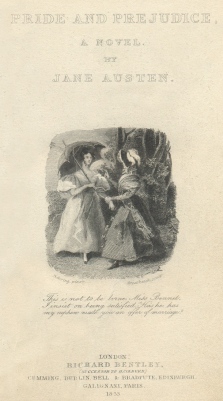 Clearly, Mrs. Dashwood feels that ensuring her sisters-in-law are not impoverished would make her only son less rich. Less appealing to other affluent families.
 Many of James’s books feature one common theme—lust.
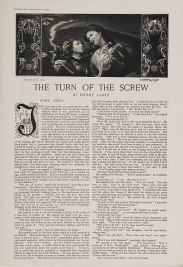 Henry James is famous for his novels and short stories laying bare the deepest motives and manipulations of the society he knew. However, he wrote one of the most famous novellas ever published,
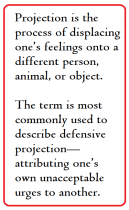 Projection
 Why is this so? Let’s look at an example.
 So how is social class different from economic class? In some parts of the world, they are the same. In others, social class is inherited, and economic class is acquired.
 For instance, I grew up in a financially stable lower-middle-class family. But I never buy pre-distressed furniture, no matter how much the designers on TV love it. This is because, by the time my youngest child left home, all my hand-me-down furniture was distressed. I like my furniture to reflect my life—un-distressed.
 February here in my little town was dryer than usual, far less rainy than in other parts of the Northwest. We have seen the sun much more than usual over the last two weeks, which doesn’t bode well for the summer. I can’t help but think of the horrible heat we had last June. We don’t like it when it gets up to 110 degrees Fahrenheit (43.3 Celsius). It’s literally hell when you realize most people here don’t have air conditioning in their homes. Up through the 1980s, we never needed it, as summers rarely topped 80 degrees (26.6).
 Edible mushrooms of all sorts abounded. One I hadn’t seen before, the lion’s mane mushroom, was the central feature in the displays of the two local craft fungi growers. It was interesting to look at, but … no.
 On the writing front, last week was quite productive. I received the final chapters back for my blended novel from my editor and am now going over the manuscript one last time. This is a merging of the stories of two characters and the events of one overarching plot arc. It’s the parallel stories of two battle mages, a father and son, told from their unique generational viewpoints.
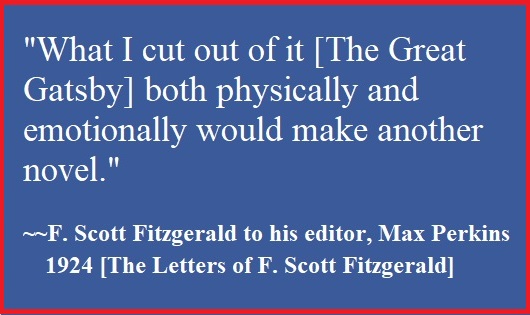
 This merger of two novels into one involved cutting a number of chapters out of each and layering the stories so that the timeline moves forward at the right pace and doesn’t repeat what we already know.
 Also, I submitted my 2020 NaNoWriMo novel to
 Today we are discussing a particular kind of editor: the submissions editor. When I first began this journey, I didn’t understand how specifically you have to tailor your submissions for literary magazines, contests, and anthologies. Each publication has a specific market of readers, and their editors look for new works their target market will buy.
 The quality of your work isn’t the problem, and you have selected a publication that features work in your chosen genre. But your subgenre may not match what the readers of that publication want to see. After all, both spaghetti Bolognese and bruschetta are created out of ingredients made from wheat and tomatoes, but the finished meals are vastly different.
 Some hobbyists expect special consideration and are offended when they don’t get it. Egos are rampant in this business, but in reality, no one gets to be treated like a princess.
 er sending your work.
 Please, if you consider yourself a professional, format your submissions properly. You want to stand out but getting fancy with your final manuscript is not the way to do that—you will be rejected out of hand if you don’t make this effort.
 For new and beginning authors, it may take an editor more than one trip through a manuscript to straighten out all the kinks. This may be a three-step process involving you making the first round of revisions and/or explanations, sending them back to the editor, who will make final round of suggestions. At that point, the editor is done. You have the choice to either accept or reject those suggestions in your final manuscript.
 For creative writing, editing is a stage of the writing process. A writer and editor work together to improve a draft by correcting punctuation and making words and sentences clearer, more precise. Weak sentences are made stronger, info dumps are weeded out, and important ideas are clarified. At the same time, strict attention is paid to the overall story arc.
 Editors who have been in the business for a long time find it much faster to use the markup function and insert inline changes. A new author or someone unfamiliar with how word-processing programs work might find it confusing and difficult to understand.
 Inserting the changes and using Tracking cuts the time an editor spends on a manuscript. Writing comments takes time, and suggestions may not always be clear to the client.
 However, many authors don’t have the money to hire an editor. If that is the case, you may have a friend in your writing group who has some experience editing, and they will often help you at no cost. Your writing group is a well of inspiration, support, and wisdom, and they are invested in your book. They want you to succeed and most will gladly trade services.


 Life in the Realm of Fantasy